

The Foundations of Church Hill, Tennessee
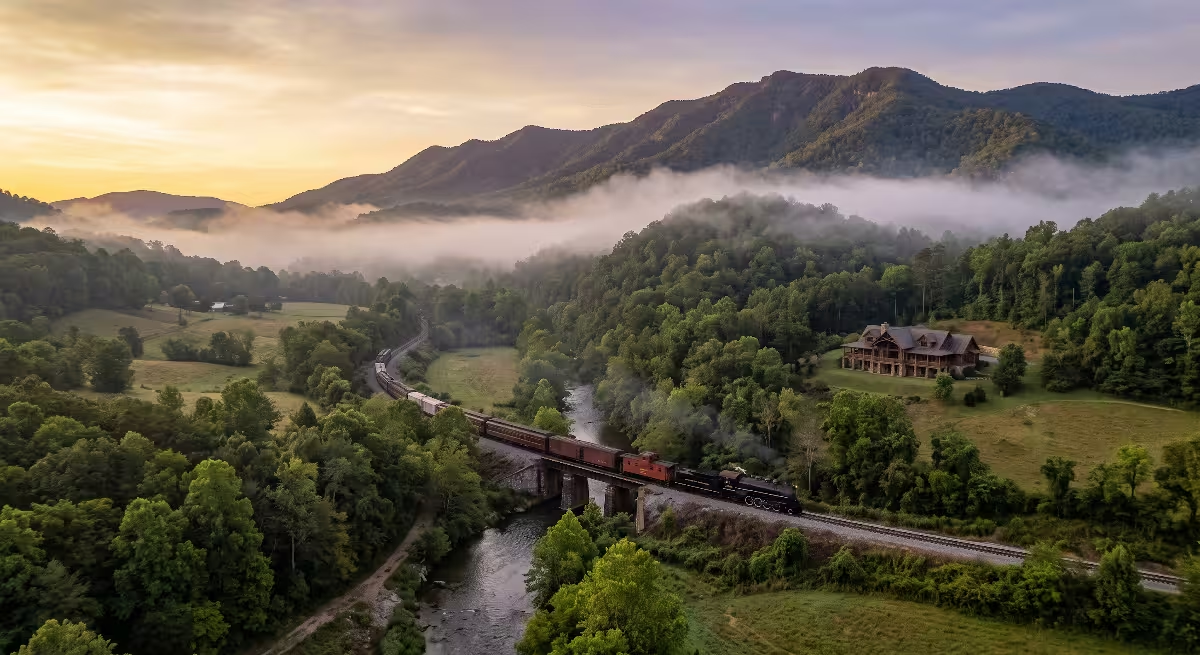
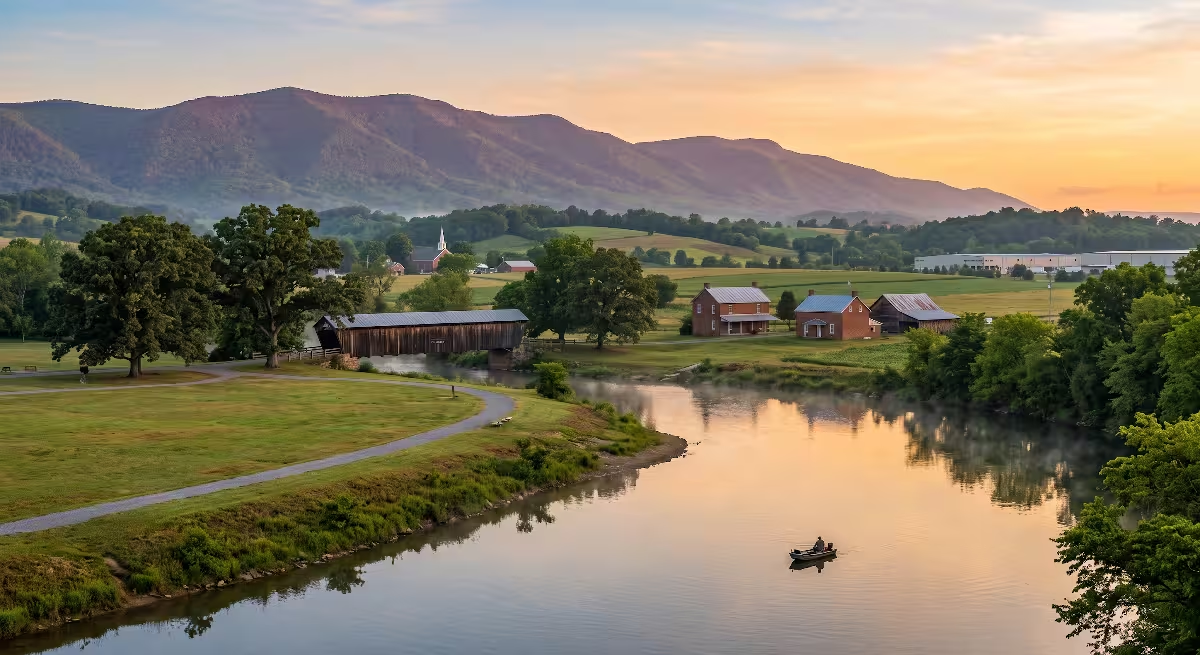
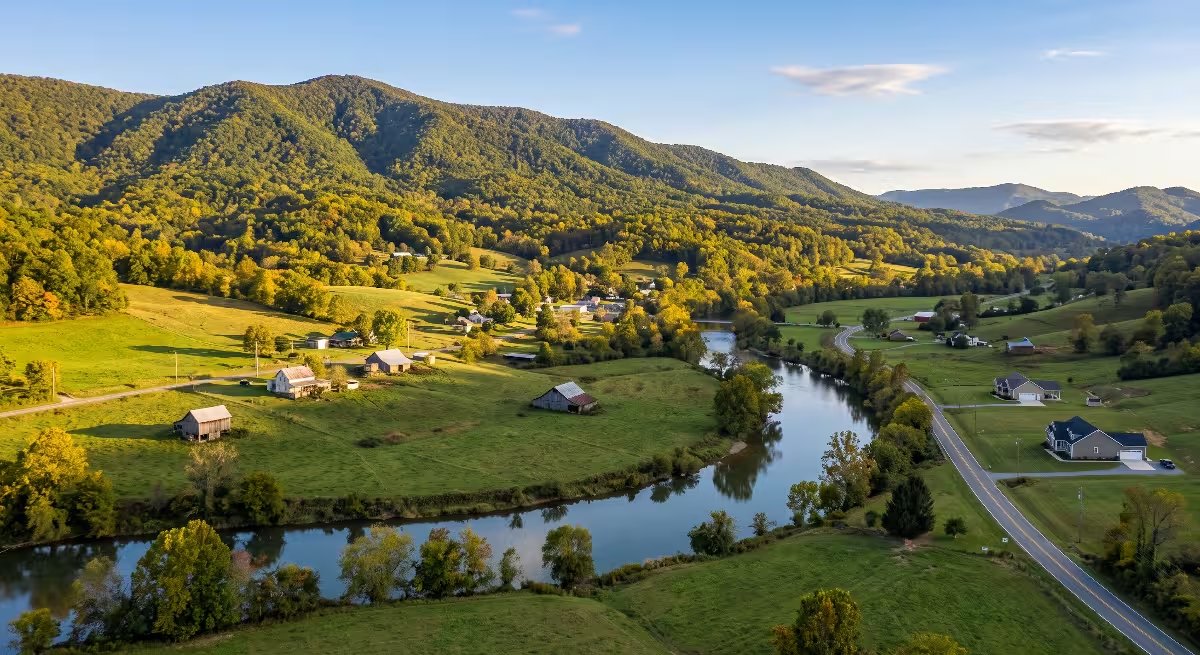
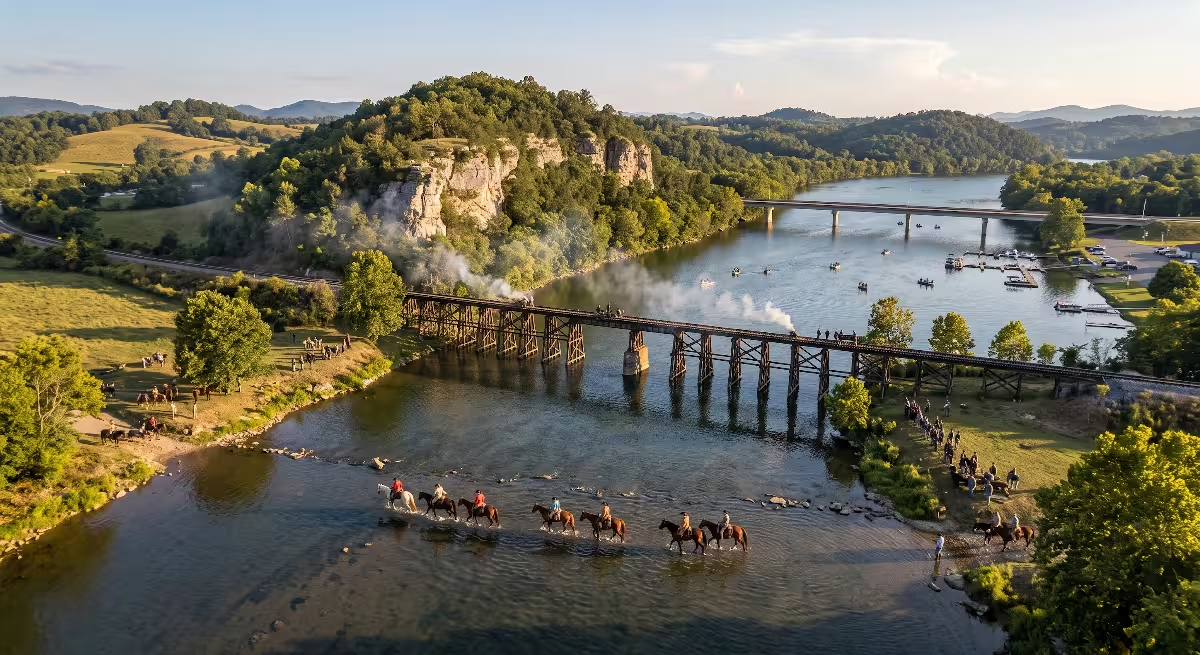
To really appreciate Church Hill, TN as it stands today, you have to look past the surface. You have to look deeper than the quiet subdivisions, the rolling pastures, and the scenic mountain ridges that frame the horizon. What we see today as a peaceful residential haven in Hawkins County was once a vital frontier outpost. The story of Church Hill, TN is deeply tied to the natural landscape of the Holston River valley. Long before modern backhoes, concrete trucks, and laser levels arrived, early pioneers had to read the land using nothing more than practical horse sense and sharp eyes. They looked for fertile river bottoms where crops could thrive, clean spring water that never ran dry, and high ground that stayed safe from annual spring floods.
Understanding the history of Church Hill, TN gives any prospective property owner or home builder a huge advantage. When you look at local tax maps or survey plats today, you are looking at boundary lines that were carved out by early settlers along old wagon trails and river crossings. The soil composition, the limestone bedrock ledges, the way the surface water drains down toward the Holston River, and the very layout of local roads all connect directly to this frontier past. Church Hill, TN offers a unique blend of historical stability, rural beauty, and modern utility.
In this comprehensive guide, we will look into through every chapter of that journey. We will examine how this town grew from an isolated river valley settlement into the largest municipality in Hawkins County, and why it remains one of the finest places in the Tri-Cities area to set down permanent roots.
The Frontier Era: Carter’s Valley and 18th-Century Settlements (c. 1750s to 1790s)
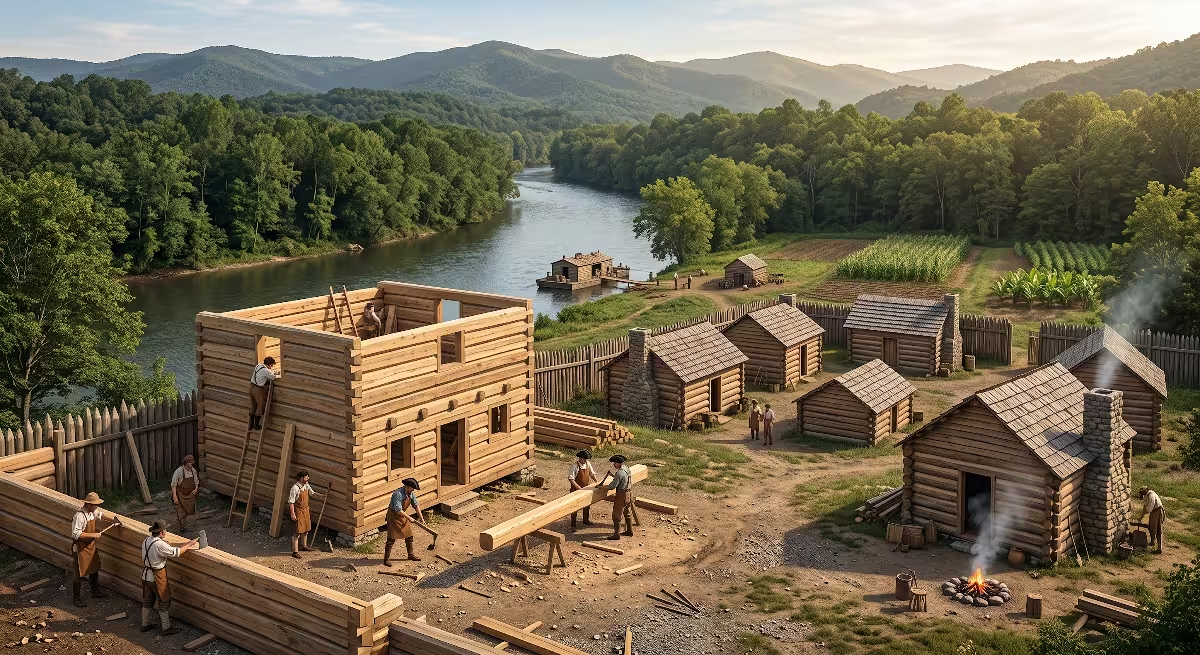
To find the earliest roots of Church Hill, TN, we have to travel back to the middle of the eighteenth century. Long before the state of Tennessee was even formed, early longhunters and pioneer families began filtering into the Great Appalachian Valley. Around 1750, the first groups of European settlers started entering the fertile basin along the Holston River. At that time, this area was an untamed wilderness, rich in timber, wild game, and exceptionally fertile black river loam.
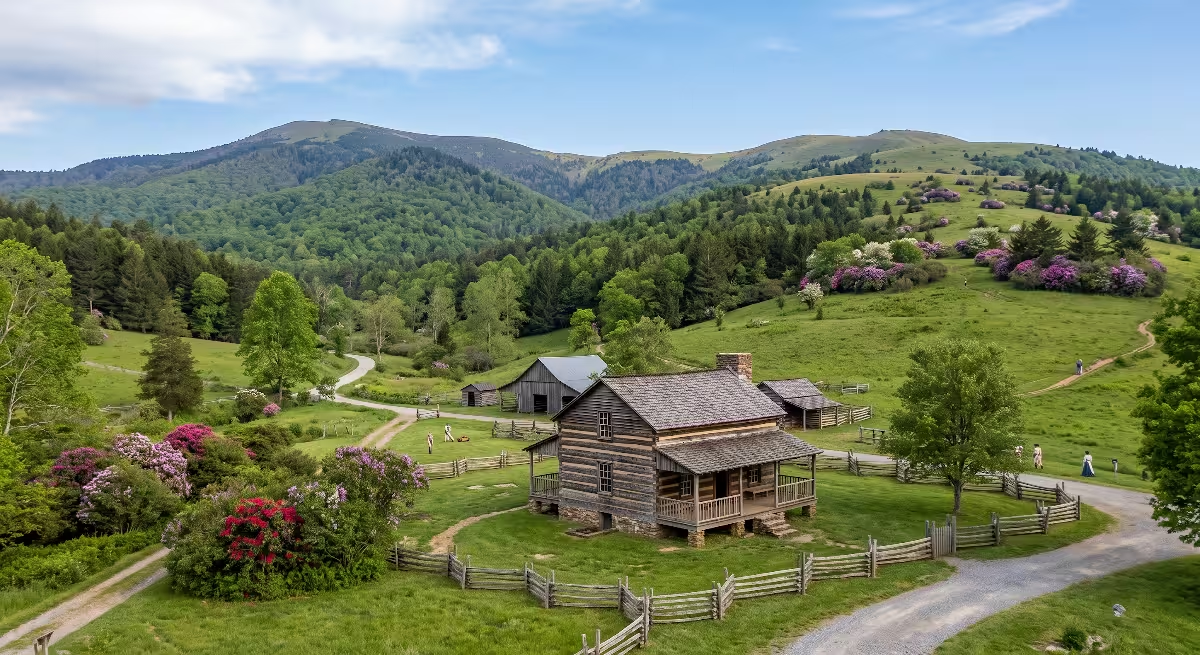
Settling in this region was not for the faint of heart. It required immense physical stamina, self-reliance, and practical craftsmanship. Families had to fell massive virgin hardwoods, hew logs by hand with broadaxes, and notch corners with tight dovetail joints that could keep out the biting winter winds. Every home site had to be chosen with care. You needed to be close enough to a reliable water source to keep your livestock alive, but you also had to build your log cabin high enough on the surrounding terraces so that river floods would not wash your family away. These early homesteaders laid the initial groundwork for what would eventually develop into Church Hill, TN.
As more families pushed westward through the gaps in the mountains, the need for organized trade grew quickly. The Holston River served as a natural highway, but overland travel was equally vital for those moving through the river valleys. The fertile corridor known as Carter’s Valley became an early gateway into Upper East Tennessee, serving as a primary thoroughfare for pioneers heading toward the Cumberland settlements or down into the lower Tennessee Valley. The people who settled around modern Church Hill, TN understood how to make the land work for them, creating an agricultural network that sustained entire generations through difficult frontier conflicts and harsh winter seasons.
Trade, Outposts, and Water-Powered Industry: Spencer’s Mill and Patterson’s Mill
By the 1770s, organized commerce began taking shape along these frontier paths. A prominent trader named John Carter established an early trading post known as Carter’s Store in the nearby valley. This outpost was far more than a simple supply shack. It served as a critical commercial crossroads and supply center for westward travelers, hunters, and early farmers. Settlers could trade furs, salted meats, and corn whiskey for iron tools, salt, gunpowder, and lead shot. This bustling trade hub anchored the broader valley and brought a steady stream of trade through the area that surrounds present-day Church Hill, TN.
As farming expanded from simple subsistence gardens to larger acreage, grain production quickly outpaced what could be processed by hand. In any frontier community, the first true industrial structure to be built was always a gristmill. Water power was the original engine of American expansion. The natural hydrology around Church Hill, TN offered pristine conditions for water-driven commerce. With reliable, spring-fed tributaries and creeks cutting through limestone valleys toward the Holston River, early entrepreneurs recognized prime locations to harness moving water.
Two vital mills helped transform the area: Spencer’s Mill and Patterson’s Mill. Constructing a water-powered gristmill in the late 1700s was a masterpiece of early mechanical engineering.
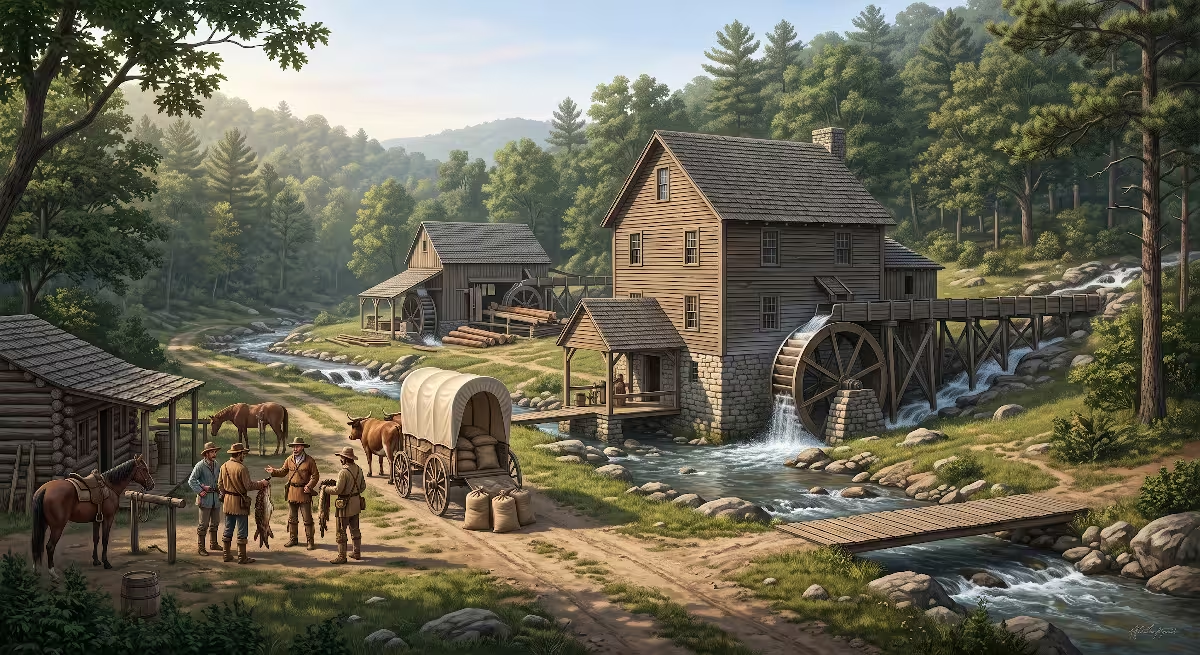
Millwrights had to quarry and dress heavy granite millstones by hand, balance massive wooden waterwheels, and cut intricate gearing out of dense mountain hardwoods like hickory and white oak. Once Spencer’s Mill and Patterson’s Mill were operational, the territory around Church Hill, TN became an essential destination for farmers across Hawkins County.
Farmers would load wagons with sacks of shelled corn and bushels of wheat, traveling for miles over rough dirt tracks to have their grain ground into meal and flour. These mills served as natural gathering places. While waiting for the millstones to finish their work, neighbors shared news, discussed politics, negotiated livestock sales, and arranged building projects. The presence of these milling operations also spurred regular stagecoach travel along the early turnpikes. Long before it was an incorporated city with paved streets, the community of Church Hill, TN was already established as an industrious and dependable crossroads.
How Church Hill Got Its Name: The Landmark on the Hill
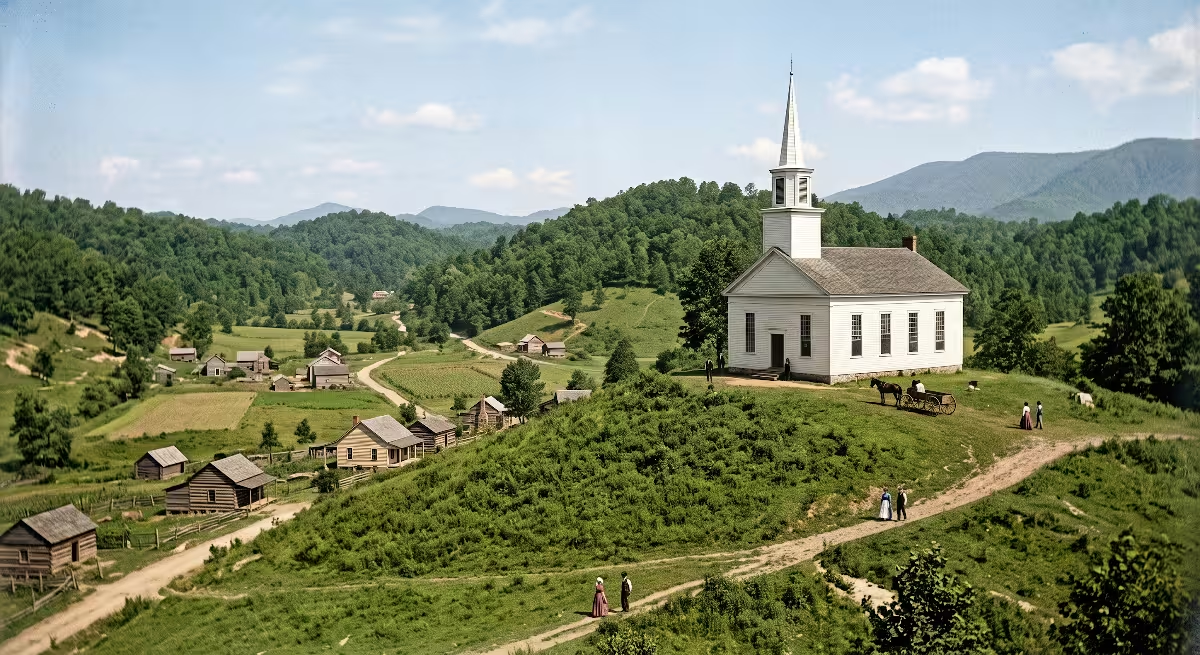
Many people driving through Hawkins County today wonder how the city got its name. In East Tennessee, place names often tell you exactly what you need to know about the local topography and the cultural heart of the people who settled there. The naming of Church Hill, TN is a classic example of this regional tradition.
During the early nineteenth century, as the local population grew along the river lowlands and surrounding ridges, circuit-riding preachers traveled through East Tennessee on horseback. These dedicated ministers held open-air revivals and brush arbor meetings, preaching to frontier families in open clearings. Over time, these gatherings led to the establishment of organized congregations that needed permanent houses of worship. One such group was a congregation of local Methodists who decided to build a permanent church structure.
Rather than building in the low-lying hollows or directly on the riverbanks where moisture and high water could threaten the foundation, the congregation chose a prominent, elevated hill overlooking the valley floor. They erected their meetinghouse at a spot along what is known today as the Oak Drive and Grandview Street corridor. Because of its elevated position, the white frame church building stood out against the green ridges and blue skies of Hawkins County.
For travelers riding horseback along the river trail or stagecoaches rattling along the turnpike, that building became an unmistakable navigation beacon. Teamsters and stagecoach drivers would point up the rise and tell their passengers that they were approaching “the church on the hill.” Over decades of daily conversation, the phrase was shortened and formalized. People began referring to the entire surrounding farming settlement simply as Church Hill. When formal postal routes and community records were established, the name stuck permanently. To this day, the First United Methodist Church remains an honored spiritual anchor, reminding everyone in Church Hill, TN of the simple physical landmark that gave their hometown its name.
Architectural and Land Heritage: Plantations and Historic Landmarks
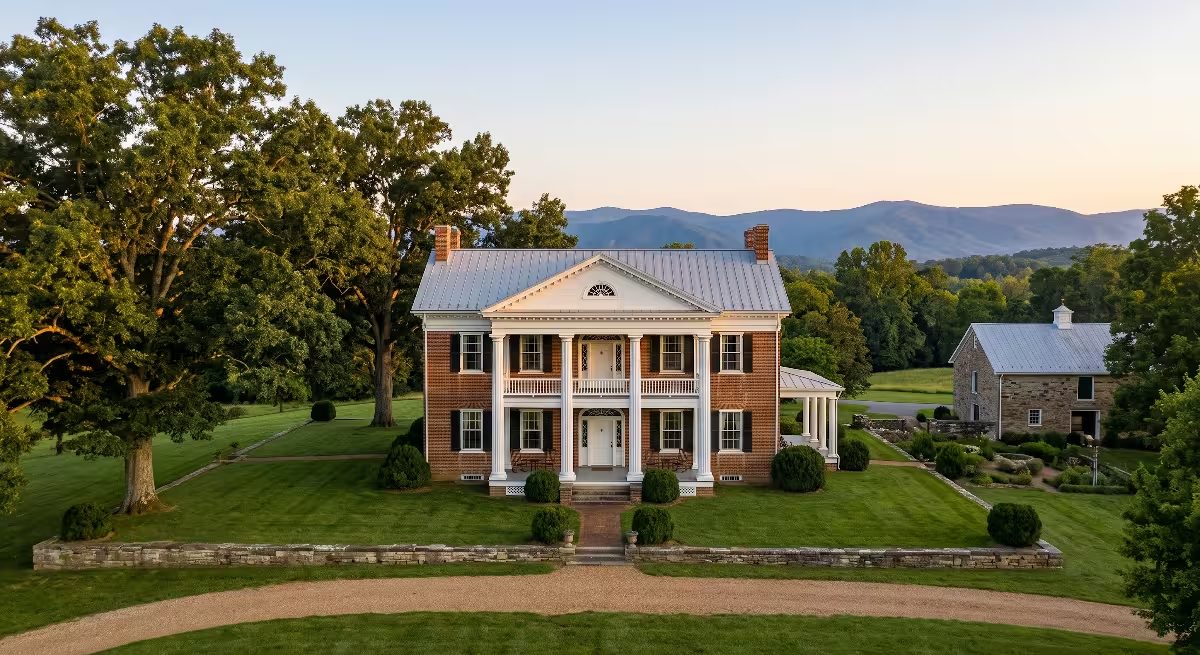
As the nineteenth century advanced, the area surrounding Church Hill, TN transitioned from rough-hewn log cabins into permanent agricultural estates. The rich soils of the Holston River bottomlands produced bumper crops of corn, wheat, hay, and later, burley tobacco. This agricultural wealth allowed prominent regional families to build lasting homes that showcased the finest building methods of the antebellum era.
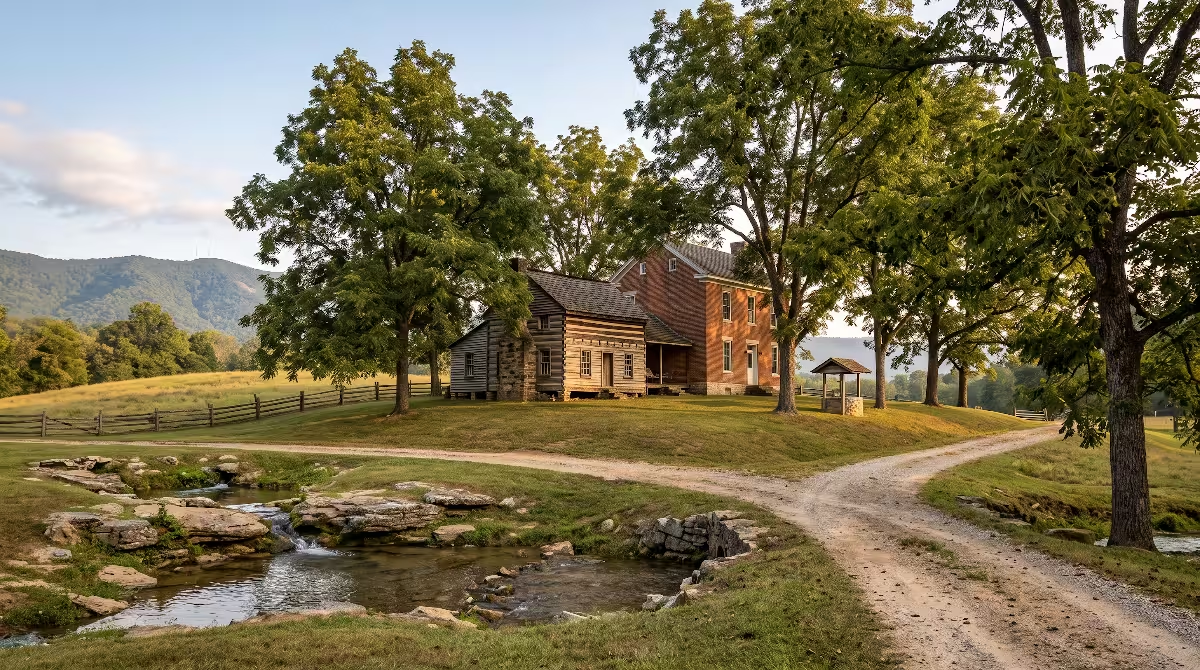
One of the most remarkable surviving examples of this architectural period is Canton Hall, situated on the historic New Canton Plantation just outside the immediate town center. Built by the Hord family, Canton Hall stands as a testament to exceptional craftsmanship and structural durability. When you study a home like Canton Hall from a structural standpoint, you see principles that modern custom home builders still admire. The bricks were not manufactured in an automated factory hundreds of miles away; they were hand-pressed from local red clay and fired right on the property in wood-burning kilns.
The framing of Canton Hall features heavy virgin timbers, hand-hewn and assembled using traditional mortise-and-tenon joinery secured with seasoned wooden pegs. The foundation was built from massive limestone blocks quarried directly from local outcroppings, laid dry and pointed with lime mortar. Because the builders understood natural air currents and sunlight, the house was oriented to capture cooling summer breezes from the Holston River while maximizing passive solar warmth during cold Appalachian winters. Canton Hall proves that when you build with integrity and respect local materials, a structure can endure through centuries of weather.
Beyond Canton Hall, the broader landscape of Church Hill, TN is dotted with historic homesteads, classic bank barns, and vernacular farmhouses from the nineteenth and early twentieth centuries. Structures like the Smith Place and other generational family farmhouses feature sweeping covered porches, stone chimneys crafted by skilled local stonemasons, and metal standing-seam roofs designed to shed heavy snows and torrential summer downpours.
Another defining feature of the local heritage is the Laurel Run corridor. Running along the southern edges of the community, this rugged, forested stream basin provided timber for early sawmills and clean water for livestock. Today, this landscape lives on as Laurel Run Park, preserving hundreds of acres of untouched woodland, dramatic rock cliffs, and pristine mountain cascades. For anyone planning a custom home in Church Hill, TN, this rich architectural legacy offers endless design inspiration, from deep timber overhangs and natural stone accents to practical wraparound porches that celebrate the beauty of East Tennessee.
20th Century Transformation: Incorporation and Municipal Growth

For the first half of the twentieth century, Church Hill, TN remained an unincorporated farming and milling community. Local families tended their land, shopped at general stores, and sent their children to modest community schools. However, the world was changing rapidly after World War II, and the Upper East Tennessee region was right at the center of an industrial boom.
Nearby Kingsport was expanding rapidly into a modern manufacturing giant, driven by major employers like the Eastman Kodak company (now Eastman Chemical Company) and the Holston Army Ammunition Plant. Thousands of skilled manufacturing jobs, chemical engineering positions, and industrial trades opened up. Workers wanted spacious home sites where they could raise their children with clean air, large yards, and a quiet rural lifestyle while remaining within an easy drive of their job sites. Families began looking west toward the rolling farmland of Hawkins County, and Church Hill, TN was positioned perfectly to meet that demand.
With new subdivisions popping up and population density increasing, community leaders realized that the town needed organized governance to manage public services, install modern utility lines, pave local roads, and provide reliable fire and police protection. On November 1, 1958, the citizens officially voted to incorporate, establishing a municipal government under a City Manager charter.
As the town matured and public infrastructure expanded, the community refined its administrative structure. In 1965, the citizens voted to transition to a Mayor-Aldermanic form of government, ensuring direct neighborhood representation for its growing list of property owners. Growth continued at a steady, sustainable pace through the following decades. To better reflect its size, regional importance, and comprehensive public services, the municipality took another major step forward between 1994 and 1995, formally transitioning its charter from the “Town of Church Hill” to the “City of Church Hill.”
A major catalyst for this post-war transformation was the modernization of U.S. Route 11W. Known historically as the Lee Highway, this major east-west transportation artery was widened into a modern four-lane divided highway. The expansion of Route 11W created a direct, high-speed connection between the quiet residential neighborhoods of Church Hill, TN and the heavy commercial and industrial centers of Kingsport, Bristol, and Johnson City. Suddenly, you could live on an acre of land overlooking the Holston River and drive to work at a major industrial plant in fifteen minutes flat. This commuter balance cemented the modern identity of Church Hill, TN as a premier residential community.
Frequently Asked Questions about Church Hill, TN
When people research the area online, several common questions come up time and again. Let us address each of these popular questions with straightforward facts.
How did Church Hill, TN get its name?
The community earned its name from the First United Methodist Church, which was built on an elevated hill overlooking the Holston River valley during the early 1800s along what is now the Oak Drive and Grandview Street area. The prominent building served as a familiar navigation landmark for river travelers, horseback riders, and stagecoach drivers. Over time, travelers routinely referred to the area as “the church on the hill,” which eventually became the official name of Church Hill, TN.
What is Church Hill, TN known for?
Church Hill, TN is best known for its exceptional natural beauty, peaceful small-town atmosphere, outstanding municipal parks, and its strategic location as a top residential bedroom community in the Tri-Cities region. The city is home to Laurel Run Park, a 440-acre natural preserve featuring hiking trails, waterfalls, and river recreation. The community is also widely recognized for its affordable cost of living, low municipal property tax rates, and strong family values.
What is the largest city in Hawkins County, TN?
Church Hill, TN holds the official distinction of being the largest municipality located entirely within Hawkins County, Tennessee. With a population of approximately 7,000 residents, it has grown larger in population than the historic county seat of Rogersville, serving as a primary residential, educational, and commercial center for the eastern half of the county.
Is Church Hill, TN a good place to build or live?
Yes, Church Hill, TN is widely considered one of the finest places to live and build a home in Upper East Tennessee. The area offers gentle topography that keeps site preparation costs manageable, dependable utility services including First Utility District public water, low city property taxes, and access to quality public schools within the Volunteer High School cluster. Its close proximity to Kingsport gives residents the benefits of small-town living with immediate access to major regional medical centers and employment hubs.
Modern Church Hill: Blending Heritage with Residential Opportunity
Many people see Church Hill, TN as a community that has managed its growth with common sense. Unlike some towns that experience uncontrolled urban sprawl, Church Hill, TN has maintained its rural, welcoming character while steadily investing in high-quality municipal infrastructure.
Let us talk about what it actually takes to build a home here, because that is where the rubber meets the road. When evaluating a potential home site in Church Hill, TN, one of the first things you will notice is the quality of the land. The topography here is characterized by gentle river valley terraces and wide, rolling ridges. For a residential contractor, this topography is ideal. You can easily site a home to capture panoramic views of the Holston Mountain range without spending an arm and a leg on massive retaining walls, extensive hillside blasting, or extreme foundation drops.
The soils in Church Hill, TN generally consist of well-drained silt and clay loams underlain by solid limestone formations. If you are building outside the areas served by public sewer, these soils tend to perk well for conventional septic drain fields, provided you work with an experienced site evaluator who understands local karst formations and soil horizons. Furthermore, municipal water service is widely available throughout the area, provided by the First Utility District of Hawkins County, ensuring reliable water volume and pressure for residential fire protection and daily domestic use. Electrical service is provided by Holston Electric Cooperative, known throughout the region for reliable service and competitive power rates.
Another major advantage of living in Church Hill, TN is the fiscal responsibility of local government. As of recent budget cycles, the municipal property tax rate sits at an attractive $1.01 per $100 of assessed value. Combined with Hawkins County’s low property tax burden and the fact that the state of Tennessee levies no personal income tax on wages, your hard-earned money stretches substantially further here than in other states or even neighboring metropolitan counties.
The city also maintains fantastic public recreational amenities. Beyond the wilderness trails of Laurel Run Park, the Church Hill, TN Parks and Recreation Department oversees community parks complete with baseball fields, tennis courts, picnic shelters, and community walking tracks. For families with school-age children, the city features a well-regarded school feeder system within the Hawkins County School District, including Church Hill Elementary School, Church Hill Middle School, and nearby Volunteer High School. The local schools serve as major cultural hubs where the entire community gathers on Friday nights in the fall to support the home team.
Selecting Land and Planning Construction in Church Hill, TN
If you are planning to purchase raw land or build a custom home in Church Hill, TN, there are several practical, technical steps you should take to ensure your project goes smoothly from start to finish. Having managed construction projects across the Tri-Cities for decades, here is the professional advice I give to my own family and clients.
1. Perform a Thorough Topographical and Drainage Analysis
While the rolling hills of Church Hill, TN are gorgeous, water management is the most important factor in the long-term health of any structure. Before you sign a purchase contract on a parcel, walk the property during or immediately after a heavy rain. Observe where surface runoff flows. Because the town drains naturally toward the Holston River, you want to position your home on a natural crown or high spot on the lot. Always ensure that your final rough grading plan establishes a minimum of a five percent slope away from the foundation perimeter for the first ten feet.
Directing downspout runoff into buried, smooth-wall PVC discharge pipes that daylight well away from your foundation will prevent foundation settlement and keep your crawlspace or basement dry for the life of the home.
2. Verify Utility Infrastructure Early
Never assume utilities are ready at the road curb just because you see a nearby home. If you are buying a lot in Church Hill, TN, call the First Utility District to verify the exact location and size of the nearest public water main, and find out what tap fees will cost. If you need a private septic system, make sure the lot has a current, valid septic improvement permit from the Tennessee Department of Environment and Conservation (TDEC). The permit will specify the maximum number of bedrooms your soil can support and dictate the exact footprint where your drain field and reserve area must be located. Knowing these details prevents costly layout redesigns after you have already purchased your architectural blueprints.
3. Design for the Climate and the Views
Upper East Tennessee enjoys four distinct seasons, but summer humidity and winter freezing cycles require smart material selections. When building in Church Hill, TN, consider wrapping your home with a continuous weather-resistive barrier, taped tightly at every seam to prevent air infiltration. Use double-pane, low-emissivity windows with argon gas fills to minimize thermal transfer. Take advantage of the scenic mountain views that surround Church Hill, TN by incorporating large rear covered porches, deep gable overhangs, and outdoor living spaces that let you enjoy the fresh mountain air while protecting your exterior wall assemblies from driving rain.
4. Work with Reputable Local Craftsmen
Building a custom home is one of the largest financial investments you will ever make. Take the time to partner with a licensed, insured general contractor who has established roots and proven relationships with local subcontractors and building suppliers across Hawkins and Sullivan counties. A contractor who knows the local building codes, soil types, and inspector expectations in Church Hill, TN will save you time, keep your project on budget, and deliver a home that your family will cherish for generations.
The Natural Setting: Embracing the Holston River and Laurel Run
You cannot talk about the lifestyle in Church Hill, TN without highlighting its extraordinary natural playground. The Holston River is not just a historical transportation route; it is the lifeblood of the community’s outdoor lifestyle. The river supports world-class smallmouth bass fishing, with anglers traveling from all across the Southeast to drift its crystal-clear riffles and deep pools. On any warm weekend from May through October, you will see kayakers, canoeists, and paddleboarders putting in at local river ramps, drifting peacefully past limestone palisades and quiet farm pastures.
Directly south of the river lies the crown jewel of the municipal park system: Laurel Run Park. Spanning over 400 acres, this pristine park was created on land originally purchased by the city, honoring the natural beauty of the region. The park features paved picnic shelters, expansive playgrounds, and miles of well-maintained hiking trails that wind deep into the Appalachian forest.
One of the most popular trails follows the rushing waters of Laurel Run Creek up the mountain hollow to two stunning natural cascades: Laurel Run Falls and Kiner Creek Falls. The park also features an authentic, reconstructed historic log cabin, giving visitors a tangible glimpse into how early pioneer families lived on this rugged frontier. For property owners in Church Hill, TN, having this level of outdoor recreation right in your backyard provides a quality of life that crowded metropolitan suburbs simply cannot duplicate.
Economic Resilience: Church Hill’s Place in the Tri-Cities Economy
When deciding where to build a permanent home, economic stability is just as important as natural beauty. A community needs a resilient economic engine to protect your property value over the long haul. Church Hill, TN occupies a very strategic position within the broader Tri-Cities metropolitan area, which encompasses over 500,000 residents across Northeast Tennessee and Southwest Virginia.
Historically, the local economy was anchored strictly by farming and water-powered mills. Today, the economy of Church Hill, TN is powered by a diverse regional industrial and commercial network. Because the city borders the Sullivan County line, residents can commute seamlessly to some of the largest employers in the state of Tennessee. Eastman Chemical Company, located just minutes down Route 11W in Kingsport, employs thousands of scientists, chemical engineers, technicians, and corporate staff. Domtar Paper operates a major, state-of-the-art packaging mill in nearby downtown Kingsport. Regional healthcare systems like Ballad Health provide comprehensive medical care and vast employment opportunities across multiple regional hospitals, including Holston Valley Medical Center.
At the same time, Hawkins County has developed its own robust industrial base. Nearby industrial parks house precision manufacturing, automotive parts production, plastics, and distribution logistics facilities. Church Hill, TN allows workers to earn competitive professional wages while living in a peaceful, lower-cost environment where property tax rates remain gentle on the family budget. This balance between high earning potential and affordable living costs makes Church Hill, TN one of the most attractive real estate markets in East Tennessee.
A Detailed Look at Neighborhoods and Living Options in Church Hill, TN
Whether you are looking for an established neighborhood with mature shade trees or raw acreage where you can create a private family mini-farm, Church Hill, TN offers a wide variety of living options. As you drive through the city, you will discover distinct residential pockets, each with its own unique character.
Established In-Town Neighborhoods
Near the original core of the town, along the streets surrounding the historic First United Methodist Church and the main city offices, you will find charming mid-century brick ranch homes, traditional split-level designs, and modest bungalows. These neighborhoods feature gently rolling lawns, mature hardwood trees like pin oaks and sugar maples, and a true neighborhood feel where neighbors wave from front porches and children ride bicycles along quiet residential side streets. Many of these homes sit on half-acre to three-quarter-acre lots, offering plenty of space for family gardens and detached utility buildings.
Modern Master-Planned Subdivisions
Over the past two decades, several modern residential subdivisions have emerged across the ridges of Church Hill, TN. These neighborhoods feature newer custom construction built with modern building techniques. Here you will see homes with open-concept floor plans, craftsman-style architectural accents, natural stone foundations, cementitious siding, and energy-efficient heat pump HVAC systems. These developments often boast elevated home sites that offer breathtaking, panoramic views of the Clinch Mountain range to the north and the Bays Mountain ridge to the south.
Rural Acreage and Riverfront Living
If your dream involves privacy, horses, or direct water access, the areas immediately surrounding Church Hill, TN provide incredible opportunities. Along the winding banks of the Holston River, you will find custom luxury homes featuring private boat docks, sweeping timber decks, and floor-to-ceiling windows designed to frame the water. Further out into Carter’s Valley and the hollows running toward Goshen Valley, you can find expansive five-to-fifty-acre tracts. These parcels feature rolling pastureland, natural springs, and hardwood forest, making them perfect for custom barndominiums, equestrian properties, or sustainable rural homesteads.
Community Culture, Events, and Small-Town Values
While roads, utilities, and tax rates are critical to analyze, a town is ultimately defined by the character of its people. The culture of Church Hill, TN is deeply rooted in traditional Appalachian values: hard work, honesty, neighbor helping neighbor, and genuine pride in the community.
Throughout the year, the town comes together for events that celebrate this tight-knit spirit. The annual Independence Day celebrations bring families from across Hawkins and Sullivan counties to enjoy parades, live bluegrass and country music, local food trucks, and a spectacular fireworks display lighting up the East Tennessee night sky. During the Christmas season, the annual Church Hill Christmas Parade features handmade floats, local high school marching bands, antique tractors, and volunteer fire department engines, bringing the holiday spirit to life down Main Street.
Community organizations, local youth athletic leagues, and active church congregations play an enormous role in everyday life. Whether gathering at a local diner for a hearty southern breakfast of biscuits and country gravy, cheering on the Volunteer High School Falcons under the Friday night lights, or volunteering at the local community food pantry, the citizens of Church Hill, TN take active ownership of their town. It is the kind of place where people still know their neighbors by name, look out for one another’s property, and welcome newcomers with warm hospitality.
Infrastructure and Future Outlook: Planning for Sustainable Growth
As we look toward the future, the outlook for Church Hill, TN is brighter than ever. City leaders have consistently prioritized sustainable, orderly development over uncontrolled expansion. By maintaining strict standards for public works, keeping water and sewer lines updated, and working closely with Hawkins County planning officials, the city is prepared to handle steady residential growth without losing its identity.
Transportation infrastructure remains one of the area’s greatest assets. With U.S. Route 11W providing a fast four-lane spine through the center of town, residents enjoy rapid access to the Tri-Cities Airport (TRI), located just twenty-five miles away in Blountville. This regional commercial airport offers direct, hassle-free flights to major hubs like Atlanta, Charlotte, and Dallas-Fort Worth, connecting Church Hill, TN residents to the entire world without the headache of massive metropolitan traffic jams.
Furthermore, high-speed fiber-optic internet infrastructure has expanded rapidly throughout Hawkins County. In today’s economy, where many professionals work remotely from home offices, reliable gigabit internet is just as important as dependable electricity or clean running water. In Church Hill, TN, you can easily conduct high-definition international video conferences from your home study in the morning, and spend your afternoon casting for smallmouth bass on the Holston River.
Final Thoughts
From its earliest days as a dangerous frontier outpost in the mid-1700s to its era of water-powered gristmills, Church Hill, TN has always been shaped by its geography and the resilient spirit of its people. The historic landmark church on the hill gave the town its permanent name, but it was the generations of hard-working farmers, millers, builders, and tradespeople who truly gave this community its enduring strength.
When you evaluate the entire Tri-Cities real estate landscape, Church Hill, TN stands out as a hidden gem that checks every single box on a smart home buyer’s checklist. You get the peace, quiet, and security of a close-knit rural community. You get the economic advantage of low municipal property taxes and an affordable cost of living. You get the outdoor recreation of the Holston River and Laurel Run Park right at your doorstep. And best of all, you get the convenience of a modern four-lane highway connecting you to Kingsport and the broader Tri-Cities in just a matter of minutes.
A house is only as good as the foundation you build it on. The same holds true for the community you choose to call home. If you are looking for a place with deep historical foundations, honest neighbors, solid ground, and a bright future, you will have a very hard time finding a better place to build your life than Church Hill, TN. Take the time to take a drive down Route 11W, explore the historic hollows, hike along Laurel Run Creek, and see for yourself why this Hawkins County community continues to stand tall.