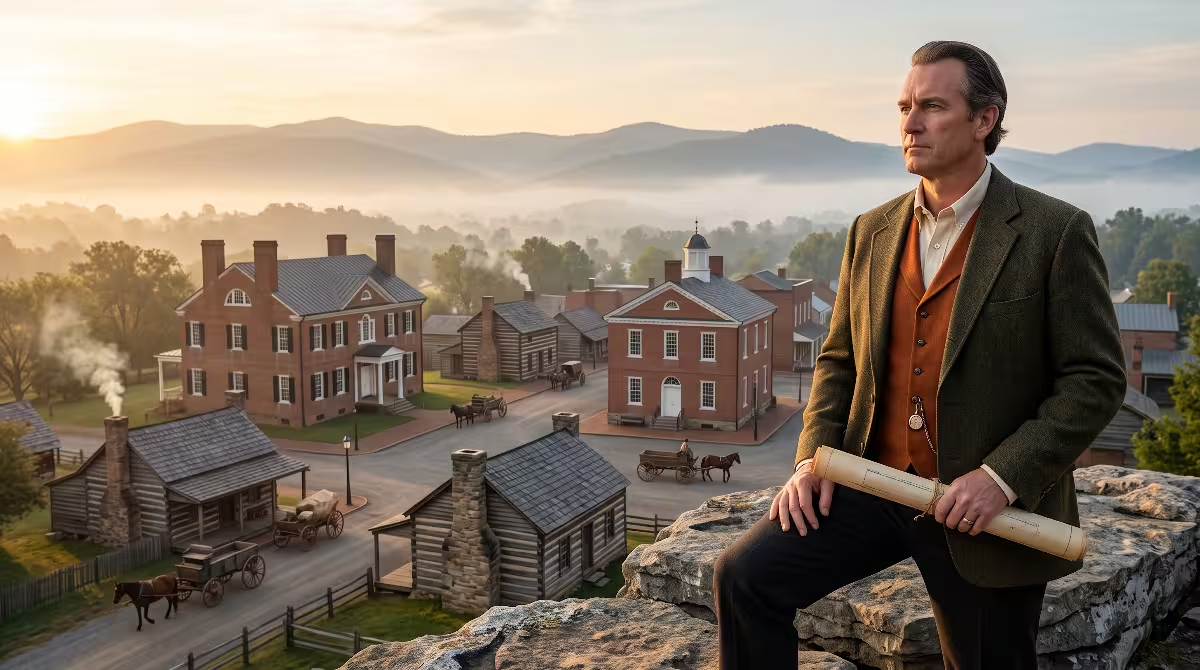


The Cradle of East Tennessee Frontier Settlement
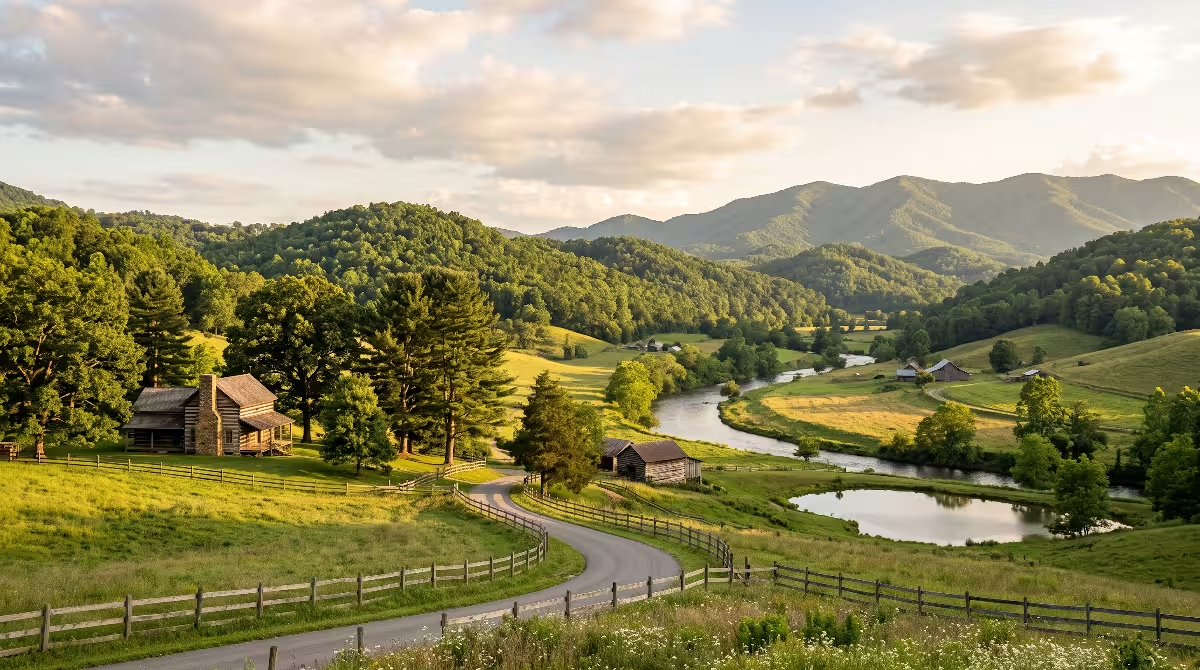
Living in the Tri-Cities region of East Tennessee gives builders a unique appreciation for how geography shapes human shelter. Long before concrete footings, engineered roof trusses, and modern building codes existed, early settlers had to read the land with extreme care. When families moved across the Appalachian Mountains in the late eighteenth century, they did not just build homes for comfort. They built for basic survival. At the center of that early frontier story stands Fort Watauga, an outpost that became the very anchor of settlement in what is now Carter County and
When you look at the topography through the eyes of a builder, you realize that the settlers who built Fort Watauga were solving complex problems with basic tools. They had to account for defensive sightlines, river access, prevailing winds, soil stability, and native lumber species. The story of Fort Watauga is a story of frontier engineering, regional grit, and deep community cooperation.
The Strategic Importance of the Sycamore Shoals
To understand
For early builders and settlers, a shallow river crossing meant a natural highway. In the eighteenth century, roads were nothing more than narrow trails beaten into the dirt by deer, elk, and Native American hunting parties. Locating Fort Watauga right near Sycamore Shoals ensured that the settlement sat directly along the main east-west corridor of travel.
A river provides three things that no human community can do without: clean drinking water, fresh fish and game, and transportation. However, building directly on a riverbank comes with severe risks. If you build too low, seasonal spring runoff from the Appalachian snowpack will flood your living spaces and rot your timber sill plates. If you build too high, your access to water is cut off during a prolonged attack. The creators of Fort Watauga selected an elevated terrace just above the active floodplain. This kept Fort Watauga high and dry while remaining close enough to the water to keep the community alive during times of peace and times of conflict.
The Establishment of the Watauga Association
Long before Tennessee became the sixteenth state of the Union in 1796, this region was a legal and political wilderness. Following the British Royal Proclamation of 1763, the British Crown banned colonial settlement west of the crest of the Appalachian Mountains. The Crown wanted to avoid expensive frontier wars with Native American nations, but independent-minded pioneers crossed the mountains anyway.
By the early 1770s, scattered farmsteads dotted the fertile bottomlands along the Watauga, Nolichucky, and Holston Rivers. These families quickly realized they were living outside the protection and jurisdiction of the colonial governments of Virginia and North Carolina. Without courts, sheriffs, or property deeds, they needed a formal framework to resolve boundary disputes, record land transactions, and establish a common defense.
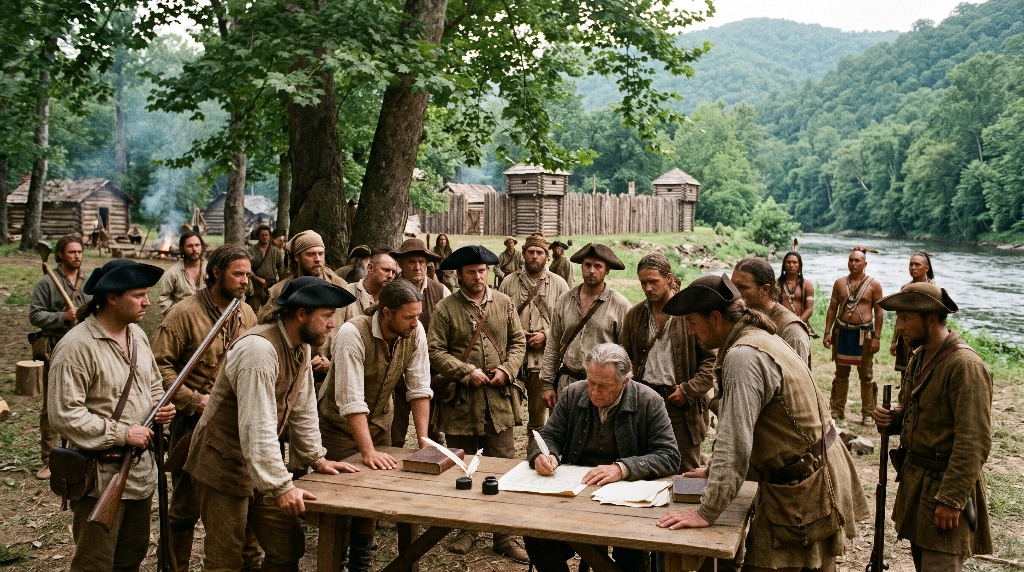
In 1772, these settlers gathered near the site of Fort Watauga and created the Watauga Association. They drafted a written compact that is widely recognized as one of the very first free, independent, democratic governments formed by American-born settlers on the continent. Under this agreement, the community elected magistrates and established a court system.
When you build a custom home today, your investment relies on clear title deeds, precise boundary surveys, and reliable civil law. The settlers who formed the Watauga Association understood that same principle. They wanted stability for their homes and farms. When British imperial tensions grew, the physical headquarters and sanctuary for the Watauga Association became Fort Watauga. The fort served as the civil courthouse, the central armory, and the emergency storm shelter for every family in the Watauga valley.
Why Fort Watauga Was Built on the Frontier
Building a large wooden defensive compound on the raw frontier required an enormous investment of physical labor. Settlers did not cut down massive hardwoods and dig deep trenches simply for recreation. They built Fort Watauga because the risk of total destruction was real and immediate.
By 1775, tensions between the British Crown and American colonists were boiling over into open warfare. At the same time, regional land treaties were causing deep anger among Native American tribes. When the Transylvania Purchase took place at Sycamore Shoals in March 1775, millions of acres of Cherokee hunting grounds were signed away to land speculators in exchange for wagonloads of trade goods.
Many Cherokee leaders, particularly the younger warriors, strongly objected to the sale of their ancestral lands. As British agents began supplying gunpowder, lead, and firearms to tribal allies, frontier leaders recognized that the scattered homesteads across East Tennessee were completely vulnerable. An isolated cabin could be burned in minutes. Families needed a fortified citadel where they could retreat at a moment’s notice.
The construction of Fort Watauga began in late 1775 and continued into early 1776. The settlers built it as a communal fortress capable of sheltering hundreds of men, women, children, and livestock. Fort Watauga was not built by professional military engineers with government funding. It was raised by local farmers, carpenters, and hunters who used their own broadaxes, felling axes, crosscut saws, and draft animals to construct a formidable defensive base.
Frontier Engineering: The Architectural and Defense Anatomy of Fort Watauga
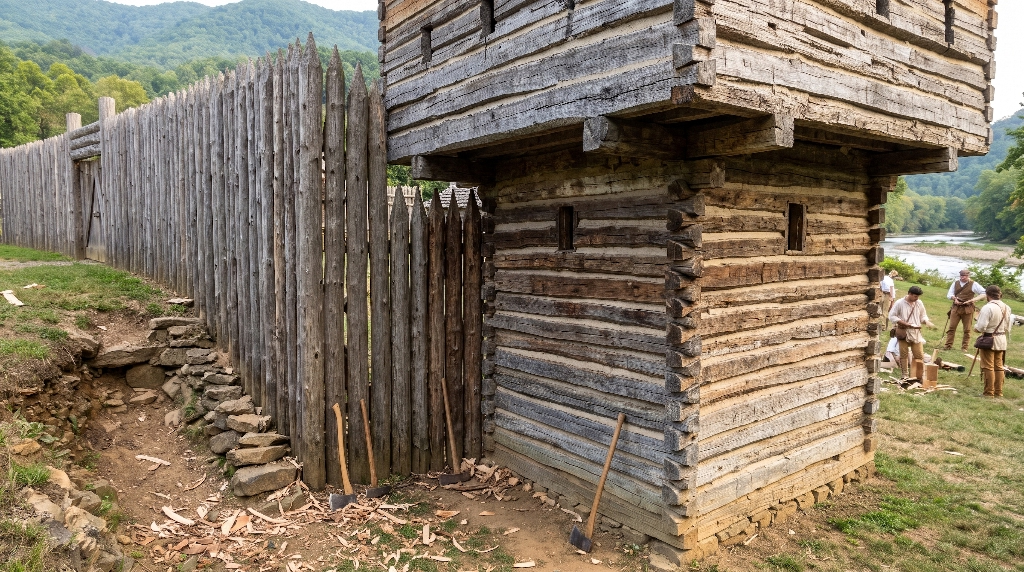
When analyzing Fort Watauga from an architectural and structural perspective, one must admire the ingenuity of eighteenth-century builders. Without power equipment, concrete, structural steel, or metal brackets, they built a timber fortress that successfully repelled coordinated military assaults.
Frontier fortification design combined European military principles with vernacular American log construction. The settlers who constructed Fort Watauga had to select materials that were available on-site, shape them quickly with hand tools, and assemble them into a cohesive structural envelope capable of stopping musket balls and resisting fire.
Siting and Topography Along the Riverbank
Every good builder knows that site selection determines the ultimate success or failure of any structure. When the Watauga settlers laid out Fort Watauga, they evaluated the local topography with defensive strategy at the forefront of their minds.
The ground chosen for Fort Watauga sat on an elevated bench overlooking the Watauga River. This location provided several vital site advantages:
First, elevation provided early visual warning. The sentries stationed on the catwalks and upper levels of Fort Watauga could look out across the open river shoals and the surrounding clearings. Because trees were cleared back hundreds of yards to eliminate natural cover for attackers, anyone approaching Fort Watauga had to cross open ground under direct rifle fire.
Second, the natural slope of the hill assisted with site drainage. Standing water will quickly turn an enclosed fort yard into an unlivable swamp of mud and animal waste. The natural slope allowed rainwater to run off toward the lower river floodplain, keeping the interior courtyard of Fort Watauga relatively dry and structurally stable.
Third, proximity to the river kept Fort Watauga viable during extended operations. While the fort walls did not run directly into the water, the short distance to the riverbanks meant that water details could make rapid dashes to the river under protective fire from the blockhouses, or draw from local springs located near the fort base.
Palisade Construction and Native Timber Systems
The perimeter wall of Fort Watauga was a heavy wooden palisade, also known as a stockade. Building a palisade wall required immense physical exertion and careful material selection.
To build the outer curtain wall of Fort Watauga, the builders used native hardwood species. In East Tennessee, the valleys were filled with virgin stands of white oak, chestnut, black locust, and tulip poplar. White oak and black locust were chosen for ground-contact structural members because their natural chemical tannins make them highly resistant to rot, insect infestation, and moisture decay.
The palisade wall was built using the following step-by-step construction methodology:
- Trench Excavation: The settlers dug a continuous trench around the perimeter, roughly three to four feet deep. In the rocky, clay-heavy soil of Carter County, digging this trench with iron hand spades and mattocks was brutal labor.
- Log Preparation: Mature trees measuring twelve to sixteen inches in diameter were felled, stripped of limbs, and cut into lengths of roughly fifteen to eighteen feet. The builders used broadaxes to hew two flat sides on each log so they would fit tightly together without leaving wide gaps. The top ends of the logs were sharpened into sharp points to deter attackers from climbing over.
- Log Placement: The heavy logs were tipped upright into the trench, side by side, creating a solid wooden barrier standing ten to twelve feet above the finished ground level.
- Backfilling and Tamping: The soil removed from the trench was shoveled back around the log bases and packed down firmly with heavy wooden tamps. Sometimes large fieldstones were wedged into the trench base to lock the posts into plumb alignment.
- Horizontal Stringers: On the interior side of the palisade, heavy horizontal timbers were pinned to the upright logs with wooden pegs, known as trunnels, to prevent individual logs from being pushed outward or pulled loose.
A palisade wall constructed in this manner was a true composite defense. A lead musket ball fired from a flintlock rifle could not penetrate twelve inches of solid green white oak. The mass of the timber dissipated the kinetic energy of the bullet instantly, keeping the defenders inside Fort Watauga safe from exterior fire.
Corner Blockhouses and Bastion Engineering
A flat, straight wall is inherently flawed in military engineering because it creates dead zones. If an attacker reaches the base of a straight palisade wall, the defenders standing directly above cannot lean over to shoot without exposing their heads and chests to enemy fire.
To eliminate these blind spots, the builders of Fort Watauga incorporated two-story corner blockhouses, or bastions, into the perimeter layout. These blockhouses were placed at strategic corners of the rectangular stockade.
The engineering of these blockhouses was brilliant in its simplicity:
- Cantilevered Second Floor: The second story of each blockhouse extended out past the lower floor by roughly eighteen to twenty-four inches on all exterior sides. This architectural feature, known as an overhang or machicolation, allowed defenders to fire straight down through slatted floor openings directly at anyone attempting to undermine or ignite the lower logs of Fort Watauga.
- Overlapping Fields of Fire: The blockhouses projected outward beyond the curtain wall. This allowed riflemen stationed in the blockhouses to fire down the length of the palisade wall. If an enemy soldier attempted to scale the wooden wall of Fort Watauga, he was caught in crossfire from the flanking blockhouse ports.
- Narrow Gun Loops: The upper walls of the blockhouses were pierced with narrow, beveled loopholes. These rifle ports were cut narrow on the outside to present a tiny target for enemy marksmen, but beveled wide on the inside to give the frontier marksman a broad lateral aiming angle.
The blockhouses were built using traditional notched-log construction. Heavy square-hewn logs were fitted together at the corners with half-dovetail or V-notches. These precise interlocking joints allowed the weight of the upper logs to pull the building tight, creating an exceptionally strong, self-bracing structural corner that could absorb heavy mechanical shocks.
Interior Living Quarters and Storage Systems
Inside the protective curtain walls of Fort Watauga, the layout functioned like a small, highly compressed village. The interior space had to accommodate daily human living alongside emergency defensive operations.
Cabins were frequently built directly into the perimeter wall structure. In this layout, the exterior wall of the cabin formed part of the outer palisade, while the roof sloped downward toward the interior courtyard. This design saved timber, reduced the amount of freestanding palisade needed, and provided an instant fighting platform. The roofs of these cabins were often reinforced with heavy poles and dirt layers to prevent fires started by burning arrows.
In the center of Fort Watauga lay the open courtyard or parade ground. This open area served multiple purposes:
- It provided a muster area where the local militia could assemble and drill.
- It served as an emergency pen for essential livestock, such as milk cows and horses, which were critical for the long-term survival of the families inside Fort Watauga.
- It acted as a buffer space, preventing fires on the perimeter from jumping across the entire compound.
Storage buildings inside Fort Watauga were constructed off the ground on dry-laid stone piers to protect grain, smoked meat, dried corn, and gunpowder from ground dampness and rodents. Gunpowder storage was an issue of life and death. The powder had to be kept dry at all costs, away from cooking fires and potential sparks. The community maintained a secure magazine building specifically to safeguard their precious reserves of lead and black powder.
Key Figures and Historical Catalysts: The 1776 Cherokee Siege
While the physical structure of Fort Watauga was a marvel of frontier carpentry, a building is only as good as the people who occupy and defend it. In the summer of 1776, Fort Watauga was tested in a baptism of fire that defined the early history of the American frontier.
During the opening months of the American Revolutionary War, the British military adopted a strategy of opening a western front. British agents encouraged Native American tribes to attack isolated settlements along the western frontier, hoping to tie down continental militia forces and prevent them from reinforcing the colonial armies fighting along the Atlantic seaboard.
Fort Watauga became the primary target of this western offensive in upper East Tennessee.
Escalation and Frontier Conflict in 1776
The year 1776 was a watershed moment across the American continent. While leaders in Philadelphia were drafting the Declaration of Independence, settlers along the Watauga River were preparing for a struggle over their physical survival.
The Cherokee nation was deeply divided over how to respond to colonial encroachment. Older chiefs, including Attakullakulla, favored diplomatic negotiations and honoring the land sales that had taken place. However, the younger faction of warriors was led by the fierce and charismatic chief Dragging Canoe.
Dragging Canoe saw clearly that the continuous arrival of white settlers would eventually destroy the Cherokee way of life. He announced his intention to resist the expansion with total force. Forming an alliance with British military agents, Dragging Canoe and other chiefs planned a coordinated, three-pronged strike against the frontier settlements in the summer of 1776.
One war party, led by Dragging Canoe, marched toward the Eaton’s Station and Long Island settlements near modern Kingsport. Another party aimed for the settlements in Southwest Virginia. The third force, numbering approximately two to three hundred warriors and led by Old Abraham of Chilhowee, marched directly up the Nolichucky and Watauga River valleys. Their clear objective was to destroy Fort Watauga and drive every white settler back across the Blue Ridge Mountains.
The Warning from Nancy Ward
The families sheltering in the Watauga valley might have been completely surprised and wiped out were it not for the courageous intervention of a remarkable woman named Nancy Ward, or Nanyehi.
Nancy Ward was the Beloved Woman, or Ghigau, of the Cherokee nation. This elevated leadership title was given only to women who had demonstrated supreme courage. It granted her a seat in the tribal council, a voice in decision-making, and the ultimate authority over the fate of war captives. Nancy Ward was a cousin of Dragging Canoe, but she believed in peace and coexistence between the Cherokee people and the white settlers.
When the war parties prepared their strike in July 1776, Nancy Ward utilized her influence to gather precise intelligence about the attack plans, troop numbers, and march routes. She secretly shared this vital intelligence with friendly frontier traders, including Isaac Thomas.
Thomas and his companions made a desperate, high-speed journey across the mountains and valleys to deliver the warning to the settlements. Thanks to Nancy Ward, the pioneers along the Watauga River had several days of advance notice. This warning allowed families to abandon their isolated farmsteads, gather their essential supplies, drive their livestock together, and retreat behind the heavy gates of Fort Watauga before Old Abraham’s war party arrived.
Frontier Defense Leadership Under Robertson, Carter, and Sevier
When the gates of Fort Watauga swung shut in mid-July 1776, roughly 150 to 200 settlers were crowded inside the wooden palisade. Of that total population, only about forty to fifty were able-bodied men capable of bearing arms. The rest were women, small children, and elderly settlers.
The leadership team inside Fort Watauga consisted of three men whose names became legendary in Tennessee history:
- James Robertson: Often called the Father of Middle Tennessee, Robertson was a cool-headed, deliberate leader with exceptional frontier survival skills. He served as the primary military commander of Fort Watauga during the crisis.
- Colonel John Carter: An older, highly respected statesman and business leader, Carter was the chairman of the Watauga Association court. His administrative abilities kept order, rationed food supplies, and maintained civil stability within the overcrowded fort.
- John Sevier: Young, daring, and intensely charismatic, Sevier was an officer of the local militia. He possessed a keen natural instinct for field tactics and timber engineering. Sevier served as Robertson’s chief lieutenant during the defense of Fort Watauga, helping direct fire, coordinate sentry rotations, and inspire the nervous families.
These three men understood that if Fort Watauga fell, there were no nearby reinforcements to save them. The closest substantial military help was located across rough mountain trails in Virginia and North Carolina. The defenders of Fort Watauga had to rely entirely on their own courage, their flintlocks, and the structural integrity of their wooden walls.
The Siege Mechanics and the Defense of Fort Watauga
On the morning of July 21, 1776, the Cherokee war party under Old Abraham reached the clearings surrounding Fort Watauga.
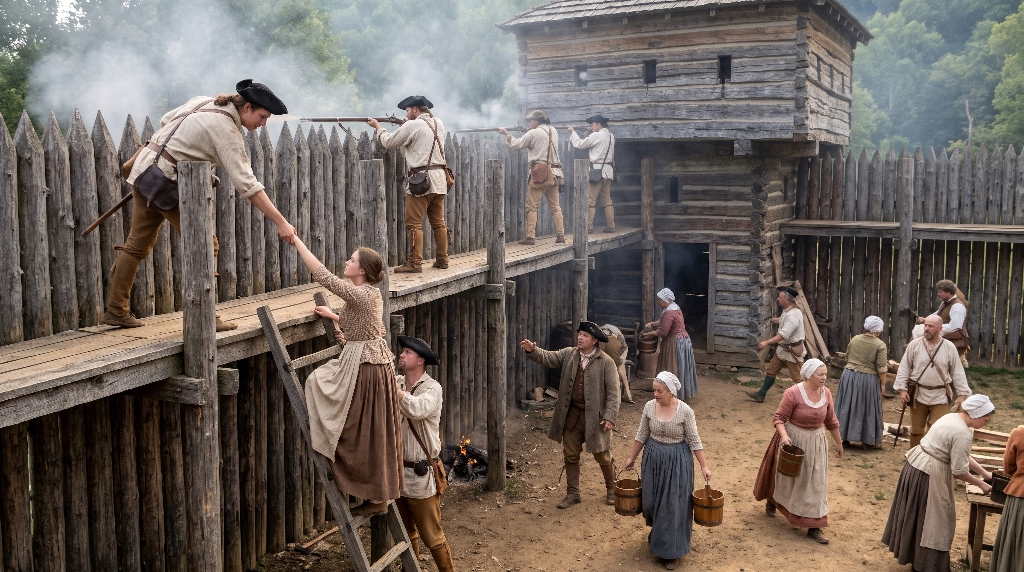
The assault began at dawn. Several women had walked out of the fort gates to milk the cows that were grazing near the timberline. Suddenly, war cries broke out from the surrounding woods. The women ran desperately for the fort gates while the sentries on the blockhouses opened rapid fire to drive back the pursuing warriors. All the women made it safely inside, though one famous rescue occurred during the chaos.
Recognizing that a frontal charge against twelve-foot hardwood walls and sweeping blockhouse fire was suicidal, Old Abraham altered his tactics. The attackers surrounded Fort Watauga and settled into a formal siege.
A siege was unusual in frontier warfare. Native American warriors generally preferred quick ambushes, rapid raids, and lightning retreats rather than static sieges. However, Old Abraham knew that Fort Watauga was packed with people and had very limited water and food reserves. He believed he could starve the defenders out or force them into a desperate, ill-advised breakout into the open field.
For approximately two weeks, Fort Watauga remained under continuous investment:
- Sniper Fire: Marksmen on both sides traded shots whenever a silhouette or limb appeared. The thick oak logs of Fort Watauga absorbed incoming rifle rounds without failing.
- Fire Attempts: Attackers attempted to crawl close to the stockade under cover of darkness to throw burning bundles of dry pitch pine against the bottom logs. The defenders extinguished these flames using stored water, wash water, and dirt thrown from the overhangs of the blockhouses.
- Rationing: Inside Fort Watauga, supplies dwindled rapidly. Water had to be rationed by the thimbleful. The summer heat inside the crowded log compound was suffocating, and the stench from confined livestock created severe sanitation hazards.
Despite the misery, the leadership of Robertson, Carter, and Sevier kept morale firm. The defenders knew that opening the gates meant certain death. They maintained strict fire discipline, conserving their gunpowder and firing only when they had clear, high-probability targets.
After roughly fourteen days, Old Abraham realized that the siege was failing. His warriors were running out of provisions, and news arrived that Virginia militia regiments were mobilizing to march south. The Cherokee force broke camp, burned several abandoned outlying cabins, killed stray farm animals, and withdrew back to their home towns along the Little Tennessee River. Fort Watauga had held its ground against all odds.
The Rescue of Catherine Sherrill
No historical account of the siege of Fort Watauga is complete without relating the legendary romance between John Sevier and Catherine Sherrill, affectionately known as Bonny Kate.
On that first morning of the attack, Catherine Sherrill was among the women who were outside the palisade milking cows. When the Cherokee warriors burst from the tree line, Catherine was cut off from the main gate. While the other women scrambled through the opening as the heavy oak doors swung shut, Catherine ran at full speed toward the rear stockade wall of Fort Watauga.
Finding the rear gate barred, the athletic young woman leaped upward, caught the top of the sharpened palisade logs with her fingers, and attempted to pull herself over the wall. The Cherokee attackers were sprinting toward her, firing shots into the timbers around her.
John Sevier, stationed on the catwalk inside Fort Watauga, saw her struggling at the top of the logs. Leaning far over the wall despite the incoming fire, Sevier reached down with his powerful arms, caught Catherine by the wrists, and hoisted her safely up and over the palisade into the interior courtyard.
Four years later, following the death of his first wife, John Sevier married Catherine Sherrill. Bonny Kate went on to become the inaugural First Lady of Tennessee when Sevier was elected as the state’s very first governor. Their meeting at the wooden wall of Fort Watauga remains one of the most famous and beloved stories in Appalachian folklore.
Fort Watauga and Its Revolutionary War Legacy
The successful defense of Fort Watauga in the summer of 1776 was far more than a local triumph. It had profound strategic consequences for the entire American Revolutionary War and fundamentally shaped the westward expansion of the United States.
Had Fort Watauga fallen in 1776, the entire frontier settlement in East Tennessee would have been erased. The loss of these settlements would have rolled the western border of the United States back to the eastern slopes of the Blue Ridge Mountains, leaving the interior wilderness completely under British control. By standing firm, the garrison at Fort Watauga preserved the western springboard that allowed American settlers to maintain their hold across the mountains.
The Staging Ground for the Overmountain Men in 1780
Four years after the great siege, the grounds around Fort Watauga and Sycamore Shoals again served as the epicenter of a pivotal Revolutionary War event.
By 1780, the British southern campaign was tearing through South Carolina and Georgia. British Major Patrick Ferguson commanded a loyalist army that was terrorizing the Carolina backcountry. Ferguson sent an arrogant ultimatum across the mountains to the independent settlers of the Watauga, Holston, and Nolichucky valleys. He warned them that if they did not lay down their arms and pledge allegiance to the British Crown, he would march his army over the mountains, hang their leaders, and lay waste to their settlements with fire and sword.
The fierce frontier settlers, accustomed to self-reliance and hardship, did not cower. Instead of waiting to be attacked, they decided to strike first.
On September 25, 1780, over one thousand frontier militia fighters gathered on the broad meadows surrounding Fort Watauga at Sycamore Shoals. These men came from Southwest Virginia, Carter County, Sullivan County, and Washington County. Because they crossed the high Appalachian mountain ranges to fight, history remembers them as the Overmountain Men.
At Fort Watauga, Reverend Samuel Doak delivered a thundering sermon to the assembled fighters, invoking the biblical battle cry: “The sword of the Lord and of Gideon!” The men saddled their horses, checked their hand-forged Deckard rifles, packed parched corn and maple sugar into their hunting pouches, and prepared to ride into battle.
Marching to the Battle of Kings Mountain
The Overmountain Men rode out from Fort Watauga and marched over the high, snow-dusted passes of the Roan Mountain range in late September. They tracked Ferguson’s loyalist force across the rolling western foothills of the Carolinas.
On October 7, 1780, the Overmountain Men surrounded Major Ferguson and his loyalist troops on the rocky, wooded crest of Kings Mountain, South Carolina. Utilizing the same woodland skirmishing tactics and accurate rifle fire they had perfected while defending posts like Fort Watauga, the backwoodsmen completely encircled the mountain.
In a battle that lasted just over an hour, the frontier riflemen destroyed Ferguson’s command. Ferguson was killed, his entire force was either killed or captured, and the British western flank was permanently shattered.
Thomas Jefferson later described the victory at Kings Mountain as the joyful turn of the tide of the American Revolution. It forced British General Lord Cornwallis to abandon his offensive into North Carolina and set in motion the chain of military movements that led directly to the British surrender at Yorktown in 1781. The entire Kings Mountain campaign had its origin and assembly point on the riverbanks directly beside Fort Watauga.
Shaping Early Tennessee Statehood and the State of Franklin
The organizational spirit that built Fort Watauga and formed the Watauga Association continued to drive regional politics long after the Revolutionary War ended.
In the mid-1780s, the settlers of East Tennessee felt neglected by North Carolina, which held legal jurisdiction over the western lands but offered little military protection or infrastructure support. Drawing on the precedent of independence set at Fort Watauga, local leaders met in Jonesborough and Greeneville to establish the State of Franklin in 1784.
John Sevier, the hero of the defense of Fort Watauga, was elected governor of this new, independent frontier state. While the State of Franklin ultimately collapsed after four years due to internal political friction and opposition from the federal government, it proved that the people of East Tennessee were determined to govern themselves.
When the Southwest Territory was formally organized and later admitted to the Union as the State of Tennessee on June 1, 1796, the leaders who took the helm were the exact same individuals who had honed their leadership skills within the timber walls of Fort Watauga. The fort served as the practical school of self-governance and defense that birthed the volunteer spirit of Tennessee.
Visitor and Living History Guide: Touring Sycamore Shoals Today
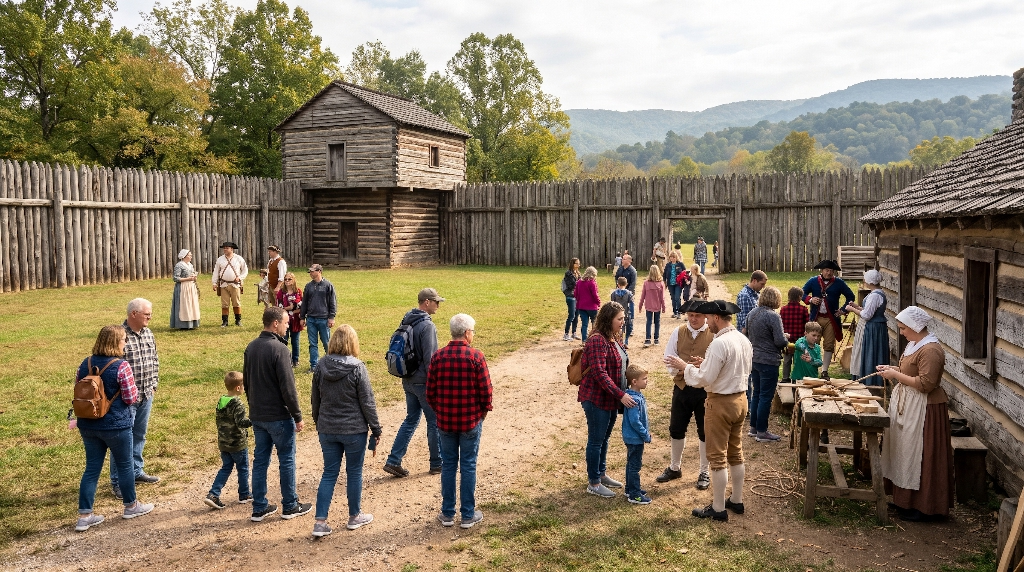
Today, modern travelers do not have to imagine what life was like on the Tennessee frontier. Thanks to dedicated preservationists, state historians, and skilled craftsmen, Fort Watauga lives on as a premier historical destination in the Tri-Cities region.
Located within Sycamore Shoals State Historic Area in Elizabethton, Tennessee, the site welcomes thousands of visitors, history lovers, and school groups every year. It offers a tangible, three-dimensional look into the early heritage of the Appalachian frontier.
The 1970s Archaeological Excavation and Reconstruction
The original timber walls of Fort Watauga did not survive the elements indefinitely. Once the frontier moved further west and the threat of attack disappeared, the original log compound was abandoned. Over the decades, the wooden palisades decayed, cabins were taken down for farm firewood or barn construction, and the ground was plowed over for agricultural fields.
During the preparations for the American Bicentennial in the early 1970s, the State of Tennessee launched an extensive archaeological and historical research project to bring Fort Watauga back to life.
Archaeologists conducted systematic excavations in the area around Sycamore Shoals. While the exact original posthole pattern of the 1776 fort proved elusive due to two centuries of farming and river silt movement, researchers discovered significant artifacts:
- Hand-forged iron nails and cabin hardware
- Flintlock gun parts and lead musket balls
- Earthenware ceramic shards and cooking utensil fragments
- Charcoal layers indicating early frontier hearths
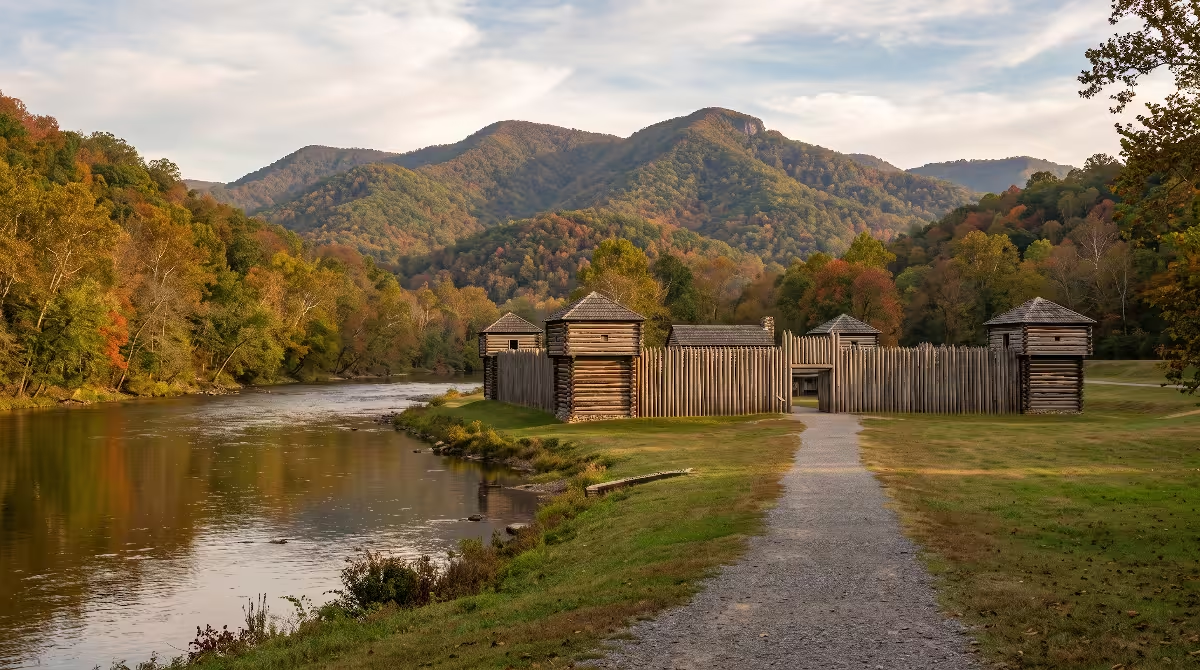
Using historical descriptions, period military manuals, and surviving examples of eighteenth-century frontier forts, master carpenters reconstructed Fort Watauga at full scale inside Sycamore Shoals State Historic Park. The builders utilized traditional timber-framing methods, hand-hewn logs, and historically accurate corner notching. Walking through the gate of Fort Watauga today gives visitors a genuine sense of the scale, smell, and visual mass of an authentic frontier fortification.
The Modern Visitor Experience and Historic Exhibits
Visiting the reconstructed Fort Watauga is a rich sensory experience that transports guests back more than two centuries.
When you enter the park grounds, your first stop should be the excellent Sycamore Shoals State Historic Park Visitor Center. The facility features a modern interpretive museum that houses:
- Displays on the native Cherokee culture and their sophisticated town systems
- Artifacts recovered from regional eighteenth-century farmsteads
- An informative documentary film that explains the formation of the Watauga Association and the gathering of the Overmountain Men
- Exhibits showcasing the clothing, weaponry, tools, and housewares used by the builders of Fort Watauga
From the visitor center, a paved, accessible walking path leads across the manicured grounds down to Fort Watauga itself. As you step through the massive timber gates, you enter the enclosed central courtyard. You can walk inside the furnished log cabins, inspect the tight dovetail corner notches, peer through the narrow gun loops of the blockhouses, and look out over the river shoals just as John Sevier and James Robertson did in 1776.
Throughout the year, the park hosts living history events where costumed reenactors portray the everyday life of the garrison at Fort Watauga. Visitors can watch blacksmiths work red-hot iron over open charcoal forges, observe frontier women demonstrate open-hearth cooking and wool spinning, and witness flintlock firing demonstrations that fill the fort yard with the distinctive smell of sulfur and black powder.
Liberty! The Saga of Sycamore Shoals
One of the highlights of the cultural calendar in East Tennessee is the annual production of Tennessee’s official outdoor drama, titled Liberty! The Saga of Sycamore Shoals.
Presented every summer on the grounds directly beside Fort Watauga, this outdoor theatrical production brings the turbulent history of the Watauga settlement to life on a large outdoor stage. The performance features:
- The dramatic signing of the Transylvania Purchase along the riverbanks
- The building of Fort Watauga and the gathering of frontier families
- A dramatic reenactment of the 1776 Cherokee siege, complete with period costumes, flashing flintlocks, and the rescue of Catherine Sherrill by John Sevier
- The muster of the Overmountain Men and their march to Kings Mountain
Attending Liberty! under the summer stars in Elizabethton is an unforgettable family experience. It provides an exciting, historically grounded education that reinforces the courage and perseverance required to settle the East Tennessee valley.
Practical Travel Details and Visiting Tips
Planning a visit to Fort Watauga is simple, whether you are a local resident of the Tri-Cities or traveling from across the country.
- Location: Sycamore Shoals State Historic Park is located at 1651 West Elk Avenue in Elizabethton, Tennessee 37643. It sits just minutes from downtown Johnson City and is easily accessible from Interstate 26 and Highway 321.
- Operating Hours: The park grounds and the exterior grounds of Fort Watauga are open daily from dawn until dusk. The Visitor Center and interpretive museum are open Monday through Saturday from 9:00 AM to 4:00 PM, and on Sundays from 1:00 PM to 4:30 PM.
- Admission Fees: Access to the park grounds, the reconstructed Fort Watauga, and the visitor center museum is completely free of charge. Donations to help support ongoing preservation efforts are gladly accepted.
- Walking and Recreation: In addition to touring Fort Watauga, visitors can enjoy the park’s two-mile walking trail that meanders alongside the scenic Watauga River. It is an excellent spot for walking dogs on leashes, birdwatching, and observing local waterfowl. The shoals themselves offer wonderful opportunities for wading and world-class fly fishing for rainbow and brown trout.
- Accessibility: The paths leading from the main visitor center to Fort Watauga are paved, level, and well-maintained, making the site accessible for wheelchairs, mobility scooters, and families with young children in strollers.
Frequently Asked Questions About Fort Watauga
To help summarize key historical details, here are straightforward answers to the questions most frequently asked by historians, travelers, and curious students about Fort Watauga.
Why Did Settlers Build Fort Watauga in East Tennessee?
Settlers built Fort Watauga primarily to protect their families from armed attacks during the opening stages of the American Revolutionary War. Following the controversial Transylvania Purchase in 1775, frontier tensions between expanding pioneer settlements and Native American tribes reached a boiling point. When the British military allied with Cherokee war factions led by Dragging Canoe, settlers along the Watauga River recognized that their isolated homesteads were defenseless. They pooled their physical labor and resources to erect Fort Watauga as a heavily fortified regional sanctuary where the entire community could shelter during times of crisis.
Why Was Fort Watauga Also Called Fort Caswell?
Historically, the official name given to the compound by its builders was Fort Caswell. The settlers named the outpost in honor of Richard Caswell, who was a prominent military commander and served as the very first constitutional governor of North Carolina. Because the Watauga settlement fell under the theoretical jurisdiction of North Carolina at that time, naming the fort after Governor Caswell was a diplomatic way to curry favor and request official military support from the state legislature. However, because the outpost sat directly on the banks of the Watauga River in the Watauga settlement, the pioneers and local militia fighters almost universally called it Fort Watauga. Over time, that popular local name became the permanent historical identifier used today.
Is Fort Watauga an Original Structure Today?
The physical structure standing today at Sycamore Shoals State Historic Park is not the original eighteenth-century wood. Due to the damp climate of East Tennessee, untreated timber structures that are exposed to rain and soil decay naturally over decades. The original Fort Watauga was dismantled and weathered away after the frontier expanded westward and the military threat subsided. The present structure is a faithful, full-scale historical reconstruction built in the 1970s. Master builders and historians used archaeological data, eighteenth-century military architectural principles, and traditional hand-hewn logs to reconstruct Fort Watauga with authentic proportions, materials, and construction techniques.
Where Exactly Is Fort Watauga Located?
Fort Watauga is located in the northeastern corner of Tennessee, within the city limits of Elizabethton in Carter County. It is situated on the south bank of the Watauga River inside Sycamore Shoals State Historic Park. The site is a core component of the Tri-Cities metropolitan area, situated roughly ten miles east of Johnson City, twenty-five miles south of Kingsport, and twenty miles southwest of Bristol. Its location along the historic river shoals places it at the very heart of early frontier settlement in the Southern Appalachian Mountains.
Architectural Lessons from the Frontier
Looking back on Fort Watauga through the lens of modern residential construction, one cannot help but admire the timeless fundamentals displayed by those early builders.
They did not have laser levels, pressure-treated lumber, or modern engineering calculators. Yet, they designed and built a compound that fulfilled its structural requirements under the ultimate stress test of an armed military siege. They matched local wood species to their ideal structural applications, used gravity and notched joinery to create self-bracing corners, and read the contours of the land to maximize drainage, sightlines, and natural resources.
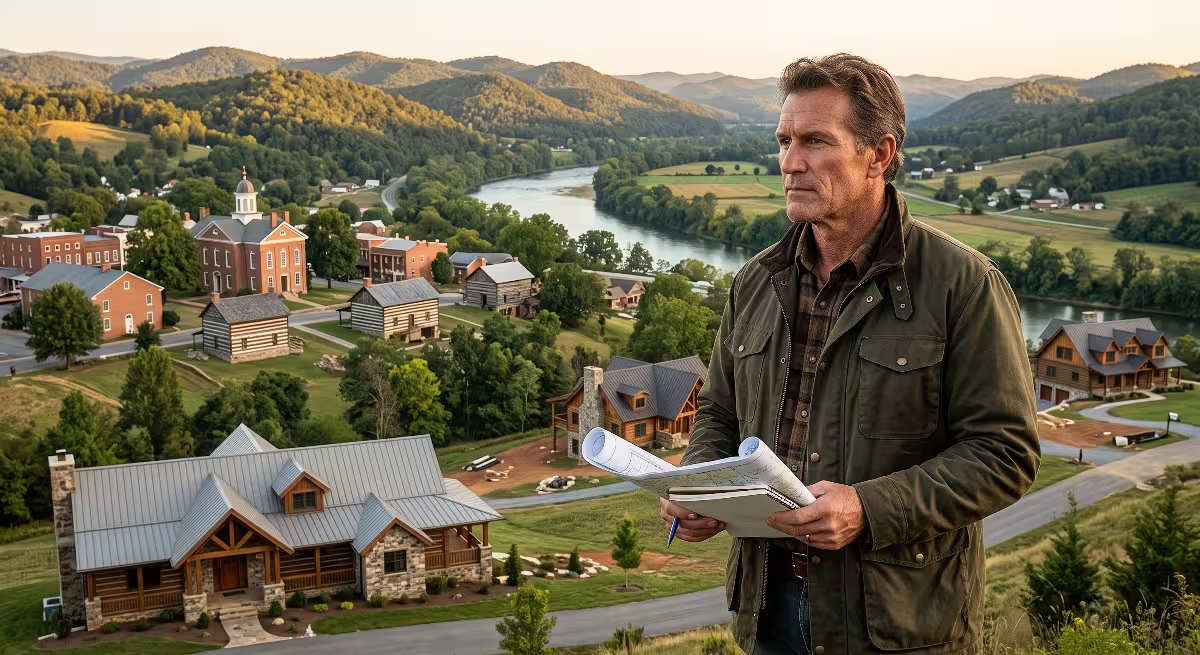
When you build a custom home in the Tri-Cities today, you are participating in a long, proud lineage of craftsmanship that stretches back to the log walls of Fort Watauga. The early pioneers understood that a home is more than wood, stone, and iron. A home is a foundation of safety, an investment in family, and a lasting physical statement of independence. Visiting Fort Watauga reminds us of the grit, intelligence, and community cooperation that made modern East Tennessee possible.