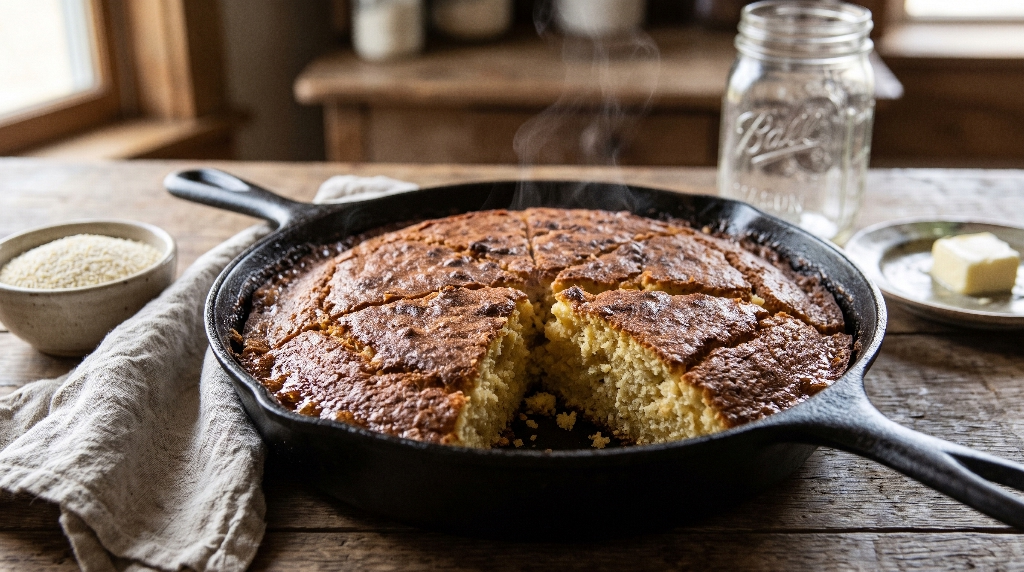


Walk into almost any home kitchen across Johnson City, Kingsport, or Bristol on a chilly autumn afternoon, and you will smell something unmistakable drifting off the stove. That rich, smoky aroma belongs to a pot of simmering beans paired with golden cornbread baking in hot iron. Learning an authentic Appalachian soup beans and cast iron cornbread recipe connects you directly to generations of cooks who turned simple pantry staples into a deeply satisfying supper.
In the Holston River Valley and the surrounding Blue Ridge Mountains, this meal is much more than a quick weeknight dinner. Shaped by Scots-Irish settlers and Affrilachian cooks who worked the farms, timber camps, and rail lines of East Tennessee, Appalachian soup beans represent smart, resourceful cooking. Early mountain families relied on dried beans stored in cool root cellars and cured pork hanging in smokehouses to feed hungry households through long winters.
If you trained in classic French kitchens, you might expect a bean soup to start with a clear vegetable stock, wine, and pureed aromatics. Appalachian soup beans follow a completely different rulebook. They are not a soup in the French stock tradition at all. Instead, they are dried pinto beans simmered low and slow with cured pork until their natural starches break down into a glossy, savory gravy known across the mountains as pot liquor. Serve a deep bowl of those tender beans beside a wedge of crackling, sugar-free cornbread baked in screaming-hot bacon drippings, and you have one of the greatest comfort meals in American food history.
The Anatomy of True Appalachian Soup Beans and Skillet Cornbread
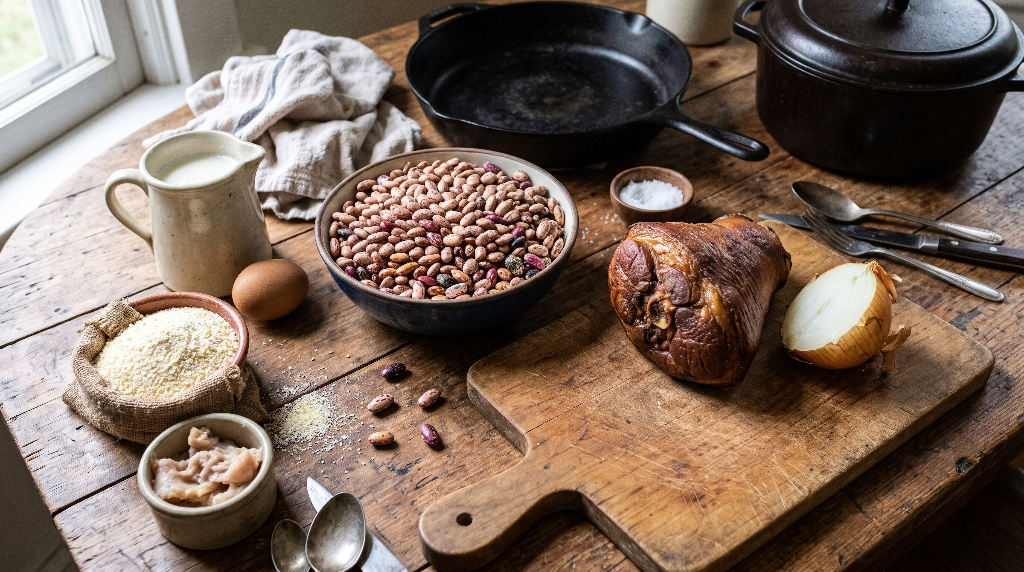
Great cooking rarely depends on complicated tricks. Humble dishes demand the most respect for basic ingredients and kitchen science. When a recipe uses fewer than ten ingredients, every single item carries real weight. Understanding how dried beans, cured pork, and stone-ground cornmeal behave under heat will transform your pot of Appalachian soup beans from ordinary to unforgettable.
Selecting the Beans: Pinto vs. Appalachian Heirlooms
Across the Tri-Cities region of East Tennessee, dried pinto beans are the undisputed king of the bean pot. Their thin skins soften evenly, and their creamy interiors release plenty of starch to thicken the cooking liquid. When shopping for pinto beans, skip dusty bags sitting at the back of a bottom grocery shelf. Dried beans continue to lose moisture as they age. Beans that are two or three years old become stubbornly dry, meaning they take hours longer to cook and often split open before the centers turn creamy. Look for plump beans with bright, clear speckles and smooth, unbroken skins.
While pinto beans are the everyday standard for Appalachian soup beans, mountain gardeners also treasure regional heirloom varieties. October beans, named because they are harvested in mid-autumn, look similar to cranberry beans with pink and red streaks across their pods. When cooked, October beans turn a soft brown and produce an extra-rich, chestnut-like broth. Greasy beans and cut-short beans, which have shiny pods and tightly packed seeds, are also prized across Southern Appalachia. Whether you choose fresh-crop pinto beans or local October beans, buying from a store with high turnover ensures your pot of Appalachian soup beans turns out silky rather than gritty.
Cured Pork and Gelatin Extraction
You cannot make traditional Appalachian soup beans without good cured pork. Mountain cooks typically reach for one of three cuts: a smoked ham hock, a piece of pork jowl, or a thick slab of salted fatback. Each cut brings something slightly different to the pot. A smoked ham hock comes from the lower leg of the pig and is packed with tough tendons, skin, and connective tissue. Pork jowl offers rich fat and deep smoky flavor, while salted fatback delivers pure pork richness without heavy smoke.
The magic happens slowly inside the pot through basic food science. Those tough tendons and skin on a smoked ham hock are loaded with a protein called collagen. When you hold your Appalachian soup beans at a gentle simmer for several hours, water and steady heat slowly melt that tough collagen into liquid gelatin. Gelatin gives the pot liquor body, sheen, and a velvety mouthfeel that coats your spoon. If you boil the pot aggressively, two bad things happen: the rapid bubbles bash the beans against each other until their skins shred, and the fat churns into a cloudy, greasy film instead of blending smoothly with the gelatin.
Why Authentic Southern Cornbread Uses Zero Sugar
Few kitchen topics spark stronger opinions in East Tennessee than sugar in cornbread. If you grew up eating northern-style cornbread from a blue cardboard box, you might expect a sweet, fluffy square that tastes almost like yellow birthday cake. Authentic Appalachian and Southern cornbread contains zero sugar. Leaving out sugar is not about cutting calories; it is about flavor, texture, and heat science.
Real mountain cornbread relies on coarse stone-ground white cornmeal, cultured buttermilk, a fresh egg, baking soda, and hot bacon drippings. Because stone-ground cornmeal is crushed slowly between heavy millstones, it keeps the nutritious germ of the corn kernel intact, giving the meal a sweet, nutty aroma all on its own. Adding white sugar hides that toasted corn flavor. Even more importantly, sugar attracts moisture and weakens the crumb, causing sweet cornbread to turn mushy the second it touches hot pot liquor.
Finally, authentic skillet cornbread bakes in a 450-degree oven. At that high temperature, sugar on the outside of the batter scorches and turns bitter before the inside of the bread finishes cooking. Unsweetened cornbread bakes up crisp, sturdy, and savory, making it the ideal partner for rich Appalachian soup beans.
Full Recipe: Authentic Appalachian Soup Beans and Cast Iron Cornbread
This recipe feeds six hungry people with plenty of pot liquor for soaking up cornbread. Plan ahead so your beans have plenty of time to simmer gently without rushing the heat.
- Prep Time: 20 minutes
- Cook Time: 3 hours
- Total Time: 3 hours 20 minutes
- Yield: 6 generous servings
Ingredients for the Soup Beans
- 1 pound dried pinto beans (fresh crop, sorted and rinsed)
- 1 large smoked pork ham hock (about 12 to 16 ounces) or 6 ounces salted fatback
- 7 cups cold filtered water (plus extra warm water if needed during cooking)
- 1 medium yellow onion, peeled and halved
- 1/2 teaspoon freshly cracked black pepper
- 1 to 1 1/2 teaspoons kosher salt (added near the end of cooking)
- 1 teaspoon apple cider vinegar (added right before serving)
Ingredients for the Cast Iron Cornbread
- 3 tablespoons rendered bacon drippings or pork lard, divided
- 2 cups coarse stone-ground white cornmeal (not self-rising)
- 1 teaspoon kosher salt
- 1 teaspoon baking powder
- 1/2 teaspoon baking soda
- 1 large egg, room temperature
- 1 1/2 cups whole cultured buttermilk, room temperature
Cooking Instructions
- Sort and rinse the beans: Spread the dried pinto beans across a clean baking sheet. Pick out any small pebbles, clumps of dirt, or shriveled beans. Pour the good beans into a colander and rinse them under cold running water for 1 minute.
- Start the bean pot: Place the rinsed beans, smoked ham hock, halved yellow onion, and black pepper into a heavy 5-quart enameled cast iron Dutch oven. Pour in 7 cups of cold filtered water so the beans are covered by at least 2 inches.
- Bring to a gentle simmer: Set the Dutch oven over medium-high heat until the water just begins to bubble around the edges. Immediately turn the burner down to low, cover the pot with a tight lid, and maintain a very gentle simmer for 2.5 to 3 hours. Check the pot every 45 minutes and add a splash of warm water if the liquid drops below the top of the beans.
- Thicken the pot liquor: Once the beans are completely tender when pressed between your fingers, remove the ham hock and set it on a cutting board to cool slightly. Use the back of a wooden spoon to mash about 1 cup of the cooked beans directly against the inside wall of the pot. Stir those mashed beans back into the broth so the natural starch thickens the liquid.
- Shred the pork and season: Pull the tender meat off the ham hock, discard the bone and tough skin, and stir the shredded pork back into the pot. Add 1 teaspoon of kosher salt and simmer uncovered for 15 more minutes. Taste and adjust salt if needed, then stir in 1 teaspoon of apple cider vinegar right before serving.
- Preheat the cast iron skillet: About 30 minutes before the beans finish cooking, place a seasoned 10-inch cast iron skillet inside your oven and preheat the oven to 450 degrees Fahrenheit.
- Mix the cornbread batter: While the skillet heats, whisk together the stone-ground white cornmeal, kosher salt, baking powder, and baking soda in a medium mixing bowl. In a separate bowl or measuring cup, beat the egg into the room-temperature buttermilk. Pour the wet ingredients into the dry ingredients and stir just until no dry pockets remain.
- Sizzle the fat and bake: Carefully remove the screaming-hot skillet from the oven using thick oven mitts. Drop 2 tablespoons of bacon drippings into the pan and swirl quickly to coat the bottom and sides. Pour the remaining 1 tablespoon of melted fat from the skillet straight into the cornbread batter and stir once. Immediately pour the batter into the sizzling skillet.
- Bake until golden: Return the skillet to the 450-degree oven and bake for 20 to 25 minutes until the top is golden brown, the edges pull slightly away from the iron, and a toothpick inserted in the center comes out clean. Let the
cornbread rest in the skillet for 5 minutes before slicing into six wedges.
Step-by-Step Instructions for Velvety Beans and Shattering Crust
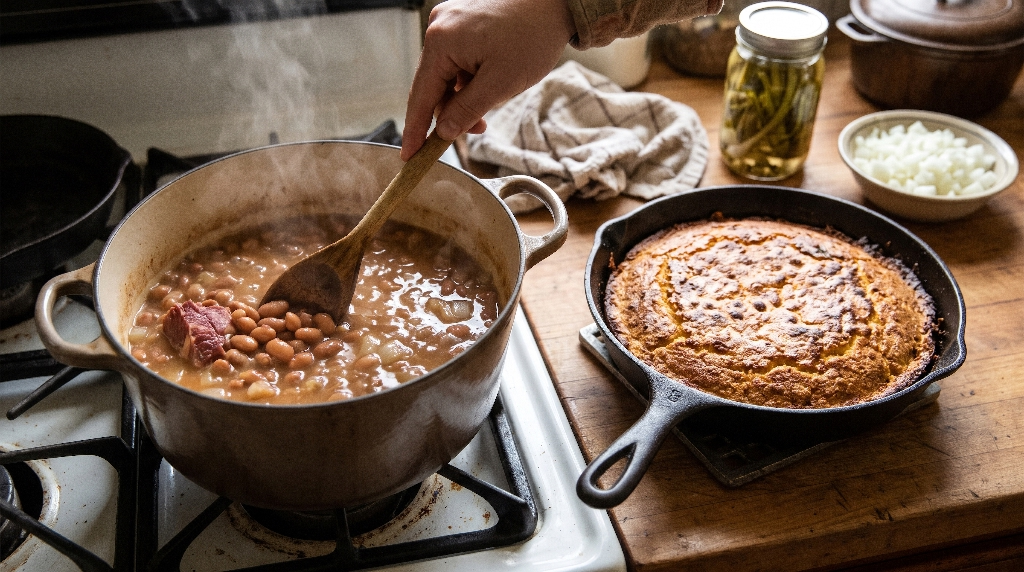
Following a list of steps gets food on the table, yet understanding what happens inside your pots and pans makes you a far better cook. When preparing Appalachian soup beans and cast iron cornbread, three small technical details separate average results from restaurant-quality mountain cooking.
Sorting, Rinsing, and Water Chemistry
Every experienced cook in East Tennessee knows never to skip sorting dried beans. Modern harvesting machines do a good job, but small stones, twigs, and broken hulls still sneak into bags of pinto beans. Spreading the beans out on a light-colored rimmed sheet pan takes less than two minutes and saves someone at your dinner table from biting down on a pebble.
Once your beans are sorted and rinsed, you face the classic question: should you soak them overnight or cook them straight from dry? For authentic Appalachian soup beans, cooking without soaking delivers superior flavor and thicker pot liquor. Soaking beans in water and pouring that soaking water down the drain washes away water-soluble sugars and flavor compounds from the bean skins. Unsoaked beans take about 45 to 60 minutes longer to cook, but they hold their shape better and reward your patience with deeper, earthier flavor.
Water quality also plays a huge role in how soft your Appalachian soup beans become. Tap water in many areas contains high levels of dissolved calcium and magnesium, which we call hard water. During cooking, those calcium ions bind to natural pectin molecules inside the bean skins, acting like microscopic glue that keeps the beans hard even after four hours on the stove. If you live in an area with hard tap water, use filtered water or spring water for your bean pot. For the exact same scientific reason, never add salt at the beginning of cooking. Salt toughens bean skins early on, so always wait until the beans are tender during the last 30 minutes before salting the pot.
Controlling the Simmer for Thick Pot Liquor
Heat control is the real secret behind silky Appalachian soup beans. Many home cooks turn the stove up too high because they want dinner ready faster. However, boiling dried beans violently tears their skins apart and leaves you with mushy fragments floating in watery broth. Instead, keep your Dutch oven at a lazy, gentle bubble around 185 to 195 degrees Fahrenheit. You should see just a few small bubbles breaking the surface every second.
During the final half hour of cooking, use the traditional mountain thickening method. Scoop up a ladleful of tender beans and press them firmly against the side of the pot with a wooden spoon until they form a smooth paste. When you stir that paste back into the pot, tiny starch granules called amylose swell up in the hot liquid and bind the melted pork fat and water together. That simple trick creates the glossy, rich pot liquor that defines real Appalachian soup beans without ever touching flour or cornstarch.
Preheating the Cast Iron Skillet
If your cornbread ever sticks to the bottom of your pan or comes out pale and soggy underneath, your skillet was not hot enough when the batter went in. A heavy 10-inch cast iron skillet acts like a thermal battery, holding onto huge amounts of heat and transferring it straight into the batter. Place your dry cast iron skillet in the cold oven before you turn the dial to 450 degrees Fahrenheit so the iron heats up evenly without warping.
When you pull that hot iron out of the oven and add bacon drippings, the fat should shimmer right near its smoke point. Pouring room-temperature buttermilk batter into smoking-hot fat creates an immediate, loud sizzle. That sound tells you the exterior of the batter is frying on contact. The intense heat triggers the Maillard reaction, browning proteins and natural corn starches into a crisp, golden-brown crust that releases cleanly from the pan when you slice your first wedge.
How to Serve Soup Beans Like a Local in East Tennessee
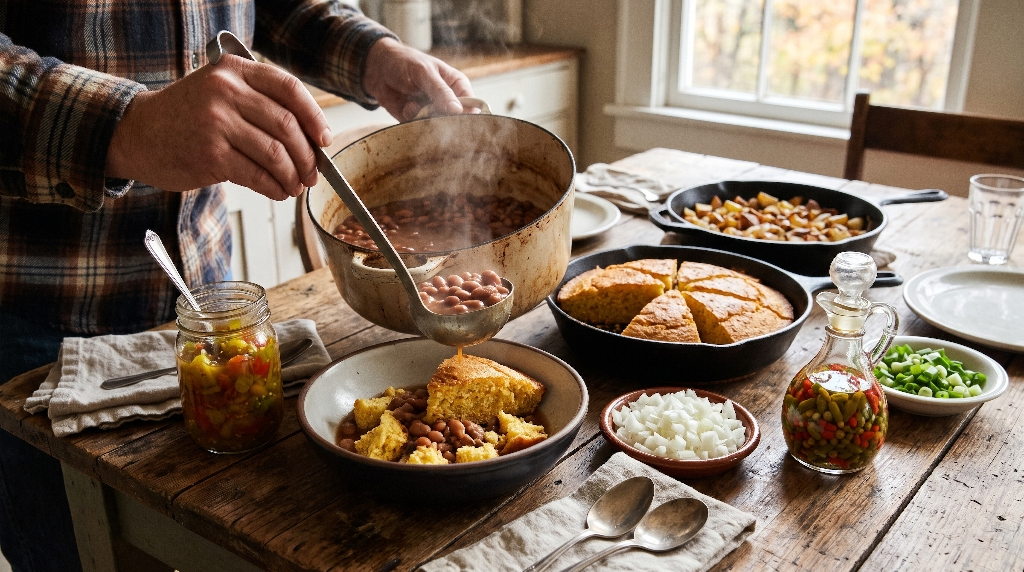
In the Tri-Cities, sitting down to a pot of Appalachian soup beans is a casual, interactive meal where everyone builds their own bowl at the table. Because the beans and pork are rich, salty, and earthy, traditional mountain tables always surround the main pot with bright, crunchy, and acidic side dishes. Those sharp flavors wake up your taste buds and keep every spoonful exciting from the first bite to the last.
Essential Mountain Garnishes
Walk around any farmers market in Johnson City or Jonesborough, and you will spot jars of green tomato chow-chow lined up on wooden tables. Chow-chow is a tangy pickled relish made from late-season green tomatoes, cabbage, onions, sweet peppers, mustard seed, turmeric, and apple cider vinegar. Spoon a heap of cold chow-chow right onto hot Appalachian soup beans, and the vinegar cuts straight through the richness of the ham hock.
Alongside chow-chow, set out a small bowl of finely diced raw sweet white onion or sliced green onions for sharp crunch. In early spring across East Tennessee, locals swap regular onions for pickled ramps, which are wild mountain leeks with a bold garlic-and-onion punch. Finally, no East Tennessee bean supper is complete without a cruet of hot pepper vinegar. Cooks make it by stuffing small, fiery garden peppers into a glass bottle and covering them with warm apple cider vinegar. A few dashes over your bowl adds clean heat and bright acidity without overpowering the smoky pork broth.
The Bowl-and-Crumble Method
If you want to eat Appalachian soup beans like someone born and raised in the Blue Ridge Mountains, skip putting your cornbread on a separate bread plate. Instead, break a warm, crusty wedge of cast iron cornbread right into the bottom of a deep stoneware bowl. Ladle steaming hot beans and plenty of savory pot liquor directly over the broken cornbread.
As the thick broth soaks into the porous white cornmeal, the soft interior absorbs all that smoky pork flavor while the crisp, bacon-fried edges stay crunchy. Most families across East Tennessee also fry up a skillet of thinly sliced potatoes in bacon grease with black pepper and onions to serve alongside the bowls. Adding crispy skillet-fried potatoes, a side of wilted garden greens, or thick slices of ripe summer heirloom tomatoes turns a humble pot of Appalachian soup beans into a feast fit for Sunday dinner.
Smoky Vegetarian Adaptation
You can easily adapt this traditional recipe for guests who do not eat pork while keeping the deep, smoky soul of the dish intact. Start by browning 8 ounces of finely chopped cremini or shiitake mushrooms in 2 tablespoons of olive oil in the bottom of your
Replace the smoked ham hock with 1 teaspoon of smoked sea salt, 1/2 teaspoon of sweet smoked paprika, and two dried bay leaves. Because plant-based ingredients lack the natural collagen and fat of cured pork, stir 2 tablespoons of rich cultured butter or extra-virgin olive oil into the pot during the final 10 minutes of cooking, right after you mash a cup of beans against the pot wall. Finished with a splash of apple cider vinegar, vegetarian Appalachian soup beans deliver the exact same cozy warmth and velvety texture.
Frequently Asked Questions About Appalachian Soup Beans
Why are they called soup beans in Appalachia?
They are called soup beans because dried pinto beans are simmered in plenty of water with smoked pork until their starches and collagen create a rich, broth-like gravy called pot liquor. Unlike thick baked beans or smooth pureed soups, whole Appalachian soup beans stay suspended in savory liquid meant for soaking up cornbread.
How do you thicken Appalachian soup beans naturally?
You thicken Appalachian soup beans naturally without flour or cornstarch by smashing one cup of tender cooked beans against the side of the pot with a wooden spoon during the final 30 minutes of cooking. Stirring those mashed beans back into the broth releases natural starches that bind pork fat and water into silky pot liquor.
Do you put sugar in authentic Southern cornbread?
Traditional Appalachian and Southern cornbread contains zero sugar. Authentic mountain recipes use coarse stone-ground white cornmeal, cultured buttermilk, baking soda, egg, and hot bacon drippings. Skipping sugar lets the toasted flavor of real corn shine through and builds a crisp, savory crust sturdy enough to hold up under hot soup beans.
How long do you cook dried pinto beans on the stove without soaking?
Unsoaked dried pinto beans take 2.5 to 3.5 hours to turn creamy and tender over a gentle stovetop simmer. Cooking Appalachian soup beans without soaking preserves deeper earthy flavor and produces thicker pot liquor, though total cooking time depends on the freshness of the dried beans and the hardness of your local tap water.
What do you eat with soup beans and cornbread?
Classic accompaniments for Appalachian soup beans and cornbread include diced raw sweet onion, tangy green tomato chow-chow, pickled spring ramps, sliced green onions, and hot pepper vinegar. For a full East Tennessee supper, serve the bowls alongside crispy cast iron fried potatoes, wilted greens, or sliced heirloom summer tomatoes.