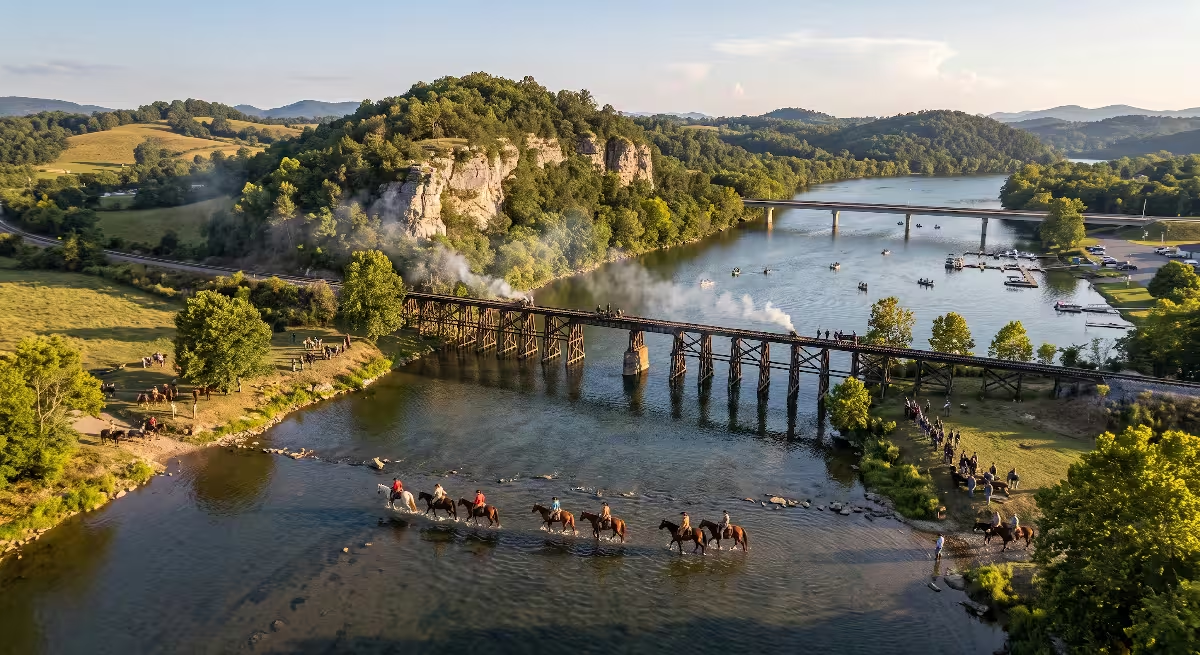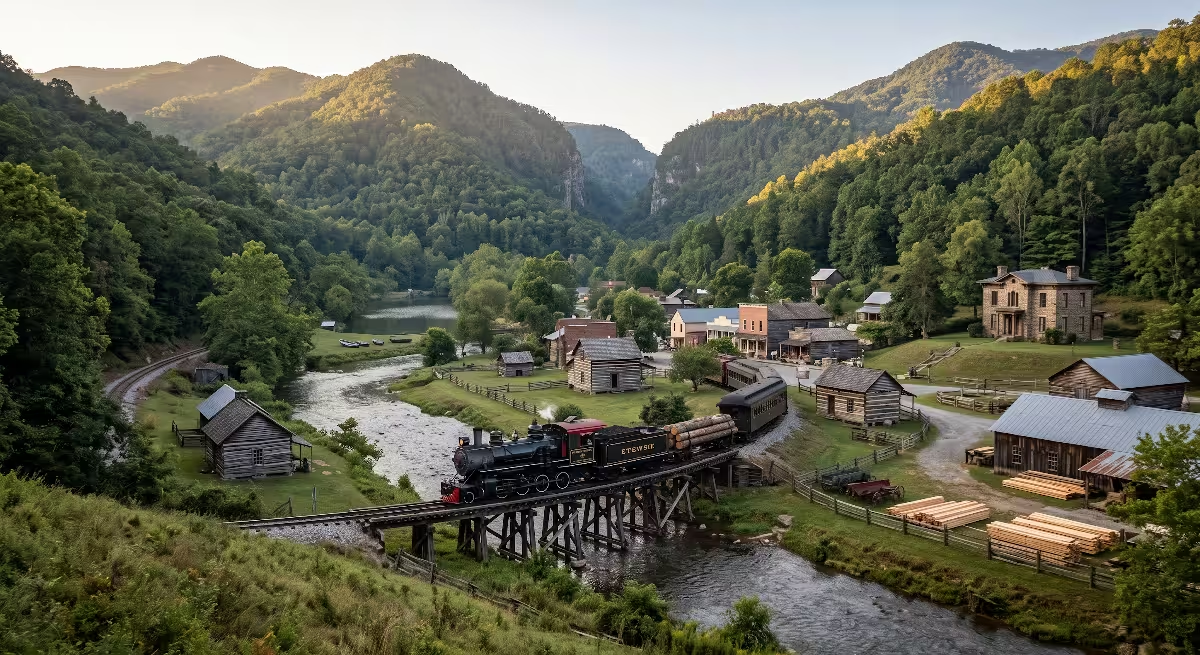


The Valley in the Mist
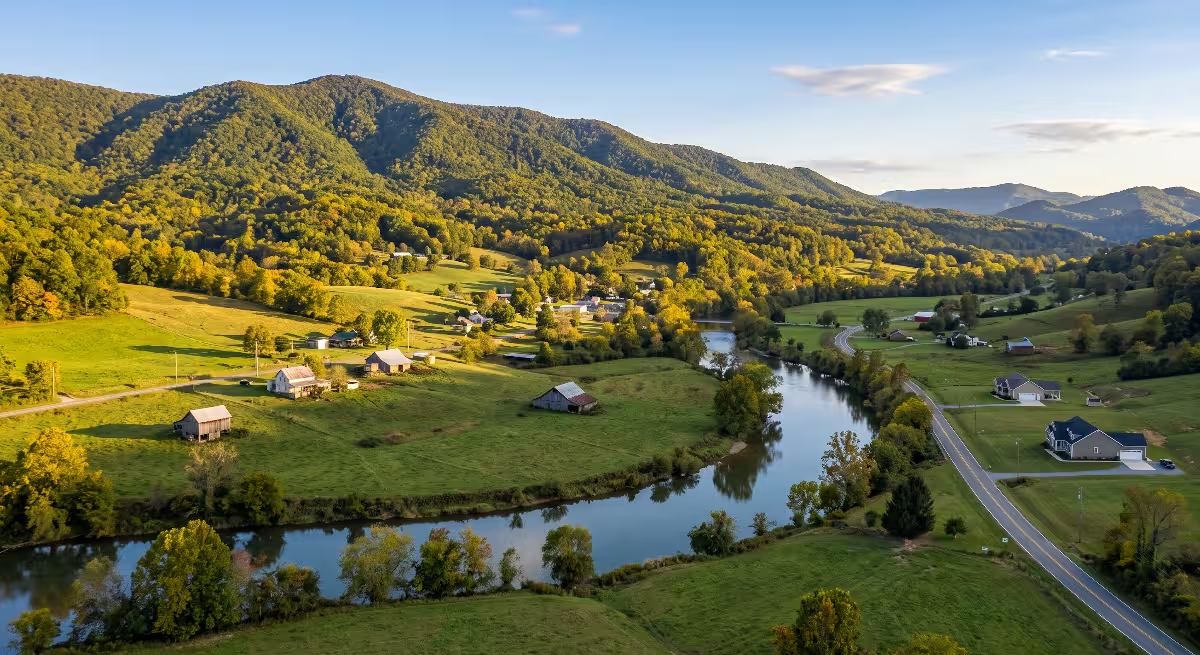
If you drive south out of Johnson City along Interstate 26, the rolling hills begin to rise into steep mountain walls. Within ten minutes, you enter a peaceful basin known as Buffalo Valley. This mountain bowl is the setting for Unicoi, TN. It sits right where the valley floor meets the rugged Unaka Range and the rocky slopes of Buffalo Mountain.
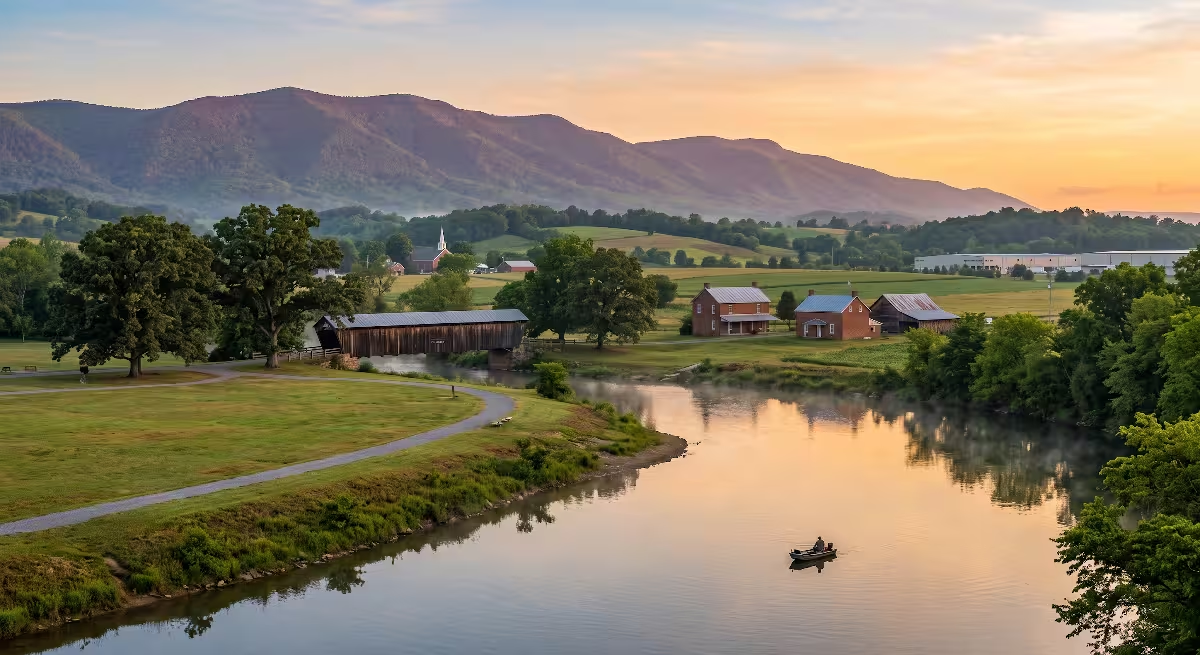
When you stand in Unicoi, TN in the early morning, you will quickly understand how this community received its name. A soft bank of white mist often settles across the forest canopy and stays draped over the ridges until the morning sun warms the soil. The name comes from a Cherokee word that describes this exact weather event. It translates to hazy, white, or fog-draped.
For generations, the natural shape of the land has directed the lives of the people who settled here. The narrow hollows, clean mountain creeks, and protective ridge lines provided shelter, fresh water, and vital routes through the southern Appalachian Mountains. Over hundreds of years, ancient game trails transformed into pioneer wagon roads, which later became busy rail corridors and modern highways.
Today, Unicoi, TN represents one of the most distinctive mountain communities in East Tennessee. It preserves its deep rural roots while offering easy access to the growing commercial hubs of the Tri-Cities region. Understanding the history of Unicoi, TN gives us a solid foundation for understanding why this valley remains such a desirable location for building a custom home and raising a family.
Earliest Inhabitants and The Great Buffalo Trace (Pre-1770s)
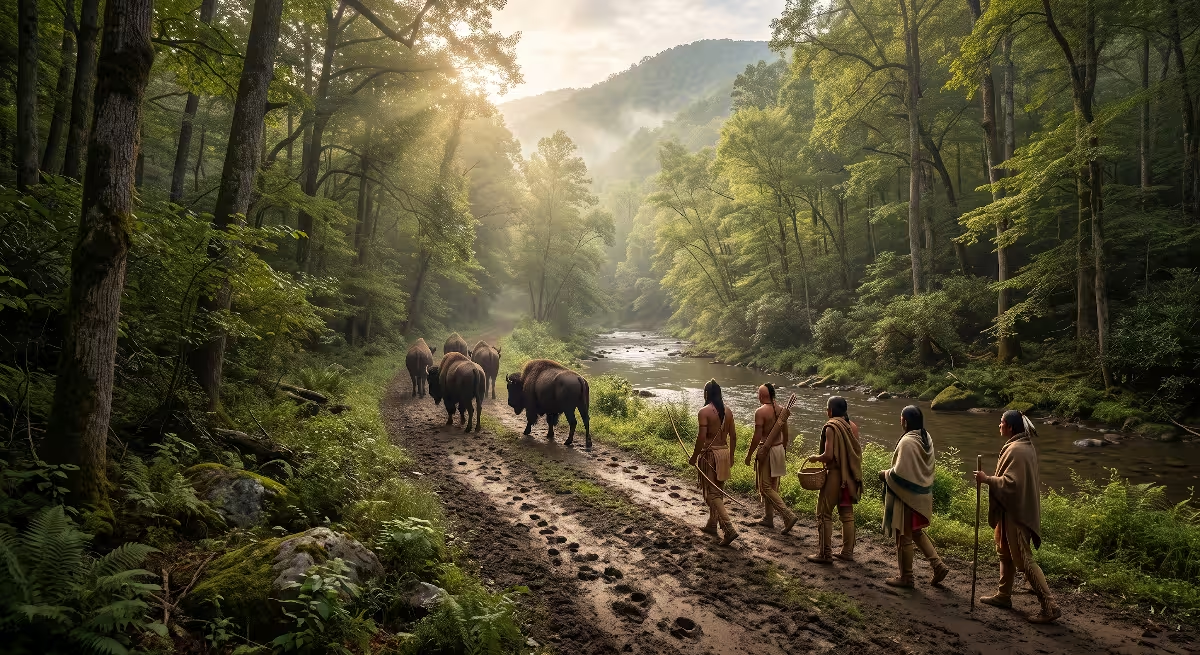
Long before early European settlers set foot in this mountain corridor, Native Americans recognized Buffalo Valley as a prime hunting and traveling territory. The Cherokee people established seasonal camps along the banks of North Indian Creek and South Indian Creek. These fast-flowing streams drained pure water directly out of the high mountain elevations, feeding the rich soils of the valley floor.
Native travelers followed paths that were not initially created by human hands. Vast herds of woodland bison once roamed through the river valleys of the upper Tennessee region. These heavy animals weighed well over a thousand pounds and sought the easiest natural grades across steep mountain ridges. As they traveled between winter grazing fields and natural mineral salt deposits, they trampled wide, firm routes through dense brush and cane thickets.
This network of game routes became known as the Great Buffalo Trail. The path followed along modern Buffalo Creek, carving a level corridor right through what would become Unicoi, TN. Human travelers quickly adopted these routes because the bison had already discovered the most practical passes through the mountain terrain.
In 1673, English traders and explorers James Needham and Gabriel Arthur ventured through this region. They documented the mountain passages and the well-worn paths established by the native inhabitants and migrating wildlife. These early explorations revealed that the geography of Unicoi, TN acted as a natural gateway. The gaps in the mountains provided a direct physical bridge connecting the high mountain territory of Western North Carolina with the Great Valley of East Tennessee.
Because the landscape was so steep and rugged, any traveler who wished to pass through without climbing vertical cliff faces had to follow these creek beds. As a result, the physical footprint of Unicoi, TN became fixed by nature hundreds of years before any permanent town was ever plotted on paper.
Frontier Settlement and The Forgotten State of Franklin (1770s to 1870s)
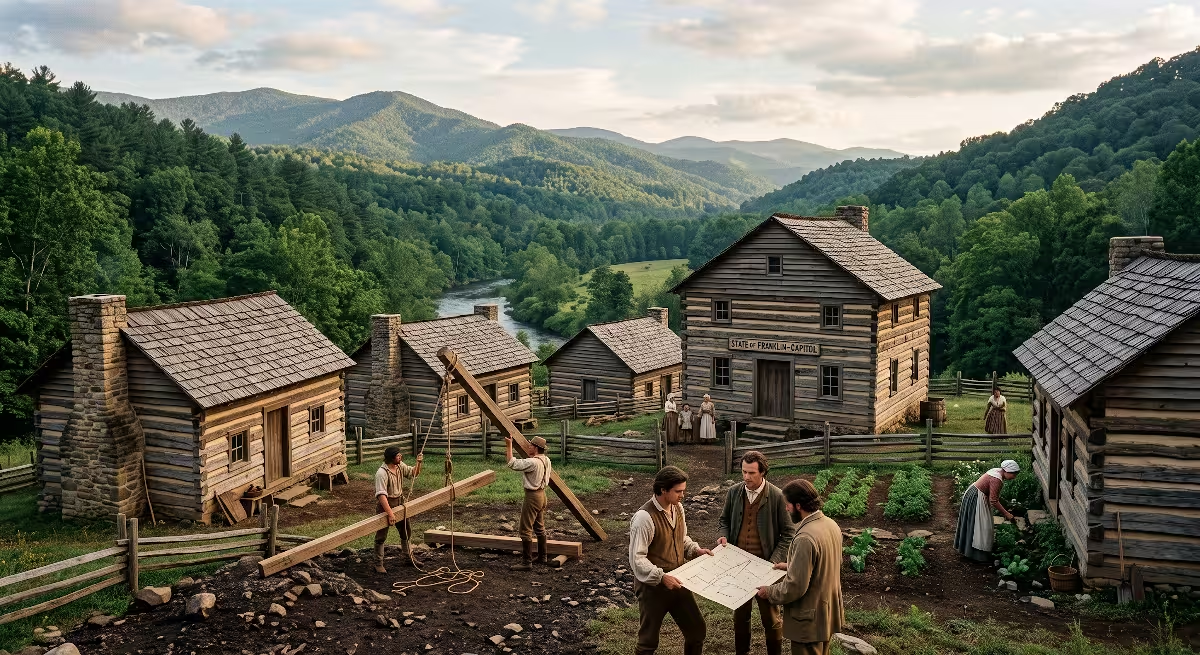
During the late eighteenth century, pioneer families pushed westward across the Blue Ridge Mountains. They were drawn by reports of abundant game, timber, and fertile bottomlands along the streams of upper East Tennessee. These brave homesteaders began clearing small acreage tracts along Greasy Cove, Limestone Cove, and the heart of Buffalo Valley near Unicoi, TN.
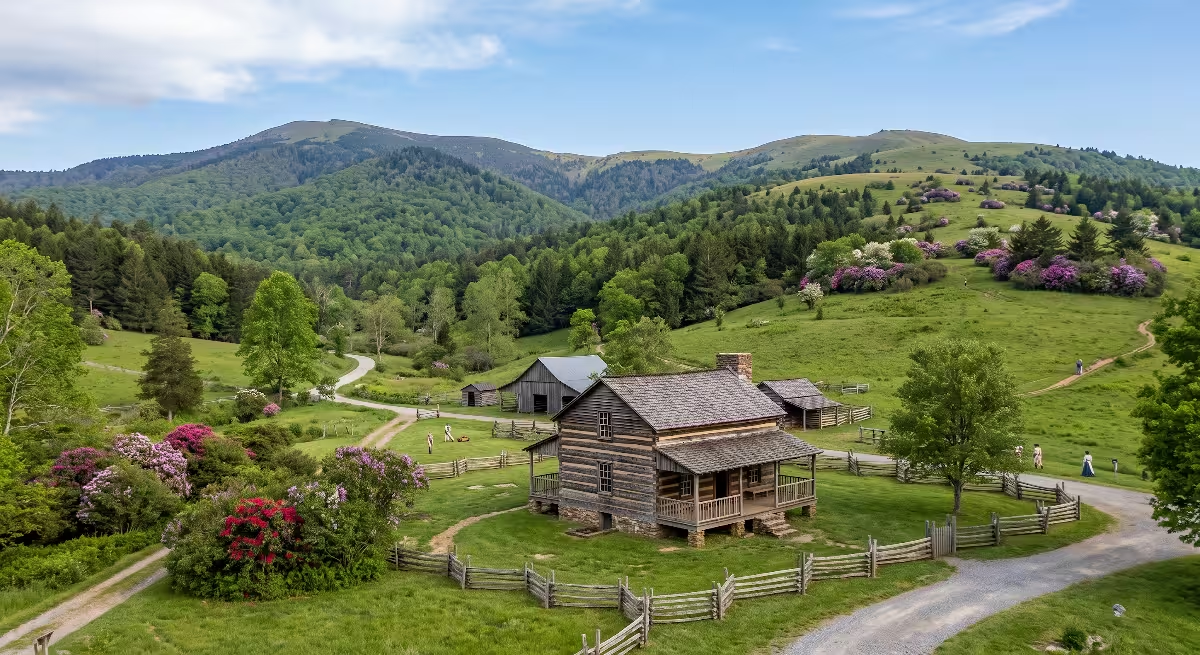
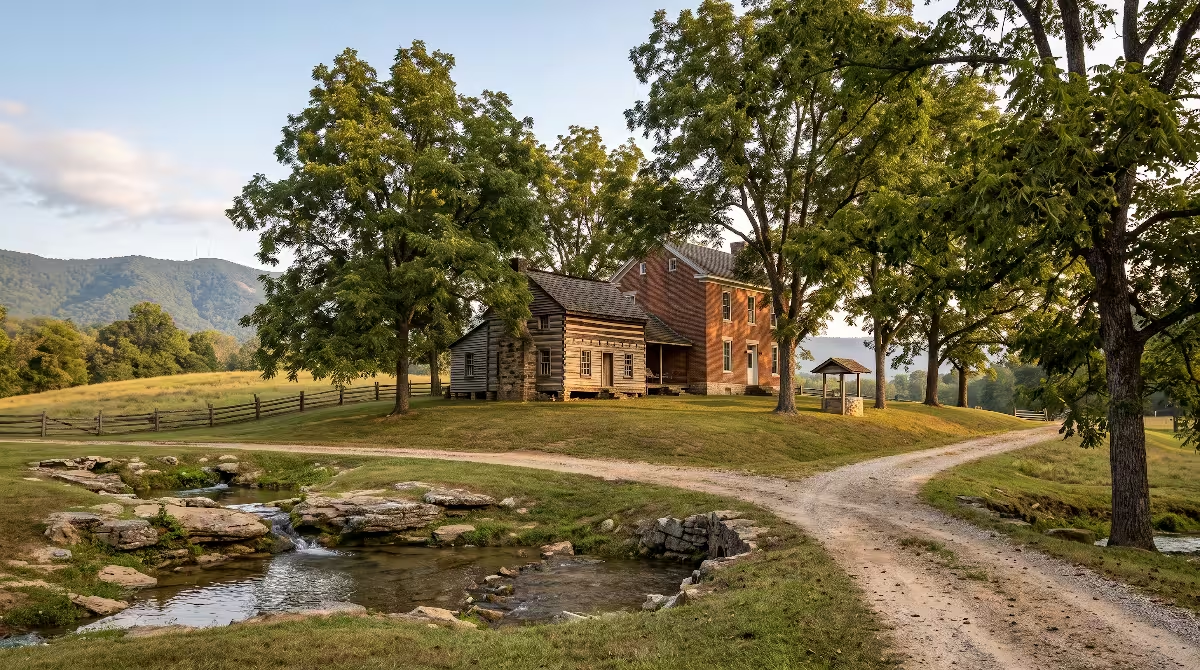
Life for these early settlers was physically demanding and required total self-reliance. They cleared towering hardwoods with simple hand axes to build log cabins and split-rail fences. They cultivated corn, beans, and squash in the rocky soil and depended on the surrounding forests for game and wild forage. The cold mountain streams supplied continuous power for early gristmills, allowing neighbors to grind their grain into meal.
As the American Revolutionary War came to an end, political instability gripped the frontier settlements of East Tennessee. The region was originally part of North Carolina, but the state government had difficulty protecting and governing these remote settlements across the high mountains. In 1784, frustrated frontier leaders took matters into their own hands and formed an independent government known as the State of Franklin.
For four short years, this territory, including the farms in Unicoi, TN, operated under the laws of the State of Franklin. Settlers paid taxes in animal skins, whiskey, and agricultural goods instead of official currency. John Sevier served as the only governor of this short-lived state. When the State of Franklin dissolved in 1788 due to internal disputes and political pressure from North Carolina, the valley returned to state control before Tennessee was officially admitted to the Union in 1796.
Throughout these shifting political tides, the settlers in Unicoi, TN had to deal with complicated county jurisdictions. The boundary lines between Washington County and Carter County shifted repeatedly. Depending on the year, a farmer in Unicoi, TN might have had to travel all the way to Jonesborough or Elizabethton just to register a land deed, pay taxes, or participate in court proceedings.
Despite these logistical headaches, community life continued to expand. In 1794, the federal government established formal postal routes through the region. Small community centers began to form around local post offices, including early community designations like Mire’s District and the Unaka post office. These small postal hubs provided a gathering point where neighbors could exchange news, conduct basic trade, and build a lasting community in Unicoi, TN.
The Birth of Unicoi County and The Town Layout (1875 to 1900)
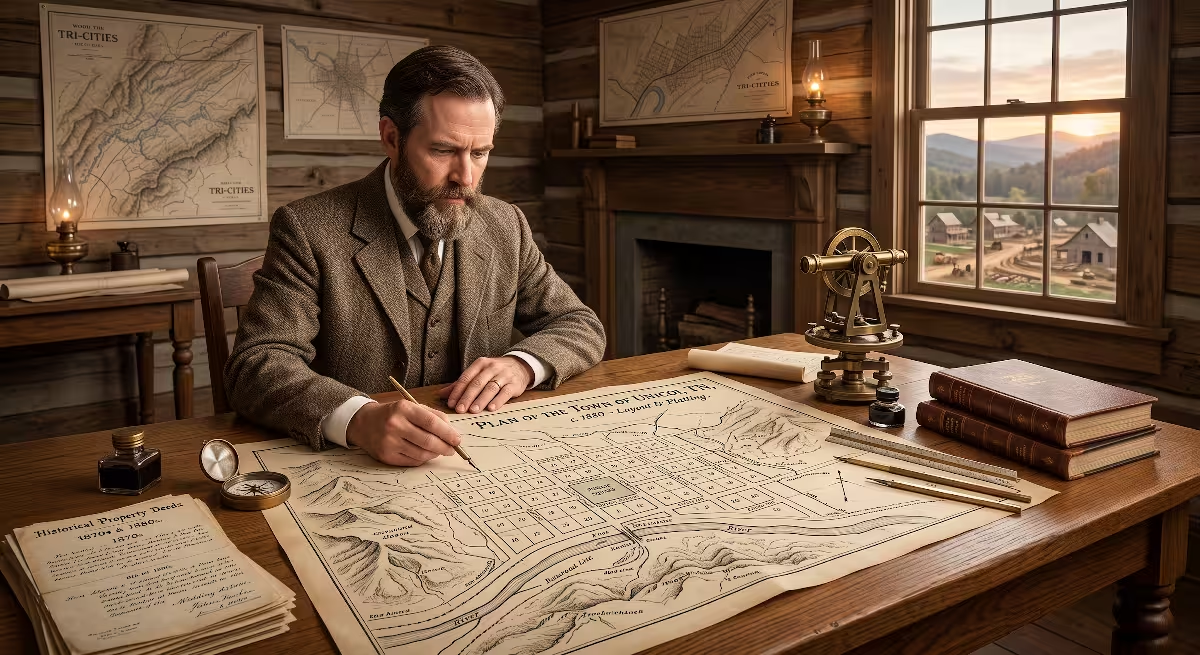
By the middle of the nineteenth century, residents living in the mountainous southern portions of Washington and Carter Counties felt increasingly isolated from their county seats. Traveling to Jonesborough or Elizabethton on horseback or by wagon was an exhausting journey that could take two full days over muddy, rutted mountain trails. High water in the creeks frequently cut off access for days at a time.
Local leaders petitioned the Tennessee General Assembly for the right to establish their own county government. On March 23, 1875, the state legislature officially passed an act establishing Unicoi County. The new county took territory from both Carter and Washington Counties, bringing the entire mountain watershed under a single local government.
With the creation of the county, the settlement of Unicoi, TN began to formalize its physical identity. Rather than remaining an informal collection of scattered farmsteads, the community started laying out roads and parcel boundaries. The original town layout centered around what is now Unicoi Drive, where flat land allowed for wider rights-of-way, small country stores, and the community schoolhouse.
During this period, the local economy began to move away from simple subsistence farming toward commercial enterprise. The dense forests of the Unaka Mountains contained massive stands of virgin oak, poplar, and chestnut. Small portable sawmills moved into the hollows, turning local timber into lumber for building homes and commercial structures.
At the same time, small iron furnaces operated in the nearby coves, taking advantage of iron ore deposits and abundant timber for charcoal production. The residents of Unicoi, TN were practical workers who understood how to extract value from the steep mountain slopes while preserving the best flat parcels along the creek bottoms for row crops and pastures.
The Railroad Era and Industrial Expansion (Late 1800s to Mid 1900s)

The true economic revolution for Unicoi, TN arrived on steel rails. In the late nineteenth century, industrial financiers recognized that vast reserves of high-grade coal were trapped in the mountains of southwest Virginia, while textile mills and industrial plants in the Carolinas desperately needed that fuel. The only barrier standing between the coalfields and the mills was the Blue Ridge and Unaka mountain ranges.
Initial attempts to build a rail line through these rugged gaps were plagued by financial panics and engineering failures. The Charleston, Cincinnati and Chicago Railroad began grading lines through the valley, but the company went bankrupt before finishing the project. It was not until the early twentieth century, with the chartering of the Carolina, Clinchfield and Ohio Railway, that the dream became reality. This historic route was known simply as the Clinchfield Railroad.
Constructing the Clinchfield Railroad was one of the most remarkable engineering accomplishments in American history. Crews had to carve rail beds directly into solid granite canyon walls, dig dozens of tunnels, and build high steel trestles across deep gorges. The line ran right through Unicoi County, creating an immediate economic boom for Unicoi, TN.
Neighboring Erwin became the headquarters and main repair yard for the Clinchfield Railroad, which provided hundreds of steady industrial jobs. Meanwhile, Unicoi, TN served as an essential passenger and freight depot. Farmers in Unicoi, TN could now load their livestock, apples, and timber onto freight cars and ship their products to major national markets in a matter of days.
The presence of the railroad also fostered new regional manufacturing. In 1897, the federal government established the U.S. National Fish Hatchery in nearby Erwin, taking advantage of the pure mountain springs. Soon after, Southern Potteries opened its doors, producing world-famous hand-painted Blue Ridge China.
Many residents of Unicoi, TN worked in these manufacturing plants or supplied them with materials and agricultural produce. The rail line brought manufactured goods, metal roofing, cement, and advanced framing lumber into Unicoi, TN, forever changing how local homes were constructed. The era of hand-hewn logs was replaced by modern balloon framing and finished architectural details.
Mid to Late 20th Century: Preservation, Incorporation, and Growth
As industrial harvesting stripped mountain hillsides of timber across the country, federal leaders recognized that southern Appalachian watersheds needed urgent protection. The Weeks Act of 1911 authorized the federal government to purchase cut-over timber lands to protect the headwaters of navigable streams.
Over the following decades, the federal government acquired tens of thousands of acres surrounding Unicoi, TN, consolidating them into the Cherokee National Forest. Today, public national forest land makes up more than half of the total surface area of Unicoi County.
This massive federal footprint had a profound effect on the modern character of Unicoi, TN. Because so much land was permanently preserved, commercial clear-cutting stopped, allowing the forest ecosystems to recover. The surrounding mountains returned to their lush, green condition. More importantly for local homeowners, this federal boundary established a permanent greenbelt around Unicoi, TN that prevents uncontrolled urban sprawl.
Throughout the mid-twentieth century, transportation shifted from trains to automobiles. The old two-lane surface routes of U.S. Route 19W and U.S. Route 23 carried traffic through the valley, but the winding roads were slow and dangerous. In the late twentieth century, highway engineers began designing a four-lane interstate corridor that would pierce through the mountain gaps.
The completion of Interstate 26 transformed Unicoi, TN into an accessible mountain suburb. Drivers could now reach downtown Johnson City in ten to fifteen minutes and Asheville, North Carolina in under forty-five minutes.
With this improved access came increased residential growth. Local leaders recognized that without an organized municipal government, the unique rural character of the valley could be lost to unchecked commercial development. In 1994, the citizens voted to incorporate as the official Town of Unicoi.
Incorporation gave the community control over its own planning, zoning, and municipal services. The town government worked diligently to balance commercial opportunities along the interstate interchange while preserving the peaceful, single-family residential character of the hollows and mountain roads.
Frequently Asked Questions about Unicoi, TN
What is Unicoi, TN known for?
Unicoi, TN is celebrated for its unmatched outdoor recreation, historic rail heritage, and spectacular natural scenery. The town sits right on the doorstep of the Cherokee National Forest, making it an ideal home base for hiking, trout fishing, and mountain biking.
One of the most famous landmarks in the area is the Pinnacle Mountain Fire Tower. Perched high above the valley, this restored tower offers a five-mile trail that rewards hikers with panoramic views of the entire Tri-Cities area and the high peaks of North Carolina.
The town is also located just minutes away from the Appalachian Trail and Rocky Fork State Park, which protects over two thousand acres of pristine mountain wilderness and native trout waters. Beyond recreation, Unicoi, TN is known for its quiet, close-knit community atmosphere and traditional mountain artisan heritage.
What does the word “Unicoi” mean?
The word “Unicoi” comes from the Cherokee language. It translates to mean white, hazy, or fog-draped. The Cherokee used this term to describe the dense layer of white morning clouds and fog that regularly hangs over the high mountain ridges and settles down into the valleys of the Unaka Range.
The visual effect of this mountain mist gave rise to the name of the Unicoi Mountains, Unicoi County, and ultimately the Town of Unicoi, TN. When you visit the area at dawn, the living reality of this name is immediately clear as the white vapor drifts slowly through the gaps and tree branches.
When was the Town of Unicoi incorporated?
Although pioneers first settled in the valley in the late 1700s and Unicoi County was founded in 1875, the Town of Unicoi was not officially incorporated as a municipal government until 1994.
Local citizens organized the incorporation movement to gain control over local land-use planning, road maintenance, and municipal zoning. Incorporation allowed Unicoi, TN to establish its own building standards, manage local parks, and protect the scenic beauty of the valley while providing essential services to its growing population.
How far is Unicoi, TN from Johnson City?
Unicoi, TN is approximately ten miles south of downtown Johnson City. By taking Interstate 26, the drive typically takes ten to fifteen minutes, depending on traffic.
This close proximity makes Unicoi, TN an exceptionally convenient option for people who work at East Tennessee State University, the Johnson City Medical Center, or regional commercial centers, but who prefer to live in a peaceful mountain environment with lower noise levels, less congestion, and larger private lots.
The Living Legacy: Building and Living in Modern Unicoi
The long history of Unicoi, TN has created a unique real estate and residential building environment. When people evaluate property in the Tri-Cities region, they quickly discover that building a home in Unicoi, TN is quite different from building in a typical flat subdivision in Johnson City or Kingsport. The very geography that shaped the buffalo traces and the Clinchfield Railroad continues to influence custom home construction today.
Because more than fifty percent of the county is public federal land, private property in Unicoi, TN is inherently limited. You cannot have sprawling suburban subdivisions that march endlessly across the landscape. The available private land is concentrated in the coves, along the creek bottoms, and on the lower slopes of the mountain ridges. This limited supply creates long-term property stability and ensures that neighborhoods retain their rural, wooded character.
Building a custom home on mountain parcels in Unicoi, TN requires specialized construction knowledge. You must understand how to work with the natural slope of the ground rather than fighting against it.
Grading and Foundation Engineering
On steep acreage in Unicoi, TN, grading must be approached with precision. In flat subdivisions, a bulldozer can easily push dirt around to create a level pad. In a mountain cove, excessive cutting into a hillside can destabilize the slope and create long-term drainage problems.
Custom homes built on hillsides in Unicoi, TN almost always require walkout basement foundations or stepped crawlspaces. A poured-in-place concrete foundation acts as a structural retaining wall against the uphill slope. The basement walls must be properly reinforced with steel rebar, and the exterior must be coated with high-performance waterproofing membranes and foundation perimeter drains.
When done correctly, a walkout basement foundation takes full advantage of the natural terrain. It creates valuable living space on the lower level that walks directly out into the backyard, while providing safe, frost-protected structural support for the floors above.
Mountain Water Management and Drainage
Water is a defining feature of the history of Unicoi, TN. The same mountain streams that powered pioneer gristmills can quickly wash away a poorly planned gravel driveway or flood a foundation if stormwater is not properly directed.
Every custom home site in Unicoi, TN needs a comprehensive surface water management plan. This includes installing wide culverts under driveways, digging swales along the uphill side of the home site, and routing downspouts far away from the foundation footprint. By honoring the natural flow of water down the mountain, builders can protect driveways from heavy mountain rainstorms and keep basements completely dry.
Designing for Biophilic Connection and Microclimates
The deep mountain ridges around Unicoi, TN create distinct microclimates. A parcel tucked into a north-facing hollow may see frost weeks earlier than a south-facing parcel that enjoys full winter sun.
When designing a custom home in Unicoi, TN, smart builders orient the home to capture natural light and take advantage of seasonal shade. Large picture windows, covered timber porches, and screened outdoor rooms allow homeowners to connect directly with the surrounding forest.
Using natural materials like local mountain fieldstone, exposed timber trusses, and earth-toned siding helps a home blend seamlessly into the tree line. This architectural approach honors the rustic history of Unicoi, TN while delivering all the modern energy efficiency and structural performance of a modern home.
Preserving the Community Fabric
Living in Unicoi, TN means being part of a close community that values its heritage. The town is home to historic gathering spots like the Farmhouse Gallery and Gardens, where local art, native plants, and traditional mountain hospitality come together. Annual community festivals celebrate the agricultural history, music, and craft traditions that have sustained valley families for centuries.
Small businesses, independent markets, and family-owned diners line Unicoi Drive, providing daily services without the sensory overload of big-box strip malls. Residents enjoy dark night skies, clean mountain air, and the quiet comfort of knowing their neighbors.
The story of Unicoi, TN is not a tale of rapid industrial expansion that erased the past. Instead, it is the story of a community that found a way to adapt. From ancient Cherokee hunting routes and hardy pioneer homesteads to the roar of Clinchfield steam locomotives and modern residential neighborhoods, the valley has welcomed change without losing its soul.
For anyone looking to establish deep roots in the mountains of East Tennessee, Unicoi, TN offers an extraordinary balance: the peaceful security of a historic mountain cove, the permanent protection of surrounding national forests, and the simple convenience of a modern highway right down the road.
Key Historical Milestones of Unicoi, TN
| Year | Historical Milestone | Historical Significance to Unicoi, TN |
| Pre-1770 | Cherokee seasonal camps and the Great Buffalo Trace | Established the primary travel routes along Buffalo Creek and Indian Creek. |
| 1673 | Needham and Arthur expedition | Early English exploration documenting the mountain passes through the Unaka Range. |
| 1784 | Formation of the State of Franklin | Frontier settlers established temporary independent self-government across the valley. |
| 1794 | First federal postal routes established | Community hubs formed around local post offices, connecting remote farmsteads. |
| 1875 | Unicoi County officially established | State legislature carved the mountain coves out of Washington and Carter Counties. |
| 1908 | Clinchfield Railroad completes track line | Linked the valley to national markets, driving industry, timber, and local commerce. |
| 1911 | Passage of the Weeks Act | Initiated federal land purchases that formed the surrounding Cherokee National Forest. |
| 1994 | Town of Unicoi officially incorporates | Established municipal zoning, local services, and land preservation protections. |
| Present | Interstate 26 corridor development | Provides direct regional access, supporting balanced custom home development. |