
Exploring the Past and Future of Surgoinsville, TN
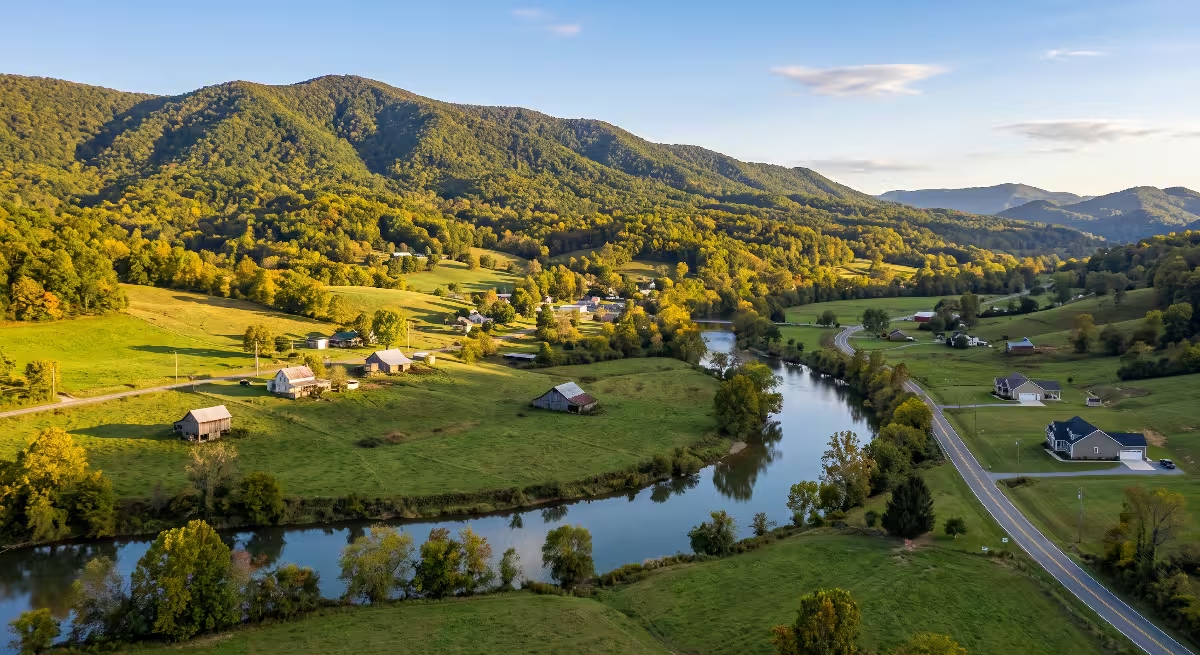
The story of the Upper East Tennessee valley cannot be told without looking at the rich heritage found along the Holston River. In Hawkins County, sitting quietly between the historic seat of Rogersville and the growing community of Church Hill, lies Surgoinsville, TN.
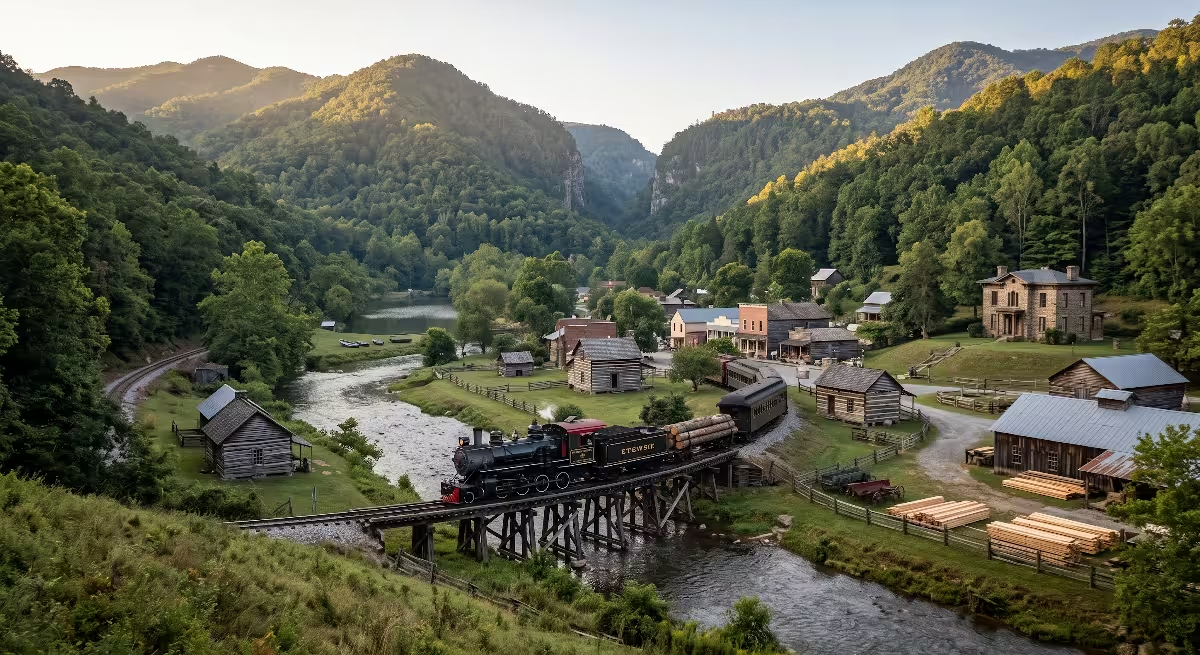
This community was shaped by the natural lay of the land, the flow of river trade, the fertility of river bottom soil, and the paths traveled by early settlers moving west through the Appalachian Mountains. What began as a frontier outpost in the late eighteenth century developed over generations into an incorporated nineteenth century center for commerce, agriculture, and river logistics. Looking closely at Surgoinsville, TN shows how early geography set the stage for later industrial innovation, modern neighborhood development, and lasting community character.
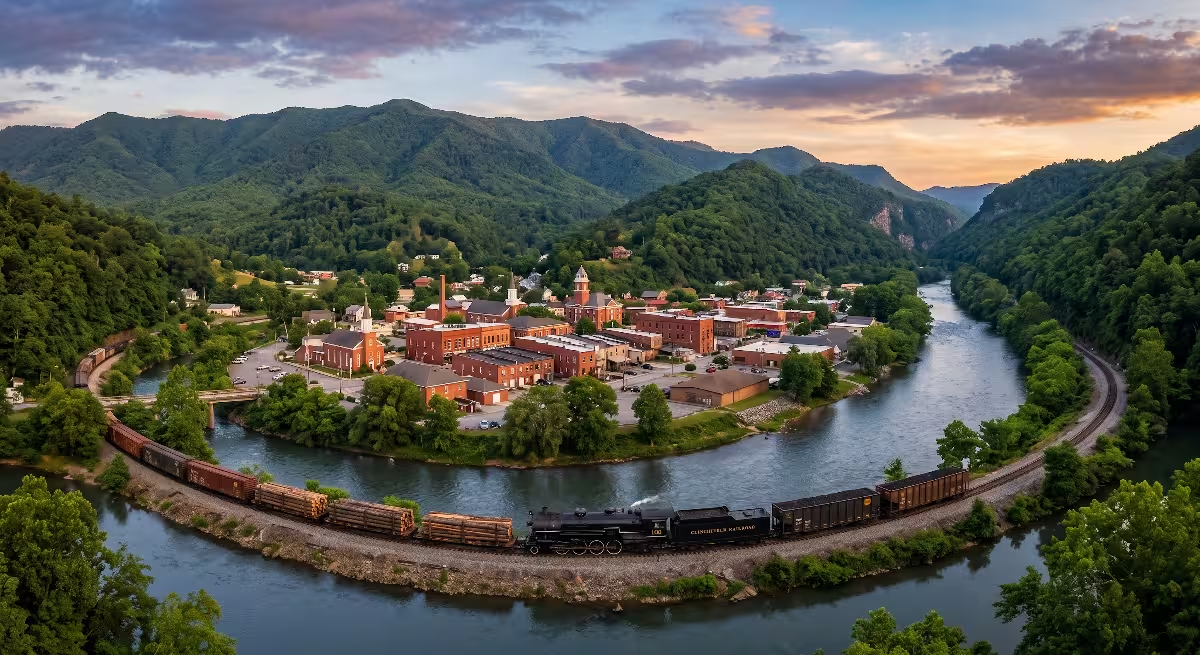
Understanding Surgoinsville, TN requires a study of how natural waterways and valley trade routes guided early builders and farmers. When early travelers came across the mountains, they sought flat ground, clean water, and reliable transport. The big bend of the Holston River gave them all three. Over the past two centuries, Surgoinsville grew from simple hand-hewn log cabins to finely constructed brick estates, early twentieth century general stores, and later, advanced modern manufacturing centers. For anyone interested in the roots of Hawkins County, the journey of Surgoinsville offers a clear lesson in how a river town adapts while keeping its strong sense of place intact.
Pre-Settlement and Early Frontier: Carter’s Valley Roots

Long before the town was officially organized, the river bottoms around Surgoinsville served as hunting and travel routes for Native American tribes, including the Cherokee. The Holston River was an important natural highway. Its waters carried native canoes, and the well-worn game trails along its banks provided natural routes for travelers. The ground around what is now Surgoinsville was fertile, watered by gentle feeder creeks, and sheltered by the surrounding mountain ridges.
As early pioneers pushed west during the late eighteenth century, the area became part of what was known as Carter’s Valley. This region was settled under early North Carolina territorial land grants. Life in the wilderness demanded resilience. Settlers had to build shelters from native timber, clear heavily wooded plots, and defend their claims. Communities formed around early crossroads like Stony Point and Long Meadow, establishing regular paths for pack horses and simple wagons.
Trade in those early days relied on the stagecoach and the river flatboat. The trails that ran parallel to the river through Surgoinsville, TN gradually improved from rough paths into established stage roads. These roads connected the small settlements in Hawkins County with larger trading points farther east in Virginia and south toward Knoxville. Surgoinsville, TN was positioned in a sweet spot along these routes, allowing early frontier families to trade surplus grain, livestock, and lumber for essential manufactured items such as salt, iron, and glass.
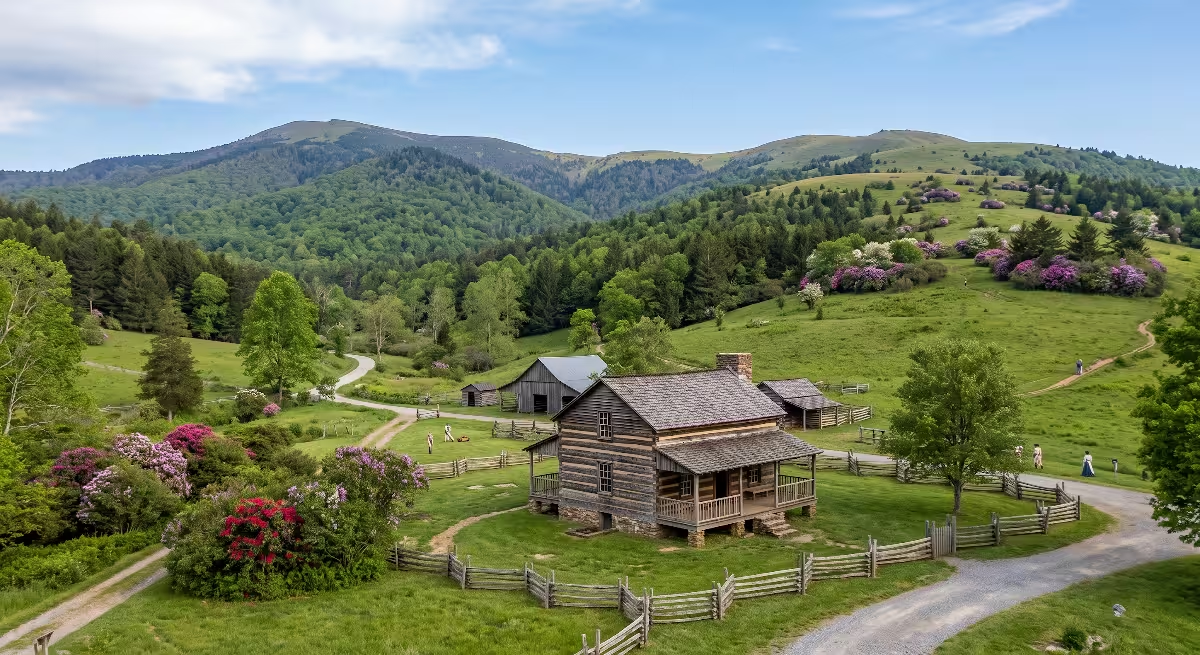
Building methods on the early frontier were practical and direct. Builders used whatever materials the land offered. Hand-hewn oak, chestnut, and poplar logs were shaped with broadaxes and secured with half-dovetail notches to build sturdy homes that could withstand harsh winters. The foundation stones were gathered from local creek beds and limestone outcroppings. This functional approach to building defined the initial phase of development in Surgoinsville, TN, providing the baseline for more permanent construction in the decades that followed.
The Founding: Major James Surguine and the 1815 Charter

The town owes its name and formal establishment to Major James Surguine, a prominent local landowner and merchant of French Huguenot heritage. He saw the lasting economic potential of this river corridor. In the early nineteenth century, Surguine set aside acreage from his own holdings to lay out a proper community plat. By establishing a central settlement, he provided a gathering point for local farmers and tradesmen who needed access to river shipping.
In 1815, the Tennessee General Assembly officially chartered the town under the name of Surguinsville, which over time evolved into its modern spelling, Surgoinsville, TN. The state legislature appointed five trusted local commissioners to organize and govern the infant municipality: Major James Surguine, John Armstrong, Joseph Klepper, John Laughmiller, and John Erwin. These leaders were tasked with surveying streets, selling designated lots, and setting up basic public infrastructure to serve the community.
The original town plan for Surgoinsville, TN reflected classic early American town planning principles. Lots were laid out along the primary east-west road, while perpendicular lanes ran down to the banks of the Holston River. River access was vital. Before railroads crossed Hawkins County, the river was the main artery for heavy freight. Farmers brought their crops down to the docks at Surgoinsville, TN to be loaded onto flatboats bound for downstream markets in Knoxville and beyond.
During this period, construction standards in Surgoinsville, TN began to shift. While log framing remained common for outbuildings and modest homes, wealthier landowners started building with locally fired clay brick and finished timber. Skilled carpenters and masons used hand planes to create custom moldings, six-panel doors, and mantels. The town grew from a simple river landing into a respectable civic community, balancing frontier grit with refined classical tastes.
Built Heritage and Architectural Significance
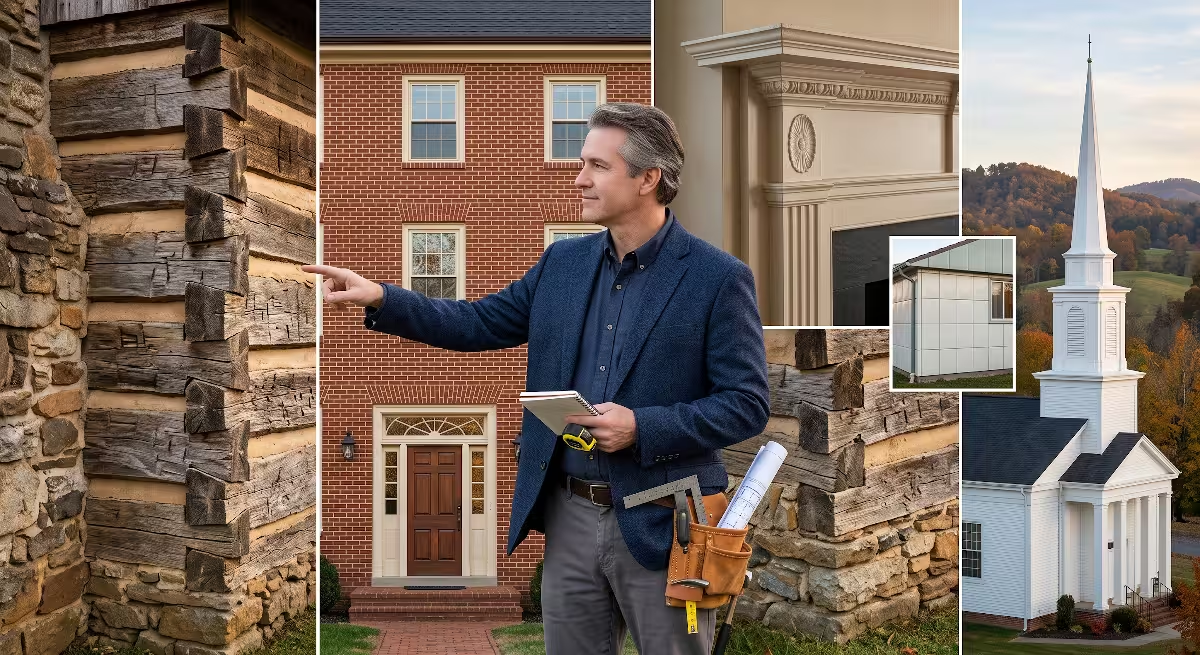
The history of Surgoinsville, TN is preserved in its surviving historical structures. These buildings show the evolution of construction practices, materials, and domestic life in Hawkins County from the early frontier era through the twentieth century.
The Historic Fudge Farm
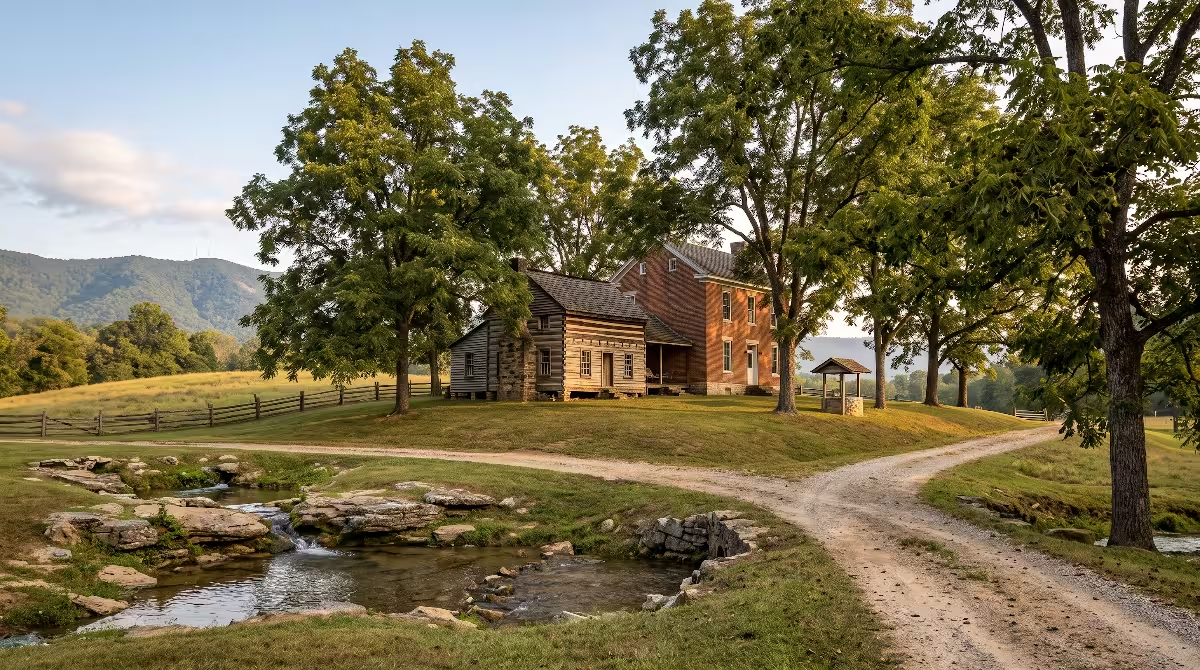
One of the most notable landmarks near Surgoinsville, TN is the historic Fudge Farm, established around 1815. The main brick residence represents the transition from frontier living to prosperous, permanent agriculture. Built with bricks fired on-site using local river-basin clay, the home features balanced Federal-style proportions, a sturdy limestone foundation, and carefully joined interior framing.
The farming operations on this estate tracked the broader economic trends of Surgoinsville, TN. Early on, the land was dedicated to grain production, corn, and livestock. By the late nineteenth and early twentieth centuries, burley tobacco became a central cash crop in Hawkins County. The Fudge Farm expanded to include wooden curing barns, storage sheds, and livestock pens, demonstrating how agricultural estates in Surgoinsville, TN maintained self-sufficiency for generations.
New Providence Presbyterian Church and Cemetery
Spiritual and community life in Surgoinsville, TN found an anchor in New Providence Presbyterian Church. Established by early Scotch-Irish settlers whose families moved into Hawkins County after the Revolutionary War, the congregation served as both a place of worship and a center for civic organization.
The building itself represents the classic rural church architecture of nineteenth-century East Tennessee, characterized by clean lines, tall rectangular windows to maximize daylight, and an orderly interior. The adjacent cemetery serves as an open-air historical record of Surgoinsville, TN. Walking through the rows of gravestones reveals the names of early commissioners, pioneer families, soldiers from early American conflicts, and ordinary citizens who worked the land and built the community.
Bellamy Store and Bluegrass Heritage
In the early twentieth century, commercial life in Surgoinsville, TN centered around local gathering spots, best exemplified by the Bellamy Store, built in 1908. In an era before supermarkets and large department stores, a rural general store was the pulse of the community. Locals came to the store not just to buy dry goods, hardware, flour, and seed, but to trade news, discuss local politics, and check the mail.
As modern retail shifted toward larger towns, the Bellamy Store in Surgoinsville, TN found new life as a cultural venue. It became a beloved home for traditional old-time and bluegrass music. Musicians from across Hawkins County and neighboring valleys gather on its wooden floors, keeping alive the acoustic mountain music that has been handed down through families for generations. The building remains a vital physical link between the working history and the cultural life of Surgoinsville, TN.
Mid-Century Innovation: The Lustron House

Beyond its nineteenth-century structures, Surgoinsville, TN is home to a rare and fascinating piece of American architectural history: an enameled-steel Lustron house. Following World War II, the United States faced an acute housing shortage as millions of soldiers returned home to start families. The Lustron Corporation developed an innovative solution by mass-producing prefabricated homes made almost entirely of porcelain-enameled steel panels.
Built on a concrete slab foundation, the Lustron home in Surgoinsville, TN was designed to be fireproof, termite-proof, and easy to clean. Every wall, ceiling, and exterior panel was fabricated in a converted airplane factory and shipped to the site as a kit for assembly. Having an intact Lustron home in Surgoinsville, TN highlights how post-war building technologies reached even the quiet rural communities of East Tennessee, showing that local builders were open to experimenting with industrial materials.
Wartime and Economic Turmoil: Civil War Through the Great Depression
Like much of East Tennessee, Hawkins County was deeply divided during the American Civil War, and Surgoinsville, TN felt this strain firsthand. While middle and western Tennessee aligned strongly with the Confederacy, East Tennessee contained a major population of Union sympathizers alongside passionate Confederate supporters. This split turned neighbor against neighbor and left families in Surgoinsville, TN in difficult, precarious positions.
The strategic position of the Holston River and the roads running through Surgoinsville, TN meant that both Union and Confederate units passed through the area frequently. Soldiers forage for food, commandeered livestock, and seized crops from local farms. While no major multi-day campaigns were fought directly inside the town limits, frequent cavalry skirmishes, scouting missions, and supply raids took place along the valley floor. The war slowed construction and disrupted trade, leaving the community to rebuild its economy after the fighting stopped.
During the Reconstruction era, the people of Surgoinsville, TN worked steadily to rebuild local commerce. The town government re-established order, roads were repaired, and new wooden bridges replaced damaged crossings. The arrival and expansion of railroad lines throughout Hawkins County changed the economic landscape. While the river remained an asset, trains could move timber, livestock, and goods faster, helping businesses in Surgoinsville, TN expand their regional reach.
When the Great Depression hit the nation in 1929, life in Surgoinsville, TN was difficult, but the rural nature of the community helped soften the blow. Most families in Surgoinsville, TN were accustomed to self-sufficiency. They kept kitchen gardens, canned vegetables, raised hogs, and milked their own cows. Barter and neighborly cooperation were common practices. While cash was scarce, the rich soil of the Holston River valley ensured that families in Surgoinsville, TN could keep food on their tables until national and regional economic recovery took hold in the 1940s.
The Modern Era: Phipps Bend, Industry, and Infrastructure
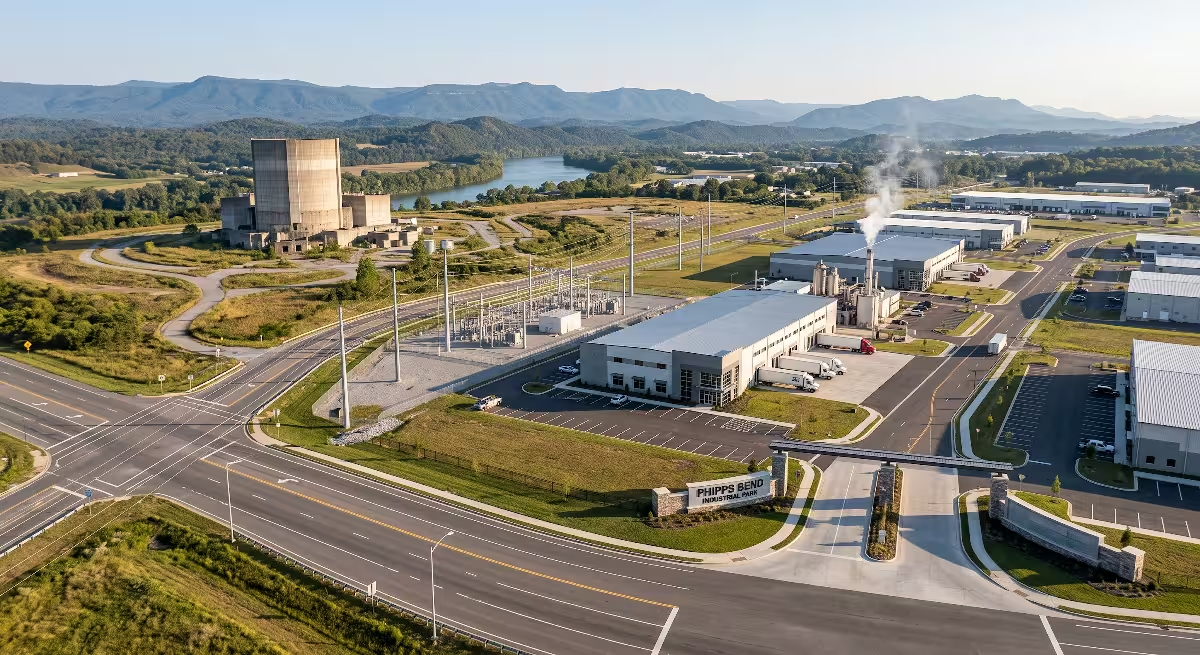
The twentieth century brought major transformations to Hawkins County, none larger than the dramatic industrial projects that took place near Surgoinsville, TN during the 1970s and 1980s.
In the 1970s, the Tennessee Valley Authority (TVA) announced plans to build the Phipps Bend Nuclear Plant just downriver from Surgoinsville, TN. The announcement set off a massive wave of activity. Roads were widened, workers poured into the area, and local real estate boomed as investors anticipated thousands of permanent jobs and steady power generation. Large-scale earthmoving reshaped the landscape, and massive concrete foundations were poured.
However, changing energy demands, rising construction costs, and new regulatory requirements led the TVA to halt and ultimately cancel the nuclear project in the early 1980s. It was a challenging setback for Hawkins County and Surgoinsville, TN, but local leaders quickly shifted gears. Instead of letting the site sit idle, local development boards in Hawkins County and nearby Kingsport worked together to turn the property into the Phipps Bend Industrial Park.
Today, Phipps Bend stands as an engine of manufacturing and distribution for Surgoinsville, TN and the surrounding area. The site offers heavy power infrastructure, deep rail access, and direct proximity to four-lane highways. By turning a cancelled nuclear project into an active industrial campus, the community around Surgoinsville, TN secured good manufacturing jobs while preserving its rural, small-town setting.
The widening of US Highway 11W into a modern four-lane divided corridor also changed daily life in Surgoinsville, TN. The highway reduced drive times to major regional employment centers in Kingsport, Bristol, and Johnson City. As a result, Surgoinsville, TN became an attractive option for commuters seeking quiet rural neighborhoods, larger lot sizes, and scenic mountain views while maintaining a short, simple drive to work.
Everyday Life and Civic Traditions in Surgoinsville, TN
Community life in Surgoinsville, TN has always centered on its schools, civic groups, and local parks. The town retains the neighborly atmosphere that defined it two centuries ago, where people take pride in knowing their neighbors and caring for public spaces.
The Surgoinsville Covered Bridge Park is a favorite gathering spot for residents and visitors. Built to celebrate traditional Appalachian craft and vernacular design, the covered bridge serves as a town symbol and a backdrop for family outings, seasonal festivals, and weekend gatherings. Walking paths, open green lawns, and easy access to the water make the park an important part of civic life in Surgoinsville, TN.
Throughout the year, local groups organize events that celebrate the valley’s history. From heritage days and tractor shows to holiday parades and community cleanups, people who live in Surgoinsville, TN stay engaged. The public schools in Surgoinsville, TN have historically served as the center of community spirit, bringing parents, teachers, and neighbors together for ballgames, concerts, and youth activities.
Residential Growth and Land Use Along the River
For people looking at property in the Tri-Cities region, Surgoinsville, TN offers distinct land-use advantages. Unlike more densely populated suburban areas, this part of Hawkins County still provides open land, large wooded parcels, and exceptional riverfront properties.
When considering residential building in Surgoinsville, TN, several factors stand out:
- Topography and Views: The rolling hills and river bottoms create scenic home sites with long-range views of the Clinch Mountain ridge to the north and the Bays Mountain range to the south.
- Lot Sizes: Properties in Surgoinsville, TN typically feature larger acreage than what is found in central Kingsport or Johnson City, giving homeowners space for workshops, detached garages, and gardens.
- Building Conditions: Soil quality along the river valley generally provides good conditions for traditional septic systems, though professional soil evaluations are always recommended before breaking ground.
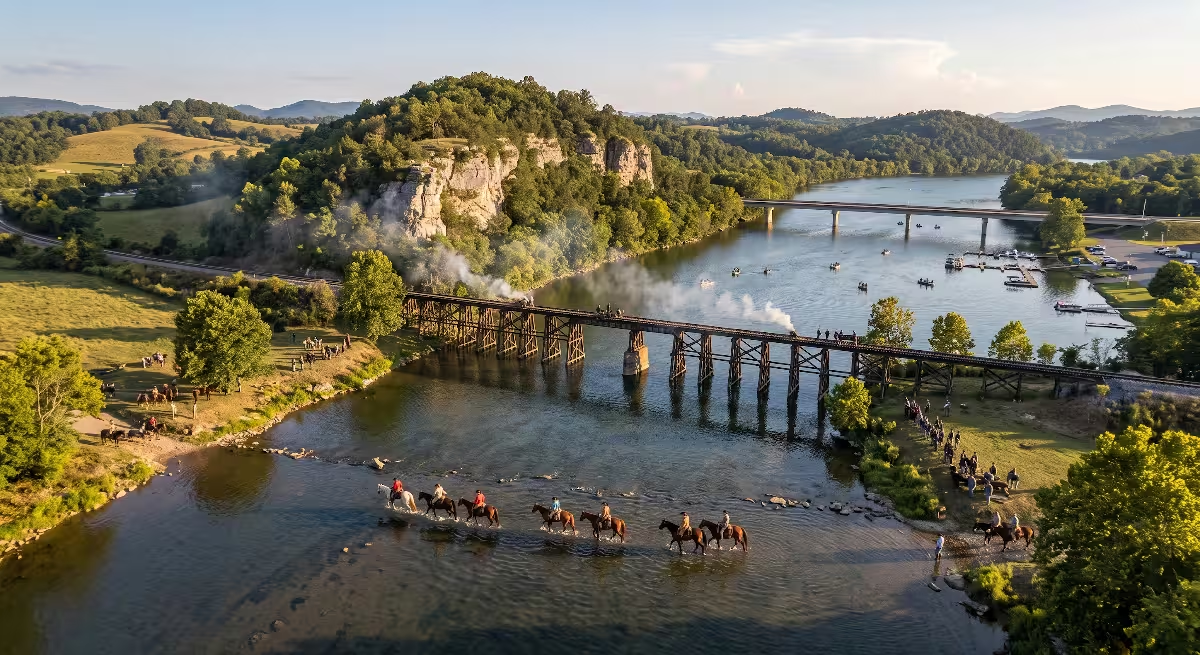
- Water Access: Properties along the Holston River around Surgoinsville, TN offer private access for small watercraft, kayaking, and world-class smallmouth bass fishing.
As more people look to build custom homes that blend modern efficiency with natural surroundings, the land around Surgoinsville, TN has grown increasingly popular. Homeowners can build modern, energy-efficient residences that still respect the quiet, open character of the East Tennessee landscape.
Frequently Asked Questions About Surgoinsville, TN
How did Surgoinsville, TN get its name?
The town was named after Major James Surguine, a local merchant, civic leader, and landowner of French Huguenot descent who helped lay out the town plat and donated land for its original development. Over the years, the spelling shifted slightly to become Surgoinsville, TN.
When was Surgoinsville, TN established?
Surgoinsville, TN was officially chartered by the Tennessee General Assembly in 1815, making it one of the older formally incorporated communities in Hawkins County and Upper East Tennessee.
What is Surgoinsville, TN known for today?
Today, Surgoinsville, TN is recognized for its peaceful Holston River access, the Surgoinsville Covered Bridge Park, historic music gatherings at the Bellamy Store, and the thriving Phipps Bend Industrial Park located just outside the main residential areas.
Where is Surgoinsville, TN located within the Tri-Cities region?
Surgoinsville, TN is located in eastern Hawkins County along US Highway 11W. It sits about 12 miles southwest of Kingsport and roughly 10 miles northeast of Rogersville, providing convenient access to the entire Tri-Cities area.
What makes the history of Surgoinsville, TN important to Hawkins County?
Surgoinsville, TN represents the practical working history of the county. From its roots as an early flatboat trade center to its nineteenth-century agricultural estates and its twentieth-century industrial rebirth at Phipps Bend, Surgoinsville, TN illustrates how rural communities can successfully adapt to changing times without losing their architectural and cultural identity.
Preserving the Spirit of Surgoinsville, TN
As the broader Tri-Cities region continues to grow, small towns like Surgoinsville, TN face the challenge of welcoming new development while protecting their natural resources and historical heritage. The community has shown that thoughtful growth can happen side by side with historic preservation.
The town’s location along the Holston River, its collection of historic buildings, and its strong industrial base make Surgoinsville, TN a unique part of Hawkins County. Whether you are walking through the historic cemetery at New Providence, enjoying acoustic music at the Bellamy Store, or exploring property along the river, the deep history of Surgoinsville, TN is visible at every turn. Its story is a lasting testament to the strength, vision, and dedication of the people who settled this valley two centuries ago and those who continue to call it home today.