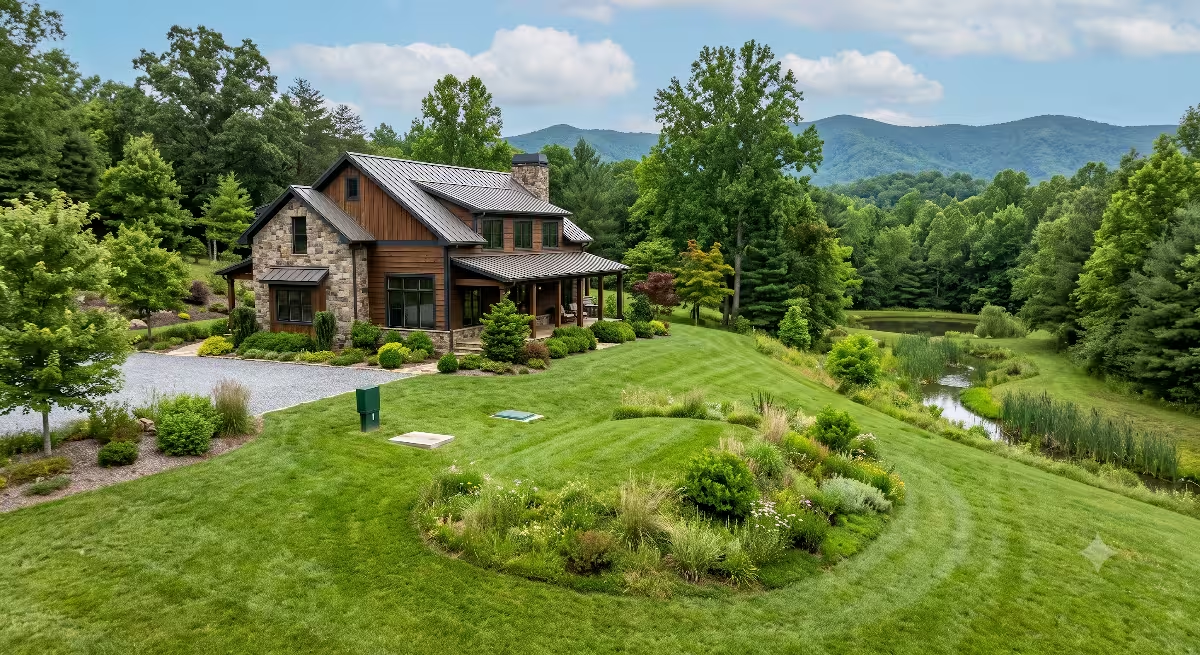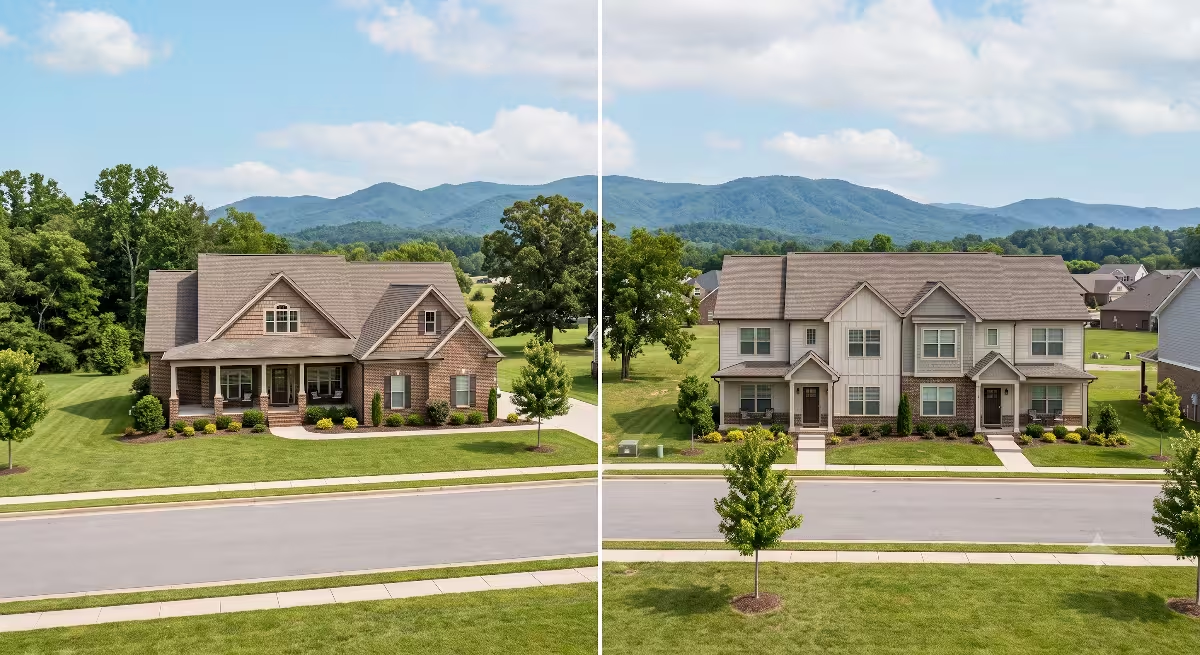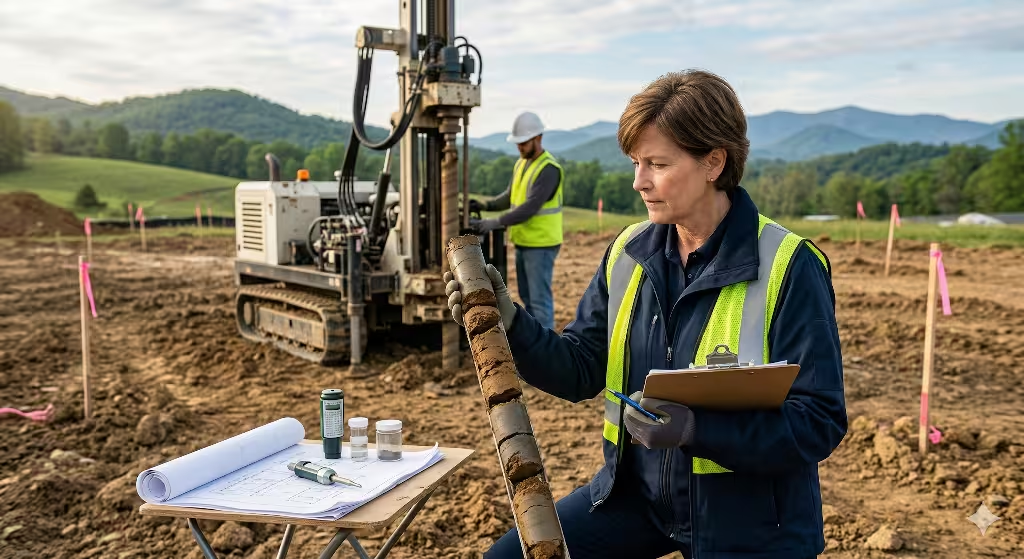


It’s a situation that plays out often here in Northeast Tennessee. A family finds a beautiful piece of land, maybe overlooking the Watauga River or nestled in the hills outside Kingsport, and they begin to dream. They envision a new deck for summer barbecues, a workshop for a beloved hobby, or perhaps an in-law suite for an aging parent.
With all these plans, they hire an architect, the plans look perfect on paper, and they’re ready to start. Then, a visit to the local planning department brings everything to a halt. A voice on the other side of the counter calmly explains that the plan is five feet too close to the property line, or the proposed garage covers too much of the lot.
The dream suddenly feels blocked by a rulebook no one knew existed. This is where many people feel discouraged, believing their project is impossible. Oftentimes this roadblock is often merely a detour. There is a formal, established path for situations just like this. It’s called a zoning variance, and while the process can seem intimidating, it’s entirely manageable with the right knowledge and preparation.
The purpose of this article is to give you that knowledge. We’ll walk through the process together, replacing confusion with a clear, logical plan so you can present your case with confidence and turn that roadblock into a foundation for your project.
Understanding the Fundamentals: What Exactly is a Zoning Variance?
Before you can ask for an exception to a rule, you have to understand the rulebook itself. Think of a city or county’s zoning ordinance as the official set of rules for a large, organized community. These rules decide what can be built where to make sure neighborhoods are safe, functional, and pleasant to live in. For example, zoning is what keeps a noisy factory from being built next to an elementary school or ensures your neighbor can’t build a 10-story apartment building that blocks all your sunlight.
The ordinance divides the entire area—whether it’s Johnson City, Sullivan County, or a smaller town like Jonesborough—into different zones, such as R-1 for single-family homes, C-2 for general commercial businesses, and so on. Each zone has its own specific rules about things like:
- Setbacks: The required empty space between your building and your property lines (front, rear, and sides).
- Lot Coverage: The maximum percentage of your land that can be covered by buildings and pavement.
- Building Height: The maximum height your structure can be.
- Use: The type of activity allowed on the property (e.g., residential, commercial, industrial).
But what happens when your unique property makes following these rules to the letter almost impossible? That’s where a variance comes in.
Defining the Terms: Variance vs. Rezoning
It’s easy to mix up these terms, but they are fundamentally different, and knowing the difference is critical. Using the wrong term can send you down a long and incorrect path.
A Zoning Variance is a minor, specific exception granted to a single property because something about that property is unique and creates a hardship. It’s like asking the referee in a basketball game for a special consideration because the court has a strange dead spot on the floor. You’re not trying to change the rules of basketball for everyone; you’re just asking for a small adjustment for one specific play because of the court’s condition. A variance doesn’t change the zoning of your property. If your home is in an R-1 single-family zone, it stays in that zone. You’re simply getting permission to deviate slightly from one of the physical rules, like a setback.
A Rezoning, on the other hand, is a major, permanent change to the official zoning map. This is like asking the basketball league to change the three-point line distance for all future games. It’s a legislative act that completely changes the property’s classification and the list of what’s allowed on it.
For example, if a developer wanted to build a small grocery store on a corner lot that is currently zoned for residential houses, they would have to apply for a rezoning to change the property to a commercial district. Rezoning is a much more complex, political, and difficult process than getting a variance. For most homeowners looking to build a deck or an addition, a variance is the correct tool.
Two Types of Variances You Need to Know
When you apply for a variance, you’ll need to know which of the two types you’re asking for. This helps you focus your argument and fill out the application correctly.
- Area Variance: This is, by far, the most common type of variance for residential projects. As the name implies, it deals with the “area” of your property—the numbers and dimensions. You’re asking for an exception to a physical rule because of the shape, size, or topography of your land.
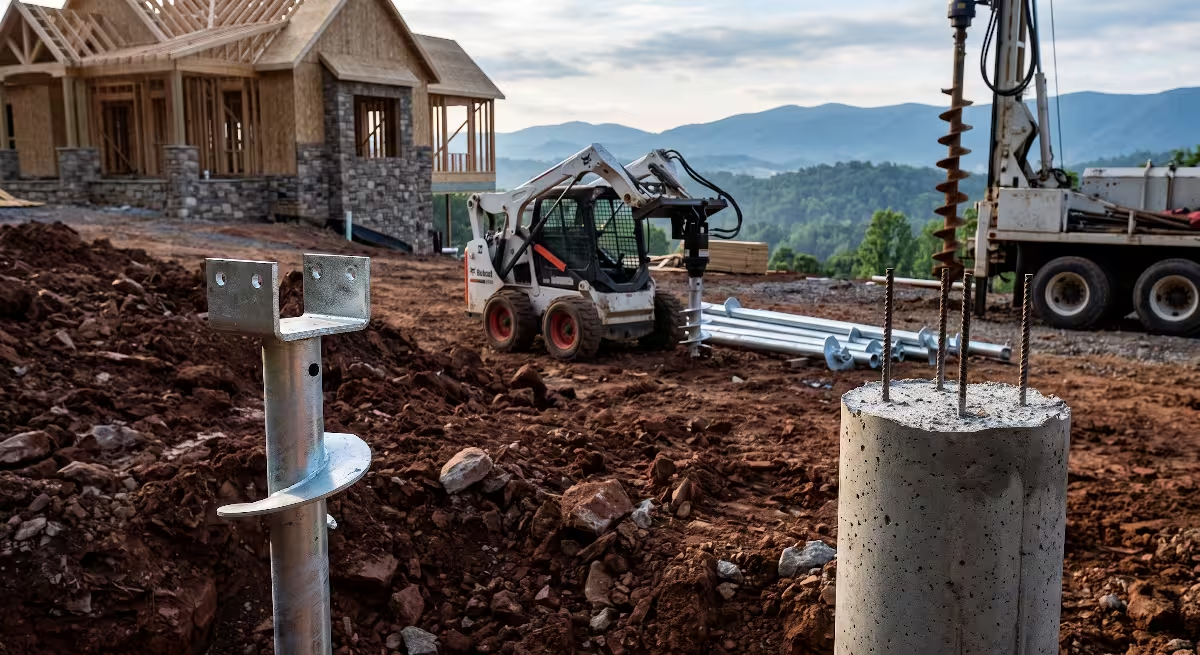
- Example 1 (Setback): Your property is on a steep hill. To build a stable foundation for a garage, you need to build it 15 feet from your side property line, but the zoning rule requires 20 feet. You would ask for a 5-foot area variance.
- Example 2 (Lot Coverage): You live on a very small, narrow lot in a historic part of town. You want to add a small, one-story in-law suite in the backyard, but doing so would put your total lot coverage at 35%, while the rule is 30%. You would request an area variance to exceed the lot coverage limit.
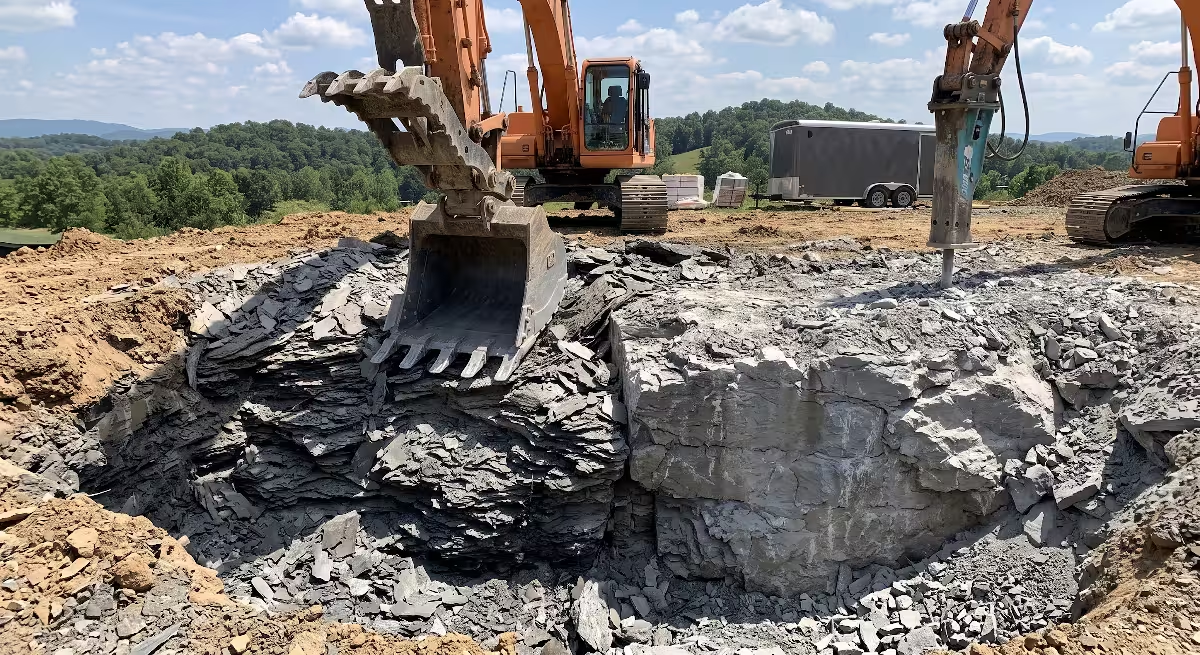
- Example 3 (Height): You need to build your home on raised pilings because your property is in a flood-prone area near a creek. This makes the peak of your roof slightly taller than the 35-foot height limit for the zone. You would ask for an area variance for building height.
- Use Variance: This is much more difficult to get and is often discouraged by planning departments. A use variance is a request to use your property for something that is not normally allowed in your zoning district. This is a bigger ask because it has the potential to change the character of a neighborhood.
- Example: An accountant wants to convert the entire first floor of her home into an office for her practice, with three employees and client parking, in a neighborhood that is strictly zoned for single-family residences only. This would require a use variance because a multi-employee office is a commercial use, not a residential one.
For most projects like additions, decks, garages, and sheds, you will be dealing exclusively with area variances.
The Most Critical Hurdle: Proving “Unnecessary Hardship”
This is the most important section of this entire guide. If you take away only one thing, let it be this: a zoning variance is not granted because you want it or because it would be more convenient. It is granted only when you can legally prove that the zoning rules, when applied to your specific, unique property, create an “unnecessary hardship.”
This is a legal standard, and the members of the Board of Zoning Appeals (BZA) are required to make their decision based on it. Your entire application and presentation must be built around proving this hardship. So, what does it actually mean?
What Qualifies as a Legitimate Hardship?
The hardship must meet a few key tests. You have to be able to answer “yes” to these questions:
- Is the problem unique to my property and not general to the whole neighborhood? The hardship must come from the land itself. If every lot in your subdivision is too small to build a two-car garage, that’s a problem with the subdivision’s design, not a unique hardship for your property. A true hardship is something specific to your parcel.
- Did I create this problem myself? This is crucial. The hardship cannot be self-created. If you built a deck without a permit and later found out it was too close to the property line, you cannot claim a hardship. You created the problem by not following the process. The BZA has very little sympathy for self-created hardships.
- Will granting the variance harm the public or my neighbors? You must show that your request won’t fundamentally change the character of the neighborhood, lower property values, or create a safety issue. A small setback variance for a garage is unlikely to cause harm. A variance to build a loud workshop right next to your neighbor’s bedroom window would likely be seen as harmful.
- Is the request the minimum variance needed to solve the problem? You should not ask for more than you absolutely need. If you only need a 3-foot variance to make your project work, don’t ask for 10 feet just to have extra room. Asking for the minimum shows the board you are trying to respect the spirit of the zoning ordinance.
Examples of Valid vs. Invalid Hardship Claims
Let’s look at some real-world scenarios you might see here in the Tri-Cities to make this concept perfectly clear.
Valid Hardship Claims (Likely to be Considered):
- The Scenario: A homeowner in Johnson City has a lot with a protected “wet weather conveyance” (a small, natural drainage ditch) running through the back corner. The city’s setback rules require their new shed to be built in that exact spot.
- The Argument: “The physical feature of our land—this protected ditch—prevents us from reasonably using our backyard according to the standard setback rules. We are requesting a variance to place the shed on the other side of the yard, which is 5 feet closer to the side property line, to avoid impacting the drainage.”
- Why it works: The hardship comes from the land (the ditch), it’s not self-created, and moving the shed likely won’t harm the neighbors.
- The Scenario: A family in Kingsport owns a corner lot that is shaped like a slice of pie. Because it’s a corner lot, the zoning code requires it to have two “front yard” setbacks, leaving only a tiny, unusable triangle in the middle to build on.
- The Argument: “The combination of our lot’s unusual shape and the double front-yard setback requirement makes it impossible to build a modest home that is comparable to others in the neighborhood. We are requesting a reduction of the side-street setback to allow for a reasonable building footprint.”
- Why it works: The hardship is created by the unusual shape of the property itself, a classic reason for a variance.
Invalid Hardship Claims (Likely to be Denied):
- The Scenario: A homeowner wants to build a large, detached three-car garage to store his fishing boat, but the standard setback rules only leave enough room for a two-car garage.
- The Argument: “We have a large boat that won’t fit in a standard garage, and building a bigger one would really improve our property value. We have a hardship because we can’t use our property the way we want to.”
- Why it fails: This is an argument based on personal desire and financial gain, not a hardship created by the land. The property can still be reasonably used with a two-car garage. This is a want, not a need based on a property-specific limitation.
- The Scenario: A builder bought a lot, and after the purchase, he realized a protected wetland was on the property, limiting where he could build.
- The Argument: “I have a financial hardship because I didn’t know about this wetland, and now my profit will be lower because I have to build a smaller house.”
- Why it fails: The hardship is financial, which the board cannot consider. Furthermore, failing to do proper research (due diligence) before buying land is considered a self-created hardship.
The Process: A Step-by-Step Guide to Filing in the Tri-Cities
Now that you understand the core concepts, let’s walk through the actual process. While the specific application forms and filing fees will vary slightly between Johnson City, Kingsport, Bristol, and the county governments like Washington or Sullivan, the fundamental steps are remarkably consistent across the region.
Step 1: The Pre-Application Meeting.
This is the most important step, and it happens before you ever fill out a form or pay a fee. Do not skip this. Contact the planning department for your specific jurisdiction:
- Johnson City: Planning and Development Services
- Kingsport: Planning Department
- Bristol, TN: Community Development Department
- Washington County: Planning Commission
- Sullivan County: Planning & Codes Department
Schedule a meeting or call and speak with a staff planner. Bring a simple sketch of your property and what you want to do. Be humble and ask for their advice.
Questions to Ask the Planner:
- “Based on this sketch, does it look like I need a variance?”
- “What is the specific hardship I need to prove?”
- “Have you seen requests like this before? Were they successful?”
- “Is there any other way to accomplish my goal without a variance?”
The staff planner is an invaluable resource. They cannot give you legal advice, but they can guide you through their specific process and give you an honest, professional opinion on your chances. Listening to them can save you hundreds of dollars in application fees and countless hours of wasted effort.
Step 2: Compile Your Application Package.
Once you’ve decided to move forward, you need to assemble a professional and complete application package. An incomplete package will be rejected, delaying your project. You will generally need:
- The Official Application Form: Get this from the planning department’s website or office. Fill it out completely and neatly.
- A Detailed Site Plan: This is a drawing of your property that is drawn to scale. It doesn’t always need to be done by a licensed surveyor (for a simple project), but it must be accurate and clear. It should show:
- Property lines with dimensions.
- The location and dimensions of all existing buildings.
- The location and dimensions of the proposed project.
- The exact distances from the proposed project to all property lines (this shows the setbacks you have vs. the setbacks you need).
- Any other important features like streams, steep slopes, or large trees.
- A Written Justification (Letter of Hardship): This is your chance to tell your story. In a clear, one-page letter, explain what you want to do and why you need a variance. Use the language we discussed above. State the unique physical condition of your property, explain why it creates an unnecessary hardship, and confirm that your project will not harm the public or your neighbors.
- List of Adjoining Property Owners: The city or county will require you to provide a list of the names and addresses of all property owners who touch your property, including those across the street. This is so they can be officially notified of your request. You can get this information from the Property Assessor’s office.
- The Application Fee: The fee for a variance application can vary, but you should expect it to be somewhere between $150 and $500. This fee is non-refundable, even if your request is denied.
Step 3: Public Notification & Staff Review.
After you submit your complete application, a formal process begins. First, the government will notify the public about your request. This usually involves two things:
- A sign will be posted on your property in a visible location. This sign will state what you are asking for and the date, time, and location of the public hearing.
- Letters will be mailed to all the adjacent property owners you listed, providing them with the same information.
While this is happening, the planning department staff will conduct a formal review of your application. They will analyze it against the zoning ordinance and the legal standards for a hardship. They will then write an official Staff Report, which will include their professional recommendation to the Board of Zoning Appeals. They will typically recommend approval, approval with certain conditions, or denial. You should receive a copy of this report a few days before the hearing.
Step 4: The Board of Zoning Appeals (BZA) Public Hearing.
This is the main event. The BZA is a group of citizen volunteers appointed by the city council or county commission. Their job is to hear appeals and variance requests in a fair and impartial way, almost like a small court.
- Prepare for the Hearing: Review the staff report carefully. If they recommended denial, be prepared to explain why you disagree with their reasoning. Prepare a short, simple presentation that lasts no more than 3 to 5 minutes. Practice it. Bring extra copies of your site plan and photos of your property to show the board members.
- During the Hearing: When your case is called, walk to the podium. State your name and address for the record. Calmly and clearly explain what you are asking for and why. Walk them through your hardship. A good script would be:
- “Good evening, members of the board. My name is [Your Name], and I live at [Your Address].”
- “I am here tonight to respectfully request a [describe the variance, e.g., a 5-foot rear setback variance] to allow for the construction of a [describe the project, e.g., a detached garage].”
- “As you can see from my site plan, my property has a [describe the unique feature, e.g., a very steep slope] in the back yard. This physical feature creates a hardship because…”
- “We believe this request is the minimum needed, and it will not negatively impact our neighbors or the character of our neighborhood.”
- Answer Questions: The board will have questions for you. Answer them honestly and directly. If you don’t know an answer, it’s okay to say so. After you speak, the chairman will ask if anyone from the public wishes to speak about your case. This is when your neighbors can support or oppose your project.
What Happens After the Hearing? The Decision and Next Steps
After everyone has had a chance to speak, the public portion of the hearing will be closed. The board members will discuss your request among themselves and then vote. There are three possible outcomes.
If You Are Approved

Congratulations! If the board votes to approve your variance, you’ve cleared a major hurdle. There is usually a short appeal period (often 15-30 days) during which someone could challenge the decision in court, but this is rare. After that period, the variance is official, and you can take the decision letter to the codes department to apply for your building permit. Sometimes the approval comes with conditions. For example, they might approve your garage variance on the condition that you plant a row of evergreen trees to screen it from your neighbor’s view. You must follow these conditions exactly.
If You Are Denied
Hearing the board vote to deny your request can be deeply disappointing, especially after all the work you’ve put in. It’s important not to be discouraged. Your first step is to listen very carefully to their reasons for the denial. This will tell you what your options are.
- Option 1: Modify Your Plan. This is almost always the best path forward. If they denied your request because it was too big, can you redesign the project to be smaller and meet the code? If they were concerned about its impact on a neighbor, can you move it to a different part of your property? Modifying your plan to comply with the rules allows you to move forward without any further hearings.
- Option 2: Appeal. You have the legal right to appeal the BZA’s decision to a higher court, like the local Chancery Court. However, I must give you a word of caution here: this is a long, difficult, and very expensive process that requires hiring an attorney. You are no longer just arguing about your hardship; you are trying to prove that the BZA made a legal error in its decision, which is very hard to do. This option should be considered a last resort.
Pro-Tips for a Successful Application
After decades in this business, I’ve seen what separates successful applications from unsuccessful ones. It often comes down to preparation and professionalism.
- Talk to Your Neighbors Early: This is my most important piece of advice. Do not let your neighbors first learn about your project from a cold, official letter from the city. Weeks before you even apply, go talk to them. Bring a sketch, explain what you want to do, and ask if they have any concerns. More often than not, they will appreciate you asking and will have no problem with your project. A neighbor speaking in favor of your project at the hearing is incredibly powerful. An angry neighbor speaking in opposition is the single biggest reason that variances get denied.
- Professional Presentation Matters: You don’t need an expensive, professionally printed presentation, but everything you submit should be neat, clean, and easy to understand. Your site plan should be legible. Your letter should be typed and free of errors. At the meeting, dress respectfully. This all shows the board that you are a serious person who respects their time and the process.
- Do Your Homework: Many cities and counties now post minutes from past BZA meetings online. Go read them. See what kinds of requests are being approved and what kinds are being denied in your area. This will give you a much better feel for what your local board considers to be a valid hardship.
Conclusion: Building with Precision and Integrity
The zoning variance process can feel like a complex maze, but it is a logical one. It exists to provide a necessary escape valve for property owners who, through no fault of their own, are unfairly burdened by the one-size-fits-all nature of zoning codes. It is a system built on proving a simple point: that your property is unique and requires a unique consideration.
Success is not about finding a loophole or “beating the system.” It is about demonstrating with facts, precision, and professionalism that your request is reasonable, necessary, and fair to both you and your community. By doing your homework, preparing a thorough application, and presenting your case with integrity, you can navigate this process with confidence. A solid plan, respectfully presented, is the best foundation you can build—not just for your project, but for your relationship with the community you call home.