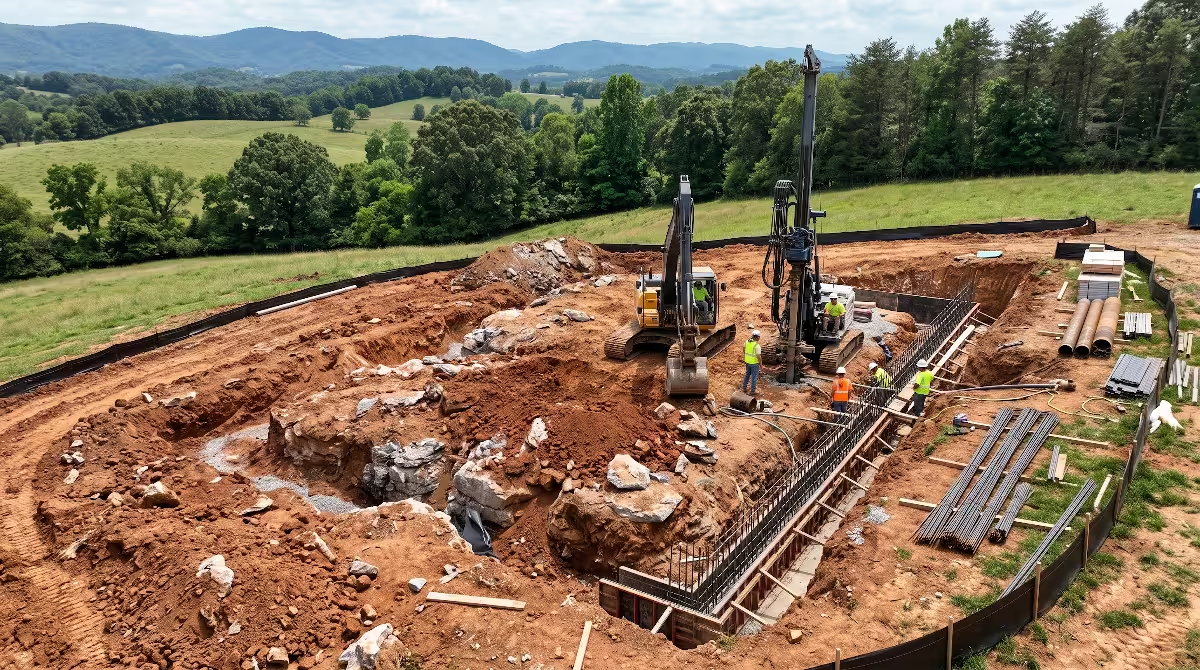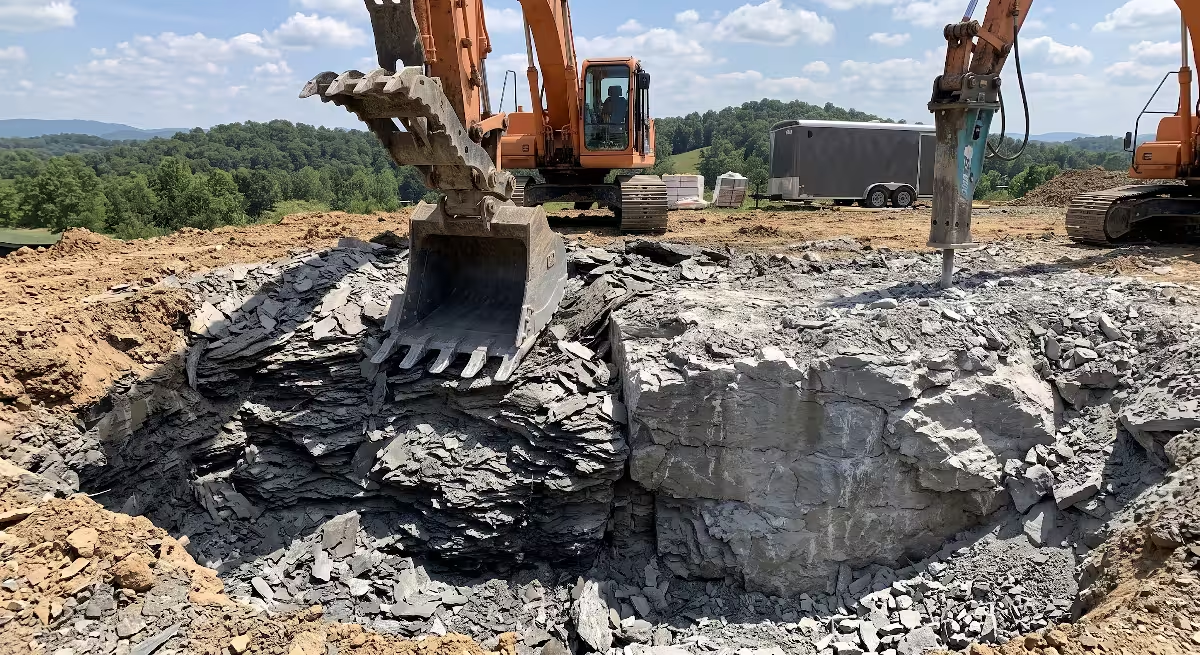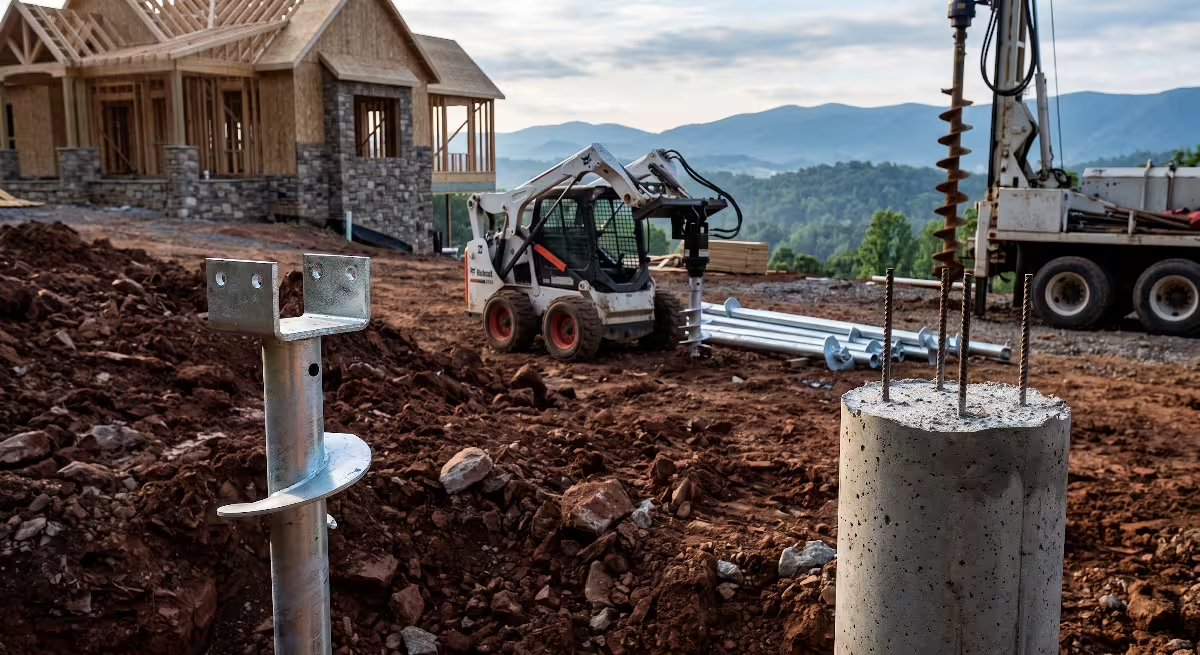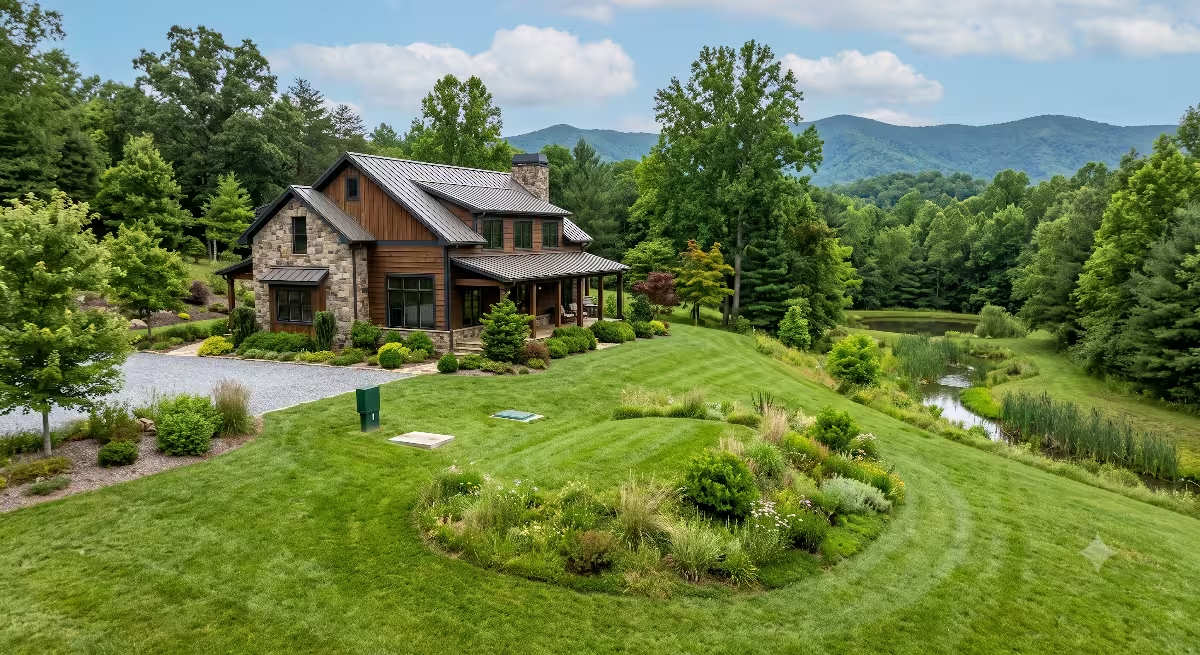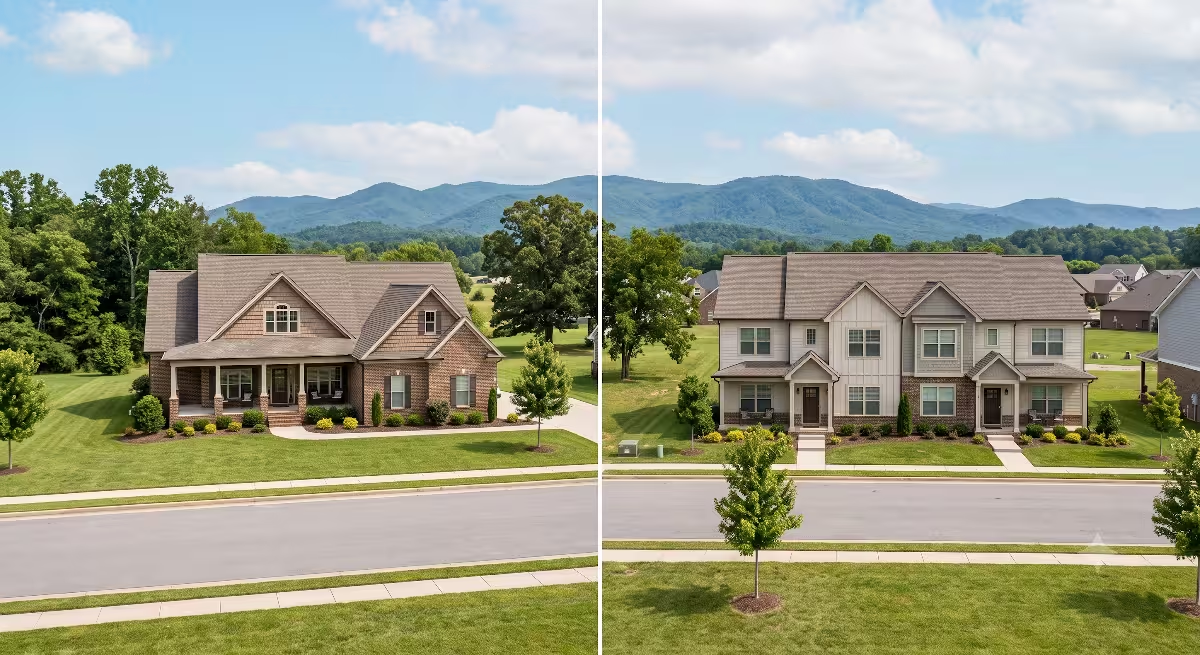


Picture this: You’ve finally found it – that perfect piece of land overlooking the Watauga River, or maybe a charming older home nestled in Kingsport’s historic Fairacres neighborhood, ripe for renovation. Your mind is buzzing with possibilities! You envision adding a workshop for your hobbies, building a small in-law suite, or perhaps starting that home-based business you’ve dreamed of. The excitement builds… until it crashes headlong into an invisible, yet incredibly solid, barrier. A notice arrives, or a permit is denied, citing something called “zoning restrictions.” That initial thrill curdles into frustration, confusion, maybe even a sense of unfairness. Why can’t you do what you want with your own property?
Doesn’t it make you stop and think? As you travel across our Tri-Cities region, from the revitalized downtown Bristol to the growing developments stretching towards Boones Creek, have you ever truly considered why our communities look and function the way they do? Why is a quiet residential street preserved, while just a few blocks away, a bustling commercial center thrives? Why are certain types of businesses welcomed in one area but prohibited in another, seemingly similar, location?
The answer, fundamentally, lies in local zoning laws. Now, don’t let the term intimidate you. At its core, zoning is simply the set of rules our local governments (Johnson City, Kingsport, Bristol) put in place to guide how land is used. Think of it as a community-agreed-upon blueprint, aiming for orderly development, separating incompatible activities (like keeping heavy industry away from quiet neighborhoods), and protecting public health, safety, and general welfare.
However – and this is where that initial frustration often stems from – navigating these regulations requires a degree of technical understanding. Let’s be direct: Misinterpreting or simply being unaware of these local ordinances isn’t just a minor inconvenience. It can lead to genuinely costly mistakes, stall your building or renovation projects indefinitely, impose unexpected limits on how you can use your property, and, in some cases, result in legal challenges. Honesty and reliability, core values we cherish, demand acknowledging these rules upfront.
Therefore, this article focuses specifically on the local zoning laws within the Tri-Cities – Johnson City, Kingsport, and Bristol, Tennessee – and their direct impact on property use. My aim is to help demystify this crucial aspect of real estate. We’ll break down the concepts, explore how these rules affect your plans, and guide you on where to find the reliable information you need, empowering you to make informed decisions about your property ventures right here in Northeast Tennessee.
Okay, let’s delve deeper into the framework of understanding local zoning laws here in the Tri-Cities. Building upon our introduction, we’ll now break down the technical aspects, the real-world impacts, and how you can navigate the system effectively. Honesty and technical competence require us to get specific.
(Note: While I strive for accuracy based on common practices and my knowledge of the region, always consult the official, current zoning ordinances and planning departments of Johnson City, Kingsport, or Bristol for definitive information regarding specific properties as of May 2, 2025. Codes can and do change!)
Deconstructing Zoning: The Technical Foundation
So, we’ve established that zoning exists, but what exactly is it made of? At its heart, zoning is an exercise of a municipality’s “police power” – its inherent authority, granted by the state of Tennessee, to enact regulations that protect the public health, safety, and general welfare. Think of it less as arbitrary restriction and more as a tool for community planning. But why bother?
The primary purposes include:
- Orderly Growth: Preventing haphazard development, ensuring infrastructure like roads and utilities can keep pace.
- Compatibility: Separating incompatible land uses – would you really want a noisy factory built next door to your quiet residential home on the Tree Streets? Zoning aims to prevent such conflicts.
- Protecting Property Values: Stable, predictable neighborhoods tend to maintain value better.
- Public Health & Safety: Ensuring adequate light, air, and space; preventing overcrowding; facilitating emergency access.
To achieve this, zoning ordinances – the actual legal documents – are created. These are typically developed by a city’s Planning Department and Planning Commission (citizen boards appointed to advise on planning matters), involving public input, and are ultimately adopted into law by the elected City Council or Board of Mayor and Aldermen. Enforcement usually falls to the Codes Enforcement or Building Department.
These ordinances divide the entire city into different zoning districts. While the exact codes differ slightly between Johnson City, Kingsport, and Bristol, you’ll find common categories:
- Residential (R zones): Typically ranging from low-density single-family (like R-1) to higher-density multi-family (like R-3 or R-4). These dictate how many dwelling units can be on a lot, minimum lot sizes, etc.
- Commercial (C or B zones): Allowing retail, office, and service businesses. Restrictions vary greatly, from neighborhood-scale shops (perhaps C-1 or B-1) to large regional centers (maybe C-4 or B-4). Johnson City’s B-4 Central Business District, for instance, has different rules than a suburban C-2 zone.
- Industrial (I or M zones): For manufacturing, warehousing, and distribution. Often separated into “light” (I-1/M-1) and “heavy” (I-2/M-2) based on intensity and potential nuisance factors.
- Agricultural (A zone): More common on the fringes, preserving land for farming.
- Special Districts: Such as Mixed-Use (M-U), Planned Unit Developments (PUDs) offering more flexibility, or Historic Overlay zones with additional aesthetic controls.
Within each district, the ordinance specifies key rules:
- Permitted Uses: What activities/building types are allowed by right?
- Conditional/Special Uses: What might be allowed if specific conditions are met (often requiring a special permit)?
- Bulk & Density Regulations: These are critical:
- Setbacks: Minimum distances structures must be from front, side, and rear property lines.
- Lot Coverage: Maximum percentage of the lot that can be covered by buildings.
- Height Limits: Maximum building height allowed.
- Minimum Lot Size/Width: Smallest permissible lot dimensions.
- Floor Area Ratio (FAR): Ratio of total building floor area to the lot area.
- Parking & Loading: Minimum required off-street parking spaces based on use (e.g., per dwelling unit, per square foot of retail).
- Signage: Regulations on size, type, location, and lighting of signs.
Understanding these technical components is the first step toward ensuring your plans align with community standards. Isn’t it better to know the rules of the game before you start playing?
How Tri-Cities Zoning Directly Shapes Your Property Plans
Knowing the technical rules is one thing; seeing how they impact your real-world plans for a property in Johnson City, Kingsport, or Bristol is another. Let’s consider some common scenarios where zoning plays a decisive role:
- Building a New Home or Structure: Zoning dictates the type of dwelling (single-family, duplex, etc.), the maximum size and height, and precisely where on the lot it can be placed due to setback requirements. Found a great deal on a narrow lot? You’ll need to verify if the required side setbacks even leave enough width to build. Thinking of adding a detached garage or workshop? Its size and placement are also governed by these rules.
- Running a Home-Based Business (Home Occupation): This is a frequent point of inquiry. While many simple home offices with no client traffic might be permissible in residential zones, businesses involving customers visiting the home, significant deliveries, outdoor storage, or non-resident employees often face strict limitations or may be prohibited altogether. The specifics vary significantly between the three cities, so assuming the rules are the same is unwise. Does your business plan fit the residential character the zoning aims to protect?
- Short-Term Rentals (Airbnb, VRBO): Another hot topic. The permissibility and regulation of short-term rentals are rapidly evolving and differ across jurisdictions. Some areas may allow them by right in certain zones, others may require special permits and inspections, impose limits on the number of days rented, or prohibit them entirely in some residential districts. Check the current specific ordinances for Johnson City, Kingsport, and Bristol – don’t rely on outdated information.
- Additions and Renovations: Planning to add a second story or expand your kitchen? Even modifications to existing structures must comply with current zoning regulations regarding setbacks, height, and lot coverage. Your renovation plans will likely require a building permit, and zoning compliance is a key part of that review.
- Impact on Property Value: This is more nuanced. Consistent, well-enforced zoning can stabilize or enhance property values by maintaining neighborhood character and predictability. Conversely, overly restrictive zoning might stifle desired improvements, while zoning changes nearby (like allowing a less desirable use) could potentially negatively impact your property’s appeal. How might the long-term value of your property investment be influenced by the zoning rules not just on your lot, but in the surrounding area? It’s a crucial question for any buyer.
- Nonconforming Uses (“Grandfathering”): What if your property was built or used in a certain way before the current zoning rules were adopted, and it no longer complies? Generally, such “legal nonconforming uses” or structures are allowed to continue. However, there are usually strict limitations. You often cannot expand the nonconforming use, rebuild it if substantially damaged (e.g., by fire), or resume it after abandoning it for a specified period. Understanding these limitations is vital if buying a property with nonconforming characteristics.
Zoning, therefore, isn’t just abstract lines on a map; it’s a set of rules that directly enables, restricts, and shapes what you can physically and legally do with your property in the Tri-Cities.
Navigating the System in Johnson City, Kingsport & Bristol
Understanding the rules is essential, but how do you find out which rules apply to a specific property and what do you do if your plans seem to conflict? Acting with integrity means doing your homework before committing.
Finding Your Property’s Zoning: This is the critical first step.
- Official City Resources: The definitive sources are the official Planning Departments or Community Development Departments of each city.
- Johnson City: Look for the Planning and Development Services Department website. They typically have online interactive zoning maps and the full text of the zoning ordinance.
- Kingsport: Check the City of Kingsport website, usually under Planning/Community Development or a similar name. Expect to find their zoning map and ordinance there.
- Bristol, TN: Search the City of Bristol, TN website for their Planning Department or Community Development section.
- Using the Maps: Locate the specific property address or parcel ID on the official zoning map. This will show you the designated zoning district (e.g., R-2, C-1, I-1).
- Consulting the Ordinance: Once you know the zone, you need to look up that specific district in the text of the city’s zoning ordinance. This document details the permitted uses, setback requirements, height limits, etc., for that zone.
- Verification: For complex situations or if you’re unsure, always contact the relevant city’s Planning Department directly. They can provide official confirmation of the zoning and help interpret the ordinance. Relying on third-party websites or assumptions can be risky.
- Official City Resources: The definitive sources are the official Planning Departments or Community Development Departments of each city.
The Permitting Link: Remember that zoning compliance is almost always reviewed when you apply for a building permit for new construction, additions, or significant renovations. The permit application process is where the city formally checks if your plans meet the zoning code.
When Your Plans Don’t Align: What if your dream project doesn’t quite fit the standard rules for the zone? There are established processes for seeking flexibility, but success is never guaranteed.
- Variances: If complying with a specific rule (like a setback) creates an “unnecessary hardship” due to unique physical conditions of your property (e.g., steep slope, odd lot shape), you might be able to seek a variance. This is a minor deviation from the rules, not a change in the permitted use. You typically apply to a Board of Zoning Appeals (BZA), demonstrating hardship that isn’t self-created and proving the variance won’t harm the public interest or undermine the ordinance’s intent. It often involves a public hearing.
- Rezoning: If you want to use the property for something not allowed in the current zone (e.g., put a commercial business in a residential zone), you need a rezoning. This is a formal change to the official zoning map – a legislative act. It requires demonstrating that the change is consistent with the city’s comprehensive plan and benefits the community. It’s a much more involved process than a variance, typically requiring review and recommendation by the Planning Commission and final approval (or denial) by the City Council/BMA, usually with public hearings.
- Special Use / Conditional Use Permits: Some uses might be allowed in a zone only if they meet specific extra conditions outlined in the ordinance (e.g., a church in a residential zone might need adequate parking and landscape buffers). This requires applying for a Special or Conditional Use Permit, reviewed against those specific criteria, often by the Planning Commission or BZA.
Key Contacts: When in doubt, reach out! Your primary points of contact are:
- Johnson City Planning and Development Services
- Kingsport Planning Department
- Bristol, TN Community Development/Planning Department
- The respective city Codes Enforcement departments (for questions about violations).
Being proactive and communicating with these departments is the most reliable way to navigate the system.
Answering Your Pressing Zoning Questions
As you absorb this information, certain questions likely come to mind. These are common points of discussion and confusion, so let’s address them directly:
- Can local zoning laws actually change over time? Absolutely. Zoning ordinances are not static. Cities periodically update their Comprehensive Plans (long-range guides for growth), which can lead to corresponding updates in the zoning code to reflect new goals or changing community needs. Property owners can also petition for rezonings (as discussed above), which, if approved, alter the map for specific parcels. Staying aware of proposed changes, especially near your property, is wise.
- So, how exactly do I find the zoning for a property I want to buy in Kingsport (or Johnson City, or Bristol)? To reiterate the reliable method: 1) Visit the official city website. 2) Locate the Planning Department/Community Development section. 3) Find the interactive or PDF zoning map and locate the property. 4) Note the zoning district designation. 5) Find the zoning ordinance document online and read the specific rules for that district. 6) For confirmation or clarification, call or visit the city’s Planning Department. Don’t rely solely on realtor listings or hearsay.
- What really happens if I just ignore the rules and violate zoning regulations? This is strongly discouraged. Codes Enforcement officers can issue Notices of Violation. Consequences can escalate from requirements to cease the violating activity or remove an illegal structure, to daily fines, liens on the property, and potentially legal action by the city to force compliance. Zoning violations can also create major problems when you try to sell the property later. Is the risk truly worth it?
- Are the rules for running a business from my home basically the same across all three cities? No, it’s safer to assume they are different. While the general principles might be similar (limiting impact on neighbors), the specific allowances for signage, client traffic, types of businesses permitted, and square footage limitations can vary considerably. You must check the specific home occupation ordinance for the city where the property is located.
- My house was built 60 years ago and sits too close to the property line according to today’s rules (it’s ‘grandfathered’). If it’s heavily damaged in a storm, can I rebuild it exactly where it was? Maybe, but often not automatically. Zoning ordinances typically have specific rules for nonconforming structures. Many codes state that if a nonconforming structure is destroyed beyond a certain percentage (often 50% of its value), it must be rebuilt in compliance with current zoning regulations (e.g., meeting current setbacks). Check the specific ordinance language carefully.
- I’ve heard people mention ‘spot zoning.’ What is that, and should I worry about it? Spot zoning refers to the practice of singling out a small parcel of land for a zoning classification totally different from, and inconsistent with, the surrounding area, usually for the benefit of the property owner and potentially to the detriment of neighbors or the comprehensive plan. For example, rezoning one single lot in the middle of a large R-1 residential zone to allow a C-2 commercial use might be considered spot zoning. It’s often legally questionable and can be challenged in court. While not exceedingly common, being aware of the concept helps you recognize potentially unfair or inconsistent zoning actions.
Considering these complexities, doesn’t investing a little time upfront to thoroughly understand these local regulations seem like the most reliable and prudent path forward for any significant property decision?
The Bigger Picture: Zoning’s Role in the Tri-Cities’ Future
Stepping back from individual property concerns, it’s important to appreciate how zoning collectively shapes the Tri-Cities region we know and enjoy. It’s more than just rules; it’s a primary tool our communities use to manage growth and define their character.
- Shaping Community Character: Think about the distinct feel of different neighborhoods – the historic preservation in downtown Jonesborough, the planned layouts of newer subdivisions near Bristol Motor Speedway, the mix of uses along Johnson City’s State of Franklin Road. Zoning ordinances, with their use restrictions, density controls, and sometimes even architectural guidelines (in overlay districts), are instrumental in creating and maintaining these unique identities. Is the character of your neighborhood something zoning helps protect?
- Managing Growth and Infrastructure: As the Tri-Cities continue to attract residents and businesses, zoning helps manage this growth. By designating areas for residential, commercial, and industrial development, cities can better plan for the necessary infrastructure – roads, water/sewer lines, schools, parks, emergency services. Uncontrolled development can quickly outstrip infrastructure capacity, leading to traffic congestion, strained utilities, and reduced quality of life. Zoning aims to align development patterns with infrastructure planning.
- Balancing Interests: Zoning inherently involves balancing the desires of individual property owners with the broader interests and goals of the community. It’s a continuous process involving public input, deliberation by planning commissions, and decisions by elected officials. It attempts to find a middle ground between allowing property owners reasonable use of their land and protecting neighbors and the community from negative impacts.
- Looking Ahead: Stay informed about discussions regarding updates to your city’s Comprehensive Plan or major rezoning initiatives. These often signal future directions for development and can impact large areas. For instance, discussions about promoting mixed-use development, increasing housing density in certain corridors, or preserving green space are often reflected in zoning changes. Being aware allows you to participate in the process and understand potential long-term impacts on the region.
Zoning, therefore, is a dynamic process that reflects our communities’ ongoing efforts to build a desirable, functional, and sustainable future here in Northeast Tennessee.
Conclusion: Your Foundation for Sound Decisions
We’ve journeyed through the often-complex landscape of local zoning laws, from their technical underpinnings to their tangible impact on property use right here in Johnson City, Kingsport, and Bristol. As we’ve seen, these aren’t mere suggestions; they are enforceable regulations that significantly influence what you can buy, build, and do with real estate in the Tri-Cities.
Understanding these rules isn’t just about avoiding penalties; it’s about making informed, sound decisions. It aligns directly with the core values of integrity and technical competence. Undertaking due diligence – taking the time to verify zoning, understand the restrictions, and follow the correct procedures – is fundamental to any honest and reliable real estate endeavor, whether you’re a homeowner planning a renovation, a builder mapping out a new project, or an investor evaluating a potential purchase.
Don’t leave zoning to chance. Before you invest your time, money, and dreams into a property, take that crucial step: Check the zoning. Consult the official city resources, ask questions of the planning departments, and ensure your plans align with the community’s established blueprint. Knowing the rules of the land before you break ground (or sign the deed) is the most secure foundation you can build upon.
Wishing you clarity and success in all your property endeavors here in our beautiful region.