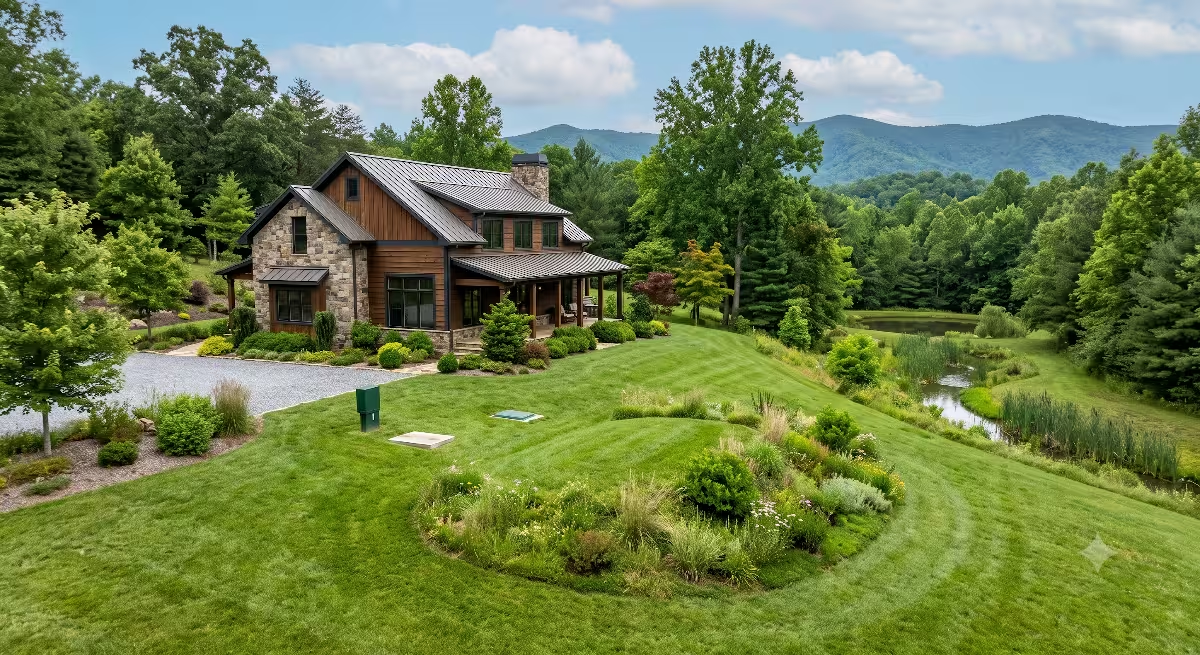


It’s a moment that stops you in your tracks. You’re driving through our beautiful corner of Tennessee when you see it, the perfect piece of land. Maybe it’s a gentle slope just outside Johnson City with a view of the mountains, or a quiet, tree-lined lot in a Kingsport neighborhood that feels like home. You can already picture the driveway, the front porch, the life you’ll build there. It’s a powerful, exciting vision.
But before you let your heart make the final decision, you have to understand the invisible blueprint that already exists on that property. I’ve seen the pure joy that comes from building a dream home, but I’ve also witnessed the heartbreak and financial disaster that occurs when a family discovers, too late. that this invisible code, known as residential zoning, prohibits what they planned to build.
This is, without question, the most critical and often overlooked step in the entire home-building journey. Zoning isn’t just bureaucratic red tape; think of it as the foundational “rules of the road” for our community. It’s a shared agreement that protects property values, preserves the character of our neighborhoods, and ensures everything fits together logically. My goal with this guide is to translate those complex codes into a practical, easy-to-understand resource for anyone looking to buy or build in the Tri-Cities, so you can move forward with your vision, confident and clear.
What is Zoning and Why Does It Matter for Your Home?
Before we look at a single map, it’s essential to understand the core concepts. In my line of work, a solid foundation is everything, and that’s precisely what these terms are for your project. Zoning is simply the set of local laws, the municipal code, that a city or county uses to guide development. Its primary purpose is to group compatible land uses together to ensure the community is functional and orderly. It’s the reason you don’t have a noisy auto body shop opening next to a quiet residential cul-de-sac. For you as a homeowner or builder, it dictates the very DNA of what’s possible on a piece of property.
Key Zoning Terms You’ll Encounter
You will run into this language when you talk to planners or read the ordinances. Don’t be intimidated; it’s more straightforward than it sounds.
- Use: This is the most fundamental concept. It defines what the property can be used for. In residential zones, this typically means a single-family home, but some zones may permit duplexes or multi-family apartment buildings.
- Setbacks: This is the required “breathing room” around your home. A setback is the minimum distance your house must be from the front, side, and rear property lines. This is non-negotiable and one of the first things to check when planning your home’s placement on a lot.
- Lot Coverage: This rule dictates the maximum percentage of your property that can be covered by “impervious surfaces”—your home’s footprint, driveway, garage, and any other structure that doesn’t allow water to pass through. It ensures green space and helps with stormwater management.
- Variance: A variance is a minor exception to the zoning rule. Let’s say the shape of your lot is unusual, making it impossible to meet a side setback by just one or two feet. You can apply to the Board of Zoning Appeals for a variance. This is for demonstrating a specific hardship, not just for convenience.
- Rezoning: This is a much bigger deal than a variance. Rezoning is the formal process of changing a property’s zoning classification entirely, for example, from low-density residential to commercial. This involves public hearings before the Planning Commission and a final vote by the city council or county commission.
A Tour of Residential Zones in the Tri-Cities
While Johnson City, Kingsport, and Bristol each have their own specific codes, they all follow a similar logic based on density—the number of homes allowed within a certain area.
Common Residential Zoning Districts
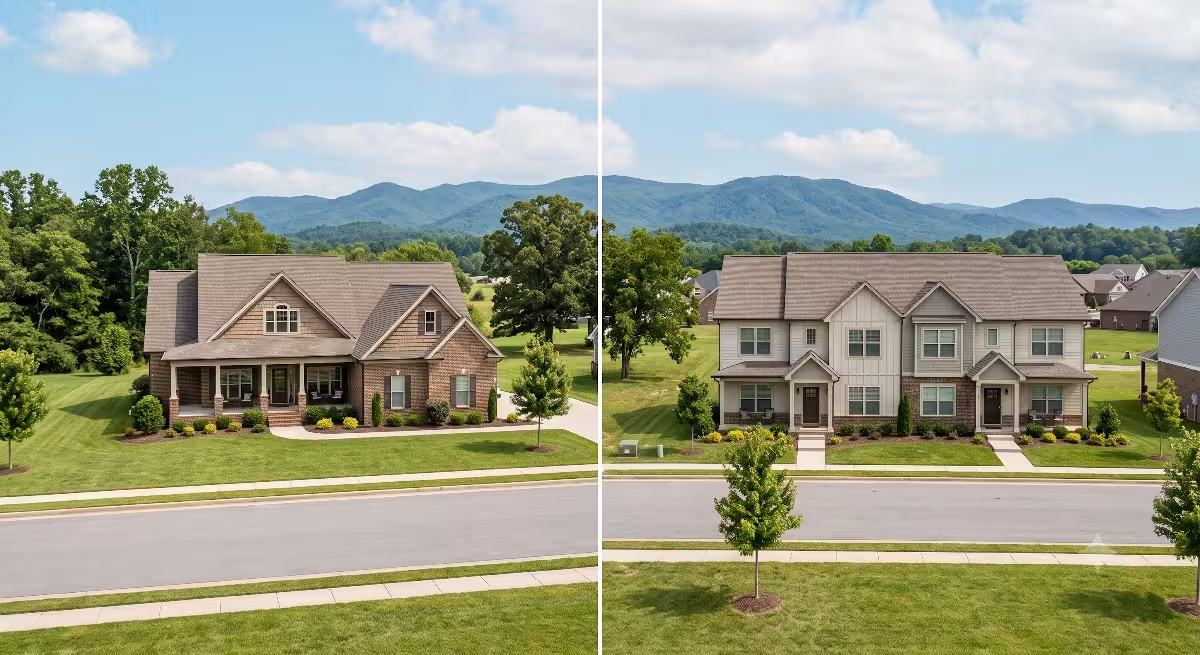
- Low-Density Residential (Examples: R-1 in Johnson City, R1A in Kingsport, R-1A in Bristol): This is the classic suburban neighborhood zone. It primarily allows for single-family detached homes on individual lots, often with larger minimum lot sizes and generous setbacks to create a sense of space.
- Medium-Density Residential (Examples: R-3/R-4 in Johnson City, R-2 in Bristol): These zones act as a transition. You’ll still find single-family homes here, but the regulations also typically permit attached homes like duplexes and townhouses. Lot sizes are often smaller, and the overall feel of the neighborhood is more compact.
- High-Density Residential (Examples: R-5 in Johnson City): These areas are designated for the most intensive residential use, such as multi-story apartment buildings and condominium complexes. They are almost always located along major arterial roads and have access to public transit.
- Agricultural/Rural Zones (Example: A-1 in Washington and Sullivan Counties): Outside the official city limits, you’ll find these zones. They are designed for farms and homes on very large lots (often one acre or more). As the Tri-Cities region grows, you will often see land on the fringes of these A-1 zones being rezoned for new subdivisions.
Special Overlays: Historic and Conservation Districts
In some areas, like the historic Tree Streets in Johnson City or parts of downtown Bristol and Kingsport, you may find an “overlay.” This is an additional layer of zoning rules on top of the base zone that provides extra regulations, usually to preserve the historic character or protect a sensitive environmental feature.
How to Find and Verify Zoning for a Property in the Tri-Cities

Guessing is not a strategy. You must do your due diligence. Here is the exact process I follow.
Step 1: The Official Zoning Map
Every city and county maintains a zoning map, most of which are now accessible online through a GIS (Geographic Information System). This is your starting point.
- Actionable Tip: You can find these invaluable tools on the official websites for the planning departments of Johnson City, Kingsport, and Bristol, as well as the county websites for Washington, Sullivan, and Carter counties.
Step 2: How to Use the Map
- Navigate to the city or county’s GIS mapping website.
- Use the search bar to enter the property’s address or its parcel ID number.
- In the map’s menu, find the “Layers” option and make sure the “Zoning” layer is checked.
- The map will then display the zoning code for your property, such as “R-2.”
Step 3: Read the Ordinance
Knowing the code isn’t enough. You must read the text of the ordinance that defines it. A quick search for “[City Name] Municipal Code” will lead you to the city’s online code library. From there, you can navigate to the zoning section and read the exact permitted uses, setback requirements, and other rules for your specific district.
Step 4: Always Confirm with the Source
This is the most important step. An online map can be out of date. Before you make any financial commitment, call or visit the relevant planning department. Speak to a city planner, give them the address, and have them verbally confirm the zoning and any pending changes. They are a public resource, and this single conversation can save you from a catastrophic mistake.
Your Tri-Cities Zoning Questions Answered

These are some of the most common practical questions I get from clients.
Can I build a second small house (ADU) on my property?
The trend of Accessory Dwelling Units (ADUs or “in-law suites”) is growing. Whether you can build one depends entirely on the specific ordinance for your city and zone. Some zones in our area are beginning to allow them, while others strictly prohibit a second dwelling on a single-family lot. You must check the specific use table in your city’s municipal code.
What if I want to use a property for something not listed in its zone?
If your plan deviates from the rules, you have two potential paths. For a minor deviation (like needing a smaller setback), you can apply for a Variance from the Board of Zoning Appeals. For a major change (like wanting to put an office in a residential zone), you must apply for a formal Rezoning. Both processes require a formal application, fees, and a public hearing where your neighbors can voice their opinions.
Can I run a home-based business?
Generally, yes, but with strict limitations. Most ordinances in the Tri-Cities allow for “no-impact” home offices where there is no customer traffic, no non-resident employees, and no exterior signage. As soon as your business creates traffic or changes the residential character of the property, it will likely be prohibited without a special exception.
How do I find out about zoning changes that might affect my neighborhood?
Planning Commissions are required by state law to post notices for public hearings on zoning changes, often in local newspapers like the Johnson City Press or Kingsport Times-News. The best way to stay informed is to check the agenda for your local Planning Commission meeting, which is usually posted on the city’s website a week or so in advance.
When to Call a Professional
While you can do the initial research yourself, there are times when you need an expert. If you are looking to subdivide a large parcel, attempt a rezoning, or face a complex variance request, it is wise to consult a professional. This could be a local real estate attorney with land-use experience or a civil engineer who can help you develop a site plan that complies with all regulations.
Conclusion: Building with Confidence on a Solid Foundation
The zoning code is the DNA of a property. It dictates what is possible. By taking the time to understand the residential zoning in the Tri-Cities, you are not getting tangled in red tape; you are empowering yourself to make a smart investment. Remember the key steps:
- Zoning dictates what you can build and where.
- Every city and county in our region has its own specific rules.
- Always verify your findings on the official map with a direct call to the city planner.
Doing this homework ensures that the perfect piece of land you found can actually become the perfect home you envision. It’s the first and most important step to building your project on a solid, unshakeable foundation.