When you step into a standard modern bathroom, your senses are often met with harsh conditions. You see bright overhead recessed lights bouncing off polished white porcelain. You hear echoes bouncing off cold, flat glass walls. You feel freezing acrylic tubs under your feet. These conventional choices create high visual glare, sharp acoustic reflections, and physical discomfort. They look clean in photographs, but they fail to support human wellness.
Our bodies evolved to thrive in nature. In nature, light is soft and indirect, filtered through leaves or bouncing off rugged mountain walls. Textures are varied, warm, and grounding underfoot. Sound is absorbed by stone, soil, and wood. When we bring these same natural principles indoors, we create true home sanctuaries.
Sensory-rich master bath designs change the way a home feels by connecting our daily living spaces to the surrounding Appalachian landscape. By using local East Tennessee stone formations alongside carefully engineered soft light, we can build spaces that lower stress, regulate our internal body clocks, and improve physical comfort. This article provides a comprehensive guide to sensory-rich master bath designs, explaining how regional geology and lighting science come together to create sustainable home retreats in Johnson City, Kingsport, Bristol, and across the Tri-Cities region.
Geologic Foundation: Selecting Local Tennessee Stone for Sensory & Structural Performance
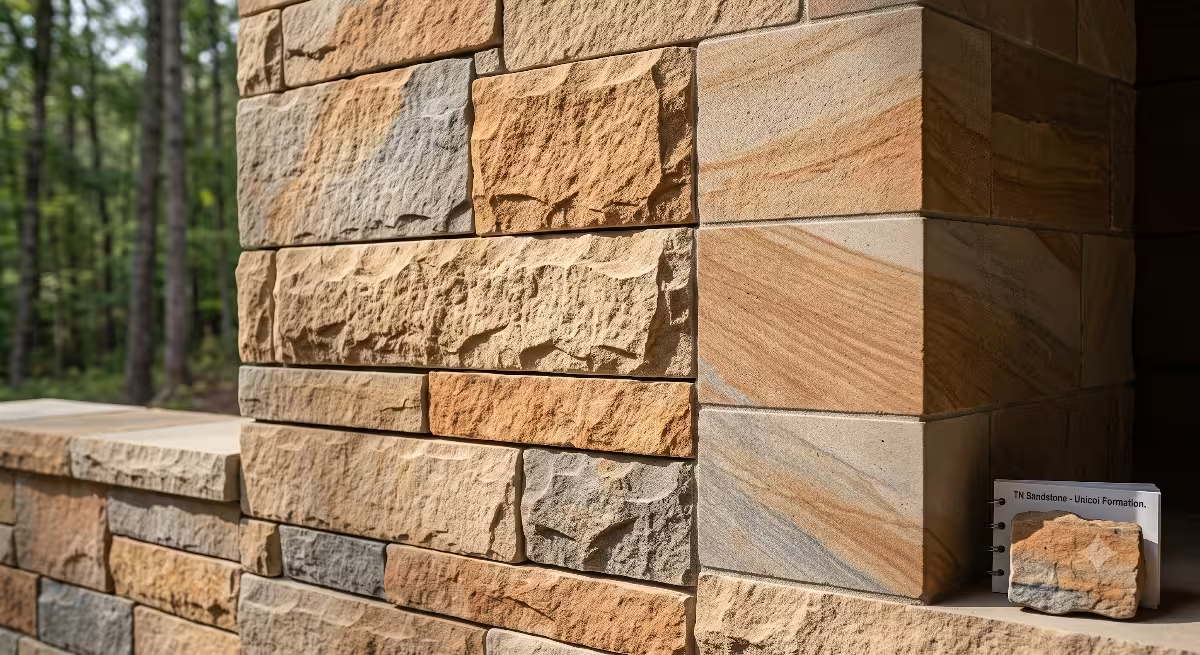
Building authentic sensory-rich master bath designs starts beneath our feet. The geological history of East Tennessee gives us access to some of the finest building stones in North America. By sourcing stone quarried right here in our region, we reduce shipping energy while bringing the natural beauty of the Appalachian mountains into the home. However, choosing natural stone for a wet room requires looking at both structural engineering facts and physical human touch.
       [ East TN Geologic Selection ]
                   │
      ┌────────────┴────────────┐
      ▼                         ▼
Crab Orchard Sandstone    Tennessee Marble
(High Grip / Wet Zones)   (Honed / Wall Slabs)
      │                         │
      └────────────┬────────────┘
                   ▼
       [ Diffuse Soft Lighting ]
                   │
      ┌────────────┴────────────┐
      ▼                         ▼
 Indirect Cove LEDs        Wall Grazing
(2700K Circadian)      (Highlight Texture)
Crab Orchard Sandstone for Wet Zones and Curbless Showers
Crab Orchard sandstone comes from the Cumberland Plateau region of Tennessee. It is a unique rock with a high silica content, making it exceptionally hard, strong, and resistant to moisture. For sensory-rich master bath designs, Crab Orchard sandstone is one of the best choices for shower floors, curbless entries, and built-in shower benches.
From a physical standpoint, Crab Orchard sandstone has a natural cleft surface texture. This means when the stone is split along its natural grain, it creates a slightly irregular, non-slip surface. Wet bathroom floors can be slippery and dangerous. Engineers measure slip resistance using a rating called the Dynamic Coefficient of Friction, or DCOF. A standard smooth tile floor might have a low score, making it slick when wet. Crab Orchard sandstone easily achieves a high safety rating well above standard requirements. This makes it an ideal material for curbless walk-in showers.
When you walk barefoot across Crab Orchard sandstone, your feet feel subtle ridges and warm earth textures. The stone ranges in color from soft tan and buff to warm pink, rust, and gray tones. When water runs across these natural sandstone slabs, the colors darken and deepen, creating a dynamic visual experience during your morning shower.
Honed Tennessee Marble (Holston Formation) for Vanities and Feature Walls
Tennessee marble is technically a very dense, crystalline limestone found within the Holston Formation of East Tennessee. It has been used in famous buildings across the United States, including the National Gallery of Art in Washington, D.C. In sensory-rich master bath designs, Tennessee marble offers a smooth, refined surface for vanity tops, wall cladding, and tub surrounds.
A common mistake in traditional luxury bathrooms is using highly polished stone surfaces. Polished stone acts like a mirror, bouncing bright light directly into your eyes and causing visual strain. For sensory-rich master bath designs, it is advised to use honed, leathered, or brushed finishes. A honed finish removes the glossy shine, leaving a soft matte surface that feels silky to the touch.
Honed Tennessee marble comes in subtle gray tones as well as famous cedar-pink varieties. The crystalline structure of this stone absorbs light rather than reflecting it. When soft ambient light falls across a honed Tennessee marble vanity, the light spreads evenly across the wall. This softens the visual environment of the master bath and highlights the subtle veining in the stone without creating distracting glare spots.
River Slicks and Cobbles for Reflexology Shower Basins
Appalachian river slicks are smooth, rounded stones carved over thousands of years by moving river currents. Incorporating smooth river stones into shower basins adds another tactile layer to sensory-rich master bath designs.
When set into a shower floor mortar bed, river cobbles gently massage the bottoms of your feet. This massage action stimulates plantar nerves, promoting better circulation and helping your body relax after a long day. Beyond physical comfort, river stone shower floors break up water drops as they land, reducing the sharp clicking noise of shower spray. This transforms harsh acoustic noise into a soothing background sound similar to a natural woodland stream.
Lighting Engineering: Soft Light, Low Glare, and Circadian Integration
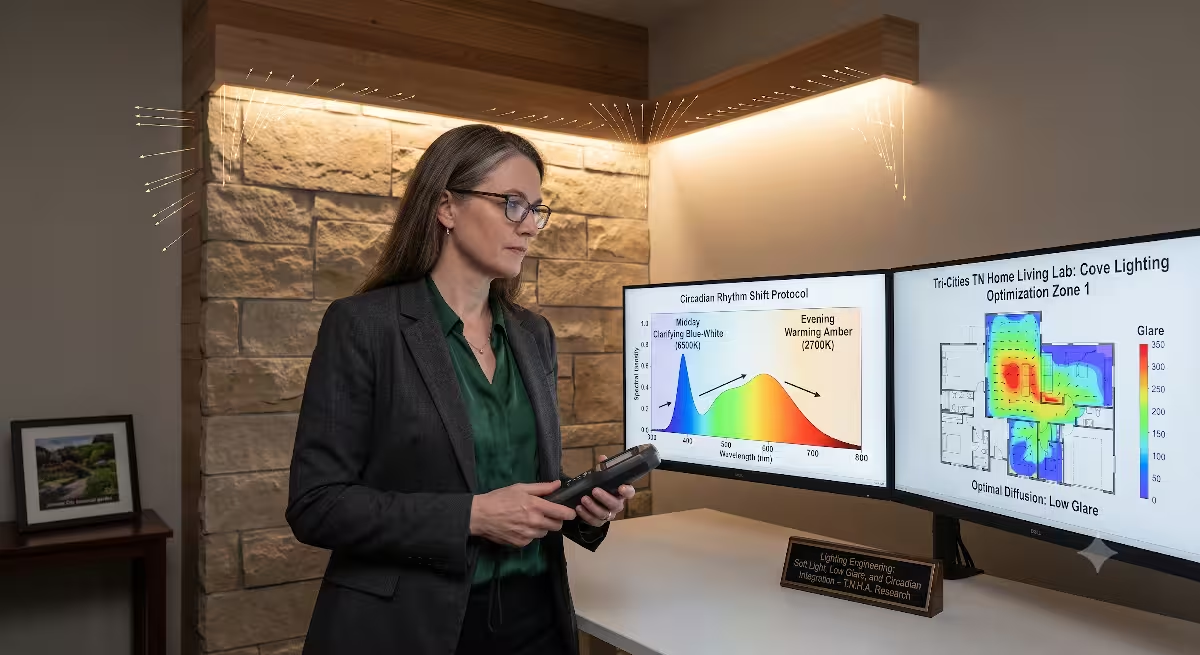
Light shapes how we experience physical space. In sensory-rich master bath designs, lighting is not just about illuminating a room so you can see. It is about engineering a visual setting that works with your body’s natural biology.
+-----------------------------------------------------------------------+
|                    CIRCADIAN LIGHTING TIMELINE                        |
+-----------------------------------------------------------------------+
| Time of Day  | Light Temperature | Intensity | Primary Sensory Goal   |
+--------------+-------------------+-----------+------------------------+
| 06:00 - 08:00| 2700K (Warm)      | Low-Med   | Gentle Morning Awake   |
| 08:00 - 17:00| 3500K (Neutral)   | Medium    | Functional Clarity     |
| 17:00 - 22:00| 2200K - 2700K     | Low Dim   | Evening Melatonin Prep |
+-----------------------------------------------------------------------+
Eliminating Downlight Glare with Indirect Cove Lighting
Standard master bathroom lighting relies heavily on recessed light cans installed directly in the ceiling above sinks and showers. These lights project harsh, narrow beams of light downward. This causes severe shadow lines under your eyes and nose when looking in the mirror. More importantly, direct downlights hit smooth or wet surfaces and reflect straight into your eyes, triggering visual stress.
Sensory-rich master bath designs eliminate direct downlight glare by using indirect architectural cove lighting. Indirect cove lighting hides light fixtures inside built-in ceiling ledges or wall pockets. The light is directed upward against a light-colored ceiling or wall, which bounces the light gently back down into the room. This transforms the entire ceiling into a soft light diffuser. The result is an even blanket of light that fills the room without any visible bulb or hot spot.
Surface Grazing to Highlight Natural Stone Relief
While indirect cove lighting provides general ambient light, wall-grazing fixtures showcase the rich texture of local stone. Wall grazing involves placing narrow linear LED strips close to a textured stone surface, such as a split-face Crab Orchard sandstone feature wall.
The light hits the stone at a steep angle, casting small shadows inside the natural crevices and highlights across the raised ridges of the rock. This technique emphasizes the three-dimensional depth of the stone. Rather than flattening the wall, grazing light makes the natural stone texture come alive, creating a focal point in sensory-rich master bath designs.
Circadian Kelvin Control for Morning Energy and Evening Wind-Down
Human eyes contain specialized light receptor cells that monitor the color and intensity of light around us. These receptors send signals directly to the brain to control our circadian rhythm, which is our internal 24-hour sleep and wake clock. High-energy blue light signals to our brain that it is midday, suppressing the sleep hormone melatonin. Warm amber light signals that the sun is setting, allowing melatonin levels to rise so we can sleep.
Sensory-rich master bath designs use dimmable LEDs that adjust color temperature based on the time of day:
Morning Routine (6:00 AM – 8:00 AM): The system provides warm light around 2700 Kelvin. This gently wakes the body without blinding bright light.
Daytime Utility (8:00 AM – 5:00 PM): The light adjusts to a neutral 3500 Kelvin, offering clean visual clarity for grooming, cleaning, or applying makeup.
Evening Soak (5:00 PM – 10:00 PM): The system dims down to a warm amber range between 2200 and 2700 Kelvin. This low-intensity warm light helps the body wind down, preparing your brain for restful sleep.
Biophilic Haptics: The Intersection of Thermal Mass, Acoustics, and Water
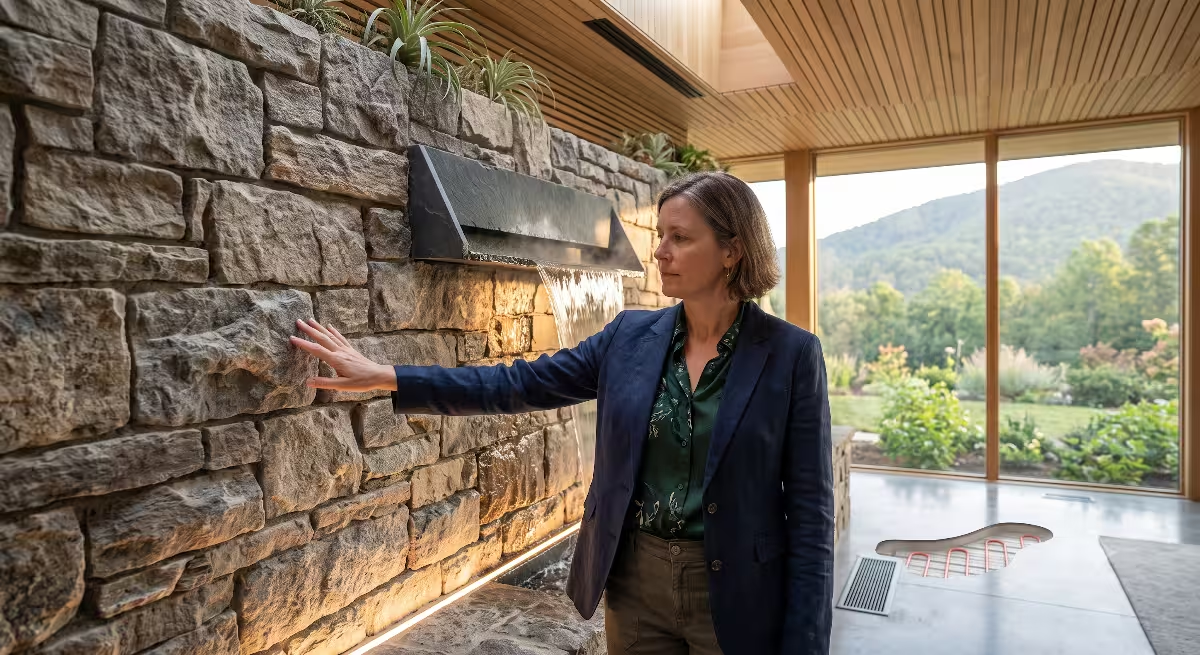
Biophilia is our innate desire to connect with nature and living systems. Haptics refers to our sense of touch, including how we feel temperature, surface texture, vibration, and pressure. Sensory-rich master bath designs bring biophilic haptics into balance by coordinating thermal performance, acoustic absorption, and water movement.
   [ Hard Flat Bathroom ]                   [ Sensory-Rich Master Bath ]
+---------------------------+              +---------------------------+
|  Glass / Smooth Tile      |              |  Textured Stone / Wood    |
|  - High Light Glare       |              |  - Diffuse Light Spread   |
|  - Cold Surface Shock     |  =========>  |  - Radiant Warmth         |
|  - Loud Echo & Reverberation             |  - Acoustic Dampening     |
|  - High Visual Stress     |              |  - Low Stress & High Comfort
+---------------------------+              +---------------------------+
Radiant Heating and Thermal Inertia of Heavy Stone Slabs
One of the biggest physical complaints in traditional bathrooms is cold stone or tile floors. Natural stone is a high-density material with significant thermal mass. This means cold stone quickly draws heat away from warm feet, causing uncomfortable thermal shock.
Sensory-rich master bath designs solve this issue by placing radiant heating systems directly underneath heavy stone floor slabs. Electric heating cables or hydronic warm-water tubes are installed beneath the Crab Orchard sandstone or Tennessee marble floors. Because stone has high thermal inertia, it stores heat effectively and radiates warmth upward evenly across the room.
Once heated, the stone floor remains warm for hours. Walking barefoot across warm, textured sandstone provides an immediate feeling of physical comfort. It also helps dry standing water on the shower floor quickly, keeping the space clean and safe.
Acoustic Softening with Textured Masonry and Wood Accents
Hard, parallel surfaces like flat glass mirrors, smooth tiles, and acrylic tubs cause sound waves to bounce back and forth repeatedly. This produces a loud, harsh echo known as flutter reverberation. High noise levels in a bathroom prevent complete relaxation.
Sensory-rich master bath designs improve room acoustics by combining textured masonry with natural wood elements:
Split-Face Stone Walls: Irregular stone surfaces scatter sound waves in many directions rather than bouncing them directly back into the room.
Moisture-Stable Wood Accents: Incorporating regional woods like thermally treated white oak or cedar on ceilings, vanities, or wall slats absorbs sound energy.
Acoustic Insulation: Placing dense insulation inside interior wall cavities prevents plumbing noises from echoing into adjoining bedrooms.
By dampening unwanted noise, sensory-rich master bath designs create a quiet, peaceful atmosphere where you can relax without hearing harsh reverberation.
Water Flow Dynamics
Water is the central element of any bathroom, but the way water moves and sounds changes the sensory feel of the space. Standard high-pressure showerheads spray thin, high-velocity jets of water that splash loudly against flat tile floors.
Sensory-rich master bath designs utilize laminar flow fixtures and open cascade outlets. Laminar flow technology creates clear, smooth streams of water without mixing air into the flow. This reduces splashing while delivering a rich, heavy water feel against the skin. Pair this with large rain showerheads and open waterfall tub fillers to mimic the gentle sound of natural Appalachian rainstorms and mountain cascades.
Local Case Study: A Johnson City Master Suite Sanctuary
To understand how these ideas work together in practice, let us examine a custom master bathroom project designed for a residence in Johnson City, Tennessee.
+-----------------------------------------------------------------------+
|                JOHNSON CITY MASTER SUITE FLOOR PLAN                   |
+-----------------------------------------------------------------------+
|                                                                       |
|  +-----------------------+          +------------------------------+  |
|  | HONED TENNESSEE MARBLE|          |   CURBLESS WALK-IN SHOWER    |  |
|  | DUAL VANITY           |          |                              |  |
|  | - Indirect Mirror LED |          | - Crab Orchard Sandstone Floor|  |
|  | - Integrated Sinks    |          | - River Slick Foot Massage   |  |
|  +-----------------------+          | - Wall Grazing Light Channel |  |
|                                     +------------------------------+  |
|                                                                       |
|             +--------------------------------------+                  |
|             | FREESTANDING SOAKING TUB             |                  |
|             | - Sits on Warm Sandstone Hearth      |                  |
|             | - Low Ambient Cove Lighting Above    |                  |
|             +--------------------------------------+                  |
|                                                                       |
+-----------------------------------------------------------------------+
Spatial Layout and Regional Integration
The owners of this Johnson City home wanted to replace their outdated 1990s master bath, which featured glossy white square tiles, chrome fixtures, and bright overhead lights. The goal was to build a modern sanctuary inspired by the nearby Unaka Mountain range.
The floor plan was reconfigured to focus on natural material flows:
The Entry Zone: Homeowners step onto a continuous warm floor made of large-format Crab Orchard sandstone in a soft buff color. Radiant electric heating keeps the floor at a comfortable 78 degrees Fahrenheit.
The Vanity Zone: A custom vanity built from native East Tennessee white oak features a thick slab of honed gray Tennessee marble. Indirect LED lighting is concealed behind the mirror frame, casting soft light outward across the marble grain without causing mirror glare.
The Shower Sanctuary: A curbless walk-in wet area features split-face stone feature walls. The floor shifts from large sandstone slabs to a floor pan lined with natural river slicks. A large rain showerhead drops water gently onto the stones below, creating a relaxing soundscape.
Lighting Control System
The master bath features an automated lighting control system programmed with three simple scenes designed around circadian rhythms:
Morning Sunrise: Activating the room in the early morning turns on indirect LED cove lights at 20% brightness with a warm 2700K color temperature. The soft lighting allows the eyes to adapt slowly as the body wakes up.
Midday Utility: Midday tasks activate task lighting around the vanity mirror at 3500K neutral light, providing clear illumination for grooming.
Evening Sanctuary: Pressing the bath scene dims ambient lights down to 10% brightness at a very warm 2200K. The wall grazing lights cast soft shadows down the split-face stone wall, creating a serene spa environment for an evening soak.
Frequently Asked Questions about Sensory-Rich Master Bath Designs
Is Crab Orchard sandstone sealed for indoor bathroom use?
Yes, Crab Orchard sandstone should always be sealed when used in indoor bathroom environments. Because sandstone is a naturally porous material, unsealed stone can absorb water, soaps, and bath oils over time, leading to staining or discoloration.
For sensory-rich master bath designs, we always specify high-grade penetrating fluoropolymer sealers rather than surface coating sealers:
Penetrating Sealers: These sealers sink deep into the microscopic pores of the stone, repelling water and oils from the inside out. They preserve the natural breathability, grip texture, and matte appearance of the sandstone without adding a shiny plastic coating.
Surface Coating Sealers: These create a shiny top layer that can yellow over time, become slippery when wet, and trap moisture inside the stone. They should be avoided in biophilic bath designs.
Properly sealed with a penetrating product, Crab Orchard sandstone remains water-repellent, easy to clean, and slip-resistant for years.
How does soft light affect mood and circadian rhythms in a bathroom?
Soft, controlled lighting has a direct impact on human mood and circadian health in your master bath:
Reduces Stress and Cortisol: High glare and harsh fluorescent lights trigger an automatic stress response, raising cortisol levels. Soft, diffuse light signals safety to the nervous system, helping lower your heart rate and ease muscle tension.
Protects Sleep Quality: Exposure to bright overhead lights during evening bathroom visits suppresses melatonin production. Using soft, warm amber light during nighttime routines keeps your circadian rhythm on track so you fall asleep easily.
Enhances Visual Comfort: Soft light eliminates harsh shadows and blinding reflections off wet stone or glass, allowing your eyes to rest without straining.
Integrating circadian lighting principles into sensory-rich master bath designs helps transform daily hygienic tasks into restorative wellness rituals.
What local Tennessee stone is best for wet bathroom environments?
The best local Tennessee stone for wet bathroom environments depends on where it is installed in the room:
For Shower Floors and Wet Walkways: Crab Orchard sandstone is the clear winner. Its high silica content prevents water damage, and its natural grip texture prevents slipping even when covered in soapy water.
For Walls, Vanities, and Dry Zones: Honed Tennessee marble from the Holston Formation is ideal. It is extremely dense, resists water absorption better than softer imported marbles, and provides a smooth matte surface that absorbs light glare.
For Shower Accent Pans: Natural East Tennessee river slicks provide foot massage benefits while holding up perfectly against daily water exposure.
Using a combination of these regional stones ensures that sensory-rich master bath designs remain safe, durable, and visually connected to the natural landscape of Eastern Tennessee.
How do you incorporate biophilic design into a master bathroom without adding clutter?
Incorporate biophilic principles into sensory-rich master bath designs without introducing unnecessary clutter by making biophilia structural rather than decorative:
Use Natural Materials as Surfaces: Instead of placing potted plants on every flat surface, make the walls, floors, and vanities out of natural stone and wood. The materials themselves provide a connection to nature.
Integrate Lighting into Architecture: Conceal LED light channels inside walls and ceilings rather than buying bulky decorative light fixtures that accumulate dust.
Optimize Views of Nature: Position freestanding soaking tubs or shower windows to frame private outdoor views of trees, mountains, or sky.
Built-in Storage Nooks: Design recessed stone storage niches inside shower walls to keep shampoo bottles organized and out of direct sight, maintaining clean visual lines.
Maintenance and Longevity of Natural Stone in High-Humidity Spaces
To keep sensory-rich master bath designs looking beautiful and performing well over decades, proper maintenance protocols must be established during the initial build phase.
+-----------------------------------------------------------------------+
|                   NATURAL STONE CARE MATRIX                           |
+-----------------------------------------------------------------------+
| Stone Type             | Recommended Cleaning | Protection Method    |
+------------------------+----------------------+-----------------------+
| Crab Orchard Sandstone | pH-Neutral Cleaner   | Penetrating Sealer    |
| Tennessee Marble       | Mild Soap / Water    | Penetrating Sealer    |
| River Slicks           | Soft Bristle Brush   | Penetrating Sealer    |
+------------------------+----------------------+-----------------------+
pH-Neutral Cleansing and Moisture Management
Natural stone is sensitive to harsh chemical cleaners. Acidic cleaners like vinegar, bleach, or bathroom lime removers can etch limestone and marble, dissolving the stone matrix and leaving dull spots.
Daily Care: Rinse stone surfaces with warm water after use to clear away soap residues.
Weekly Cleaning: Clean surfaces using a dedicated pH-neutral natural stone cleaner. These specialized formulas remove oils and soap scum without breaking down penetrating sealers or dulling natural stone finishes.
Squeegee Routine: Using a flexible rubber squeegee on glass and smooth stone walls after showering removes excess water droplets, preventing mineral buildup from hard water.
Ventilation and Relative Humidity Control
High moisture levels in a bathroom can compromise indoor air quality and damage surrounding building materials. Keeping indoor relative humidity between 40% and 60% is essential for healthy living spaces.
Sensory-rich master bath designs use inline continuous-duty ventilation fans equipped with automatic humidity sensors. When relative humidity rises above 50% during a shower, the ventilation system turns on automatically, drawing moist air out of the room quietly. The fan continues running until humidity drops back to normal levels. This continuous moisture management protects wood accents, prevents mold growth, and preserves natural stone sealants for the long term.
Technical Material & Lighting Specifications Matrix
The following reference matrix outlines technical specifications for building sensory-rich master bath designs using regional materials and precision lighting tools:
| Design Element | Material / Fixture Spec | Surface Finish | Color / Temp Spec | Sensory Function |
| Shower Floor | Crab Orchard Sandstone Slabs | Natural Cleft / Diamond Brushed | Warm Tan / Rose / Buff | High foot grip, warm thermal feel underfoot |
| Vanity / Wall Cladding | Holston Formation Tennessee Marble | Honed or Leathered (Matte) | Charcoal Gray or Soft Pink | Eliminates light glare, dampens sound echo |
| Shower Basin Accent | Local River Slicks / Cobbles | Water-Smoothed Pebble Tile | Multi-tone Gray / Brown | Plantar foot massage, softens splashing water sounds |
| Perimeter Ambient Lighting | Concealed Architectural LED Cove | Diffuse Silicone Lens | 2200K – 2700K Warm Dimming | Soft background light, supports circadian rhythms |
| Wall Grazing Accent | Micro-linear Recessed LED Channel | 15-Degree Narrow Grazing Beam | 2700K, High CRI (95+) | Highlights stone relief, low direct glare |
| Vanity Cabinetry | Native East TN White Oak | Brushed Low-VOC Matte Clear | Natural Warm Grain | Absorbs room echo, adds visual organic warmth |
| Water Outlets | Laminar Flow / Rain Showerhead | Brushed Nickel or Bronze | Low-Velocity Cascade | Soft water feeling on skin, gentle background sound |
Building Your Own Sensory-Rich Master Sanctuary
Creating sensory-rich master bath designs is about much more than following short-term design trends. It is about building personal living spaces that support our health, peace of mind, and connection to the natural world. By pairing local East Tennessee stone formations like Crab Orchard sandstone and Tennessee marble with carefully engineered circadian lighting, you can create a bathroom retreat that nourishes your senses every day.
Whether you are remodeling an existing home in Kingsport or planning a new custom build in Johnson City, sensory-rich master bath designs offer an ideal balance of durability, regional beauty, and biophilic wellness. By prioritizing indirect lighting, non-slip stone textures, radiant thermal warmth, and continuous moisture management, your home will remain a serene sanctuary for generations to come.