


Bringing the Outside In for an Authentic Holiday Gathering
When family gathers around the dining table for the holidays, the atmosphere you create should feel as welcoming and grounded as home itself. Many homeowners spend hundreds of dollars on artificial craft-store foliage. These mass-produced plastic garlands often sit stiffly on the table, lacking life, scent, and soul. Real farmhouse hospitality does not come from a plastic mold. It comes from bringing the outside in and celebrating the honest, textural beauty of the land right outside your door.
Planning a holiday dinner requires thoughtful spatial awareness. Just as a well-designed home relies on architectural balance, an inviting dining room depends on purposeful structural flow. Your table design must never get in the way of laughter, conversation, or passing heavy platters of food. By pairing functional dining layouts with the abundance of nature, you can easily develop breathtaking Thanksgiving tablescape ideas that look intentional rather than cluttered.
Best of all, walking your own property, fence lines, and neighborhood woods cuts your holiday decorating budget to zero. You do not need expensive designer centerpieces to build an authentic holiday setting. When you harvest wild branches, native evergreen clippings, and fallen accents, you create a living centerpiece filled with movement and warmth.
These wild textures tell a story of the season that store-bought decor can never match. If you are searching for meaningful Thanksgiving tablescape ideas that blend rustic simplicity with high-end style, foraged greenery offers the ultimate solution.
Ethical and Mindful Foraging: Sourcing Botanical Materials
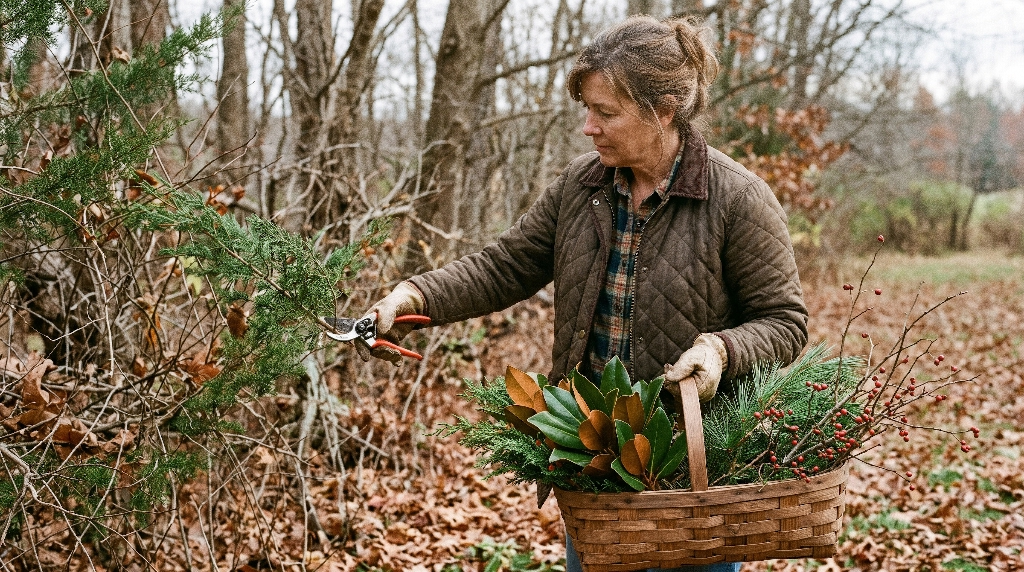
Before heading outdoors with your clippers, you need to understand how to gather natural materials responsibly. Sustainable foraging protects local ecosystems while providing fresh cuttings that stay crisp for your feast. Sourcing your own foliage is one of the most rewarding Thanksgiving tablescape ideas because it connects your holiday gathering directly to the surrounding landscape.
The Forager Field Kit
Successful foraging begins with the proper tools. A clean, sharp pair of bypass hand shears is essential because dull blades crush plant stems, preventing them from taking up water. Bring along a pair of sturdy leather gardening gloves to protect your hands from thorns, briars, and sticky tree pitch.
Carry a wide, flat harvest basket or a deep canvas tote so you can lay your branches flat without snapping fragile tips. It is also wise to keep a few small floral water vials in your kit. If you spot delicate, leafy stems on your walk, you can slip them directly into water vials to prevent immediate wilting on the walk back to your kitchen.
Safe Foraging Practices
Always forage with respect for property lines and local regulations. Never harvest from private land without clear permission from the owner, and avoid collecting from state or national parks where harvesting is prohibited. When gathering along quiet country roads, make sure you are well away from road dust and vehicle runoff.
Practice accurate plant identification before cutting any branch. Familiarize yourself with
Best Native Greenery and Foliage for November Tables
When selecting branches in late autumn, look for plants that balance structure, texture, and staying power. Combining different plant families gives your arrangement natural depth.
- Broadleaf Evergreens: Southern magnolia branches provide magnificent drama. Their thick leaves offer glossy, deep green faces with velvety bronze undersides that introduce rich harvest warmth. Boxwood cuttings offer fine, dense green leaves that fill empty gaps, while mountain laurel and glossy privet give clean lines and great structural support.
- Needled Conifers: Eastern white pine brings soft, feathery needles that drape softly across table runners. Eastern red cedar delivers deep woodland scent along with tiny, dusty blue berries. Cypress and hemlock boughs add delicate, lacy sprays that prevent heavy centerpieces from feeling too rigid.
- Sculptural Accents: Do not overlook bare wood and dried stems. Twiggy
dogwood branches , wild grapevine whips, and dried mophead hydrangea blooms offer exceptional rustic texture. Oak branches that still hold russet-colored, papery leaves add warmth and earthy contrast to fresh green boughs. - Wild Color and Berry Sprigs: Native winterberry, American bittersweet, and wild rose hips supply pops of crimson, orange, and coral. These bright accents stand out beautifully against rich green foliage, giving your Thanksgiving tablescape ideas a finished, professional look without using artificial craft berries.
Prep and Conditioning: Keeping Foraged Greenery Fresh on the Dining Table
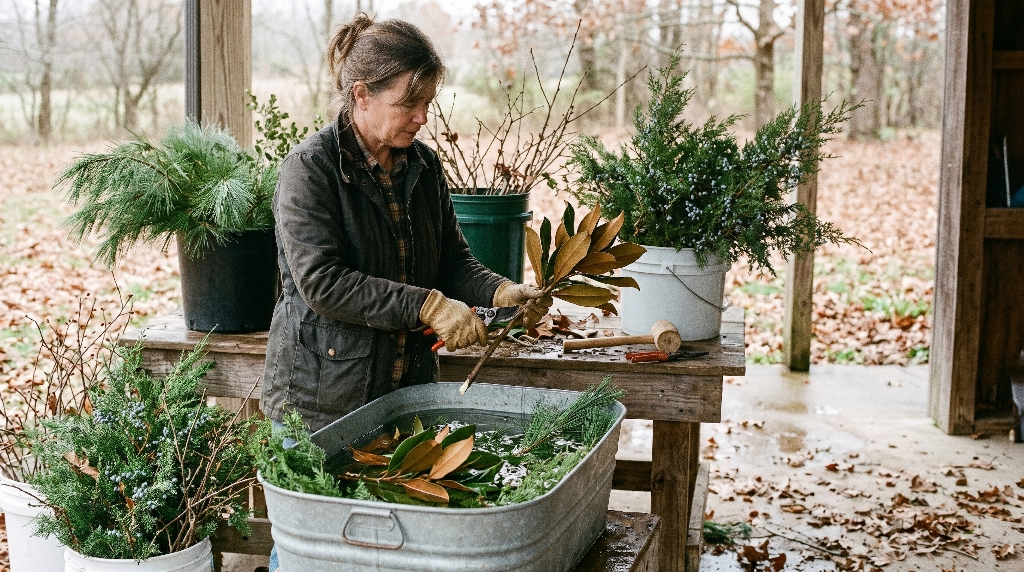
Freshly cut boughs lose moisture rapidly if they are not conditioned properly. To ensure your table stays vibrant from the moment the turkey is carved until dessert is cleared, take time to prepare your branches before arranging them. Learning proper plant prep is an essential step when exploring practical Thanksgiving tablescape ideas.
Pest Inspection and Cleaning
Wild greenery often shelters dust, small garden spiders, and hidden insects. Before bringing your harvest inside, gently shake each branch over an outdoor table or lawn. Inspect the undersides of the leaves for hidden egg sacs or cobwebs.
Fill a clean utility sink or large plastic storage tote with cool water. Submerge the foliage for ten to fifteen minutes to rinse off outdoor grime and coax out any remaining insects. After soaking, gently shake off the excess water and lay the cuttings on clean towels on your porch or patio to air dry in the shade.
Hydration Protocol
Woody stems need special care to absorb moisture effectively. Use sharp bypass shears to make a fresh diagonal cut about one inch above the original base cut. For thick branches like magnolia, cedar, or pine, use a wood mallet or the handle of your pruners to gently tap and split the bottom inch of the stem. Splitting the woody fibers increases the surface area for water absorption.
Place the trimmed stems into deep buckets filled with cool, clean water. Let your cuttings rest in a dark, cool space, such as an unheated basement or garage, overnight. This resting period lets the plant cells drink deeply, conditioning the leaves to withstand dry, heated indoor air during your gathering.
Tabletop Protection
It is always important to protect your dining table. Raw pine needles, fresh cedar boughs, and wild evergreens can release sticky sap or damp moisture that damages table finishes. Tannins in oak leaves and damp bark can also leave dark stains on unfinished, oiled, or waxed wood.
Before placing any greenery on your table, lay down a protective barrier. A wide strip of heavy brown kraft paper or natural butcher paper works wonders. It hides beneath your table runner while shielding the wood from sap and moisture. You can also lay thin floral foam trays or clear plastic florist sheets beneath your foliage to keep damp stems off fine dining surfaces. Smart protective measures ensure your Thanksgiving tablescape ideas remain entirely worry-free.
Designing the Foundation: Textiles, Runners, and Structural Base
The foundation of your table setting establishes the mood for your entire dining space. A well-planned base anchors your greenery and gives each place setting a distinct territory. When putting together creative Thanksgiving tablescape ideas, balance is just as crucial as the botanicals you display.
The Farmhouse Foundation
Farmhouse style celebrates honest, hardworking materials. If you own a farmhouse dining table crafted from reclaimed oak, heart pine, or walnut, consider leaving the tabletop partly exposed. The natural wood grain brings warmth that complements fresh foliage.
Layer an antique linen runner, a grain sack textile, or a strip of fringed natural burlap straight down the center. Neutral textiles in oatmeal, cream, or soft gray provide a clean backdrop that makes deep green magnolia leaves and bright berries stand out. The fabric also gives you a visual boundary, keeping your greenery organized down the middle of the table.
Sightlines and Ergonomics
One common mistake in holiday decorating is creating centerpieces that block eye contact. If guests must lean left and right to see across the table, the arrangement is too tall. Centerpieces should stay low, ideally under twelve to fourteen inches in height.
Leave adequate breathing room for place settings, wine glasses, and shared food dishes. In standard dining room design, each guest needs about twenty-four inches of width and fifteen inches of depth for comfortable dining. Keeping your foraged greenery consolidated within a ten-inch to twelve-inch center zone leaves ample room for meal service. Thoughtful dimensions keep your Thanksgiving tablescape ideas both stunning and practical.
Placing the Main Garland
Building a centerpiece does not require floral wire or complicated weaving. You can build a stunning, organic runner simply by layering loose branches:
- Establish the Spine: Begin with your longest and sturdiest branches, such as pine or cedar. Lay them stem-to-tip down the center of the table, creating a gentle, winding line. Let the outer ends drape softly over the table edges for relaxed elegance.
- Add Volume and Contrast: Tuck broad magnolia leaves, boxwood clippings, and laurel branches beneath the base branches. Angle the leaves outward to cover the bare stems and soften the edges of your fabric runner.
- Insert Sculptural Accents: Weave in bare dogwood twigs, grapevine whips, and dried grasses. These airy elements bring height and movement without blocking sightlines.
- Finish with Focal Color: Nest wild berry branches and dried hydrangea heads into pockets along the garland. Grouping colors in clusters of two or three feels natural and visually satisfying.
Adding Farmhouse Character: Vintage Elements and Natural Accents
Once your greenery is arranged, introduce vintage and heirloom items to add rustic personality. Everyday utilitarian objects bring history to the table, turning simple plant clippings into complete Thanksgiving tablescape ideas.
Ceramics and Glass
Vintage ironstone platters, pitchers, and tureens are staples of authentic farmhouse decor. Their creamy white glaze and simple lines provide crisp contrast against dark green conifers. You can use small ironstone sugar bowls or transferware cups to hold sprigs of boxwood and berries.
Repurposed amber glass bottles, vintage clear canning jars, and small demijohns add wonderful warmth to the table. Scatter a few small amber apothecary bottles through your greenery runner, filling each with a single stem of dried wheat, wild oat grass, or beautyberry. The amber glass catches the glow of candlelight, casting warm golden tones across the dinnerware.
Produce and Harvest Elements
Autumn produce brings fresh colors, shapes, and textures to your table. Rather than using shiny plastic gourds, gather real seasonal produce from a local farm stand or grocery store:
- Miniature Pumpkins: White Casper pumpkins, Baby Boo squash, and ribbed heirloom varieties tuck neatly into pockets among magnolia leaves.
- Seasonal Fruit: Bosc pears, Bartlett pears, and green apples offer subtle color shifts. Their russeted skins and gentle curves add simple elegance to the wild greenery.
- Pomegranates and Figs: Splitting a pomegranate open exposes rich, jewel-like seeds that echo the wild berry tones in your runner.
- Hardwood Nuts and Pods: Scatter hickory nuts, sweetgum seed pods, and pinecones along the edges of the garland for authentic woodland texture.
Ambient Lighting
Lighting sets the emotional tone of your feast. Harsh overhead fixtures can make a cozy dinner feel sterile, so dim your primary lights and rely on flickering candles. Warm candlelight dancing across glossy leaves is one of the most magical elements in rustic Thanksgiving tablescape ideas.
Use slender, hand-dipped beeswax taper candles in mismatched brass candlesticks. The varied heights of old brass holders add vertical interest without obstructing conversation. Beeswax emits a soft, honey-like scent and burns cleanly without overwhelming the aromas of roasted turkey and warm dressing.
To ensure fire safety, place taper candles inside sturdy glass hurricane cylinders, or use small glass tea light votives tucked safely along the outer perimeter of the greenery. Always make sure open flames stay well away from dry leaves and hanging twigs.
Curating the Place Setting: Individual Organic Touches
A truly memorable table extends its warmth to each individual place setting. When a guest sits down and discovers an organic touch on their plate, they feel welcomed and cherished. Individual accents are simple, low-cost Thanksgiving tablescape ideas that make a powerful impression.
Chargers and Dinnerware
Build depth at each seat by layering dinnerware textures. Start with a rustic charger plate made from woven hyacinth, rattan, or galvanized tin. The charger anchors the setting and protects your linens from hot dinner plates.
Set a simple, neutral ceramic or cream stoneware dinner plate atop the charger, followed by a matching salad plate or soup bowl. Keeping your dinnerware neutral allows the natural greens and autumnal accents to remain the stars of the room. Matte finishes and slightly irregular handmade ceramics fit the farmhouse aesthetic exceptionally well.
Textile Napkin Fold and Tie
Avoid stiff, formal napkin origami. Farmhouse style favors soft, lived-in textiles that invite you to sit down and relax. Choose washed natural linen, unbleached cotton, or vintage feed sack napkins with fringed edges.
Fold the napkin into a simple, loose rectangle and place it across the center of the salad plate. Alternatively, roll the napkin loosely and secure it with a length of natural jute twine, unspun wool yarn, or torn silk ribbon. The raw, tactile feel of natural fibers complements the wild textures of your foraged greenery.
Botanical Name Cards
Personalized place cards make family and friends feel special. You can easily make your own using botanical elements found during your foraging walk:
- Rosemary and Twine: Tie a small sprig of fresh rosemary and a cedar tip to a handwritten kraft paper tag, laying it across the napkin.
- Gilded Magnolia Leaves: Use a fine metallic gold or white ink pen to write each guest’s name across the glossy face of a pressed magnolia leaf.
- Wood Slice Holders: Small birch branches cut into two-inch rounds with a narrow slit across the top make charming, sturdy card holders.
- Pinecone Card Stands: Turn small pinecones upright and slip a small card between the upper scales.
These personal botanical touches tie the entire table together, demonstrating how easily wild greenery can inspire practical Thanksgiving tablescape ideas.
Frequently Asked Questions about Thanksgiving Tablescape Ideas
How far in advance can you make a fresh greenery Thanksgiving centerpiece?
You can forage your evergreen branches two to three days before the holiday, provided you trim the stems and store them in deep buckets of water in a cool space. However, dry-laid garlands that sit directly on the table without a water source should be assembled the morning of Thanksgiving or late on Wednesday afternoon.
If you assemble the garland on Wednesday, lightly mist the foliage with a spray bottle of cool water and keep your dining room as cool as possible overnight. Avoid placing your table near working heating vents, radiators, or sunny windows, as dry heat speeds up wilting.
What foraged greenery lasts longest indoors without water?
Broadleaf evergreens and hardy needled conifers hold up best indoors. Southern magnolia branches lead the list, as their thick, leathery leaves can look beautiful for up to a week without water. Eastern white pine, cedar, boxwood, and arborvitae also boast excellent moisture retention, easily lasting two to four days dry on a tabletop.
In contrast, delicate deciduous tree leaves that have turned red or yellow dry out and curl within hours of being brought inside. If you want to include colorful fall leaves, press them between heavy books for a few days beforehand, or coat them with a thin layer of decoupage sealer to preserve their flat shape and vibrant color.
How do you keep fresh greenery from smelling or dripping sap on table linens?
Sticky sap typically flows from fresh cuts on conifer stems. After cutting pine, spruce, or cedar branches, let the cut ends dry outdoors on scrap cardboard for an hour to allow the resin to seal. You can also dip the cut ends into melted candle wax or wrap them with florist tape to trap the sap inside.
To eliminate strong outdoor odors or dust, soak your foliage in a utility tub filled with cool water and a splash of mild dish soap, then rinse thoroughly with clear water. Ensure your branches are dry before setting them on fabric runners to avoid water rings.
What can I use instead of real pumpkins on a farmhouse tablescape?
If fresh pumpkins are hard to find in late November, there are many beautiful alternatives that still evoke harvest abundance. Fresh fruit is the easiest replacement. A mixture of green Bosc pears, deep red apples, and persimmons brings authentic farmhouse charm to your greenery runner.
You can also use clusters of whole walnuts, pecans in their shells, and large pinecones. For a non-produce option, turned-wood candlestick pillars, antique stoneware crocks, or brass animal figurines bring visual weight and rustic appeal to your Thanksgiving tablescape ideas without using squash.
Practical Teardown, Composting, and Transition to Christmas Decor
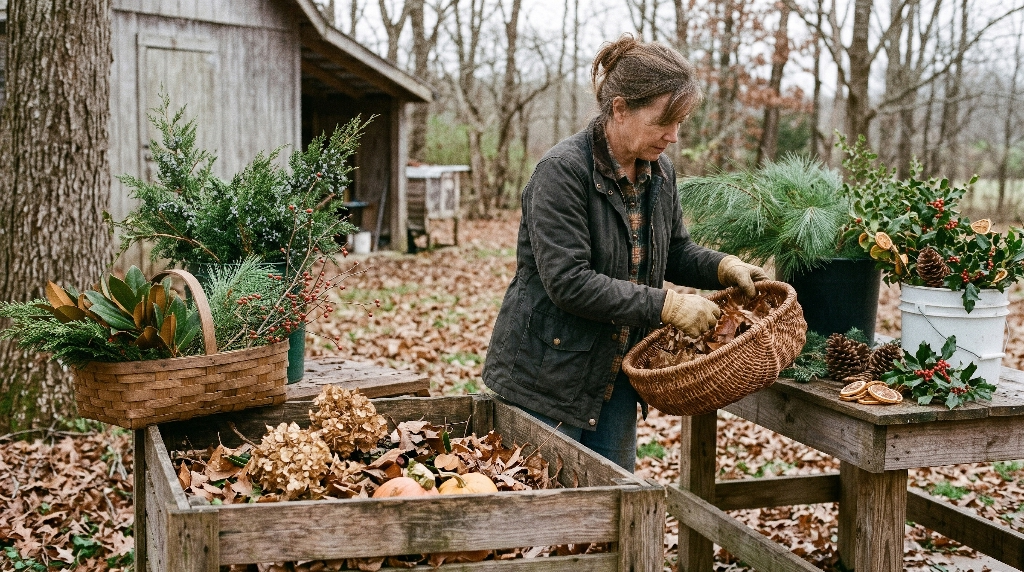
A wonderful advantage of decorating with natural botanicals is simple cleanup. Once the holiday weekend concludes, you do not have to pack away bulky plastic storage bins.
Zero-Waste Holiday Cleanup
Begin by removing non-compostable elements like candles, ribbons, vintage bottles, and wire place card holders. The remaining foraged branches can return directly to the soil.
Chop the branches into smaller sections and toss them into your backyard compost bin, where they will break down into rich garden soil for the coming spring. Alternatively, take the evergreen boughs outside and lay them across your perennial flower beds. The pine and cedar needles serve as insulating winter mulch, protecting tender plant roots from frost heave throughout the winter.
Bridging Thanksgiving to Winter
If your foraged greenery is still fresh and vibrant after Thanksgiving dinner, you can effortlessly transition your centerpiece into holiday decor for the month of December:
- Remove Autumn Harvest Elements: Take away the mini pumpkins, squash, russet oak leaves, and bittersweet berries.
- Refresh the Base: Pull out any wilted or brittle twigs, replacing them with a few fresh evergreen clippings or holly branches carrying red winter berries.
- Introduce Winter Accents: Nestle natural pinecones, dried orange wheels, whole cinnamon sticks tied with twine, and white taper candles into the existing cedar and pine garland.
- Add Festive Glow: Weave a delicate strand of battery-operated, warm-white fairy lights through the evergreen boughs.
With just a few minor adjustments, your rustic centerpiece carries right into December, proving that thoughtful, nature-inspired Thanksgiving tablescape ideas can bring lasting beauty to your home throughout the holiday season.