The Intersection of Biophilic Design and Interior Hydrology
Biophilic design is not simply adding a potted plant to an office desk. It is the intentional integration of natural elements, natural light, organic geometry, and natural water flow into our built environments. When we bring natural materials and running water inside our homes, we trigger deep biological responses that reduce stress, lower heart rates, improve concentration, and enhance overall indoor environmental quality. In Eastern Tennessee, home design is shifting toward deeper connections with the surrounding landscape. Homeowners across the Tri-Cities region want their living spaces to reflect the rich natural heritage of the Appalachian Mountains.
One of the most effective ways to accomplish this visual and physical connection is through interior water features that incorporate smooth, natural river rock. Moving water provides a dynamic sensory experience that artificial decor cannot replicate. However, adding running water inside a home requires careful attention to physics, geology, fluid mechanics, and water chemistry. When interior water features are designed correctly, they serve as biological anchoring points in the home. They create balance in rooms that are otherwise filled with flat drywall, synthetic carpet, and artificial lighting.
Natural river rock plays a critical role in how humans experience interior water features. Smooth, rounded stones create a immediate tactile and visual link to our local rivers, such as the Watauga River, the Holston River, and the Nolichucky River. In environmental psychology, this connection is explained by Prospect and Refuge Theory. This theory notes that human beings feel most secure and relaxed in spaces that offer clear views while providing a feeling of physical shelter. A well-designed indoor stream or fountain brings the wild, soothing essence of a mountain river into the safe, structured envelope of a living room or foyer.
When planning interior water features in Johnson City, Kingsport, or Bristol, choosing the right river rock is more than an aesthetic decision. The stone you choose directly dictates how the water sounds, how clean the water stays, how often you must perform maintenance, and how long your recirculation pumps will last. Building interior water features that remain beautiful for decades requires a complete understanding of rock geology, floor structural capacities, acoustic sound frequencies, and microbial control. In this guide, we will analyze every technical step required to specify, engineer, and maintain natural river rock within custom interior water features across the Tri-Cities area.
Petrographic and Geological Selection: Sourcing Stones in Eastern Tennessee

Selecting stone for interior water features is primarily an exercise in chemistry and geology. Not all river rocks behave the same way when placed in a continuously recirculating water system. If you choose the wrong rock type for interior water features, you can cause chemical reactions that cloud the water, ruin the plumbing, or leave thick white crusts across your entire stone installation.
Mineralogical Composition Considerations
When specifying rock for interior water features, we divide natural stones into chemically inert materials and chemically active materials. Chemically inert stones do not react with water, while chemically active stones slowly dissolve and alter the chemical balance of your water supply.
Quartzite and sandstone are highly recommended for interior water features. Quartzite is a metamorphic rock formed under extreme heat and pressure. It is composed almost entirely of quartz grains, making it extremely hard, non-porous, and chemically inert. Sandstone that has been worn smooth by water action offers similar chemical stability. When water flows over quartzite or hard sandstone in interior water features, the stone does not leach minerals into the water. The pH level of the water remains balanced, and the water stays crystal clear.
Limestone and dolomite should be avoided or used with extreme caution in interior water features. These sedimentary rocks contain high concentrations of calcite, which is calcium carbonate (CaCO3), and magnesium carbonate. When water flows over limestone in interior water features, the slightly acidic nature of dissolved carbon dioxide in the air causes calcium carbonate to leach into the water column. This chemical process increases water hardness and drives the pH level above 8.0. High pH levels and mineral saturation cause heavy white limescale crusts to form on the rock surfaces as water evaporates. This mineral crust ruins the dark, polished appearance of river rocks in interior water features and damages submerged water pumps.
| Stone Type | Mineral Composition | Chemical Reactivity | Suitability for Interior Water Features |
| Quartzite | Quartz (SiO2) | Chemically Inert | Highly Recommended |
| Basalt / Granite | Silicates, Feldspar | Chemically Inert | Highly Recommended |
| River Sandstone | Quartz, Silica | Low Reactivity | Recommended |
| Limestone | Calcium Carbonate (CaCO3) | Highly Reactive | Not Recommended |
| Dolomite | Calcium Magnesium Carbonate | Highly Reactive | Not Recommended |
Texture, Sizing, and Grading
Proper size grading of river rock is essential for the fluid dynamics, sound control, and mechanical operation of interior water features. Mixing different stone sizes creates a natural stream-bed appearance while serving distinct functional roles within the water system.
Small pea gravel, ranging from 1/4 inch to 1/2 inch in diameter, is best used as a base layer in the lower catch basin of interior water features. Small gravel creates a uniform drainage layer above sump pumps and mechanical filtration screens. It helps trap large debris before it reaches the pump intake. However, pea gravel should never be used as the top layer where falling water strikes directly, as small stones can easily shift and cause unwanted water splashing outside the basin.
Medium river pebbles, measuring between 1 inch and 3 inches in diameter, represent the workhorse stone size for interior water features. These medium stones are ideal for covering the main impact zone where falling water hits the basin. The smooth curves of 2-inch river pebbles break up the surface tension of the falling water. This reduces harsh splash droplets while dampening high-pitched splashing sounds, converting noisy water impacts into a smooth, soothing hum.
Large cobbles and river boulders, measuring from 4 inches to 8 inches or larger, serve as structural anchors in interior water features. These large stones direct fluid flow, create subtle channel chutes, and provide visual weight to the installation. Placing a large, smooth river boulder directly in the path of a water stream splits the flow into smaller, gentle trickles, adding visual interest and controlling overall water velocity.
Local Tri-Cities Material Sourcing and TDEC Regulations
Homeowners in Johnson City, Kingsport, and Bristol often ask if they can collect natural river rocks directly from local rivers like the Watauga or Holston River for their interior water features. The simple answer is no. Harvesting rocks directly from natural waterways in Tennessee is illegal without specific permits.
The Tennessee Department of Environment and Conservation (TDEC) strictly regulates activity within state waters under the Tennessee Water Quality Control Act. Removing river rock from active stream beds disrupts aquatic habitats, destroys spawning grounds for local fish, increases soil erosion, and destabilizes riverbanks. Removing stone from protected rivers can result in substantial state fines.
For interior water features, river stone should always be purchased from licensed local stone yards and landscape suppliers in the Tri-Cities area. Commercial stone yards supply legally quarried river stone that has been washed, sorted by precise size grades, and tested for consistency. When purchasing river rock for interior water features, request tumbled or river-washed stone that has been cleared of fine clay, organic topsoil, and oil residues. Commercial washing ensures that no wild bacteria, parasites, or agricultural runoff enter the closed water loop of your home.
Architectural and Hydro-Engineering Mechanics
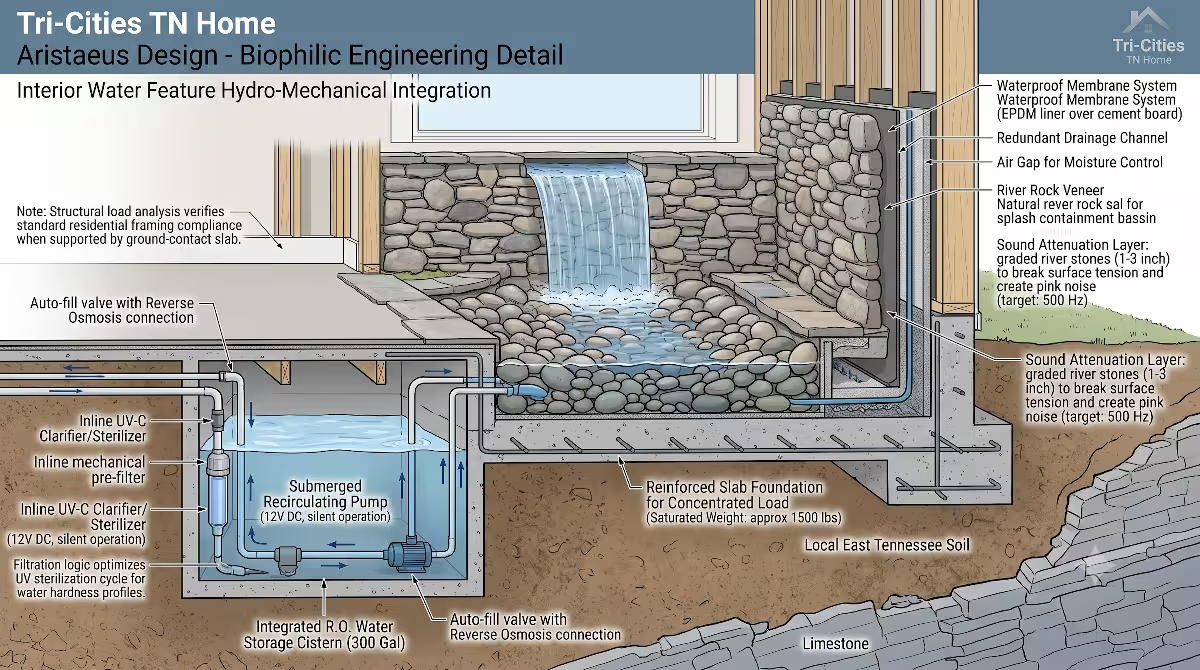
Building interior water features inside residential homes requires a careful evaluation of structural engineering, acoustics, and moisture control. Running water inside a home introduces physical forces that must be managed to protect the structural integrity of your house.
Weight Load Calculations for Residential Interiors
Water and stone are extremely heavy materials. When building large interior water features, calculating the total static and dynamic weight load on floor joists is a critical engineering requirement. Standard residential building codes in Tennessee require interior living room floors to support a uniform live load of 40 pounds per square foot ($lbs/ft^2$). Large interior water features using thick layers of river rock can easily exceed this limit if not properly supported.
To calculate the total weight of a stone-filled water basin for interior water features, we must account for the weight of the stone, the volume of the water, the porosity of the stone bed, and the weight of the basin liner itself.
The formula to calculate the total saturated load ($W_{\text{total}}$) of a river rock basin is:
Where:
Vrock is the total outer volume of the rock bed in cubic feet (ft^3).
Ρstone is the solid density of the river rock, typically around 165 lbs/ft^3 for dense quartzite.
Φ is the interstitial void ratio or porosity between the stacked stones, which ranges from 0.35 to 0.40 (meaning 35% to 40% of the space between rocks is empty space occupied by water).
Vwater is the volume of standing water in cubic feet (ft^3).
Ρwater is the weight density of water, which is 62.4 lbs/ft^3.
Wbasin is the structural weight of the basin container, pump, and frame in pounds (lbs).
Let us work through a practical example for an entry foyer in a Kingsport home. Suppose we wish to build a basin for interior water features that measures 5 feet long, 2 feet wide, and 1 foot deep.
First, calculate the basin area:
The total interior volume of the basin is:
If we fill this basin with medium quartzite river rocks, the solid rock density is 165 lbs/ft^3, and the void space between rocks is 0.38 (38%).
The total weight of the stone alone is:
Now calculate the water weight. The water fills the 38% void space between the rocks:
Adding a structural basin liner weighing 50 lbs, the total weight of the basin is:
Dividing this total weight by the 10-square-foot footprint gives the floor load:
A load of 131 lbs/ft^2 is more than three times the standard residential floor limit of 40 lbs/ft^2. Therefore, placing this water feature on a standard timber floor requires adding sister joists or structural floor jacks under the subfloor. Alternatively, large interior water features should be built on ground-level concrete slab foundations.
Acoustic Engineering and White Noise Synthesis
The acoustic profile of interior water features determines whether the feature feels relaxing or irritating over time. Unengineered water features often produce harsh splashing sounds, high-pitched dripping noises, or annoying mechanical motor hums.
Acoustic comfort in biophilic design requires tuning the sound of moving water to fall between 200 Hz and 2,000 Hz. Sound in this frequency range acts as natural pink noise, masking harsh background sounds like traffic, air conditioners, and television noise without interfering with human speech.
You can tune the sound of interior water features by adjusting the height of the falling water and changing the placement of the river rock:
High Drop Heights (over 24 inches onto flat water): Creates loud, high-pitched splashing sounds above 3,000 Hz. This increases splashing risk and can cause acoustic fatigue in small rooms.
Sloped River Rock Cascades (15 to 30 degree angles): Water glides smoothly over rounded stones rather than dropping through open air. This produces a low, soothing sound between 300 Hz and 800 Hz.
Dispersed River Rock Impact Zones: Arranging medium river pebbles in a staggered layer breaks the falling water stream into tiny sheets. This eliminates sharp dripping noises and creates a soft, consistent rushing water sound.
To prevent pump noise, submerge recirculating pumps on dense, elastomeric rubber pads at the bottom of the basin. Cover the pump housing with at least 4 inches of medium river rock. The heavy stone layer absorbs low-frequency mechanical vibrations, keeping the operation silent.
Splash Zone Containment and Humidity Control
Water splash and fine mist migration can cause severe structural damage to interior home finishes. Micro-droplets landing on surrounding drywall, hardwood flooring, or baseboards encourage mold growth, wood warping, and paint peeling.
To control splash in interior water features, maintain a dry splash zone boundary around the impact area. The height of the splash containment wall should equal at least 1.5 times the total height of the water drop. For example, if water falls 24 inches down a vertical stone wall, the splash basin should extend at least 36 inches outward from the impact point, or use angled river rocks to absorb the kinetic energy of the falling water.
Humidity management is equally important in East Tennessee homes. The regional climate brings hot, humid summers and cool winters where indoor heating systems run constantly. Interior water features act as natural evaporative humidifiers. In dry winter months, this added moisture improves indoor comfort and protects wood furniture from cracking. However, in humid summer months, unrestricted evaporation can push indoor relative humidity above 60%, creating conditions for dust mites and mold growth.
To keep indoor humidity balanced:
Ensure the home HVAC system maintains relative humidity between 40% and 50%.
Install a dedicated, quiet exhaust fan or humidistat near large interior water features to vent excess moisture during warm months.
Use a low-voltage automated ball valve to automatically replenish evaporated water from a dedicated supply line.
Water Chemistry, Biofilm Control, and Stone Maintenance
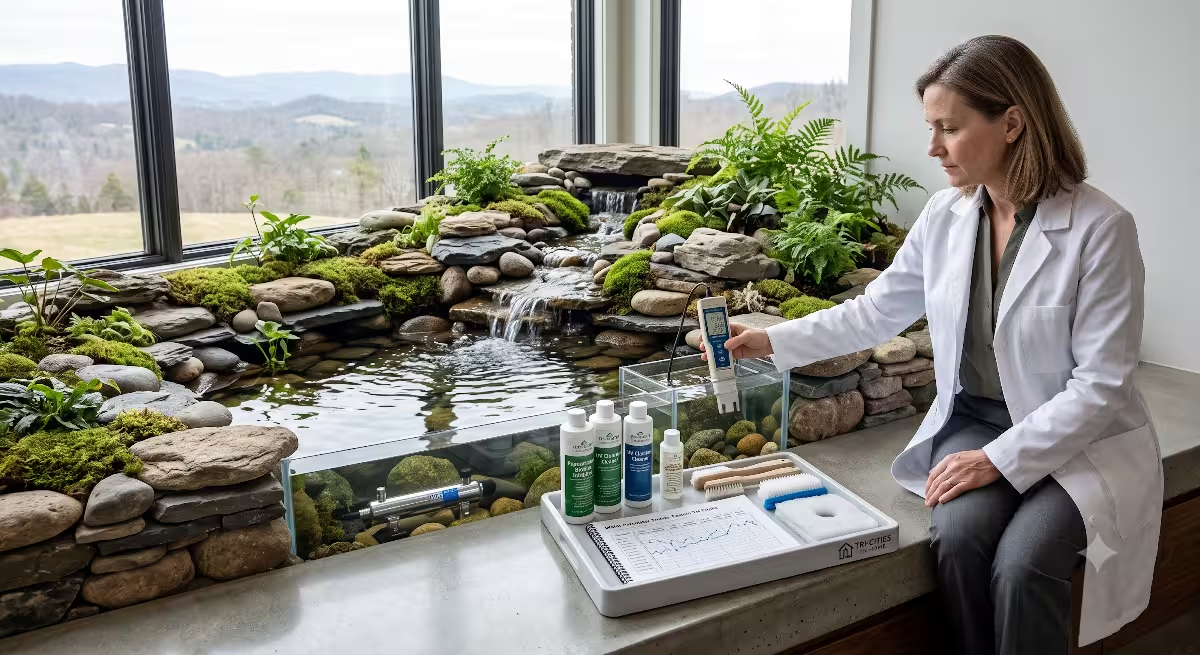
Because interior water features operate in warm, indoor environments with artificial lighting, they are vulnerable to biological growth and mineral buildup. Keeping river rocks clean and water crystal clear requires a routine maintenance plan based on safe chemistry.
Preventing Algae and Bacterial Biofilms
Biofilm is a slippery layer of bacteria, microscopic algae, and organic materials that attaches to moist river rock surfaces. Left untreated, biofilm makes stones look dull, generates unpleasant odors, and turns the water cloudy.
Traditional chemical treatments used in outdoor swimming pools, such as liquid chlorine bleach or tablet oxidizers, should never be used in interior water features. Chlorine off-gasses strong chemical fumes into your living space, degrading indoor air quality. Bleach can also react with minerals in natural river rock, causing discoloration, breaking down silicone basin sealants, and corroding pump impellers.
Instead, interior water features should use non-chemical, physical sterilization methods:
Submerged UV-C Sterilizers: Installing an inline ultraviolet (UV-C) clarifier in the filtration loop exposes circulating water to 254-nanometer light waves. This light disrupts the DNA of free-floating algae cells and bacteria, destroying them without adding chemical fumes to your indoor air.
Copper/Silver Ionization Systems: Low-voltage ionizers release micro-concentrations of copper and silver ions into the water stream. Copper prevents algae growth, while silver stops bacterial replication. This system keeps river rocks clean while remaining completely safe for indoor air.
Enzyme-Based Organic Cleaners: Natural enzyme additives break down plant matter, organic oils, and dust that settle on interior water features, preventing organic sludge from accumulating between river rocks.
+------------------+      +------------------+      +-------------------+
|                  |      |                  |      |                   |
| Recirculating    | ---> | Inline Mechanical| ---> | Submerged UV-C    |
| Water Pump       |      | Pre-Filter       |      | Sterilizer Unit   |
|                  |      |                  |      |                   |
+------------------+      +------------------+      +-------------------+
                                                              |
                                                              v
+------------------+      +------------------+      +-------------------+
|                  |      |                  |      |                   |
| Clean Water Return| <--- | Copper/Silver    | <--- | Natural River     |
| to Basin         |      | Ionizer Module   |      | Rock Cascade      |
|                  |      |                  |      |                   |
+------------------+      +------------------+      +-------------------+
Preventing White Mineral Crust (Limescale)
The Tri-Cities region is located in the Ridge-and-Valley geological province, which contains extensive underground limestone deposits. As a result, municipal tap water in Johnson City, Kingsport, and Bristol contains high levels of dissolved calcium and magnesium ions.
When tap water evaporates from interior water features, it leaves these dissolved minerals behind. Over time, white mineral crusts form along the waterline and coat dark river rocks. This scale is difficult to scrub away and ruins the natural beauty of dark river stone.
To eliminate mineral crusting in interior water features, never fill or top off your water system directly with untreated tap water. Instead, use one of these two water sources:
Reverse Osmosis (RO) Water: An RO filtration system forces tap water through a semi-permeable membrane, removing over 95% of dissolved minerals, calcium, and heavy metals. Filling interior water features with RO water prevents white mineral scale from ever forming on river rock.
Distilled Water: For smaller interior water features, distilled water provides mineral-free performance, keeping stones dark and glossy indefinitely.
If light mineral deposits do appear on river rocks, do not scrub them with harsh bathroom cleaners. Drain the basin and apply a mild solution of diluted citric acid or food-grade white vinegar. Allow the natural acid to dissolve the calcium deposits for 15 minutes, scrub gently with a soft nylon brush, and rinse thoroughly with RO water.
Sealing Natural River Rock: Pros and Cons
Homeowners often ask if they should apply chemical stone sealers to river rocks used in interior water features. The decision depends on the aesthetic finish you prefer and the stone type selected.
Unsealed, natural river stone absorbs water, giving it a rich, dark appearance while submerged. However, when the water feature is turned off and the stone dries, unsealed stone turns a lighter, muted shade.
Applying a penetrating siloxane or fluoropolymer stone sealer coats the micro-pores of the rock, protecting it against staining and keeping the stone looking dark even when dry.
If you choose to seal river rock for interior water features:
Use low-VOC or zero-VOC water-based penetrating sealers designed specifically for continuous water immersion.
Avoid cheap topical acrylic coatings or glossy sealers. Topical coatings chip, flake, and turn cloudy when exposed to continuous water flow, clogging pumps and creating a messy cleanup.
Allow sealed river rock to cure completely for at least 72 hours in a well-ventilated space before installing it in interior water features.
Common Questions Answered about Using River Rock in Interior Water Features
To help homeowners and designers evaluate interior water features, here are detailed answers to the most common technical questions about indoor stone water systems.
What is the best stone to use for an indoor water feature?
The best stone materials for interior water features are chemically inert, non-porous rocks, such as river quartzite, basalt, granite, and natural slate. These stones do not react with water, do not dissolve over time, and do not leach calcium or magnesium into the recirculating water system.
Quartzite river rock is especially prized for interior water features because its high quartz content gives it extraordinary hardness and chemical stability. Smooth, water-worn quartzite pebbles provide an attractive appearance, hold up well under continuous water flow, and will not alter your water pH or shed mineral particles that could damage pump mechanisms. Avoid soft sedimentary rocks like limestone, dolomite, or unsealed marble, as these release minerals, cause scale buildup, and deteriorate in recirculating water.
How do you keep natural river rock clean in an indoor fountain?
Keeping natural river rock clean in interior water features requires a three-part maintenance strategy: mineral control, biological prevention, and mechanical filtration.
First, always fill and top off interior water features with Reverse Osmosis (RO) or distilled water rather than mineral-rich municipal tap water. This prevents white calcium scale from forming on the river rock.
Second, install an inline submerged UV-C clarifier or a low-voltage copper/silver ionizer in the plumbing system. These systems kill free-floating algae and bacteria without requiring harsh chemical bleach that can damage stone and pollute indoor air.
Third, perform routine physical maintenance. Every three to six months, turn off the feature, drain the basin, and remove organic dust from the river rocks using a soft nylon brush and a mild citric acid cleaning solution. Rinse the rocks thoroughly with clean RO water before refilling the system.
Does river rock increase or decrease water pH?
Whether river rock changes water pH depends on the mineral makeup of the rock.
Chemically inert river rock, such as quartzite, basalt, and granite, is neutral. It will not increase or decrease the pH of the water in interior water features.
However, river rock sourced from limestone or dolomite formations contains high levels of calcium carbonate ($CaCO_3$). When used in interior water features, limestone river rock slowly dissolves into the water, releasing carbonate and hydroxyl ions. This process increases the water pH, pushing it above 8.2. High pH levels cause minerals to precipitate out of solution, coating interior water features in white scale and encouraging certain types of algae growth. Always verify that river rock is non-calcareous before installing it in indoor water systems.
How do you secure river rocks in a vertical indoor waterfall?
Securing river rocks on a vertical wall for interior water features requires fish-safe, water-resistant adhesives and structural support frames. River rocks should never be attached with standard drywall adhesive, thin-set mortar, or construction glues that break down under continuous moisture exposure.
For vertical interior water features, start with a rigid, waterproof backing board, such as a cement backer board coated with a liquid waterproofing membrane. Secure large accent river rocks using structural, 100% silicone adhesive formulated for continuous underwater exposure, or fish-safe polyurethane landscape foam.
For heavy cobbles and boulders, drill small holes into the back of each rock using a diamond masonry bit. Insert stainless steel pins into the rock using epoxy, then anchor those pins directly into the structural wall frame behind the backing board. Once the main stones are mechanically secured, fill small gaps with medium river pebbles glued in place with clear silicone to create a natural stone waterfall cascade.
Local Case Studies and Spatial Applications in Tri-Cities Homes
Applying biophilic design principles using river rock requires adapting the installation to the architectural style of the home. Here are three examples of successful interior water features installed in the Tri-Cities region.
+-----------------------------------------------------------------------------------+
|                        TRI-CITIES SPATIAL APPLICATIONS                            |
+-----------------------------------------------------------------------------------+
|  1. BOONES CREEK (Modern Mountain)                                                |
|     - Vertical Slate Waterfall with Dark Quartzite Basin                           |
|     - High Contrast, Deep Acoustic Damping, Reinforced Subfloor                   |
+-----------------------------------------------------------------------------------+
|  2. HISTORIC JONESBOROUGH (Rustic Timber Restoration)                             |
|     - Hand-Carved Oak Trough with Rounded Appalachian River Pebbles               |
|     - Low Splash Profile, RO Water System, Low-Frequency Sound Profile            |
+-----------------------------------------------------------------------------------+
|  3. KINGSPORT / BRISTOL (Commercial Biophilic Office)                             |
|     - 12-Foot Glass and River Cobble Acoustic Divider Wall                       |
|     - Inline UV-C Sterilization, Automated Top-Off, 500 Hz Sound Masking          |
+-----------------------------------------------------------------------------------+
The Modern Mountain Home: Boones Creek in Johnson City
A contemporary residence in the Boones Creek area of Johnson City featured an open-concept foyer with 18-foot ceilings, polished concrete floors, and floor-to-ceiling glass windows overlooking the Blue Ridge Mountains. While the space was visually striking, the hard surfaces created harsh acoustic echo, and the interior felt sterile.
To ground the foyer, a custom vertical interior water feature measuring 8 feet tall and 4 feet wide was designed. The main wall consisted of stacked black slate tiles, while the lower basin was constructed from reinforced concrete finished with a dark waterproof membrane. We filled the basin with 400 pounds of dark quartzite river cobbles sourced from a regional landscape supplier.
The river rocks were arranged in three distinct layers: a base of pea gravel concealing an inline pump, a middle layer of 2-inch smooth pebbles to break up splash, and several large 6-inch river cobbles placed along the edges to break up the water flow.
The installation transformed the home. The water cascading over the slate wall onto the dark quartzite river rock reduced room reverberation by absorbing high-frequency sound reflection. The water feature generated a consistent, low-frequency sound that masked distant road traffic, turning the open foyer into a calm, welcoming entry.
Historic Restoration Integration: Jonesborough
A historic timber-framed home near downtown Jonesborough required a subtle approach to interior water features. The homeowners wanted to improve indoor air hydration during dry winter months without compromising the historic character of their exposed heart-pine beams and original plaster walls.
The builder designed a low-profile floor water basin using a hand-carved oak trough lined with a heavy-duty butyl rubber pan. The trough was filled with smooth, light-colored river pebbles ranging from 1 to 3 inches in size. Water entered the basin through a hidden brass pipe, bubbling gently up through the center of the river rocks rather than dropping from a high vertical wall.
Because the water emerged smoothly from beneath the stone layer, splash was eliminated entirely. The wide surface area of the wet river rocks allowed natural evaporation to occur, increasing indoor humidity levels from a dry 28% up to a comfortable 44% during peak winter heating. Powered by a small, silent 12-volt pump and filled exclusively with distilled water, this historical integration required under 10 minutes of monthly maintenance while preserving the wood finishes around it.
Commercial Biophilic Installations: Downtown Kingsport and Bristol
In commercial spaces across Kingsport and Bristol, interior water features serve as functional acoustic room dividers in open-plan offices and medical waiting rooms. High background noise levels in these spaces make concentration difficult and increase stress for occupants.
The builder engineered a 12-foot-long, dual-sided vertical water wall for a corporate office in downtown Kingsport. Water flowed down both sides of textured tempered glass panels, landing in a recessed floor basin packed with graded river cobbles. The basin featured an integrated mechanical vault beneath the stone layer containing a high-efficiency UV-C clarifier, an automated water fill valve linked to an RO line, and a commercial copper/silver ionizer.
The graded river rocks in the basin absorbed falling water streams, keeping splash contained within the 18-inch basin margin. The feature produced a steady, broadband water sound centered at 500 Hz. This sound profile effectively masked background speech and office machinery noise, improving privacy in adjacent meeting areas while lowering stress levels for employees throughout the workday.
Long-Term Maintenance and Biophilic Value
Integrating natural river rock into interior water features represents the thoughtful combination of biophilic design principles, architectural engineering, and earth science. When planned correctly, interior water features transcend simple decoration, becoming functional biological systems that improve indoor environmental quality, manage acoustic comfort, and strengthen our daily connection to nature.
To ensure your investment delivers lasting value, follow this fundamental maintenance routine:
Select the Right Stone: Choose non-porous, chemically inert stones such as quartzite, basalt, or granite river rock. Avoid limestone and dolomite to prevent pH instability and mineral crusting.
Engineer for Load and Sound: Calculate floor weights before installation, reinforcing subfloors whenever load limits exceed standard capacities. Arrange medium river pebbles in impact zones to damp sound frequencies into a comfortable range between 200 Hz and 2,000 Hz.
Control Water Quality: Use Reverse Osmosis (RO) or distilled water to eliminate limescale buildup. Install inline UV-C sterilizers or copper/silver ionizers to control algae and bacteria without relying on harsh chemical bleach.
Protect Structural Surfaces: Keep splash zone margins equal to 1.5 times the water drop height, and maintain indoor relative humidity between 40% and 50% using proper HVAC ventilation.
Building interior water features using natural river rock requires an upfront investment in proper materials and hydro-engineering mechanics. However, the long-term rewards are substantial. A well-built water feature enhances home market appeal, enriches residential interior spaces, and provides a soothing acoustic sanctuary that serves your household for years to come.