
The Legacy of Appalachian and Southern Virgin Forests
The Material Presence of Lost Forests
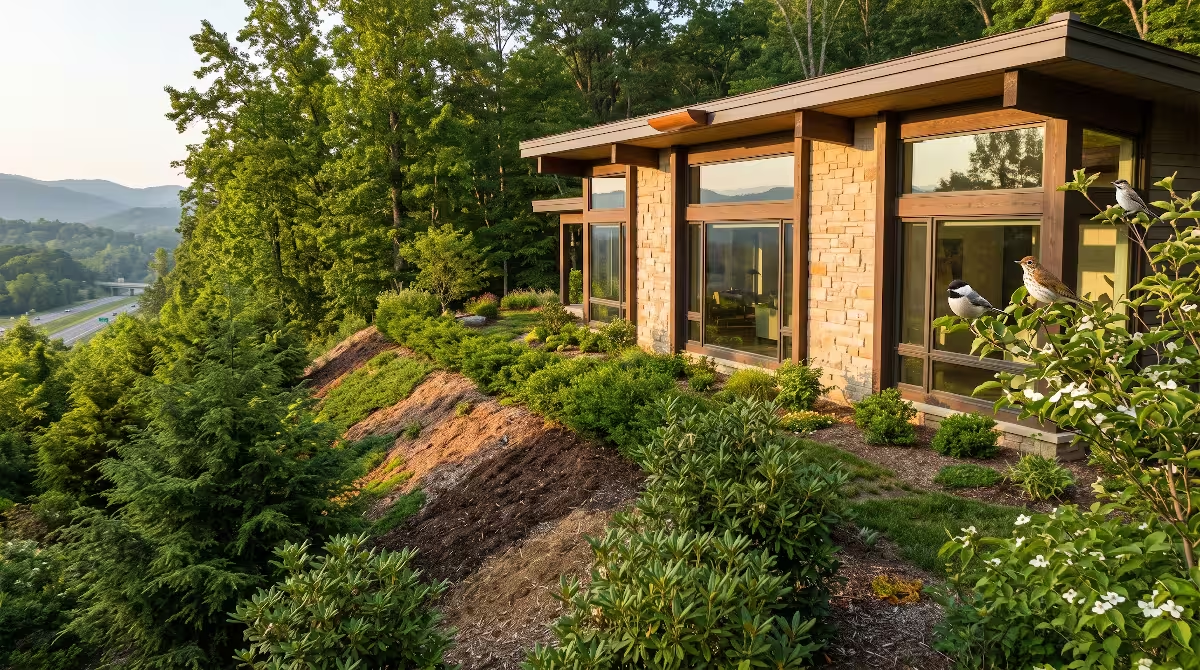
When you step into a house built with ancient wood, your body notices it right away. The rooms feel quiet, warm, and grounded. For those of us designing homes in the Tri-Cities region of Eastern Tennessee, including Johnson City, Kingsport, and Bristol, our living spaces should connect us directly to the natural world outside our doors. Incorporating reclaimed American chestnut and antique heart pine architectural features is one of the most effective ways to build this bond.
These historic woods are not ordinary lumber from a modern home improvement warehouse. They carry the physical memory of virgin North American forests. Modern lumber comes from fast-growing tree plantations harvested every twenty or thirty years. In contrast, antique heart pine and old-growth American chestnut grew slowly for two to four centuries beneath unbroken forest canopies. Because of that slow growth, their wood fibers are exceptionally dense, stable, and rich in natural color.
When we touch genuine antique heart pine or look up at an American chestnut beam, our senses engage with authentic natural textures. This physical interaction lowers human stress levels and makes indoor environments feel restorative. Bringing these timbers into our residential structures honors the historical landscape of the Southern Appalachian region while serving modern biophilic architecture.
       VIRGIN FOREST ECOSYSTEMS (Pre-1900)
    +-----------------------------------------------+
    | American Chestnut        Longleaf Pine        |
    | (Appalachian Ridges)     (Southeastern Plains)|
    +-----------------------+-----------------------+
                            |
           HISTORIC TIMBER HARVEST (1800-1920)
    +-----------------------v-----------------------+
    | Barns, Cabins,        Industrial Textile      |
    | Mountain Homesteads   Mills, Rail Warehouses  |
    +-----------------------+-----------------------+
                            |
           STRUCTURAL SALVAGE & RE-MILLING
    +-----------------------v-----------------------+
    | Metal Detection -> De-nailing -> Kiln Drying  |
    | -> Precision Milling & Profile Matching       |
    +-----------------------+-----------------------+
                            |
       MODERN BIOPHILIC LIVING SPACES (Tri-Cities TN)
    +-----------------------------------------------+
    | Reclaimed American Chestnut &                 |
    | Antique Heart Pine Architectural Features     |
    +-----------------------------------------------+
Botanical and Historical Context of American Chestnut
To appreciate these woods, we must examine their botanical history. The American chestnut, known botanically as Castanea dentata, was once the undisputed monarch of Eastern American deciduous forests. In the Southern Blue Ridge mountains and across Eastern Tennessee, one out of every four hardwood trees was an American chestnut. These trees grew to massive proportions, frequently reaching heights over one hundred feet with trunk diameters between five and ten feet.
The wood of the American chestnut was prized by early Appalachian settlers for good reason. It was lightweight, straight-grained, easy to split, and naturally immune to decay because of its high concentration of plant tannins. Settlers used it to build log cabins, farm barns, split-rail fences, and home furnishings.
In 1904, an imported bark fungus called Cryphonectria parasitica entered North America through the Bronx Zoo in New York. The resulting chestnut blight spread across the Appalachian range with devastating speed. Within four decades, more than three billion American chestnut trees died. The towering forests disappeared. Today, the only way to obtain authentic American chestnut for custom homes is through structural salvage. We carefully reclaim wood from historic barns, mountain homesteads, and early industrial buildings built before the blight struck.
Botanical and Historical Context of Longleaf Pine
While American chestnut dominated the Appalachian highlands, Pinus palustris, commonly known as the Longleaf pine, covered the Southeastern coastal plain and parts of the Piedmont. Virgin Longleaf pine forests once stretched across ninety million acres. These trees grew in open, sunny savannas that experienced frequent, low-intensity ground fires.
Because of these conditions, Longleaf pine trees grew very slowly. As the tree aged over several centuries, its living outer sapwood remained quite thin, while its non-living inner core converted into dense heartwood. This interior section filled with crystallized pine resin, yielding what we now celebrate as antique heart pine.
The heavy concentration of natural resin made the wood exceptionally dense, structurally rigid, rot-resistant, and insect-proof. During the Industrial Revolution of the nineteenth century, builders relied on virgin timber cuts of antique heart pine to frame the massive timber posts, joists, and floorboards of regional textile mills and rail warehouses. Today, vast stands of virgin Longleaf pine are gone, having been cut down during the nineteenth and early twentieth centuries. Salvaging antique heart pine from old industrial structures allows us to reuse this irreplaceable botanical resource.
Thesis Statement
Integrating reclaimed American chestnut and antique heart pine architectural features into contemporary home design creates an enduring bridge between Southern Appalachian natural history and modern biophilic building practices. This design approach creates living spaces with proven structural durability, sustainable material cycles, and authentic sensory qualities that modern synthetic materials cannot duplicate.
Material Profiles: Botanical, Physical, and Visual Characteristics
Reclaimed American Chestnut (Castanea dentata) Physical Properties
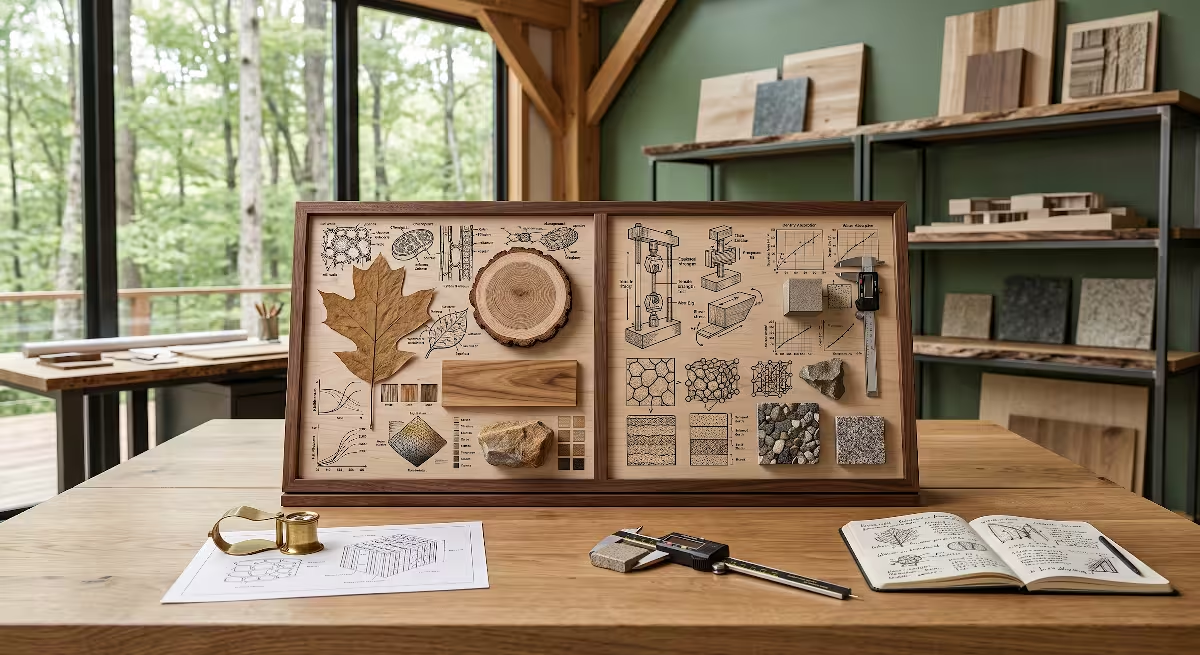
American chestnut is botanically classified as a ring-porous hardwood. Its physical composition reveals why it was so widely used in historic building. The wood has a specific gravity of roughly 0.48 and an average Janka hardness score of 540.
A score of 540 means that American chestnut is relatively soft when compared to dense hardwoods like white oak, which rates at 1,360, or sugar maple, which rates at 1,450. However, hardness is not the only measure of a good building material. American chestnut possesses extraordinary dimensional stability. It expands and contracts very little when indoor humidity shifts throughout our changing Tennessee seasons.
The cell structure of American chestnut features large earlywood pores clustered tightly at the beginning of each annual growth ring, followed by a sudden transition to smaller latewood pores. This ring-porous structure gives the wood a pronounced, coarse surface texture. More importantly, the cellular walls contain dense stores of natural tannic acid. These tannins act as an organic shield against wood-rotting fungi and microscopic pests, allowing the wood to remain sound for centuries, even in damp basements or exposed barn footings.
Reclaimed American Chestnut Visual Signatures
Visually, reclaimed American chestnut displays an earthy, warm color profile. When freshly milled, it shows light honey and caramel tones. Over decades of air exposure, it oxidizes into deep shades of dark cocoa, amber, and warm molasses.
Because virtually all reclaimed American chestnut comes from dead or dying trees harvested during the blight era, it carries distinct insect signatures. Small wood-boring ambrosia beetles entered the standing dead trees, creating smooth pinholes between one-sixteenth and one-eighth of an inch in diameter. Modern woodworkers refer to this prized material as wormy chestnut.
These tiny insect tunnels, paired with coarse growth rings, weathered checks, and original hand-hewn axe marks, give the wood an organic, tactile appeal. When sunlight hits an American chestnut wall, the open grain softens reflections and creates a soothing visual warmth across the room.
                  WOOD CROSS-SECTION CELLULAR PROFILES

   Reclaimed American Chestnut              Antique Heart Pine
   (Ring-Porous Hardwood)                  (Resin-Dense Conifer Softwood)
   +------------------------------+        +------------------------------+
   | O O O O O O O  <-Large Pores |        | |||||||||||| <-Tight Annual  |
   | . . . . . . .  <-Latewood    |        | ||||||||||||   Growth Rings  |
   | O O O O O O O  <-Growth Ring |        | * * * * * *  <-Resin Ducts   |
   |  [o]   [o]     <-Beetle Holes|        | ||||||||||||   Crystallized  |
   +------------------------------+        +------------------------------+
   - Janka Hardness: ~540                  - Janka Hardness: ~1,225
   - Light, porous, tannic                 - Heavy, resinous, structural
Antique Heart Pine (Pinus palustris) Physical Properties
Antique heart pine presents a striking contrast in physical density and mechanical strength. Although technically classified as a softwood because it comes from a coniferous pine tree, antique heart pine outperforms many true hardwoods in daily structural use.
It carries a Janka hardness rating of approximately 1,225, placing it on par with red oak (1,290) and far above modern commercially farmed pine, such as modern loblolly pine, which sits at a soft 690 on the Janka scale.
The secret to the hardness and stability of antique heart pine lies in its growth rate and high resin content. In a virgin Longleaf pine forest, trees competed fiercely for sunlight, adding only tiny fractions of wood to their girth each year. An antique heart pine beam measuring twelve inches across often contains two hundred or more annual growth rings.
As the tree’s inner heartwood matured, its cellular openings filled with heavy, aromatic terpene resins. Over decades and centuries of curing inside historic factories, these resins crystallized. This crystallization turned the wood hard, heavy, and naturally resistant to moisture, termites, and mechanical wear. Antique heart pine holds heavy structural loads and resists denting from everyday foot traffic.
       JANKA WOOD HARDNESS COMPARISON SCALE (Force in Pounds)
Modern Radiata / White Pine   [ 420 ]
Reclaimed American Chestnut   [ 540 ]
Modern Farmed Loblolly Pine   [ 690 ]
Antique Heart Pine            [ 1,225 ]
Red Oak                       [ 1,290 ]
Sugar Maple                   [ 1,450 ]
Antique Heart Pine Visual Signatures
Visually, antique heart pine is recognized by its tight growth rings and rich color. High-grade cuts often display between twenty and forty distinct growth rings per inch of width. The sapwood of a pine tree is pale yellow, but in antique heart pine, the sapwood was discarded long ago, leaving only pure, dense heartwood.
The color of genuine antique heart pine ranges from deep golden-amber to rich pumpkin-orange, russet-red, and warm oxblood. When cut along the vertical grain, antique heart pine displays tightly packed parallel lines that create clean, linear visual paths across long spaces.
When plain-sawn, antique heart pine shows sweeping, flame-shaped grain figures made prominent by the contrast between pale earlywood and dark, resin-soaked latewood. The natural resin gives the polished wood a deep, inner glow when finished with natural oils, creating a surface that catches and scatters natural daylight.
Direct Comparison Matrix
To help determine where to place each species within a custom home layout, review the direct physical and architectural comparison below:
| Material Parameter | Reclaimed American Chestnut | Antique Heart Pine |
| Botanical Name | Castanea dentata | Pinus palustris |
| Wood Classification | Ring-porous deciduous hardwood | Resin-rich coniferous softwood |
| Janka Hardness Rating | Approximately 540 | Approximately 1,225 |
| Volumetric Density | ~30 lbs per cubic foot (light to medium) | ~42 to 45 lbs per cubic foot (dense and heavy) |
| Microscopic Structure | Large earlywood pores; heavy tannic acid | Ultra-tight growth rings; crystallized resin ducts |
| Color Spectrum | Honey blonde, light cocoa, aged walnut | Golden amber, pumpkin orange, russet red |
| Surface Marks & Character | Insect pinholes, saw kerf marks, worm tracks | Tight vertical lines, flame grain, nail oxidations |
| Natural Defenses | High tannin levels prevent rot and fungus | Saturated terpenes resist pests and moisture |
| Best Architectural Uses | Ceiling box beams, wall paneling, mantels | High-traffic wide plank floors, stair treads, posts |
Key Architectural Features for Modern Appalachian Homes
       BIOPHILIC ARCHITECTURAL INTEGRATION IN A LIVING ROOM
  +--------------------------------------------------------------+
  |               CEILING & ROOF STRUCTURE                       |
  |  [American Chestnut Box Beams / Acoustic Ceiling Planks]     |
  |  - Low weight, deep acoustic absorption, warm honey tones   |
  +--------------------------------------------------------------+
  |  WALL SURFACES                 | FIREPLACE HEARTH            |
  |  [Wormy Chestnut Shiplap]     | [Hand-Hewn Chestnut Mantel] |
  |  - Natural fractal grain      | - Direct tactile focal point |
  |  - Soft light diffusion       | - Paired with local stone   |
  |                               +-----------------------------+
  |                               | DOOR & WINDOW CASINGS       |
  |                               | [Antique Heart Pine Trim]   |
  |                               | - Crisp edges, warm resin   |
  +-------------------------------+-----------------------------+
  |                 FLOORING & STAIR ELEMENTS                    |
  |  [Wide-Plank Antique Heart Pine Flooring & Solid Treads]    |
  |  - Janka 1,225 wear surface, high thermal mass, foot comfort|
  +--------------------------------------------------------------+
Heavy Timber Framing and Exposed Truss Systems
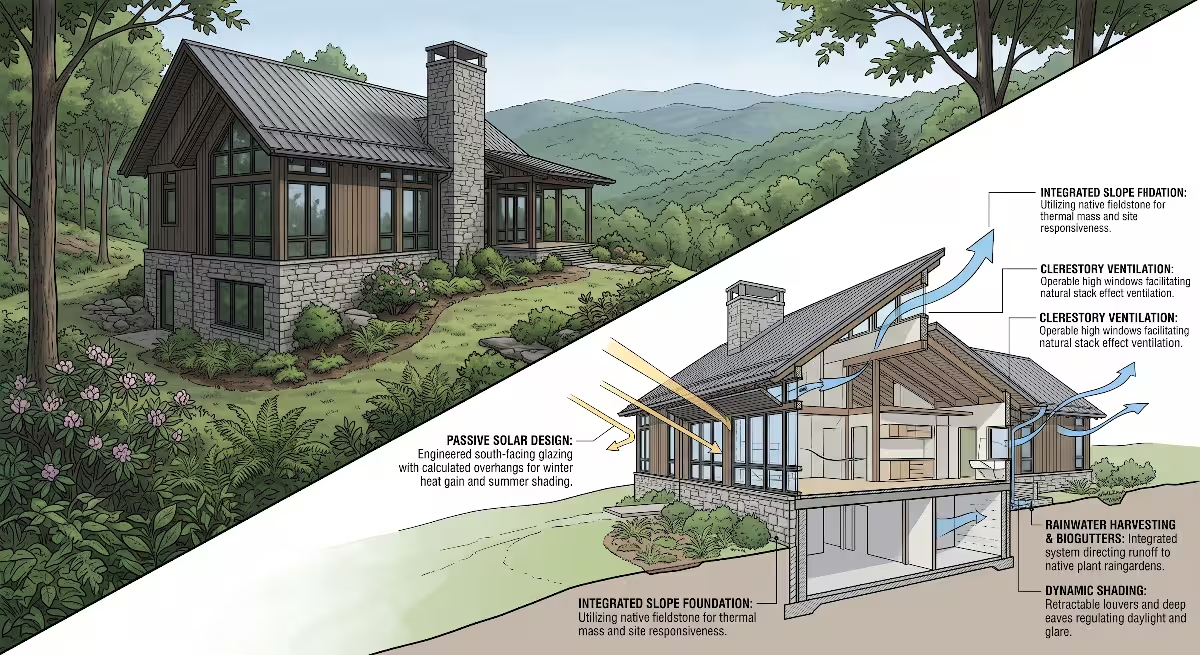
Exposed structural timbers bring structural honesty into a home. When entering a great room with high ceilings, the human eye naturally tracks upward to understand how the building is supported. Using antique heart pine for heavy structural trusses, king posts, and rafters provides the necessary strength to carry major roof loads.
Because antique heart pine boasts impressive bending strength and high compression capacity along its grain, it can span long distances across open living spaces without sagging. The dark, amber-red beams create a pleasing geometric contrast against light-colored, natural lime-plaster ceilings.
Leaving authentic joinery visible, such as mortise-and-tenon connections secured with wooden oak pegs, highlights traditional craftsmanship. In homes set against the rolling hills of the Tri-Cities, exposed trusses made from antique heart pine create a comforting, protective atmosphere beneath expansive roofs.
Fireplace Mantels and Inset Library Millwork
The fireplace hearth serves as the primary gathering point in traditional Appalachian residential design. An authentic fireplace mantel cut from an eight-by-eight or ten-by-ten rough-sawn American chestnut beam creates an instant tactile anchor. Because American chestnut is relatively soft, the subtle tool marks made by nineteenth-century broadaxes and adzes remain clearly visible across the face of the wood.
Pairing a reclaimed American chestnut mantel with local Tennessee fieldstone or Crab Orchard sandstone creates a direct material link to the surrounding mountains. In home libraries and studies, American chestnut works exceptionally well for open bookshelf shelving, wall niches, and desk surfaces. Its light weight places less stress on wall studs, while its open pores absorb sound waves, keeping reading rooms quiet and peaceful.
Contrasting this with writing desks or cabinet counters made from dense antique heart pine ensures that work surfaces resist dents from writing pens, laptops, and everyday items.
Vertical and Horizontal Wall Paneling
Modern homes often rely heavily on flat drywall, which can leave rooms feeling sterile and acoustically reflective. Covering feature walls in reclaimed American chestnut or antique heart pine introduces organic textures that soften spaces.
Using tongue-and-groove or shiplap boards of wormy American chestnut on vertical accent walls introduces subtle, repeating irregularities that feel natural and calming. The tiny insect holes and flowing grain lines break up sound reflections, creating a softer acoustic environment.
In rooms that receive strong natural light, horizontal shiplap made of antique heart pine radiates a warm, sunset-colored glow across adjacent surfaces. The natural variations in antique heart pine keep long hallways and tall stairwells visually engaging without needing artificial wall coverings or synthetic wallpapers.
Flooring and Stair Systems
Flooring is the architectural element we touch most often. Our feet stay in continuous physical contact with the floor, making material choice critical for a sensory home experience. This is where antique heart pine proves its worth.
Because American chestnut is soft and dents under concentrated pressure, it is not recommended for high-traffic residential flooring. Antique heart pine, however, provides the hardness needed to withstand active households with children and pets. Specifying wide-plank antique heart pine flooring in widths from five to nine inches showcases the dense grain patterns and amber tones of the historic wood.
Stair treads cut from solid, five-quarter-inch antique heart pine provide secure, slip-resistant steps that will not cup or bow over decades of use. As daylight changes from morning to evening, antique heart pine floors subtly shift in tone, reflecting rich golden light throughout your home.
       OPTIMAL MATERIAL PLACEMENT BY ARCHITECTURAL PLANE
  Upper Plane (Ceilings / Roof)   --> Reclaimed American Chestnut
                                      (Low weight, acoustic dampening)
  Mid Plane   (Walls / Mantels)   --> Chestnut Paneling & Mantels
                                      (Intricate visual grain, soft touch)
  Lower Plane (Floors / Stairs)   --> Antique Heart Pine
                                      (High Janka hardness, wear resistance)
Custom Architectural Millwork
Beyond major structural beams and floorboards, historic timbers bring elegance to everyday finish details. Doors, window casings, baseboards, and ceiling crown mouldings can all be milled from reclaimed stock.
Using antique heart pine for interior door jambs and window trim guarantees crisp, sharp edges that resist dings from furniture moving or vacuum cleaners. The natural resins in antique heart pine also protect window sills from moisture condensation during cold mountain winters.
Meanwhile, American chestnut can be crafted into interior cabinet door panels, dining tables, and floating display shelves. The distinct tonal differences between the golden-brown chestnut and the reddish-amber antique heart pine allow designers to create layered color palettes without relying on artificial wood stains or chemical dyes.
Biophilic Impact and Environmental Physiology
Material Connection with Nature
Biophilic design is the practice of connecting people to nature within modern built environments. Research in environmental psychology demonstrates that our nervous systems respond positively to natural materials. Synthetics like vinyl, plastic laminates, and printed veneers can appear flat and repetitive. Our brains quickly identify these artificial materials as fake, which keeps us subtly detached from our surroundings.
When we use reclaimed American chestnut and antique heart pine architectural features, we satisfy what psychologists call a material connection with nature. Every single plank of antique heart pine displays non-repeating growth rings, resin streaks, and nail oxidations created by decades of human use and natural growth.
Looking at genuine antique heart pine triggers a calming mental response similar to walking through a forest. The organic textures provide our visual systems with restful complexity, allowing our eyes to wander without causing cognitive fatigue.
      BIOPHILIC DESIGN BENEFITS IN THE LIVING ENVIRONMENT
   +---------------------------------------------------------+
   |                  SENSORY INPUT CHANNELS                 |
   +----------------------------+----------------------------+
                |                                        |
     TACTILE & THERMAL                        VISUAL & ACOUSTIC
   +----------------------------+   +------------------------+
   | Low thermal effusivity     |   | Non-repeating fractals |
   | Soft, natural grain touch  |   | Natural light diffusion|
   | Dynamic moisture balancing |   | Sound dampening pores  |
   +----------------------------+   +------------------------+
                |                                        |
                +-------------------+--------------------+
                                    |
                            PHYSIOLOGICAL IMPACT
   +---------------------------------------------------------+
   | - Lower resting heart rate                              |
   | - Reduced sympathetic nervous system activation (stress)|
   | - Enhanced acoustic comfort and quiet speech clarity    |
   | - Tangible sense of regional history and permanence     |
   +---------------------------------------------------------+
Atmospheric and Thermal Qualities
The physical presence of solid wood improves indoor air and acoustic comfort. Large structural elements made from American chestnut and antique heart pine contribute to what engineers call passive thermal comfort. Wood has low thermal effusivity compared to stone, ceramic tile, or concrete. This means that when you walk barefoot across an antique heart pine floor, it does not quickly pull heat away from your skin. The floor feels naturally warm in winter and comfortably temperate in summer.
Furthermore, authentic wood is hygroscopic. Its pores naturally absorb moisture from indoor air when humidity climbs during humid East Tennessee summers, and they release that moisture during dry winter months when heating systems are running. This natural buffering helps stabilize indoor relative humidity, creating a healthier breathing environment.
Acoustically, the cellular structure of American chestnut and antique heart pine absorbs unwanted sound reflections. Sound waves penetrate the open pores of chestnut ceiling boards and the resin-damped fibers of antique heart pine beams, rather than bouncing harshly off flat surfaces. This reduces interior echo, making living areas and dining rooms feel quiet and intimate.
Sensory Authenticity and Well-Being
Sensory authenticity refers to how materials feel, smell, and respond to our touch. Artificial building products often off-gas synthetic volatile organic compounds (VOCs) that irritate eyes and respiratory passages. In contrast, genuine antique heart pine emits a faint, pleasant natural scent of pine rosin when warmed by sunlight, introducing a clean, natural aroma into the home.
Reclaimed American chestnut provides a soft, warm surface to the touch, making it an inviting material for dining room tables, handrails, and desktop surfaces. As humans interact with these materials, they experience a tactile connection to the past.
Living in a home that displays genuine antique heart pine and reclaimed chestnut provides a steady sense of stability, permanence, and calm. This grounded feeling is the heart of biophilic design.
Sourcing, Milling, and Installation Logistics in Eastern Tennessee
          RECLAMATION AND PREPARATION TIMELINE
  +-------------------------------------------------------+
  | STEP 1: HISTORIC DECONSTRUCTION                       |
  | Salvage from 19th-century barns, mills, and cabins    |
  +---------------------------+---------------------------+
                              |
  +---------------------------v---------------------------+
  | STEP 2: METALLURGICAL CLEANING                        |
  | Dual-pass metal scanning, extracting iron hand nails  |
  +---------------------------+---------------------------+
                              |
  +---------------------------v---------------------------+
  | STEP 3: THERMAL KILN CYCLING                          |
  | Heating to 140-150 F core temp to eliminate larvae    |
  | Stabilizing moisture content precisely to 6% to 8%    |
  +---------------------------+---------------------------+
                              |
  +---------------------------v---------------------------+
  | STEP 4: PRECISION RE-MILLING                          |
  | Planing, profiling tongue-and-groove, relieving backs |
  +---------------------------+---------------------------+
                              |
  +---------------------------v---------------------------+
  | STEP 5: ON-SITE ACCLIMATION                           |
  | 14-21 days inside climate-controlled living space     |
  +-------------------------------------------------------+
Sourcing Provenance
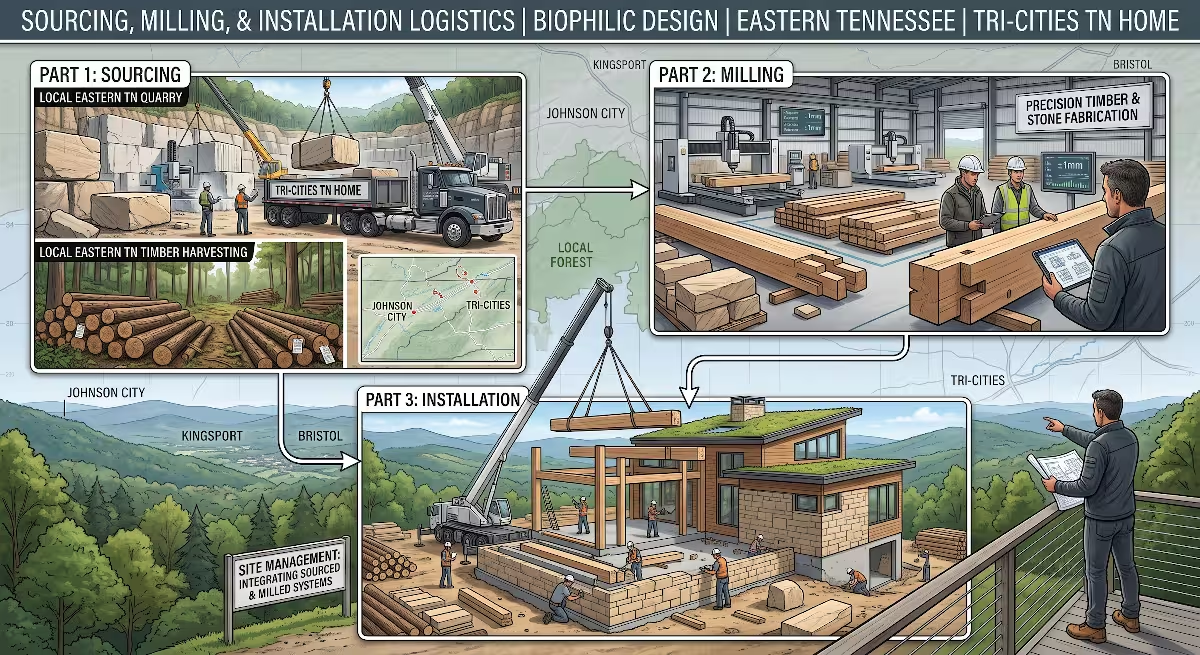
Sourcing authentic historic timbers requires patience, research, and careful architectural salvage. In the Tri-Cities region, we are fortunate to live near historical sources for both timber varieties. Reclaimed American chestnut is primarily salvaged from nineteenth-century agricultural barns, mountain cabins, and upland storage sheds throughout the Southern Appalachian mountains of East Tennessee, Western North Carolina, and Southwest Virginia.
On the other hand, antique heart pine is typically salvaged from industrial sites. During the late nineteenth and early twentieth centuries, textile mills, tobacco warehouses, and manufacturing plants were built across the Southeastern Piedmont using large timbers of virgin Longleaf pine. As these old commercial buildings are safely retired, specialized deconstruction crews carefully dismantle the structures, preserving the antique heart pine floorboards and framing timbers for architectural reuse.
When purchasing these materials, it is important to verify the provenance of your lumber. Legitimate salvage suppliers provide documentation detailing where the timbers were harvested, ensuring the wood was ethically reclaimed.
Re-Milling and Preparation Protocols
Raw salvaged lumber cannot be installed directly into a modern home without careful preparation. Decades or centuries of agricultural or industrial use leave the wood dirty, embedded with metal fasteners, and carrying varying moisture levels.
The preparation process begins with thorough metal detection. Technicians scan every board using specialized metal detectors to locate old cut nails, iron spikes, and broken fasteners. These metal objects are carefully removed by hand to avoid damaging modern saw blades.
       CROSS SECTION: PROPERLY RE-MILLED WOOD PLANK
  +-------------------------------------------------------+
  | [T]======                                   ======[G] |
  |   |     |   RECLAIMED TIMBER CORE (6-8% MC)   |     | |
  |   +-----+                                     +-----+ |
  |          \______/   \______/   \______/               |
  |            Stress Relief Relief Grooves               |
  +-------------------------------------------------------+
  - [T] Precision Tongue Matches [G] Precision Groove
  - Stress relief grooves on bottom prevent cupping
Next, the wood must undergo slow-cycle kiln drying. This step serves two vital purposes:
- It heats the core of the timber to between 140 and 150 degrees Fahrenheit for several hours, eliminating any dormant powderpost beetles or wood-boring larvae.
- It slowly reduces and evens out the moisture content until it reaches six to eight percent.
Stabilizing the moisture prevents wide-plank flooring made from antique heart pine from shrinking, warping, or buckling after installation. Once the lumber is dry, it is re-milled, planed to consistent thicknesses, and shaped with precise tongue-and-groove edges, often with stress-relief grooves cut into the underside of the boards to ensure long-term flatness.
Finishing for Maximum Biophilic and Material Fidelity
How you finish historic wood dictates how it looks, feels, and performs. In modern construction, builders often coat wood floors in thick, glossy polyurethane finishes. These chemical coatings form a plastic film over the wood. While durable, plastic films seal off the wood pores, ruin its natural texture, and prevent you from directly touching the authentic material.
To preserve the biophilic benefits of reclaimed American chestnut and antique heart pine, specify natural, vapor-permeable finishes. Plant-based hardwax oils, pure zero-VOC tung oil, and natural linseed oil finishes penetrate deep into the wood fibers. These oils bond with the grain and cure into a tough, water-resistant surface that leaves the natural texture accessible to the touch.
Hardwax oils enhance the warm amber tones of antique heart pine and the earthy, golden colors of American chestnut without adding an artificial plastic sheen. If a section of an oil-finished antique heart pine floor gets scuffed or scratched, you can easily repair that isolated spot without having to sand and refinish the entire room.
Frequently Asked Questions about Reclaimed American Chestnut and Antique Heart Pine
Can you mix American chestnut and antique heart pine in the same room?
Yes, you can successfully mix reclaimed American chestnut and antique heart pine in the same room, provided you follow sound architectural design principles. Because both woods originate from historic virgin forests, their natural, aged colors complement one another.
To create visual balance, assign each wood to specific architectural surfaces based on its physical properties:
- Horizontal Floor Planes: Use dense, wear-resistant antique heart pine for wide-plank flooring and stair treads. Its deep reddish-amber tones provide a solid visual anchor for the space.
- Vertical and Overhead Planes: Use lighter, softer American chestnut for ceiling box beams, fireplace mantels, wall paneling, and open shelving.
This approach prevents the room from feeling visually overwhelmed while letting the unique color and grain of both woods shine.
               BALANCED MATERIAL DISTRIBUTION
  +-----------------------------------------------------+
  | CEILING: Reclaimed American Chestnut                |
  | Light honey tones, open texture, low weight load    |
  +-----------------------------------------------------+
  | WALLS & HEARTH: Chestnut Accents / Pine Window Trim |
  | Natural focal points, tactile connections           |
  +-----------------------------------------------------+
  | FLOOR: Wide-Plank Antique Heart Pine                |
  | High hardness (Janka 1,225), rich amber foundation  |
  +-----------------------------------------------------+
How do you identify real reclaimed American chestnut?
Identifying authentic reclaimed American chestnut requires checking four distinct botanical and structural characteristics:
            IDENTIFYING RECLAIMED AMERICAN CHESTNUT
  +-------------------------------------------------------+
  | 1. PORE PATTERN: Large earlywood pores form a clear   |
  |    ring-porous ring; resembles oak at first glance.   |
  |                                                       |
  | 2. NO MEDULLARY RAYS: Unlike red or white oak, it     |
  |    completely lacks wide, shiny medullary ray flecks. |
  |                                                       |
  | 3. WEIGHT & FEEL: Surprisingly lightweight compared   |
  |    to oak or heart pine; soft enough to dent easily.  |
  |                                                       |
  | 4. WORM PINHOLES: Often contains tiny, clean tunnels  |
  |    bored by ambrosia beetles during the blight era.   |
  +-------------------------------------------------------+
- Ring-Porous Pore Structure: American chestnut features large earlywood pores that form visible growth rings, resembling white or red oak.
- Absence of Medullary Rays: Unlike oak, which displays prominent, shiny medullary rays that cut across the growth rings, American chestnut has no visible rays. Its grain looks cleaner and more uniform.
- Weight and Density: American chestnut is surprisingly light. When you lift a board of American chestnut and compare it to a piece of oak or antique heart pine of the same size, the chestnut feels much lighter in your hands.
- Insect Pinholes: Authentic reclaimed American chestnut frequently displays tiny, clean pinholes left behind by ambrosia beetles that nested in the dead trees during the early twentieth century blight.
Why is reclaimed antique heart pine harder than regular pine?
Reclaimed antique heart pine is significantly harder than modern retail pine because of its botanical origin, tree age, and dense growth conditions:
Modern pine lumber sold in big-box stores comes from fast-growing loblolly, slash, or radiata pines grown on commercial tree plantations. These trees are harvested when they are only twenty-five to thirty years old. They grow rapidly, producing wide, soft annual growth rings made mostly of sapwood, yielding a low Janka hardness score around 690.
In contrast, antique heart pine was harvested from virgin Longleaf pine trees (Pinus palustris) that grew slowly in natural forests for two to four centuries. Because they competed for light and moisture, they developed tightly packed growth rings, often numbering twenty to forty rings per inch.
As the tree matured, the living cells in the center died and transformed into heartwood, becoming saturated with natural resin. Over decades of curing inside historic timber buildings, this resin crystallized, turning the wood hard, dense, and heavy. This process gives antique heart pine its impressive Janka hardness score of roughly 1,225, making it nearly twice as hard as modern pine.
                  PINE SPECIES GROWTH RING DENSITY
  Modern Farmed Pine (Loblolly)     Antique Heart Pine (Longleaf)
  +----------------------------+    +----------------------------+
  |  |      |      |      |    |    | |||||||||||||||||||||||||| |
  |  |      |      |      |    |    | |||||||||||||||||||||||||| |
  +----------------------------+    +----------------------------+
  - 3 to 6 rings per inch           - 20 to 40 rings per inch
  - Soft, modern sapwood            - Dense, resin-cured heartwood
  - Janka Hardness: ~690            - Janka Hardness: ~1,225
Is reclaimed wood more expensive than new hardwood flooring?
Yes, reclaimed wood generally costs more up front than standard new hardwood flooring. The higher initial price reflects the extensive labor, time, and specialized craftsmanship required to reclaim, prepare, and re-mill the lumber.
Standard modern hardwood flooring is processed using automated machinery: trees are cut down, run through industrial sawmills, dried in bulk kilns, and shipped directly to retail stores.
Reclaiming historic timbers, on the other hand, involves labor-intensive steps:
- Specialized salvage crews must carefully dismantle historic barns and factories by hand.
- Technicians scan every individual beam with metal detectors to remove old iron nails, spikes, and bolts.
- The lumber must be dried in small batches inside specialized kilns to eliminate pests and stabilize internal moisture.
- Craftsmen carefully saw and mill the boards to highlight their grain patterns while trimming away unusable sections.
While the upfront cost is higher, antique heart pine and reclaimed chestnut offer superior dimensional stability, greater durability, and historical character that cannot be bought in modern lumber. When cared for properly, these historic woods will last for generations, making them a worthwhile investment for custom homes in the Tri-Cities.
Sustainability, Carbon Sequestration, and Green Building Metrics
Embodied Carbon and Circular Design
In sustainable building design, embodied carbon refers to all the greenhouse gas emissions generated by harvesting, manufacturing, transporting, and installing building materials. Modern construction products, like steel, concrete, and synthetic vinyl planks, carry high levels of embodied carbon.
Using reclaimed American chestnut and antique heart pine architectural features represents circular design at its best. These timbers were cut and processed over a century ago, meaning their original harvesting and processing emissions have long since passed.
By salvaging these woods from buildings destined for demolition, we divert tons of useful material from municipal landfills and prevent the cutting of living trees.
            THE CARBON CYCLE OF RECLAIMED TIMBER
  +-------------------------------------------------------+
  | 1. HISTORIC ATMOSPHERIC CARBON CAPTURE (1600-1900)    |
  | Trees absorbed and locked away metric tons of CO2.    |
  +---------------------------+---------------------------+
                              |
  +---------------------------v---------------------------+
  | 2. FIRST LIFE: HISTORIC BUILDINGS (1880-2020)         |
  | Carbon remained safely sequestered for 100+ years.    |
  +---------------------------+---------------------------+
                              |
  +---------------------------v---------------------------+
  | 3. SECOND LIFE: MODERN CUSTOM HOME (2025+)            |
  | Wood is re-milled, avoiding new harvesting emissions  |
  | and locking away carbon for another century.          |
  +-------------------------------------------------------+
Furthermore, trees act as natural carbon sponges. As they grow, they take carbon dioxide out of the air and store it safely in their wood cells. When an old building is demolished and sent to a landfill or burned, that stored carbon is released back into the atmosphere.
Salvaging antique heart pine and American chestnut keeps that carbon locked securely inside your home’s walls, floors, and ceilings for decades or centuries to come.
LEED v4 and WELL Building Standard Synergy
For homeowners and architects in the Tri-Cities designing homes to meet green building certifications, reclaimed wood provides clear paths to valuable credits.
        GREEN BUILDING CERTIFICATION ALIGNMENT
   +-----------------------------------------------------+
   | LEED v4 (Leadership in Energy & Environmental Design)|
   +-----------------------------------------------------+
   | - MR Credit: Building Life-Cycle Impact Reduction   |
   | - MR Credit: Sourcing of Raw Materials (Reuse)      |
   | - MR Credit: Regional Materials (Within 100 Miles)  |
   +-----------------------------------------------------+
                            |
   +------------------------v----------------------------+
   | WELL Building Standard                              |
   +-----------------------------------------------------+
   | - Feature 62: Mind and Nature (Biophilic Shapes)    |
   | - Feature 04: VOC Reduction (Zero-VOC Finishes)     |
   | - Feature 88: Biophilia I - Qualitative Integration |
   +-----------------------------------------------------+
In the LEED v4 (Leadership in Energy and Environmental Design) rating system, using salvaged lumber helps earn points across several Material and Resources (MR) categories:
- Building Life-Cycle Impact Reduction: Reusing salvaged historic components significantly lowers the environmental impact of your build.
- Sourcing of Raw Materials: Reclaimed wood meets strict material reuse standards, documenting responsible sourcing.
- Regional Materials: Reclaiming timbers from historic barns and mills within our regional Appalachian watershed earns additional credit for local sourcing.
Under the WELL Building Standard, which focuses on human health and wellness in indoor spaces, reclaimed wood supports several key targets:
- Feature 88 (Biophilia I – Qualitative): Incorporating natural materials that reflect regional geology and history supports psychological comfort and reduces stress.
- Feature 04 (VOC Reduction): Finishing antique heart pine with plant-based hardwax oils avoids toxic off-gassing, protecting indoor air quality.
Conclusion and Design Implementation
Creating Timeless Appalachian Living Spaces
Designing a custom home in the Tri-Cities region is an opportunity to create a space that feels deeply connected to our mountain landscape. Reclaimed American chestnut and antique heart pine architectural features provide a unique way to bring this vision to life.
These historic woods offer an irreplaceable combination of rich character, structural strength, and biophilic warmth. The warm honey hues and insect markings of wormy American chestnut celebrate the lost giants of our Appalachian forests. Meanwhile, the rich amber tones, tight vertical grain, and remarkable hardness of antique heart pine provide durable, long-lasting floors and structural timbers.
By choosing reclaimed timbers, you invest in high-quality craftsmanship, preserve regional history, support sustainable circular building practices, and bring the calming qualities of the natural world directly into your daily life.
Whether framing a dramatic great room with exposed antique heart pine trusses, building a peaceful stone hearth around a weathered American chestnut mantel, or laying wide-plank antique heart pine flooring throughout your home, these materials turn houses into enduring works of art.
Implementation Checklist for Your Build
Before beginning your build or renovation project in Johnson City, Kingsport, or Bristol, review this operational checklist with your architect and builder:
        PROJECT PLANNING AND SPECIFICATION STEPS
  [ ] 1. Identify Provenance: Confirm your timber supplier can verify
         where the reclaimed wood was sourced.
  [ ] 2. Match Materials to Uses: Place antique heart pine on floors
         and load-bearing elements; reserve American chestnut for
         mantels, ceilings, and wall paneling.
  [ ] 3. Ensure Proper Milling: Check that all salvaged lumber has been
         scanned for metal, kiln-dried to 6-8% moisture content, and
         heat-treated against pests.
  [ ] 4. Plan for Acclimation: Stack lumber on stickers inside your
         climate-controlled home for two to three weeks before installation.
  [ ] 5. Choose Natural Finishes: Use low- or zero-VOC natural hardwax
         oils rather than film-forming plastics to preserve the natural grain.
Honoring the material legacy of our Southern forests allows us to build homes that are sustainable, structurally sound, and connected to nature. Reclaimed American chestnut and antique heart pine bring warmth, history, and beauty to any home, providing lasting enjoyment for generations to come.