Choosing Your Perfect Dining Table
When you step into a home, space should feel open, calm, and welcoming. Yet in many smaller floor plans, cottage layouts, and modern townhomes, square footage is at a premium. For decades, traditional house plans dedicated an entire room to a formal dining setup. That room often sat empty for three hundred and fifty days a year, gathering dust while taking up valuable space that could have been used for everyday living. Today, smart homeowners and builders are rethinking how rooms function. We want our spaces to work hard for us every single day without sacrificing the ability to gather with family and friends.
This is where multi-functional furniture changes the way we live. A convertible coffee to dining table for small flex spaces bridges the gap between everyday relaxation and functional entertaining. During the day, you have an open living room with a low-profile centerpiece where you can set down a mug of tea, rest a book, or display a vase of fresh flowers. When mealtime arrives, or when friends come over for dinner, that same piece of furniture lifts, expands, and transforms into a full dining table. You do not have to give up a comfortable living area just to have a proper place to eat, nor do you have to squeeze past an oversized table every time you walk across the room.
To make this kind of furniture work in a real home, you need to understand both the physical structure and the daily lifestyle impact. It is not just about buying a clever table from a catalog. It is about understanding how mechanical hinges handle weight, how wood moves with seasonal humidity, how much room you need to pull out a chair, and how easy it is for one person to lift the top without straining their back. In this guide, we will walk through the ten essential architectural, engineering, and lifestyle criteria you should evaluate. By understanding these structural details, you can choose a convertible dining table that looks beautiful, operates effortlessly, and lasts for years to come.
+-------------------------------------------------------------------------+
|                  TYPICAL CLEARANCE ENVELOPE (TOP-DOWN VIEW)             |
|                                                                         |
|         [Wall or Credenza]                                              |
|                 ^                                                       |
|                 |  36 inches (Minimum Walkway)                          |
|                 v                                                       |
|       +-------------------+                                             |
|       |   Dining Chair    |                                             |
|       +-------------------+                                             |
|                 ^                                                       |
|                 |  18-24 inches (Pull-out zone)                         |
|                 v                                                       |
|     +=======================+ <--- CONVERTED DINING TABLE               |
|     |                       |      (Height: 29-30 inches)               |
|     |                       |                                           |
|     +=======================+                                           |
|                 ^                                                       |
|                 |  44 inches (Main Service / High Traffic Path)         |
|                 v                                                       |
|         [Living Room Sofa]                                              |
+-------------------------------------------------------------------------+
Spatial Clearance and Circulation Envelopes
The foundation of good home design is traffic flow. In home building, we talk about circulation envelopes, which are simply the open pathways people use to move from one room to another. When you place a conventional dining table in an open living area, it permanently locks up valuable floor area. A convertible table gives that floor space back to you, but only if you plan the clearances correctly for both its low and raised positions.
When the piece is lowered as a coffee table, you generally want fourteen to eighteen inches between the edge of the table and the front edge of your sofa. This gives you enough legroom to sit down comfortably while keeping drinks and books within easy arm reach. However, when you lift and expand that furniture into a functional dining table, the physical footprint changes completely. The top usually moves upward and outward toward your seating, or it doubles in width across the room.
To use a dining table comfortably, you must maintain at least thirty-six inches of clear floor space from the edge of the expanded tabletop to any surrounding wall, bookcase, or cabinet. This thirty-six inch perimeter is the standard architectural minimum. It allows someone to pull back a chair, sit down, and get up without bumping their elbows or scraping the wall. If a primary walkway runs directly behind the seating area, such as the path from the front door to the kitchen, you should expand that clearance to forty-four inches. That extra width ensures someone can carry a hot serving dish past a seated guest without asking them to tuck in their chair.
You also need to calculate the vertical and diagonal travel path of the table itself. Most lift-top mechanisms do not move straight up like an elevator. Instead, they swing upward in an arc. If your living room features a low-hanging chandelier, pendant light, or a ceiling fan, verify that the rising tabletop will never interfere with the fixture.
From a practical living perspective, planning these pathways means you never feel trapped in your own living room. When you host a holiday meal or Sunday dinner, your guests should feel relaxed, not cramped. A well-placed dining table respects the human body and allows natural movement through the home. Before buying any convertible unit, take painter tape and mark two separate outlines on your living room rug: one for the table when closed, and one for the table when fully expanded with chairs pulled out. Walk through the space with the tape on the floor. If you can move freely without turning sideways, your room can easily support a convertible dining table.
Mechanical Lift Systems: Engineering the Kinetic Core
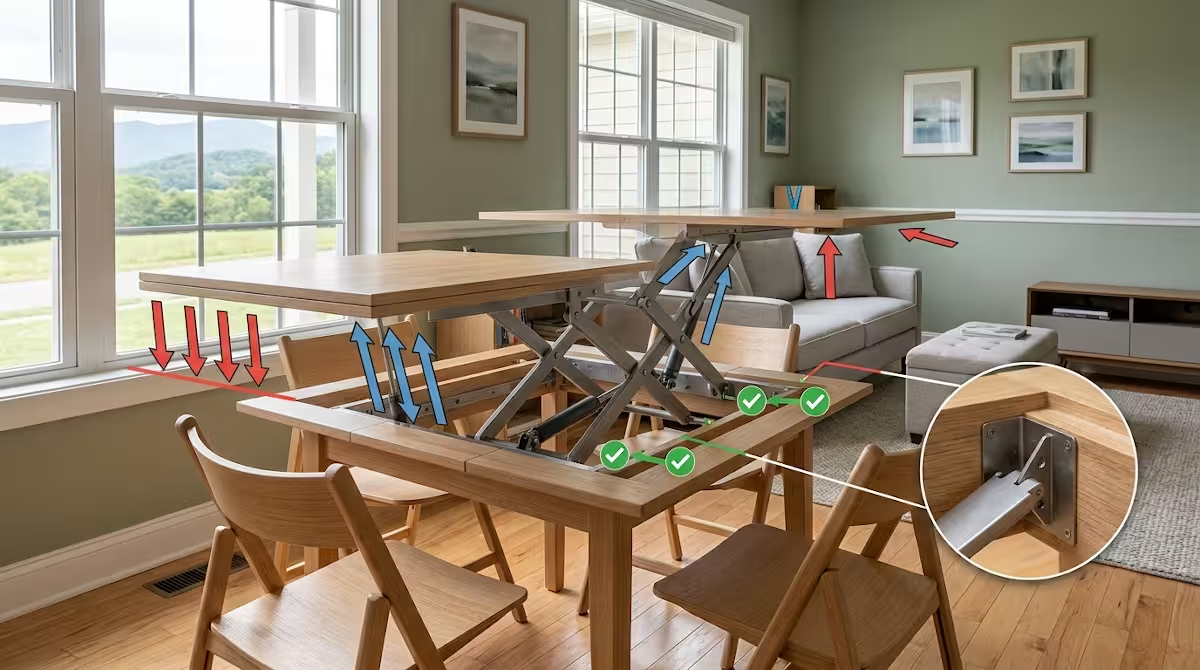
The real heart of any convertible coffee-to-dining furniture is the mechanical lift system. This is the hardware hidden inside the frame that allows a low coffee table to rise up into a sturdy dining table. If the hardware is poorly made, the entire piece will wobble, squeak, and quickly fail. If the hardware is engineered correctly, the table will operate silently and feel solid under your hands.
LIFT MECHANISM COMPARISON

1. Heavy Steel Scissor Lift with Hydraulic Pistons
   [ Tabletop ]
       | \   / |    <-- Heavy-duty pivot brackets
       |  \ /  |    <-- Dual cross-braced scissor arms
       |   X   |
       |  / \  |    <-- Internal hydraulic dampers (smooth, quiet)
       | /   \ |
   [ Solid Base ]
   Verdict: Exceptional stability; zero frame twist; supports full dining weight.

2. Thin Single-Spring Lift Brackets
   [ Tabletop ]
       |       |
       |  / \  |    <-- Thin stamped sheet metal (bends easily)
       | ( S ) |    <-- Exposed high-tension spring (snaps shut)
       |       |
   [ Particleboard Box ]
   Verdict: Prone to racking; snaps shut dangerously; wobbles under dinner plates.
There are three main types of lifting mechanisms used in these tables: manual tension springs, pneumatic gas struts, and hydraulic damping pistons.
Manual spring mechanisms are the most basic and affordable. They rely on heavy steel coil springs hooked between scissor arms. When you pull the tabletop up, the springs contract to assist with the weight. While simple, spring systems have distinct drawbacks. They can be stiff and jerky to lift, requiring significant arm strength to start the upward motion. Even worse, when you push the table back down, the springs can snap shut abruptly if you lose your grip. Over time, metal springs also tend to squeak every time you lean on the table.
Pneumatic gas struts use compressed nitrogen gas sealed inside a metal cylinder, similar to the lift supports found on the rear hatchback of an SUV. As you lift the tabletop, the internal gas pressure pushes a piston rod outward, doing nearly all the heavy lifting for you. Gas struts provide a much smoother, quieter motion than raw springs. A single person can easily guide the surface upward with one hand. When it is time to lower the table, the gas cylinder provides controlled resistance, ensuring the top glides down softly without slamming.
Hydraulic systems take this engineering a step further by using fluid dampening valves. In a hydraulic lift table, the motion is slow, steady, and completely controlled throughout the entire range of travel. High-grade hydraulic arms prevent frame racking, which is the twisting force that happens if you accidentally pull up on one side of the table harder than the other. In cheaper tables, uneven pulling bends the hinge brackets over time, leaving the dining table crooked. A dual-piston hydraulic setup keeps the frame square and true, no matter where your hands are placed during the lift.
When evaluating these mechanisms, inspect the thickness of the steel arms. Look for cold-rolled structural steel that is at least one-eighth of an inch thick. Thin, stamped sheet metal will bend under dynamic weight. Check the pivot points as well. Premium tables use bronze bushings or sealed miniature ball bearings at every hinge joint. Cheaper models simply drive a rivet through two pieces of sheet metal. Those rivets loosen quickly, causing the expanded dining table to shake whenever someone cuts a steak or rests their elbows on the wood. A quality mechanical core guarantees that lifting the top feels smooth, balanced, and completely safe.
Ergonomics and Tri-Level Height Geometry
Ergonomics is the science of designing objects to fit the human body correctly. In home construction and interior design, standard furniture heights exist for very specific physical reasons. When a single table attempts to serve two or three different purposes, its height geometry must be exact.
A standard coffee table sits between sixteen and eighteen inches off the floor. This height aligns naturally with the seat cushions of standard living room sofas, which typically sit seventeen to nineteen inches high. At this low height, you can see over the table across the room, keeping your line of sight open toward entertainment centers, fireplaces, or windows. Reaching down to pick up a coffee cup or a remote control feels natural and relaxed.
On the other hand, a standard dining table must stand between twenty-nine and thirty inches high. This measurement was established centuries ago because it matches the distance from an average adult lap to their elbows. When you sit in a chair with an eighteen-inch seat height, a thirty-inch dining table allows your feet to rest flat on the floor, your thighs to slide comfortably under the table apron, and your forearms to rest on the surface without hunching your shoulders or raising your elbows. If a converted table only rises to twenty-six or twenty-seven inches, it is not a true dining surface. Sitting at a table that is even two inches too short forces adults to hunch their upper spine forward, leading to neck strain, lower back fatigue, and an uncomfortable meal.
HEIGHT GEOMETRY COMPARISON
+-------------------------------------------------------------------------+
| Height Level      | Elevation Range  | Primary Function                 |
+-------------------------------------------------------------------------+
| Level 1: Low      | 16 to 18 inches  | Coffee table, open sightlines    |
| Level 2: Mid      | 24 to 26 inches  | Laptop work, casual sofa snacks  |
| Level 3: High     | 29 to 30 inches  | Standard dining table, hosting   |
+-------------------------------------------------------------------------+
Some of the finest convertible tables offer tri-level geometry. In addition to the low sixteen-inch position and the high thirty-inch dining table position, they feature an intermediate locking stop at twenty-four to twenty-six inches. This mid-level height is ideal for working on a laptop from the sofa or enjoying a quick casual lunch while sitting on the couch. At twenty-five inches, the surface pulls forward over your knees, eliminating the need to lean awkwardly forward toward a low coffee table.
Another critical ergonomic factor is the forward cantilever distance. When many convertible tables lift, the mechanism carries the top both upward and forward toward the couch by eight to twelve inches. This forward extension is wonderful when you are using the table while seated on your sofa. However, when you want to convert the piece into a freestanding dining table for four to six people, a heavy forward overhang can make seating on the opposite side clumsy. The best convertible designs feature an articulated base or a central telescoping column that rises straight up or balances the expanded surface evenly, ensuring every person seated around the dining table enjoys identical legroom and arm positioning.
Tabletop Expansion Mechanics and Surface Continuity
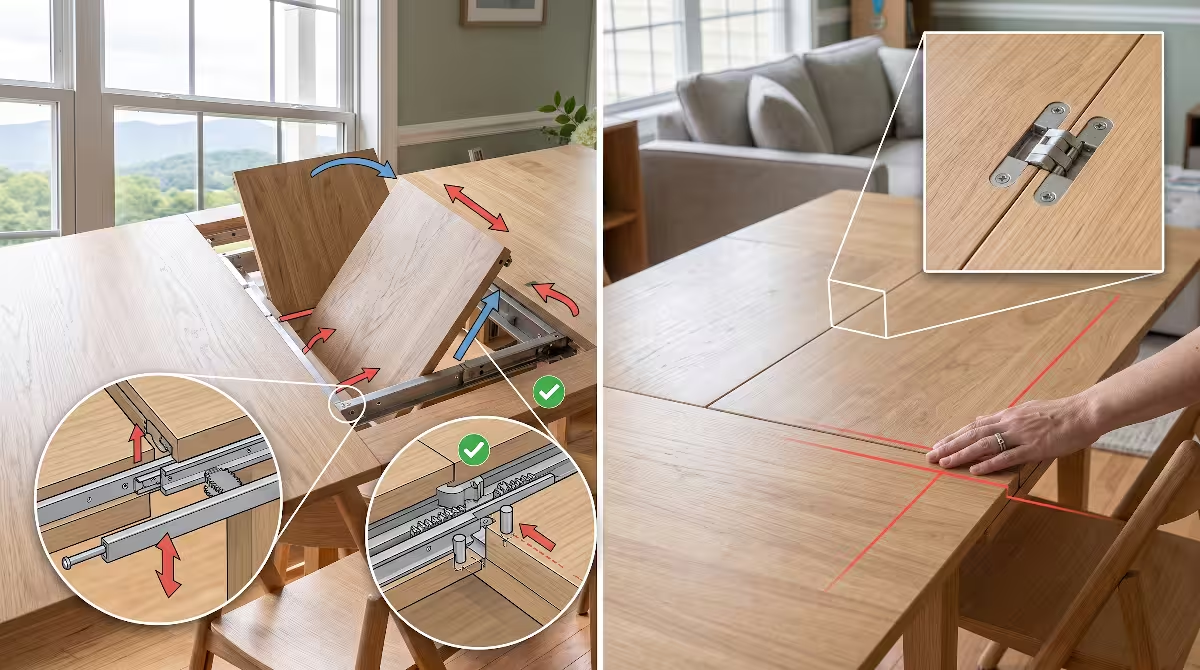
Transforming the height is only half the equation; a true dining table must also provide enough surface area to hold plates, glassware, serving bowls, and silverware for multiple people. A standard coffee table measures roughly twenty-four inches wide by forty-eight inches long, which is barely enough space for two people to eat comfortably. To become an authentic dining table, that surface must expand to at least thirty-six inches wide, and ideally open up to sixty or seventy inches in length.
TABLETOP EXPANSION METHODS

Method A: Book-Fold Leaf (Swivel & Unfold)
Step 1: Rotate closed top 90 degrees on a central heavy-duty pivot pin.
Step 2: Unfold the top half like a book along concealed piano hinges.
Step 3: Surface area doubles instantly; internal frame supports both halves.

Method B: Concealed Center Butterfly Leaf
Step 1: Unlock under-table tension latches.
Step 2: Pull outer table ends apart along smooth aluminum gear tracks.
Step 3: Lift and unfold the center butterfly leaf stored inside the chassis.
Step 4: Push ends inward to lock flush; creates an extended dinner surface.
Furniture makers use several clever methods to expand the surface:
The book-fold leaf is the most common and reliable method for small spaces. The top surface consists of two identical panels joined along one long edge by heavy hinges. To open the table, you lift the top, rotate it ninety degrees on a heavy-duty central pivot pin, and then unfold the top panel just like opening a book. The lower half of the frame provides continuous structural support directly beneath both leaves. When opened, the surface area doubles instantly, turning a twenty-four-inch coffee table into a generous forty-eight-inch square dining table.
The butterfly leaf system operates like a traditional expandable dining table. The main tabletop splits down the center, and the two ends glide apart on metal tracks. As the ends separate, a folded leaf stored inside the internal chassis rises up and unfolds into place. The ends are then pushed back together against the leaf and locked with under-table latches. This method preserves the long rectangular shape of the furniture, which works exceptionally well in narrow, rectangular living rooms.
No matter which expansion style you choose, pay close attention to the hinges and surface seams. Poorly built tables use standard surface-mounted butt hinges that stick up above the wood. These exposed metal barrels catch on tablecloths, scratch dinner plates, and trap breadcrumbs. A properly built dining table uses concealed SOSS hinges or continuous brass piano hinges that sit completely flush with the wood surface when opened. When the leaves unfold, the seam between the two panels should be tight, level, and nearly invisible. If one side of the seam sits higher than the other, glasses will wobble, drinks will spill, and the table will feel like a cheap temporary fix rather than a permanent piece of fine furniture.
Seating Ergonomics, Apron Clearance, and Knee Geometry
When building or furnishing a home, what happens underneath a table is just as important as what sits on top. One of the most common complaints about converted furniture is poor knee clearance. A traditional coffee table is built like an enclosed wooden box with deep side panels or storage drawers that drop down close to the floor. If you simply raise that box to thirty inches, adults cannot sit comfortably because their thighs and knees collide with the underside of the table.
In carpentry, the vertical board that runs directly under the tabletop between the legs is called the apron. On a standard dining table, the apron is narrow, usually measuring between two and three inches high. When you pair a thirty-inch table height with an eighteen-inch chair height, that narrow apron leaves roughly nine to ten inches of open vertical space for human thighs. Guests can cross their legs comfortably, sit close to their food, and relax without feeling pinched.
Convertible tables often hide mechanical scissor arms, lift springs, or internal leaves beneath the main surface, which can create a very deep apron. If that under-table chassis is six or eight inches thick, your vertical knee clearance drops to less than six inches. Sitting at a dining table with restricted clearance forces people to sit far back or splay their knees outward to the sides. Over a long dinner party, this becomes exhausting.
UNDER-TABLE KNEE CLEARANCE PROFILE

Standard Dining Table Setup (Ideal):
   Top Surface: 30 inches elevation
   ==================================== [ Tabletop ]
   |___ 2.5" Apron                    |

   [ 9.5 Inches Open Vertical Knee Clearance ]

   ------------------------------------ [ Chair Seat: 18" elevation ]
   |                                  |
   | [ Human Thighs Rest Naturally ]  |

Deep-Box Mechanical Table (Flawed):
   Top Surface: 30 inches elevation
   ==================================== [ Tabletop ]
   |                                  |
   |___ 8.0" Deep Mechanical Box Chassis

   [ 4.0 Inches Restricted Clearance: Knees Hit Bottom! ]

   ------------------------------------ [ Chair Seat: 18" elevation ]
To solve this problem, look for tables designed with a central pedestal base or an articulated trestle frame rather than a bulky four-corner box. A central pedestal houses the lifting column in the middle of the room, leaving the entire outer perimeter open and free for human legs.
You must also consider where you will store chairs when the table is lowered as a coffee table. In a small home, you do not want four to six large wooden chairs cluttering your living space all week.
- Nesting upholstered ottomans can sit neatly under the raised table or double as regular living room footrests and extra sofa seating during the week. When dinner is served, they provide comfortable seats at the correct height.
- Fold-flat wooden dining chairs can be folded down to two inches thick and hung on decorative brass hooks inside a nearby closet or tucked behind an interior door.
- The living room sofa itself can serve as built-in banquette seating. If the converted dining table is adjusted to overhang the edge of your couch by four inches, two or three people can sit comfortably on the sofa cushions while two folding chairs are brought in for the opposite side.
Planning your knee clearance and seating strategy ahead of time guarantees that your dining table is genuinely functional for full-course meals, rather than just a novelty piece you rarely use.
Dynamic vs. Static Load Capacities
One of the most critical structural concepts to understand when choosing furniture is the difference between static load capacity and dynamic load capacity. As an engineering principle, static load refers to steady, motionless weight placed gently on a surface. Dynamic load refers to moving weight, shifting forces, and sudden impacts.
When a manufacturer claims their table can hold two hundred pounds, they are almost always quoting a static load rating for the table when it is completely closed in the low coffee table position. In that resting state, the weight travels directly down through the solid base frame into the floor. However, the moment you lift that furniture into a dining table, the structural physics change dramatically.
LEVER ARM AND CANTILEVER FORCES
                       Downward Lean Force: 40 lbs
                                |
                                v
                   +------------------------+ <--- Cantilevered Edge
                   |      Tabletop Surface  |
                   +-----------+------------+
                               /  <-- Scissor Linkage (Pivot Point)
                              /
                             /    Moment Arm: The farther the edge extends
                            /     from the base, the greater the tipping force.
                           /
           +--------------+
           | Table Base   |
           +==============+
When raised, the tabletop is cantilevered on metal arms. A cantilever is a projecting beam or arm supported only at one end. Any weight placed on the outer edge of that raised surface creates a rotational twisting force, known in mechanics as a bending moment. The farther the edge of the tabletop extends beyond the mechanical support base, the more leverage that weight has against the hinges.
Consider a real-world dinner party. You set down a heavy ceramic casserole dish full of food, four heavy dinner plates, glassware, and a bottle of wine. That static weight might total twenty-five to thirty pounds, which any decent dining table can easily handle. But what happens when someone finishes their meal, places both hands firmly on the edge of the table, and leans all their body weight forward as they stand up from their chair?
In that moment, a dynamic load of fifty to eighty pounds of downward force hits the very edge of the cantilevered surface. If the table is built with cheap sheet-metal hardware, the scissor arms will flex, the hinge pins will bend, and the entire dining table can pitch forward, sending dishes, wine glasses, and food sliding off onto your rug.
When shopping for a convertible dining table, look for hardware that includes structural locking pins or mechanical detents. A locking detent is a steel pin or latch that snaps securely into place once the table reaches its full thirty-inch height. This lock transfers the downward weight directly into a rigid vertical support column rather than relying solely on spring or hydraulic tension to hold the top in the air.
Check the base ballast as well. A high-quality convertible table will have a heavy, weighted steel or cast-iron plate inside the lower base cabinet. This low center of gravity counterbalances the high, cantilevered weight of the raised tabletop. A good rule of thumb is simple: when the table is fully raised as an open dining table, you should be able to press firmly down on any corner with both hands without the opposite side lifting off the floor or the frame twisting. Stability brings peace of mind, allowing you to host dinners with absolute confidence.
Dual-Zone Storage and Concealed Utility Management
Living comfortably in a small home requires deliberate clutter control. In a compact floor plan, visual clutter creates mental fatigue. If every surface is covered with laptops, television remotes, charging cords, and stray paperwork, a home quickly feels cramped and chaotic. A well-engineered convertible table can double as an organizational command center by utilizing the dead space inside its structural frame.
DUAL-ZONE INTERNAL STORAGE SCHEMATIC

+-------------------------------------------------------------+
|               Top Surface (Lifts Up & Away)                 |
+-------------------------------------------------------------+
        |                                             |
        v                                             v
+-------------------------------+  +--------------------------+
|  Zone A: Shallow Clean Tray   |  | Zone B: Deep Bay         |
|  - Laptop, tablet, documents  |  | - Table runners, linens  |
|  - Pens, notebooks, remotes   |  | - Folding chair cushions |
|  - Routed cable pass-through  |  | - Mechanical piston clearance
+-------------------------------+  +--------------------------+
| [ Battery Bank / Surge Strip] |  | [ Heavy Base Ballast ]   |
+=============================================================+
Because the tabletop lifts up and away from the base chassis, manufacturers can build a hollow storage cavity directly beneath the main surface. In the best designs, this storage is split into two distinct zones:
Zone A is a shallow, felt-lined tray positioned right under the primary work surface. This area is designed for everyday essentials. During the workday, you can keep your laptop, charging cables, notebooks, and pens here. When five o’clock arrives, or when company knocks on the door, you simply lift the lid, set your work materials inside, and lower the surface. In less than ten seconds, your home office vanishes completely, and your living room is calm and tidy.
Zone B is a deeper compartment positioned lower in the chassis. This space is ideal for dining essentials that you only need when the piece is converted into an active dining table. You can store fabric placemats, cloth napkins, table runners, and compact coaster sets right inside the furniture. When it is time to eat, everything you need to set the dining table is right at your fingertips, saving trips back and forth to kitchen cabinets.
When evaluating internal storage, examine how the mechanical hardware moves inside that cavity. Low-end tables leave their heavy steel springs and greasy scissor linkages completely exposed inside the storage bay. If you place a woolen blanket, a linen table runner, or a computer charger inside, the mechanical arms can pinch the fabric, smear grease on your linens, or sever the electrical insulation on your cords when the table closes.
Look for furniture that isolates the lifting arms behind smooth wooden bulkheads or protective metal covers. High-end modern tables also incorporate routed cable channels. These small, finished grooves allow you to run a low-profile power strip or a high-capacity portable battery bank directly into the internal box. You can plug your devices into the table while working on a laptop, without having long, ugly extension cords stretched across your open living room floor where someone could trip over them.
Material Science, Joinery, and Surface Durability
A traditional dining table usually lives a relatively sheltered life. It sits in a dining room, gets wiped down after meals, and occasionally holds a decorative centerpiece. A convertible coffee-to-dining piece, however, works twice as hard every single day.
In the morning, it serves as a coffee table where hot mugs are set down. In the afternoon, it becomes an office desk where laptops slide across the finish. In the evening, it rises to become a full dining table where it faces hot dinner plates, spilling water glasses, acidic tomato sauce, and greasy silverware. It must withstand continuous cleaning, mechanical vibration, and shifting household temperatures without warping, peeling, or cracking.
SURFACE MATERIAL DURABILITY COMPARISON
+-------------------------------------------------------------------------+
| Material Type        | Heat Resistance | Scratch Defense | Water Proof  |
+-------------------------------------------------------------------------+
| Particleboard + Foil | Very Poor       | Very Poor       | Fails fast   |
| Hardwood Veneer/MDF  | Moderate (Coaster)| Good (Repairable) | Good (Sealed)|
| Solid White Oak/Ash  | High (Needs oil)| High (Can sand) | Excellent    |
| Sintered Stone       | Extreme (Trivet-free)| Extreme (Blade-proof) | 100% Impermeable |
+-------------------------------------------------------------------------+
The underlying core material is your first major consideration:
Standard particleboard or low-density fiberboard should be avoided completely in convertible furniture. Particleboard is simply sawdust glued together under pressure. It has very little internal tensile strength. Because a convertible table concentrates tremendous mechanical stress onto small hinge brackets, the screws holding the metal arms will eventually pull straight out of the crumbly particleboard core. Once a screw hole strips out in particleboard, it is nearly impossible to repair permanently.
Medium-density fiberboard (MDF) with high-quality hardwood veneer is a much more stable option. Premium MDF is extremely dense and will not cup or warp when indoor humidity levels change between summer and winter. When wrapped in a thick, real-wood veneer, it provides the warm, natural appearance of authentic lumber while maintaining a flat, level surface that unfolds evenly every time.
Solid hardwood, such as white oak, hard maple, or walnut, offers unmatched natural beauty and structural strength. Screws driven into solid Appalachian white oak hold tight under intense dynamic leverage. If a solid wood dining table gets scratched or dented after years of family dinners, the wood can be sanded down, repaired, and refinished.
However, solid wood moves across its grain as humidity rises and falls. In the humid summers of the southern states, solid wood expands; in the dry heat of winter, it shrinks. If a craftsman does not account for this natural wood movement with slotted screw holes and floating table buttons, an expanding solid wood tabletop can warp or bind against its metal lift tracks.
Sintered stone and ceramic slabs are becoming increasingly popular for modern convertible tables. Sintered stone is made by subjecting natural minerals to intense heat and immense pressure, mimicking the natural formation of metamorphic rock. The resulting surface is non-porous, completely waterproof, immune to heat from boiling cookware, and so hard that you can cut vegetables directly on it without leaving a scratch. If you have young children, love entertaining, or simply do not want to worry about coasters, a sintered stone top provides bulletproof durability for a hardworking dining table.
Finally, inspect the protective topcoat finish. Look for commercial catalyzed polyurethane or high-solid conversion varnishes. These modern factory finishes form a tough, chemical-resistant barrier that protects the wood underneath from alcohol spills, hot coffee rings, and daily wiping with sanitizing cleaners.
Safety Engineering: Pinch Prevention and Child-Safe Dampening
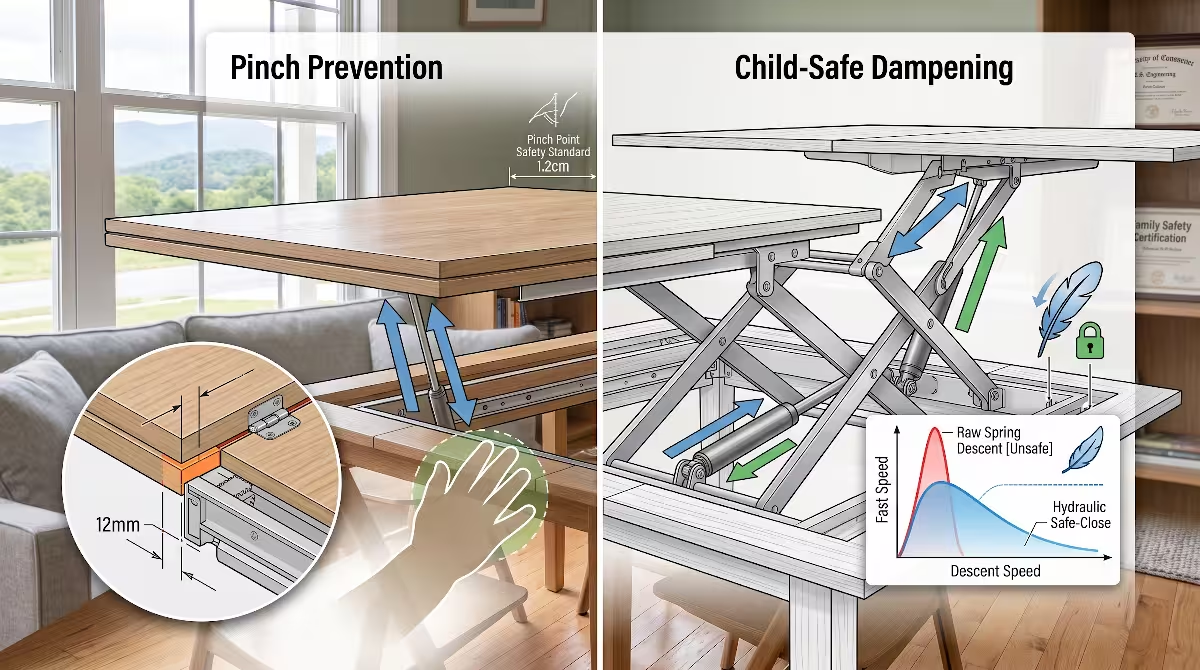
Any time you bring moving mechanical furniture into a home, safety must be taken seriously. A convertible coffee-to-dining table contains powerful scissor linkages, heavy sliding leaves, and structural hinges that generate significant leverage. If a heavy tabletop falls uncontrollably, or if fingers are caught between moving steel arms, serious pinching or crushing injuries can occur.
If you have toddlers, young children, or curious pets in your household, safety engineering should be at the very top of your evaluation checklist.
CRITICAL SAFETY GAP CLEARANCE

                  [ Raised Tabletop Surface ]
                             |
                             v
           +-----------------------------------+
           |                                   |
           +-----------------+-----------------+
                             |
                  Pinch Zone | <-- Minimum 12mm (0.5") perimeter safety gap
                             |     prevents crushing small fingers!
                             v
           +-----------------------------------+
           |                                   |
           +-----------------------------------+
                  [ Table Base Chassis ]
The most critical safety feature on any mechanical table is an anti-slam hydraulic dampener. Cheaper spring-assisted tables have a dangerous tendency to collapse rapidly if they are pushed down from the wrong angle. If a child bumps the underside of the table or pulls on a release lever, a spring-loaded top can drop like a guillotine.
A high-grade hydraulic soft-close system makes an uncontrolled drop physically impossible. Even if you press downward with all your strength and let go, the internal hydraulic fluid valves restrict the flow of oil, forcing the heavy dining table to descend at a slow, gentle pace of two to three inches per second. The final inch of travel should be whisper-quiet, gliding down softly into the resting coffee table position without an abrupt snap.
Finger gap safety clearances are another vital engineering detail. High-end manufacturers design their furniture with intentional clearance reliefs along the perimeter. When the tabletop folds down or slides shut, the frame maintains a small safety gap of at least twelve millimeters (about half an inch) between the moving top and the lower cabinet until the final dampened closure. This structural space prevents small fingers from being pinched or crushed if a child rests their hand along the edge while the table is being lowered.
Look for secondary mechanical safety locks. These are manual safety latches or sliding steel pins that must be deliberately disengaged before the raised dining table can begin its downward descent. A physical lock guarantees that the table cannot be accidentally bumped down by an active dog wagging its tail, a child crawling underneath during a game of hide-and-seek, or an adult bumping the frame with their knee while shifting their chair.
Finally, check the stability of the leaf expansion. If the table utilizes a rotating book-fold leaf, it should feature magnetic catches or ball-detent stops that lock the leaf firmly in place once it is opened. You never want a dining table leaf to slide, spin, or pinch someone while food is being passed across the dinner table.
The Investment Matrix: Selecting the Right Table for Your Space
Investing in multi-functional furniture is fundamentally different from buying a standard piece of living room decor. A regular side table has no moving components; as long as its legs are glued tightly, it will perform its job indefinitely. A convertible coffee-to-dining piece is a kinetic mechanical machine disguised as living room furniture. How much you choose to spend directly influences the materials, the hardware engineering, the daily ease of use, and the functional lifespan of the unit.
To help you make an informed decision, let us look at the three primary investment tiers available on the market today:
THE THREE INVESTMENT TIERS

Tier 1: Budget Flat-Pack ($150 - $400)
- Materials: Paper foil over hollow particleboard.
- Mechanics: Stiff coil springs, thin stamped steel brackets.
- Lifespan: 1 to 2 years before joints loosen and surfaces chip.
- Best for: Temporary student housing, short-term rentals.

Tier 2: Mid-Range Engineered ($500 - $1,400)
- Materials: Real wood veneer over dense MDF; solid hardwood legs.
- Mechanics: Pneumatic gas struts, soft-close dampeners, steel scissor arms.
- Lifespan: 5 to 10 years of reliable daily operation.
- Best for: Long-term apartments, first-time homeowners, townhome flex spaces.

Tier 3: Architectural Artisan / European Precision ($1,600 - $4,500+)
- Materials: Solid white oak, walnut, or genuine sintered stone; heavy steel chassis.
- Mechanics: Sealed-bearing counterbalanced hydraulic lifts, flush SOSS brass hinges.
- Lifespan: Lifetime heirloom quality; smooth, silent one-handed operation.
- Best for: Custom compact homes, luxury downsizing, permanent open-concept living.
The budget tier, ranging from one hundred and fifty to four hundred dollars, consists primarily of flat-pack furniture manufactured from laminated particleboard. These tables almost always rely on raw steel coil springs. While they can serve a temporary need for a college apartment or a short-term rental, they are rarely satisfying as an everyday dining table.
The tops tend to wobble when raised, the plastic-coated paper surfaces scratch and bubble when exposed to moisture, and the lifting motion requires two hands and considerable physical effort. Within a year or two of regular dinner use, the mounting screws often strip out of the particleboard, causing the top to sit crooked.
The mid-range tier, spanning five hundred to fourteen hundred dollars, represents the sweet spot for many practical homeowners. In this price range, you will find furniture built from high-density fiberboard wrapped in thick, authentic hardwood veneers, often paired with solid wood legs. The lifting systems upgrade to smooth pneumatic gas struts or entry-level hydraulic dampeners.
These tables feature flush-mounted brass hinges, stable scissor linkages, and magnetic leaf catches. When elevated, a mid-tier model feels solid enough for dinner parties, wipes clean easily, and operates smoothly enough for one person to raise and lower without frustration. With basic care, a mid-range dining table will provide five to ten years of reliable daily service.
The premium tier, ranging from sixteen hundred to forty-five hundred dollars and beyond, features master-crafted artisan furniture and precision-engineered European imports. These tables are constructed from solid kiln-dried hardwoods like walnut and white oak, or topped with indestructible Italian sintered stone.
The internal lift mechanisms are works of industrial art, featuring counterbalanced hydraulic pistons, sealed precision ball bearings, and heavy, laser-cut structural steel frames. Raising a luxury table requires nothing more than light fingertip pressure; the top glides silently into position and locks with the satisfying solidity of a bank vault. The seams are microscopically tight, the apron clearances are engineered for complete knee comfort, and the base is heavily ballasted.
When you sit down to eat, you completely forget that you are using a convertible piece; it looks, feels, and performs exactly like an authentic, high-end dining table. If you own your home and plan to embrace compact, flexible living for years to come, investing in a high-quality table pays dividends every single day in comfort, style, and peace of mind.
Room Layout Strategies for Small Flex Spaces
To get the most out of your convertible furniture, you must look at your room as a complete, unified ecosystem. Placing a transforming table in the middle of a crowded room without adjusting the surrounding pieces will only lead to frustration. Here are three architectural layout strategies that make an expanding table feel natural and seamless:
FLEX ROOM LAYOUT: THE CORNER PIVOT STRATEGY

+-------------------------------------------------------------+
|                                  [ Low Credenza / Storage ] |
|                                                             |
|   +-------------------+                                     |
|   | Sectional Sofa    |                                     |
|   |                   |     [ Open Floor Space / Path ]     |
|   |                   |                                     |
|   |   +===========+   |                                     |
|   |   | Low Table |   |                                     |
|   |   +===========+   |                                     |
|   +---|-----------|---+                                     |
|       |           |                                         |
|       v           v                                         |
|   (When hosting: Table expands out into the open room;      |
|    folding chairs unfold from the closet onto bare floor)   |
|                                                             |
+-------------------------------------------------------------+
The first strategy is the Corner Pivot. In this layout, you anchor your living room seating with an L-shaped sectional sofa tucked against a corner or positioned along two walls. When closed, the table sits neatly in the elbow of the sofa as a traditional coffee table.
When it is time to dine, you lift the table, expand the leaves, and rotate the top slightly into the open room. The sofa cushions provide comfortable seating for two or three people along the back and side, while two lightweight chairs are brought in from a closet to seat guests on the open room side. This layout preserves maximum floor space and requires almost no furniture rearranging before dinner.
The second strategy is the Floating Island approach, ideal for modern, square studio apartments and open-concept great rooms. Here, the sofa floats in the center of the room facing a wall-mounted television or fireplace, with clear circulation pathways running around both sides.
The convertible table sits in front of the sofa on a low-pile area rug. When converted to a full dining table, the table expands away from the sofa toward the open room, creating a central gathering place that feels grand, open, and deliberate. Because the pathways were already kept clear, nobody has to squeeze against a wall to take their seat.
The third strategy is the Dual-Banquette configuration, which works wonders in narrow living spaces. Instead of using a deep, bulky couch, you choose a sleek, armless settee or a tailored upholstered bench against one wall. The convertible table sits directly in front of this bench.
During the day, with the table lowered, it acts as a relaxed lounge nook where you can sip coffee and read. At mealtimes, you raise the surface to thirty inches, instantly converting the lounge nook into a classic European dining booth. You can slide two nesting ottomans up to the front edge to complete a four-person dining table setup in an area that measures less than six feet wide by six feet deep.
Routine Maintenance and Long-Term Care
Like any finely tuned machine, a mechanical table requires simple, routine maintenance to ensure it continues to operate smoothly and quietly over its life. Spending five minutes twice a year inspecting the hardware will prevent premature wear and keep the table operating like new:
Every six months, lift the tabletop and inspect all the mechanical pivot bolts and mounting brackets. The mechanical vibrations from daily raising, lowering, and eating can slowly loosen fasteners over time. Using a screwdriver or Allen wrench, check every screw connecting the metal arms to the wooden frame. Snug down any loose hardware, but be careful not to overtighten and strip the wood threading.
Keep the mechanical tracks and scissor joints clean and free of dust. In a living room, floating dust, pet hair, and crumbs naturally settle into the lower chassis. Vacuum out the storage cavity using a soft brush attachment. If your table uses exposed steel hinges or scissor arms, apply a tiny drop of clear silicone lubricant or dry Teflon spray to each pivot pin once a year. Wipe away any excess oil with a clean rag. Never use heavy, sticky motor oil or WD-40, which attracts household dust and can drip onto your area rug.
For the wood surfaces, care depends on the type of finish. If your table features a modern factory polyurethane topcoat, simply wipe it down after meals with a soft microfiber cloth dampened with warm water and a drop of mild dish soap. Never use harsh abrasive scouring powders, bleach, or ammonia-based glass cleaners, which can dull and break down the protective finish over time.
If your table is crafted from natural oiled solid hardwood, such as oiled walnut, apply a fresh coat of mineral oil or natural beeswax paste once or twice a year to replenish the wood fibers and keep the surface water-resistant.
Always use placemats or trivets under boiling hot pots or rough cast-iron pans. Even the finest dining table topcoat can suffer heat damage or white clouding rings if an oven-hot ceramic dish is set directly onto the finished surface without protection.
Summary Checklist for Smart Buyers
Before you make a final purchase, step back and run through this practical checklist to ensure the piece fits your home, your body, and your lifestyle:
- Does the table reach a true dining table height of twenty-nine to thirty inches when fully elevated?
- Does the expanded surface measure at least thirty-six inches wide to comfortably accommodate dinner plates, glasses, and serving dishes?
- Have you verified that your living room floor plan provides at least thirty-six inches of open clearance around the table when expanded?
- Is the lifting mechanism powered by smooth pneumatic gas struts or hydraulic dampeners rather than stiff, noisy coil springs?
- Can one person lift and lower the table easily with one hand without back strain or awkward balance?
- Does the table mechanism include a safety soft-close dampener to prevent the top from slamming shut on fingers or paws?
- Does the under-table apron leave at least eight to nine inches of open vertical knee clearance above an eighteen-inch chair seat?
- Is the base sufficiently weighted or designed with a wide footprint so the expanded dining table will not tip when someone leans on the edge?
- Are the leaves supported by flush-mounted brass piano hinges or concealed SOSS hinges that create a flat, seamless surface?
- Are the internal mechanical arms isolated from the storage compartment so blankets, papers, and charging cords will not get pinched or stained?
- Does the surface material match your real-world household needs for heat resistance, scratch protection, and effortless cleaning?
- Do you have a clear, convenient plan for storing your dining chairs or nesting ottomans when the table is resting in its coffee table position?
Embracing the Freedom of Multi-Functional Living
Transforming how we use our living spaces is one of the most liberating choices a homeowner can make. When we stop dedicating square footage to outdated rules and formal rooms that nobody uses, our homes instantly feel larger, more comfortable, and more connected to the way we actually live.
A convertible coffee to dining table for small flex spaces proves that you never have to choose between everyday comfort and generous hospitality. With the right piece of furniture, your living room can be a tranquil lounge, a productive home office, and a welcoming dining room, all within the exact same four walls.
By prioritizing quality mechanical engineering, sturdy materials, proper clearance envelopes, and sound ergonomic geometry, you can select a convertible dining table that serves your household faithfully for decades. When evening arrives and your friends gather at your door, you can effortlessly lift your table, pull out your chairs, set out your favorite meal, and celebrate the simple joy of coming together around a beautiful dining table in a home that works for you.