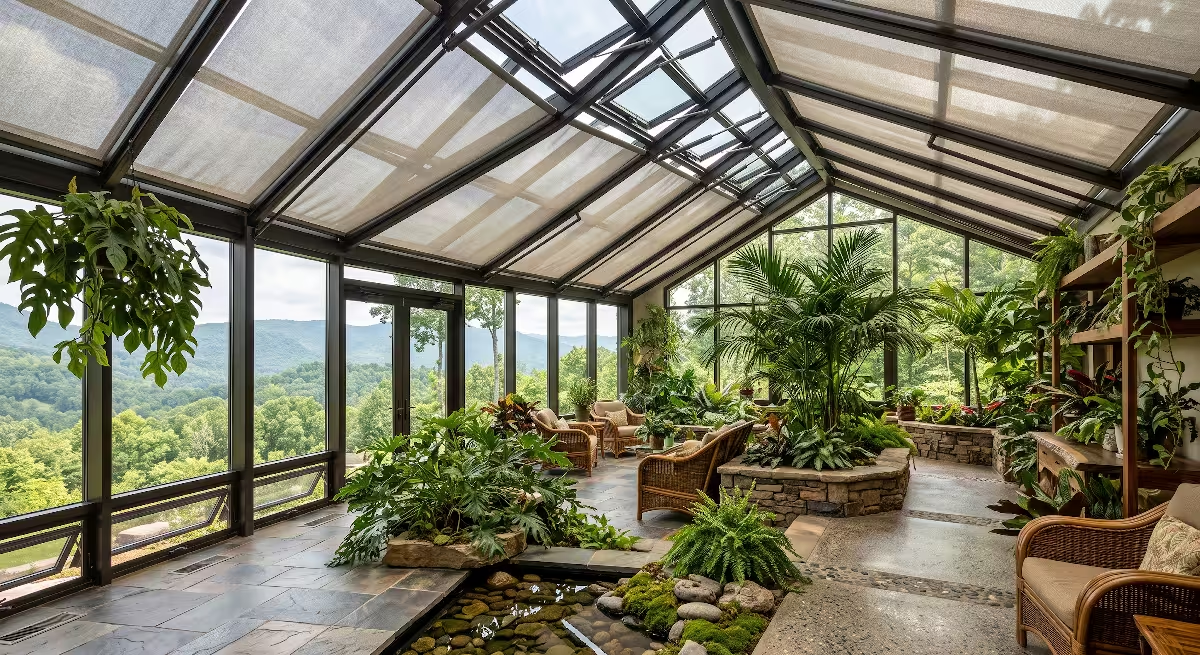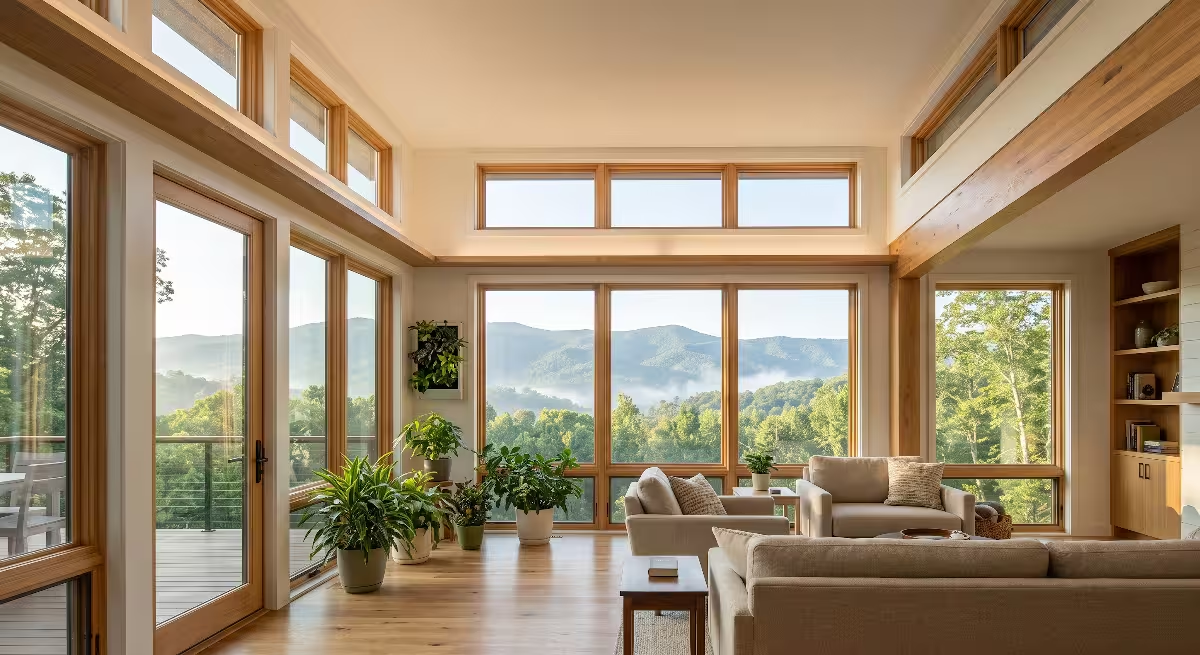


Most modern homes are built to keep out weather, but they often trap bad noise inside. When you step into a newly built house, you might hear the dull drone of the heating system, the hum of the refrigerator, or traffic rumbling outside. Even worse, many modern rooms with tall drywall ceilings and hard tile floors make sounds bounce around like an echo chamber. For decades, home builders thought the best goal was simply to make a room as quiet as possible. They added thick insulation to shut out the outside world. Yet, when a room is completely dead and quiet, people often feel anxious, isolated, or fatigued.
Human ears did not evolve in a silent plastic box. Our ears and brains evolved outdoors, surrounded by rustling leaves, flowing streams, and singing birds.
This guide explores how to build homes that sound as good as they look. By using an intentional natural acoustic soundscape, we can shape our indoor spaces to calm our nerves, sharpen our focus, and support deep rest. Whether you are building a custom home on a mountain ridge near Johnson City or remodeling a bungalow in Kingsport, this article provides the engineering standards, physical materials, and design strategies you need to succeed.
Search Intent and Semantic Scope of Indoor Soundscapes
When architects and engineers search for acoustic standards, they usually look for decibel numbers. Decibels measure sound pressure level, which tells us how loud a noise is. For a long time, building codes relied only on Noise Criteria ratings to keep machinery quiet. However, low decibel numbers do not automatically make a space comfortable. If a room has no natural acoustic soundscape, your brain stays on high alert.
A natural acoustic soundscape is not just the absence of mechanical noise. Under international standards such as ISO 12913-1, a soundscape is defined as the acoustic environment as perceived and understood by people in context. This distinction changes everything for residential design. An empty room with an air conditioner buzzing in the background may register a low decibel level on a meter, but your ears still hear the mechanical motor. That persistent hum tells your primitive brain that a machine is running nearby. Over hours and days, this low-level mechanical hum triggers subtle stress responses in your body.
To build an effective natural acoustic soundscape, we must look at how the human nervous system processes auditory cues. In nature, complete silence usually signals extreme danger, such as a predator walking through the forest. When birds stop chirping and the woods fall completely silent, wildlife freezes in fear. When we isolate ourselves in an unnaturally quiet, sealed room, our brain constantly strains to hear tiny noises. You might notice the high-pitched ringing in your own ears or get startled by the click of an appliance switch.
Creating a natural acoustic soundscape inside a home restores a healthy auditory backdrop. We replace stressful mechanical hums with gentle, living frequencies. The goal is not dead silence, but auditory nourishment. By understanding the true semantic scope of a natural acoustic soundscape, custom builders and designers can look beyond simple soundproofing. We can design indoor environments that feel as peaceful, safe, and restorative as an open woodland trail along the Appalachian hills.
When we evaluate a room, we must ask what the occupant actually hears throughout the day. Does the space provide gentle acoustic movement, or is it flat and lifeless? A proper natural acoustic soundscape provides gentle background sound that helps mask annoying noises without overwhelming the senses. It turns a static house into a living sanctuary where your ears and mind can rest.
Comprehensive Psychoacoustic Metrics Specification Table
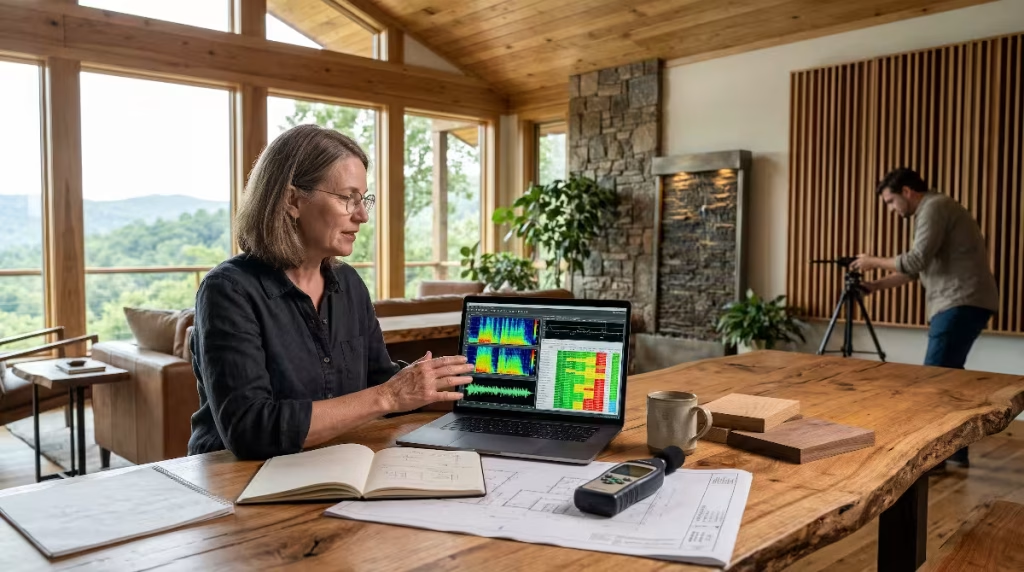
To build a high-performance natural acoustic soundscape, we cannot rely on guesswork or simple decibel meters alone. Decibel meters measure total sound energy, but they do not tell us whether a sound is pleasant, harsh, scratchy, or soothing. For that, we use psychoacoustics, which is the study of how human brains perceive sound waves.
When designing a natural acoustic soundscape, acoustic engineers look at several key metrics:
- Loudness (N): Measured in Sones, loudness accounts for how the human ear hears different frequencies at different volumes. Human ears are especially sensitive to sounds between 1,000 Hertz and 4,000 Hertz, which is where human speech sits.
- Sharpness (S): Measured in Acum, sharpness tells us how much high-frequency energy is in a sound. High-pitched squeaks, fan hisses, or metal scrapes have high sharpness, which makes people feel tense. A healthy natural acoustic soundscape keeps sharpness low.
- Roughness (R): Measured in Asper, roughness tracks rapid changes in sound that happen between 15 and 300 times per second. A grinding motor has high roughness, which irritates the human brain.
- Fluctuation Strength (F): Measured in Vacil, this metric evaluates slow, rhythmic changes in volume, like gentle ocean swells or a slow breeze through tall trees. Low to moderate fluctuation strength creates comfort.
- Speech Transmission Index (STI): This score runs from 0.0 to 1.0. A high score means words are easy to understand. In a private office, you want a lower STI between rooms so private conversations do not distract family members in the hallway.
- Reverberation Time (RT60): This measures how many seconds it takes for a sound to fade away by 60 decibels after the source stops. Too much bounce creates an annoying echo, while too little bounce makes a room feel suffocating.
Here are the specific target ranges for a high-performance natural acoustic soundscape:
| Psychoacoustic Parameter | Target Metric Range | Standard Test Method | Architectural Role in Indoor Spaces |
| Zwicker Loudness (N) | 1.0 to 3.5 Sones | ISO 532-1 | Keeps sound energy comfortable without causing sensory deprivation. |
| Acoustic Sharpness (S) | Under 1.1 Acum | DIN 45692 | Cuts out harsh treble hiss from air ducts and bare glass walls. |
| Acoustic Roughness (R) | Under 0.05 Asper | Daniel and Weber Model | Eliminates mechanical rattling and motor vibrations from ventilation. |
| Fluctuation Strength (F) | 0.02 to 0.1 Vacil | Fastl Model | Mimics the slow, soothing cadence of natural wind and moving water. |
| Speech Transmission (STI) | 0.35 to 0.45 in work areas | IEC 60268-16 | Protects speech privacy across rooms without needing heavy vault doors. |
| Reverberation Time (RT60) | 0.4 to 0.65 seconds | ISO 3382-2 | Gives rooms warmth and natural voice clarity without muddy echoes. |
By calibrating a home to these ranges, we build a natural acoustic soundscape that feels effortless to live in. When sound levels stay within these targets, your ears never feel strained. You do not have to raise your voice to speak across the kitchen island, and you do not hear every footstep on the floor above.
Establishing these numbers before construction begins gives builders a clear roadmap. Instead of trying to fix bad room acoustics after the drywall is painted, you can engineer the natural acoustic soundscape right into the framing, ductwork, and finish selections. The result is a home that feels peaceful the moment you cross the threshold.
Biophilic Auditory Architecture and the Water-Acoustic Spectrum
Water is one of the most powerful tools for shaping a natural acoustic soundscape indoors. For thousands of years, courtyards in historic architecture featured stone fountains to cool the air and mask street noise. In modern homes,
A leaky pipe or a dripping faucet drives people crazy. That rhythmic, sharp droplet impact creates high acoustic roughness and spikey sharpness, keeping your brain awake. To build a true natural acoustic soundscape, the water sound must follow a pink noise curve.
When designing an indoor water feature for a natural acoustic soundscape, the geometry of the water drop matters:
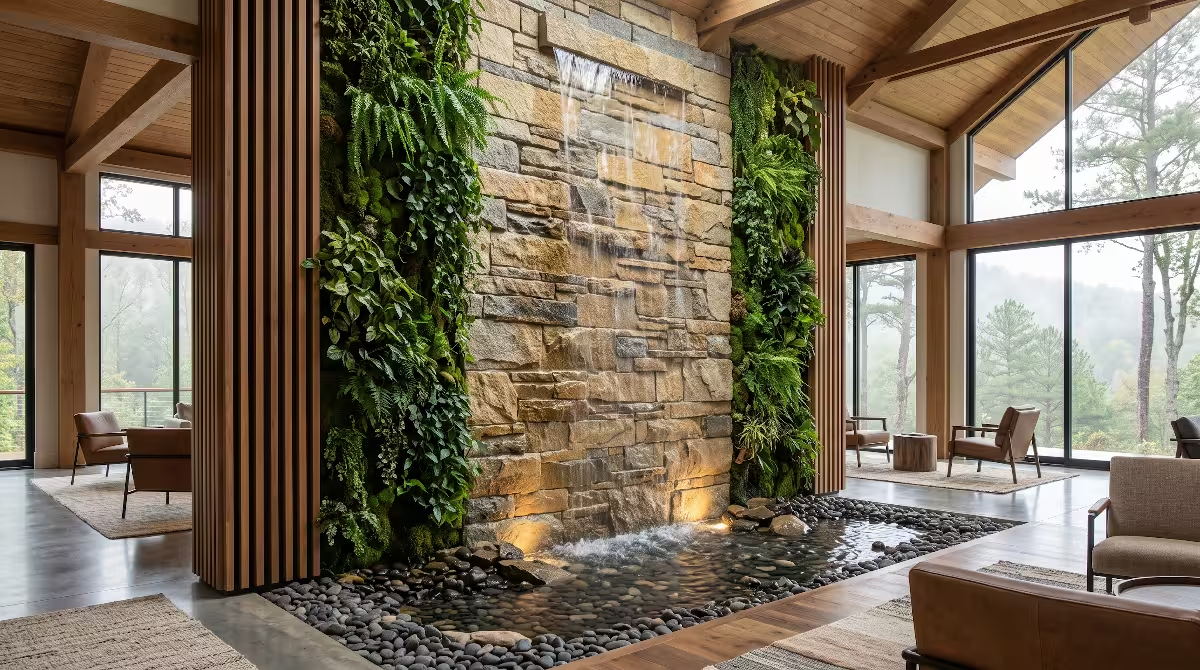
- Laminar Sheet Flow: When water glides smoothly down a vertical slate, granite, or copper panel, it creates almost no splashing sound. Instead, it generates a very soft, low-frequency hum that grounds the room.
- Cascading Drop Height: If water falls more than four inches through open air, the impact creates high-frequency air bubble bursts. To keep the sound soft, keep fall heights under three inches, or guide the water along angled stone steps.
- The Catch Basin: The bottom basin should never be a bare plastic tub or flat metal pan. Line the basin with smooth river pebbles of varying sizes. The irregular shapes of river stones scatter the falling water droplets, breaking up repetitive clicking sounds into a broad, soft rush.
- Submerged Pump Isolation: Electric water pumps create low-frequency hums that travel straight through wood flooring and drywall. Always mount recirculating pumps on heavy silicone isolation pads and connect them with flexible tubing. This ensures the pump remains silent, leaving only the pure water sound to define your natural acoustic soundscape.
By tuning the water flow, you can mask unwanted noises like road traffic, loud refrigerators, or neighborhood dogs. A well-designed water wall in an open living room produces a natural acoustic soundscape that feels alive. It brings the soothing character of a mountain creek right into the heart of your home, washing away the mental clutter of a busy day.
Materiality, Porosity, and Acoustic Diffusion

The surfaces inside a room dictate how sound behaves. Hard, flat surfaces like drywall, tile, and glass act like acoustic mirrors. When sound waves hit them, they bounce straight back into the room, creating flutter echoes and muddy speech. In contrast, cheap acoustic foam panels look like recording studios and can make a residential room feel dark and artificial. To build an organic natural acoustic soundscape, we use natural materials that diffuse and absorb sound naturally.
Wood is an exceptional material for shaping a natural acoustic soundscape. Dense hardwoods like Appalachian white oak, black walnut, and yellow poplar have complex grain structures that absorb high frequencies while reflecting warm mid-range tones. By mounting wooden slats with narrow air gaps over natural wool backing, you create a hybrid acoustic panel. The wooden slats scatter sound waves in multiple directions, while the wool behind them absorbs excess energy. This setup prevents echo without making the room sound dead.
Porosity is the secret to natural sound absorption. Sound waves enter tiny open pores in a material, where friction turns the sound energy into tiny amounts of heat. Instead of synthetic fiberglass or petroleum-based foam, healthy biophilic homes use:
- Pure Sheep’s Wool Batt Insulation: Natural wool fibers have microscopic scales and natural crimp that trap sound waves better than fiberglass. Wool boasts a Noise Reduction Coefficient (NRC) between 0.85 and 0.95, while also cleaning indoor air by absorbing harmful VOCs.
- Hemp and Wood Fiber Boards: Dense hemp mats and breathable wood fiber underlayments absorb heavy impact noise on floors and ceilings, keeping footsteps from booming through joists.
- Preserved Botanical Moss Walls: Preserved sheet moss and reindeer lichen (Cladonia rangiferina) mounted on wall panels look like living art and act as high-efficiency acoustic absorbers. Their intricate branch structures scatter high-frequency speech sounds, making open-concept dining rooms comfortable and quiet.
- Clay and Lime Plasters: Traditional acoustic plaster made from natural clay and fine sand contains microscopic voids. Unlike glossy paint, which reflects sound sharply, clay plaster softens room reflections and creates a gentle, warm natural acoustic soundscape.
By combining wooden diffusers with porous wool and clay finishes, you balance sound reflection and absorption. Sound moves through the space smoothly, creating a balanced natural acoustic soundscape where every conversation feels intimate, clear, and relaxed.
Salutogenic and Neuro-Acoustic Health Impacts
The word salutogenic comes from the Latin word salus (health) and the Greek word genesis (origin). Salutogenic design focuses on creating spaces that actively promote human health rather than just preventing disease. A properly engineered natural acoustic soundscape plays a direct role in healing the human body and calming the nervous system.
When you sit in a room filled with mechanical noise, your sympathetic nervous system stays quietly active. This is the part of your body responsible for the fight-or-flight response. Your adrenal glands release tiny amounts of cortisol, your blood vessels constrict slightly, and your heart rate variability (HRV) drops. Heart rate variability is the healthy variation in time between consecutive heartbeats. A higher HRV indicates that your body is relaxed, flexible, and resilient against stress.
Clinical research shows that when people listen to a natural acoustic soundscape, their parasympathetic nervous system takes over. This is your rest-and-digest system. The vagus nerve signals your heart rate to slow down, your blood pressure stabilizes, and your heart rate variability climbs. The brain shifts out of high-frequency beta wave stress and settles into alpha waves, which represent relaxed alertness.
A natural acoustic soundscape also restores mental focus through Attention Restoration Theory. In daily life, work emails, phone screens, and traffic demand direct attention. Direct attention requires conscious mental effort, which quickly exhausts the prefrontal cortex of the brain. When your prefrontal cortex gets tired, you become irritable, make poor decisions, and lose focus.
Biophilic sounds provide what psychologists call soft fascination. The gentle rustle of leaves, the distant song of a thrush, or the steady trickle of water catches your attention without demanding mental analysis. Your brain can listen effortlessly. While your auditory system enjoys this soft fascination, your directed attention mechanisms get a chance to rest, recharge, and rebuild mental stamina. Living in a home with a curated natural acoustic soundscape gives you a cognitive refuge where your mind can heal every single day.
Active Biophonic Soundscaping and Integrated Audio Engineering
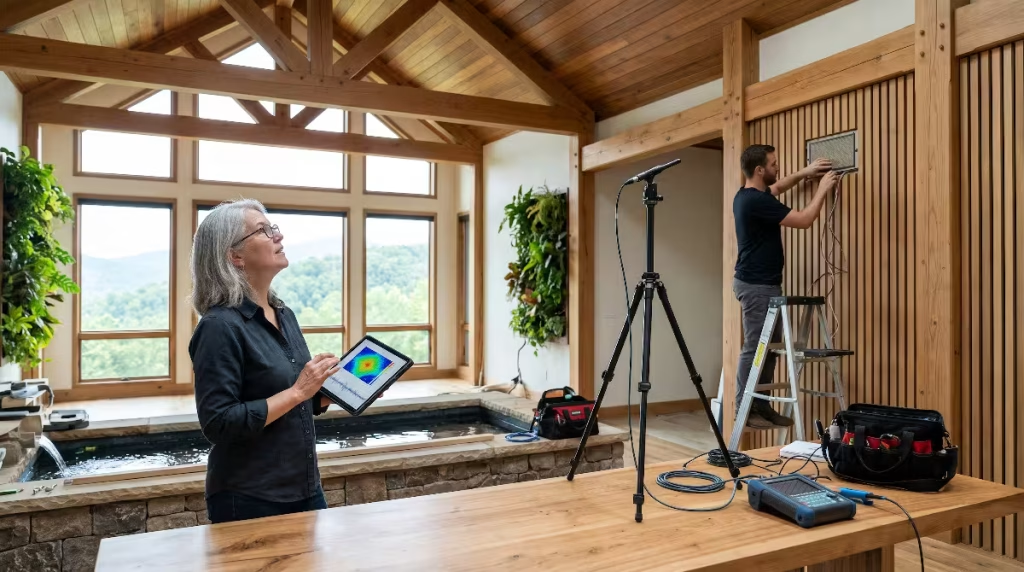
In dense urban neighborhoods or homes located near busy
Active biophonic soundscaping uses hidden speakers to introduce real, high-resolution natural sound recordings into indoor rooms. However, playing a repetitive ocean sounds CD on a cheap plastic bookshelf speaker will only cause annoyance. The brain quickly identifies looping recordings, and bad speakers distort the frequencies, making the sound feel fake.
To design an authentic active natural acoustic soundscape, we use professional architectural audio methods:
- Invisible Planar Speakers and Distributed Mode Loudspeakers (DML): These speakers do not have visible speaker cones or fabric grilles. Instead, they mount directly behind drywall or attach to structural timber beams. The entire wall or wood panel vibrates like the soundboard of an acoustic guitar. This spreads sound evenly across the room without creating hot spots where the volume is too loud.
- Non-Looping Algorithmic Sound Engines: Instead of static audio loops, advanced sound engines use algorithms to assemble natural soundscapes in real time. The software combines separate audio stems, such as wind through pine needles, distant mountain runoff, and bird calls, so that the track never repeats itself.
- Circadian Soundscape Scheduling: Just as biophilic lighting changes color temperature to match the sun, an active natural acoustic soundscape should change throughout the day. Early morning soundscapes might feature gentle dawn birdsong to help you wake up naturally. Afternoon soundscapes can transition to steady breeze and moving water for deep work focus. Evening soundscapes shift to cricket chirps and soft night winds to signal your body that it is time for restful sleep.
- Acoustic Masking Calibration: To blend smoothly into the room, the artificial biophonic sound must be calibrated slightly above the background noise floor. Keeping the soundscape between 1 and 3 decibels above the ambient room sound masks intrusive street traffic without feeling loud or distracting.
When active audio is engineered with care, the technology disappears. Occupants do not feel like they are listening to a stereo. Instead, they feel as though the walls of the room have dissolved into an open mountain meadow, providing an immersive natural acoustic soundscape that supports well-being.
Regional Biophilic Adaptation in Southern Appalachian Microclimates
Every region has its own unique acoustic signature. A home built on a coastal dune in Florida should not sound like a cabin perched on an Appalachian ridge in East Tennessee. To make a natural acoustic soundscape feel authentic, the sound design must honor the native geography, flora, and fauna of the local ecosystem.
Here in the Tri-Cities region, including Johnson City, Kingsport, and Bristol, our homes sit within the rich ecology of the Southern Appalachian Mountains. Our landscape is defined by deep, shaded hollows, rushing rocky creeks, and dense hardwood forests. An indoor natural acoustic soundscape designed for this region draws inspiration from these local natural features:
- Appalachian Riparian Streams: The rocky mountain streams of Carter and Unicoi counties flow over native limestone, sandstone, and granite. Their sound has a unique tonal profile with fewer deep booming waves than ocean surf, but richer, multi-layered ripples in the 500 to 2,000 Hertz range. Bringing this specific water profile indoors creates an acoustic environment that feels native to the Appalachian landscape.
- Native Forest Canopies: The wind blowing through broadleaf tulip poplars (Liriodendron tulipifera) sounds completely different from wind blowing through the needles of an eastern white pine (Pinus strobus) or an eastern hemlock (Tsuga canadensis). Deciduous trees produce a softer, fluttering rustle, while evergreen conifers create a continuous, soothing sigh. Blending these regional sound textures makes the indoor natural acoustic soundscape feel grounded and real.
- Local Hardwood Timber: Building with locally sourced timber grounds the home physically and acoustically. Appalachian red oak, white oak, and black walnut provide exceptional mass and acoustic damping. When used in exposed timber frame trusses or ceiling decking, these regional woods absorb excessive low-frequency boom from home theater systems and mechanical equipment, preserving a calm natural acoustic soundscape.
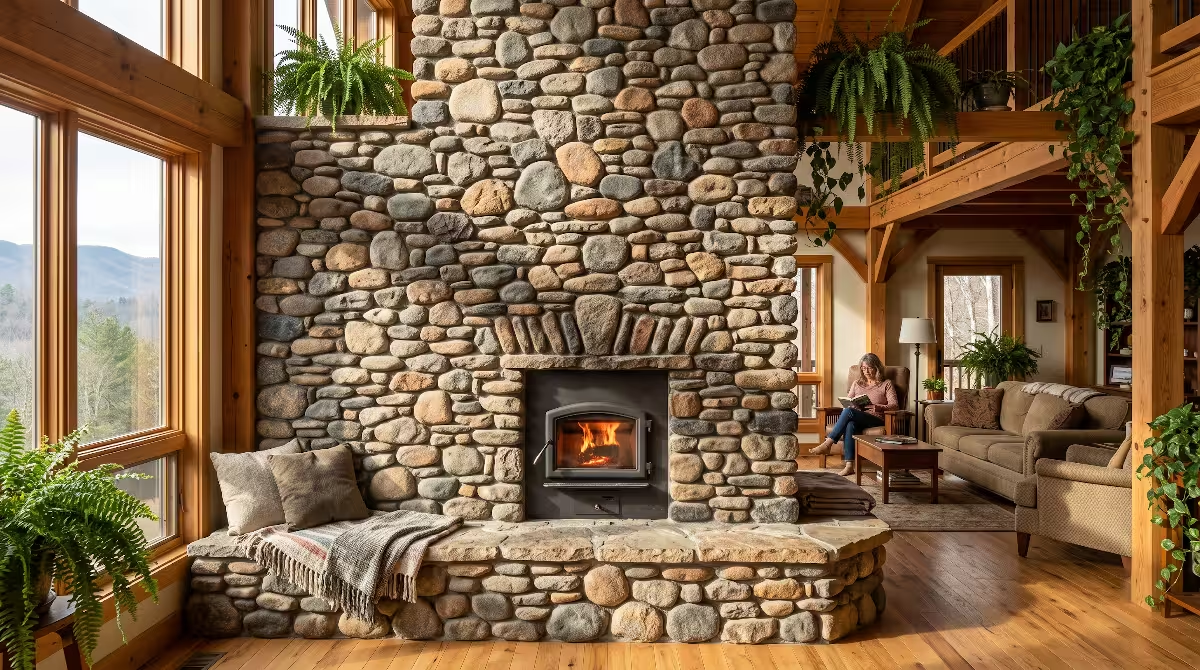
- Managing Seasonal Humidity: East Tennessee experiences humid summers and crisp, dry winters. High humidity changes how air carries high-frequency sounds. In summer, air conditioning runs frequently, drying the air indoors while generating fan noise. In winter, wood-burning fireplaces add crackling warmth but dry out the room air, making echoes more noticeable. Tuning the natural acoustic soundscape requires balancing indoor humidity around 40 to 50 percent, which keeps air healthy and ensures smooth sound travel.
By rooting acoustic design in our local mountain home, we create spaces that feel connected to the land. The natural acoustic soundscape reminds us of the ridges and rivers just outside our doors, creating a deep sense of place and belonging.
Room-by-Room Architectural Acoustic Specifications
Every room in a house serves a different purpose, which means each space requires its own acoustic setup. You do not want the lively acoustics of a family kitchen in a quiet primary bedroom. Here is how to specify and construct a natural acoustic soundscape for each main zone of a modern custom home.
The Restorative Primary Bedroom Suite
- Goal: Deep restorative sleep, low sensory stimulation, and complete mechanical isolation.
- Target Noise Criteria: NC-20 to NC-25.
- Reverberation Time (RT60): 0.35 to 0.45 seconds.
- Acoustic Strategy: The bedroom should be a sanctuary. Use solid-core doors with perimeter acoustic seals to block hallway noise. Insulate interior walls with dense sheep’s wool batts. Add thick wool rugs over natural felt pads to dampen footstep noise.
- Soundscape Integration: Introduce a very quiet, continuous natural acoustic soundscape using low-level water sounds or nighttime wind rustle calibrated to 32 to 36 dBA. This masks sudden noises like outdoor thunder, passing cars, or plumbing sounds from nearby bathrooms, protecting uninterrupted sleep cycles.
The Biophilic Home Office and Library
- Goal: High cognitive focus, clear vocal communication on video calls, and minimal speech distraction.
- Target Noise Criteria: NC-25 to NC-30.
- Speech Transmission Index (STI): Under 0.40 into adjacent corridors.
- Reverberation Time (RT60): 0.45 to 0.55 seconds.
- Acoustic Strategy: Video meetings and focused reading require clean sound without echoes. Install slatted hardwood acoustic wall panels behind your desk. The wood slats give your video background an organic look while preventing flutter echoes.
- Soundscape Integration: Use invisible ceiling transducers to play a dynamic natural acoustic soundscape featuring gentle birdsong and soft creek flows. Position the sound source behind your primary seating position to create depth. This soft biophonic background boosts creative thinking and cuts mental fatigue during long work hours.
The Great Room and Open Kitchen
- Goal: Warm social gathering, speech clarity during dinner parties, and containment of kitchen appliance clatter.
- Target Noise Criteria: NC-30 to NC-35.
- Reverberation Time (RT60): 0.55 to 0.65 seconds.
- Acoustic Strategy: Open floor plans with high ceilings often suffer from terrible noise buildup. Sound from clattering pots, running dishwashers, and overlapping conversations bounces off hard surfaces, forcing everyone to talk louder. To fix this, use tongue-and-groove wood plank ceilings treated with micro-perforations or hidden acoustic felt. Use large fabric furniture and natural wool drapery to absorb stray sounds.
- Soundscape Integration: A central architectural water wall positioned between the kitchen and living area acts as a natural acoustic buffer. The soothing rush of falling water breaks up sound reflections and anchors the great room with an engaging natural acoustic soundscape.
Field Verification, Testing, and Commissioning Protocol
Designing a soundscape on paper is only the first step. Once construction is complete, the home must be tested to ensure the space meets all performance targets. Acoustic commissioning verifies that your natural acoustic soundscape performs as intended.
To verify a home’s acoustic quality, engineers use specialized testing equipment:
- Class 1 Sound Level Meters: High-precision microphones capture exact sound pressure levels across one-third octave bands from 20 Hertz up to 20,000 Hertz.
- Binaural Head and Torso Simulators (HATS): These testing devices feature realistic artificial ears with silicone ear canals. Placing a binaural mannequin in a room allows engineers to record sound exactly as a human head and brain experience it.
- Omnidirectional Loudspeakers: Also known as dodecahedron speakers, these units project sound equally in all directions to measure room reverberation time (RT60).
The verification process follows a clear testing sequence:
- Background Noise Floor Testing: Turn off all audio systems and water features. Measure the baseline mechanical noise with heating and cooling systems running at full capacity. If the background noise exceeds your target Noise Criteria, inspect ductwork for air turbulence, check mechanical dampers, and verify equipment vibration pads.
- Reverberation Decay Testing: Fire a calibrated impulse sound, such as a starter pistol or an acoustic burst through the omnidirectional speaker. Measure how long it takes for the sound to decay across all frequency bands. If high frequencies linger too long, add porous wool panels or soft natural furnishings. If low bass notes boom, install timber bass traps in room corners.
- Psychoacoustic Parameter Processing: Feed binaural recordings into acoustic analysis software to calculate Zwicker Loudness, Sharpness, Roughness, and Fluctuation Strength. Confirm that sharpness remains under 1.1 Acum and roughness stays below 0.05 Asper.
- Soundscape Calibration: Turn on active water features and architectural audio systems. Balance the output volume so the natural acoustic soundscape sits 1 to 3 decibels above the ambient noise floor. Walk the entire room to confirm there are no strange volume spikes, buzzing grilles, or dead spots.
- Human Perception Surveys: Follow the guidelines in ISO/TS 12913-2 by having the homeowners sit in the finished space and complete a structured perception survey. The survey checks whether the room feels calm, pleasant, chaotic, or dull. Combining objective instrument data with real human feedback ensures the natural acoustic soundscape delivers true well-being.
Documenting these measurements in an acoustic commissioning report gives homeowners proof of performance. It confirms that the home was built to the highest standards of modern biophilic engineering.
Frequently Asked Questions about Natural Acoustic Soundscapes
What is an indoor natural acoustic soundscape?
An indoor natural acoustic soundscape is an intentionally designed sound environment inside a building that uses natural, organic sounds to enhance human health, focus, and comfort. Unlike traditional acoustic design, which focuses solely on making rooms as quiet as possible by blocking noise, a natural acoustic soundscape introduces beneficial sounds, such as moving water, wind rustle, and bird songs. It combines sound-absorbing natural materials, spatial diffusion, and tuned water features to build a balanced auditory setting that supports human well-being.
How do natural soundscapes affect the human brain and nervous system?
Natural soundscapes trigger the body’s parasympathetic nervous system, which governs the rest-and-digest response. When you listen to organic sounds like running water or birdsong, your brain down-regulates the amygdala, which is the brain’s fear and stress center. This shift lowers cortisol levels, stabilizes heart rate variability, and encourages the production of calming alpha brain waves. In addition, natural sounds provide soft fascination, allowing the brain’s prefrontal cortex to recover from the mental fatigue caused by daily screens and work tasks.
What is the difference between acoustics and psychoacoustics?
Acoustics is the physical branch of physics that studies how sound waves travel, reflect, and dissipate through physical spaces. It measures mechanical properties like sound pressure levels in decibels and reverberation times in seconds. Psychoacoustics, on the other hand, studies how the human brain and nervous system perceive, interpret, and react to those physical sound waves. While acoustics tells you how loud a room is, psychoacoustics explains whether that room feels stressful, soothing, irritating, or peaceful to the people living inside it.
Can indoor water sounds replace synthetic white noise machines?
Yes, indoor water sounds are vastly superior to synthetic white noise machines. White noise machines produce flat, artificial frequencies that can feel harsh and monotonous over long periods, leading to auditory fatigue. A properly designed indoor water feature produces a living natural acoustic soundscape with a gentle pink noise curve. The natural, non-repetitive micro-variations of water falling over river stones mask unwanted background noise effectively while keeping the brain relaxed, calm, and grounded.
What are the best natural materials for sound absorption?
The most effective natural materials for indoor sound absorption include pure sheep’s wool batt insulation, dense wood fiber panels, preserved botanical moss walls, and natural clay plasters. Sheep’s wool provides an outstanding Noise Reduction Coefficient (NRC) between 0.85 and 0.95, matching or outperforming synthetic fiberglass. Preserved reindeer moss walls scatter and absorb harsh high-frequency sounds, while clay plasters soften sound reflections across walls and ceilings without off-gassing harmful chemicals into the living space.
Implementation Next Steps for Custom Builders and Designers
Building a home that nurtures the senses requires looking at light, air, materials, and sound as a single unified system. If you are planning a new custom home build or a major renovation in the East Tennessee region, begin integrating your natural acoustic soundscape during the initial floor plan design phase:
- Map the Site Acoustics: Before breaking ground, measure the existing sound levels on your building lot. Identify road noise, wind patterns across ridge tops, and nearby streams to determine how your building envelope should respond.
- Isolate Mechanical Equipment: Specify variable-speed HVAC units, wrap supply and return ducts with sound-damping liners, and isolate all plumbing runs with heavy cast iron drops or acoustic wraps.
- Select Natural Acoustic Finishes Early: Plan for hardwood ceiling accents, wool insulation batts, and textured clay plaster finishes before drywall begins, rather than trying to paste acoustic treatments onto finished walls later.
- Commission the Space: Test and tune your finished rooms using real psychoacoustic measurements to verify that your natural acoustic soundscape meets every standard of human comfort and biophilic health.