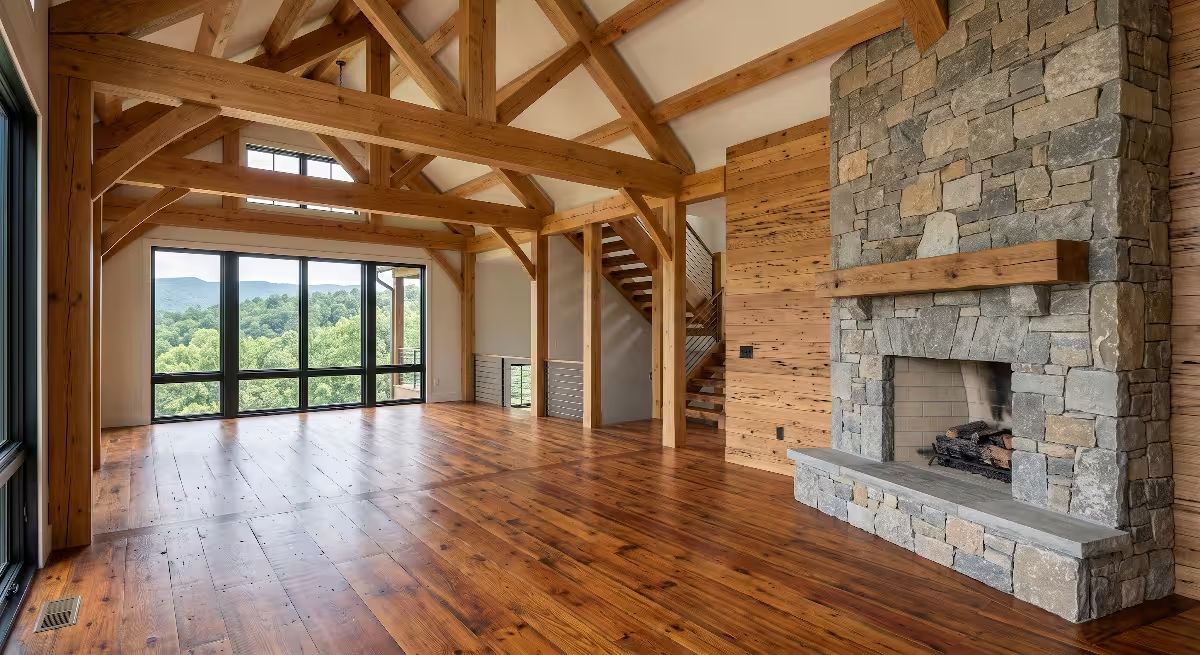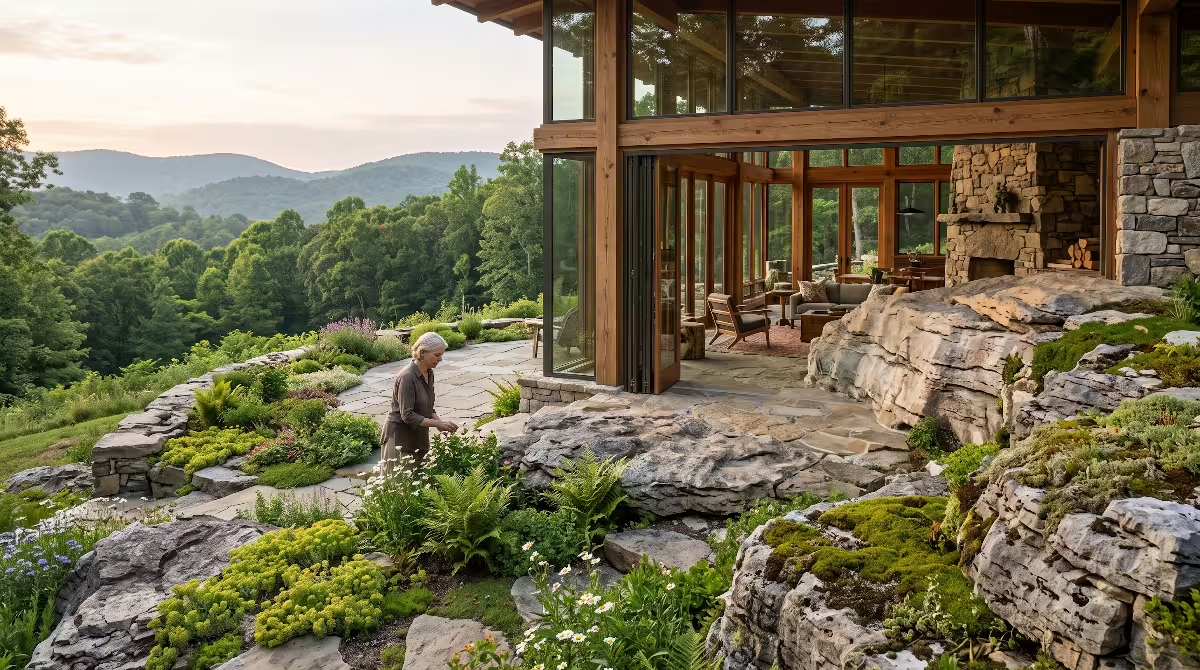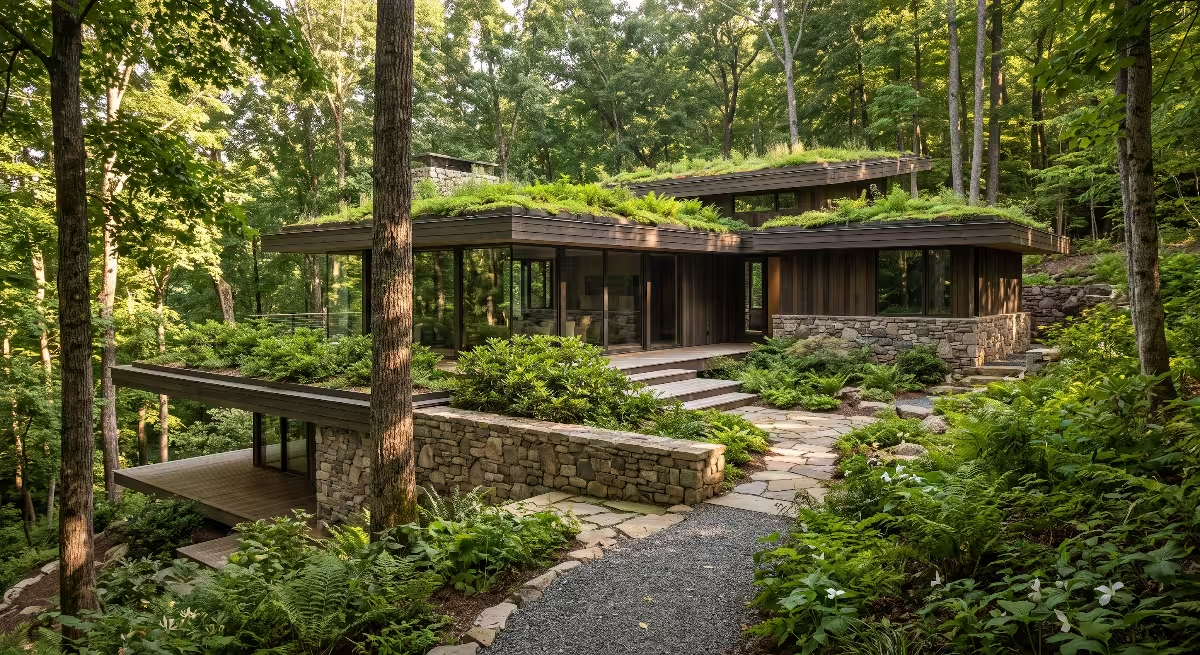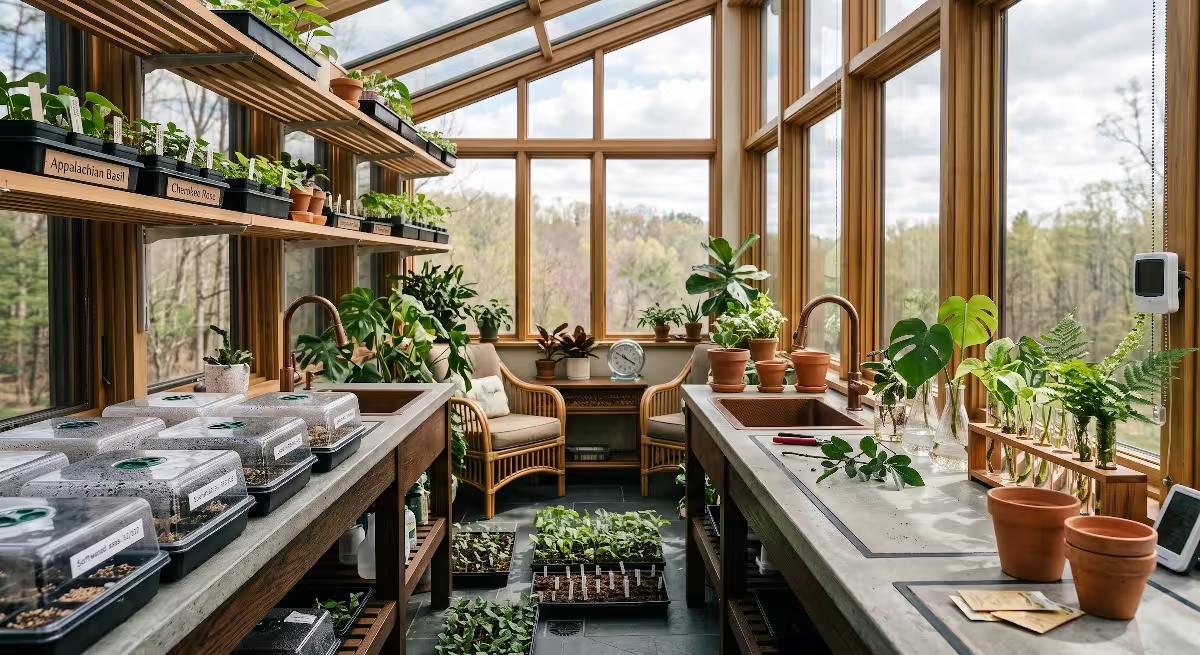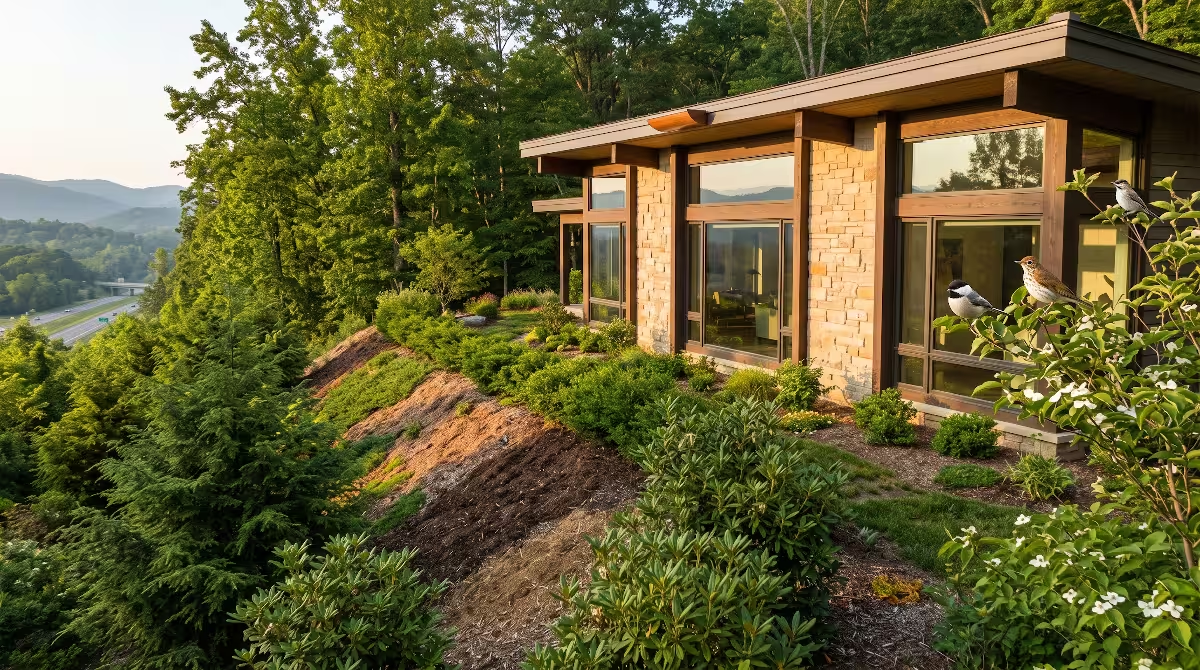


Here in the Tri-Cities of Tennessee we experience hot, humid summers in the valleys and freezing winter nights when mountain winds sweep down from the Appalachians. If you want to grow healthy plants every single day of the year, standard home additions simply will not work. You need a dedicated, climate controlled enclosure that balances structural building science with the biological needs of plants.
Deciding between glass vs polycarbonate sunrooms for year-round plant growing is the most critical architectural choice you will face. Both materials allow light to enter your home, yet they treat light rays, internal heat, and structural loads in entirely different ways. One material turns incoming sun into bright, focused beams, while the other scatters that same energy into a soft, protective glow. One holds heat like a double pane house window, while the other relies on tiny air pockets within its plastic walls.
To make the right investment, you must evaluate how both materials perform across photobiology, thermal efficiency, daily durability, and total lifecycle costs.
Balancing Human Architecture with Botanical Physiology
Building a space that satisfies both people and plants requires a dual understanding of architecture and plant biology. Human beings use sunrooms to read, entertain guests, drink morning coffee, and enjoy a visual connection to the outdoor landscape. Plants, however, use sunrooms as metabolic engine rooms. They take in the sunlight passing through the roof and walls, convert that radiant energy into chemical sugars, drink up water from their soil, and breathe moisture back into the surrounding air. When a room fails to balance these distinct needs, plants suffer from leaf burn or freezing roots, and homeowners are left with massive utility bills and spaces that feel uncomfortable to sit in.
The Biophilic Design Imperative
Biophilic design is the intentional practice of connecting human beings to natural systems inside the built environment. In modern homes, people spend up to ninety percent of their lives cut off from natural sunlight, living greenery, and daily weather cycles. Adding plants to a living space does far more than just look nice. Natural greenery lowers resting heart rates, clears airborne contaminants, and brings a sense of calm to our fast paced lives.
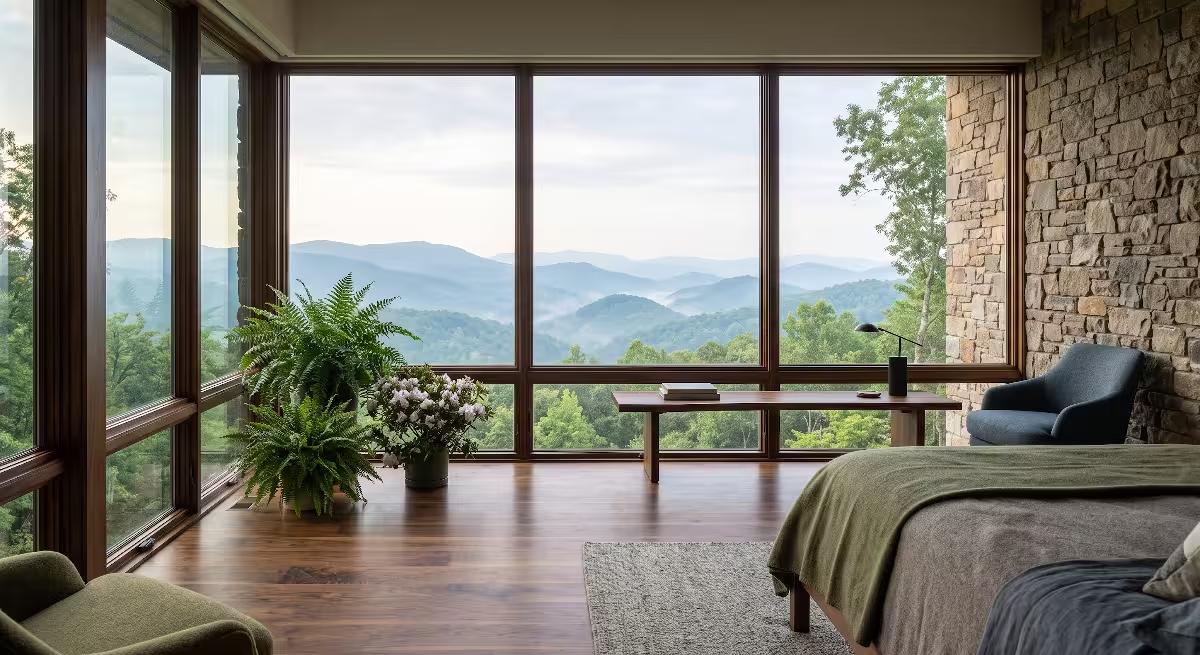
True biophilic design means you do not treat vegetation as temporary furniture. You build a living habitat where botanical life can thrive permanently. A successful plant room creates a fluid visual transition between your indoor living room and the wild outdoor landscape. Whether you are gazing out at the misty morning ridgelines of Roan Mountain or resting next to a collection of tropical aroids, your sunroom envelope must let in living sunlight while keeping interior room temperatures completely stable.
The Glazing Dilemma
Many homeowners make the costly mistake of assuming that residential sunrooms and commercial production greenhouses are the exact same thing. They are not. A farm greenhouse is an unconditioned production shed built exclusively for plant survival. It often features single skin walls, visible condensation running down the panels, noisy mechanical exhaust fans, and severe temperature swings between high noon and midnight. Humans rarely spend relaxing leisure time inside working agricultural greenhouses during the heat of July or the dead of January.
Residential sunrooms, by comparison, must function as full architectural extensions of your house. They require finished flooring, moisture sealed drywall, insulated doors, and steady heating and air conditioning. The glazing material you install must handle human comfort needs, such as keeping out cold drafts and loud highway noises, while still giving your plants enough sunlight to drive continuous growth. If you install the wrong glazing panels, you will end up with an unconditioned hotbox that scorches your tropical ferns in July and chills your citrus trees down to their roots in January.
Scope of the Analysis
This comprehensive guide examines the physical, biological, and economic realities of building with architectural glass versus cellular polycarbonate. We will look closely at photosynthetically active radiation, light scatter, thermal insulation values, condensation pathways, physical impact ratings, and long term material lifespan. Throughout this evaluation, we will pay close attention to the unique climate demands of USDA Hardiness Zones 6 and 7, where freezing Appalachian winter spells give way to hot, humid summer afternoons. By taking a close look at these performance metrics, you can confidently select the perfect glazing system for your property, your personal budget, and your plant collection.
Photobiology and Light Dynamics: Direct vs. Diffused PAR
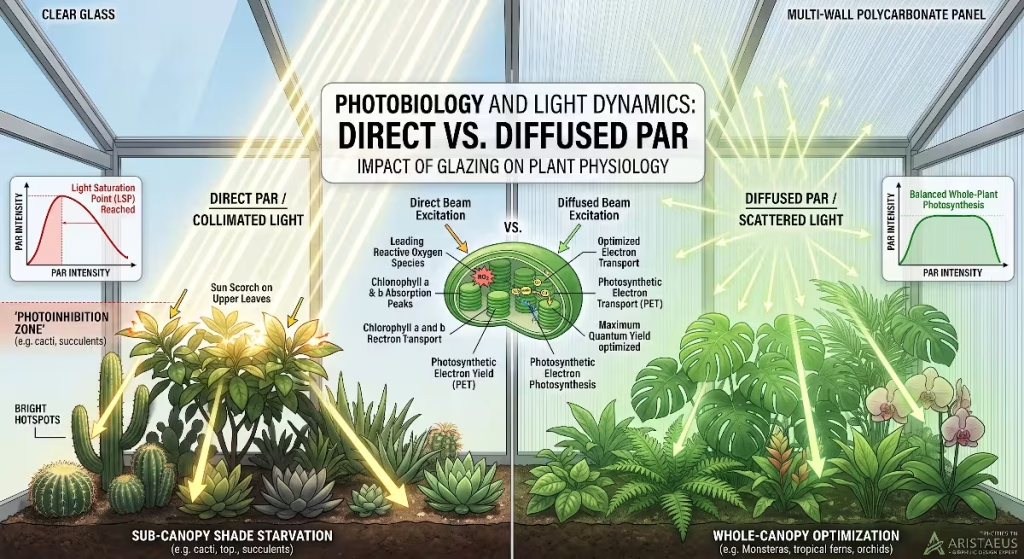
Light is the single most critical resource for any indoor garden. However, the human eye and a plant leaf evaluate light through totally different biological mechanisms. Human eyes adjust automatically to brightness and perceive a wide spectrum of visual colors, with a peak sensitivity in the green and yellow wavelengths. Plant leaves rely on special light harvesting pigments, mainly chlorophyll a and chlorophyll b, to capture photons and fuel photosynthesis. Glazing materials alter the quality, quantity, and direction of incoming sunlight, directly changing how your plants grow.
Direct Sunlight (Glass)                Diffused Sunlight (Polycarbonate)
       │   │   │                                  \   │   /
       ▼   ▼   ▼                                   \  │  /
  ┌─────────────┐                                ┌─────────────┐
  │ Float Glass │                                │Multi-Wall PC│
  └─────────────┘                                └─────────────┘
       │   │   │                                   /  │  \   \
       ▼   ▼   ▼                                  /   ▼   \   \
  Upper Canopy Scorch                        Deep Sub-Canopy Lighting
(Lower leaves stay in shade)                (Balanced whole-plant growth)
Total Light Transmission vs. Useful Photosynthetically Active Radiation
When researching sunrooms, you will encounter the term Visible Light Transmittance, or VLT. This number simply measures the total percentage of electromagnetic light that passes through a panel that the human eye can see. Standard architectural float glass and low iron tempered glass offer high visible transmittance, typically delivering between eighty-eight and ninety-two percent of natural daylight into a room. Multi-wall cellular polycarbonate features internal structural ribs that scatter incoming light rays, delivering a slightly lower visible transmittance between seventy-four and eighty-two percent.
For plants, visible light ratings tell only part of the story. Plant growers must measure Photosynthetically Active Radiation, or PAR. This metric covers the specific band of solar wavelengths between 400 and 700 nanometers that plants use to power their photosynthetic machinery. While low iron glass lets through a higher raw volume of PAR photons, multi-wall polycarbonate bends and scatters those photons in multiple directions. Delivering raw light is not enough on its own. You must ensure that light reaches your plants in a usable, balanced form that does not damage delicate leaf tissues.
The Photosynthetic Mechanics of Diffusion
The internal fluting of twin-wall and triple-wall polycarbonate breaks apart straight beams of sunlight, turning harsh directional rays into diffuse, multidirectional illumination. When sunlight hits standard window glass, it continues traveling in a straight line. This directional path creates harsh hotspots on upper leaves while casting deep, black shadows across lower branches and ground-level pots.
Diffuse light is vastly superior for total plant canopy health. As scattered light waves enter the room from multiple angles, they slip past top leaves and penetrate deep down into the lower canopy. In clear glass sunrooms, upper leaves often reach their light saturation point very early in the day. Once a leaf absorbs more direct solar energy than its photosynthetic enzymes can process, it enters a self defense state called photoinhibition. The leaf shuts down carbon processing to protect itself, dissipating the excess energy as damaging heat.
Meanwhile, shaded lower leaves on the same plant starve for light. Polycarbonate spreads incoming light evenly across every tier of foliage. This balanced exposure allows lower and middle leaves to contribute actively to daily sugar production, yielding faster growth, thicker stems, and fuller indoor foliage.
Crop-Specific Physiological Response
Your ultimate choice between clear glass and diffusing polycarbonate should depend heavily on the exact botanical species you intend to cultivate. Different plant varieties evolved under vastly different natural forest, mountain, and desert canopies across the globe.
- High Light and High DLI Cultivars: Desert cacti, thick stemmed agaves, bougainvillea, dwarf meyer lemons, key limes, and Mediterranean herbs like rosemary and lavender evolved under open, unshaded skies. These species have dense leaf structures or waxy cuticles that handle intense solar radiation. They require a high Daily Light Integral, which is the total volume of photons delivered over a full twelve-hour day. These sun-loving varieties thrive under the direct, uninhibited light transmission of clear, low-iron glass sunrooms.
- Understory Foliage and Tropical Epiphytes: Popular indoor houseplants like Monsteras, Philodendrons, Anthuriums, Calatheas, and sensitive tropical ferns evolved on the forest floor beneath dense jungle canopies. Direct, midday glass beams will heat their tender leaf surfaces, bleaching vibrant green pigments and causing brown sun scorch marks. These shade-loving plants perform exceptionally well under the soft, scattered light cast by multi-wall polycarbonate sunrooms.
- Orchids and Gesneriads: Epiphytic orchids, African violets, and weeping figs need consistent, ambient light levels without extreme thermal focal points. Diffuse light keeps their leaf temperatures cool and prevents moisture stress, helping them bloom reliably without drying out their roots.
Building Envelope Thermodynamics: Thermal Performance and Climate Control
To grow tropical specimens, edible crops, and sensitive exotics through the four distinct seasons of the mid-Atlantic and upper South, you must strictly control your indoor climate. Plants cannot put on a sweater or walk into another room when winter drafts arrive. If root balls freeze inside wet soil, or if dry indoor air drops relative humidity below thirty percent, plant cells collapse and root systems rot. Your sunroom building envelope serves as your primary thermal shield against harsh outdoor elements.
Thermal Conductivity and Values: U-Factor vs. R-Value
When comparing building materials, engineers use U-factors and R-values to quantify heat movement. The R-value measures a material’s internal resistance to heat flow. The higher the R-value number, the better the material insulates your home. The U-factor is the exact mathematical inverse of the R-value, measuring the rate at which heat escapes through one square foot of material. For U-factors, a lower number means less heat is lost.
Single-pane glass provides practically no thermal insulation. A single sheet of clear glass has an R-value of roughly 0.9 and an alarming U-factor around 1.1. In our cold East Tennessee winters, a single-pane glass room bleeds expensive furnace heat into the night sky, creating a freezing cold zone right next to the panels.
To safely support year-round plant growth with glass, you must upgrade to double-pane Insulated Glass Units, often called IGUs. These units feature two panes of tempered glass separated by a sealed space filled with dense argon gas and treated with microscopic Low-Emissivity, or Low-E, metallic coatings. High-performance double-pane IGUs achieve R-values between 2.0 and 3.2, with U-factors dropping down between 0.31 and 0.50.
Cellular multi-wall polycarbonate traps heat using an entirely different physical method. Rather than relying on heavy glass sheets, it uses extruded internal chambers. A standard 10mm twin-wall sheet achieves an R-value of roughly 1.9. Upgrading to a premium 16mm triple-wall or five-wall structural panel pushes the thermal performance up to an R-value between 2.5 and 3.5, with U-factors matching or exceeding high-end double-pane residential windows. The dead air trapped inside these extruded plastic flutes forms a reliable thermal blanket that prevents valuable indoor heat from radiating away into freezing winter winds.
Diurnal Temperature Oscillations
The daily swing between the hottest hour of the afternoon and the coldest hour of the night is called the diurnal temperature oscillation. Unconditioned outdoor greenhouses suffer massive diurnal swings, sometimes jumping from forty degrees at dawn to ninety degrees by two in the afternoon, only to drop back down to freezing after dusk.
Such rapid thermal rollercoasters place immense stress on domestic plants. Root systems slow their water uptake, cellular cell walls weaken, flower buds drop off prematurely, and plant energy is wasted adjusting to extreme temperature changes rather than making new leaves.
Well-insulated sunrooms act as protective thermal shock absorbers. By slowing down the rate of heat loss at night and filtering intense heat gain during midday peaks, high performance sunrooms keep indoor room temperatures within a safe botanical growing range between sixty-two and seventy-eight degrees Fahrenheit. Maintaining this steady baseline reduces your reliance on auxiliary electric heaters and mechanical air conditioners, lowering your monthly utility expenses while protecting sensitive plant roots from unexpected cold snaps.
Solar Heat Gain Coefficient Management
Light energy passing through a clear window naturally converts into thermal infrared heat once it strikes interior surfaces like tile floors, dark soil, or painted walls. The metric used to measure this heat gain is the Solar Heat Gain Coefficient, or SHGC. This value ranges from zero to one, indicating the share of solar heat that successfully enters the room.
Incoming Solar Radiation
       │
       ▼
┌──────────────┐
│ Glazing Skin │ ──► Reflected Solar Heat (Controlled via Low-E or Tint)
└──────────────┘
       │
       ▼
Transmitted Energy ──► Absorbed by Floors/Soil ──► Trapped Longwave Infrared (Heat)
In deep winter, a high solar heat gain is wonderful. Free solar heat warms your sunroom naturally, cutting down on daytime furnace cycles. However, during July and August, unchecked solar heat gain will quickly roast your plants alive. If air temperatures inside climb above ninety-five degrees Fahrenheit, plant respiration outpaces photosynthesis. The plant burns through stored sugars faster than it can produce them, leading to yellowing leaves, scorched margins, and rapid soil desiccation.
Glass sunrooms can be ordered with custom Low-E coatings tailored to allow visible light to pass while reflecting away hot infrared wavelengths. Multi-wall polycarbonate can be manufactured with specialized solar-reflective tints, such as opal, bronze, or pearlescent finishes. These reflective additives bounce harsh summer heat back outside while keeping the interior environment bright, comfortable, and humid for delicate understory plants.
Condensation Dynamics and Relative Humidity
Indoor plants release significant amounts of moisture into the air through transpiration. A collection of thirty or forty mature tropical plants can easily pump several gallons of water vapor into your living space every single day. This biological moisture raises indoor relative humidity to healthy plant growing levels between fifty and seventy percent. However, this airborne water vapor introduces serious structural challenges once outdoor temperatures plummet in winter.
When warm, moisture-rich indoor air hits a cold exterior surface, the air chills rapidly down to its dew point, dropping its moisture out as liquid water condensation. In poorly insulated sunrooms, winter condensation runs down the walls in continuous streams, pooling along baseboards, rotting wood window trim, rusting metal fasteners, and fostering dangerous black mold infestations.
Even worse for plant health, cold condensation dripping from overhead roof panels onto wet foliage encourages damaging fungal leaf blights, powdery mildew, and gray mold pathogens like Botrytis cinerea.
To prevent winter condensation issues, glass sunrooms must be engineered with true thermal breaks. A thermal break is a continuous insulating barrier of structural polyamide plastic inserted between the interior and exterior aluminum framing extrusions. This barrier prevents freezing outside temperatures from conducting straight through the metal frame to your warm interior air.
When building with polycarbonate, choose panels manufactured with specialized internal anti-condensation coatings. These chemical factory coatings lower water surface tension, causing moisture to spread out into a microscopically thin, clear sheet of water that flows safely down into perimeter drainage channels instead of forming heavy, hanging droplets that drip onto your plants below.
Structural Engineering, Durability, and Environmental Degradation
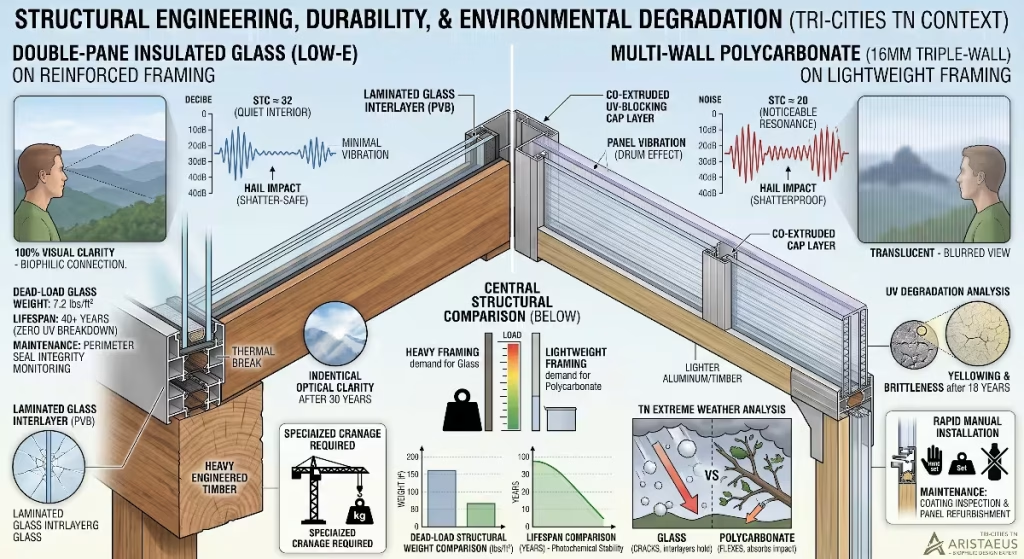
A four-season plant room is a permanent, permitted building addition that must safely withstand local wind pressures, heavy winter snow loads, and severe summer storms. Deciding between glass and polycarbonate requires a careful review of structural weight, impact strength, material fatigue, and decades of outdoor weathering.
       PROPERTY                 GLASS (Double-Pane Tempered)      POLYCARBONATE (Multi-Wall)
┌─────────────────────────┬──────────────────────────────────────┬─────────────────────────┐
│ Impact Resistance       │ Shatters under focused hail/impact   │ 200x stronger than glass│
│ Material Lifespan       │ 30 to 50+ Years (No UV breakdown)    │ 15 to 20 Years (UV loss)│
│ Acoustic Dampening      │ Excellent sound reduction (Quiet)    │ Resonant drum in rain   │
│ Structural Weight       │ Heavy (Requires reinforced framing)  │ Extremely Lightweight   │
│ Visual Transparency     │ Flawless, distortion-free view       │ Translucent/Ribbed lines│
└─────────────────────────┴──────────────────────────────────────┴─────────────────────────┘
Impact Resistance and Structural Loading
When sudden severe weather strikes, polycarbonate provides exceptional physical impact protection. High grade extruded polycarbonate exhibits an impact resistance up to two hundred times greater than standard window glass, and more than ten times greater than impact-modified acrylic plastics. In areas prone to violent summer thunderstorms carrying large hail, or where mature trees drop heavy seed pods and dead branches, polycarbonate roof panels are virtually impossible to shatter. A direct strike from a golf-ball-sized hailstone that would immediately crack standard safety glass will simply bounce off a 16mm multi-wall polycarbonate sheet without puncturing the inner air chambers.
Architectural glass sunrooms, however, rely on heavy tempered and laminated safety glass panels to protect occupants from impacts. Tempered glass is heated and rapidly cooled in specialized industrial ovens, making it four to five times stronger than standard annealed float glass. If an impact exceeds its design threshold, tempered glass breaks safely into thousands of tiny, rounded pebbles rather than dangerous, razor-sharp shards.
For sloped overhead roofs, modern building codes require laminated glass, where a tough sheet of clear polyvinyl butyral, or PVB, plastic is sandwiched tightly between two glass panes. If a heavy falling branch cracks the outer glass pane, the tough internal plastic interlayer holds all the broken fragments firmly in place, keeping the weather seal intact and preventing heavy glass shards from falling down onto plants and people below.
Lifespan and Photochemical Degradation
Where glass easily outperforms all structural plastics is long term material durability. Glass is an inorganic, chemically inert solid made from melted silica sand. It is completely immune to ultraviolet radiation from the sun. A high-performance insulated glass window built with premium perimeter seals will look just as crystal clear, transparent, and smooth thirty, forty, or fifty years from now as it did the day it was installed. It will never yellow, fog internally, become brittle, or scratch during routine cleaning.
Polycarbonate, by contrast, is an organic polymer plastic. When exposed to constant ultraviolet sunlight, raw polycarbonate molecules undergo a chemical breakdown called photodegradation. Over years of unshaded sun exposure, cheap unprotected plastics become brittle, turn a cloudy yellowish-brown color, and lose their flexible impact strength.
To prevent this early breakdown, high quality architectural polycarbonate panels are manufactured with a protective, co-extruded UV-blocking cap layer fused directly into the exterior surface. This protective barrier reflects away damaging ultraviolet wavelengths, preserving panel clarity and strength.
Even with advanced UV coatings, multi-wall polycarbonate has a realistic exterior service life of fifteen to twenty-five years. Over two decades of wind, driving rain, expanding summer heat, and contracting winter freezes, the material will eventually show micro-fissuring, surface haze, and minor yellowing, meaning the panels will eventually need replacement.
Acoustic Dampening and Sensory Biophilia
Biophilic architecture focuses on calming all human senses, not just what our eyes see. How a room sounds during a heavy downpour directly shapes how relaxing it feels to sit inside. In this sensory category, heavy insulated glass sunrooms outperform lightweight polycarbonate panels by a wide margin.
Because glass has substantial physical density and mass, it serves as an outstanding acoustic dampener. A heavy downpour striking an insulated glass roof produces a soft, muted, gentle ambient patter that adds a calming background sound to an afternoon of reading or potting plants.
Polycarbonate panels, by comparison, are lightweight, hollow, and flexible. When torrential raindrops, sleet, or hail hit an untreated multi-wall polycarbonate roof, the panels vibrate like the skin of a drum. The resulting sound inside the room can become surprisingly loud, making it difficult to hold a normal conversation or listen to soft music until the storm passes. If you plan to use your sunroom as a quiet everyday living space, reading den, or home office, the acoustic dampening of heavy architectural glass is an important comfort factor to keep in mind.
Visual Clarity and Landscape Connectivity
The final sensory factor is pure visual transparency. Glass provides distortion free optical clarity. If your home overlooks mountain ridges, flowering backyard dogwoods, or peaceful perennial garden beds, clear insulated glass walls give you an uninterrupted view of the world outside. You feel as though you are sitting outdoors in nature while staying comfortable in a climate-controlled room.
Multi-wall polycarbonate is translucent rather than transparent. Because of its internal structural flutes and cellular air chambers, you cannot see clear landscape shapes through the panels. Instead, you see diffused bands of light, blurred shapes, and soft silhouettes.
From a plant’s biological viewpoint, this diffuse lighting is ideal. For human beings who want to look out at their yard, sitting inside a room walled entirely with ribbed polycarbonate can feel a bit like sitting inside an industrial greenhouse or a commercial shipping facility.
Capital Expenditure, Installation Logistics, and Lifecycle ROI
Every home addition must balance structural performance with your available construction budget. Your choice of glazing material influences far more than just the price of the transparent panels. It changes the total weight of the room, the size of the foundation piers you must pour, the heavy equipment required on site, and the ongoing heating and cooling bills you will pay for years to come.
Glazing Material Choice
       │
       ├─► Heavy Glass ──► Reinforced Foundations + Steel/Thick Aluminum Frames + Crane Labor
       │
       └─► Light Poly  ──► Standard Framing + Rapid Manual Installation + Reduced Site Prep
Upfront Material and Structural Framing Costs
Multi-wall polycarbonate panels are far less expensive to buy than custom-manufactured double-pane insulated glass units. On a pure square foot basis, a high quality 16mm triple-wall polycarbonate panel typically costs between five and ten dollars per square foot of raw material. A custom-sized, argon-filled, tempered, Low-E double-pane architectural glass unit costs anywhere from thirty-five to over eighty dollars per square foot.
The cost differences become even wider when you factor in structural framing requirements. Glass is extremely heavy. A single double-pane insulated glass unit can easily weigh between five and eight pounds per square foot. When you design an entire room with glass walls and an overhead sloped glass roof, you are adding thousands of pounds of dead weight to your building addition.
This heavy load demands heavy-gauge extruded aluminum rafters, interior steel structural supports, or massive engineered timber beams to prevent roof sagging under winter snow. The ground beneath the room must be prepared with deeper concrete footers and reinforced foundation piers. Handling and setting these massive glass units requires specialized lifting equipment, vacuum suction rigs, and a large team of skilled glaziers on site.
Polycarbonate panels, on the other hand, are remarkably light. A standard multi-wall panel weighs less than one-tenth of an equivalent glass unit, often tipping the scales at less than one pound per square foot. This lightweight profile allows builders to use lighter aluminum frames or standard residential wood framing.
Installation goes quickly. Two workers can easily lift and secure a twenty-foot-long polycarbonate sheet by hand, without cranes or heavy vacuum machinery. For homeowners on a strict construction budget, choosing polycarbonate can cut thousands of dollars off initial framing, foundation, and labor costs.
Long Term Operating Expenditures (OpEx)
Upfront purchase costs tell only half of the financial story. You must also calculate what it costs to heat and cool your plant room over decades of continuous use. Because a 16mm triple-wall polycarbonate panel and a quality double-pane Low-E glass window have comparable R-values (between 2.5 and 3.2), their baseline winter heat retention is remarkably similar. Both materials hold heating costs down far better than old, drafty single-pane enclosures.
However, maintenance and replacement schedules differ significantly over time. High quality glass installations are essentially a one-time purchase. Aside from replacing the occasional failed edge seal on an insulated glass unit after twenty or twenty-five years, an architectural glass room will easily outlive its original owners with basic soap and water cleaning.
Polycarbonate panels must be planned as a consumable, semi-permanent building element. Over fifteen to twenty years of exposure to baking summer sun, freezing winter storms, and falling branches, polycarbonate will eventually show its age, lose some optical clarity, and require panel replacement. When calculating your thirty-year return on investment, you must balance the higher initial cost of glass against the future replacement labor and panel costs of polycarbonate.
Technical Specification Matrix
To evaluate both options directly, we can compare their core engineering, thermal, optical, and structural properties side by side in a technical performance matrix:
| Engineering Parameter | Double-Pane Insulated Glass (Low-E) | Multi-Wall Polycarbonate (16mm Triple-Wall) | Impact on Year-Round Plant Growing |
| Visible Light Transmittance (VLT) | 70% to 82% | 62% to 76% | Both deliver plenty of visible light for active plant growth. |
| Light Diffusion Index | Low (< 15% direct light scatter) | High (60% to 85% forward scatter) | Polycarbonate minimizes canopy leaf scorch and illuminates lower foliage. |
| Thermal Resistance (R-Value) | R = 2.5 to 3.2 | R = 2.4 to 3.0 | Both materials hold winter heat effectively when properly air sealed. |
| Rate of Heat Loss (U-Factor) | 0.31 to 0.40 | 0.33 to 0.42 | Lower numbers mean less heat escapes into cold nighttime air. |
| Solar Heat Gain Coefficient (SHGC) | 0.30 to 0.60 (Customizable) | 0.45 to 0.65 | Both need summer shade systems and good cross ventilation. |
| Physical Impact Resistance | Moderate (Shatter-safe if tempered) | Extreme (200x stronger than glass) | Polycarbonate is practically immune to hail and falling tree branches. |
| Expected Product Lifespan | 30 to 50+ Years | 15 to 20 Years | Glass offers multi-decade performance without UV yellowing. |
| Acoustic Dampening | High (Quiet interior during storms) | Low (Noticeable rain resonance) | Glass creates a calmer living space for relaxing and entertaining. |
| Dead-Load Structural Weight | 5.0 to 8.5 lbs per square foot | 0.5 to 0.8 lbs per square foot | Glass requires reinforced foundations and heavy framing. |
| Visual Optical Transparency | 100% Clear and distortion-free | Translucent (Visible internal ribs) | Glass connects you to outdoor views; polycarbonate blurs them. |
Common Questions Answered About Sunrooms
When planning home additions for indoor horticulture, homeowners often have questions about seasonal maintenance, material performance, and how plants adapt to these spaces. Here are clear answers to the most common questions:
Is a glass or polycarbonate sunroom better for year-round plant growth?
Neither material is universally better across every single category. The ideal choice depends on the specific plant species you want to grow and how you intend to use the space yourself.
Polycarbonate is biologically superior for total vegetative growth, leaf health, and lower canopy development. Its internal chambers scatter light across multiple angles, preventing upper leaf scorch while lighting up lower foliage. It also provides outstanding impact protection against hail storms and delivers great insulation at an accessible price.
Glass is architecturally superior for human comfort, long-term durability, and visual connection to your yard. It offers crystal clear views of the outdoors, dampens loud rain sounds during storms, and lasts for over forty years without UV yellowing.
If you want an authentic outdoor living area that doubles as a home for hardy plants, choose insulated glass. If your main goal is building a serious, high efficiency plant sanctuary, polycarbonate delivers the best overall growing environment.
Can you grow plants in a polycarbonate sunroom in the winter?
Yes, you can easily grow plants inside a polycarbonate enclosure throughout the dead of winter, provided the room is engineered as a true four-season structure. To keep tropical plants and citrus trees healthy during sustained freezing weather, you must use panels that are at least 10mm twin-wall or 16mm multi-wall thickness.
You must also mount those panels inside thermally broken frames, seal all joint caps with airtight EPDM rubber gaskets, and pair the room with a reliable heat source, such as a ductless mini-split heat pump.
Because multi-wall polycarbonate has a strong R-value between 2.4 and 3.0, it traps interior heat and prevents cold frost zones from forming along the perimeter walls.
For the best winter plant health, monitor soil temperatures closely. Even when room air is warmed to sixty-five degrees, cold concrete slab floors can chill wet potted soil down into the fifties, slowing root water intake. Placing large planters on raised rolling plant caddies or using low wattage seedling heat mats keeps root zones active, warm, and growing all winter long.
Does polycarbonate cause plants to burn in sunrooms?
No, this is a common myth that gets plant physiology backward. Polycarbonate panels actually protect plants from leaf burn far better than standard clear window glass.
Leaf burn is caused by two main factors: high surface leaf temperatures created by focused, direct sunlight, and excessive infrared heat build up that outpaces the plant’s ability to cool itself through water transpiration. Clear glass acts like a magnifying window, directing straight, intense beams onto upper leaves. This focused light can cause immediate surface sunburn on thin leaf tropicals like Calatheas, Begonias, and young Anthuriums.
Polycarbonate prevents leaf scorch through light diffusion. Its internal fluting breaks apart harsh direct beams, scattering the light evenly into a soft, ambient glow. Photons bathe the entire plant from multiple angles without focusing intense radiant heat onto any single leaf tip.
Furthermore, polycarbonate naturally blocks almost one hundred percent of harmful, burning ultraviolet rays (UV-A and UV-B) right at the outer surface. Plants grown under multi-wall polycarbonate rarely develop sunburn marks, provided the room has proper cross ventilation to keep general air temperatures below eighty-five degrees.
Direct Sunlight Hotspot (Clear Glass)         Scattered Gentle Photons (Polycarbonate)
       │    │    │                                     \   │   /
       ▼    ▼    ▼                                      \  │  /
   ┌──────────────┐                                   ┌──────────────┐
   │ High Foliage │ ◄── Scorched Tissues              │ High Foliage │ ◄── Healthy Leaf Surface
   │  Leaf Zone   │     (Too much heat)               │  Leaf Zone   │     (Even light distribution)
   └──────────────┘                                   └──────────────┘
How long will a polycarbonate sunroom last compared to glass?
Architectural glass lasts significantly longer than structural polycarbonate panels. High quality insulated glass units will easily last thirty to fifty years or more. Because silica glass is an inorganic compound, it does not degrade under solar ultraviolet radiation. As long as the structural framing holds firm and nothing physically breaks the glass, it will never discolor, become brittle, or lose its optical clarity. The only long term maintenance item is replacing the perimeter rubber seals or insulated glass spacer units if they show internal fogging after twenty-five years of service.
Architectural multi-wall polycarbonate panels have a realistic exterior lifespan between fifteen and twenty-five years. Although manufacturers treat the panels with co-extruded UV-blocking surface barriers, decades of direct sun exposure, wind-blown dust, freezing snow, and thermal expansion will gradually degrade the polymer chains.
Over fifteen to twenty years, polycarbonate panels slowly lose some flexibility, develop fine surface micro-scratches, and take on a slight yellowish cast. In regions that see frequent heavy hail, aging panels become more brittle over time, eventually needing replacement to keep the room fully weather tight and bright.
Strategic Architectural Recommendation: The Hybrid Biophilic Design
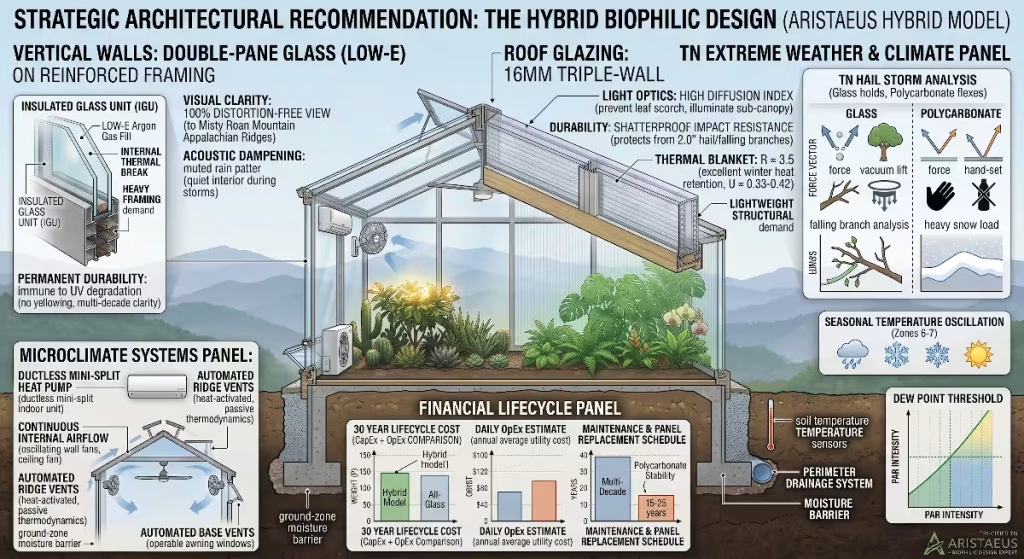
When evaluating glass vs polycarbonate sunrooms for year-round plant growing, you do not have to choose just one material for the entire build. In fact, relying on a single material for the entire envelope often forces you to compromise on either plant health or human comfort.
The most successful biophilic home additions take an engineered, hybrid approach. By pairing the unique strengths of both materials in a single structure, you can create a space that offers exceptional growing conditions for your plants and a beautiful, quiet living area for your family.
                  HYBRID ARCHITECTURAL ENVELOPE

                     Overhead Roof: 16mm Polycarbonate
            ┌─────────────────────────────────────────────────┐
            │ • High-diffusion PAR penetrates deep canopy     │
            │ • Shatterproof protection against hail & limbs  │
            │ • Strong thermal insulation prevents heat loss  │
            └─────────────────────────────────────────────────┘
                                   │
                                   ▼
        Vertical Walls: Double-Pane Insulated Glass (Low-E)
  ┌─────────────────────────────────────────────────────────────┐
  │ • Distortion-free landscape views for human biophilia       │
  │ • Excellent acoustic dampening against heavy rainfall       │
  │ • Permanent 40+ year exterior lifespan with zero yellowing  │
  └─────────────────────────────────────────────────────────────┘
The Best Glazing Strategy: Polycarbonate Overhead, Glass at Eye Level
For the sloped overhead roof, install high-performance 16mm or 25mm multi-wall polycarbonate panels. The roof receives the most punishing, direct solar exposure during summer, along with the highest risk of impacts from falling tree branches and severe hail.
Polycarbonate on the roof scatters harsh overhead midday sun into a rich, omnidirectional glow that bathes your plant canopy without burning top leaves. It also provides peace of mind against storm damage and sheds pounds of dead structural weight, saving you thousands of dollars on expensive roof framing and steel support beams.
For all vertical side walls, install custom double-pane Low-E argon-filled tempered glass windows. The vertical walls sit at eye level, where human beings look out at the landscape and interact with the room. Glass walls give you an unobstructed, crystal-clear view of your yard, garden paths, and distant mountain ridgelines, providing the rich psychological benefits of true biophilic design.
Glass walls also provide superior acoustic insulation, keeping the room quiet and peaceful during heavy storms, while standing up to decades of weed-eater kicks, patio furniture bumps, and routine pet paws without scratching.
Microclimate Systems: HVAC, Airflow, and Humidity Management
No glazing system can keep plants thriving year-round on its own without supporting mechanical systems. To maintain a stable botanical sanctuary through cold winters and humid summers, build your plant room with these three essential climate tools:
- Ductless Mini-Split Heat Pump: An independent ductless mini-split is the gold standard for conditioning year-round plant rooms. These systems feature inverter-driven compressors that ramp up or down smoothly to deliver exact heating and cooling without creating cold, sudden drafts. Set the system to maintain a winter night baseline of sixty-four degrees Fahrenheit and a summer day cooling cap of seventy-eight degrees Fahrenheit.
- Continuous Internal Air Circulation: Stagnant, humid air creates cold micro-pockets along exterior walls and encourages fungal mold spores to settle on wet leaves. Mount two or three variable-speed, low-decibel oscillating wall fans or a quiet ceiling fan running on low speed twenty-four hours a day. Gentle, continuous air movement strengthens plant stems, speeds up carbon dioxide exchange across leaf pores, and prevents winter condensation from settling on the panels.
- Automated Ridge and Base Venting: Take advantage of natural passive thermodynamics by installing operable awning windows low on the vertical walls and automated, heat-activated vent panels up along the highest roof ridge. As warm air rises naturally on sunny spring and fall afternoons, opening the top and bottom vents pulls cool outdoor air across your plants without having to run your power-hungry air conditioner.
Designing for Botanical Thriving and Human Wellness
Investing in a four-season plant room is one of the most rewarding home improvements you can make. It creates a bright, refreshing architectural sanctuary that elevates your daily mood, cleans your home’s air, and lets you cultivate an incredible variety of botanical species through every season of the year.
By understanding the scientific trade-offs between glass vs polycarbonate sunrooms for year-round plant growing, you can avoid costly design missteps. Polycarbonate provides unmatched light diffusion, outstanding impact safety, and efficient thermal insulation for your plants at an economical upfront cost. Architectural glass delivers lasting durability, quiet acoustic insulation, and clear, beautiful views of your outdoor world.
Whether you choose the crystal-clear transparency of an all glass conservatory, the high-efficiency growing environment of a dedicated polycarbonate room, or the balanced performance of a hybrid design, prioritize thermal insulation, humidity control, and your own long-term lifestyle needs.
When built with proper building science and biophilic design principles, sunrooms become the true living center of any home. They create an enduring space where people and nature live, grow, and flourish together across every season.