
Green Home Incentives in Johnson City, TN
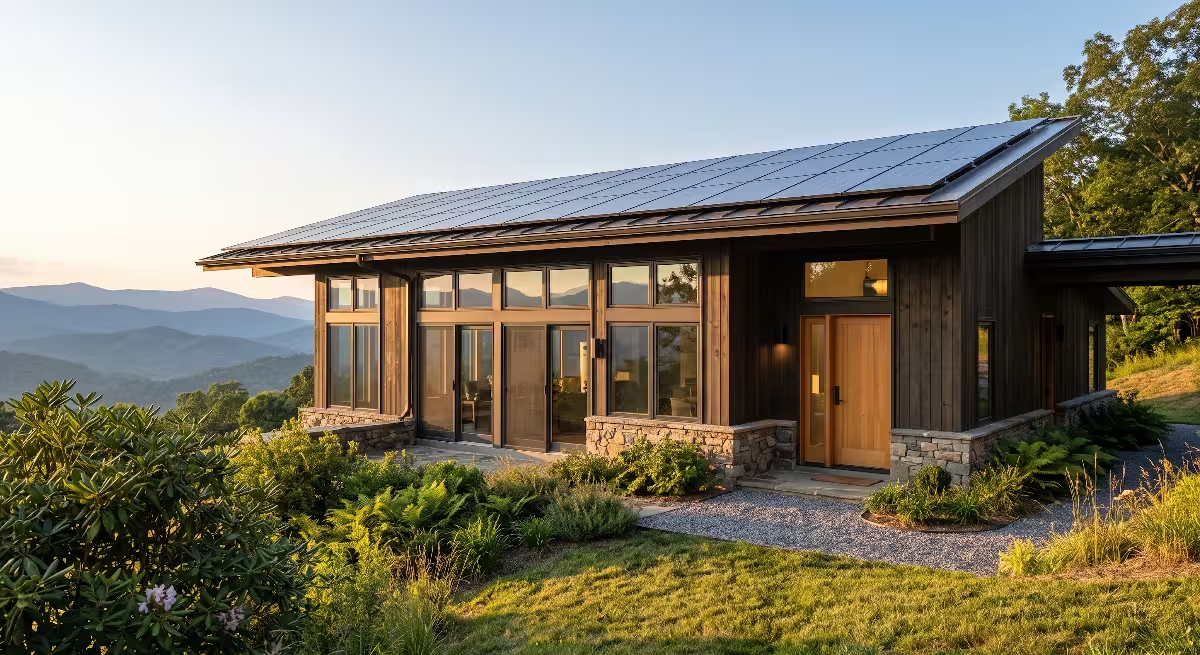
One trend that has established itself in the Tri-Cities and that is building smarter with a green home. When people hear the term “green home,” they often picture expensive solar arrays or experimental designs. But the reality is far more practical. A modern green home is about financial intelligence. It’s about building a higher quality, more comfortable, and more durable house that costs significantly less to operate month after month. The environmental benefits are a welcome result of a fundamentally sound financial decision.
The challenge is that the incentives designed to help you build a green home are spread across federal, regional, and utility-based programs. Navigating this landscape can feel overwhelming, leaving potential savings on the table. That’s why we’ve put together this guide.
Consider this your definitive roadmap to understanding and capturing every available incentive for building a new green home right here in Johnson City. We will cut through the jargon and lay out a clear plan, showing you how building a green home is not just an ethical choice, but the most financially savvy way to invest in your family’s future in our corner of Tennessee. This article will walk you through what a green home truly is, where the money is, and how you can leverage these programs to build the best home possible.
Defining a “Green Home” in East Tennessee: More Than Just Solar Panels
Before we can talk about incentives, we need a clear and practical definition of what a green home actually is. In the world of construction, a “green home” isn’t defined by a single feature. It’s about the house as a complete, high-performing system. It’s a home built with a primary focus on energy efficiency, resource conservation, and indoor air quality. Think of it less as a collection of gadgets and more as a fundamentally better approach to building.
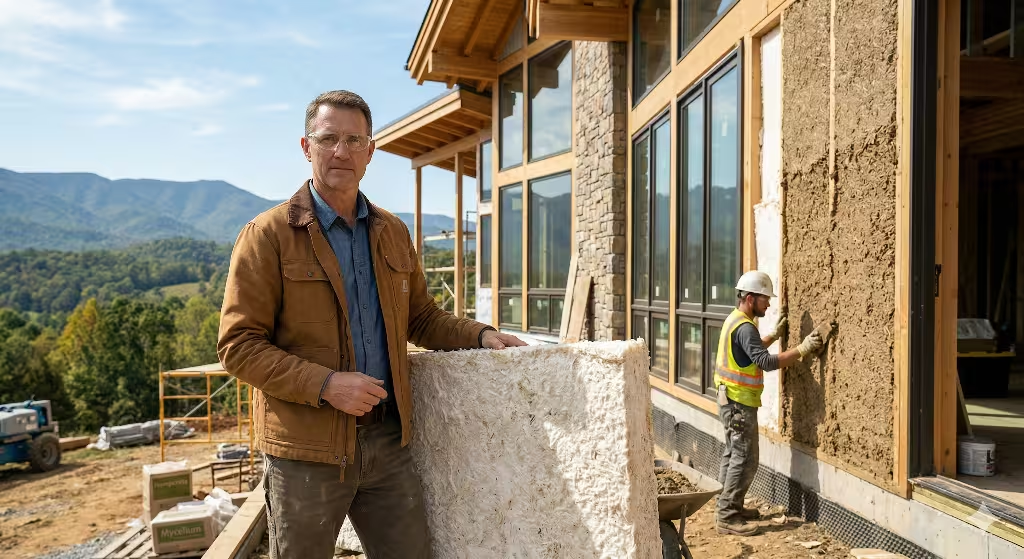
The core of a true green home lies in its building envelope. This is the shell of your house—the foundation, the walls, the roof, the windows, and the doors. In a standard build, tiny gaps and cracks can lead to massive energy loss through air leakage. A green home, by contrast, is built with meticulous attention to air sealing. We use advanced framing techniques, high quality house wrap properly taped at the seams, and spray foam or dense-packed insulation to create a nearly airtight barrier. This tight envelope means your heating and cooling systems don’t have to work as hard, saving you money every single day. It also makes the home more comfortable, eliminating the drafts and cold spots common in older houses.
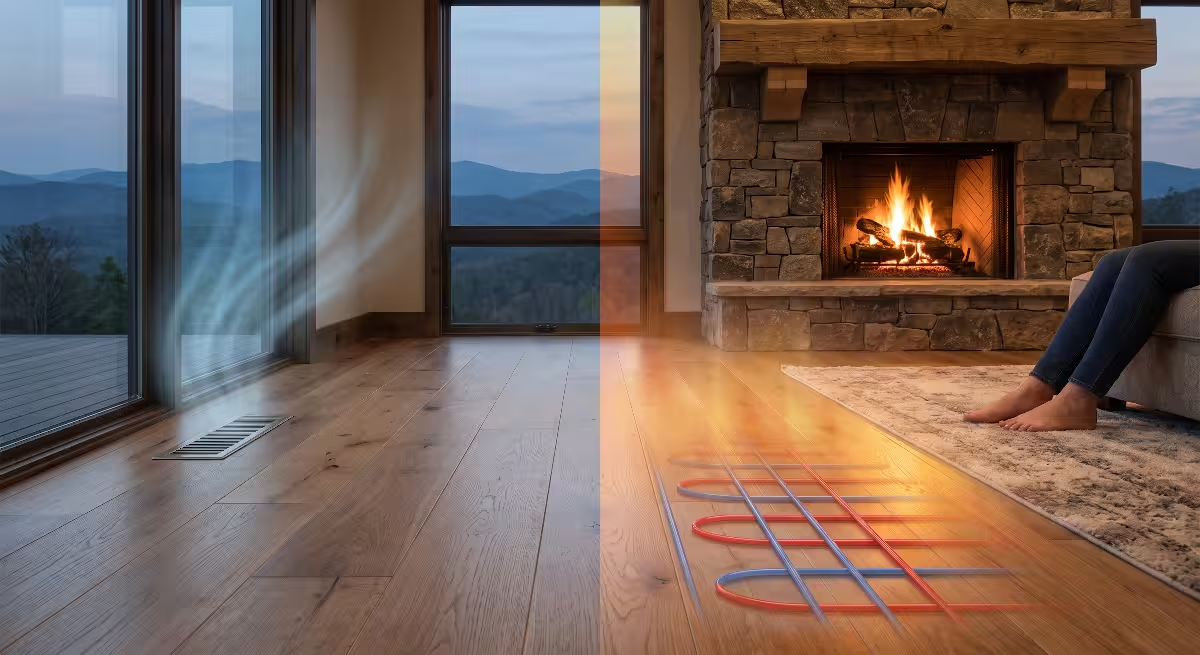
Beyond the envelope, a green home uses high efficiency systems. This includes an HVAC system that is properly sized for the home’s low energy demand, an energy efficient water heater, and a full suite of ENERGY STAR rated appliances and lighting. The goal is to reduce the energy load from every angle, ensuring that the energy you do use is put to work as efficiently as possible. This holistic approach is what truly defines a modern green home.
To move this from a vague concept to a measurable standard, the construction industry uses the Home Energy Rating System, or HERS Index. This is the most important metric you need to know when building a green home. The HERS Index is like a miles per gallon rating for your house. A standard new home built to code is given a baseline score of 100. Every point below 100 represents a 1% improvement in energy efficiency. So, a home with a HERS score of 60 is 40% more energy efficient than a standard new home. Most of the incentive programs we will discuss are directly tied to achieving a certain HERS score. It’s the official yardstick that proves your home is a legitimate green home.
While the HERS Index is the key score, there are also certifications that signal a home has met rigorous standards. The most common and accessible program is ENERGY STAR® Certified New Homes. An ENERGY STAR home isn’t just about having the right appliances; it’s a comprehensive program that requires third party inspections and verification to ensure the home meets strict efficiency guidelines. Achieving this certification often requires a HERS score in the low 60s or 50s and is a clear sign that you have a quality green home. For those looking for an even higher standard, LEED (Leadership in Energy and Environmental Design) for Homes is a more intensive program that covers everything from energy use to sustainable site selection and water conservation. For most homeowners in our area, aiming for a low HERS score and achieving ENERGY STAR certification is the perfect target for a cost effective, high performance green home.
Federal Energy Efficiency Tax Credits: The Foundation of Your Savings
The first layer of incentives for your new green home comes from the federal government. Recent legislation, particularly the Inflation Reduction Act of 2022, has renewed and expanded several tax credits that can significantly reduce the cost of building a green home. It’s important to understand that these incentives come in two forms: credits for the builder, which indirectly benefit you, and credits you can claim directly as the homeowner. Though be sure to check if they are still in place.
Let’s start with the builder credit, as it has a major impact on the market. The 45L Tax Credit for New Energy Efficient Homes is a powerful incentive given directly to builders. For a home to qualify, it must be certified to meet specific ENERGY STAR or Department of Energy Zero Energy Ready Home program standards. The credit can be worth up to $5,000 per home for the builder. While you don’t file for this credit yourself, it directly encourages builders in the Johnson City market to construct homes to these higher standards. It helps them offset the modest additional cost of better insulation, more efficient windows, and the necessary third party inspections. This makes it more financially viable for them to offer a green home at a competitive price, a benefit that is passed directly to you, the buyer. When you see a builder advertising ENERGY STAR certified homes, you know they are leveraging this program to deliver a superior product.
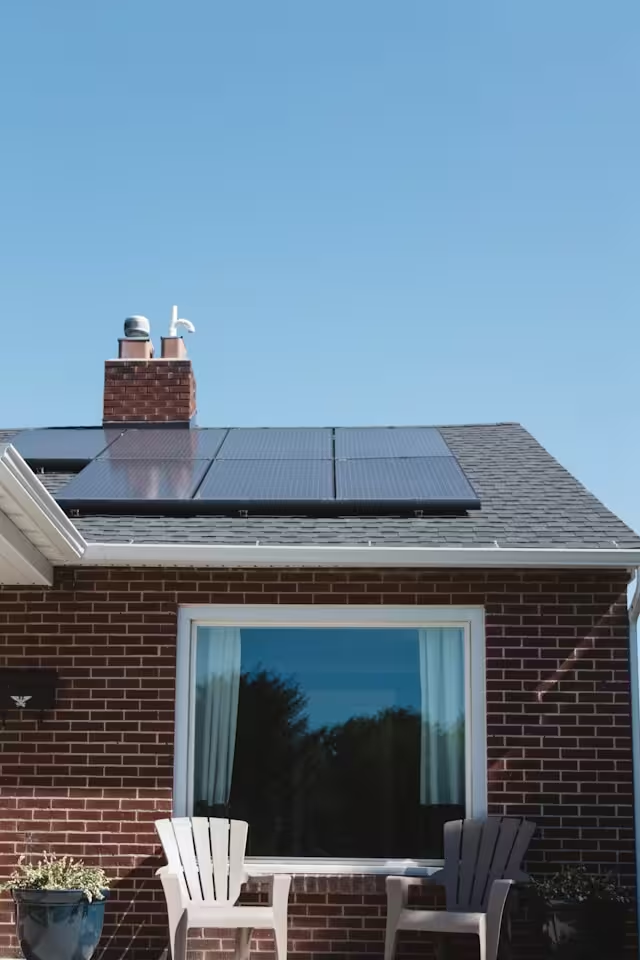
Beyond the builder credits, there are substantial tax credits you, the homeowner, can claim for including specific renewable energy technologies in your new green home. The most significant of these is the Residential Clean Energy Credit.13 This allows you to claim a credit worth 30% of the total cost for installing certain systems, with no upper limit on the cost. This is a dollar for dollar reduction of your tax liability. The qualifying systems include:
- Solar Panels (Photovoltaics): If you decide to add a solar panel system to your new green home, you can take a 30% credit on the entire cost of the system, including panels, inverters, wiring, and installation labor.
- Solar Water Heaters: These systems use the sun’s energy to heat your water, dramatically reducing your water heating bills. The 30% credit applies here as well.
- Geothermal Heat Pumps: These are among the most efficient heating and cooling systems available. They use the stable temperature of the earth to exchange heat, making them incredibly effective in our East Tennessee climate. While the upfront cost is higher than a traditional HVAC system, the 30% tax credit makes a geothermal system a much more attainable and financially attractive option for a new green home.
- Battery Storage Technology: If you are installing a solar system, you can also claim the 30% credit on the cost of a home battery system (with a capacity of at least 3 kilowatt hours). This allows you to store excess solar power for use at night or during a power outage, making your green home even more resilient.
These federal credits form the financial foundation for your project. They make it possible to incorporate advanced technologies that will provide savings for decades. When planning your green home, discussing these credits with both your builder and a tax professional is a critical first step.
The Regional Powerhouse: TVA EnergyRight® and BrightRidge Rebates
While federal credits provide a strong base, the most direct and impactful incentives for building a green home in Johnson City come from our regional power provider, the Tennessee Valley Authority (TVA), and are delivered through our local power company, BrightRidge. This partnership is designed to encourage the construction of energy efficient homes throughout our service area, and their programs offer significant cash rebates that can make a real difference in your construction budget.
The main program you need to know about is the TVA EnergyRight® New Homes Program. This program provides a financial incentive to homeowners who build a home that is significantly more efficient than a home built to standard building codes. The entire program is based on that HERS Index score we discussed earlier. The process is straightforward but requires you to work with a builder who is part of the TVA network of participating contractors.
Here’s how it generally works: Your builder constructs your home using energy efficient techniques. Throughout the process, an independent HERS Rater inspects the home at key stages, such as before the drywall goes up, to verify insulation levels and air sealing quality. Once the home is complete, the rater performs a final test, including a “blower door test” which measures the home’s airtightness. This final test determines the official HERS score. Based on that score, you receive a rebate. The lower the score, the more efficient the home, and the larger the rebate you receive from TVA and BrightRidge. This program directly rewards you for building a better green home.
The beauty of the EnergyRight program is that it focuses on the whole house as a system. It ensures that the builder is paying attention to all the details that create a truly high performance green home. The rebates essentially help pay for the upgrades that get you to that lower HERS score, such as upgrading from standard fiberglass insulation to spray foam or installing a higher efficiency heat pump.
In addition to the whole home rebate, BrightRidge often offers separate incentives for specific components. For example, there are often rebates available for installing a high efficiency electric heat pump or an energy efficient electric water heater. You can often “stack” these incentives on top of the new home rebate, further increasing your savings. The programs and rebate amounts can change from year to year, so it is absolutely essential to visit the BrightRidge and TVA EnergyRight websites or have your builder contact them directly at the beginning of your project. They will have the most current information on available rebates, program requirements, and a list of local, participating builders and HERS raters. By leveraging this powerful regional program, you can significantly reduce the upfront cost of your new green home and guarantee that it will perform efficiently for years to come.
Johnson City & Washington County Focus: Navigating Local Regulations
In Washington County and Johnson City, unlike some cities in other states, there are currently no specific municipal property tax abatements or local tax credits offered for constructing a green home here. However, that does not mean there are no local advantages or considerations. In fact, understanding the local regulatory environment is a key part of a successful green home project.
First, it’s important to recognize that our local building codes provide a strong foundation for energy efficiency. Johnson City and Washington County have adopted modern versions of the International Energy Conservation Code (IECC). This code sets minimum requirements for insulation levels, window performance, and air leakage. While the standards for a high performance green home far exceed these minimums, the code ensures that even a basic new home built today is significantly more efficient than one built just a decade ago. This rising tide of standard efficiency makes it easier and more cost effective for builders to take the next step towards building a true green home.
The primary local advantage lies in planning and process. When you work with a builder who is experienced in constructing a green home, they understand how to properly document and present the plans to the City of Johnson City’s Planning and Development Services. While you won’t get a special discount on your permit fee for building a green home, a well prepared plan that clearly outlines advanced framing techniques, insulation specifications, and mechanical system designs can lead to a much smoother and faster permitting process. Delays in permitting can be costly, so this efficiency is a real, though indirect, financial benefit.
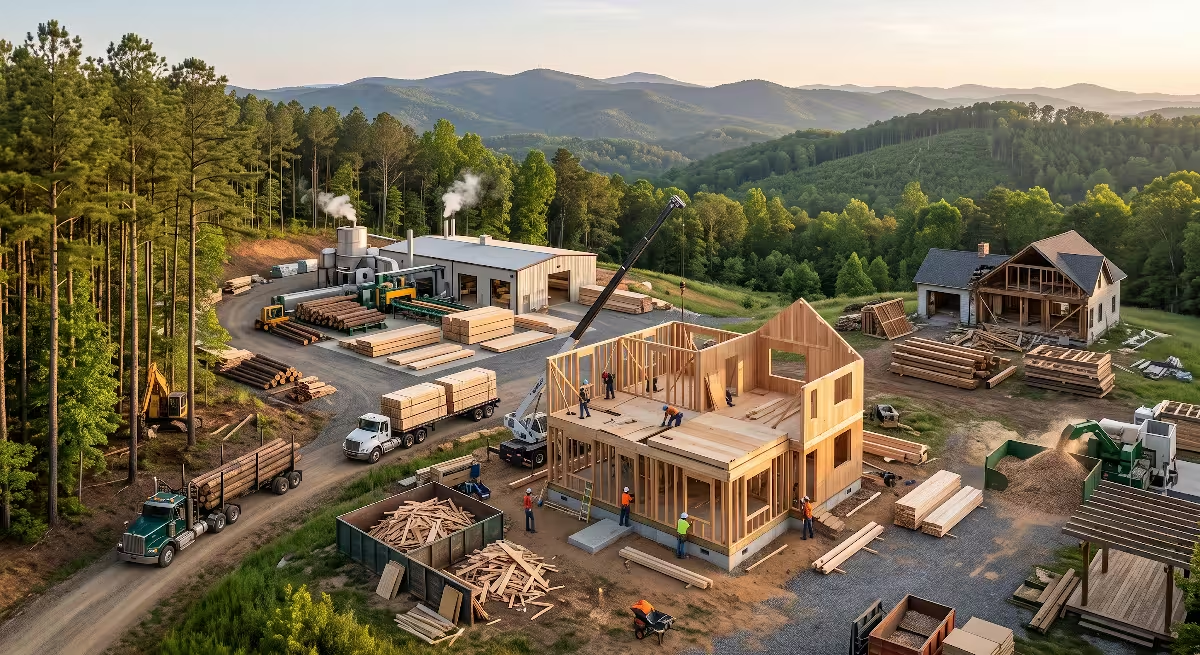
Furthermore, a builder who specializes in green home construction will have established relationships with local suppliers and subcontractors who understand the specific requirements of these projects. They know which local suppliers carry the best high performance windows, and they work with HVAC contractors who know how to properly design and install systems for a low load green home. This local network is invaluable. It ensures that you are getting quality materials and expert installation, which are critical for the long term performance of your house. So while you may not find a line item on a city budget for a green home rebate, the local expertise and streamlined processes available in our area provide a very real and tangible value to your project.
The Unseen Financial Gains: Beyond Credits and Rebates
The tax credits and rebates we’ve covered are fantastic for reducing the upfront cost of construction. But the most profound financial benefits of building a green home are realized over the long term. These are the advantages that continue to pay you back for decades, long after the construction is complete.
First, let’s talk about financing. When you apply for a mortgage, lenders are increasingly recognizing the value of a certified green home. An Energy Efficient Mortgage (EEM) is a special type of loan that allows a borrower to qualify for a larger loan amount based on the future energy savings of the home. Here’s how it works: the lender takes the projected monthly utility savings from your HERS rating and adds a portion of it to your qualifying income. This increased income can help you qualify for a slightly larger mortgage, which can be used to cover the cost of the energy efficient upgrades. It’s a smart financial tool that acknowledges that a green home simply costs less to own each month.
Second, the resale value of a green home is consistently higher than that of a standard home. Study after study has shown that homes with certifications like ENERGY STAR or a low HERS score sell for a premium and spend less time on the market. Think of it from a future buyer’s perspective. When faced with two similar homes, the one that comes with a certificate proving it will have significantly lower utility bills is a much more attractive and secure investment. This certification acts as a third party quality assurance seal, giving future buyers confidence in the construction and performance of your home. Building a green home is not just an investment in your comfort; it’s a powerful investment in your equity.
Finally, and most importantly, is the drastic reduction in your lifetime operating costs. This is the number one benefit of owning a green home. A home with a HERS score of 55 is 45% more efficient than a standard home built to code.28 In our Johnson City climate, with our hot, humid summers and chilly winters, that translates into hundreds, or even thousands, of dollars in savings on your BrightRidge bill every single year. Imagine your construction mortgage is for 30 years, but you will be paying utility bills for as long as you live in the house. The cumulative savings over the life of the home are staggering. This is money that stays in your pocket, allowing you to save for retirement, invest, or simply enjoy a higher quality of life. This lasting financial benefit is the ultimate reason why building a green home is the smartest choice you can make.
Your Blueprint for a High-Performance Home
As we’ve seen, the path to building an affordable, high performance green home in Johnson City is paved with a series of powerful incentives. It’s a layered approach that starts with a strong foundation of federal tax credits for renewable technologies, adds significant regional rebates from the TVA and BrightRidge for proven whole home performance, and is capped off by the immense long term benefits of lower utility bills and higher property values. Building a green home is not a sacrifice; it is a calculated decision to build a superior asset.
The process rewards thoughtful planning and meticulous execution. The key is to see your home not as a collection of separate parts, but as an integrated system where the insulation, windows, air sealing, and HVAC all work together to create a comfortable, healthy, and incredibly efficient environment. The rebates and credits are simply there to help you make the smartest choices at every step.
There is one piece of advice to give here. That is all of these programs and benefits hinge on one single decision you make at the very beginning. You must choose a builder who is not only willing but is an expert in green home construction. An experienced builder will know how to navigate the TVA EnergyRight program, how to properly document for a HERS rating, and how to execute the advanced building science techniques required to get the job done right. The planning phase is where you lock in your savings and ensure the success of your green home.
Building a new home is an exciting journey. Building a green home ensures that the journey ends with a house that is not only a source of pride but also a source of lasting financial security. If you have questions or are ready to start planning, I encourage you to reach out. It is my job and my passion to help people in our Tri-Cities community have the best home building experience possible.