

The Historic Heart of Sullivan County
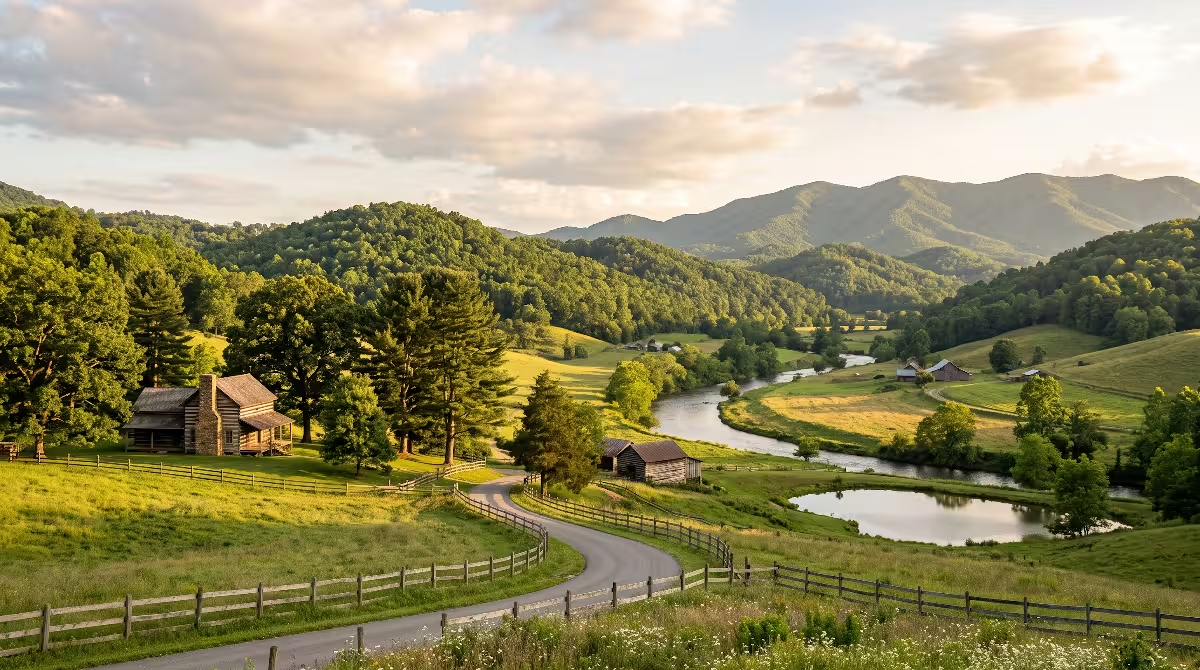
Right in the geographical center of Sullivan County sits Blountville. Most people pass through it on their way between Bristol and Kingsport or when heading to Tri-Cities Airport. But if you stop and walk down Main Street, you will quickly realize that the history of Blountville, TN, is one of the most fascinating stories in the entire Appalachian region.
To understand
From its founding in 1795 on a donated thirty acre tract of land to the day artillery shells tore through its brick courthouse in 1863, Blountville, TN, shows how early settlers built lasting structures against tough frontier odds. In this guide, we will explore the history of Blountville, TN, through the eyes of a builder. We will look at the timber framing, the limestone foundations, the stagecoach routes, and the Civil War events that shaped this community.
Whether you love regional heritage or want to learn about historic Tennessee architecture, Blountville, TN, offers lessons that still matter for our communities today.
Frontier Beginnings and Municipal Founding (1782 to 1795)
The earliest chapters of Blountville, TN, began long before European settlers laid out street grids. Native American tribes used the fertile valleys and ridges of Sullivan County for seasonal hunting and travel. Linville Cave, located just outside the modern town center, contains archaeological evidence showing that Indigenous groups used the limestone cavern systems for shelter and tool preparation centuries before the American Revolution. The natural topography provided fresh springs, timber, and shelter, which later drew long hunters and homesteaders into the Holston River basin.
Following the Revolutionary War, North Carolina issued land grants to soldiers and settlers moving westward into what was then the frontier of North Carolina and the short-lived State of Franklin. In 1782, an early settler named James Brigham acquired a 600-acre land grant in the rolling valley between Muddy Creek and the Holston River. Brigham recognized that the geographic position of his property sat along natural travel gaps in the mountains. This realization would permanently change the course of Blountville, TN.
By 1792,
In 1795, the town was formally surveyed and established by law. Leaders named the settlement in honor of William Blount, who served as the Governor of the Territory South of the River Ohio, commonly known as the Southwest Territory. William Blount played a central role in organizing the territory that became the state of Tennessee in 1796. The naming of the town solidified the place of Blountville, TN, in the founding years of the state.
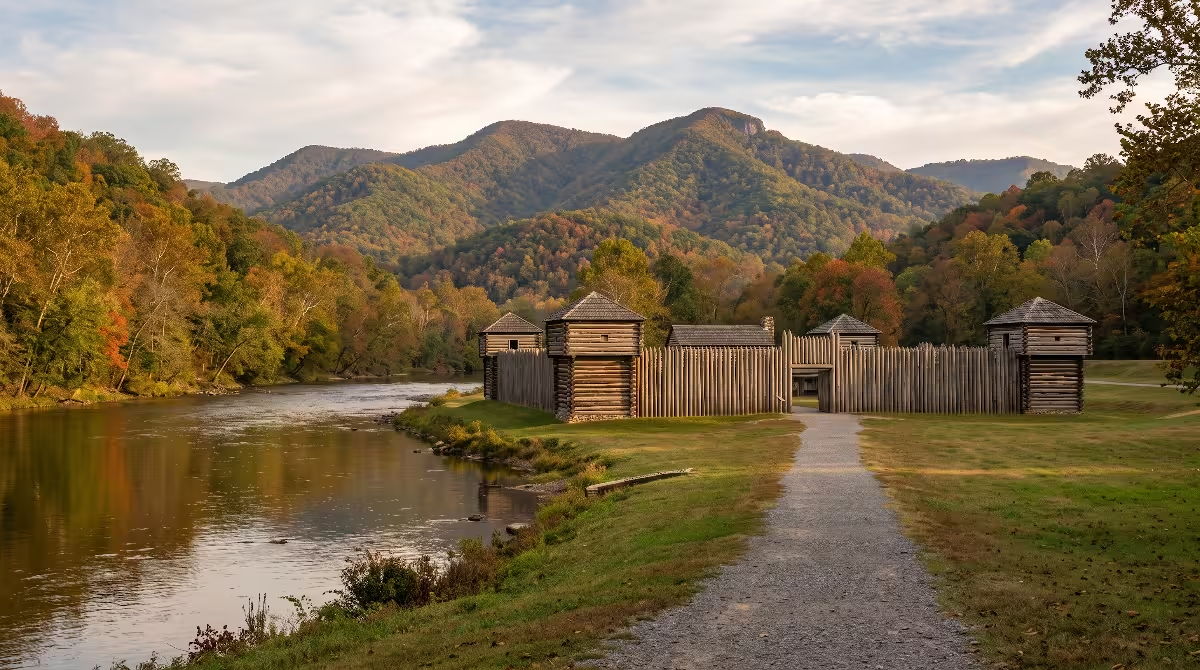
From a builder’s perspective, the early construction during this phase of Blountville, TN history was practical and sturdy. Settlers worked with dense virgin timber, primarily American chestnut, white oak, and yellow poplar. The first public buildings were heavy log structures. Builders squared the logs with broadaxes and joined the corners with half-dovetail or V-notches. These corner notches locked the heavy timbers together and shed rainwater away from the joints, preventing rot in our humid climate.
Foundations were built directly on the limestone bedrock that runs under Sullivan County. Because Northeast Tennessee features karst geology, early builders learned to place foundation piers on solid stone ledges to prevent settling. These smart, simple building methods set a high standard for construction throughout the early years of Blountville, TN.
The Stagecoach Era: The Old Deery Inn and The Great Stage Road
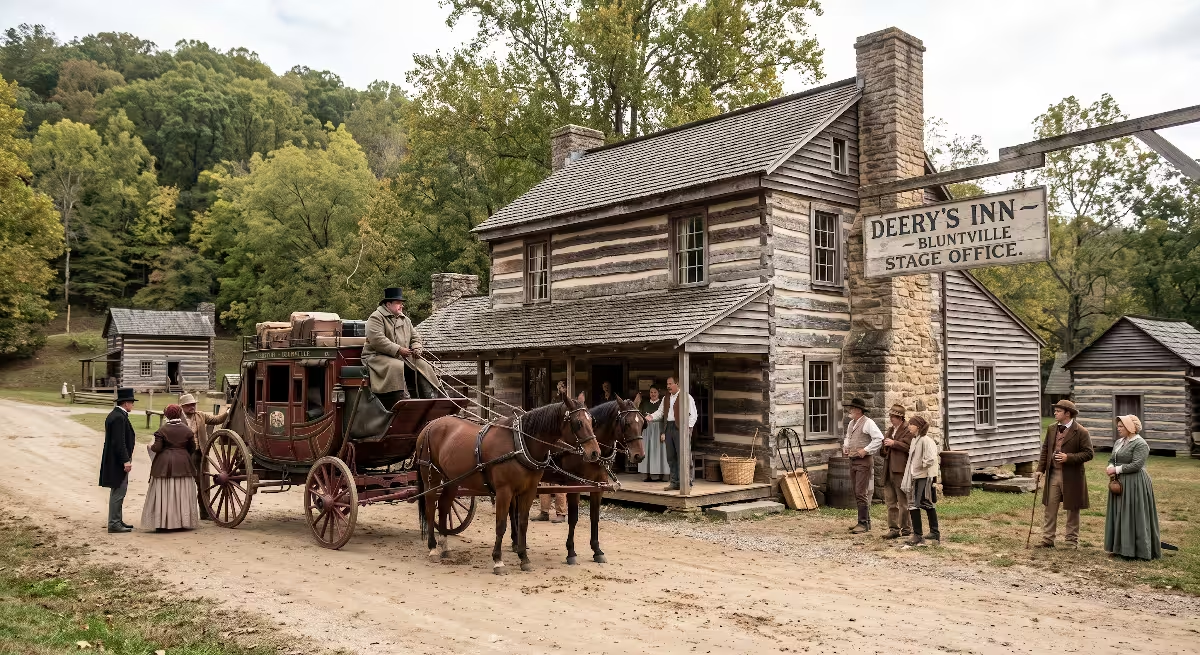
As the nineteenth century opened, Blountville, TN, shifted from a quiet frontier outpost to a bustling transportation crossroads. The town sat directly on the Great Stage Road, also known historically as the Island Road. This vital route served as the primary highway connecting Baltimore, Philadelphia, and Washington, D.C., to Knoxville, Nashville, and the western frontier. Stagecoaches carried mail, merchandise, and travelers through the center of town along what is now Tennessee State Route 126.
The growth of travel brought new businesses, but none played a bigger role in Blountville, TN, history than the Old Deery Inn. The property began around the late 1780s or early 1790s as a modest, two-story double log cabin. Around 1801, an Irish immigrant and merchant named William Deery purchased the property. Deery expanded the original cabins into a large, multi-building commercial complex that became famous across the region.
The Old Deery Inn is a masterclass in organic structural expansion throughout Blountville, TN. William Deery did not tear down the original log cabins. Instead, he built around them and connected them. He added a two-story Federal style frame addition to the front, covered the exterior in painted weatherboarding, and built several stone and timber dependencies behind the main house. These outbuildings included a detached kitchen, a smokehouse, a stone springhouse, and a law office.
By the 1820s, the Deery Inn contained nineteen rooms and offered dining, overnight lodging, stables, a general store, and the local post office. It was a complete travel plaza for its time. When you study the architectural details of the Deery Inn, you can see how builders of that era handled high traffic. They used wide-plank heart pine flooring, hand-cut lath behind lime plaster walls, and hand-forged strap hinges on heavy interior doors.
Because of its prominent place on the Great Stage Road, the Old Deery Inn welcomed some of the most famous figures in American history. A review of guest records and local letters from Blountville, TN history reveals that three United States Presidents stayed at the inn: Andrew Jackson, James K. Polk, and Andrew Johnson. The French Marquis de Lafayette visited during his farewell tour of America in 1825, and tradition records that Louis Philippe, who later became King of France, also stayed there while traveling through the East Tennessee mountains.
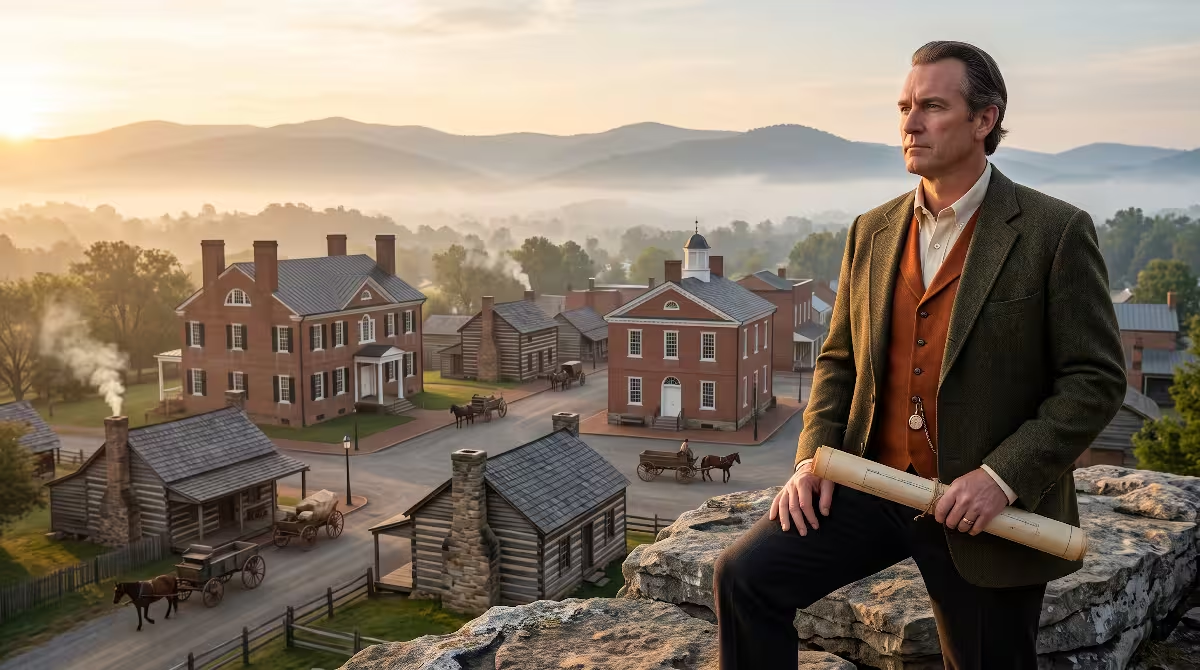
The prosperity of the stagecoach era spurred further residential building throughout Blountville, TN. Prosperous merchants and attorneys built handsome brick and frame homes along Main Street. Many of these homes featured classic Federal styling, including symmetrical front facades, five-bay layouts, fanlights over front doors, and brick masonry laid in common or Flemish bond patterns. The local brick was made from clay dug right out of Sullivan County creek beds and fired in temporary field kilns. That stagecoach boom gave the town the cohesive historic character that remains a hallmark of Blountville, TN, history today.
The Battle of Blountville (September 22, 1863): Fire and Artillery
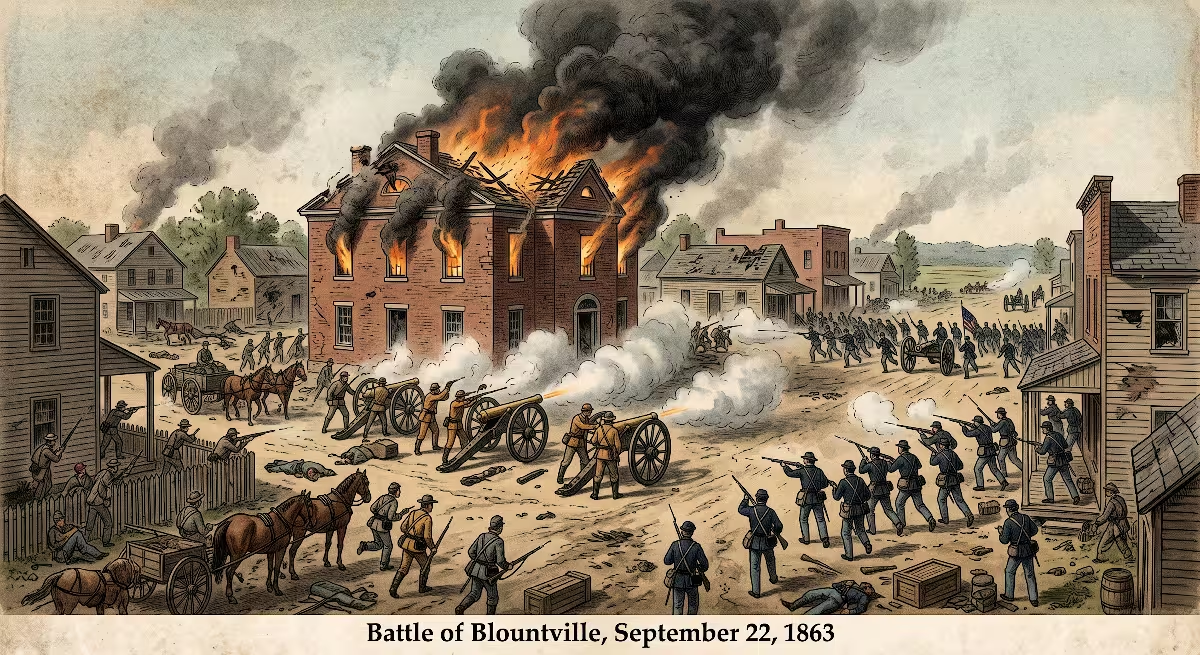
The peaceful growth of the stagecoach era came to an abrupt halt during the American Civil War. Northeast Tennessee was a region of divided loyalties, where neighbors often held sharply conflicting views. Because the Virginia and Tennessee Railroad ran through nearby Bristol and Union, now known as Bluff City, Sullivan County held major strategic importance for military logistics and salt transport from Saltville, Virginia. This military focus led directly to one of the darkest days in Blountville, TN: the Battle of Blountville on September 22, 1863.
During the late summer of 1863, Union forces under Major General Ambrose Burnside moved into East Tennessee to secure the railroad and support Union sympathizers. A Union cavalry brigade of approximately 1,200 men, commanded by Colonel John W. Foster, advanced toward Blountville. Defending the town was a smaller Confederate force of roughly 400 to 500 cavalrymen from the 1st Tennessee Cavalry, led by Colonel James E. Carter, supported by an artillery battery.
The engagement began around noon on September 22. Colonel Foster positioned his Union artillery batteries on the high ground at Cemetery Hill, looking directly down over the town center. The Confederate troops set up defensive lines near the courthouse and the surrounding residential streets. For four hours, an intense artillery duel and rifle fight echoed across the valley.
The battle brought severe structural destruction that left a permanent mark on the history of Blountville, TN. During the exchange of artillery, Union shells struck several buildings in the town center. A catastrophic fire broke out, spreading rapidly across the dry wood-shingled roofs of the commercial district. The 1825 Sullivan County Courthouse, an impressive two-story brick building, caught fire and was completely gutted. Along with the courthouse, the fire consumed several stores, law offices, and private homes.
The burning of the courthouse caused a tragic loss for Blountville, TN. Most of Sullivan County’s early deed books, land surveys, tax rolls, and marriage certificates were stored inside the clerk’s office. While county clerks managed to rescue a small number of record books, many decades of early frontier documentation vanished in the flames. For modern title searchers, genealogists, and historians, this fire created a permanent gap in county records.
Despite the heavy shelling and spreading flames, Confederate forces fought a stubborn rear-guard action before retreating toward Zollicoffer and the railroad bridge. A few buildings survived through remarkable luck and solid construction.
One of the most famous surviving structures in Blountville, TN, is the Miller-Haynes House, often called the Cannonball House. Built around 1856 by Dr. Elbert S. Miller and later owned by Confederate Senator Landon Carter Haynes, this two-story frame home took a direct artillery hit during the battle. A solid iron cannonball pierced through the exterior weatherboarding and passed through an interior door. Rather than patching over the damage after the war, the owners preserved the hole, and that battle scar remains visible today.
The Old Deery Inn also survived the battle. Local stories tell that townspeople and inn workers stood watch with buckets of water from the nearby spring, quickly dousing embers that landed on the cedar shake roof. When the smoke finally cleared on the evening of September 22, 1863, the town center lay in ruins, marking the Battle of Blountville as a pivotal turning point in Blountville, TN’s history.
Rebuilding and Structural Evolution (1866 to the Mid-20th Century)
Following the end of the Civil War in 1865, the citizens of Sullivan County faced the heavy task of rebuilding their community with limited money. The post-war reconstruction period in Blountville, TN, highlights the resilience of local builders and civic leaders.
The primary challenge was the ruined county courthouse. In 1866, the county court voted to rebuild the courthouse rather than move the seat of government to another town. Builders inspected the fire-damaged structure and determined that the thick, load-bearing exterior brick walls were still structurally sound. They cleared the charred interior framing, laid new heavy timber joists, installed new roof trusses, and rebuilt the courthouse within its original 1825 brick footprint.
In 1920, Sullivan County updated the building to meet the needs of a growing population. The county hired architects to expand the structure, adding classical two-story porticos supported by tall columns, giving the courthouse its current Classical Revival appearance. This combination of 1825 brick walls, 1866 reconstruction framing, and 1920 Classical styling makes the Sullivan County Courthouse a physical timeline of Blountville, TN.
During the late nineteenth and early twentieth centuries, neighboring communities like Bristol and Kingsport experienced rapid industrial growth. Kingsport became a planned industrial hub for chemicals, glass, and paper, while Bristol grew into a manufacturing and railroad center. During this period, the leaders of Blountville made a conscious choice that shaped the modern era of Blountville, TN history: they decided not to incorporate as an independent municipality.
By remaining unincorporated, Blountville avoided creating duplicate city taxes, police forces, and municipal utilities for a small town population. Sullivan County government directly manages local services, roads, and law enforcement for the town. This unique administrative status kept Blountville free from aggressive industrial development and heavy commercial sprawl, preserving the quiet, residential feel of the historic center.
In the mid-twentieth century, modern transportation returned to the forefront of Blountville, TN. As commercial aviation grew, regional leaders recognized the need for a shared, central airport to serve Bristol, Kingsport, and Johnson City. In 1937, construction began on McKellar Field on rolling farmland just outside the Blountville town limits.
Over the decades, that airfield grew into the modern Tri-Cities Airport. The airport brought corporate travel, aerospace maintenance facilities, and industrial parks to the surrounding area. Yet even as global jet traffic landed nearby, the core historic district along Main Street remained preserved, protected by local families and historical organizations dedicated to keeping Blountville, TN, alive.
Architectural Guide to the Blountville Historic District
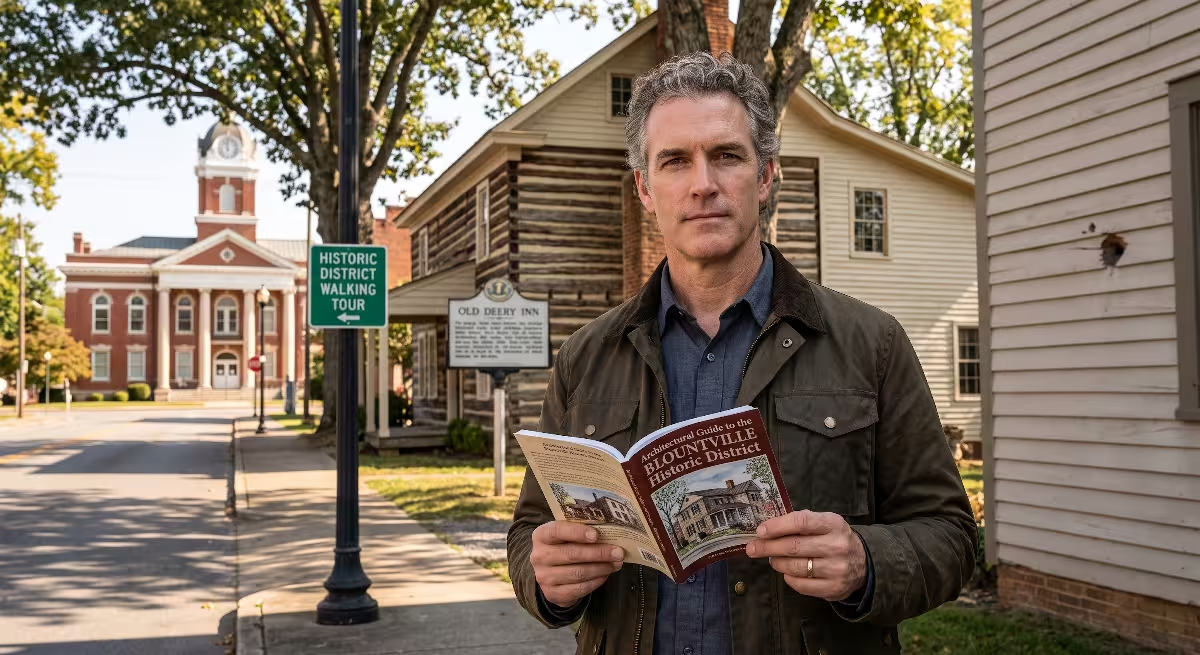
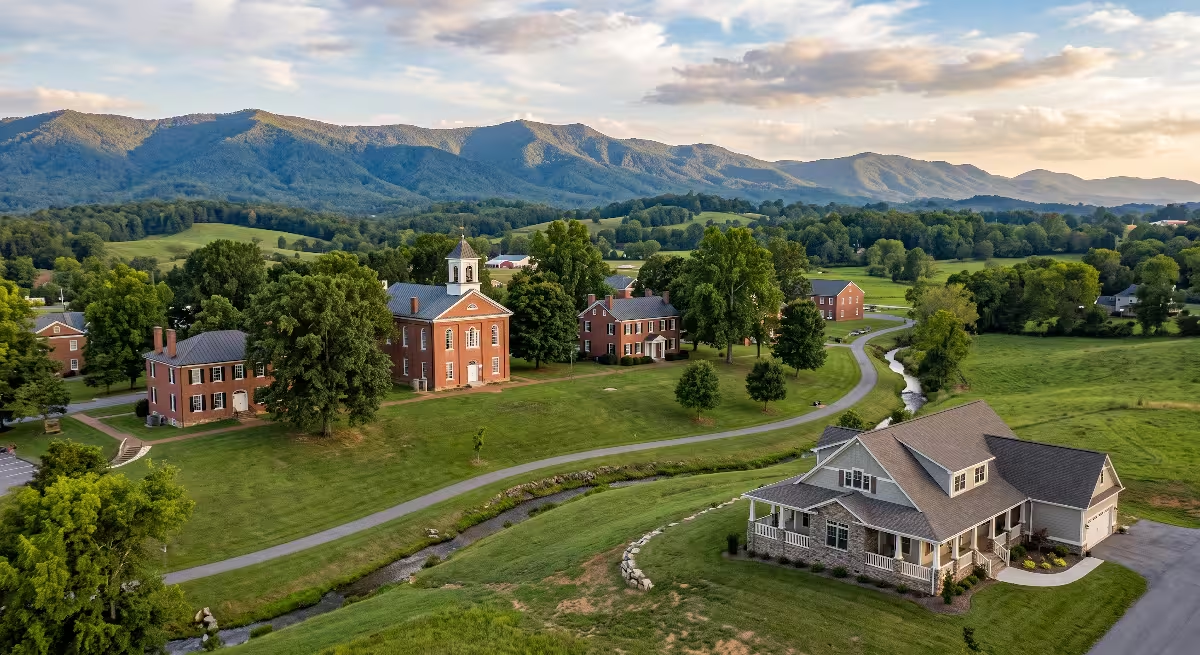
To truly appreciate Blountville, TN, history, you have to take a walk down Old Island Road and Main Street. In 1973, the town center was officially listed on the National Register of Historic Places as the Blountville Historic District. The district contains dozens of buildings that show the evolution of American domestic and civic architecture from the late 1700s through the early 1900s.
When evaluating these homes from a construction perspective, several distinct architectural styles stand out across Blountville, TN history:
- Pioneer Log Construction (Late 1700s): Found in the rear sections of the Old Deery Inn and early outbuildings. Characterized by hand-hewn rectangular logs, tight half-dovetail corner joints, and lime-based chinking placed between the logs.
- Federal Style (1790 to 1830): Visible in multiple private homes and commercial fronts. Features include symmetrical five-bay facades, low-pitched gable roofs, multipane double-hung sash windows, delicate fanlights over entries, and side-gabled brick chimneys.
- Greek Revival (1830 to 1860): Displayed in prominent residences and civic structures. Defined by bold entry porticos, square or round columns, wide frieze boards under the eaves, and formal, balanced proportions.
- Classical Revival (1900 to 1920): Epitomized by the 1920 renovations to the Sullivan County Courthouse, featuring monumental pediments, fluted columns, and stone accent work.
A self-guided walking tour through the center of Blountville, TN, should include several key historic landmarks:
1. The Old Deery Inn Complex
Located on Main Street, this is the crown jewel of Blountville, TN. The site lets you walk from an eighteenth-century log cabin into a refined nineteenth-century Federal parlor under one roof. The backyard area includes restored stone outbuildings, a formal garden, and the original springhouse that provided cool water storage for travelers two hundred years ago.
2. Sullivan County Courthouse and Plaza
Standing prominently at the center of the town, the courthouse serves as the working heart of county government. The surrounding courthouse lawn contains historical markers detailing the 1863 battle, commemorative monuments honoring veterans, and the original stone mounting blocks once used by horseback riders.
3. The Miller-Haynes “Cannonball” House
Located a short walk from the courthouse square, this two-story white frame house stands as a living witness to the Civil War. Its simple Greek Revival trim and preserved cannonball damage offer an authentic look at the wartime experience in Blountville, TN.
4. Historic Blountville Cemetery
Situated on the ridge above the town, this cemetery served as the artillery battery position for Union forces during the 1863 battle. The cemetery contains headstones dating back to the late 1700s. Among those buried here are Revolutionary War patriots, including Congressman John Rhea, along with prominent early settlers and veterans from both sides of the Civil War.
5. Blountville Presbyterian Church
Organized in 1820, this church building reflects the deep religious traditions that supported early frontier families. The sanctuary features classic brick masonry and simple, elegant proportions that mirror the architectural restraint favored by early Scotch-Irish settlers in Blountville, TN.
Frequently Asked Questions About Blountville, TN History
When visitors and newcomers explore the region, they often have specific questions about how this community developed. Below are clear, direct answers to the most common questions regarding the history of Blountville, TN.
Why is Blountville an unincorporated town if it is a county seat?
Blountville remains unincorporated by choice to avoid redundant government expenses and duplicate local taxes. In Tennessee, county governments have the legal authority to maintain administrative seats in communities without requiring a separate town council, mayor, or city charter. Because Sullivan County offices, court facilities, and the sheriff’s department are directly located in Blountville, county operations manage local services, roads, and emergency protection. This setup has allowed the community to maintain its small-town historic feel for over two centuries.
What is the oldest building in Blountville, TN?
The oldest surviving structure in the town is the Old Deery Inn, located on Main Street. The earliest log components of the inn date back to the late 1780s and early 1790s. In 1801, William Deery expanded these frontier cabins into a large, nineteen-room stagecoach inn and tavern. The building is fully restored and operates as a historic museum property open for tours.
What happened during the Civil War Battle of Blountville?
On September 22, 1863, a four-hour battle took place between approximately 1,200 Union cavalrymen under Colonel John W. Foster and roughly 500 Confederate defenders under Colonel James E. Carter. Union artillery fired on the town from Cemetery Hill, causing a widespread fire that destroyed the 1825 Sullivan County Courthouse, local businesses, and multiple homes. The battle ended with a Confederate retreat toward Bluff City, leaving the town center in ruins and destroying decades of early county land and court records.
Is Blountville older than Jonesborough, TN?
No, Blountville is not older than Jonesborough.
The Craftsmanship of Early Sullivan County Builders
When you examine the physical relics of Blountville, TN, you gain deep respect for the craftsmanship of early East Tennessee builders. Modern construction relies on engineered lumber, laser levels, and pneumatic fasteners. The settlers who built Blountville worked with simple hand tools, local timber, native stone, and raw muscle.
Early carpenters understood wood species and where to use them. For ground-contact foundation sills, they chose American chestnut or white oak because the natural tannins in the wood resisted rot and insect damage. For straight wall studs, floor joists, and rafters, they harvested tall yellow poplars from mountain ravines. Yellow poplar provided long, straight spans that stayed true without excessive warping as the green wood cured.
The joinery used in early homes throughout Blountville, TN, relied on mortise and tenon connections secured with wooden pegs, known as trunnels or tree-nails. Carpenters cut rectangular mortise holes into vertical posts and shaped corresponding tenon tongues on horizontal beams. Once joined, they bored holes through the joint and drove in tapered wooden pegs made from seasoned white oak. When moisture levels changed with the seasons, the wood swelled together, creating tight, durable joints that have held buildings upright for more than two hundred years.
Masonry work in Blountville, TN, required equal skill. Early mortar was made by burning local limestone in kilns to create quicklime, which was then mixed with clean river sand and water. Unlike modern hard Portland cement, traditional lime mortar was softer and breathable. This breathability allowed moisture to evaporate freely from the brick walls without trapping water inside the bricks during winter freeze-and-thaw cycles. When you look at the surviving nineteenth-century brick buildings on Main Street, their enduring strength is direct proof of these smart traditional masonry techniques.
Timeline of Major Milestones in Blountville, TN History
To see how the community developed over the centuries, it helps to review the key dates that shaped its civic and structural growth:
- 1782: James Brigham acquires a 600-acre land grant in Sullivan County following the Revolutionary War.
- 1792: Brigham donates thirty acres of his land to create a permanent county seat for Sullivan County.
- 1795: The town of Blountville is formally surveyed, established, and named after Territorial Governor William Blount.
- 1801: William Deery purchases the original log structures on Main Street and begins developing the Old Deery Inn complex.
- 1820: Blountville Presbyterian Church is established, and construction begins on several classic Federal homes.
- 1825: Construction of the first two-story brick Sullivan County Courthouse is completed; Marquis de Lafayette visits during his American tour.
- 1856: The Miller-Haynes House is built on Main Street.
- 1863 (September 22): The Battle of Blountville occurs; Union artillery fire sparks a blaze that burns the courthouse and commercial district.
- 1866: Sullivan County reconstructs the courthouse within its surviving historic brick exterior walls.
- 1920: Major Classical Revival porticos and interior expansions are added to the Sullivan County Courthouse.
- 1937: Construction begins on McKellar Field, laying the groundwork for the modern Tri-Cities Airport.
- 1973: The Blountville Historic District is officially listed on the National Register of Historic Places.
Preserving Sullivan County’s Frontier Identity
Today, Blountville stands as a proud bridge between our frontier past and our modern residential future. In a fast-growing region like the Tri-Cities, where new subdivisions and commercial centers pop up every year, having an authentic historic core is an invaluable asset.
Blountville, TN, reminds us of the value of durable construction, thoughtful community planning, and historical preservation. The Sullivan County Historical Preservation Association, along with dedicated local property owners, works hard to maintain the architectural integrity of the historic district. Their work ensures that the hand-hewn logs, antique brickwork, and historic landscapes remain accessible for future generations.
When you understand the craftsmanship, the struggles, and the rebuilding efforts that define the history of Blountville, TN, you look at our entire region with greater appreciation. From the sturdy foundations of the Old Deery Inn to the dignified columns of the Sullivan County Courthouse, the physical landmarks of Blountville show that when you build with integrity, skill, and care, your work can stand strong through centuries of change.
Summary Checklist for Exploring Historic Blountville
If you are planning an afternoon trip to experience Blountville, TN, history firsthand, here is a quick checklist of things to look for along your route:
- Look for Notched Timbers: Visit the Deery Inn outbuildings to see traditional V-notching and half-dovetail corner craftsmanship.
- Inspect Historic Brickwork: Walk around the courthouse to view the original early nineteenth-century brick courses and the 1920 portico additions.
- Spot the Civil War Damage: Stop by the Miller-Haynes House to see the preserved cannonball impact on the exterior and interior door.
- Walk Cemetery Hill: Head up to the historic cemetery to see early frontier headstones and get a clear view of how the battlefield lay out in 1863.
- Drive Old Island Road: Follow Route 126 through town to trace the historic stagecoach route that linked the early American Republic to the western frontier.
By taking the time to explore these landmarks, you will see how Blountville, TN, remains alive and well in the historic heart of Sullivan County.