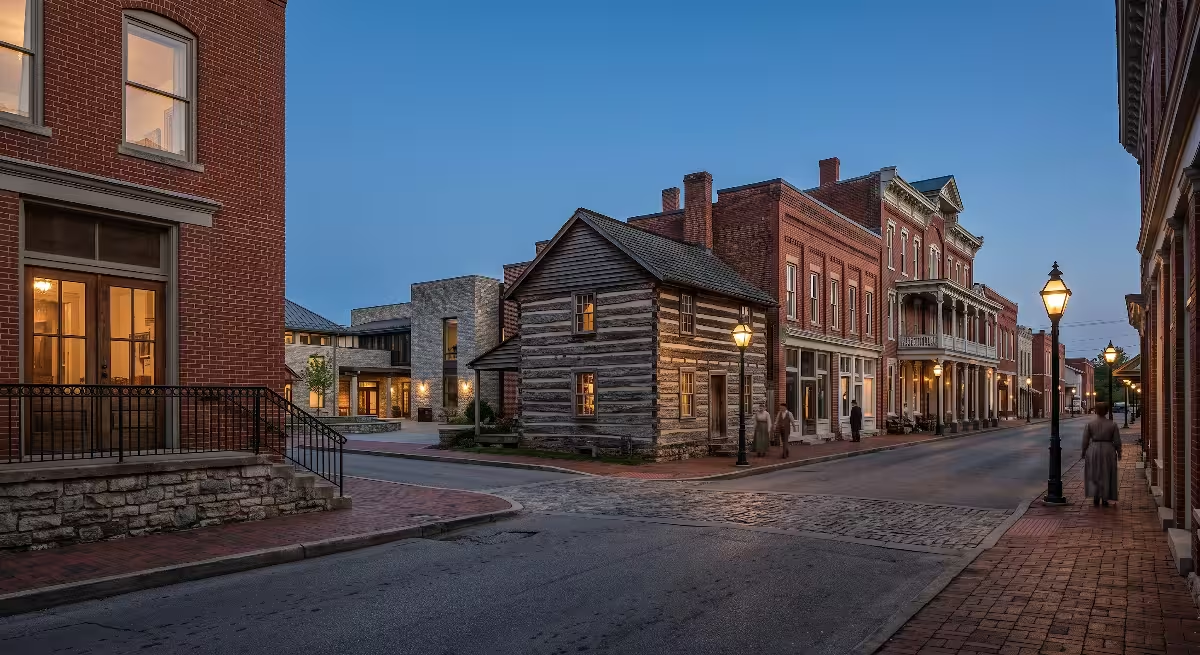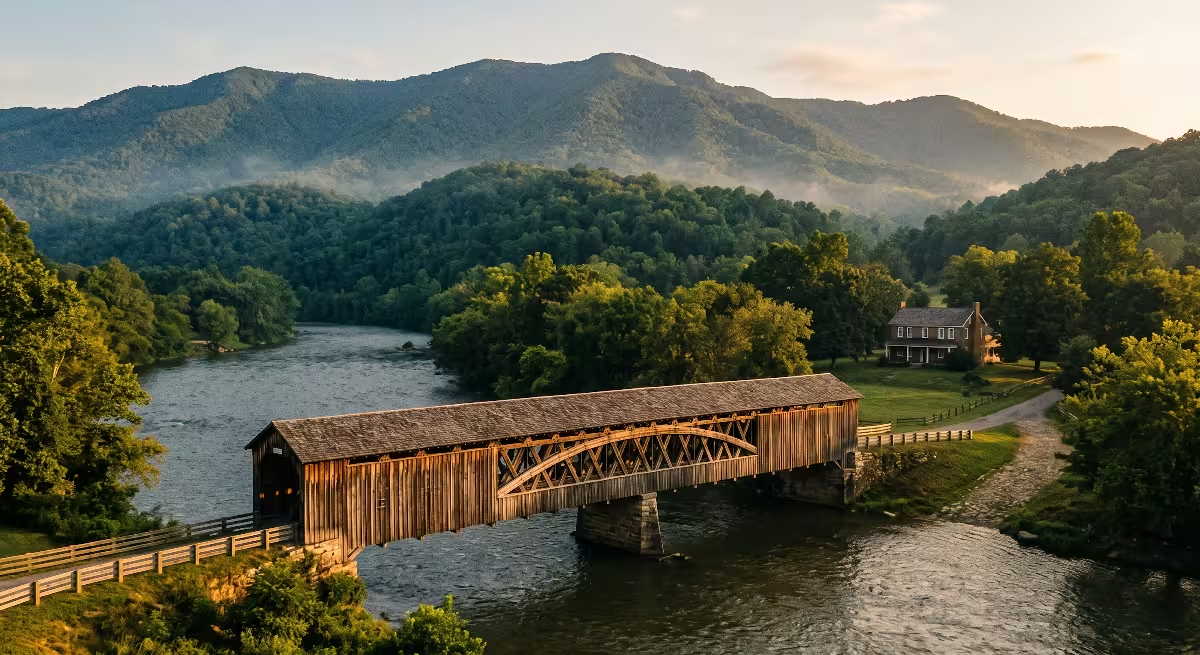


When you spend your life studying foundations, load-bearing timber, and local building materials, you develop a deep respect for the places that have stood the test of time. There is no place in East Tennessee where that craftsmanship is more alive than in Rogersville, TN.
Long before Tennessee became a state in 1796, early pioneers, surveyors, and traders were blazing trails through this fertile valley. Rogersville, TN was settled in 1775 and officially chartered in 1789. It serves as the county seat of Hawkins County and holds the proud title of Tennessee’s second-oldest incorporated town. While Jonesborough was chartered first in 1779, the deep roots of Rogersville, TN reach right back to the earliest days of American frontier exploration.
The story of Rogersville, TN is not just a collection of dates on a bronze plaque. It is a living story written in heavy timber, quarried limestone, and handmade clay bricks. From the early settlement of the Crockett family near natural springs to the busy stagecoach commerce along the Great Stage Road, this town was built with purpose. It witnessed visits from three United States presidents at local taverns, survived the deep divisions of the Civil War, and pioneered regional education.
Today, the historic district of Rogersville, TN stands as one of the best-preserved architectural treasures in the South. In this comprehensive guide, we will walk through the full story of Rogersville, TN, exploring how its frontier beginnings, historic firsts, unique building methods, and strong community spirit created a town built to last for centuries.
The Frontier Era and Founding (1775 to 1789)
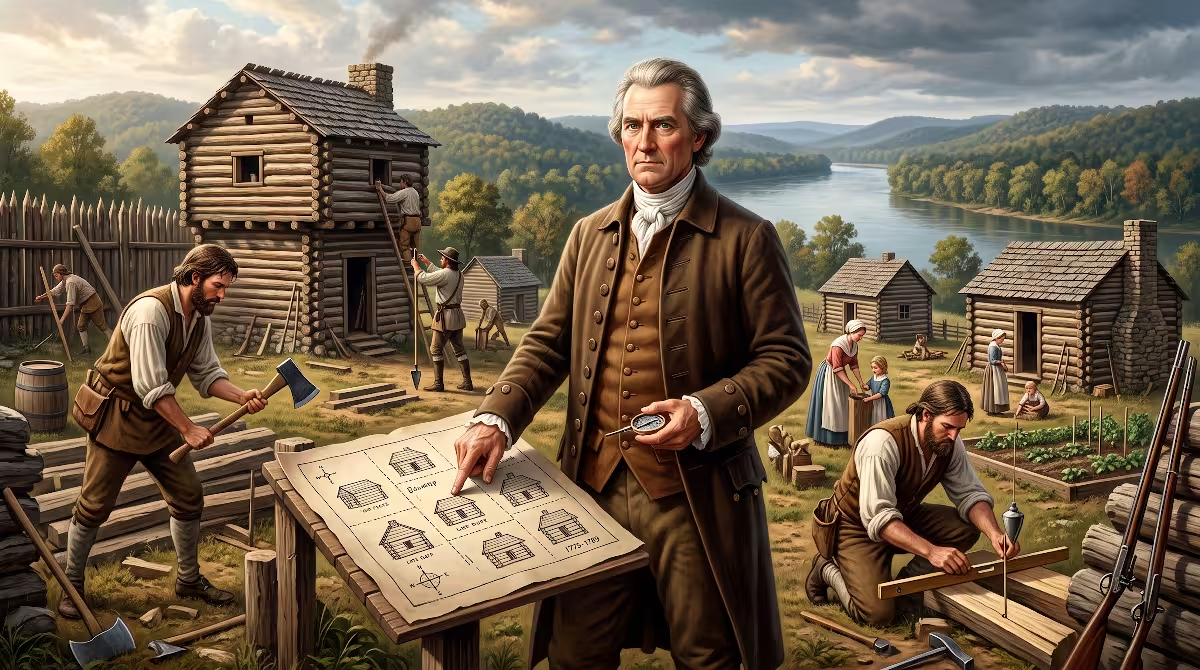
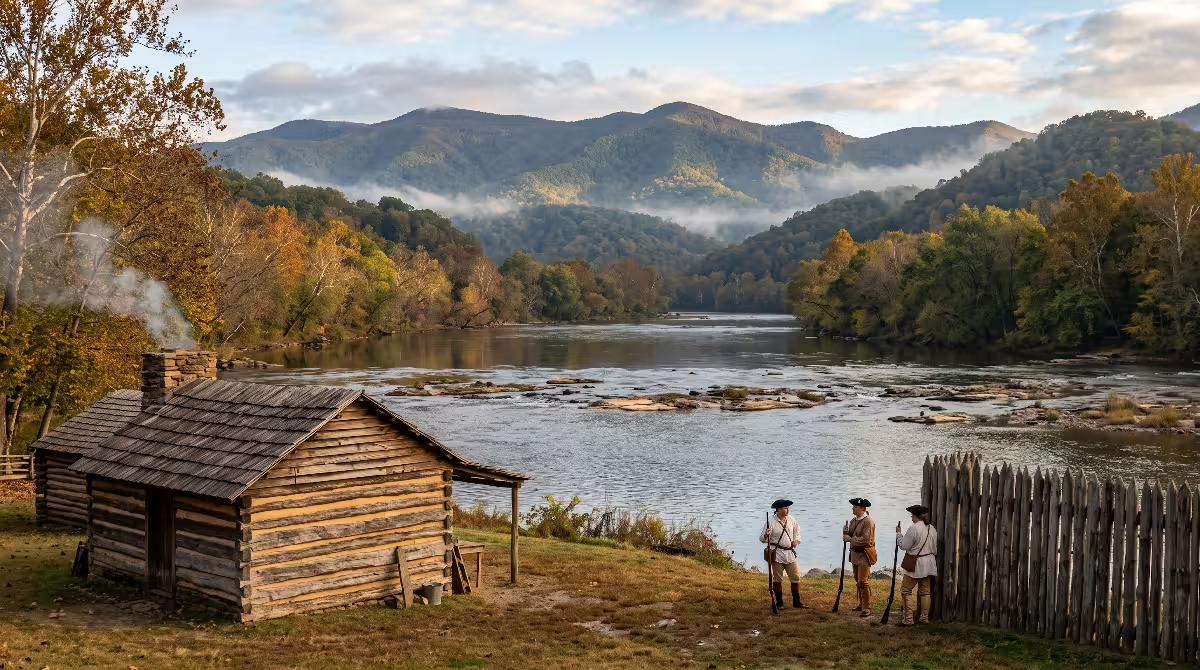
To understand Rogersville, TN, you have to look at the land and the natural resources that drew early settlers across the Appalachian Mountains. The Holston River Valley offered fertile soil, abundant timber, fresh springs, and defensible ridgelines. These natural assets made the area around Rogersville, TN a prime location for early frontier settlement.
+-----------------------------------------------------------------------+
|              ROGERSVILLE, TN: FRONTIER FOUNDATION TIMELINE            |
+-----------------------------------------------------------------------+
|  1775: David Crockett Sr. establishes homestead at Crockett Spring    |
|  1777: Frontier conflict leads to Crockett settlement tragedy         |
|  1780: Col. Thomas Amis builds fortified stone house at Big Creek     |
|  1785: Joseph Rogers arrives in the valley from County Tyrone, Ireland|
|  1786: Joseph Rogers marries Mary Amis and acquires townsite tract   |
|  1789: Rogersville, TN officially chartered by North Carolina Assembly|
+-----------------------------------------------------------------------+
The Crockett Family Homestead (1775)
The documented history of Rogersville, TN begins in 1775 with David Crockett Sr. and his wife Elizabeth Hedge Crockett. They were the grandparents of the famous frontiersman and folk hero Davy Crockett. Seeking a new life on the western frontier, they built a modest homestead near a clear water source known today as Crockett Spring.
Frontier living in 1775 required immense physical labor and constant vigilance. Settlers had to clear dense virgin timber, hand-hew heavy logs, and raise cabins using basic hand tools such as felling axes and broadaxes.
The Crockett cabin was situated near the natural spring to ensure a dependable water supply for daily chores and livestock. In 1777, during the turbulent years of the American Revolutionary War, the frontier was fraught with tension. A hostile raid struck the isolated Crockett homestead, resulting in the deaths of David and Elizabeth Crockett.
The surviving family members relocated, and the property eventually changed hands. Today, the peaceful grounds of Crockett Spring Park in Rogersville, TN honor these early pioneers. The park preserves the very spring that sustained the first settlers who dared to build a life in this mountain valley.
Colonel Thomas Amis and the Big Creek Fortification (1780)
Following the early frontier conflicts, a prominent figure arrived who would shape the economic backbone of Rogersville, TN. Colonel Thomas Amis was a North Carolina patriot, Huguenot descendant, and veteran of the Revolutionary War. In 1780, he moved his family to Hawkins County and established a fortified settlement along Big Creek, just a few miles from modern downtown Rogersville, TN.
Colonel Amis understood construction, logistics, and trade. Rather than building a temporary log shelter, he constructed a massive stone house between 1780 and 1782 using thick, local limestone blocks.
The Amis complex was designed as a self-sustaining frontier stronghold. It featured:
- A fortified stone residence built with defensive gun ports.
- A sturdy palisade wall to shelter neighboring settlers during attacks.
- A commercial gristmill to grind local corn and wheat.
- A sawmill to turn raw forest logs into building lumber.
- A blacksmith shop to forge tools, nails, and wagon hardware.
- A licensed tavern and distillery to provide food, spirits, and rest for travelers.
The Amis home quickly became a vital supply station on the Great Stage Road. Anyone traveling west toward the Cumberland Gap or heading south into the frontier stopped at the Amis compound. The durable stone structure still stands today near Rogersville, TN, serving as a testament to the rugged engineering of early East Tennessee builders.
Joseph Rogers and the Amis Connection (1785 to 1786)
In 1785, an ambitious young Irish immigrant named Joseph Rogers arrived in the Holston Valley. Born in County Tyrone, Ireland, Rogers carried an entrepreneurial spirit and a keen eye for land planning. During his travels through Hawkins County, he stayed at the Amis tavern and met Colonel Amis’s daughter, Mary Amis.
Joseph Rogers and Mary Amis fell in love, but Colonel Amis initially opposed the union. Frontier fathers were protective of their daughters, and Amis wanted to ensure Rogers was capable of providing a stable future. According to local lore, the couple eloped in 1786 with the help of friends near the remarkable Ebbing and Flowing Spring, one of the rare tidal springs in North America.
Recognizing the young man’s dedication and business sense, Colonel Amis soon reconciled with the couple. He granted them the tract of land that included the former Crockett homestead. Joseph and Mary Rogers established their home near Crockett Spring, where Joseph opened his own tavern and trading post. This settlement formed the core around which the future town of Rogersville, TN would grow.
The State of Franklin and the North Carolina Charter (1789)
During the mid-1780s, the settlers of East Tennessee found themselves in political limbo. The region briefly broke away from North Carolina to form the autonomous State of Franklin between 1784 and 1788. Joseph Rogers and his fellow Hawkins County neighbors navigated this shifting political landscape while focusing on local commerce and community building.
When the North Carolina government re-established authority over the western lands, Joseph Rogers, who was the postmaster, recognized the opportunity to establish a formal county seat. In 1787, Hawkins County was officially organized, and Rogers successfully lobbied to have the local government centered on his property. He offered his tavern as a meeting place for the county court and donated land for a permanent courthouse and public square.
In November 1789, the North Carolina General Assembly officially chartered the town, naming it Rogersville in honor of its founder, after being called Frankland and Franklin, previously. Joseph Rogers worked with surveyors to lay out an orderly street grid centered on the courthouse square. This grid established dedicated lots for businesses, churches, private residences, and public greens, creating the urban foundation that still defines historic Rogersville, TN today.
Tennessee’s Crucible: Historic Firsts in Rogersville, TN
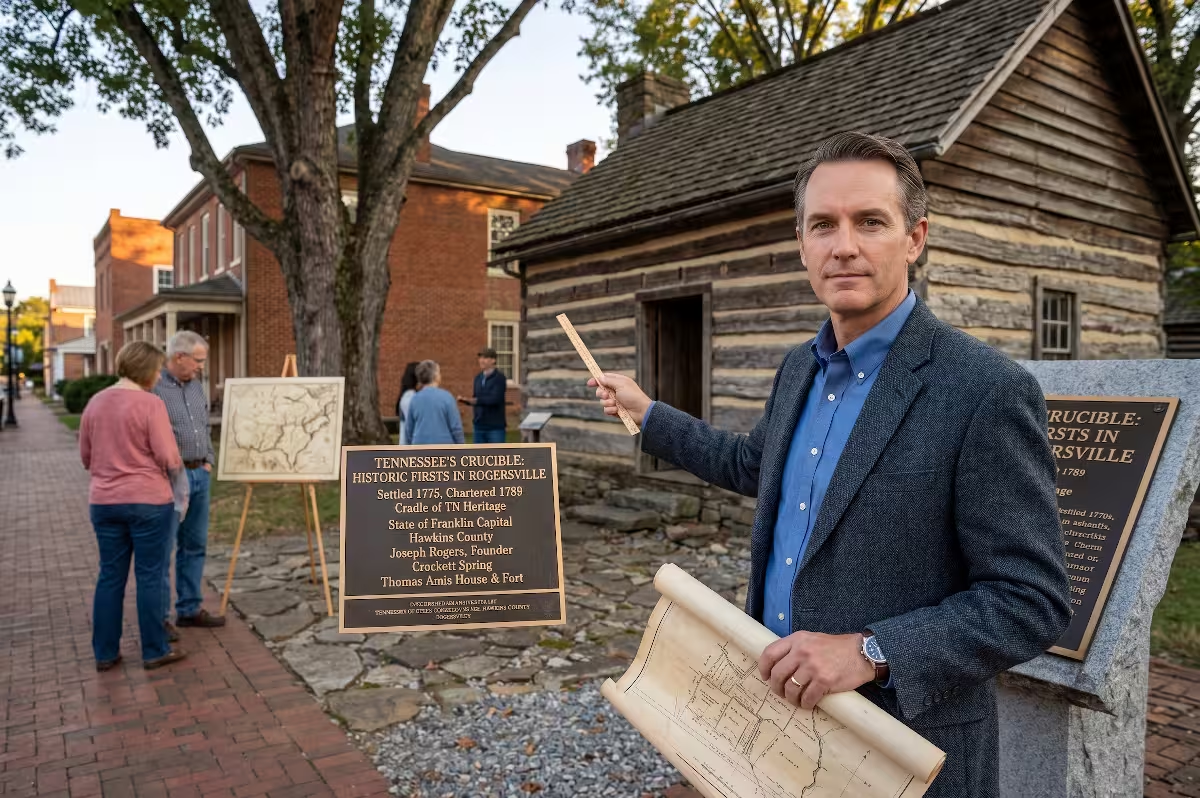
As the eighteenth century drew to a close, Rogersville, TN grew rapidly from a remote frontier outpost into a central hub of communication, trade, and legal administration in the Southwest Territory. The town became a hotbed for several major historical milestones that helped shape the state of Tennessee.
+-----------------------------------------------------------------------+
|                 HISTORIC FIRSTS IN ROGERSVILLE, TN                    |
+-----------------------------------------------------------------------+
|  1. Birthplace of Tennessee Journalism:                               |
|     The Knoxville Gazette published here on November 5, 1791.         |
|                                                                       |
|  2. First Post Office in Tennessee:                                   |
|     Established in 1795 with Joseph Rogers appointed Postmaster.      |
|                                                                       |
|  3. Primary Regional Stagecoach Junction:                             |
|     Key depot connecting Washington, D.C. to the Cumberland Gap.      |
+-----------------------------------------------------------------------+
The Birthplace of Tennessee Journalism (1791)
One of the proudest titles held by Rogersville, TN is the birthplace of Tennessee journalism. In 1791, William Blount, the newly appointed Governor of the Territory South of the River Ohio (the Southwest Territory), recognized the urgent need for an official newspaper to publish public notices, territorial laws, and national news.
Governor Blount recruited printer George Roulstone from Massachusetts and his partner Robert Ferguson to establish the press. Because the designated territorial capital of Knoxville was still an unfortified wilderness site under threat of attack, Roulstone set up his printing operation in Rogersville, TN.
On November 5, 1791, Roulstone pulled the very first issue of The Knoxville Gazette from his wooden hand press in Rogersville, TN. For nearly a year, until October 1792, every edition of the region’s first newspaper was printed and distributed directly from Rogersville, TN.
The paper carried:
- Official territorial proclamations from Governor Blount.
- News of national debates in Congress.
- Advertisements for local merchants, runaway apprentices, and livestock.
- Important dispatches regarding frontier security and treaty negotiations.
Once Knoxville was sufficiently fortified and established, Roulstone packed up his press and moved to the new capital. However, the foundational printing work that informed early Tennessee citizens occurred right in downtown Rogersville, TN.
Tennessee’s First Post Office (1795)
Reliable communication was essential for frontier business, land transactions, and family connections. In 1795, one year before Tennessee achieved official statehood, the federal government established the first official post office in the territory in Rogersville, TN.
Joseph Rogers was appointed as the town’s first postmaster. In the early years, mail arrived by horseback along rugged wilderness paths, with Rogers sorting and distributing letters directly from his tavern on the square.
As mail volume grew, a dedicated brick post office was built along Main Street. This reliable mail station made Rogersville, TN a critical communication hub for settlers pushing deeper into the southern and western territories.
The Great Stagecoach Road and Trade Logistics
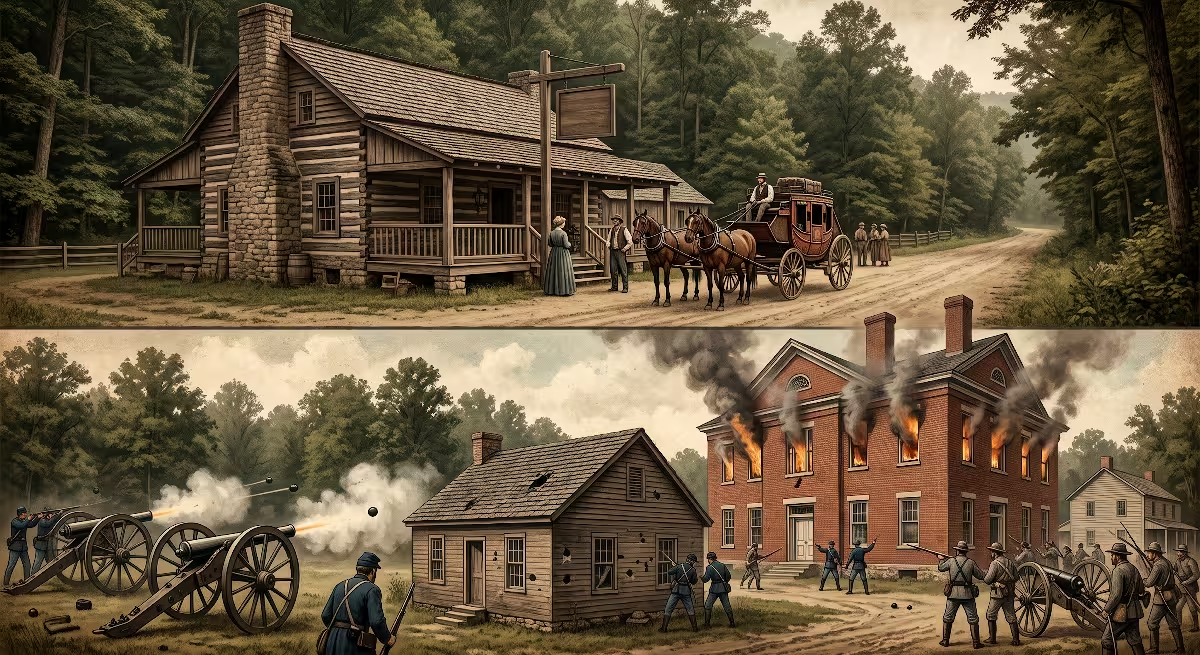
During the late eighteenth and early nineteenth centuries, Rogersville, TN occupied a prime spot along the Great Stagecoach Road. This major thoroughfare followed ancient Native American migration paths and connected the eastern seaboard and Washington, D.C. to Knoxville, Nashville, and the Cumberland Gap.
Because horse-drawn stagecoaches could only cover fifteen to twenty-five miles per day over rough mountain roads, towns with dependable lodging, blacksmiths, and fresh teams of horses flourished. Rogersville, TN was ideally positioned to service this steady stream of travelers.
Local merchants in Rogersville, TN built substantial general stores, dry goods shops, and taverns to cater to passengers, lawyers traveling the judicial circuit, and freight haulers. This steady influx of commerce brought financial prosperity to Hawkins County, funding the transition from simple timber cabins to sophisticated brick and stone architecture.
Architectural Evolution: Built to Stand the Test of Time
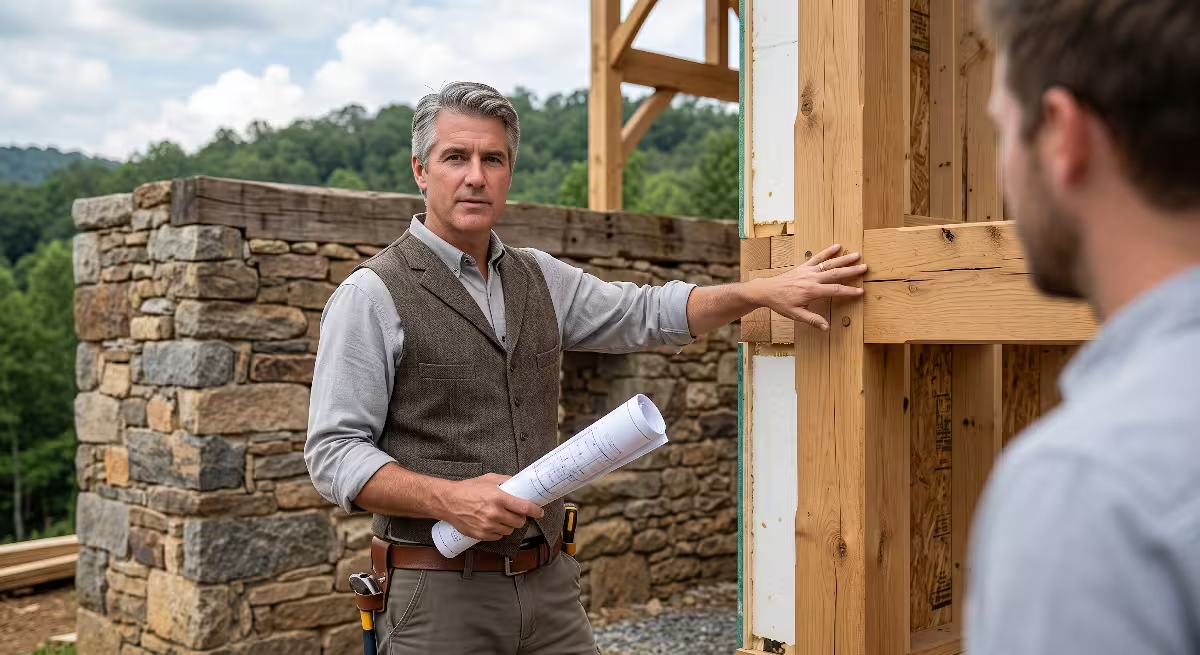
As an engineer and builder, walking through the historic district of Rogersville, TN is like reading an open textbook on American structural history. You can clearly trace how building techniques evolved from rustic frontier woodcraft to refined Federal and Greek Revival masonry.
From Pioneer Timber to Kiln-Fired Brick
The earliest buildings in Rogersville, TN were constructed from massive hardwood logs, primarily native chestnut, oak, and yellow poplar. Pioneers squared these logs by hand using broadaxes and joined them at the corners with precise dovetail or saddle notches. These tight corner notches used gravity and wood-to-wood contact to lock the walls together without metal fasteners.
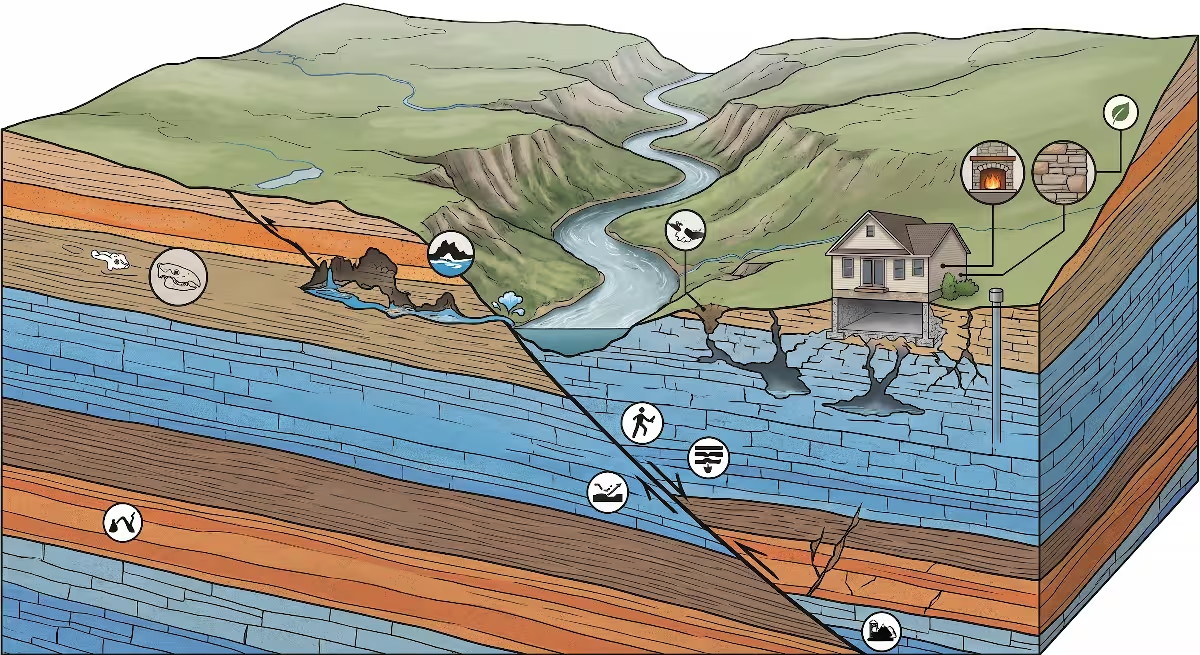
As the town prospered in the 1800s, builders transitioned to permanent masonry construction. Hawkins County sits on rich clay deposits and dense limestone strata, providing excellent local raw materials for building.
Early local brickmakers in Rogersville, TN dug local clay, pressed it into wooden molds, dried the blocks in open sheds, and fired them in temporary wood-burning kilns called clamps. These handmade bricks display subtle color variations ranging from deep orange to rich iron red.
Masonry builders in Rogersville, TN frequently laid these bricks in traditional Flemish bond and Common bond patterns. Flemish bond alternates headers (the short end of the brick) and stretchers (the long face of the brick) in every course. This technique not only created an attractive geometric facade, but it also mechanically tied the multi-wythe brick walls together, ensuring immense structural stability.
The Hale Springs Inn (1824)
Standing proudly on the courthouse square, the Hale Springs Inn is one of the most famous historic landmarks in Rogersville, TN. Built in 1824 by prominent local lawyer and businessman John A. McKinney, this three-story Federal-style brick building was designed to rival the earlier wooden taverns of the frontier era.
McKinney built the inn directly adjacent to the Great Stagecoach Road to capture the high-end traveler market. The building features solid multi-wythe brick exterior walls, tall multi-pane double-hung sash windows, and an elevated second-story balcony directly over the main entrance.
The Hale Springs Inn welcomed many distinguished travelers traveling through Rogersville, TN, including three United States Presidents:
- Andrew Jackson: Stayed at the inn and gave a public political speech to the citizens of Rogersville, TN from the prominent second-floor balcony.
- James K. Polk: Lodged here while traveling the state during his political campaigns.
- Andrew Johnson: A frequent guest who spent substantial time in Hawkins County during his political career in East Tennessee.
When the inn briefly closed in the late 1990s, it was celebrated as the oldest continuously operated inn in Tennessee. Thanks to a multi-million-dollar restoration spearheaded by the Rogersville Heritage Association, the building was meticulously stabilized, updated with modern plumbing and climate systems, and reopened as a boutique inn and restaurant.
The Hawkins County Courthouse (1836)
At the heart of downtown Rogersville, TN stands the magnificent Hawkins County Courthouse. Constructed in 1836, it holds the distinction of being the oldest continuously operating courthouse in the state of Tennessee.
Designed in the classic Greek Revival style, the courthouse represents civic stability and structural order.
Key architectural and engineering features include:
- Foundation: Massive hand-dressed native limestone foundation blocks that transfer the building’s substantial weight directly into bedrock.
- Portico and Columns: A dignified pedimented portico supported by prominent classical columns, symbolizing democratic governance and justice.
- Cupola and Clock Tower: A towering tiered wooden cupola that served as a central visual landmark and community timekeeper across the valley.
- Interior Framing: Heavy timber floor joists and roof trusses hand-notched and secured with wooden trunnels (tree nails) and hand-forged iron straps.
For nearly two centuries, court sessions, public land records, community debates, and civic elections have taken place inside these historic brick walls in Rogersville, TN.
+-----------------------------------------------------------------------+
|          NOTABLE HISTORIC LANDMARKS IN ROGERSVILLE, TN                |
+-----------------------------------------------------------------------+
|  1. Hale Springs Inn (1824):                                          |
|     Three-story Federal brick inn; hosted Jackson, Polk, and Johnson. |
|                                                                       |
|  2. Hawkins County Courthouse (1836):                                 |
|     Oldest continuously operating courthouse in Tennessee.            |
|                                                                       |
|  3. Overton Hall & Overton Lodge No. 5 (1840):                        |
|     Historic Masonic hall featuring exquisite brickwork.              |
|                                                                       |
|  4. The Kyle House (1837):                                            |
|     Federal-style townhouse that served as Confederate headquarters.  |
+-----------------------------------------------------------------------+
Overton Hall and The Kyle House
Across the street from the courthouse and the inn stand several other remarkable historic structures that define the skyline of Rogersville, TN.
Overton Lodge No. 5 (Overton Hall): Chartered in the early nineteenth century and constructed in its present form around 1840, this building served as an active Masonic lodge and civic meeting hall. Its balanced brick facade and detailed cornice demonstrate the high level of masonry skill available in Rogersville, TN during the antebellum period.
The Kyle House: Built around 1837 by wealthy merchant Absalom Kyle, this grand Federal-style brick residence sits directly across Main Street from the Hale Springs Inn. The house features fine interior woodwork, high ceilings designed for passive summer cooling, and a commanding street presence. During the Civil War, the house played a dramatic tactical role in the military occupation of Rogersville, TN.
The Rogersville Historic District
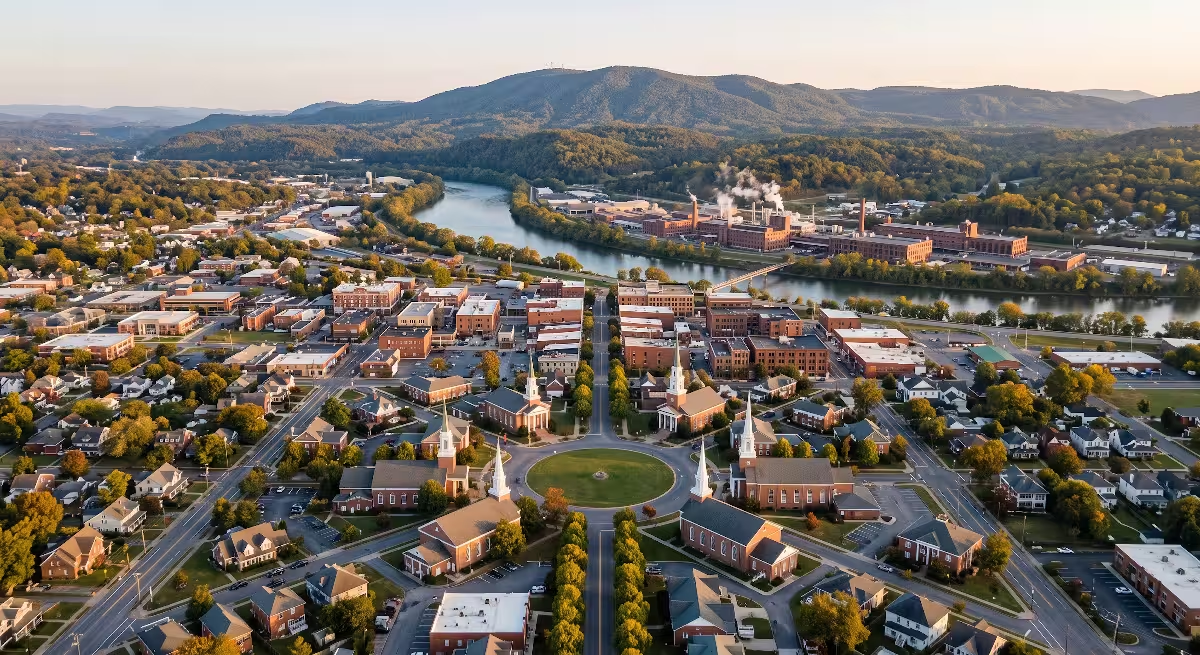
The entire downtown core of Rogersville, TN is listed on the National Register of Historic Places. The district encompasses dozens of contributing commercial buildings, churches, and residential properties representing Federal, Greek Revival, Victorian, and Craftsman architectural styles.
What makes the district in Rogersville, TN special from a builder’s perspective is its visual cohesion. Because early town leaders enforced orderly setbacks and because local builders utilized the same regional limestone, clay, and timber resources, the downtown area feels harmonious and complete.
Walking these sidewalks gives you an authentic sense of how a prosperous nineteenth-century market town was organized and built.
The Civil War, Reconstruction, and Educational Growth
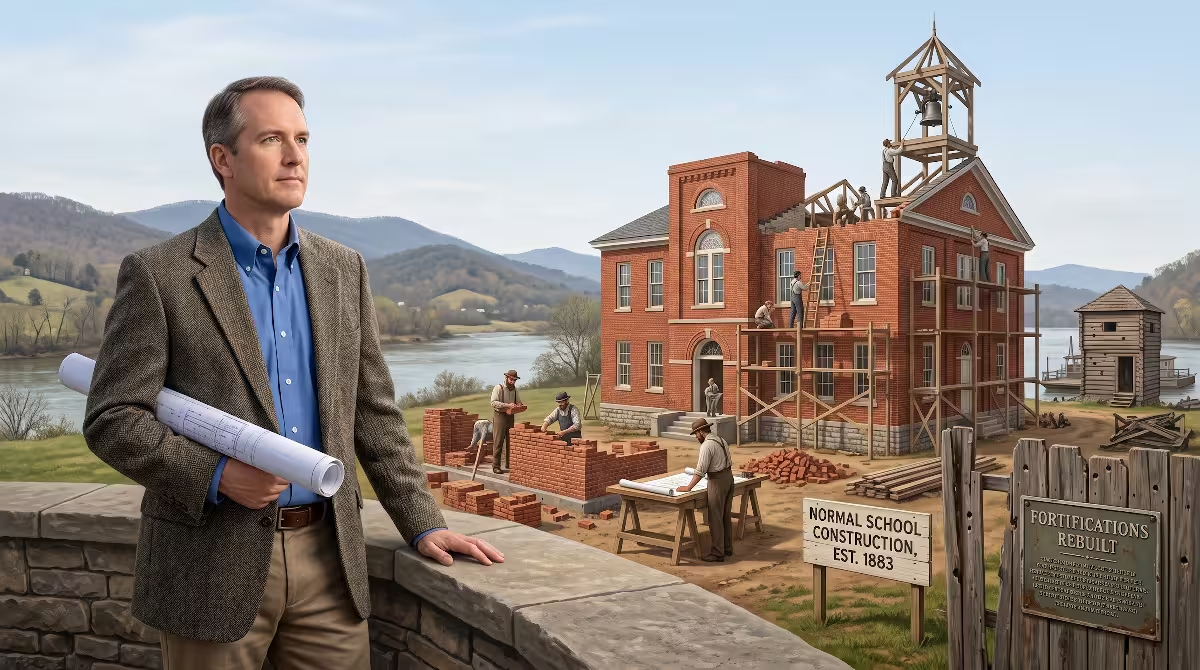
Like much of East Tennessee, Hawkins County and Rogersville, TN were deeply divided during the American Civil War. The region’s geography, with small family farms rather than massive cotton plantations, fostered strong Union sentiment alongside deeply committed Confederate sympathizers.
+-----------------------------------------------------------------------+
|           CIVIL WAR & RECONSTRUCTION IN ROGERSVILLE, TN               |
+-----------------------------------------------------------------------+
|  * Divided loyalties: County voted against secession in 1861.         |
|  * The Battle of Rogersville fought on November 6, 1863.              |
|  * Surprise cavalry victory led by Confederate Gen. William E. Jones. |
|  * Swift Memorial Institute founded in 1883 by Dr. William H. Franklin.|
|  * Arrival of rail service spurred the Tennessee Pink Marble industry.|
+-----------------------------------------------------------------------+
A Divided County and Military Occupation
When the vote for secession took place in June 1861, Hawkins County voters, like the majority of East Tennessee, voted against leaving the Union. However, within the town of Rogersville, TN itself, many prominent business leaders and landowners favored the Confederacy.
This internal division created a tense environment where neighbors held opposing loyalties. During the early years of the conflict, control of Rogersville, TN shifted back and forth between Union and Confederate forces as both armies sought to control the vital rail lines and agricultural supplies of East Tennessee.
When Union troops occupied the town, their commanding officers established headquarters inside the Hale Springs Inn on the south side of Main Street. When Confederate forces held Rogersville, TN, their officers set up operations right across the street in the Kyle House.
Remarkably, because both sides had friends, family, and supporters in town, the architectural fabric of Rogersville, TN was spared from the widespread burning and destruction that devastated other Southern cities.
The Battle of Rogersville (November 6, 1863)
The most significant military engagement in the area occurred on the cold, damp morning of November 6, 1863. Known as the Battle of Rogersville (or the Surprise at Big Creek), this clash was part of the broader Knoxville Campaign.
Union forces under Colonel Israel Garrard, consisting of the 7th Ohio Cavalry, the 2nd East Tennessee Mounted Infantry, and Battery M of the 2nd Illinois Light Artillery, were camped near Big Creek to guard the northern approaches to Bull’s Gap and Knoxville.
Confederate Brigadier General William E. “Grumble” Jones launched a coordinated surprise attack. Moving his cavalry regiments through heavy rain from Kingsport, Jones flanked the Union position:
- The Confederate cavalry struck the Federal encampment at dawn before the Union troops could fully form defensive lines.
- Union artillery crews attempted to defend their position, but the rapid cavalry advance overwhelmed the battery horses and limbers.
- The Confederate forces captured over 650 Union soldiers, four artillery pieces, dozens of supply wagons, and hundreds of horses.
The Confederate victory at Rogersville, TN disrupted Union supply lines and provided a temporary morale boost for Confederate operations in upper East Tennessee. Today, Civil War trail markers in and around Rogersville, TN commemorate the soldiers who fought across these rolling farm fields.
Educational Pioneering: Swift Memorial Institute (1883)
During the Reconstruction era and the late nineteenth century, Rogersville, TN emerged as a pioneer in education for African Americans in the Appalachian region.
In 1883, Dr. William Henderson Franklin, an accomplished African American minister and educator who graduated with honors from Maryville College, moved to Rogersville, TN. Under the sponsorship of the Presbyterian Board of Missions for Freedmen, Dr. Franklin founded the Swift Memorial Institute (later known as Swift Memorial College), named in honor of the board’s secretary, Rev. Dr. E.E. Swift.
+-----------------------------------------------------------------------+
|             DR. WILLIAM HENDERSON FRANKLIN'S LEGACY                   |
+-----------------------------------------------------------------------+
|  * Founded Swift Memorial Institute in Rogersville, TN in 1883.       |
|  * First African American to receive a master's from Maryville College.|
|  * Built a campus providing academic, industrial, and normal training.|
|  * Educated generations of Black teachers, nurses, and leaders.       |
|  * Campus legacy preserved at the Swift Museum in Rogersville, TN.    |
+-----------------------------------------------------------------------+
Swift Memorial Institute provided vital academic, high school, and junior college instruction for Black students during an era of strict segregation. When the Tennessee state legislature passed laws prohibiting integrated education at private institutions like Maryville College in 1901, many Black students transferred to Swift Memorial in Rogersville, TN to complete their degrees.
The college educated hundreds of teachers, nurses, ministers, and community leaders until it closed its doors in 1955 following national desegregation rulings. Today, the Price Public Community Center and Swift Memorial Museum in Rogersville, TN preserve this proud educational legacy, celebrating the profound impact Dr. Franklin and his students had on the region.
Railroad Expansion and Tennessee Pink Marble
In the decades following the Civil War, the arrival of the East Tennessee, Virginia and Georgia Railroad transformed the economic landscape of Rogersville, TN. Rail transportation replaced slow wagon teams, allowing Hawkins County to export its agricultural products, timber, and mineral wealth directly to major national markets.
One of the most valuable resources shipped from Rogersville, TN was Tennessee Pink Marble. While technically a dense, high-grade crystalline limestone, this stone could be polished to a mirror finish and featured distinctive pink, gray, and cedar tones.
Quarries around Hawkins County and neighboring counties extracted massive blocks of stone that were hauled by rail through Rogersville, TN. This beautiful stone was shipped across the country to build iconic national monuments, state capitols, and major train stations, including portions of the National Gallery of Art and Grand Central Terminal in New York City.
Modern Heritage Preservation and Community Life
Today, Rogersville, TN maintains a rare balance that many American small towns have lost. It has preserved its deep eighteenth and nineteenth-century history while maintaining an active, vibrant downtown community.
Annual Cultural Festivals
The community’s commitment to heritage is on full display during its annual public festivals, which draw thousands of visitors from across the region.
+-----------------------------------------------------------------------+
|              ANNUAL COMMUNITY EVENTS IN ROGERSVILLE, TN               |
+-----------------------------------------------------------------------+
|  * Rogersville Heritage Days (Every October):                         |
|    Over 120 juried craft vendors, living history demonstrations,      |
|    traditional Appalachian food, and period music.                    |
|                                                                       |
|  * Fourth of July Celebration:                                        |
|    Parade, community music, local food, and fireworks over town.      |
|                                                                       |
|  * Main Street Cruise-Ins (May through October):                      |
|    Monthly classic car shows on the historic brick-paved square.      |
|                                                                       |
|  * Junk and Jam Vintage Fair:                                         |
|    Antique picking, vintage artisans, and live regional bluegrass.   |
+-----------------------------------------------------------------------+
The premier event is the Rogersville Heritage Days festival, held every October. The historic district closes its streets to automobile traffic, transforming the downtown square into an authentic 1800s marketplace.
Visitors can watch blacksmiths hammer glowing iron, observe woodworkers shape timber with drawknives, sample kettle-cooked apple butter, and listen to traditional Appalachian string bands.
Living in a Historic Town: The Home Builder’s Perspective
As someone who builds and inspects homes throughout the Tri-Cities region, I often work with buyers who fall in love with the historic architecture in Rogersville, TN. Living in a historic home is a rewarding experience, but it requires an understanding of how older construction systems function.
If you are considering buying or restoring an older home in Rogersville, TN, here is practical technical advice based on standard residential engineering principles:
1. Inspecting Stone and Brick Foundations
Historic homes in Rogersville, TN typically sit on dry-stacked or lime-mortared limestone foundations. Unlike modern poured concrete walls with steel rebar, these stone foundations rely on mass and gravity for their strength.
- Look for Step Cracking: Minor mortar wear is normal, but stair-step cracking through the actual stone indicates foundation settlement that needs structural underpinning.
- Check the Mortar Type: Never use modern Portland cement mortar to repoint historic soft clay brick or limestone. Modern cement is too hard and will cause the historic brick faces to spall (pop off) during winter freeze-thaw cycles. Always use a softer, breathable lime-based mortar.
2. Managing Crawlspace Moisture
The natural springs and rolling terrain around Rogersville, TN create unique soil moisture conditions.
- Drainage First: Ensure roof gutters direct rainwater at least six to ten feet away from the foundation perimeter.
- Vapor Barriers: Install a heavy 10-mil to 12-mil polyethylene vapor barrier over the exposed dirt floor in the crawlspace to keep ground humidity from rising into the subfloor joists.
3. Understanding Timber Framing
Many historic residences in Rogersville, TN feature true full-dimension rough-sawn lumber or heavy timber framing.
- Notching and Modifications: Previous owners often cut into historic floor joists to run modern plumbing pipes or electrical conduits. If you are renovating, check that major floor joists have not been over-notched or structurally compromised.
- Support Spans: Older timber spans can sag slightly over a century of service. Adding supplemental support beams and screw jacks in the crawlspace can level floors without damaging historic lath and plaster walls above.
+-----------------------------------------------------------------------+
|             HISTORIC HOME RESTORATION CHECKLIST                       |
+-----------------------------------------------------------------------+
|  [ ] Masonry: Repoint only with flexible lime-based mortar.           |
|  [ ] Drainage: Extend downspouts 6-10 feet away from foundation.      |
|  [ ] Crawlspace: Lay continuous vapor barrier over exposed earth.     |
|  [ ] Framing: Inspect timber joists for plumbing notches or sags.     |
|  [ ] Guidelines: Consult Rogersville Historic Zoning Commission.      |
+-----------------------------------------------------------------------+
Architectural and Historical Comparison Table
To see how the key structures in Rogersville, TN compare in terms of their construction date, structural materials, and historic significance, review the breakdown below:
| Historic Landmark | Year Built | Architectural Style | Primary Structural Materials | Historical Significance |
| Thomas Amis Stone House | 1780 to 1782 | Frontier Vernacular | Hand-cut native limestone, heavy oak framing | Fortified supply outpost on the Great Stage Road; oldest stone residence in the region. |
| Hale Springs Inn | 1824 | Federal | Triple-wythe kiln-fired brick, stone foundation | Hosted U.S. Presidents Jackson, Polk, and Johnson; oldest continuously operated inn in TN. |
| Hawkins County Courthouse | 1836 | Greek Revival | Kiln-fired local brick, limestone base, timber trusses | Oldest continuously operating courthouse in the state of Tennessee. |
| The Kyle House | 1837 | Federal / Georgian | Handmade red brick, detailed timber millwork | Prominent merchant residence; Confederate military headquarters during the Civil War. |
| Overton Lodge No. 5 | 1840 | Classical Revival | Multi-wythe clay brick, timber joists | One of the earliest dedicated Masonic and civic halls in East Tennessee. |
| Swift Memorial College Campus | 1883 | Victorian / Institutional | Structural brick, slate roofing, hardwood framing | Founded by Dr. W.H. Franklin; premier African American educational institution in Appalachia. |
Frequently Asked Questions About Rogersville, TN History
Here are answers to the most common questions people ask when exploring the rich history and architecture of Rogersville, TN.
What is Rogersville, TN famous for?
Rogersville, TN is famous for being the second-oldest town in Tennessee (chartered in 1789), the county seat of Hawkins County, and the birthplace of Tennessee journalism, where The Knoxville Gazette was first printed in 1791.
It is also home to the oldest continuously operating courthouse in Tennessee (built in 1836), the historic Hale Springs Inn (built in 1824), and the historic Swift Memorial Institute.
Who was the founder of Rogersville, TN?
The founder of Rogersville, TN was Joseph Rogers. He was an Irish immigrant from County Tyrone who married Mary Amis, daughter of pioneer Colonel Thomas Amis.
Rogers platted the original town street grid around the public square, donated the land for the county courthouse, served as the town’s first postmaster, and established the community that received its official charter from North Carolina in 1789.
Which is older: Jonesborough or Rogersville, TN?
Jonesborough, TN is the oldest incorporated town in Tennessee, chartered by North Carolina in 1779. Rogersville, TN is the second-oldest incorporated town in Tennessee, receiving its official charter in 1789.
However, both communities trace their pioneer settlements back to the 1770s, with David Crockett Sr. settling at Crockett Spring in Rogersville, TN in 1775.
What presidents stayed at the Hale Springs Inn in Rogersville, TN?
Three United States Presidents stayed at the Hale Springs Inn in Rogersville, TN: Andrew Jackson, James K. Polk, and Andrew Johnson. President Andrew Jackson famously delivered a political address to local townspeople from the inn’s distinctive second-story balcony.
What is there to do in downtown Rogersville, TN?
Visitors to downtown Rogersville, TN can:
- Take a self-guided walking tour of the National Register Historic District.
- Tour the historic 1836 Hawkins County Courthouse and Crockett Spring Park.
- Dine or spend the night at the restored Hale Springs Inn.
- Explore local history exhibits at the Swift Memorial Museum and Price Public Community Center.
- Shop at local antique stores, specialty bookshops, and traditional Southern diners on Main Street.
- Attend the annual Rogersville Heritage Days festival in October.
Final Perspective: Preserving Craftsmanship and Character
When you examine the full sweep of history in Rogersville, TN, you see a community that was built on a solid foundation. The early settlers did not take shortcuts. They surveyed sensible street grids, quarried hard native limestone, molded dense clay bricks, and framed their buildings with heavy hardwoods harvested from local ridges.
That dedication to solid construction is the reason so many 1800s landmarks in Rogersville, TN still stand today, fully functional and serving their community. In an era where modern construction often relies on lightweight materials and fast turnaround times, Rogersville, TN reminds us of the value of true craftsmanship, structural integrity, and thoughtful urban planning.
Whether you are visiting for an afternoon walking tour, researching your family’s Appalachian heritage, or looking to purchase and restore a piece of East Tennessee history, Rogersville, TN welcomes you with authentic charm and timeless character. It stands as a proud guardian of Tennessee’s frontier origins and an inspiring model for historic preservation in the Tri-Cities region.