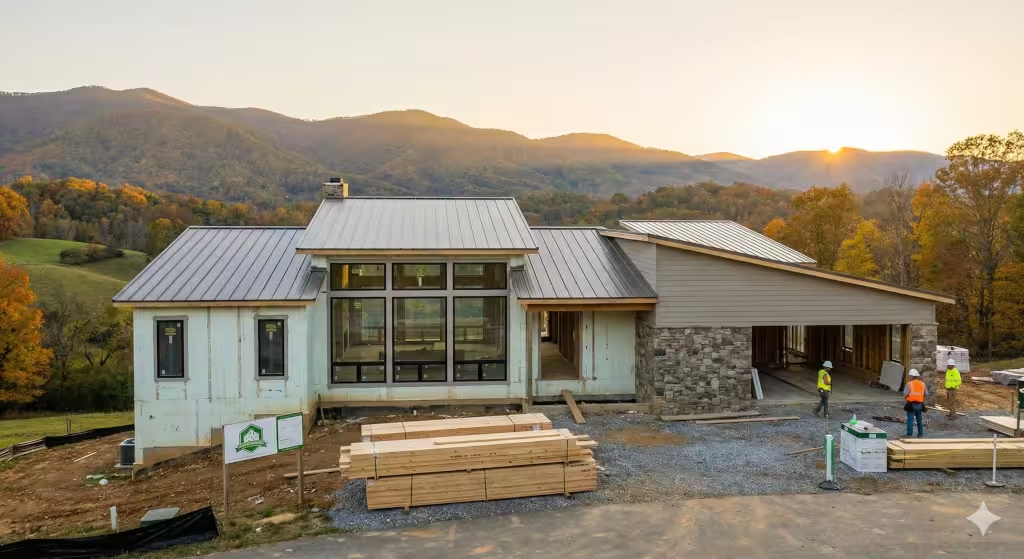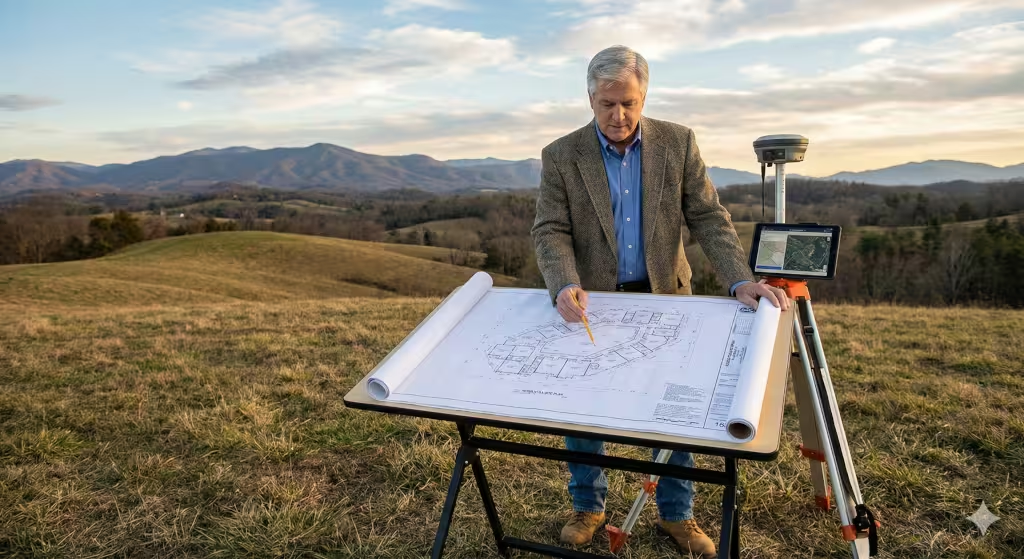

The drive through Northeast Tennessee reveals a clear trend. Tucked into the rolling hills between Johnson City and Kingsport, or situated with a view of Bristol, a distinct architectural style is taking root: the modern farmhouse. Its appeal is undeniable, blending classic, comfortable lines with the clean, sharp details of contemporary design. It feels at home here. But for many, the dream of building one is quickly met with a daunting question: What does it actually cost?
The purpose of this post is not to sell you on a dream, but to equip you with the knowledge to build it intelligently. The internet is filled with simplistic, often misleading, per-square-foot calculators that do a disservice to the reality of a custom build. Going further, purpose of this guide is to move past those generalities and provide a clear, precise, and honest breakdown of the investment required to build a modern farmhouse here in the Tri-Cities as of August 2025. The market is fluid, but the principles of a solid budget are constant.
The Bottom Line Up Front: What’s the Average Cost?

Let’s address the central question directly. For a quality, custom-built modern farmhouse in the Tri-Cities region, you should anticipate a construction cost in the range of $185 to $250+ per square foot.
I can sense your immediate follow-up questions. Why such a wide range? What does that price even include? This is the most critical point to understand: a per-square-foot cost is merely a starting point for a conversation, not a figure you can take to the bank. That number represents the cost of the house itself—the structure and its finishes—and does not typically include the cost of the land, extensive site preparation, or other significant expenses we’ll cover shortly.
Think of it this way. You can walk onto a car lot and see two pickup trucks of the exact same size. One is a basic work model with a standard engine and cloth seats, priced at $45,000. The other is a top-tier luxury model with a high-output engine, a panoramic sunroof, premium leather, and an advanced technology package, priced at $80,000. They are the same size, but their cost per pound is vastly different.
A home is no different. A 2,500-square-foot modern farmhouse with builder-grade finishes, standard vinyl windows, and architectural shingles will land on the lower end of that cost spectrum. A home of the exact same size featuring a standing seam metal roof, premium James Hardie board and batten siding, a wall of Pella windows to capture a mountain view, custom cabinetry, and quartz countertops will easily push toward, or even exceed, the upper end of that range.
To truly understand your all-in cost, we must deconstruct the budget into its three foundational pillars: the land, the site work, and the home itself.
The Three Pillars of Your Building Budget
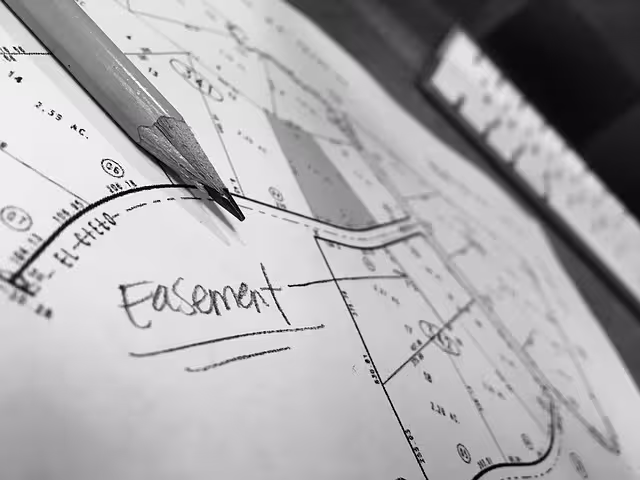
Every single home building project, regardless of style or size, sees its budget divided across three core areas. Misunderstanding or underestimating any one of them can lead to significant financial strain.
1. Land Acquisition & Preparation (The Foundation of Your Project)
Before a single 2×4 is cut, you need a place to build. This initial phase is often where budgets are broken before they’re even properly established because of the numerous “hidden” costs involved.
Land Costs
The price of a piece of ground in our region is incredibly variable. A quarter-acre city lot within the Johnson City limits that’s already connected to public utilities will have a completely different price tag than five acres of raw, rolling land in a more rural part of Washington or Sullivan County.
- Location & Accessibility: A plot in a developed subdivision will cost more upfront but may save you money on utility connections. Rural acreage might seem like a bargain until you factor in the cost of a long driveway and extending power lines.
- Topography & Views: We live in a beautiful, hilly area. A flat, easy-to-build-on lot is the most cost-effective. A sloped lot, while potentially offering a stunning view or the ability for a walk-out basement, will require significantly more foundation work, excavation, and retaining walls, adding tens of thousands of dollars to your site prep budget. Proximity to desirable features like Boone Lake or Watauga Lake also carries a premium.
Site Work & Due Diligence
This is, without a doubt, the category with the most potential for costly surprises. This is the work that must be done to make your raw land a buildable homesite. I always advise my clients to budget for this with a healthy contingency.
- Surveying: At a minimum, you’ll need a boundary survey. For a complex lot, a topographical survey is essential for the architect and engineer to properly design the foundation and drainage.
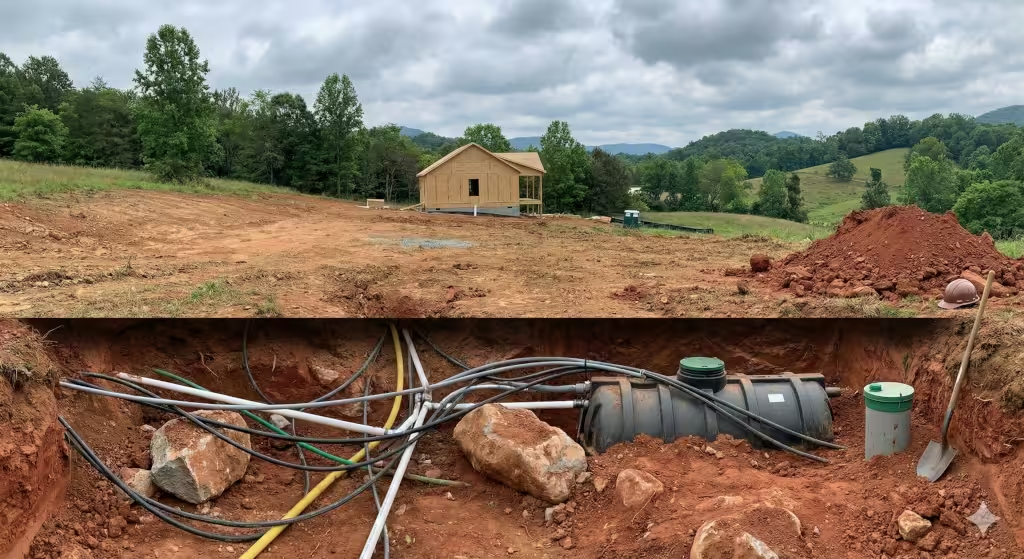
- Soil Testing (Percolation or “Perk” Test): If you are not connecting to a public sewer system, this is a non-negotiable step. A soil scientist must test the ground to determine if it’s suitable for a septic drainage field. A failed perk test can render a beautiful piece of property unbuildable for your intended home size, or require a much more expensive engineered septic system.
- Excavation & Grading: This involves clearing trees, stripping topsoil, and leveling the area for your foundation. The cost is dictated by the amount of earth that needs to be moved. Hitting unexpected rock, a common occurrence in East Tennessee, can cause delays and significantly increase costs as heavy equipment like hydraulic hammers may be needed.
- Utilities: The cost to get services to your home can be substantial. In the city, you’ll pay tap fees to connect to water and sewer. In the county, you bear the cost of drilling a well and installing a complete septic system, an expense that can easily run from $15,000 to $30,000 or more. You’ll also need to coordinate with your local power company, be it BrightRidge, Bristol Tennessee Essential Services (BTES), or another provider, to run electricity to your home site, which can cost thousands depending on the distance from the nearest pole.
- Driveway Installation: The cost depends on length, slope, and material. A long, winding gravel driveway will be the entry-level option, with asphalt and concrete representing larger investments.
2. Hard Costs (The “Sticks and Bricks”)
These are the costs most people think of when they imagine building a house. It’s the labor and materials required to construct the physical structure, from the foundation to the roof.
- Architectural Plans & Engineering: You can purchase stock plans online for $1,500-$3,000, but they will still need to be reviewed and stamped by a Tennessee-licensed engineer to ensure they meet local codes for things like wind load and soil conditions. A fully custom set of plans from a local architect will provide a home tailored perfectly to your lot and lifestyle but represents a larger investment, often 5-10% of the construction cost.
- Permits & Fees: Every municipality—Johnson City, Kingsport, Bristol—and county has its own fee structure for building permits, inspections, and impact fees. Your builder will handle the submission process, but the costs are passed on to you.
- Foundation: A monolithic concrete slab is the most cost-effective option. A crawl space, which is very common in our area to get the home off the ground and provide easy access to plumbing and wiring, costs more. A full basement, offering valuable square footage, is the most expensive option due to the deep excavation, extensive concrete work, and mandatory waterproofing required.
- Framing & Lumber: This is one of the largest single components of your budget. The price of lumber is a commodity and can be volatile. A skilled framing crew is essential for ensuring the house is square, plumb, and structurally sound—this is not an area to cut corners.
- Exterior Finishes: This is where the modern farmhouse aesthetic truly takes shape and has a major impact on cost.
- Siding: While standard vinyl siding is the cheapest option, it doesn’t achieve the signature look. The classic modern farmhouse relies on crisp board and batten siding, typically made from a durable fiber cement product like James Hardie, which costs significantly more in both material and labor to install correctly.
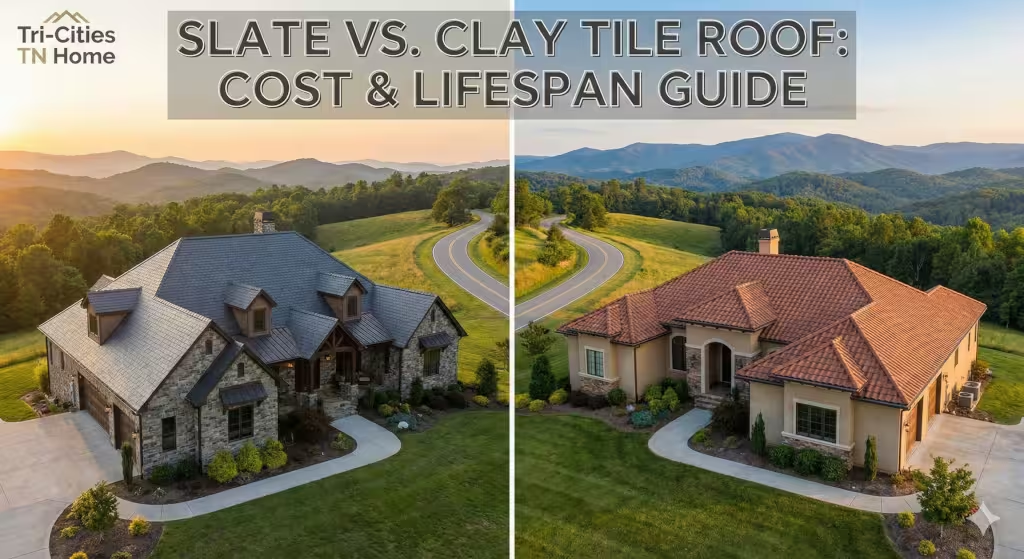
- Roofing: A standard architectural shingle roof is a durable, cost-effective choice. However, the quintessential modern farmhouse look often incorporates or exclusively uses a standing seam metal roof. A metal roof can cost two to three times as much as shingles but offers superior longevity and a sharp, clean appearance.
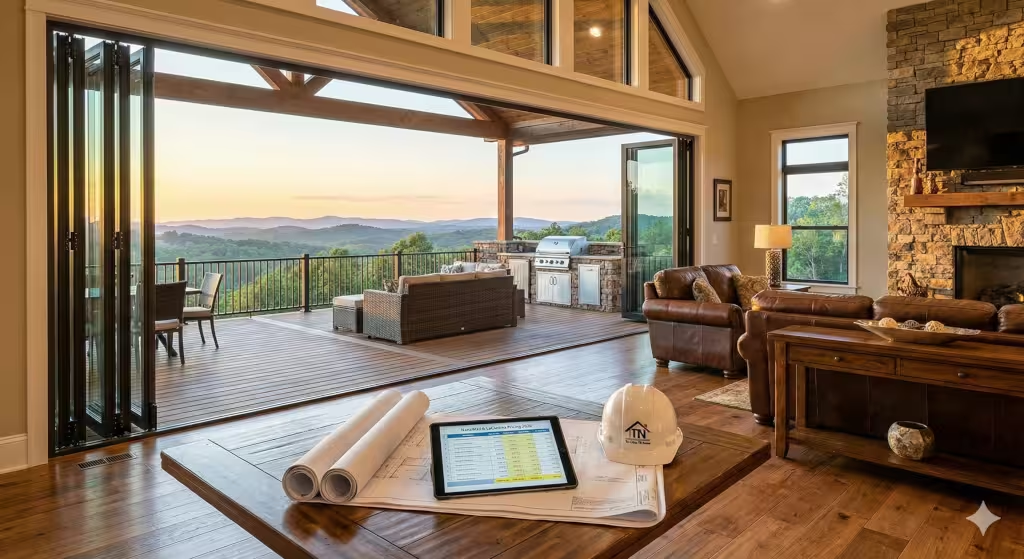
- Windows & Doors: The modern farmhouse style is defined by abundant natural light, often through large groupings of tall windows, frequently with black exterior frames. The jump from standard-sized, white vinyl windows to larger, more energy-efficient wood or fiberglass windows from brands like Pella or Andersen is one of the most significant line-item increases in the budget.
- Interior Systems (The Guts of the Home): This includes your HVAC, plumbing, and electrical systems. The choices you make here have long-term impacts on your utility bills and daily comfort. A standard-efficiency HVAC system will be cheaper upfront than a high-efficiency, multi-zone system, but the latter provides superior comfort and lower operating costs. Similarly, the quantity of recessed lights, outlets, and the quality of your plumbing fixtures all contribute to the final number.
- Insulation: Adhering to the Tennessee Residential Building Code is the minimum requirement. However, upgrading from standard batt insulation to spray foam insulation in the walls and roof deck can dramatically improve your home’s energy efficiency and structural rigidity, paying for itself over time in lower energy bills.
3. Soft Costs & Finishes (Where Your Style Comes to Life)
If hard costs are the bones of the house, soft costs and finishes are the personality. This is where your budget is most directly tied to your personal taste, and it’s the area with the most flexibility and potential for cost control—or overruns.
- General Contractor & Builder Fees: Your builder’s fee covers the management and coordination of your entire project—scheduling subcontractors, ordering materials, ensuring quality control, and managing the budget. This is typically structured as either a fixed-price contract, where you agree on a total price upfront, or a cost-plus contract, where you pay the actual cost of construction plus a percentage or fixed fee to the builder. A good builder is your most important asset and their expertise is an investment in a smooth process.
- Interior Finishes: This category can swing a budget by tens, or even hundreds, of thousands of dollars.
- Flooring: Luxury Vinyl Plank (LVP) is a very popular, durable, and cost-effective choice. Engineered hardwood offers the authentic feel of wood at a moderate price point, while solid hardwood and high-end tile are premium selections.
- Cabinetry & Countertops: The kitchen is the heart of the home and a major budget center. Stock cabinets are the most affordable, followed by semi-custom, and finally fully custom cabinetry, which offers limitless options. For countertops, laminate is the entry-level choice, with granite and the ever-popular quartz representing a significant step up in cost.
- Paint, Trim, and Millwork: The cost here is primarily in the labor. A simple trim package is standard, but adding details like shiplap accent walls, coffered ceilings, or built-in bookshelves requires significant skilled carpentry and adds to the final price.
- Fixtures: Lighting and plumbing fixtures are like jewelry for your home. You can purchase a functional and attractive faucet for $150 or a designer model for $1,000. These choices, multiplied across kitchens, bathrooms, and all lighting, add up quickly.
- Appliances: A basic appliance package might cost $4,000. A high-end package with a professional-style range and built-in refrigerator can easily exceed $20,000. It’s crucial to establish a realistic appliance allowance early in the process.
- Landscaping & Exterior Concrete: Your construction budget will typically include a final grade of the yard, basic seeding, and straw. A full landscaping package with shrubs, trees, and mulch is a separate cost. Likewise, concrete for patios and walkways beyond a small front stoop or back pad is also an additional line item.
Frequently Asked Questions (FAQ)
When I sit down with clients, the same questions almost always surface. Let’s address them directly.
Is it cheaper to build or buy a modern farmhouse in the Tri-Cities right now?
This is a nuanced question. As of late 2025, the inventory of high-quality, recently built homes on the market remains tight. You might find an existing modern farmhouse, but it may not be in your desired location or have the finishes you want. Renovating an older home to achieve this style can be fraught with costly surprises.
Building a new home is rarely the cheapest path on a pure dollar-for-dollar basis compared to an existing home. However, it offers immense value:
- Full Customization: Every detail, from the placement of outlets to the style of the kitchen sink, is your choice.
- Energy Efficiency: A new home built to modern codes will be significantly more energy-efficient than an older home, saving you money every month.
- No Deferred Maintenance: Everything is brand new. You won’t be replacing a roof, HVAC system, or water heater for many years.
The answer comes down to your priorities: if ultimate control and a brand-new, efficient home are paramount, building is the superior choice. If immediate move-in and a potentially lower upfront cost are key, buying existing is worth exploring.
What are the main cost drivers for a modern farmhouse specifically?
Beyond the standard construction costs, the modern farmhouse aesthetic has five key elements that drive its price point above a more basic “builder grade” home:
- The Roof: A standing seam metal roof is iconic for this style, and it’s a significant budget item.
- The Siding: The crisp lines of board and batten siding require more material and more precise labor than standard vinyl.
- The Windows: Large, black-framed windows are a hallmark. They are a premium product compared to standard white vinyl windows.
- The Porches: Generous front and back porches add square footage to the roof and foundation, increasing costs.
- The Interior Millwork: Details like shiplap, barn doors, and simple, shaker-style custom cabinetry are labor-intensive and define the interior feel.
How much does a 2,500 sq ft modern farmhouse actually cost to build here?
Let’s create a hypothetical, but realistic, example for a mid-range custom build in our area.
- Construction Cost: 2,500 sq ft x $215/sq ft = $537,500
This $537,500 covers the “sticks and bricks” and finishes—the house itself. Now, we must add the other pillars:
- Land Cost: (Highly variable) Let’s assume a 1-acre lot in Washington County: $75,000
- Site Work & Utilities: (Estimate for a lot needing well & septic): $45,000
- Includes septic permit/install, well drilling, basic excavation, driveway, and utility hookups.
- Soft Costs: (Plans, permits, loan fees, etc.): $25,000
Estimated “All-In” Cost: $537,500 + $75,000 + $45,000 + $25,000 = $682,500
This illustrates how quickly a home with a construction cost of around $540,000 becomes a project approaching $700,000.
What are the most common “hidden costs” when building a new home?
They aren’t truly hidden, but they are often forgotten in initial planning.
- Site Cost Overages: Hitting rock during excavation is the most common culprit.
- Utility Tap Fees & Meters: These fees from utility districts can be several thousand dollars.
- Construction Loan Interest: You will pay interest on your construction loan during the build process.
- Landscaping & Window Treatments: These are rarely included in a standard builder’s contract but are necessary expenses to finish the home.
- Closing Costs: You will have closing costs for both your construction loan and your final mortgage.
How to Manage Your Budget and Have the Best Building Experience

A successful build is a well-managed one. Integrity and precision are paramount.
- Get Detailed Bids: Do not accept a simple per-square-foot price. A professional builder should provide a detailed, itemized budget that shows you where every dollar is going.
- Establish a Contingency Fund: I advise every client to have a contingency fund of at least 10-15% of the total construction cost, set aside in a separate account. This is not a slush fund for upgrades; it is a safety net for true unforeseen costs, like that unexpected rock. If you don’t use it, you have a nice fund for furniture or landscaping at the end.
- Understand Allowances: Your builder will give you “allowances” for items like appliances, lighting fixtures, and flooring. An allowance is simply a budget placeholder. If your builder allows $5,000 for appliances and you choose a $10,000 package, you are responsible for the $5,000 difference out of pocket. Be realistic with these from the start.
- Choose the Right Builder: Your relationship with your general contractor is the single most important factor in a successful build. Look for a builder with a strong local reputation, a portfolio of work you admire, and a transparent communication style. Check their references. A great builder is an advocate for your project and your budget, expertly navigating the Tri-Cities’ subcontractor market and local regulations.
Conclusion: Building Your Tri-Cities Dream Home
Building a modern farmhouse in the Tri-Cities is a significant but incredibly rewarding undertaking. The final cost is a complex equation of land, site conditions, size, and your personal taste. It is far more than a simple multiplication of square footage. Understanding the key cost drivers, the roof, siding, windows, and interior finishes specific to this style, and budgeting for all three pillars of the project is the first step toward a successful outcome.
The process requires diligence, patience, and a partnership built on trust and integrity with your builder. With careful planning and a precise, realistic budget, you can move from a dream on paper to the satisfaction of turning the key in the door of a home built just for you, right here in the beautiful landscape of Northeast Tennessee.