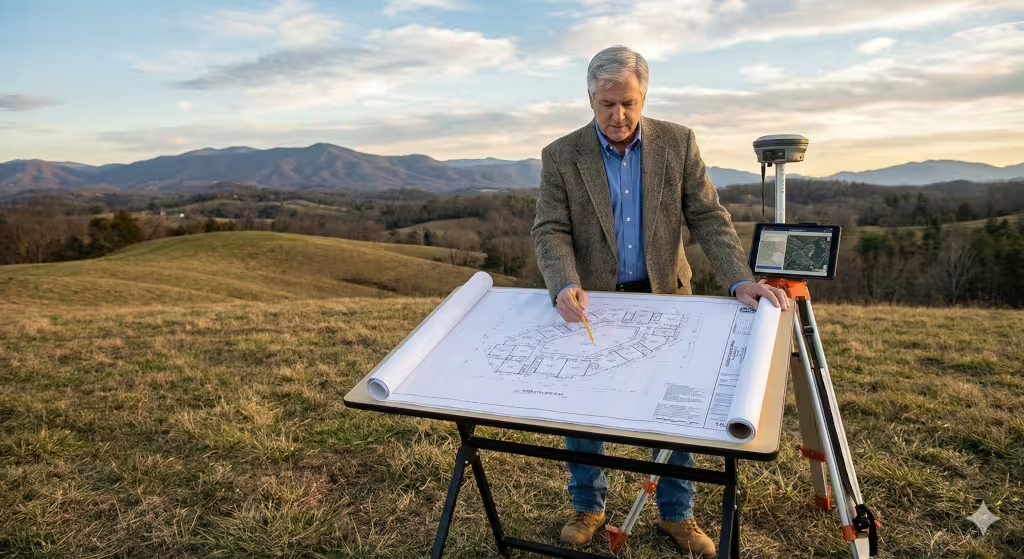

Building a home in Jonesborough is about more than just timber and nails; it’s about planting roots in Tennessee’s oldest town, a place with a distinct character and history.1 Many people dream of this, but they often get stalled by the first and most critical question: “What will it actually cost?” The purpose of this post is to give you a precise, no-nonsense look at the real factors affecting home building cost in Jonesborough, TN. We’ll move beyond the vague cost-per-square-foot guesses and break down the specific elements that will truly shape your budget, ensuring you begin this journey with clarity and confidence.
Understanding the Baseline Home Building Cost: Is There an “Average” Cost?
One of the first questions I always hear is, “What’s the average cost per square foot to build a house in East Tennessee?” It’s a natural starting point, but I must be direct: an “average” can be misleading. As of mid-2025, you might see figures ranging from $175 to over $275 per square foot in our region. However, this number is a blunt instrument. It fails to account for the most significant variables that determine your final cost.
A simple, 2,000-square-foot rectangular home with builder-grade finishes on a flat, cleared lot will fall at the low end of that spectrum. A home of the exact same size with complex architecture, steep rooflines, high-end stone and hardwood finishes, and built on a sloped, wooded lot will easily exceed the high end of that range. Think of the square-foot price as a starting point for a conversation, not a figure you can take to the bank. The real cost is in the details that follow.
Core Factors Driving Your Home Building Budget
Your final budget is a sum of several distinct parts. Understanding each one is critical for effective planning. I break them down into four core categories: the land itself, the design of the home, the materials you choose, and the necessary administrative costs.
Factor 1: Land Acquisition and Site Preparation
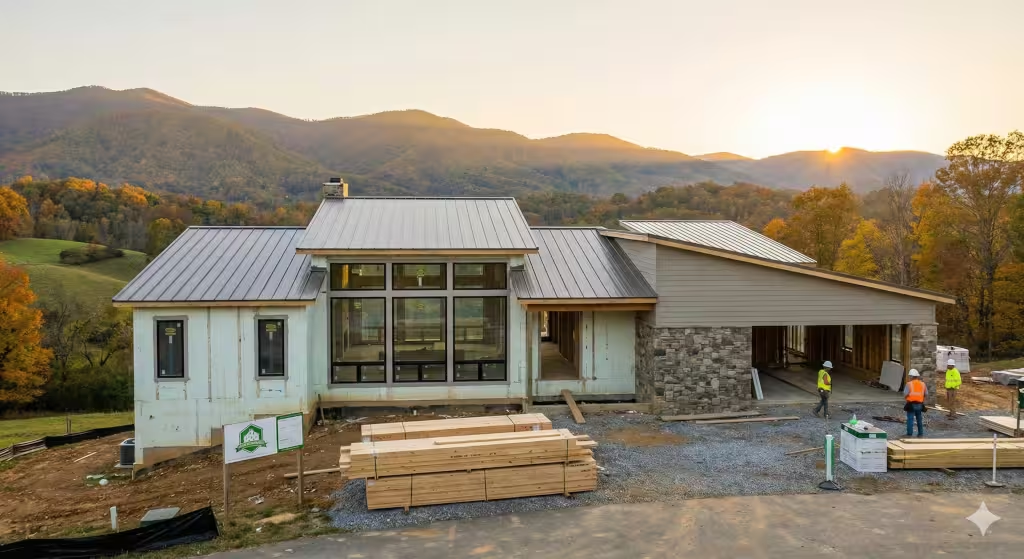
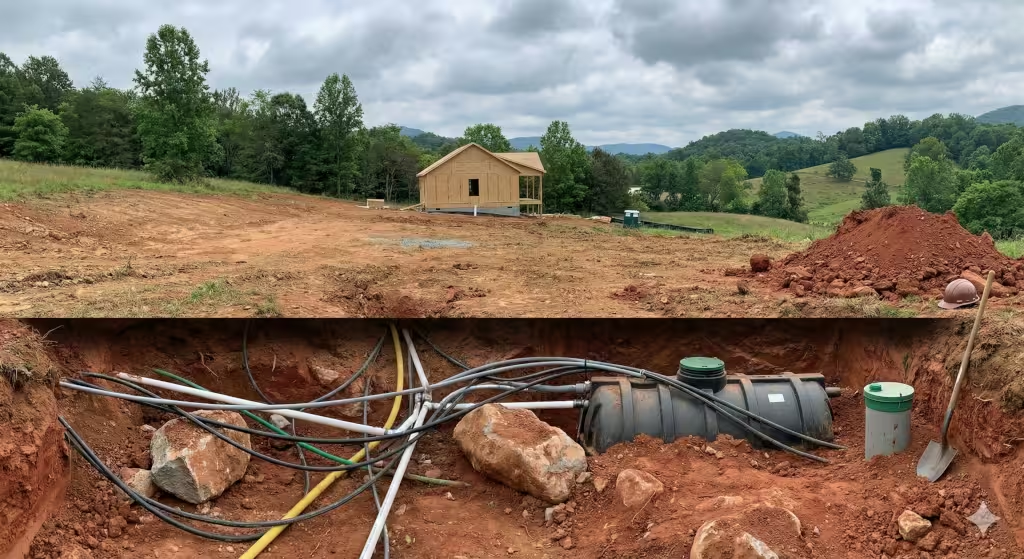
Before a single board is cut, the land itself presents a major cost variable. The purchase price for a lot in or around Jonesborough can vary dramatically based on acreage and location. But the initial purchase is just the beginning. Site preparation costs are often underestimated by prospective homeowners. For example, a heavily wooded lot requires extensive clearing. A property with significant slope or bedrock requires more complex and costly foundation work.
Furthermore, you must account for bringing utilities to the home. This involves coordinating with providers like BrightRidge for electricity and determining whether you can connect to municipal water and sewer or if you’ll need to budget for drilling a well and installing a septic system. Each of these steps has a significant price tag that exists entirely outside the structure of the house itself.
Factor 2: Architectural Design and Engineering Complexity
The design of your home is a primary cost driver. Opting for a pre-existing stock plan is generally less expensive than commissioning a fully custom design from an architect. However, the real cost impact comes from complexity. Every corner you add to a floor plan increases labor and material costs. A complex roof with multiple gables, valleys, and pitches is significantly more expensive to frame and shingle than a simple hip or gable roof. A two-story home may have a smaller foundation footprint, but it requires additional structural engineering and labor for framing the second floor. These design decisions, made early in the process, will have a ripple effect throughout every phase of construction.
Factor 3: Construction Materials and Finishes
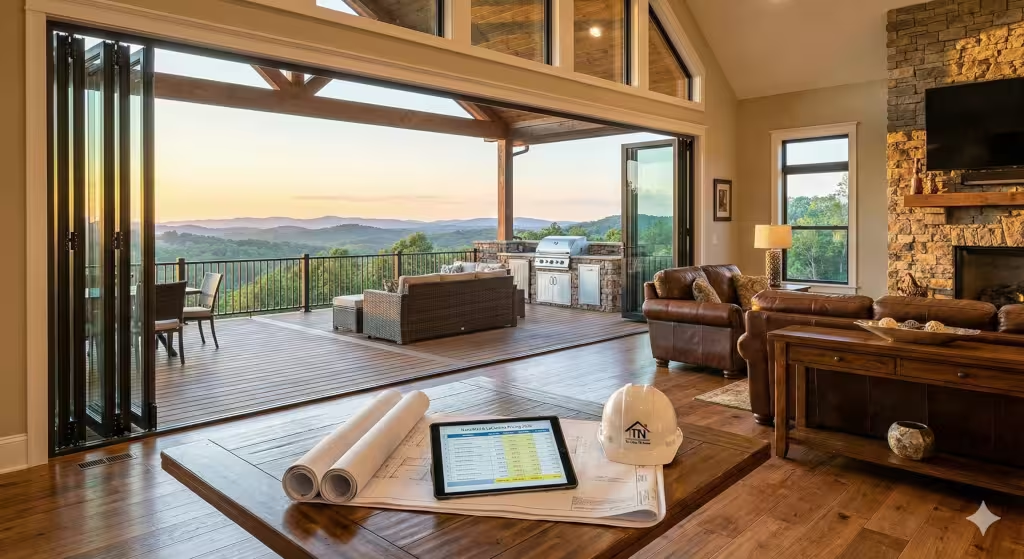
This is where you have the most control over your budget. The choices you make for finishes and materials can swing your final cost by tens or even hundreds of thousands of dollars. As of August 2025, while the extreme volatility of post-pandemic construction material prices in East TN has leveled off for some items like lumber, other manufactured goods continue to see steady increases.
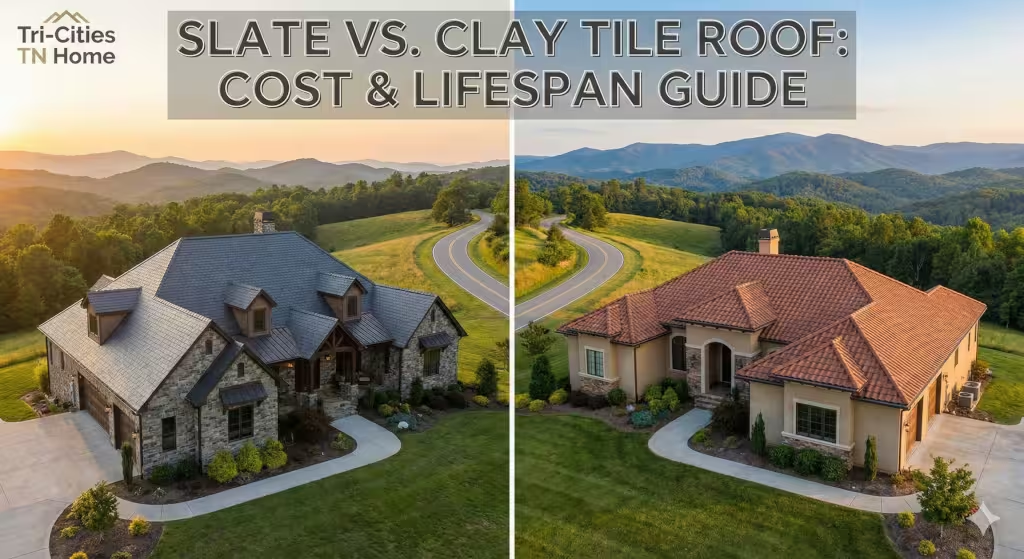
Consider the exterior: standard vinyl siding is the most cost-effective, fiber cement (like HardiePlank) is a mid-range step up, and a full brick or stone exterior from a supplier like General Shale represents a top-tier investment. This same principle applies to every interior choice:
- Flooring: Luxury Vinyl Plank (LVP) vs. engineered hardwood vs. site-finished solid hardwood.
- Countertops: Laminate vs. granite vs. high-end quartz.
- Cabinets: Stock big-box cabinets vs. semi-custom vs. fully custom cabinetry built by a local craftsman.
- Fixtures: Basic chrome faucets and light fixtures vs. designer pieces in bronze or matte black.
Your builder should be able to price out these different options transparently so you can make informed decisions that align with your budget.
Factor 4: Permits, Fees, and Local Regulations
The administrative side of building is a hard cost that cannot be avoided. You will need to secure building permits from Washington County, which involve plan reviews and a series of inspections (footing, framing, final) to ensure the home is built to code. The cost of a permit is typically based on the valuation of the project.
Crucially, if you are building within the designated historic areas of Jonesborough, you must also go through the Jonesborough Historic Zoning Commission. This involves a separate review process to ensure your home’s exterior design, scale, and materials are in keeping with the town’s historic character. While this process preserves the unique charm of the town, it can add time to your project and place limitations on certain design choices and materials, which can in turn affect cost.
Building vs. Buying in Jonesborough: A Cost-Benefit Analysis
Many clients ask, “Is it cheaper to build or buy a house in TN?” The answer is rarely straightforward. In today’s market, buying an existing home might seem cheaper on paper initially. However, you must factor in the potential for immediate renovation costs to suit your tastes, as well as the likelihood of higher utility bills from older, less efficient construction and the potential for surprise repairs.
When you build new, you are in control. You get the exact layout and finishes you want, and the home is built to modern energy efficiency codes, saving you money on long-term operating costs. Everything is new and under warranty, from the roof to the HVAC system, providing peace of mind and predictable expenses for years to come. While the upfront cost to build may be higher, the value of total customization and long-term reliability is significant.
Putting It All Together: A Sample Cost Breakdown
To make this tangible, let’s address the question: “How much does it cost to build a 2000 sq ft house in Tennessee?” Using our Jonesborough example, let’s assume you have already purchased the land.
Here’s a rough percentage breakdown of where the money goes for the structure itself:
- Site Work, Foundation & Flatwork: 12-15%
- Framing (Labor & Materials): 18-22%
- Exterior Finishes (Roof, Siding, Windows, Doors): 15-18%
- Major Systems (HVAC, Electrical, Plumbing): 12-15%
- Interior Finishes (Drywall, Paint, Flooring, Cabinets): 25-30%
- Final Items (Landscaping, Driveway, Builder’s Fee): 10-15%
For a 2,000 sq. ft. home with good quality, builder-grade finishes, you might budget around $380,000 – $440,000.
For that same home with significant upgrades—hardwood floors, custom cabinetry, a brick exterior, and high-end fixtures—the cost could easily be $500,000 – $550,000+. These are estimates, but they illustrate how profoundly your decisions impact the final number.
Your Guide to a Successful Build
Understanding the costs is the first step. Managing them is the next. The single most important decision you will make is selecting a competent and trustworthy custom home builder. Look for a professional with a proven track record, transparent communication, and an emphasis on integrity. Always review their previous work and speak with former clients.
Insist on a detailed contract that clearly specifies scopes of work and material allowances. Finally, you must plan for the unexpected. I advise every client to maintain a contingency fund of at least 10% of the construction cost. This isn’t a “slush fund”; it’s a necessary buffer for unforeseen site conditions, material price changes, or upgrades you decide you want during the process. Proper planning prevents financial stress and keeps the project moving smoothly.
Conclusion: Building Your Future in Tennessee’s Past
The final cost to build your home in Jonesborough is a sum of its parts: the land you choose, the complexity of your design, the quality of your materials, and the required local fees. It is a complex equation, but it is not an unknowable one. By understanding these core factors and partnering with an experienced building professional who values precision and integrity, you can navigate the process efficiently. You can turn the dream of a custom home in this historic town into a well-planned, financially sound reality.
If you are ready to take the next step, I invite you to reach out for a personalized consultation to discuss your specific project.