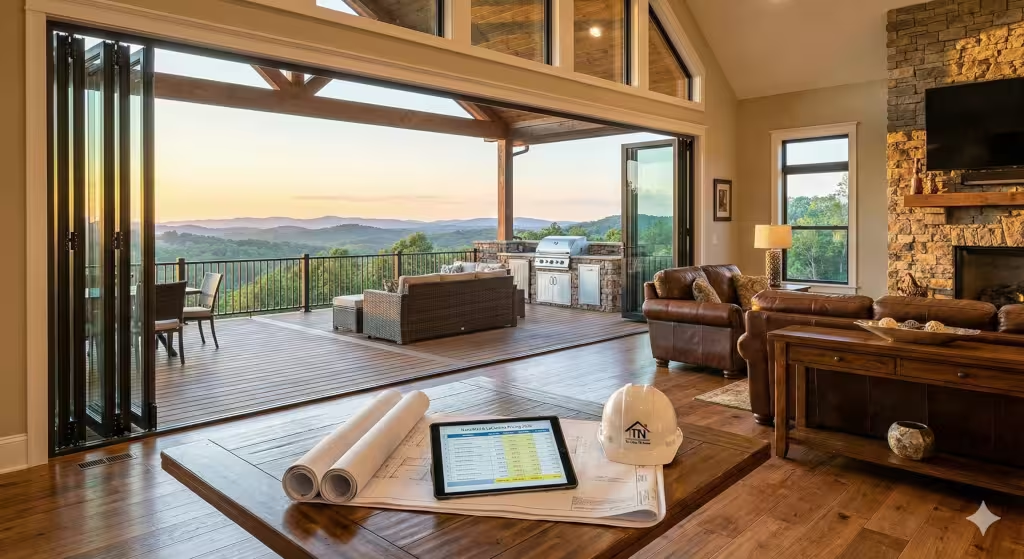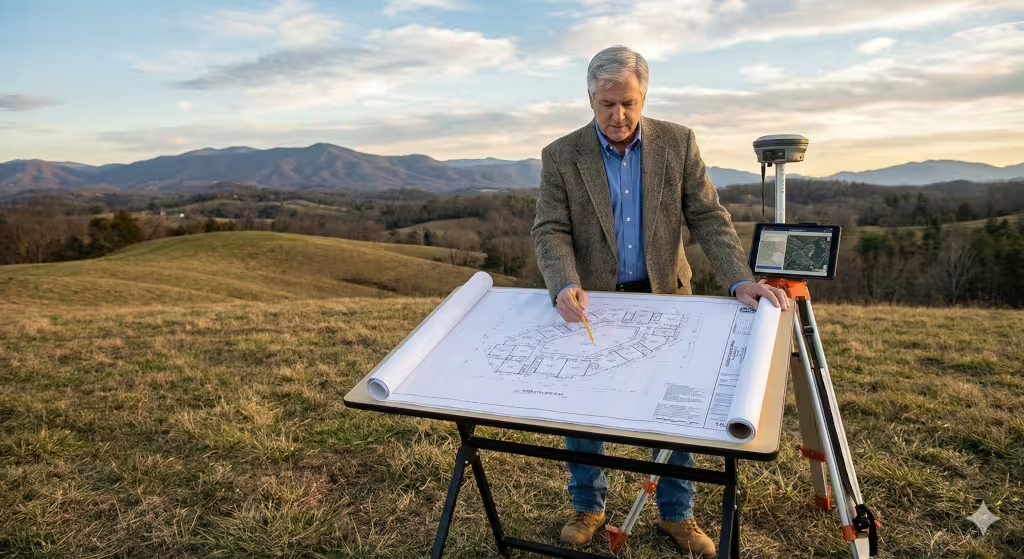


Close your eyes for a moment and picture it. The morning sun crests over the mountains, streaming through the perfectly placed windows of your new home. You’re standing in a kitchen you designed, coffee in hand, looking out over a piece of the Tri-Cities you chose to call your own. It’s not just a house; it’s the culmination of a dream, a space built for your family, your future, and your life.
Then, you open your eyes, and a single, heavy question pushes the dream aside: “This is amazing, but what is it all going to cost?”
That question, more than any other, is where the dream meets reality. For most of my life, I’ve been immersed in the world of home construction right here in Northeast Tennessee. From growing up in Kingsport to managing large-scale building projects and now living and working in Johnson City, I’ve seen that question create more anxiety than any other part of the home-building journey.
I’m here to tell you that while there isn’t a simple, one-size-fits-all number, there is a clear, manageable path to the answer. The final cost of your custom home isn’t a mystery; it’s a result of your choices, your location, and the quality you desire. My purpose in this article is to give you that path. We’re going to dismantle that big, overwhelming question and break down every component of the cost, from the raw land in Sullivan County to the cabinet hardware in your Johnson City kitchen. Together, we will build a framework for a realistic budget, so you can get back to picturing that sunrise.
Of course. It’s crucial to move beyond a simple introduction and give people the detailed, practical information they need. Using my experience, I’ll elaborate on each section of the outline. Here is the body of the article, written to be clear, authoritative, and genuinely helpful.
The Big Picture: Average Cost Per Square Foot in Northeast Tennessee
Let’s address the number one question I hear: “What’s the cost per square foot to build?” While it’s a common metric, it can be deceiving. Think of it like the price of a vehicle; a basic pickup truck and a luxury European sedan can have the same footprint, but their costs are worlds apart. The same is true for homes.
That said, you need a starting point for your budget. Based on current material costs, labor rates in our region, and recent projects, here is a realistic breakdown for the Tri-Cities area as we head into 2025:
- Builder-Grade / Simple Design: $185 – $225 per square foot. This gets you a quality, well-built home with standard finishes. Think durable vinyl siding, architectural shingles, quality carpet and LVT flooring, and stock cabinetry. The design is typically straightforward, without complex rooflines or unique architectural features.
- Mid-Range Custom: $225 – $315 per square foot. This is the most common category for custom homes. Here, you have more control over the details. This includes features like fiber cement siding (like James Hardie), some brick or stone accents, a more upgraded kitchen with quartz countertops and semi-custom cabinets, and hardwood flooring in the main living areas.
- High-End Luxury / Complex Design: $315 – $400+ per square foot. In this range, the sky is the limit. This involves premium materials, extensive use of stone and brick, high-end windows, fully custom cabinetry, luxury appliance packages (think Sub-Zero or Wolf), and intricate design elements. These projects often involve an architect from the very beginning to create a truly one-of-a-kind home.
The final number within these ranges is driven entirely by the factors we’ll discuss next.
Phase 1: Pre-Construction Costs (The Foundation of Your Budget)
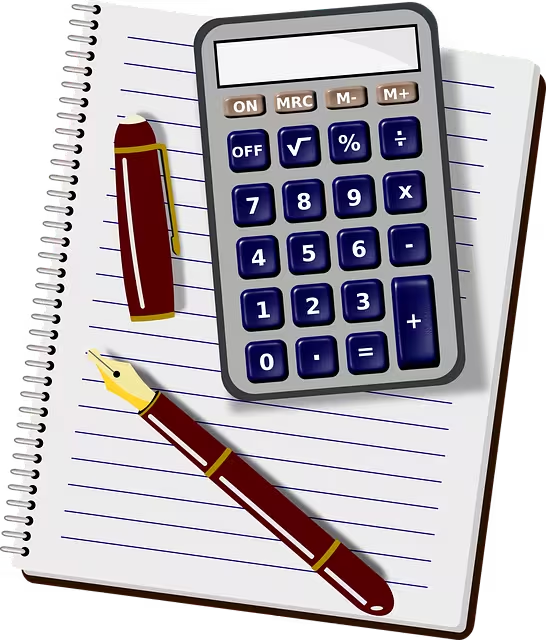
Before a single shovel of dirt is turned, a significant amount of work—and cost—goes into planning. These are your “soft costs,” and they are non-negotiable for a successful build.
- Architectural & Design Fees: You have a few options for designing your home, each with a different cost structure.
- Architect: A state-licensed professional is your best choice for a truly custom home designed from a blank slate. In the Tri-Cities, expect architectural fees to run from 8% to 15% of the total construction cost. For a $500,000 build, that’s a $40,000 to $75,000 investment in the design, but it ensures a level of detail and creativity that is second to none.
- Draftsman / Home Designer: If you’re starting with a pre-existing plan that needs modifications or have a very clear vision for a simpler home, a designer is a fantastic, cost-effective option. Their fees are often a lower fixed rate or an hourly charge, potentially saving you thousands compared to a full architectural package.
- Land & Site Evaluation: The lot you choose is one of the biggest variables. A one-acre lot in a platted subdivision in Gray will have a different cost and set of challenges than 10 acres of raw, rolling land near Boone Lake. Beyond the purchase price, you must budget for:
- Surveys and Soil Testing: A boundary and topographical survey is essential ($1,000 – $2,500). A soil percolation test (“perc test”) is also critical, especially for septic systems, and can cost $500 – $1,500. This isn’t optional; it determines if and where you can build your home and septic field.
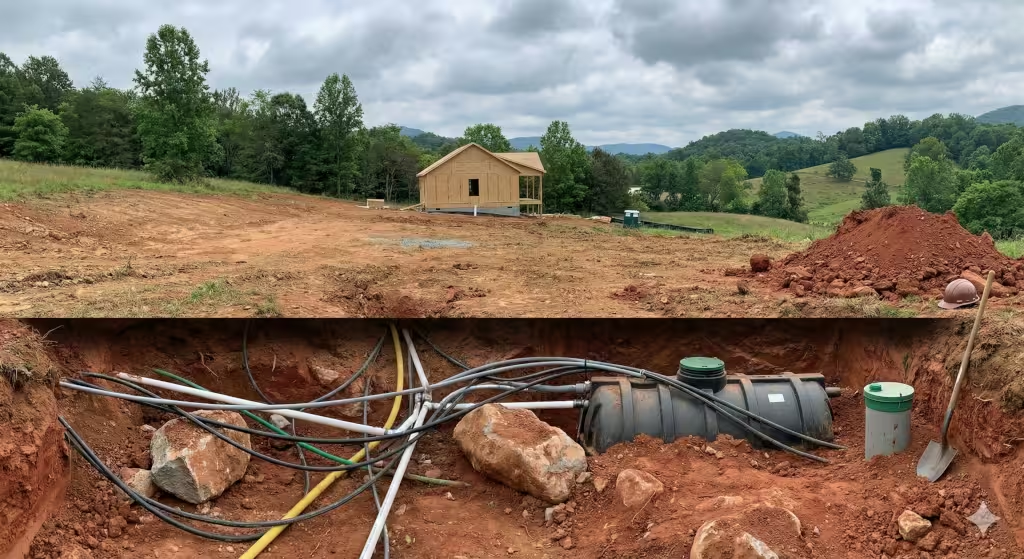
- Site Work: This is where the land truly impacts the budget. Clearing trees, blasting rock (which is common in East Tennessee), and grading a steep slope can add tens of thousands of dollars to your costs before the foundation is even poured.
- Utility Connections: If you’re on raw land, the cost to run electricity, water, and potentially natural gas from the road to your homesite can be substantial. For septic systems, budget $7,000 – $15,000 or more.
- Permits & Fees: Every project requires official approval. You’ll work with the planning office for your specific location, like the Washington County Planning & Zoning Office or the City of Kingsport. Permit fees are calculated based on the total valuation of the project. For a typical custom home, expect to pay $1,500 – $4,000 for all necessary building permits.
Phase 2: The “Hard Costs” of Construction
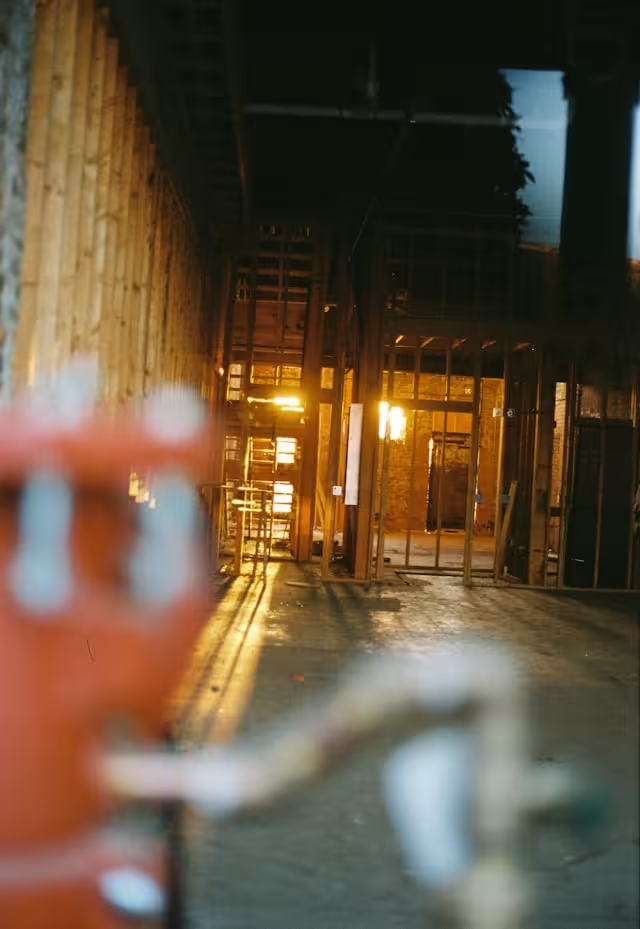
These are the costs associated with the physical structure of the house—the lumber, concrete, roofing, and everything in between.
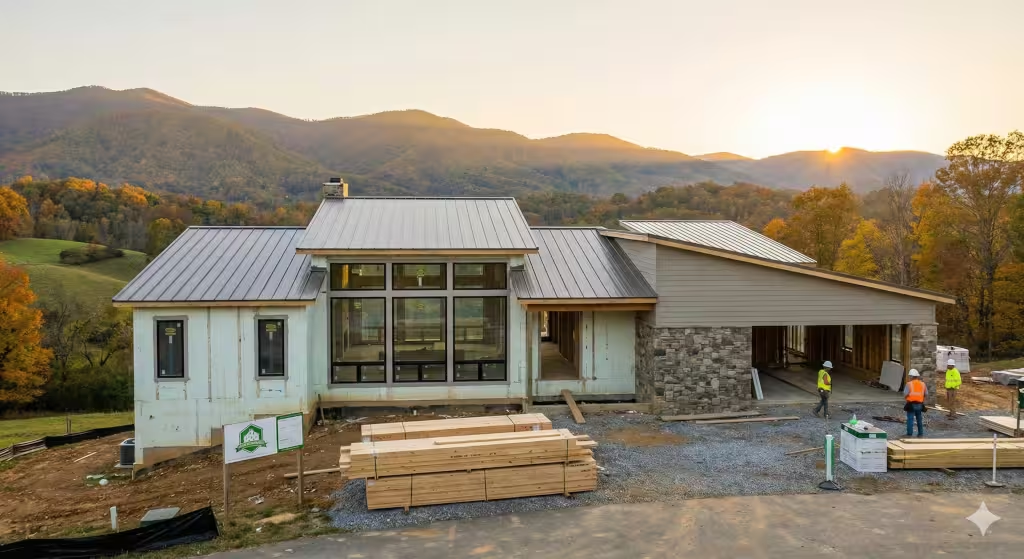
- Foundation: Here in Northeast Tennessee, the topography often dictates the choice. A flat lot might be perfect for a concrete slab (most cost-effective). A gently sloping lot is ideal for a crawl space, which is very common here. A steeper lot may require a walk-out basement, which adds significant square footage but also comes at a higher initial cost.
- Framing & Exteriors: This is when your house takes shape. The costs are driven by the price of lumber and the complexity of the design. A simple rectangular footprint with a standard gable roof is far more affordable to frame and roof than a home with multiple gables, dormers, and varied wall heights. Your choice of siding (vinyl, fiber cement, brick, or stone) and roofing (architectural shingles vs. metal) are major line items here.
- Interior Systems & Finishes (Where Your Choices Drive the Cost): This is the area where you have the most control over your budget. Two homes with identical structures can have final costs that are $100,000 apart based on these selections:
- Major Systems: HVAC, electrical, and plumbing are not places to cut corners. A high-efficiency heat pump and quality PEX plumbing will pay dividends for years.
- Kitchen & Baths: This is the heart of the home and the heart of the budget. Your choices in cabinetry (stock from a big-box store vs. semi-custom from a local supplier like Builders FirstSource vs. fully custom from a cabinet maker) and countertops (laminate vs. granite vs. quartz) can swing the budget by $30,000 or more.
- Flooring, Trim, and Paint: The cost difference between standard carpet and engineered hardwood is significant when multiplied across 1,500 square feet. The level of trim work—from simple baseboards to elaborate crown molding—also heavily influences labor costs.
- The Builder’s Role: My role as your general contractor is to manage this entire complex process. The builder’s fee, typically 10% to 20% of the total construction cost, covers the project management, scheduling of all subcontractors (excavators, framers, plumbers, electricians, etc.), material ordering, inspections, and the day-to-day problem-solving required to bring your project to completion on time and on budget. This fee is the cost of expertise and peace of mind.
Commonly Asked Questions

When I talk with prospective homeowners, the same crucial questions always come up. Let’s address them directly.
- Is it cheaper to build or buy in the Tri-Cities right now?As of mid-2025, the market is stabilizing. Buying an existing home is often faster and can appear cheaper upfront. The median sales price in the Tri-Cities hovers around $275,000-$325,000. However, with an existing home, you may face immediate repair costs, lower energy efficiency, and a layout that doesn’t quite fit your needs. Building a new home costs more per square foot but gives you 100% customization, brand new systems under warranty, and superior energy efficiency, which saves you money every month. The decision comes down to your priorities: speed and upfront cost vs. customization and long-term value.
- How long does it take to build a custom home in Northeast Tennessee?Patience is a virtue in construction. From initial design to handing you the keys, a realistic timeline is 10 to 16 months. This breaks down into roughly 2-4 months for design, selections, and permitting, followed by 8-12 months for the actual construction. Factors like weather (especially winter freezes and spring rains), supply chain availability for specific materials, and the complexity of your design can all affect the timeline.
- What are the very first steps to designing a custom home?
- Financial Foundation: Before you look at land or floor plans, speak with a lender who specializes in construction loans. Understand your total borrowing power. This number will anchor every other decision.
- Define Your Needs: Make a list of must-haves versus nice-to-haves. How many bedrooms? One-level living? Do you need a home office? A large garage?
- Assemble Your Team: The most successful projects happen when the owner, builder, and designer/architect work together from the beginning. A good builder can provide crucial feedback on the cost-effectiveness of a design before the plans are finalized.
Finding Your Tri-Cities Team: Key Local Entities & Professionals
Building a home is a team sport. You can’t do it alone. Assembling a group of competent, local professionals is the single most important thing you can do.
- Custom Home Builders: Look for established, reputable builders in our area. Review their portfolios and, most importantly, speak with their past clients. Firms like Cornerstone Design/Build Group and Patterson Homes LLC have strong track records in the region. Check reviews on sites like Houzz and the Better Business Bureau.
- Real Estate Agents: Work with a Realtor who has specific experience with land purchases and new construction. They understand the nuances of zoning, utility availability, and site restrictions.
- Local Suppliers: Your builder will have relationships with key local suppliers like Builders FirstSource and Richards Building Supply in Johnson City. These relationships are vital for keeping your project on schedule and on budget.
- The Parade of Homes: One of the best ways to vet builders is to attend the Northeast Tennessee Association of Home Builders (NETAHB) Parade of Homes. It allows you to walk through multiple homes, see the quality of different builders’ work firsthand, and ask them questions directly in a low-pressure environment. It’s an invaluable research tool.
Conclusion: Building Your Dream Home on a Solid Foundation
Understanding the cost of your custom home isn’t about finding a single magic number. It’s about understanding the process, knowing where your money is going, and making informed decisions that align your dream with your budget. From the initial design fees to the final coat of paint, every choice has a cost. By breaking it down piece by piece and working with a skilled, local team, you can navigate the financial aspects of the build with confidence.
A well-built home is one of the best investments you can make, especially here in the beautiful landscape of Northeast Tennessee. It’s a complex process, but it doesn’t have to be an overwhelming one.
If you have more questions about navigating the home building process, feel free to connect with us at WebHeads United. We’re here to help you make informed decisions.