

Insurance for Buried Utility Lines
When you build or buy a home in East Tennessee, an outbuilding is often at the top of your list. Whether you live out in Jonesborough, on a wooded ridge in Kingsport, or right in Johnson City, having extra space adds immense practical value to daily life. Many homeowners decide to construct a detached workshop, a multi-bay carriage garage, an auto bay, or a guest apartment.
To make that outbuilding truly functional, you cannot just build four walls and a roof. You need running water for a utility sink. You need natural gas or propane for winter heat. You need electrical power for heavy tools, lighting, and vehicle charging. You might even want an underground fiber data link so you can work out of an upstairs office.
All of those services run beneath the turf of your yard. We often walk right across our lawns without giving a second thought to the network running below our feet. The earth conceals those systems, and when everything operates smoothly, it is easy to assume they will last forever without trouble.
However, running subterranean systems across your property creates real risks. Ground shifts, tree roots grow, heavy work trucks drive across the lawn, and plastic or metal conduits corrode. When subterranean infrastructure breaks down, repairing the damage can require thousands of dollars in equipment, digging, and specialized trade work. Many homeowners believe their standard home insurance policy will naturally pay for the repairs. In reality, finding the right protection requires understanding how modern insurance handles underground feeds.
Let us walk step by step through what runs beneath the surface, where standard policies leave costly gaps, how specialized endorsements work, and how proper construction methods save you money and headaches over the lifespan of your property.
The Overlooked Vulnerability
Adding a detached garage changes the physical balance of your property. In our area, lots often feature rolling terrain, rocky clay soil, and mature timber. Running power, water, and heat out to a building fifty or a hundred feet from your main home creates an extended path of exposure.
When a problem happens with underground utility lines, you do not see it happen in real time. A water pipe does not simply leak into a visible floor basin. Instead, it slowly saturates the subsoil, washing away the dirt that supports your driveway or sidewalk. An electrical wire buried deep in the ground may suffer an insulation split that goes unnoticed until a breaker repeatedly trips or an electrical arc burns through the wire completely.
The trouble with these underground utility lines is that you cannot inspect them with a quick glance. A roof issue shows up as missing shingles or water stains on ceiling drywall. A damaged wall is obvious the moment you pull your truck into the bay. Underground utility lines, on the other hand, sit surrounded by soil, moisture, rocks, and root networks.
Because they are out of sight, homeowners rarely budget for their unexpected breakdown. When an excavator has to dig up fifty feet of finished lawn, concrete walkways, or an asphalt driveway just to find a severed conduit, the bill adds up quickly. That hidden vulnerability makes proper protection essential for every property owner.
The Homeowner Assumption Versus Policy Reality
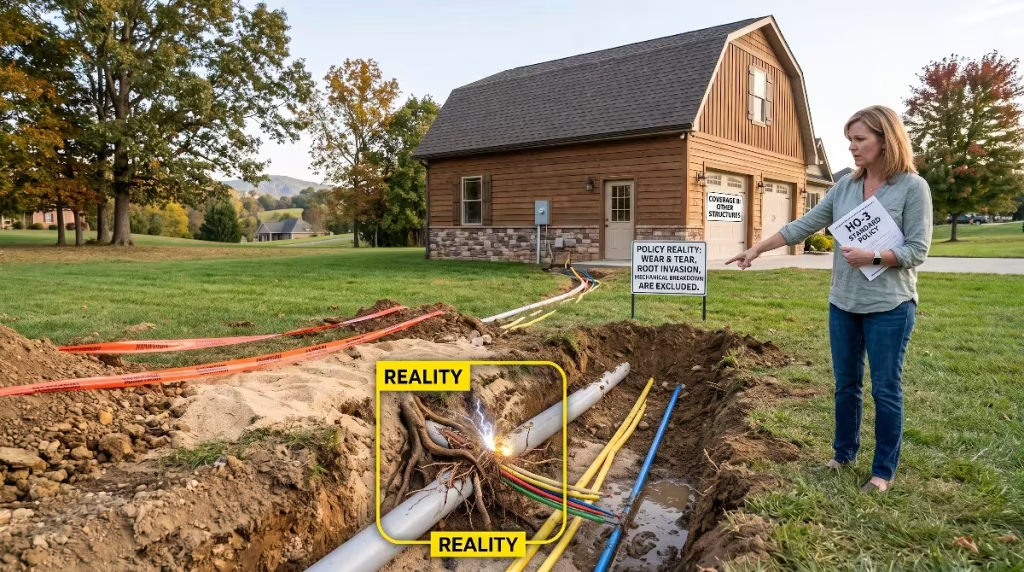
A widespread assumption among property owners is that standard homeowners insurance covers every pipe, wire, and conduit on the property. People often assume that because they pay a regular premium, any catastrophic failure on their land will be handled by their carrier.
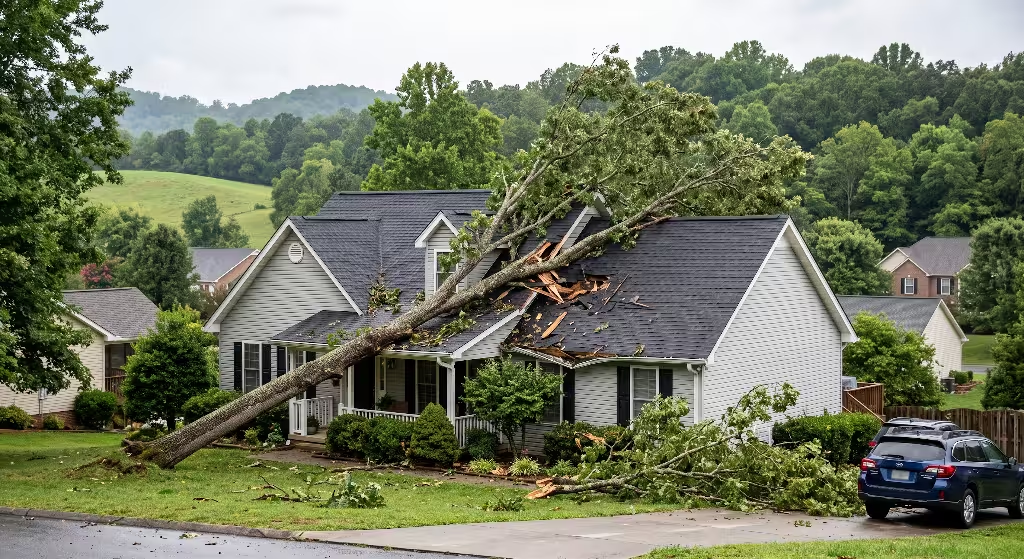
Unfortunately, that is rarely how property policies operate. Most standard homeowners policies are built around specific covered perils, such as fire, lightning, windstorms, hail, or sudden falling objects like an oak branch crashing through a garage roof. If a storm blows down a tree and the roots pull up electrical utility lines, you might find coverage because a covered wind event caused the primary physical damage.
However, if your underground utility lines fail because they simply grew old, cracked from soil pressure, corroded, or were choked off by root growth, standard coverage generally steps aside. Basic policies strictly exclude everyday wear and tear, rust, deterioration, settling, and mechanical breakdown. When a homeowner calls their insurance agent after a garage loses all power, they are often surprised to hear that their base policy will not cover a single dollar of the excavation or line replacement.
Understanding the difference between an above ground disaster and an underground breakdown is the first step in protecting your personal finances from expensive repairs.
Direct Definition
To understand your risk, you must distinguish between your base homeowners policy and a dedicated buried utility lines endorsement.
A standard homeowners policy protects the physical structures on your land and your personal belongings inside them against sudden, external catastrophes. It is primarily designed to rebuild framing, replace roofing, repair drywall, and restore belongings after major accidents or natural disasters.
A buried utility lines endorsement, also called a service line endorsement, is an optional add-on rider. This specific coverage bridges the gap left by standard exclusions. It specifically protects the underground utility lines that run through your private property. Rather than requiring a falling tree or a fire to trigger benefits, a service line endorsement covers mechanical breakdown, root invasion, rust, compaction damage, and electrical failure of the lines themselves.
In short, your primary policy protects the garage building itself, while the buried utility lines endorsement protects the vital connections that supply the building with power, water, fuel, and communication.
Subfeed Electrical Conduits and Direct-Burial Cable
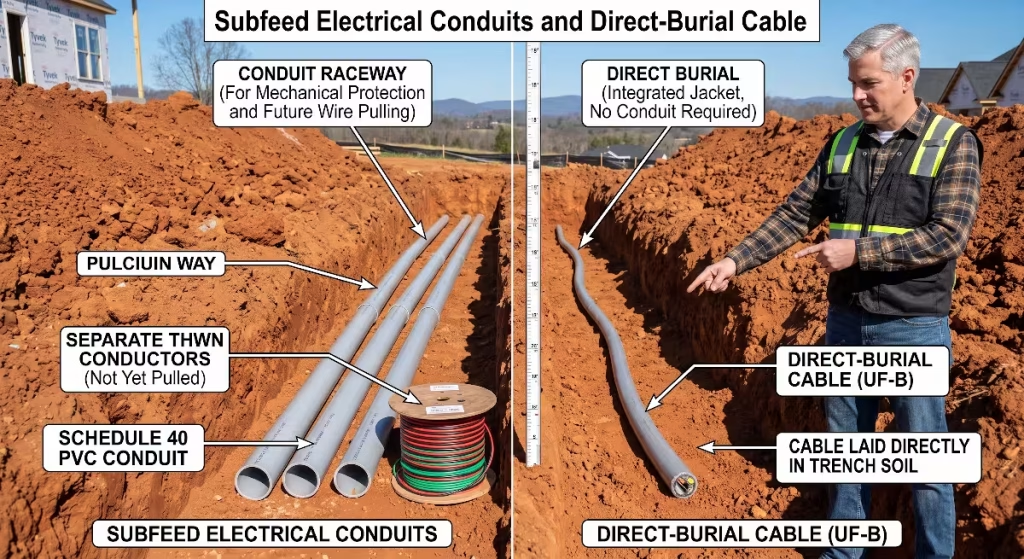
The most common connection running from a house to a detached garage is an electrical subfeed. Whether you are running a table saw, charging an electric vehicle, operating an air compressor, or simply keeping the lights and garage door opener running, electrical current must travel safely from your main distribution panel to a subpanel in the outbuilding.
There are two primary ways contractors run these electrical utility lines:
- Direct-burial cable, often designated as underground feeder cable. This cable features a solid plastic sheath molded around the conductors to resist moisture. It sits directly in the dirt trench. While cost-effective to install initially, it remains vulnerable to sharp rocks, settling ground, and accidental shovel strikes.
- Rigid metal or heavy schedule PVC conduit. Running individual wires through a rigid pipe provides far better physical protection against rocks and rodents.
Even inside conduit, electrical utility lines face real threats. Water can condense inside plastic pipes over time. In cold weather, that standing water freezes and expands, cracking the conduit. Once the conduit breaks, sharp edges of frozen dirt press against the wire insulation. If the insulation wears through, electrical arcing occurs, burning out the run and cutting off all power to your workshop.
Replacing a damaged electrical subfeed involves isolating the panels, locating the fault with specialized diagnostic tools, digging up the trench, pulling new conductors, and restoring the ground.
Potable Water and Waste Lines
A detached garage often includes plumbing. Many owners want a deep utility sink to clean up after yard work or mechanical repairs. Others build an accessory dwelling unit or guest suite above the bays, complete with a full bathroom and kitchen.
These installations require two distinct types of plumbing utility lines:
- Supply lines carrying pressurized potable water from the house or well system to the outbuilding. These are typically flexible cross-linked polyethylene, known as PEX, or rigid copper or plastic pipe.
- Gravity sewer or drain pipes carrying wastewater away from the outbuilding to the septic tank or municipal sewer connection.
Water utility lines face constant danger from seasonal temperature drops. In our region, freezing winter nights can push frost down into the soil. If a contractor did not dig the trench deep enough, the water inside the line freezes, expands, and splits the pipe wall.
Even without freezing temperatures, plumbing utility lines are targets for tree roots. Tiny hairline root tips seek out moisture. They find micro-fissures or joints in the pipe, work their way inside, and expand. Over months or years, the roots clog the line completely or break the pipe apart, leading to saturated ground, lost water pressure, and costly cleanups.
Natural Gas and Propane Supply Piping
A cold garage is tough to work in during the winter months. For comfortable year-round use, many property owners install unit heaters, radiant tube heaters, or backup generators fueled by natural gas or propane.
Gas-carrying utility lines require great care during installation and maintenance. These feeds are typically constructed from yellow polyethylene pipe specifically rated for underground gas distribution, or coated steel pipe protected against soil corrosion.
Because natural gas and propane are combustible, any underground leak presents serious safety concerns. Leaking gas can migrate through loose trench soil, follow other pipe runs, and seep into basements, crawlspaces, or under garage slabs.
Corrosion, ground movement, or joint failure along gas utility lines requires immediate emergency intervention. You cannot put off repairing a gas run. The supply must be shut off instantly, the leak pinpointed by qualified technicians, and the entire section excavated and rebuilt according to strict building codes. Because safety standards are so demanding, the labor and testing costs for gas lines often exceed those of standard water pipes.
Low-Voltage and Fiber Communication Lines
Modern detached buildings are rarely disconnected from the digital world. Home offices, smart garage doors, security cameras, and automated monitoring systems all require steady, high-speed connections.
To achieve this, owners run low-voltage utility lines alongside their power feeds. These include:
- Shielded direct-burial Ethernet cables.
- Fiber optic lines for high-speed, interference-free internet.
- Coaxial cables for television signals.
- Low-voltage control wires for exterior landscape lighting, gate openers, or property alarms.
While low-voltage utility lines do not carry the safety risks of gas or high-voltage power, they are fragile. Fiber optic lines rely on hair-thin glass strands to transmit light signals. Any sharp bend, heavy rock pressure, or ground shift can snap the glass core inside the protective jacket.
When a fiber or data line fails, finding the break underground requires specialized optical equipment. In most cases, you cannot simply splice a broken underground cable with tape. You must pull an entirely new cable through the ground, adding another layer of unexpected expense.
Base Policy Limitations
To protect your property, you have to look closely at standard insurance forms like the common HO-3 or broader HO-5 policies. These documents spell out the specific events that trigger coverage, along with a long list of explicit exclusions.
Under standard policy wording, coverage applies when damage occurs due to a sudden and accidental named event. If lightning strikes your property, travels down a tree, and damages an electrical box, that is a covered peril. But when damage comes from underground wear, the language turns against the homeowner.
Standard policies routinely exclude:
- Normal wear, tear, and gradual decline.
- Rust, oxidation, and chemical corrosion caused by soil conditions.
- Mechanical failure or electrical breakdown without an external accident.
- Earth movement, including soil settling, compaction, and frost heave.
- Damage caused by tree roots, rodents, or insects.
Notice that every single item on that exclusion list represents the most common reason buried utility lines fail. Under a standard policy, if an underground conduit breaks because of seasonal ground shifting or old age, the insurer will deny the claim based directly on these standard exclusions.
Coverage B Versus Service Line Endorsements
When you review your homeowners insurance policy, you will see a section called Coverage B, which applies to other structures. This section covers buildings that are separated from your main home by clear space, such as detached garages, gazebos, garden sheds, and fences.
Typically, Coverage B provides a pool of money equal to 10 percent of your primary dwelling limit. For example, if your home is insured for $400,000, your detached garage has up to $40,000 in structural protection. Homeowners often read this and assume that any damage related to the detached garage, including its utility lines, falls under this limit.
However, Coverage B applies to the structure itself. It covers the roof, the framing, the siding, the overhead doors, and the drywall if a covered tree falls on them. It does not alter the underlying exclusions regarding underground wear and tear. If the utility lines supplying that outbuilding break down due to age or ground pressure, Coverage B does not step in.
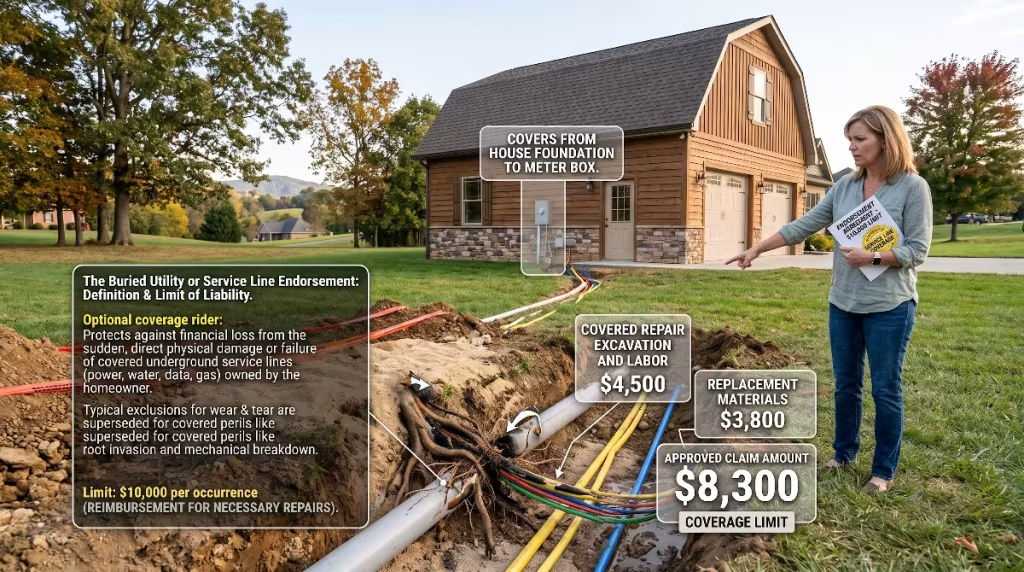
This is why an endorsement is necessary. A buried utility lines endorsement specifically overrides the standard exclusions for underground systems. It adds a dedicated pot of money specifically tailored to repairing subterranean feeds, regardless of whether the garage building itself suffered any damage.
The Buried Utility or Service Line Endorsement Defined
Insurance companies developed the buried utility lines endorsement to address the rising costs of underground residential repairs. This rider acts as a mini-policy attached to your primary insurance package.
In most areas, adding this endorsement is surprisingly affordable. It typically costs between $30 and $60 per year, which is a modest investment considering the financial protection it provides.
When you add this rider, it establishes:
- A dedicated coverage limit, usually ranging from $10,000 to $25,000 per occurrence.
- A separate, manageable deductible, which is frequently set at $500.
If your garage water line splits fifty feet out in your yard, the endorsement pays to locate the failure, dig the trench, replace the damaged piping, and backfill the hole. You pay only your $500 deductible, while the endorsement covers the remaining cost up to the selected limit. Without this rider, you would have to pay the entire balance out of your personal savings.
What Service Line Riders Typically Cover
A comprehensive buried utility lines endorsement covers a broad range of real-world problems that happen under your lawn. Understanding what is covered helps you know when to pick up the phone and contact your claims adjuster.
Most service line endorsements cover failures caused by:
- Root intrusion from nearby trees, shrubs, or ornamental landscaping that crushes, breaks, or clogs utility lines.
- Mechanical breakdown, such as a sudden internal rupture of a pipe under normal operating pressure.
- Electrical failure, including arcing, short circuits, and ground faults that destroy wires and conduits.
- Ground freeze and thaw cycles that heave the soil, snapping rigid utility lines.
- Soil compaction caused by delivery trucks, lawnmowers, or personal vehicles driving across the lawn.
- Rust, rot, electrolysis, and chemical decay caused by reactive minerals in the surrounding soil.
- Accidental physical severance caused by standard excavation or hand digging, provided reasonable care was taken.
By covering these specific causes of loss, the endorsement eliminates the exclusions that normally prevent standard insurance policies from paying for underground repairs.
Crucial Exclusions and Policy Traps
While a buried utility lines rider provides excellent protection, it is not an open checkbook for every underground issue. Like all insurance products, it contains specific boundaries and limitations you must understand.
One major exclusion involves systems that are not fully connected or active. If you ran an empty PVC conduit out to a garage pad three years ago with plans to wire it later, and that conduit cracks while sitting empty, the policy will not pay to fix it. The utility lines must be active and providing an ongoing service to the structure.
Other common exclusions include:
- Well pump assemblies, deep well casings, and down-hole mechanisms. The endorsement generally covers the horizontal pipe running from the wellhead to the building, but excludes the pump motor and internal well hardware.
- Septic tanks, leech fields, and distribution boxes. The pipe carrying waste from the building to the tank is usually covered, but the septic field itself requires separate septic system coverage.
- Piping located directly beneath a structural concrete foundation. If utility lines break directly beneath a poured garage floor slab, standard endorsements may not pay for tearing out and repouring the interior structural concrete.
- Damage caused by digging without calling your local 811 locate service. If you fire up a rented mini-excavator and chop through your own power line without having the public utilities marked first, the carrier may cite gross negligence and deny the claim.
Reviewing your policy terms with an independent agent ensures you do not encounter surprises when filing a claim.
Does Homeowners Insurance Cover Private Utility Lines Between My House and Garage?
This is one of the most common questions homeowners ask. To understand the answer, you must understand where public utility responsibility ends and private property ownership begins.
The municipal water department or electric utility company only owns and maintains equipment up to the service meter. For power, their responsibility ends at the meter base mounted to the side of your home or on a dedicated service pole. For water, their responsibility ends at the street meter vault. Everything past that point is private property, owned entirely by you.
When you run subfeed utility lines from your main house out across the yard to a detached garage, those are private utility lines. The electric company will not come out to fix a severed cable between your basement and your workshop.
Under a standard homeowners policy without extra riders, private utility lines running to an outbuilding are not covered for wear, rust, or root damage. However, if you have an active buried utility lines endorsement, those private runs are protected. The rider specifically recognizes that detached structures rely on private feeds and extends coverage to the runs crossing your lawn.
Will Insurance Pay for the Excavation and Landscaping to Fix the Garage Line?
When an underground pipe breaks, the plumbing materials themselves are relatively cheap. Fifty feet of PEX tubing or PVC conduit costs very little at a local building supply store. The true expense comes from getting to the line and repairing the property afterward.
Excavation requires heavy machinery, skilled operators, and hours of labor. If the line runs underneath a concrete patio, an asphalt driveway, or expensive landscape beds, the project costs rise rapidly.
Fortunately, a quality buried utility lines endorsement covers:
- The diagnostic work needed to locate the subterranean break.
- The excavation equipment and labor needed to trench down to the damaged utility lines.
- The physical repair or complete replacement of the broken line.
- The backfilling and rough grading of the trench.
- Landscape restoration, including replacing damaged turf, re-seeding lawns, and fixing concrete or paved pathways that had to be cut during the excavation.
Because excavation and restoration make up the largest portion of any underground repair bill, having an endorsement that includes site restoration is critical for keeping out-of-pocket costs manageable.
Are Utility Company Service Line Protection Plans Better Than an Insurance Endorsement?
Many property owners receive monthly flyers in their utility bills offering private protection plans. Water companies, natural gas providers, and electrical utilities frequently market their own monthly insurance or warranty products.
While these standalone protection plans offer value in certain situations, an insurance endorsement is almost always the superior and more economical choice.
Utility company programs operate in silos. The water company plan covers only the single incoming water line from the street to your house. The electric company plan covers only the main incoming electric line. If you buy a plan for water, another for power, and another for gas, you could spend between $20 and $40 every month in separate warranty fees. Even worse, those municipal plans rarely cover the private secondary utility lines running between a house and a detached outbuilding.
By contrast, a homeowners insurance buried utility lines endorsement covers all of your underground systems under a single umbrella. For an average cost of $40 to $50 a year, one endorsement protects your water, sewer, power, gas, and communication utility lines across your entire parcel, including the lines running out to your detached garage.
Does a Service Line Claim Cover Water Damage Inside the Garage if a Pipe Bursts Underground?
When an underground water line bursts near a detached garage, water follows the path of least resistance. It can saturate the gravel backfill beneath the concrete slab, bubble up through expansion joints, and flood the interior of the building.
When this occurs, handling the claim requires two separate parts of your policy working together:
- The buried utility lines endorsement covers the costs outside the building: digging the trench, replacing the broken pipe section, and restoring your lawn.
- Your standard property coverage, specifically Coverage B, handles the physical water damage inside the building. It pays to dry out the structure, replace waterlogged drywall, and repair built-in cabinets or wall framing damaged by the flood.
- Your personal property coverage protects the contents inside the garage, such as woodworking tools, automotive equipment, lawnmowers, or stored household goods.
It is important to remember that internal water damage requires that the burst was sudden and accidental. If a pipe leaked slowly for six months and caused slow rotting of the bottom wall plates, the insurance company may deny the interior repairs due to continuous seepage exclusions. Taking quick action the moment you notice water issues helps protect your claim.
Trench Depth and Code Compliance
As a builder, I can tell you that the most effective way to avoid insurance claims altogether is to install your utility lines correctly from day one. Meeting or exceeding modern building codes prevents structural failures, electrical shorts, and freeze damage down the road.
Building codes establish minimum burial depths for private utility lines to protect them from surface impacts, garden tilling, and freezing weather. These depths vary depending on the service and the conduit material used:
| Utility Type | Conduit or Burial Method | Minimum Code Depth | Best Practice Depth | Primary Risk Avoided |
| Electrical (High-Voltage) | Direct-Burial UF-B Cable | 24 Inches | 24–30 Inches | Shovel strikes, surface vehicle weight |
| Electrical (High-Voltage) | Schedule 40 or 80 PVC Conduit | 18 Inches | 24 Inches | Physical crushing, garden tilling |
| Electrical (High-Voltage) | Rigid Metal Conduit (RMC) | 6 Inches | 12–18 Inches | Mechanical impact |
| Potable Water Supply | PEX, Copper, or Polyethylene | Below Regional Frost Line | 24–30 Inches | Freezing temperatures, burst pipes |
| Natural Gas / Propane | Polyethylene Gas Tubing | 12–18 Inches | 18–24 Inches | Ground settlement, accidental digging |
| Low-Voltage / Data | Direct-Burial or PVC Conduit | 12 Inches | 18 Inches | Aeration equipment, landscaping tools |
In our East Tennessee region, the frost line typically sits between 12 and 18 inches, depending on elevation. Placing water utility lines at least 24 inches down ensures that unusual cold snaps will not freeze the pipes supplying your garage.
Whenever you run electrical utility lines, choosing heavy-duty Schedule 80 PVC rather than thinner Schedule 40 adds substantial protection against impact and ground crushing for very little extra material cost.
Soil Preparation and Backfill Strategy
Trench depth is only half the battle. How you bed and cover your underground utility lines determines how well they hold up as the years roll by.
Our native soils are full of heavy clays and sharp limestone rocks. If an excavator digs a trench, drops a bare pipe inside, and shoves the excavated dirt and rocks right back into the hole, those rocks will press directly against the pipe walls. Over time, seasonal freeze-thaw cycles cause the ground to expand and contract, pressing sharp stones into the plastic until it cracks.
To ensure long-term performance, follow this backfill process:
- Clear the bottom of the open trench of large stones, roots, and construction debris.
- Lay down a two- to four-inch bedding layer of clean utility sand or fine stone screenings along the trench floor.
- Rest the utility lines gently on this smooth, stable bed.
- Cover the lines with another four to six inches of clean sand or stone dust, creating an protective envelope around the conduit.
- Backfill the next foot of soil using hand-shoveled dirt free from large boulders, tamping lightly to prevent future settling.
- Install high-visibility underground utility warning tape twelve inches directly above the lines. This bright plastic tape serves as a critical warning. If someone digs in the yard years later, their shovel or backhoe tooth hits the warning tape before striking the live utility lines underneath.
- Complete the final backfill with native soil, mounding it slightly above grade to allow for natural settling over the coming months.
Taking the time to prep the soil properly costs a little more during construction, but it protects your utility lines from premature failure.
Documentation and Mapping
Once a trench is closed and the grass grows back, human memory fades quickly. Five years later, you might not remember whether the electrical conduit runs straight off the corner of the back porch or curves around an old tree stump.
Failing to document buried utility lines creates substantial risk whenever you tackle future landscaping, fence building, or construction projects.
Before the backfill crew covers your open trenches, take these practical steps:
- Take clear reference photographs showing the open trench in relation to permanent landmarks, such as the garage foundation, the corner of the main house, a concrete driveway, or a property boundary pin.
- Measure the exact distance from the trench to permanent physical structures at several points along its path, noting the measurements on a simple sketch.
- Create a dedicated as-built site plan. Keep this document stored with your home records, electrical panel schedules, and property deed.
- If your installation involves multiple utility lines in a single trench, note their relative positions. For example, record that the water line sits on the left side at 24 inches, while the low-voltage communication conduit sits on a shelf twelve inches higher on the right side.
Having accurate records makes future work safe and straightforward. If an underground failure ever does occur, your contractor can pinpoint the exact path of the utility lines instantly, reducing the excavation time and cost required to make repairs.
Reviewing Declarations Pages
To determine whether your property is properly protected right now, you must inspect your insurance policy declarations page. The declarations page is the summary sheet provided with your annual policy renewal that outlines your coverage limits, deductibles, and active policy endorsements.
Do not assume you have underground protection just because your agent told you that you have comprehensive coverage. You must verify the specific wording on the page.
When reviewing your policy, look for these details:
- Look for line-item endorsements labeled as Buried Utility Lines Coverage, Service Line Endorsement, or Underground Utility Coverage.
- Check the stated limit of liability. A limit of $10,000 should be the absolute minimum for properties with detached buildings, while $20,000 or $25,000 provides much better security against extensive excavation and concrete replacement.
- Note the specific deductible assigned to the rider. Service line deductibles are usually independent of your main dwelling deductible and typically sit at $500.
- Carefully read the endorsement definitions. Look for the phrase “covered service structure” or “detached structures.” Ensure the policy covers utility lines running to secondary buildings, rather than restricting coverage to the primary feed entering the main house from the street.
If you read your declarations page and find no mention of service line protection, pick up the phone and call your insurance agent. Adding this coverage can usually be done with a brief conversation, providing valuable peace of mind for pennies a day.
Emergency Response Actions
When underground utility lines break, your immediate actions make a massive difference in controlling property damage and keeping everyone safe. A broken gas line can trigger an explosion, while a compromised electrical line poses electrocution risks, and a broken water line can wash away foundational soils.
If you suspect an underground utility failure, follow these steps:
- For suspected gas leaks, leave the area immediately. Do not flip light switches, start vehicles, or use cell phones near the garage. Once you are in a safe location, contact your gas utility provider or call 911 from a safe distance.
- For electrical failures, shut off the power at the main house breaker panel. Switch off the two-pole circuit breaker that feeds the garage subpanel. Do not attempt to reset a breaker that trips repeatedly, as this indicates a direct ground fault or short circuit along the buried utility lines.
- For plumbing breaks, close the dedicated isolation valve feeding the outbuilding. If you do not have an independent shutoff valve for the detached garage, turn off the main water shutoff valve to the entire property to prevent water from scouring the subsoil.
- Call 811 before doing any digging. Even during an emergency, federal and state safety regulations require that public underground lines be marked before mechanical excavation begins.
- Contact your insurance company to report the failure before hiring an excavation contractor. The adjuster must review the claim and document the failure before the broken pipes or wires are removed from the ground.
Taking calm, deliberate safety steps protects your family and preserves your ability to file a smooth, successful insurance claim.
Working With Licensed Trade Contractors
Repairing underground utility lines is not a do-it-yourself project. It requires skilled, licensed trade professionals who understand local building codes, soil mechanics, and safety procedures.
When hiring contractors to repair broken utility lines, you will generally need to work with:
- A licensed excavation contractor who has the proper trenching machinery, trench boxes for deep digs, and experience working around existing subterranean systems.
- A licensed master electrician to handle the diagnostic testing, conduit installation, wire pulling, and subpanel terminations.
- A licensed plumbing contractor to install code-compliant, pressure-tested water or gas piping.
To ensure your insurance company reimburses your costs without friction, demand detailed, line-itemed estimates from your contractors. The bid should clearly break out the costs for:
- Diagnostic locating fees.
- Machine excavation and hourly labor.
- New pipe, wire, and conduit materials.
- Permitting and local municipal inspection fees.
- Trench backfilling, compaction, and topsoil grading.
- Surface restoration, including repairing broken concrete, asphalt patches, and lawn re-seeding.
Submitting clear, itemized bills showing exactly how much was spent on the utility lines versus the surrounding surface repairs makes it easy for your insurance adjuster to approve your reimbursement quickly.
Long-Term Maintenance and Prevention Strategies
Once your detached garage is built and its utility lines are buried safely underground, adopting a few ongoing maintenance habits will help you avoid unexpected failures down the road.
First, be careful about what you plant near your utility runs. When you finish building a detached garage, it is natural to want to dress up the lawn with shrubs, ornamental trees, and flower beds. However, planting aggressive tree species near underground utility lines invites root trouble. Keep large trees with wide root networks at least twenty feet away from your utility trench path.
Second, protect your utility corridors from excessive surface weight. A yard is designed to support foot traffic and riding lawnmowers, not heavy delivery trucks, concrete mixers, or heavy equipment. Driving heavy vehicles across your lawn compresses the soil beneath the tires, which can bend, deform, or crack buried utility lines. If you need to have heavy materials delivered to your backyard, establish a travel path well away from your underground utilities.
Third, maintain good surface drainage. Standing water saturates the soil and makes it more prone to shifting during freeze-thaw cycles. Ensure that your yard slopes away from both the main house and the detached garage, allowing rainwater to run off rather than soaking the ground around your buried utility lines.
Finally, keep your insurance coverage up to date. As building costs, machine rental rates, and labor expenses rise, review your service line policy limits every few years. An endorsement limit of $10,000 might have covered a complete repair a decade ago, but today, extensive excavation through a paved driveway could easily exceed that amount. Adjusting your coverage to $20,000 or $25,000 ensures your insurance policy keeps pace with modern construction costs.
Building a detached garage or custom workshop is one of the most rewarding improvements you can make to your property. By pairing proper construction methods with the right insurance endorsements, you ensure that the systems running beneath your feet keep your workshop bright, warm, and fully operational for decades to come.