Introduction to Hunting Lease Liability Insurance
The Scenario: Land Ownership and Recreational Access in East Tennessee
When you spend your life working the rolling hills and hardwood ridges of East Tennessee, you learn to look at acreage through practical eyes. Whether you are walking timberland outside Kingsport, looking across pasture in Washington County, or laying out a driveway on a rural tract near Sullivan County, open land represents opportunity and responsibility. For many owners, rural property is not just an investment for a future build. It is recreation ground, family heritage, and often a source of annual revenue.
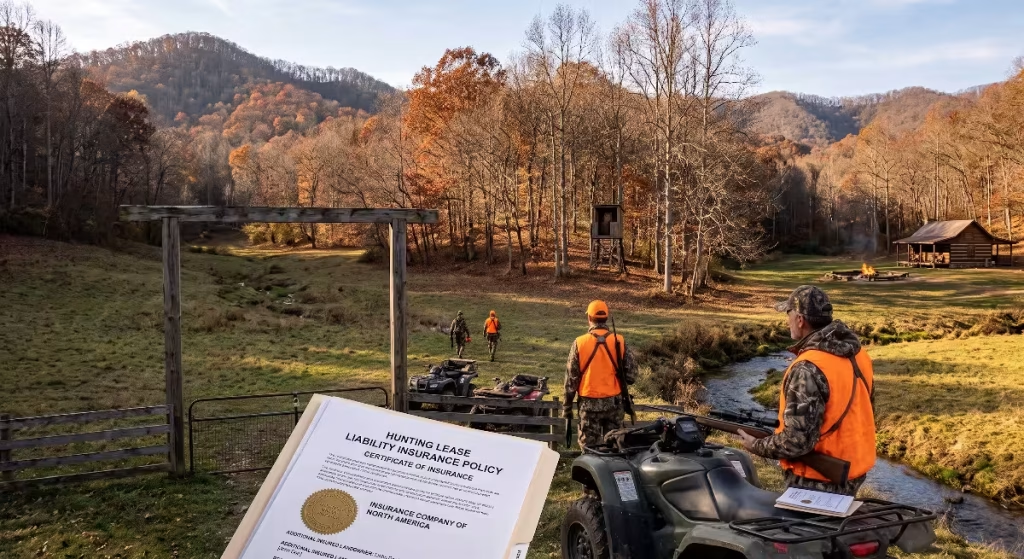
Every autumn, hundreds of property owners across our region open their acreage to sportsmen. Setting up a hunting lease allows landowners to offset property taxes, manage wildlife populations, and keep regular eyes on remote acreage. For sportsmen, securing a dedicated hunting lease is the gold standard of outdoor recreation. It offers private acreage, established stands, and relief from crowded public management areas.
However, inviting other people onto private timberland introduces real liability. Firearms, elevated stands, moving machinery, and unpredictable outdoor terrain create genuine physical hazards. When land changes hands for recreation, legal duty shifts immediately. Many folks jump into an arrangement without stopping to look at the paperwork that stands between a safe season and financial disaster.
The Common Misconception: The Magic Umbrella Policy
Many land buyers, landowners, and hunt club managers believe that a personal umbrella policy solves every legal issue on private ground. Landowners often say: “I have a two-million-dollar umbrella policy on my home and vehicles, so I am completely protected if an accident happens on my hunting lease.”
At the same time, hunters often believe that carrying their own personal umbrella policy means they are fully covered while pursuing game on leased land. They assume their personal policy protects their partners, shields their club treasury, and satisfies any legal demands the landowner might make.
This assumption is false. A personal umbrella policy is built for personal, private life. It was never written to cover a commercial hunting lease, and treating it like commercial coverage creates dangerous gaps.
The Thesis: Two Completely Different Legal Tools
While both insurance products exist to protect your savings and personal wealth, they operate under entirely separate legal frameworks. Hunting lease liability insurance is a specialized commercial general liability tool designed for recreational property operations, group activities, and multi-party defense. A personal umbrella policy is a strictly personal excess policy designed to sit on top of standard household personal insurance, like your primary home or auto coverage.
Confusing the two leaves your life savings, your home equity, and your property exposed to massive liability. If you operate or join a hunting lease, you must understand how both tools work, where their limits lie, and why you rarely want to rely on one without the other.
Key Distinction Summary Box: Fast Definitions
To keep things simple, look at the core definitions side by side:
- Hunting Lease Liability Insurance (HLLI):A commercial general liability contract written specifically for the premises, operations, and hazards of an active hunting lease.It covers the hunt club, all listed members, guests, and explicitly names the property owner as an Additional Insured. It covers accidents tied directly to sporting activities on the leased ground, regardless of who caused them.
- Personal Umbrella Policy (PUP):An individual, personal excess liability contract that adds an extra layer of protection (typically one to five million dollars) above standard personal homeowner or auto policies.It defends a specific person or household against catastrophic personal lawsuits, but it almost universally excludes commercial activities, business pursuits, and liability tied to land leased out for fee access.
Technical Breakdown: What Is Hunting Lease Liability Insurance?
Nature of Policy: Commercial General Liability for the Outdoors
Hunting lease liability insurance is a commercial policy adapted to the outdoor recreation market. In building and development, when a contractor steps onto a job site, nobody expects a standard homeowner policy to cover that work. We require commercial general liability to cover the physical site and operations.
A hunting lease operates the exact same way. When land is used for organized recreation, it carries operational risks. Hunting lease liability insurance provides primary, dollar-one premises liability protection. That means if an accident occurs on the property during normal sporting operations, this policy responds immediately. It pays legal defense costs, medical expenses, and court judgments up to the policy limit without requiring someone’s personal home policy to step forward first.
Who It Covers: The Triangle of Protection
A properly drafted policy covers three distinct groups under a single contract:
- The Hunting Club or Organization: If a group of friends forms an informal club to sign a hunting lease, the policy covers the named organization.
- Individual Club Members and Permitted Guests:Every listed member hunting the property receives active liability coverage during their time on the hunting lease.Permitted guests are also included within the policy guidelines.
- The Property Owner as an Additional Insured: This is the most important legal link for landowners. When a hunting lease policy is issued, the owner receives a Certificate of Insurance listing their name, address, and legal parcel information as an Additional Insured. If an injured hunter or third party files a lawsuit naming the owner, the insurance company must assign defense attorneys and cover judgments on behalf of the landowner.
  +-------------------------------------------------------------+
  |              HUNTING LEASE LIABILITY POLICY                 |
  +-------------------------------------------------------------+
          |                                            |
          v                                            v
  [THE HUNTING CLUB]                          [THE LANDOWNER]
  - Covers all club members                   - Listed as Additional Insured
  - Extends to permitted guests               - Direct legal defense provided
  - Protects cross-member claims              - Shields personal land equity
          |                                            |
          +---------------------+----------------------+
                                |
                                v
               [SPECIFIC COVERED HAZARDS ON PREMISES]
               * Tree stand failures
               * Accidental firearm discharges
               * Utility vehicle / ATV trail transit
               * Unintentional brush / camp fires
Targeted Inclusions: The Realities of the Woods
Unlike generic policies, a hunting lease policy is written around the specific mishaps that happen in the timber:
Tree Stand Accidents and Falls
Elevated platforms are the single largest source of serious injury and death in the woods. When a strap rots, a weld breaks, or an anchor slip occurs twenty feet up an oak tree, spinal injuries or fractures are common. A hunting lease policy covers accidents arising from the placement, maintenance, and use of portable tree stands, climbing sticks, and elevated shooting houses.
Accidental Firearm Discharges
A hunter climbs down from a blind, slips on a wet limestone outcropping, and suffers an accidental discharge. The round passes through brush and strikes a hunting partner or an adjacent property line. Hunting lease liability insurance provides explicit coverage for bodily injury caused by accidental firearm discharge during lawful sporting activities.
ATV and UTV Operations on Leased Land
Reaching back ridges requires off-road transport. A dedicated hunting lease policy covers the use of all-terrain vehicles, utility vehicles, and trail equipment when operated on the leased property for access, stand placement, trail clearing, or game recovery. Standard personal policies frequently restrict or exclude off-road vehicle liability once vehicles leave the owner’s immediate residence.
Member-to-Member Liability
This is a standard blind spot in personal lines of insurance. If Hunter A accidentally injuries Hunter B, they are often considered co-participants. Many insurance policies will refuse to defend one member against another under family or household exclusions. A commercial hunting lease liability policy includes member-to-member liability coverage, ensuring that if one club member brings a legal claim against another for an accidental injury on the hunting lease, the policy defends the claim.
Guest Liability and Accidental Fire Damage
When dry autumn winds sweep through mountain hollows, a small warming fire, camp stove, or catalytic heater can ignite dead brush. A hunting lease policy provides legal defense and property damage liability if an accidental fire damages timber stands, perimeter fencing, outbuildings, or neighboring tracts.
Technical Breakdown: What Is a Personal Umbrella Policy?
Nature of Policy: Secondary Excess Liability
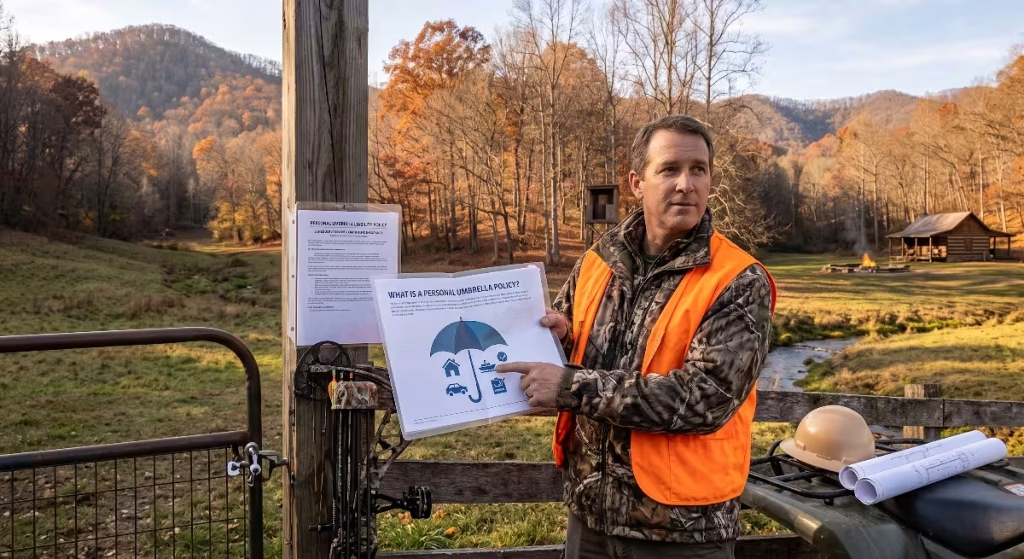
A personal umbrella policy (PUP) is a vital tool for family asset protection, but you have to understand how it functions. Think of it as an oversized sheet of safety glass sitting above your daily life. It does not provide primary, front-line insurance. Instead, it functions as secondary or excess coverage.
For an umbrella policy to respond to an incident, two conditions must occur:
- The claim must stem from an underlying personal policy that is currently active and in good standing, such as your homeowner or auto liability policy.
- The loss must completely exhaust the primary limit of that underlying policy.
If your home policy provides $300,000 in personal liability, your personal umbrella policy will not pay a single penny until that full $300,000 has been spent defending the claim or paying settlements. If the underlying policy denies the claim or excludes the activity, the personal umbrella policy generally refuses to step in.
  +-------------------------------------------------------------+
  |              PERSONAL UMBRELLA POLICY (EXCESS)             |
  |        Only pays AFTER underlying policy limit is spent     |
  +-------------------------------------------------------------+
                                ^
                                | (Passes through after limit hit)
  +-------------------------------------------------------------+
  |               UNDERLYING HOMEOWNER'S POLICY                 |
  |       Standard Personal Liability (e.g., $300k limit)       |
  +-------------------------------------------------------------+
                                X  <-- (BLOCKED BY EXCLUSIONS)
                                |
                   [PAID HUNTING LEASE OCCURRENCE]
           * Commercial activity exclusion voids the base policy
           * No primary payout = Personal umbrella never activates
How Coverage Operates: Follow-Form Mechanics
In insurance terms, most modern personal umbrellas operate on what is called a “follow-form” structure. That means the umbrella policy follows the rules, definitions, and exclusions written into your primary homeowner contract. If your primary homeowner policy contains an exclusion for business enterprises, commercial land access, or motorized trail vehicles, the umbrella policy inherits those exact same exclusions. You cannot fix a bad foundation by building a bigger roof, and you cannot fix an excluded claim by purchasing a larger umbrella policy.
What It Does Well: Protecting Personal Assets
To be fair to the personal umbrella, it serves an important purpose for everyday risks. If you are driving your truck down the highway to go hunting and cause a multi-vehicle accident, your auto insurance pays first. If the medical costs exceed your auto policy limits, your personal umbrella policy steps forward to protect your bank accounts, wages, and home from being seized.
Similarly, if you are hunting on public land (like a wildlife management area or national forest), you are not operating a business or collecting fees. If you accidentally cause property damage or injury there, your personal homeowner liability and your personal umbrella policy generally protect you.
The Critical Gaps in a Hunting Context
When you cross into the world of an active hunting lease, the personal umbrella breaks down for several major reasons:
The Business Pursuits Exclusion
This is the single most common reason insurance carriers deny claims on leased land. Every standard homeowner and personal umbrella policy contains a strict business pursuits exclusion. The moment a property owner charges a hunter or a club a fee to step onto the property, the legal status of that land changes. In the eyes of an insurance underwriter, you are no longer using private land for personal enjoyment; you are running a commercial enterprise.
Even if you only charge a couple of dollars an acre to help pay the annual county property taxes, insurance carriers consider that commercial revenue. If an accident occurs, the carrier will point directly to the business exclusion, deny defense, and leave the property owner completely on their own.
Premises Hazards and Land Conditions
A personal umbrella policy follows the policyholder; it does not protect the condition of the real estate for outside commercial users. If an old logging road collapses beneath a hunter’s vehicle, or an unmarked barbed-wire fence causes a catastrophic injury, that is a premises liability claim. An umbrella policy held by the hunter does not cover the physical hazards of the landowner’s tract, and the landowner’s personal umbrella will exclude the incident because the property was under a paid hunting lease.
Lack of Additional Insured Status
A hunter’s personal umbrella policy protects only that individual hunter and their immediate resident household. It cannot name the landowner as an Additional Insured. If a member of the public or an injured hunter sues the property owner, the hunter’s personal insurance company owes the landowner zero legal defense, zero support, and zero indemnity.
Head-to-Head Comparison: Structural Differences
To understand why these policies cannot replace one another, we have to look at how their contracts are built. The following breakdown shows how each policy handles key operational and legal situations.
| Feature or Provision | Hunting Lease Liability Insurance (HLLI) | Personal Umbrella Policy (PUP) |
| Primary Classification | Commercial General Liability (CGL). | Personal Excess Liability. |
| Trigger Point | Primary: Pays from dollar one with zero deductible. | Secondary: Activates only after underlying limit is fully paid. |
| Named Insureds | Club entity, all listed members, and permitted guests. | Named policyholder, spouse, and resident relatives. |
| Landowner Protection | Landowner named as Additional Insured with defense rights. | Landowner cannot be added as an Additional Insured. |
| Commercial Revenue Handling | Designed specifically for paid, fee-access recreational leases. | Excludes all claims arising from commercial or business leases. |
| Premises Defect Defense | Covers accidents arising from terrain, roads, and land hazards. | Excluded if property is leased; otherwise limited to personal home. |
| Member-to-Member Protection | Included: Hunter A can be defended if sued by Hunter B. | Generally excluded under co-insured or household clauses. |
| ATV and Utility Vehicles | Covers trail transit and maintenance on the hunting lease. | Frequently excluded or requires expensive standalone vehicle policies. |
| Annual Pricing Model | Flat acreage or membership rate (often $200 to $400). | Underwritten per household (homes, autos, youthful drivers). |
Legal Mechanics: Landowners vs. Lessees
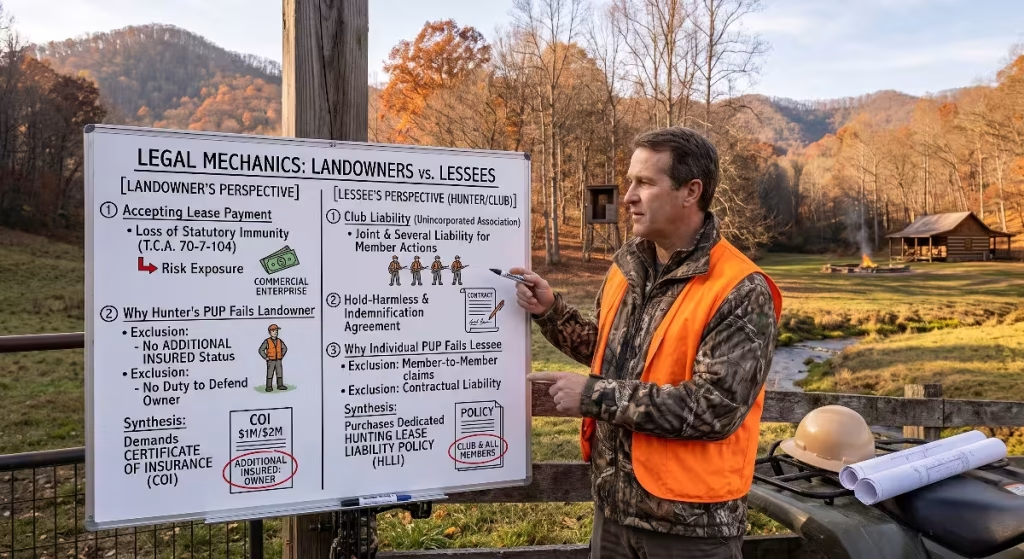
Understanding how liability moves through a legal dispute requires looking at the separate risks faced by the person who owns the dirt and the people who hunt on it.
The Landowner’s Perspective
Why Relying on a Hunter’s Umbrella Is a Costly Mistake
Many rural landowners believe that requiring a hunter to show proof of a personal umbrella policy is enough to protect the farm. This creates serious legal exposure.
First, a hunter’s personal umbrella policy has no duty to defend the landowner. If a hunter falls from a stand, their family’s attorney will sue the landowner, claiming the tree was rotted or that the landowner failed to warn of an unsafe condition. When the landowner turns to the hunter’s insurance company for a legal defense, that company will deny the request.
Second, the landowner has no control over the hunter’s personal umbrella policy. The hunter could let the policy lapse for non-payment the week after showing you the declaration page, and you would never receive a cancellation notice. A proper hunting lease liability policy requires the carrier to notify the Additional Insured if coverage is canceled.
The Loss of Recreational Use Statutory Immunity
In our state, landowners enjoy legal protections designed to encourage open outdoor recreation. Under Tennessee Code Annotated Section 70-7-102, a property owner owes no duty of care to keep their land safe for entry or use by others for recreational activities like hunting, fishing, or camping. If you grant someone free permission to walk your ridge and hunt deer, that person generally cannot hold you liable for natural hazards, sinkholes, falling limbs, or uneven ground.
However, the statute contains a major legal exception that many landowners miss. Under Tennessee Code Annotated Section 70-7-104, that statutory liability shield vanishes if the permission to enter the land was granted for a fee, rent, or other financial consideration.
The moment a landowner accepts payment for a hunting lease, they lose the legal immunity of the Tennessee Recreational Use Statute.
               [TENNESSEE LANDOWNER RECREATIONAL ACCESS]
                                  |
                                  v
                   Is access free or paid for a fee?
                                  |
         +------------------------+------------------------+
         |                                                 |
         v                                                 v
    [FREE ACCESS]                                    [PAID LEASE FEE]
  Protected by T.C.A. § 70-7-102                   Immunity REMOVED under § 70-7-104
  - No duty to keep land safe                      - Owner held to higher legal standard
  - Broad statutory immunity applies               - Standard farm policies deny coverage
  - Protected from ordinary negligence             - HLLI coverage REQUIRED for defense
Under common law, paying hunters become business invitees. The landowner now owes them an active duty to inspect the land, identify hazards, maintain safe roadways, and warn of hidden dangers. If an accident occurs under a paid hunting lease, the owner is judged by this higher commercial standard. Because standard farm and homeowner policies exclude paid commercial recreation, the landowner faces those lawsuits without an insurance company paying for their defense.
The Requirement for a Formal Certificate of Insurance
A handshake agreement or informal note is never enough for a hunting lease. Every landowner leasing ground must demand a formal Certificate of Insurance before anyone sets foot on the property.
This certificate must confirm three things:
- Minimum coverage limits of at least $1,000,000 per occurrence and $2,000,000 aggregate.
- The exact legal property owner listed as an Additional Insured.
- A policy effective date that spans the entire season, including spring prep and food plot installation.
The Hunter and Hunt Club Perspective
Why Personal Umbrella Policies Leave the Hunting Group Exposed
When several hunters form an informal group or club to secure a hunting lease, they operate as an unincorporated association. Under the law, each member can be held personally liable for the negligent actions of other members while engaged in group activities.
If a member of your hunting group invites a guest who accidentally damages an expensive farm machine or shoots toward a neighboring barn, the property owner will not sue just that single hunter. They will name the entire hunting club in the lawsuit.
Your individual personal umbrella policy will only pay for your own individual legal defense. It will not provide an attorney to defend the hunting club, it will not protect your fellow club members, and it will not pay for the club’s shared liability. A hunting lease liability insurance policy treats the club as a single entity, defending the entire membership together under one collective limit.
Hold-Harmless and Indemnification Agreements
Most written hunting lease agreements require the hunting club to sign an indemnification and hold-harmless clause. This clause states that if anyone sues the landowner because of the club’s presence or activities, the club must pay the landowner’s legal defense bills and settle any judgments.
If you sign that agreement and rely only on your personal umbrella policy, you have taken on a massive personal liability that your personal insurance policy refuses to cover. Personal policies generally exclude contractually assumed liabilities. Conversely, a commercial hunting lease liability insurance policy is built specifically to support and fund those lease agreements, taking that legal burden off your shoulders.
Common Questions Answered about Hunting Lease Liability
Does a personal umbrella policy cover hunting accidents?
It depends on where the accident takes place and whether any money changed hands. If you are hunting on your own primary residential property, on public land, or on a friend’s tract with free permission, your primary homeowner liability and personal umbrella policy usually protect you from third-party lawsuits.
However, if you are hunting on land under a paid hunting lease, or if you run a guiding business or charge people to hunt with you, your personal umbrella policy will exclude the incident under its commercial business exclusion. Furthermore, a personal umbrella policy never covers the premises hazards of the hunting lease property itself.
Does a farm or homeowner policy cover a hunting lease?
Almost certainly not. This is one of the most dangerous myths in rural land management. A standard homeowner or farm liability policy is underwritten for residential living and traditional agricultural operations, such as raising cattle or harvesting hay.
Those policies contain explicit exclusions for commercial recreational activities, fee-access operations, and business ventures carried out on the premises. When a landowner signs a paid hunting lease, the land is no longer solely an agricultural parcel; it is a recreational commercial property. Without an endorsement or a dedicated hunting lease liability policy, your farm insurance carrier can deny coverage for hunting claims.
  +-------------------------------------------------------------+
  |              TYPICAL RURAL FARM/HOMEOWNER POLICY            |
  +-------------------------------------------------------------+
        |                                             |
        v                                             v
  [COVERED BY BASE POLICY]                     [EXCLUDED ACTIVITIES]
  - Raising crops & timber                     - Fee-access hunting leases
  - Livestock operations                       - Commercial recreational sports
  - Incidental family guests                   - Paid guide or outfitter access
  - Personal home liability                    - Hunt club organized events
Who pays for hunting lease insurance: the landowner or the hunter?
In the hunting industry, standard practice places the responsibility of securing and paying for hunting lease liability insurance on the hunting club or hunters. The hunters purchase the policy through specialty outdoor insurance programs (such as the National Deer Association, Outdoor Underwriters, or specialty land protection firms). They provide the Certificate of Insurance to the landowner before gaining property keys or gate access codes.
However, some landowners prefer to purchase a blanket master hunting lease liability policy directly and roll that cost into the annual lease fee they charge the hunters. This ensures the landowner knows the premium was paid, the policy limits are active, and coverage remains in effect without relying on third parties.
How much does hunting lease liability insurance typically cost?
Hunting lease liability insurance is one of the most affordable commercial policies available in the insurance industry.
Pricing is typically structured on a per-acre basis with a modest minimum annual premium:
- Minimum Annual Premiums: Usually range between $200 and $350 per year for parcels under 200 to 300 acres.
- Per-Acre Rates: On larger properties, rates generally run between 15 cents and 35 cents per acre, depending on property size and membership numbers.
- Cost Factors: Factors that can increase the premium include having an active campsite, operating electrical hookups, allowing year-round ATV recreational use, or featuring bodies of water with boat docks.
For a group of four to eight hunters, the cost of hunting lease liability insurance works out to roughly $30 to $60 per hunter for an entire year of protection. That is a tiny price to pay for peace of mind.
Can a hunter sue a landowner if they have signed a liability waiver?
Yes, they can. A liability waiver is an important contract, but it is not an impenetrable shield. While a properly written liability waiver protects a landowner against ordinary negligence (such as tripping over an exposed root or slipping in mud), courts routinely throw out waivers under two common scenarios:
- Gross Negligence or Willful Misconduct:If a landowner knows about a hidden, dangerous hazard (such as an open, abandoned hand-dug well or a bridge with rotted stringers) and fails to mark it or warn the hunters, a court may rule this gross negligence.Liability waivers cannot legally excuse gross negligence or willful disregard for safety.
- Injuries to Minors: In many jurisdictions, parents cannot waive the legal rights of their minor children to sue for personal injuries. If a teenager hunts on the property and suffers an injury, the signed waiver may be set aside.
When a lawsuit is filed, the waiver does not prevent the landowner from being sued; it only serves as a legal defense during the trial. You still need an insurance company to hire and pay the defense attorneys who will present that waiver in court. Without hunting lease liability insurance, the landowner must pay thousands of dollars in legal fees out of pocket just to prove the waiver is valid.
Strategic Risk Management Framework: How to Structure Both Policies
To protect your family assets and real estate, you should not choose between hunting lease liability insurance and a personal umbrella policy. Instead, use a layered defense model that coordinates both policies.
  =============================================================
             THE THREE-LAYER RISK MANAGEMENT MODEL
  =============================================================

   LAYER 3: PERSONAL UMBRELLA POLICY (PUP)
   - Protects overall personal net worth and family savings.
   - Provides $1M-$5M in catastrophic personal liability defense.
   - Responds to off-premises, non-commercial personal incidents.
   -------------------------------------------------------------
   LAYER 2: HUNTING LEASE LIABILITY INSURANCE (HLLI)
   - First line of defense for the real estate and sporting operations.
   - Provides primary commercial defense from dollar one.
   - Names landowner as Additional Insured on the Certificate.
   - Covers club members, guests, tree stands, and firearms.
   -------------------------------------------------------------
   LAYER 1: WRITTEN LEASE AGREEMENT & WAIVERS
   - Establishes rules, boundaries, and safety expectations.
   - Contains hold-harmless and indemnification language.
   - Outlines prohibited activities and mandatory reporting.
  =============================================================
Layer 1: The Foundation (Written Lease and Hold-Harmless Agreement)
Never rely on a verbal agreement. Every hunting lease arrangement must be formalized with a clear, written contract that contains specific provisions:
- Clear Boundaries: Include a map with marked property lines, no-hunting safety zones around adjacent homes, and designated parking areas.
- Indemnification and Hold-Harmless: Clear contractual language stating that the hunters agree to defend and hold the landowner harmless from any claims arising from their use of the property.
- Mandatory Safety Rules: Strict rules regarding the mandatory use of safety harnesses in all elevated stands, alcohol bans, target practice restrictions, and game harvest rules.
- Mandatory Insurance Clause: A section stating that the lease is void unless an active hunting lease liability policy is in force and on file with the owner.
Layer 2: The Core Defense (Hunting Lease Liability Insurance)
This is the workhorse policy for the hunting lease:
- The hunting club or the landowner secures a dedicated policy providing at least $1,000,000 per occurrence and $2,000,000 aggregate coverage.
- The landowner is formally issued an Additional Insured Certificate.
- This policy provides the front-line shield. If a hunting accident occurs, this carrier handles the investigation, hires the lawyers, pays the court fees, and settles the claim without touching the landowner’s or hunters’ personal homeowner policies.
Layer 3: The Asset Shield (Personal Umbrella Policy)
Above the hunting lease policy, every hunter and landowner should maintain their own personal umbrella policy:
- Landowners and hunters should carry an umbrella policy ($1,000,000 to $5,000,000 limit) to safeguard their personal assets from catastrophic life events.
- While the personal umbrella will not defend against commercial lease claims, it provides excess liability protection for your travel to and from the property, personal pursuits off the lease, and personal life outside the recreational business.
Practical Opening Day Checklist
Before opening day of archery or gun season arrives, the landowner and hunting club leader should walk through this checklist:
[ ] 1. Written Lease Signed: Contract executed with signed liability waivers
       for every participating member and guest.
[ ] 2. Certificate in Hand: Landowner has received an active Certificate of
       Insurance listing their legal name as Additional Insured.
[ ] 3. Limits Verified: Policy provides at least $1M per occurrence and
       $2M aggregate coverage.
[ ] 4. Policy Dates Match: Insurance dates span from pre-season maintenance
       through post-season stand removal.
[ ] 5. Tree Stand Provision Confirmed: Policy explicitly includes elevated
       stands and blinds without restrictive underwriting exclusions.
[ ] 6. Vehicle Rules Clarified: ATV and utility vehicle coverage rules
       reviewed and understood by all operating members.
[ ] 7. Hazard Inspection Completed: Landowner and club leaders have walked
       the tract, marked hazards (open wells, bad crossings), and documented
       the inspection in writing.
Final Thoughts
When managed properly, a hunting lease is a great arrangement for everyone involved. For a landowner, it turns unused acreage into steady income, keeps trespassers off private property, and helps maintain healthy game herds. For hunters, it provides a safe, predictable place to hunt with family and friends.
However, good relationships rely on clear contracts and proper legal boundaries. You cannot depend on a standard personal umbrella policy to do a job it was never written to do. A personal umbrella is an excess personal safety net, not a commercial liability shield for recreational land access.
If you are an East Tennessee landowner considering a hunting lease, or if you are part of a hunting group looking to secure acreage this season, treat liability insurance with the same care you would any other property transaction. Set up a written contract, insist on a dedicated hunting lease liability policy that names the owner as an Additional Insured, and keep your personal umbrella policy in place for your household life.
Take the time to review your agreements with an insurance professional who understands rural land risks and an attorney familiar with recreational property law. Laying that legal groundwork today ensures that when opening morning comes, everyone can enjoy their time in the woods with complete peace of mind.