

When you build a custom home in the rolling hills of East Tennessee, you put your heart, vision, and hard-earned savings into every square foot. Whether you are building on a ridge overlooking Boone Lake, setting up an estate in Johnson City, or settling into the countryside near Kingsport, modern custom homes are marvels of residential engineering. Today, a custom home is not just framing lumber, brick, and drywall. It is a complex network of computers, pumps, compressors, high-voltage electrical gear, and precision climate controls.
Many builder, although,s see the invisible mechanical muscles and electrical nervous systems that make a luxury property comfortable, healthy, and functional. Most buyers assume that their standard homeowner insurance policy protects everything under their roof. Unfortunately, that assumption often leads to an expensive surprise. When a high-tech variable-speed heat pump suddenly burns out its control board, or a deep-well pump motor seizes hundreds of feet underground, standard insurance rarely pays a dime.
This is where an equipment breakdown endorsement steps in to protect your investment. In this comprehensive guide, we will examine every detail of how an equipment breakdown endorsement works, what it covers, what it excludes, and why it is one of the most vital protections you can add to your custom home insurance package.
What Is an Equipment Breakdown Endorsement?
To understand how this protection works, you must first understand insurance terminology. An equipment breakdown endorsement is an optional addition to your standard homeowners insurance policy. You might hear insurance agents call it a rider, an inland marine floater, or residential mechanical breakdown coverage. Regardless of the label, an equipment breakdown endorsement fills a massive gap left open by traditional property insurance.
A standard homeowners policy is designed around external perils. It pays when something outside your home attacks it, such as a windstorm ripping shingles off your roof, a lightning bolt striking a chimney, or a kitchen grease fire damaging cabinetry. An equipment breakdown endorsement does the exact opposite. It protects the mechanical, electrical, and pressure systems inside your home when they fail from within.
The Fundamental Difference Between Peril and Failure
In the insurance world, the difference between a hazard peril and a mechanical failure is critical. When a direct lightning strike hits your roof and causes a fire, that is a covered peril under standard dwelling coverage. However, if a sudden spike in electrical voltage travels down the utility line from the power company and destroys the microprocessors in your HVAC system, that is an internal electrical failure.
Standard home insurance explicitly excludes losses caused by internal electrical arcing, mechanical breakdown, centrifugal force tear-apart, and pressure vessel rupture. If an internal motor bearing seizes and ruins a five-ton air compressor, a standard policy will deny the claim. With an equipment breakdown endorsement added to your policy, that internal mechanical breakdown is treated as a covered loss.
The main trigger for an equipment breakdown endorsement is sudden and accidental damage. It is not a policy for items that gradually wear out over twenty years of normal operation. Instead, an equipment breakdown endorsement is triggered when a machine is operating normally, and an unexpected mechanical, electrical, or pressure failure suddenly knocks it out of commission.
Why Standard Homeowners Policies Fall Short on Modern Custom Builds
Many custom home buyers believe that buying an expensive HO-5 comprehensive insurance policy means everything is covered. An HO-5 policy is indeed an open-peril policy for your dwelling and personal property, meaning it covers any cause of loss unless that cause is specifically excluded. The problem is that mechanical failure, electrical arcing, and artificial power surges are explicitly listed on the exclusions page of almost every standard policy.
The Hazard Peril Myth
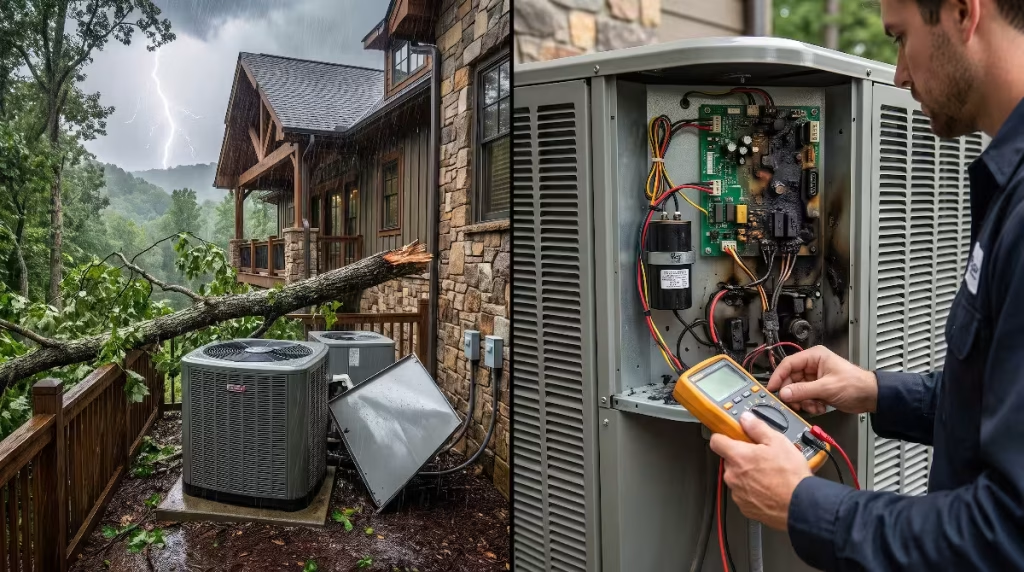
Many homeowners believe that if their air conditioning compressor dies on a hot July afternoon, insurance will buy them a new one. That is simply not true under a base policy. If a tree falls through your outdoor condenser unit, insurance pays because the tree is an external peril. But if the compressor motor suffers an electrical burnout from an internal short circuit, the insurance adjuster will point directly to the mechanical exclusion clause.
Without an equipment breakdown endorsement on your policy declarations page, you are left paying for that repair out of your own pocket. An equipment breakdown endorsement removes that specific exclusion for your home mechanical and electrical infrastructure, restoring coverage when internal failure strikes.
Custom Home Cost Multipliers
In an entry-level production home, replacing a failed furnace or simple split-system air conditioner might cost four to six thousand dollars. In a custom home, the equipment is entirely different. You are not dealing with off-the-shelf, builder-grade units.
Custom homes feature multi-zone variable-refrigerant flow systems, commercial-grade electrical switchgear, complex hydronic in-floor radiant heating, and integrated microprocessor automation. When an electrical event fries the control boards across three interconnected HVAC air handlers, the repair bill can easily exceed twenty-five thousand dollars. The sheer scale and complexity of custom home mechanicals make going without an equipment breakdown endorsement a massive financial gamble. An equipment breakdown endorsement provides the specific financial backstop needed to handle these five-figure mechanical disasters.
Mechanical Systems: Beyond Basic Heating and Cooling
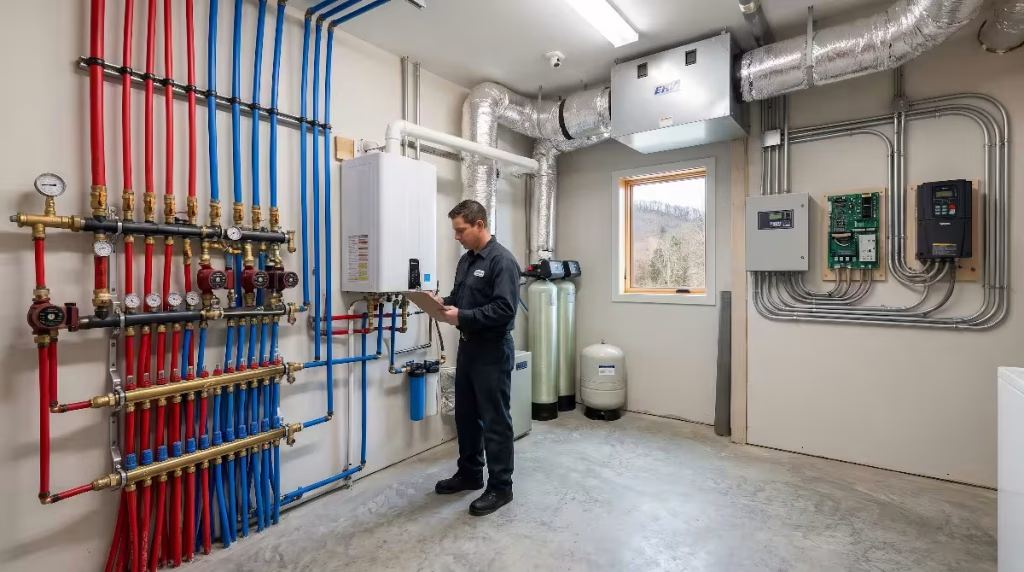
Heating, ventilation, and air conditioning are the largest mechanical investments inside any modern custom home. Here in the Tri-Cities, our winters bring sub-freezing temperatures, and our summers bring heavy humidity. Custom homes require advanced, high-efficiency equipment to keep indoor air clean and comfortable year-round.
Complex HVAC Infrastructure
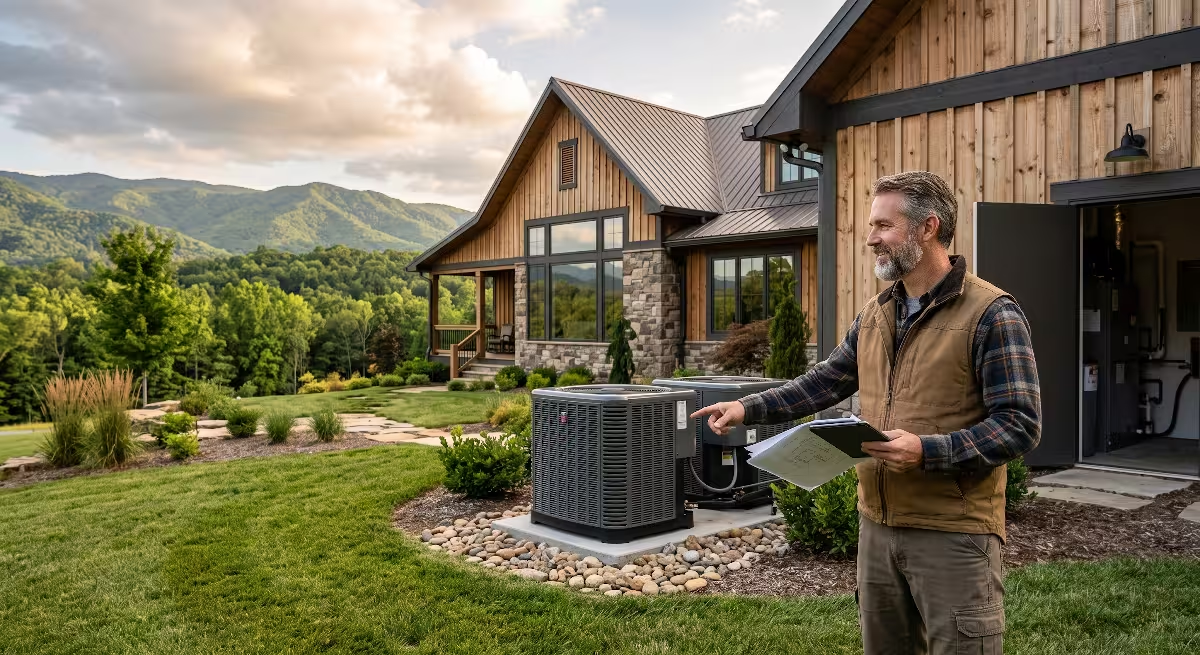
Modern custom construction has moved far beyond simple single-stage compressors. Today, high-performance homes utilize multi-stage inverter compressors that ramp up and down in tiny increments to match the heating or cooling load precisely. These units rely on sensitive electronic power inverter boards that convert alternating current to direct current.
An equipment breakdown endorsement covers these expensive inverter drive boards when an electrical surge burns them out. An equipment breakdown endorsement also covers variable-speed Electronically Commutated Motors, commonly called ECM blowers, which are easily damaged by utility voltage fluctuations.
If your home utilizes a hydronic radiant heating system, you have high-efficiency condensing boilers, motorized manifold distribution valves, and multi-speed circulation pumps hidden behind mechanical room walls. If an internal pressure relief failure causes a boiler tube to rupture, or if an electrical surge burns out the primary hydronic circulation pump, an equipment breakdown endorsement pays for the repair or replacement of those specialized components.
For luxury homes utilizing geothermal ground-source heat pumps, the stakes are even higher. Geothermal systems use closed loops of pipe buried deep underground, connected to heavy-duty heat exchangers and multi-stage water-to-air or water-to-water units. If an internal mechanical failure destroys the primary loop circulation pump or causes the compressor to lock up, your equipment breakdown endorsement steps in to cover the high cost of mechanical replacement.
Ventilation and Climate Control
Modern custom homes are built with tight, energy-efficient building envelopes. Because these houses do not leak air like older structures, they require mechanical ventilation to introduce fresh outdoor air without losing conditioned energy. Builders install
These units run continuously, balancing air intake and exhaust while transferring sensible and latent heat across specialized core membranes. If the internal dual-fan motors or digital control logic modules seize up, an equipment breakdown endorsement covers the mechanical failure.
Similarly, custom crawl spaces and basements often house heavy-duty commercial dehumidifiers and motorized zone dampers that manage climate zones across multiple floor levels. When an internal electrical breakdown strikes these dedicated climate control machines, an equipment breakdown endorsement protects your financial investment.
High-Amperage Electrical Distribution and Microprocessor Assets
The electrical system in a modern custom home looks more like the service panel of a light commercial building than a traditional residence. Large square footage, outbuildings, heated garages, backup power systems, and electric vehicle chargers require immense electrical capacity.
Main Service and Power Distribution
A typical tract home usually operates on a 200-amp electrical panel. A custom home, by contrast, frequently requires a 400-amp split service or even a 600-amp commercial-grade service entrance. These systems feature secondary distribution subpanels, heavy copper busbars, and whole-house transfer switches.
If a transformer down the road blows during a thunderstorm and sends a massive electrical wave down the secondary lines, it can cause severe electrical arcing inside your main distribution panels. Standard insurance policies often deny this damage because the damage originated as artificial power rather than a direct lightning hit.
An equipment breakdown endorsement specifically lists artificial electrical arcing and power surges as covered failure events. Furthermore, an equipment breakdown endorsement covers stationary automatic backup generators. If your twenty-four-kilowatt natural gas or propane standby generator suffers a mechanical engine seizure or an alternator winding short circuit during a power loss, an equipment breakdown endorsement pays to rebuild or replace that emergency unit.
Smart Home Automation and Microprocessors
Smart home technology has transformed modern custom home building. Today, luxury homeowners install smart breaker panels, such as Span or Leviton Smart systems, that allow digital energy monitoring and remote load-shedding. In addition, architectural lighting systems like Lutron HomeWorks or Crestron use centralized panel-mounted dimming modules and central processor racks.
These systems are essentially specialized computers wired directly into your high-voltage infrastructure. They are remarkably sensitive to dirty power, harmonic distortion, and sudden line surges. If a power fluctuation destroys the primary processor modules or burns out thirty individual smart circuit breakers, the replacement cost can easily reach tens of thousands of dollars.
An equipment breakdown endorsement covers the microprocessors and circuit architecture that manage your smart home infrastructure. By keeping an equipment breakdown endorsement active, you ensure that a single electrical spike will not leave your entire home automation backbone in ruins.
Water Supply, Sanitation, and Pressure Vessel Equipment
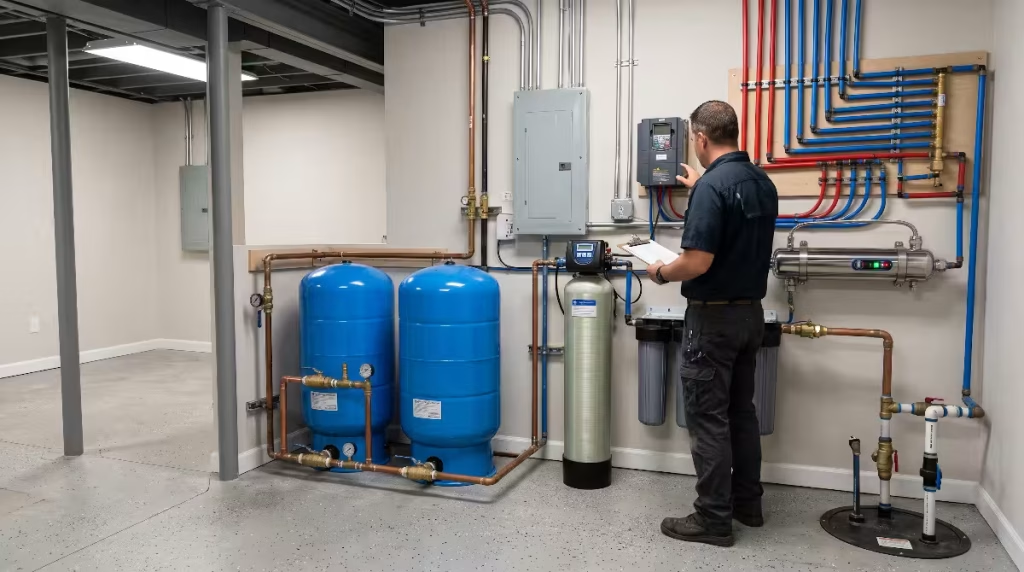
In custom home construction, water infrastructure is an essential mechanical system. Whether your home is connected to municipal utilities or draws from a private mountain aquifer, the equipment required to pump, filter, and heat that water is extensive.
Deep-Well and Sump Systems
Many luxury homes in our region are situated on private acreage where municipal water is unavailable. These properties depend on private water wells that often reach depths of three hundred to eight hundred feet.
At the bottom of that well casing sits a high-horsepower submersible well pump. That pump is wired directly to a digital constant-pressure variable-frequency drive controller and a heavy steel pressure tank located in your utility room. If the submersible pump motor burns out or the internal impeller assembly seizes, pulling hundreds of feet of drop pipe to replace that pump is a major, expensive excavation job.
An equipment breakdown endorsement covers the mechanical breakdown of that submersible pump, the control box, and the pressure vessel. Likewise, if your finished basement or foundation drainage relies on heavy-duty commercial sump pumps, or if your property utilizes an engineered septic system with high-head effluent pumps and aeration compressors, an equipment breakdown endorsement protects those critical sanitation machines from sudden mechanical and electrical failure.
Water Quality and Heating Assets
High-end custom homes rarely rely on standard tank water heaters. Instead, builders install cascading multi-unit tankless gas water heaters or high-efficiency hybrid heat pump water heaters equipped with recirculating pumps to ensure instant hot water at every fixture.
Tankless water heaters rely on compact copper or stainless steel heat exchangers, electronic flow sensors, and digital combustion controllers. If a sudden pressure failure ruptures a heat exchanger tube, or an electrical transient fries the combustion computer, an equipment breakdown endorsement covers the repair.
Furthermore, custom estate homes frequently incorporate whole-house water filtration systems. These setups include commercial-grade reverse osmosis manifolds, high-output ultraviolet disinfection systems with sensitive electronic ballasts, and motorized water softener valves. An equipment breakdown endorsement extends coverage to these expensive water treatment assets, ensuring your home pure water supply remains operational without unexpected out-of-pocket costs.
Luxury Built-In Appliances and Specialized Estate Amenities
When visitors walk into a custom home, the kitchen and entertaining spaces immediately draw their attention. The appliances installed in custom kitchens are commercial-grade machines designed for culinary enthusiasts.
Commercial-Style Kitchen Suites
Today’s custom kitchens feature integrated, built-in appliances that blend seamlessly into custom cabinetry. Refrigeration suites from manufacturers such as Sub-Zero, Thermador, and Miele do not function like ordinary standalone refrigerators. They feature dedicated, separate compressors and evaporators for the refrigerator and freezer sections, variable-speed fan motors, and computerized temperature monitoring boards.
If an electrical surge hits your home and destroys the dual compressors or the microprocessor control board on a forty-eight-inch built-in refrigerator, the repair can easily cost several thousand dollars. Replacing the entire unit can run upwards of fifteen to twenty thousand dollars.
Standard home insurance policies offer zero coverage for this type of internal mechanical or electrical breakdown. An equipment breakdown endorsement directly covers these luxury appliances. From your built-in steam convection oven and multi-zone induction cooktop to your high-end drawer dishwashers, an equipment breakdown endorsement provides the precise mechanical protection that these culinary machines require.
Specialty Living Equipment
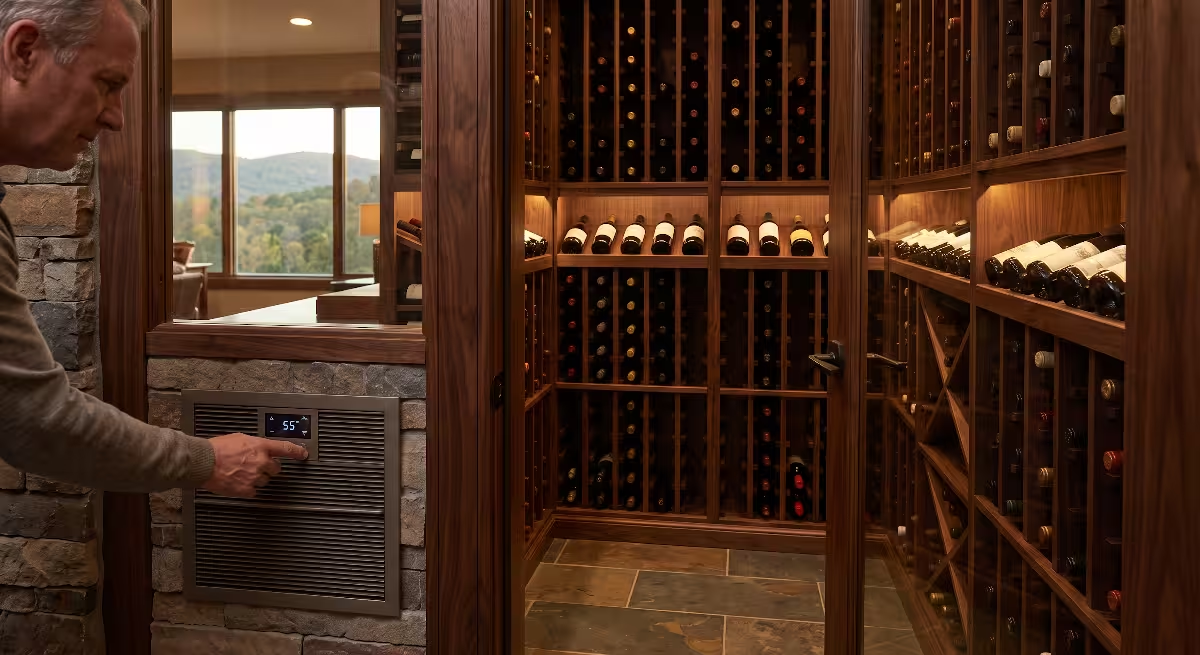
Custom homes often include luxury amenities that extend well beyond the kitchen. Many homes feature climate-controlled wine cellars equipped with dedicated through-the-wall or ducted split refrigeration systems designed to maintain strict temperature and humidity levels. If the dedicated wine cooling compressor suffers an internal mechanical seizure, an equipment breakdown endorsement covers the hardware.
Outdoor living spaces are another hallmark of modern custom builds. Saltwater swimming pools and heated spas require an array of equipment, including variable-speed filter pumps, automated chemical feeders, electronic salt chlorine generators, and natural gas pool heaters.
When an electrical surge burns out the computerized control board of your variable-speed pool pump, an equipment breakdown endorsement covers the loss. In multi-story estate homes, accessibility elevators, motorized dumbwaiters, and central vacuum power units are also recognized as covered mechanical assets under a standard equipment breakdown endorsement.
Secondary and Collateral Coverage Provisions
One of the greatest benefits of an equipment breakdown endorsement is that it does not just pay for the broken mechanical part. It also includes secondary coverages that protect against collateral damage caused by the breakdown.
Spoilage and Loss of Use
When a primary refrigeration system fails, the damage does not stop at the mechanical components. An expensive built-in refrigerator or custom wine room often holds thousands of dollars in perishable food, aged steaks, and rare wines.
Most equipment breakdown endorsement policies include a dedicated spoilage coverage provision. If your refrigeration equipment breaks down due to a covered mechanical or electrical failure, the equipment breakdown endorsement will reimburse you for the spoiled food and wine, often up to a limit of two thousand five hundred or five thousand dollars.
Importantly, this spoilage coverage under an equipment breakdown endorsement applies even if the power grid stayed on, because the loss was triggered by the failure of your own machine. That is a critical distinction, as basic insurance spoilage riders usually require an off-premises power outage to trigger payment.
Expedited Repairs and Green Upgrades
When your primary heating system fails in the dead of winter, you cannot wait three weeks for a replacement part to arrive by standard ground shipping. Many equipment breakdown endorsement policies include an expediting expense provision. This provision pays for temporary repairs, rush orders, overtime labor, and overnight air freight to get your heating or cooling system back online as fast as possible.
Additionally, forward-thinking insurers now include environmental and energy efficiency enhancements within their equipment breakdown endorsement language. Known in the industry as green upgrades, this clause allows you to replace a broken, standard-efficiency machine with a higher-efficiency, Energy Star-rated, or higher SEER2 model.
The equipment breakdown endorsement will often pay up to an extra twenty-five percent above the standard replacement cost to fund that energy-efficient upgrade. In addition, an equipment breakdown endorsement will cover the necessary costs for the environmental recovery and recycling of refrigerants, ensuring that your repairs comply with federal environmental regulations.
Head-to-Head: Endorsement vs. Home Warranty vs. 1-Year Builder Warranty
When custom home clients ask me about protecting their mechanical systems, they often get confused between three different protections: the equipment breakdown endorsement, a third-party home warranty, and the builder warranty. Let us clear up that confusion by looking at each layer directly.
Comparing the Three Protection Layers
The following breakdown illustrates how these three protective layers differ across coverage scope, costs, and service execution:
- 1-Year Builder Warranty: As a custom home builder, I provide a comprehensive one-year workmanship and materials warranty on every home I build. This warranty guarantees that everything was installed correctly according to code and industry standards. If a plumbing joint leaks or a duct connection slips off within that first year because of an installation error, the builder covers it completely. However, the builder warranty does not cover unexpected power surges coming from the electric grid or internal motor seizures that occur after manufacturer installation.
- Third-Party Home Warranty: Home warranties are annual service contracts sold by private warranty corporations. They typically cost between six hundred and fifteen hundred dollars a year. While they claim to cover wear and tear, they are notorious for strict payout limits, high service call fees, and restrictive fine print. Most importantly, when a machine breaks down, a home warranty company sends their own contracted repair technician. You have no control over who works on your expensive, custom-integrated appliances.
- Equipment Breakdown Endorsement: This rider is added directly to your property casualty insurance policy by your primary insurance carrier. It costs remarkably little, typically thirty to sixty dollars per year. It carries a low deductible, usually two hundred and fifty or five hundred dollars, and provides an enormous coverage limit, often up to fifty thousand or one hundred thousand dollars per occurrence. Best of all, an equipment breakdown endorsement allows you to hire your own certified, factory-authorized mechanical technicians to complete the repair work.
When you weigh the three options, an equipment breakdown endorsement is far superior to a third-party home warranty in terms of cost, coverage limits, and repair quality. While your builder warranty protects against initial installation defects, your equipment breakdown endorsement protects your long-term mechanical systems against internal disasters for years to come.
What the Endorsement Will Never Cover (Avoiding Claim Denials)
While an equipment breakdown endorsement is an outstanding policy addition, it is not a blank check for free home maintenance. Understanding what this endorsement excludes will keep you from facing an unexpected claim denial.
The Maintenance and Wear-and-Tear Boundary
The single most common reason an insurer denies an equipment breakdown endorsement claim is normal wear and tear. Insurance is built on the concept of sudden and accidental loss. It is not designed to replace a machine that has simply reached the end of its useful lifespan.
If an air conditioning compressor is twenty years old and gradually loses its ability to pump refrigerant due to worn rings and valves, that is normal deterioration. An equipment breakdown endorsement will not pay to replace a machine that has died of old age.
Similarly, an equipment breakdown endorsement will not cover damage caused by neglect or a lack of routine maintenance. If a tankless water heater scales up completely and fails because you never flushed the mineral deposits for five years, the adjuster will likely deny the claim. To protect your equipment breakdown endorsement coverage, you must keep clean records showing that your mechanical systems have been regularly serviced and maintained by licensed professionals.
External Events Handled by Base Policies
An equipment breakdown endorsement is specifically designed for internal failures, which means it excludes events that are already covered by the main body of your homeowners policy.
If a direct lightning strike hits your outdoor unit and leaves visible scorch marks, that claim is filed under your standard dwelling fire coverage, not your equipment breakdown endorsement. If a water pipe freezes and bursts because an ice storm knocked down power lines, the resulting water damage is covered under your standard policy hazard perils.
Likewise, damage caused by floods, surface water runoff, earth movement, or insects and rodents chewing through wiring harnesses is excluded under an equipment breakdown endorsement. An equipment breakdown endorsement focuses purely on the mechanical, electrical, and pressure failure of the machine itself.
Builder’s Bottom Line: Premium Costs and Policy Verification Checklist
From an engineering and financial standpoint, an equipment breakdown endorsement represents one of the highest value-to-cost ratios in the entire insurance market. For custom homeowners, leaving this rider off your insurance policy is an unnecessary risk.
Return on Investment Analysis
Consider the basic financial calculation. Adding an equipment breakdown endorsement to your homeowners policy typically costs between thirty-five and sixty dollars per year. Over a ten-year period, you will spend less than six hundred dollars in total premium payments for this endorsement.
Now consider the equipment inside your custom home. A variable-refrigerant flow heat pump compressor replacement can easily cost eight to twelve thousand dollars. A deep-well submersible pump replacement can run four to seven thousand dollars. A whole-house smart electrical panel failure can cost ten to twenty thousand dollars.
If you experience even one electrical surge or mechanical breakdown over a twenty-year period, the payout from your equipment breakdown endorsement will pay for decades of endorsement premiums many times over. The return on investment of an equipment breakdown endorsement is practically unmatched in residential property management.
The New Custom Home Audit Checklist
When you are preparing to close on your new custom home and transition from builder risk insurance to your permanent homeowners insurance policy, use this simple checklist to verify your equipment breakdown endorsement:
- Check the Declarations Page: Review your insurance declarations page with your agent. Confirm that an equipment breakdown endorsement is explicitly listed as an active rider or endorsement on the policy.
- Verify the Coverage Limit: Ensure your equipment breakdown endorsement carries a coverage limit that matches the scale of your home. For a custom build, insist on a minimum limit of fifty thousand dollars per occurrence, though one hundred thousand dollars is preferable for larger estates.
- Confirm the Deductible: Verify that the equipment breakdown endorsement carries its own flat deductible, typically two hundred and fifty or five hundred dollars, rather than tying back to your high percentage-based wind or hail deductible.
- Confirm Off-Premises Utility Surge Coverage: Make sure the equipment breakdown endorsement policy language specifically includes power surges originating off-premises from the utility grid.
- Assemble Your Equipment Binder: Collect all commissioning sheets, equipment cut sheets, manufacturer warranty registration cards, and startup logs from your general contractor. Store these records in an organized binder or digital folder. Proving that your equipment was operating properly from day one will make filing an equipment breakdown endorsement claim fast, simple, and painless.
- Set Up Preventative Maintenance Agreements: Establish annual or semi-annual maintenance contracts with certified heating, cooling, and plumbing contractors. Having documented proof of regular filter changes, system cleanings, and inspections completely neutralizes any attempt by an adjuster to claim wear and tear or neglect during an equipment breakdown endorsement claim.
Practical Engineering Considerations for Long-Term Protection
While an equipment breakdown endorsement provides superior financial protection, pairing this insurance rider with sound engineering practices creates the ultimate defense for your custom home. As a builder, I always recommend a layered defense strategy.
First, install a
Second, consider adding dedicated isolation valves and bypass loops around critical water filtration and pumping equipment. If a pump or filtration manifold suffers a breakdown, having bypass capability allows your household to maintain basic water service while your certified technician sources the replacement parts through your equipment breakdown endorsement claim.
Third, ensure your mechanical rooms are properly ventilated and conditioned. Even the finest variable-speed compressors and computerized smart panels will suffer premature failure if they are installed in unconditioned, sweltering attics or damp, unsealed basements. By creating a clean, conditioned envelope for your mechanical infrastructure, you minimize mechanical stress while ensuring that any sudden failure that does occur is unambiguously covered under the terms of your equipment breakdown endorsement.
Summary of Coverage Benefits
To summarize everything we have examined, an equipment breakdown endorsement gives the modern custom homeowner peace of mind across every major household system. It bridges the dangerous gap between external hazard insurance and high-priced, restrictive service contracts.
With an equipment breakdown endorsement, your high-performance multi-stage HVAC systems, in-floor radiant heating boilers, and ventilation units are fully protected against internal motor burnout and mechanical lockup. Your commercial-grade 400-amp electrical distribution panels, backup generators, and delicate smart home processors are shielded from sudden artificial electrical surges and arcing.
Furthermore, an equipment breakdown endorsement safeguards your private water supply, deep-well pumps, and sanitation equipment, while extending complete mechanical coverage to luxury kitchen suites, wine cellars, and swimming pool machinery. When you add in the reimbursement for spoiled food, expedited shipping for custom replacement parts, and allowances for modern energy-efficient green upgrades, the value becomes undeniable.
Building a custom home is an extraordinary milestone. You carefully select your architectural designs, choose your interior finishes, and invest in top-tier mechanical systems to create an enduring, comfortable sanctuary for your family. Making sure your insurance package includes a comprehensive equipment breakdown endorsement is the final, essential step in protecting that masterpiece for the decades ahead.