
When you buy land or start laying out a custom home in East Tennessee, you are usually thinking about the view, the floor plan, the foundation, and the quiet beauty of our hills. There is nothing quite like looking out over the rolling ridges and planning where the front porch will sit.
At the exact same time, decades in construction and engineering teach you that every project begins with clear lines on the earth and a clear grasp of the law. Disagreements over property borders are far more than a nuisance between neighbors. When land lines become blurry, you run straight into legal complications regarding who holds control over the ground. If someone wanders onto that disputed strip of dirt and gets hurt, questions about trespasser injury liability quickly surface. A trespasser injury on an uncertain border can turn an exciting custom home project into an expensive, stressful lawsuit.
In this guide, we are going to look closely at boundary line conflicts and the reality of a trespasser injury in Tennessee. We will break down how property boundaries are defined, how state statutes treat premises liability, what happens when someone enters land without permission, and practical building steps to protect yourself. By keeping our approach structured, precise, and practical, you will have the knowledge you need to build your home on a solid legal and physical foundation.
Where Land Lines and Legal Risk Intersect in East Tennessee
Building a custom home should be a rewarding adventure, but unexpected physical conditions often lead to legal headaches. When a parcel has an uncertain boundary, any physical event that takes place on that uncertain patch brings legal exposure. A trespasser injury might occur when an uninvited walker cuts across your wooded boundary line and falls into an open trench. The first question asked by insurance carriers and lawyers is not merely who holds the deed, but who controls the area where the trespasser injury took place.
The stakes climb dramatically when you combine boundary conflicts with a physical mishap. You might think your neighbor owns the overgrown ditch line, while your neighbor believes it is your duty to maintain it. If an unexpected guest wanders through that ditch line and experiences a severe trespasser injury, both you and your neighbor could be named in a civil suit. When courts sort out the dispute, they look at who had dominion over that specific ground.
Understanding this connection is essential for any responsible land buyer or home builder. You cannot afford to treat your boundaries as loose approximations. If you overlook property markers, you leave your financial investment open to border disputes and costly claims stemming from an unexpected trespasser injury.
The Tri-Cities Reality: Rolling Land, Old Deeds, and Modern Lots
The geography of upper East Tennessee makes land ownership both picturesque and challenging. In places like Johnson City, Bristol, and Kingsport, parcels often feature steep grades, dense hardwood hollows, limestone outcrops, and winding creek beds. A large number of properties in our region trace back through deeds that are decades or even a century old.
Older deeds frequently use metes and bounds descriptions based on natural monuments that no longer exist. You might read an old deed that references an old oak tree, a pile of river rocks, or the centerline of an old wagon trace. Over forty or fifty years, trees fall, creeks change course during heavy spring downpours, and farm lanes disappear under modern asphalt. When new residential subdivisions expand into these legacy farmlands, the modern boundary pins do not always align cleanly with the descriptions written generations ago.
This terrain creates blind spots. An uninvited visitor walking an old logging path might not realize they have crossed onto private ground. If that uninvited visitor sustains a trespasser injury on a steep bank or on uneven terrain, the legal fallout hits the person who appears to control that zone. Because our regional terrain is rugged, the physical risk of a slip, trip, or fall is inherently higher. That makes understanding the exact perimeter of your property essential before grading equipment ever rolls onto the lot.
The Stakes: How Boundary Fights Expand Your Legal Exposure
A boundary dispute usually starts small. Maybe a neighbor points out that your gravel driveway seems to cut across a corner of their lot, or maybe you notice their newly stacked firewood sits inside your tree line. While many people view this as a minor disagreement to iron out later, letting it linger creates legal vulnerabilities.
If someone steps onto that disputed strip and suffers a trespasser injury, you cannot simply say the line was unsettled so it is not your problem. In personal injury cases, an injured party looks for compensation from anyone who held authority, did construction work, or maintained the property. If you altered that border zone by digging footings, stacking logs, or clearing saplings, the court may view you as the party in possession of the land where the trespasser injury happened.
Additionally, defending yourself in court against a trespasser injury claim requires legal counsel, time away from your work, and considerable stress. If your title insurance company discovers that the incident occurred on land subject to an unresolved boundary dispute, coverage complications can quickly arise. Resolving boundary questions early on is therefore the first line of defense against being pulled into an avoidable trespasser injury dispute.
Common Causes of Disputed Lines in Custom Home Building

Boundary line fights rarely happen because people intentionally want to steal dirt from their neighbors. Most often, they stem from honest mistakes, careless assumptions, and poor site planning during the construction process.
Outdated Surveys and Missing Pins
A buyer often relies on a property survey completed twenty or thirty years ago to save money at closing. Over decades, iron survey pins get pulled up by farm equipment, buried under inches of topsoil, or moved during utility work. Relying on an outdated survey without finding the physical pins in the dirt is an invitation for conflict. If you misjudge where your dirt ends, an entrant might experience a trespasser injury in an area you mistakenly claimed and altered.
Contractor Over-Clearing and Grading
When heavy machinery arrives on a job site, excavator operators and grading crews need clear guidance. If boundary lines are not visibly marked with bright survey ribbon or temporary fencing, a bulldozer can easily clear trees twenty feet past your true lot line. This mistake angers your neighbor, disrupts the natural grade, creates erosion, and opens up hazardous drop-offs where someone can suffer a trespasser injury.
Misplaced Fences and Landscape Beds
Homeowners often build privacy fences or plant evergreen privacy screens without ordering a fresh boundary survey. People often believe that an existing fence line marks the legal property boundary, but that is frequently untrue. A fence might have been placed off line decades ago simply to avoid a rocky ledge or tree roots. When you assume a fence marks the boundary, you might perform grading or excavation work next to it. If someone walks through that area and sustains a trespasser injury, your mistaken assumption about the fence line puts you right in the middle of a lawsuit.
Adverse Possession vs. Permissive Use in Tennessee
When boundary lines are misunderstood for an extended period, landowners often begin hearing legal terms like adverse possession and prescriptive rights. In Tennessee, adverse possession allows an individual to acquire legal title to real estate owned by another person if specific statutory and common law requirements are met over time.
Color of Title Under Tennessee Code Annotated Section 28-2-101
Under Tennessee Code Annotated Section 28-2-101, an individual who holds what the law calls color of title can claim ownership of property after seven years of continuous, open, adverse, and exclusive possession. Color of title means the person holds a written document, such as a deed, that appears on its face to give them valid title, but due to some legal defect, it fails to do so. If you have been occupying and paying taxes on a strip of land described in your recorded deed for seven years, your claim can become legally enforceable against your neighbor.
Common Law Adverse Possession Without Color of Title
If a person does not have a deed describing the disputed strip of land, Tennessee common law requires twenty years of continuous, open, notorious, hostile, and exclusive possession before they can claim ownership. Simply mowing the grass on your neighbor’s property line once a month usually does not meet this strict test. The possession must be truly adverse, meaning it occurs without the true owner’s permission and sends a clear message of ownership.
The Contrast of Permissive Use
Permissive use stands in direct opposition to adverse possession. If a neighbor explicitly grants you permission to use a corner of their lot for a vegetable garden or to park a utility trailer, that use is not adverse. It can never ripen into legal ownership no matter how many years pass. However, if a visitor wanders onto that area and suffers a trespasser injury, both you and the owner may have to answer questions about who maintained the space and whether the risk was obvious.
Resolution Mechanisms for Property Line Conflicts
If you find yourself in a boundary disagreement with an adjoining property owner, handling the problem calmly and professionally is the best path forward. Getting angry or setting up hasty barricades solves nothing and increases safety risks.
Boundary Line Agreements and Quitclaim Deeds
The cleanest and most cost effective way to fix an uncertain line is through a mutual boundary line agreement. You and your neighbor can hire a licensed Tennessee land surveyor to locate the intended line, stake it, and draw up a clear plat. Once the plat is drawn, both parties sign a written boundary agreement or exchange quitclaim deeds describing the agreed upon border. Recording this document with the county register of deeds settles the issue for current owners and future buyers. It also removes confusion about who is liable if a trespasser injury occurs on either side.
Chancery Court Action to Establish Boundaries
When neighbors cannot reach an agreement, Tennessee law provides a formal judicial route. Under Tennessee Code Annotated Section 16-11-106, chancery courts hold jurisdiction to hear boundary disputes and establish the true line through legal decree. During a boundary lawsuit, the chancellor evaluates conflicting deeds, historical surveys, expert testimony from surveyors, and physical evidence on the ground. While this process brings a final legal determination, it can be expensive and take months to conclude. During that waiting period, leaving the disputed boundary unmarked invites hazards that could lead to a trespasser injury.
The Indispensable Role of a Modern Boundary Survey
In custom home construction, precision is everything. You cannot install cabinetry or balance a roof truss with guesswork, and you should never establish your building perimeter with assumptions. The single most valuable investment you can make before buying a parcel or digging a basement is a Category I boundary survey performed by a licensed Tennessee Registered Land Surveyor.
A qualified surveyor does not merely pull a string line or check a tax map. They research original deed records, cross check adjoining deeds, locate historical markers in the field, and use precision instruments to drive permanent iron pins into the soil.
When your surveyor pins the corners and tags them with high visibility caps, you gain clarity. You know exactly where your building setbacks lie, where your driveways must be poured, and where your grading limit ends. Having staked pins eliminates border arguments with neighbors. Most importantly, it gives you a defined line for safety controls, making it easy to protect your property against a potential trespasser injury on land you do not own or control.
Tennessee Premises Liability Law and the Trespasser Rule
To understand how physical harm connects to property lines, you have to examine the foundations of Tennessee premises liability law. For many years, premises liability in Tennessee relied heavily on common law classifications, separating visitors into invitees, licensees, and trespassers.
An invitee is someone invited onto the property for business or mutual benefit, such as a customer in a store or a subcontractor on a job site. A licensee is a social guest who enters with the owner’s knowledge and permission. A trespasser is defined as any person who enters the land of another without express or implied invitation, right, or permission.
Traditionally, property owners owed different standards of care to each category of entrant. While the Tennessee Supreme Court adjusted some of these categories in past decades regarding social guests and business visitors, the state legislature stepped in to establish very clear rules concerning the legal duties owed to uninvited individuals.
Understanding Tennessee Code Annotated Section 29-34-208
In 2011, the Tennessee General Assembly enacted Tennessee Code Annotated Section 29-34-208. This statute governs the civil liability of landowners and possessors of real property to trespassers. It establishes a broad rule designed to protect private property owners from unfair lawsuits brought by individuals who enter their real estate without legal right.
Under Tennessee Code Annotated Section 29-34-208, a lawful possessor of real property owes no duty of care to a trespasser and is not liable for any injury to a trespasser on the property. This statutory standard gives strong peace of mind to homeowners and builders. If an uninvited stranger walks across your wooded lot and stumbles on an exposed tree root, the general rule shields you from liability for that trespasser injury. The law recognizes that an owner cannot reasonably anticipate or protect people who enter land unlawfully.
However, the statute is not an absolute shield that excuses every dangerous action. Landowners must understand that the law carves out specific exceptions where you can still be held liable for a trespasser injury on your ground.
The Possessor Rule: Possessor vs. Titled Owner

One of the most critical aspects of Tennessee premises liability law is that liability attaches to the possessor or person in physical control of the property, not solely to the person holding the legal deed. A possessor can be an owner, a tenant, or a general contractor managing an active job site.
Under Tennessee law, a person in possession of land is someone who occupies the ground with the intent to control it, or someone who is entitled to immediate occupation if no other person is occupying it. This rule has enormous implications during a boundary dispute.
Imagine you are building a custom home and believe your property extends twenty feet past an old fence. You clear the trees, grade the bank, and store heavy drainage tiles on that strip. Meanwhile, your neighbor insists that the strip belongs to them. If an uninvited walker enters that area at night and trips over your stacked pipes, suffering a severe trespasser injury, you cannot escape responsibility simply by proving the neighbor owns the deed.
Because you occupied and exercised dominion over the strip, the court can treat you as the de facto possessor. You created the physical condition that led to the incident, and you held control over the ground. Conversely, if your neighbor actively farmed or landscaped that disputed boundary strip, they could be seen as the possessor if a trespasser injury takes place there. In legal disputes involving a trespasser injury, physical control and active maintenance often outweigh the deed description in the initial phase of litigation.
Statutory Exceptions: Willful and Wanton Conduct
While Tennessee Code Annotated Section 29-34-208 states that owners owe no general duty of care to an uninvited entrant, the statute identifies strict exceptions where liability for a trespasser injury will apply.
The primary exception involves intentional, willful, or wanton misconduct. A landowner cannot intentionally harm a trespasser or act with gross negligence that amounts to a willful disregard for human safety. For example, setting up deliberate physical traps, spring guns, hidden tripwires, or concealed pits to catch unwanted visitors is strictly illegal.
If a property owner rigs a hidden wire across a trail to catch an ATV rider, and that rider suffers a severe trespasser injury, the owner faces clear civil liability and potential criminal charges. The law does not permit using potentially deadly force or concealed violence to defend vacant real estate from an ordinary trespass. If an entrant sustains a trespasser injury due to intentional cruelty or malice, the statutory immunity is completely lost.
The Attractive Nuisance Doctrine in Tennessee
The second major exception under Tennessee Code Annotated Section 29-34-208(c) preserves the long standing attractive nuisance doctrine. This doctrine provides special legal protections for trespassing children who are too young to understand the dangers presented by artificial conditions on the land.
The law recognizes that young children lack mature judgment. They are naturally drawn to explore novel, dangerous features. If a landowner maintains an artificial condition on their ground that they know or should know attracts children, they have an affirmative duty to exercise reasonable care to protect them from a serious trespasser injury.
To hold a property owner liable for a child trespasser injury under the attractive nuisance doctrine, Tennessee courts examine several specific factors:
+-----------------------------------------------------------------------------------+
|               Tennessee Attractive Nuisance Core Legal Elements                    |
+-----------------------------------------------------------------------------------+
| 1. Condition Location:                                                            |
|    The owner knows or should know that children are likely to trespass where the  |
|    artificial condition exists.                                                   |
+-----------------------------------------------------------------------------------+
| 2. Unreasonable Risk:                                                             |
|    The condition is one the owner knows or should know involves an unreasonable   |
|    risk of death or serious bodily harm to children.                              |
+-----------------------------------------------------------------------------------+
| 3. Child Incapacity:                                                              |
|    The child, because of youth, does not discover the condition or realize the    |
|    danger involved in meddling with it.                                           |
+-----------------------------------------------------------------------------------+
| 4. Utility vs. Risk:                                                              |
|    The burden of eliminating the danger is slight compared to the risk to youth.  |
+-----------------------------------------------------------------------------------+
| 5. Failure of Care:                                                               |
|    The possessor fails to exercise reasonable care to eliminate the danger or to   |
|    otherwise protect the children from a severe trespasser injury.                |
+-----------------------------------------------------------------------------------+
On a custom home site, open basement excavations, swimming pool pits filled with murky rainwater, stacked framing timber that can slide, and unlocked construction equipment are classic attractive nuisances. If a neighborhood child wanders onto your building site and sustains a trespasser injury in an unbarricaded foundation trench, the attractive nuisance doctrine removes the ordinary trespasser protections.
Known and Discovered Trespassers: Duties Owed
Another important nuance in premises liability law involves known or discovered trespassers. While the baseline rule under Tennessee Code Annotated Section 29-34-208 protects landowners, a possessor who discovers an uninvited entrant in a position of immediate peril cannot actively place them in deeper danger.
If a property owner discovers an entrant who has entered without permission, the owner must refrain from actively creating new, hidden dangers while the entrant is present. For example, if you see an entrant walking near a steep, freshly graded drop-off at dusk, you cannot intentionally release earth moving equipment or trigger a blasting charge that causes them to fall and suffer a trespasser injury.
Furthermore, if a landowner knows that people constantly cut across a specific corner of their land—such as an established foot trail connecting two residential streets—courts may view repeated tolerated passage with closer scrutiny. While the entrant remains an unauthorized walker under the statute, allowing a hidden, man made hazard to sit directly across that well worn footpath without warning signs invites unnecessary litigation if someone suffers a trespasser injury.
High Risk Scenarios on Custom Home Sites and Acreage
Active construction sites are naturally dynamic and hazardous environments. When boundary lines are unsettled, these ordinary hazards become legal traps.
Open Excavation and Foundation Trenches
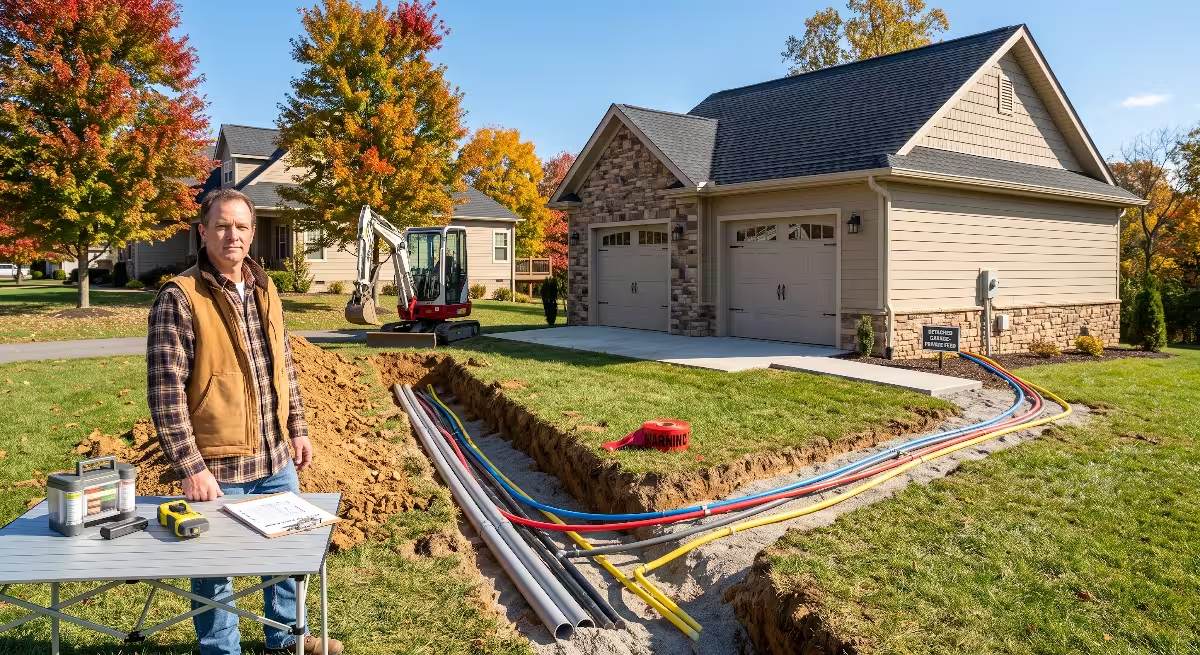
Digging a basement or foundation trench requires removing hundreds of yards of dirt, leaving vertical earthen walls that can easily reach eight to ten feet in depth. If your building site sits close to a disputed property boundary, you might pause work while surveyors and attorneys review deed lines. Leaving a deep, vertical excavation open during a prolonged dispute is dangerous.
Rainstorms can soften the trench walls, causing them to cave in. If an uninvited walker cuts through the woods on a dark evening and falls into that trench, they could suffer a life threatening trespasser injury. Because the boundary is disputed, the question of whether the trench was safely contained on your land becomes a central dispute in the lawsuit.
Timber Clearing and Dangerous Logging Debris
Preparing a site for a new custom home usually requires clearing trees. Timber crews leave behind large piles of brush, hidden stump holes, and branches caught high in the tree canopy known in the timber trade as widow-makers.
If you clear timber up to an assumed boundary line that turns out to belong to your neighbor, you have not only committed a timber trespass, but you have also left dangerous terrain behind. An uninvited hiker who trips into a hidden stump hole or is struck by a falling limb could sustain a severe trespasser injury. When multiple parties argue over ownership of the cleared timber zone, sorting out liability for that trespasser injury becomes complicated.
Barbed Wire and Dilapidated Agricultural Fencing
Much of the land developed for new homes in Johnson City, Kingsport, and surrounding areas was once cattle pasture. Old boundary lines are often marked by rusted, broken barbed wire fencing hidden under thickets of briars and honeysuckle.
When a custom home project begins, contractors often tear out sections of old fence while leaving other sections dangling. A person cutting through the underbrush can easily catch their leg on hidden barbed wire and suffer a painful puncture wound or falling trespasser injury. Property owners must take care to remove or clearly flag old agricultural wire rather than leaving it as a concealed hazard along an uncertain boundary line.
Recreational Access and the Tennessee Landowner Protection Act
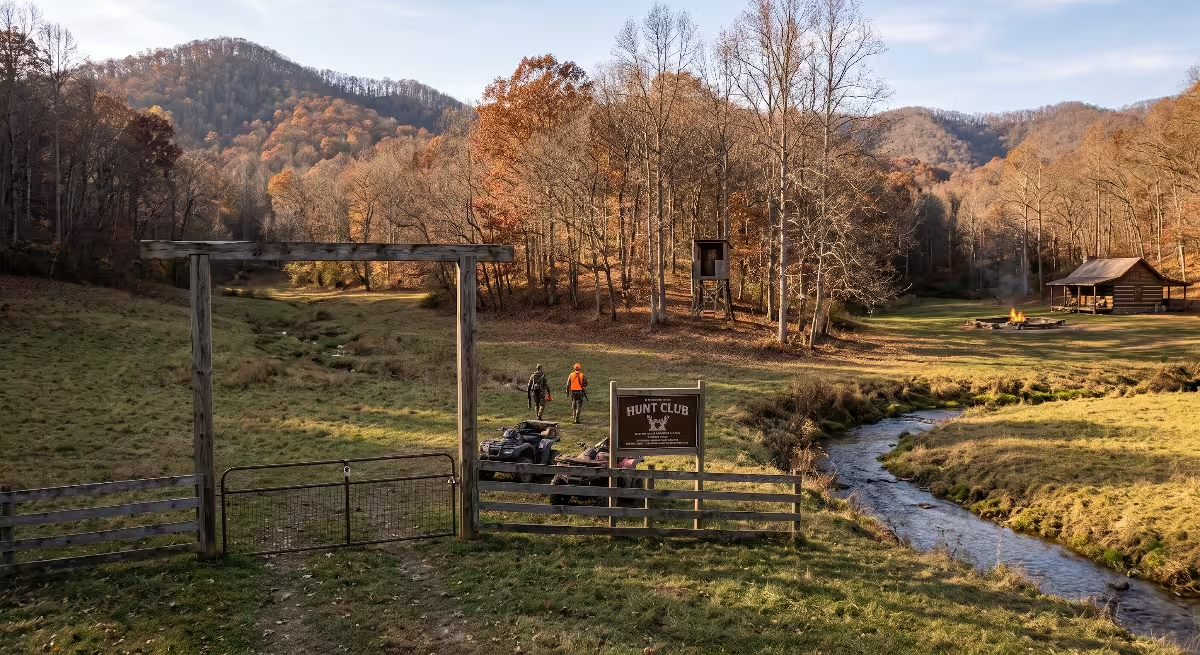
Many people who buy large acreage in East Tennessee do so to enjoy outdoor recreation like hunting, trail riding, and fishing. Landowners often allow friends or neighbors to hunt deer or ride four-wheelers across their acreage. However, combining recreational access with boundary disputes introduces distinct legal challenges.
Protections Under Tennessee Code Annotated Section 70-7-102
To encourage property owners to make private land available for outdoor activities, the state legislature passed Tennessee Code Annotated Section 70-7-102, commonly known as the Tennessee Landowner Protection Act. Under this statute, an owner, lessee, or occupant of real estate owes no duty of care to keep their land safe for entry or use by others for recreational activities, including hunting, fishing, trapping, camping, and hiking.
The statute protects you from liability if someone participating in an authorized recreational activity is injured by natural conditions on the land, such as falling over a log or slipping on a creek bank. It also shields you if a recreational entrant suffers a trespasser injury after wandering outside their permitted boundary zone into unauthorized areas.
The Loss of Protection Through Commercial Fees
The protections of Tennessee Code Annotated Section 70-7-102 only apply if the landowner does not charge a commercial fee for access. If you charge a hunter a fee to use your ground, or if you lease your acreage for commercial sporting access, the statutory liability protections are lost. You are then held to the higher legal duty of care owed to paying business visitors.
If you have an unresolved boundary dispute, granting a recreational lease is particularly dangerous. If your paying lessee crosses the disputed boundary line onto your neighbor’s property and suffers a trespasser injury, you could face liability for leasing land you did not own. Clarifying your boundaries with an ironclad survey is essential before leasing or offering hunting access.
Common Questions About Tennessee Property Disputes
When property owners research boundary disputes and premises liability, several practical questions arise consistently. Reviewing these common questions provides quick, clear answers to real world concerns.
Can a Trespasser Sue You for Getting Hurt on Your Property in Tennessee?
Yes, a trespasser can file a lawsuit, because our court systems allow anyone to submit a complaint. However, winning that lawsuit is an entirely different matter. Under Tennessee Code Annotated Section 29-34-208, the court will dismiss the case unless the claimant can prove specific legal exceptions.
To succeed, the injured party must prove that you acted with willful or intentional malice, that you set a trap or intentional hazard, or that they qualify as a young child injured by an attractive nuisance. For an ordinary adult who simply walks onto your land without permission and experiences an accidental slip or fall, Tennessee law bars recovery for that trespasser injury.
What Is the Legal Boundary Line Hierarchy in Tennessee?
When Tennessee courts must determine where a boundary line truly lies, they follow an established legal hierarchy of evidence. The law recognizes that written deed descriptions can contain drafting errors, so it ranks physical and written proof in order of legal reliability:
- Natural Monuments: Permanent natural landmarks, such as rivers, creeks, rock bluffs, or ridgelines, carry the highest legal authority.
- Artificial Monuments: Human placed markers, such as iron survey pins, stone boundary markers, marked trees, or certified corner posts, rank second.
- Adjacent Boundaries: The verified legal lines of neighboring, adjoining tracts recorded in public records rank third.
- Courses and Distances: The mathematical angles, compass bearings, and distance measurements listed on a deed description rank fourth.
- Acreage Quantity: The total estimated acreage listed in a deed holds the lowest priority. If a deed says a tract contains fifty acres, but the physical monuments and boundary courses measure only forty-two acres, the monuments and courses control the boundary.
Knowing this hierarchy helps you understand why an old iron pin found deep in the woods carries far more legal weight than an estimated acreage number on an old tax card.
Can You Put Up a Fence on a Disputed Boundary Line in Tennessee?
Erecting a permanent fence on a disputed boundary line before resolving the dispute is very risky. If you install a fence and a court later determines you placed it three feet onto your neighbor’s land, you have committed an intentional encroachment. The court can order you to tear down the fence at your own expense and pay damages to your neighbor.
Furthermore, a hastily constructed fence on an active building site can create a hazard. If you leave loose rolls of wire, unbraced posts, or sharp metal corners along an unverified line, someone might stumble into it. An uninvited entrant who suffers a trespasser injury on your unbraced fence can bring a personal injury claim against you as the party who installed the dangerous condition. The proper approach is to commission a certified boundary survey, stake the line, and confirm the findings before installing permanent fencing.
How Long Does a Neighbor Have to Claim a Property Line in Tennessee?
The time limit for claiming land across a property line depends on whether the claimant holds color of title. Under Tennessee Code Annotated Section 28-2-101, an individual claiming land under a recorded deed or written title has seven years of open, continuous, and adverse possession to cement their claim. Without color of title, Tennessee common law requires twenty full years of open, notorious, exclusive, and hostile possession.
If a neighbor spots an encroachment, such as a driveway or grading cut, they should act promptly. Failing to protest or take legal action within the statutory timeframe can result in losing title to the ground, shifting the boundary line permanently.
Builder’s Risk-Mitigation Protocol: Precision Site Management
Preventing boundary fights and insulating your property from premises liability claims requires a structured, engineering minded approach. In home building, mistakes happen when steps are rushed or skipped. By following a proven four step protocol, you can protect your financial investment and minimize the risk of a trespasser injury on your property.
+-----------------------------------------------------------------------------------+
|               Builder's Risk-Mitigation Protocol for Property Lines               |
+-----------------------------------------------------------------------------------+
| Step 1: Precision Site Verification                                               |
|    - Commission a Category I boundary survey from a licensed TN surveyor.         |
|    - Locate and expose all physical corner pins.                                  |
|    - Never rely on GIS tax maps for construction layouts.                         |
+-----------------------------------------------------------------------------------+
| Step 2: Physical Boundary and Buffer Definition                                   |
|    - Establish clear, staked limits of disturbance inside property pins.          |
|    - Install bright silt fencing and orange barrier tape along work perimeters.   |
|    - Keep a safety setback between active excavation and the true boundary.       |
+-----------------------------------------------------------------------------------+
| Step 3: Lawful Notice and Site Security                                           |
|    - Post compliant "No Trespassing" signs under TCA § 39-14-405.                 |
|    - Secure heavy equipment, lock electrical panels, and cover open pits.         |
|    - Maintain clear sightlines at all natural points of entry.                    |
+-----------------------------------------------------------------------------------+
| Step 4: Comprehensive Insurance Safeguards                                        |
|    - Secure Builder's Risk insurance with strong premises liability limits.       |
|    - Require commercial general liability certificates from all subcontractors.   |
|    - Add a personal umbrella policy covering active acreage and boundary zones.   |
+-----------------------------------------------------------------------------------+
Engineering Step 1: Precision Site Verification
The foundation of site safety is accurate measurement. Before closing on vacant land or turning the first bucket of earth, hire a licensed Tennessee Registered Land Surveyor to perform a comprehensive boundary survey.
Homeowners often look at online county GIS mapping tools and assume the displayed parcel overlays represent legal boundary lines. As an engineer and builder, I must stress: GIS mapping tools are developed strictly for property tax assessment purposes. They are not legal boundary surveys. Tax maps can easily be shifted ten, twenty, or fifty feet from actual physical pins on the ground.
Never establish a building envelope, layout a driveway, or grade a building pad based on GIS parcel lines. Relying on tax maps can lead you to build directly across a property line. If an uninvited walker enters that misidentified area and sustains a trespasser injury, you have created a severe legal problem for yourself.
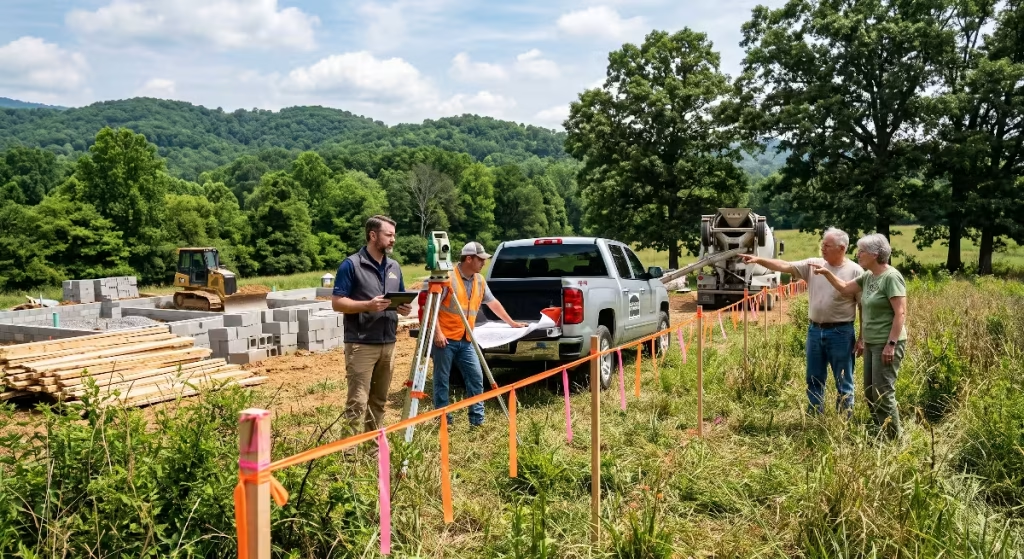
Insist that your surveyor drive iron pins with identifying plastic caps into the ground at all property corners and angle points. Walk the property with the surveyor. Have them set wooden witness stakes flagged with bright surveyor ribbon directly beside each pin so they remain easy to spot throughout excavation and framing.
Engineering Step 2: Physical Boundary and Buffer Definition
Once your surveyor has driven the pins and marked the legal perimeter, establish what builders call a limit of disturbance. A limit of disturbance is a clearly staked boundary line on the ground beyond which no machinery, clearing, or excavation is permitted to go.
On an active custom home job site, always establish your limit of disturbance safely inside your true property boundaries. Maintaining a buffer zone of ten to fifteen feet between your active construction work and the property line prevents accidental clearing across the boundary.
Install sturdy silt fencing and orange high density polyethylene safety netting along the edge of your disturbance zone. Silt fencing serves a dual purpose: it prevents sediment runoff into adjoining properties as required by the Tennessee Department of Environment and Conservation (TDEC), and it acts as an unmistakable physical boundary line.
If an entrant approaches your wooded property line at dusk, an orange safety fence makes it clear that they are entering a restricted construction zone. If that person bypasses the fence and suffers an accidental trespasser injury, having clear physical barriers provides tangible evidence that you took reasonable precautions to secure your site perimeter.
Engineering Step 3: Lawful Notice and Site Security
Under Tennessee law, clear communication reinforces your legal protections. To ensure that an uninvited entrant is treated as an unlawful trespasser under the criminal and civil law, you should post proper notice on the property.
Tennessee Code Annotated Section 39-14-405 defines the crime of criminal trespass. To establish clear legal notice that entry is prohibited, landowners should post visible signs along the perimeter. Signs should read “No Trespassing” or “Private Property – Keep Out” in clear lettering. Under state law, these signs should be posted at all normal points of ingress, such as where an old logging road, foot trail, or driveway enters the tract, as well as along the boundaries at reasonable intervals.
In addition to signs, maintain active physical site security during construction:
- Cover and Barricade Trenches: When footings or basement walls are poured, backfill around the exterior foundations as soon as the concrete cures and waterproofing passes inspection. If trenches must remain open, install wooden guardrails or barricade them with safety fence.
- Secure Machinery and Materials: At the end of every workday, ensure that all backhoes, skid steers, and mini-excavators are locked, with keys removed and buckets lowered flat to the ground. Unattended, elevated excavator buckets attract children. An injury involving unattended equipment can trigger an attractive nuisance lawsuit for a severe child trespasser injury.
- Manage Material Stacks: Stack framing lumber, drywall, and structural steel beams on level, compacted soil. Strap bundles tightly to keep them from sliding or shifting if someone climbs on them.
Taking these straightforward site precautions reduces hazards on your property and provides clear evidence that you acted responsibly if a trespasser injury ever occurs on the land.
Engineering Step 4: Comprehensive Insurance Safeguards
Even when you follow every engineering guideline, pin your property lines accurately, and secure your site, you cannot prevent every possible accident. Someone determined to cross private land can still enter your acreage and suffer an unexpected trespasser injury. Comprehensive insurance coverage is your ultimate shield.
Builder’s Risk and Premises Liability Insurance
If you are acting as your own general contractor or financing a custom build, secure a comprehensive Builder’s Risk policy combined with strong Commercial General Liability (CGL) coverage. Ensure the policy includes premises liability coverage that applies to the entire parcel, not just the footprint of the home itself.
If an entrant wanders into the woods fifty feet from the house and suffers a trespasser injury, you want your liability carrier to cover defense costs. The cost of hiring a civil litigation attorney to dismiss a frivolous trespasser injury lawsuit can quickly reach thousands of dollars. Having strong liability coverage ensures your insurance carrier provides legal defense at their expense.
Subcontractor Insurance Verification
Never allow an excavation contractor, framing crew, or site utility company onto your property without receiving an official Certificate of Insurance (COI). The certificate must verify that the contractor carries both active Workers’ Compensation coverage and Commercial General Liability coverage.
Ensure that you are named as an Additional Insured on the contractor’s general liability policy. If a subcontractor digs an open utility trench along a disputed boundary line and leaves it uncovered overnight, a resulting trespasser injury claim will target both the contractor and the landowner. Being listed as an Additional Insured requires the contractor’s insurance policy to defend you.
Homeowner Personal Umbrella Coverage
Once construction wraps up and your permanent homeowner policy takes effect, purchase a personal umbrella liability policy. Standard homeowner liability coverage typically caps at $300,000 or $500,000. For a modest annual premium, an umbrella policy adds an extra $1,000,000 to $5,000,000 in excess liability protection.
If someone suffers a severe, catastrophic trespasser injury on your property line, claims can easily exceed basic policy limits. An umbrella policy protects your home, your savings, and your real estate investments from devastating civil judgments.
Comparison: Landowner Duties Under Tennessee Premises Liability Law
To help you quickly reference how Tennessee premises liability law treats different types of visitors, review the following operational summary table:
| Entrant Category | Definition Under Tennessee Law | Legal Duty Owed by Possessor | Liability Exposure for Entrant Harm |
| Trespasser (Adult) | A person who enters real property without invitation, right, or permission. | No duty of care under TCA § 29-34-208; possessor must refrain from willful, wanton, or intentional harm. | Very Low: Shielded by statute unless intentional injury, spring guns, or hidden intentional traps are involved. |
| Trespassing Child | A child who enters without right and lacks the maturity to recognize dangers. | Duty of reasonable care under the Attractive Nuisance Doctrine (TCA § 29-34-208(c)) regarding artificial conditions. | High: Liable if the possessor fails to secure attractive, dangerous conditions like open pits, pools, or equipment. |
| Recreational User | A person entering private land for hunting, hiking, or fishing without paying a fee. | No duty of care under TCA § 70-7-102 to keep property safe from natural hazards or inspect conditions. | Very Low: Protected by the Tennessee Landowner Protection Act, provided no commercial fee is charged. |
| Licensee | A social guest who enters the property with the possessor’s knowledge and consent. | Duty to warn of known, concealed dangerous conditions that the guest cannot reasonably discover. | Moderate: Liable if the owner fails to warn of hidden hazards known to exist on the premises. |
| Invitee | A customer, client, or subcontractor entering for business purposes. | Duty to exercise reasonable care to inspect the premises, make it safe, and warn of hidden hazards. | High: Liable for injuries caused by hazards the owner knew about or should have discovered through inspection. |
How to Handle an On-Site Incident if Someone Gets Hurt
If someone does enter your property and suffers a trespasser injury, how you respond in the initial hours matters. Reacting with clear composure helps protect both the injured individual and your legal rights.
First, address any immediate medical need. If the individual is hurt, call 911 immediately. Direct first responders to the exact entrance of your property. Never move an injured individual unless they face immediate danger from fire, rising water, or structural collapse.
Second, document the scene thoroughly. Take high resolution photographs of the exact location where the trespasser injury occurred. Capture wide shots showing the surrounding terrain, any boundary fences, posted signs, and safety barriers. Photograph any physical evidence, such as fallen branches, wet clay, or misplaced materials. Document the weather conditions, time of day, and lighting at the time of the event.
Third, avoid admitting fault or discussing boundary arguments. Never tell the injured party or bystanders that the boundary line is unsettled or that a contractor made a mistake. State the basic facts clearly to law enforcement officers and emergency personnel, but refrain from offering legal opinions.
Finally, notify your insurance carrier and legal counsel immediately. Inform your insurance agent that a trespasser injury occurred on your parcel. Provide them with your survey plat, your photographs, and the police or emergency response incident report. Early communication allows your insurer’s claims team to secure evidence, interview witnesses, and prepare an effective legal defense under Tennessee Code Annotated Section 29-34-208.
Building with Confidence in East Tennessee
Building a custom home in the Tri-Cities is one of the most rewarding investments you can make. The mountains of East Tennessee provide an incredible backdrop for raising a family, enjoying retirement, and building lasting memories.
Achieving a smooth, successful build comes down to precision and preparation. Just as you demand plumb walls, level subfloors, and square corners, you must demand precision on your property lines. Do not leave your boundaries to chance, assumptions, or outdated tax maps.
Hire a licensed Tennessee Registered Land Surveyor to identify every corner pin. Respect the boundary lines by establishing a clear limit of disturbance for grading crews. Secure your job site against unauthorized visitors, and understand your rights and responsibilities under Tennessee Code Annotated Section 29-34-208.
When you combine precise site engineering with a solid understanding of premises liability law, you eliminate border disputes before they start. You protect your family and your property from unexpected claims stemming from a trespasser injury, ensuring your new home stands on ground that is physically secure and legally sound.