

Building a custom home in the rolling hills of East Tennessee is a dream for many families. Moving out to acreage in Sullivan County, finding a ridgetop parcel in Washington County, or settling along the ridges of Carter County offers unmatched mountain views and peaceful quiet. However, building off the beaten path usually means your property does not connect directly to a state highway or a city street. Instead, you reach your front door by traveling over a shared gravel lane, an old logging path, or a private subdivision drive.
When you share an access drive with neighbors, you step into a shared responsibility called private road maintenance. Keeping a road smooth, clearing drainage ditches, and handling winter ice takes steady work and real money. Even more important is the legal risk that comes with private access. If an Amazon driver slides off an icy curve, a heavy concrete truck collapses a culvert, or a visitor trips in an unfilled pothole, who pays for the damage?
Many folks assume their standard homeowners insurance policy has them covered, or that the local county highway department will step in if things get bad enough. Neither assumption is true. In Tennessee, county road crews cannot legally spend taxpayer funds to repair a private right-of-way. Without a clear legal framework and proper insurance coverage, you and your neighbors could face serious financial loss.
This guide explains how private road maintenance agreements work, why liability insurance is an essential piece of that puzzle, how mortgage lenders view shared drives, and how to protect your custom home investment for decades to come.
The Mountain Road Reality in the Tri-Cities
The Appeal and the Catch
The Tri-Cities area is famous for its rolling terrain, river valleys, and mountain views. Buyers coming to our region often want five, ten, or twenty acres where they can build a custom home surrounded by hardwood trees and open skies. Because public road frontage is limited across our ridges, developers and original landowners frequently divide larger tracts by creating private rights-of-way.
These shared paths wind through hollows, trace ridgelines, and cross seasonal creeks. The catch is simple: the moment you buy a parcel served by a private drive, you step away from municipal safety nets. You are no longer just a homeowner; you are now part of an informal transportation department responsible for ongoing private road maintenance.
Defining the Core Exposure
When people think about private road maintenance, they usually picture physical labor. They think about spreading crusher run gravel, hiring a motor grader after spring downpours, or clearing fallen pine trees after a winter storm.
The physical repairs are only half the battle. The legal exposure that comes with that road is just as real. Every time a vehicle turns off the county blacktop and enters your shared drive, someone is legally responsible for their safety. When the physical condition of the road causes an accident, an injury, or property damage, the legal system looks at who owns the land, who holds the easement, and who failed to keep the road in a reasonably safe condition. If private road maintenance is neglected, the liability can be devastating.
Why General Homeowners Insurance Falls Short
A standard homeowners insurance policy is written to protect your primary structure, personal property, and the immediate grounds surrounding your home. While it includes personal liability coverage, that protection usually ends at your property boundary or applies strictly to your own deeded parcel.
When an accident happens on a private road easement that crosses three other properties before reaching your driveway, your personal homeowners insurance policy will often deny coverage. Insurance adjusters will point out that the incident took place on shared easement land or an unowned right-of-way rather than your insured premises. If several neighbors share an unrecorded, informal drive without a joint policy, an injured party’s attorney will name every single landowner who uses the road in a personal injury lawsuit. Relying on an individual home policy to handle private road maintenance liability leaves a dangerous gap in your financial defense.
What Is a Private Road Maintenance Agreement (PRMA)?
Core Mechanics of an Agreement
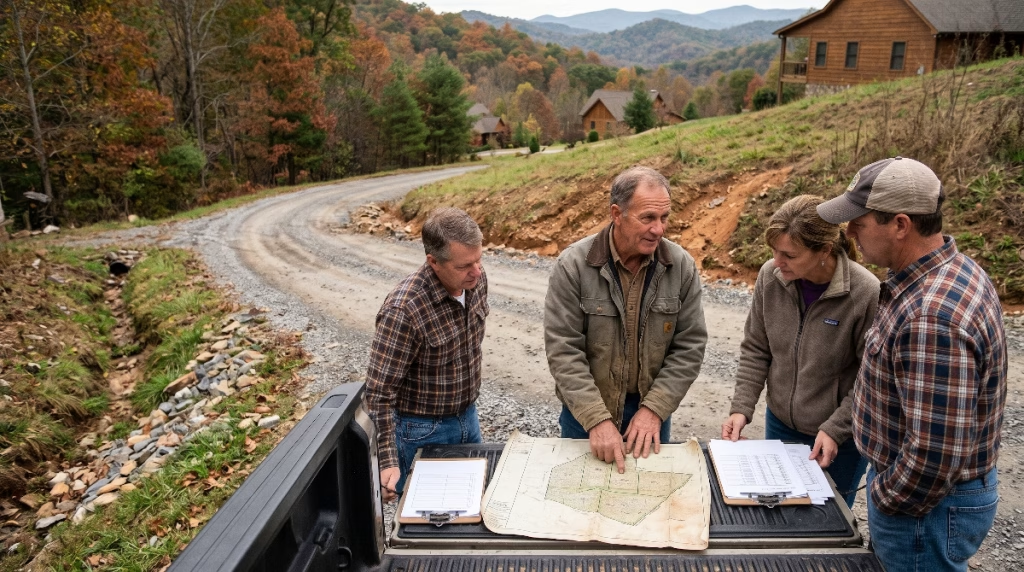
A Private Road Maintenance Agreement, commonly called a PRMA, is a recorded legal contract that binds neighboring landowners to shared duties for keeping their access road safe and open. It is not a casual handshake between folks who share a cup of coffee over the fence. A proper agreement is drafted as a formal document that runs with the land.
Running with the land means the responsibilities, costs, and rights tie directly to the property deeds. When your neighbor sells their house, the new buyer automatically steps into the exact same obligations. A solid agreement eliminates the confusion of who fixes what and sets clear rules for every owner who relies on that road for daily travel. Without a written agreement, routine private road maintenance quickly turns into bitter neighborhood arguments.
+-------------------------------------------------------------------------+
|                  CORE ELEMENTS OF A SOLID PRMA                          |
+-------------------------------------------------------------------------+
|  1. Legal Description & Survey of the Entire Easement Corridor          |
|  2. Defined List of All Participating Parcels and Owners                |
|  3. Clear Cost-Sharing Allocation Formula (Equal Share vs. Frontage)    |
|  4. Voting Rights, Meeting Quorums, and Decision-Making Rules           |
|  5. Annual Assessment Rates and Dedicated Reserve Fund Caps             |
|  6. Dispute Resolution, Arbitration, and Legal Enforcement Provisions   |
|  7. Mandatory General Liability and Property Damage Insurance Minimums  |
+-------------------------------------------------------------------------+
Key Operational Clauses
To keep an access road functional, a private road maintenance agreement must contain specific operational clauses:
Cost-Sharing Formulas
How do you divide the repair bills? There are two main approaches. The first is an equal pro-rata split, where every household pays an identical share regardless of where their house sits along the drive. The second is a distance-based or frontage-based formula, where owners living near the public road entrance pay less than owners living two miles back at the end of the hollow. In most Tri-Cities developments, an equal split per building lot works best because it avoids measuring tire wear and traffic counts between households.
Voting Rights and Quorum Definitions
What happens when three neighbors want to pave the road with asphalt, but two others only want to fill potholes with gravel? The agreement must establish voting thresholds. A healthy agreement specifies whether decisions require a simple majority of 51 percent, a supermajority of 67 percent, or unanimous consent. It also defines a quorum so that two owners cannot hold an unannounced meeting and vote to assess everyone else thousands of dollars without proper notice.
Reserve Funds for Capital Work and Seasonal Care
Private road maintenance is not just an emergency response to heavy rain. Dirt and gravel roads need fresh stone every couple of years. Asphalt roads need sealcoating every three to five years and a new structural overlay every fifteen to twenty years.
A well-run road group collects monthly, quarterly, or annual dues that go into an interest-bearing escrow reserve account. This reserve fund ensures that when winter storms drop six inches of snow on the ridge, money is already sitting in the bank to pay an independent plow operator immediately.
Lien and Collection Powers
What happens when a neighbor refuses to pay their fair share of private road maintenance? A handshake agreement leaves you with no recourse other than filing an expensive small-claims lawsuit that strains neighborly goodwill.
A formal agreement recorded at the county courthouse gives the road association or group of owners the legal authority to place an assessment lien on the defaulting neighbor’s real estate. That lien clouds their title, preventing them from selling or refinancing the home until every dollar of back maintenance fees, legal costs, and interest is paid in full.
Why Liability Insurance Must Be Explicitly Written into the PRMA
Premises Liability Scenarios on Private Drives
When a road is privately owned and maintained, ordinary premises liability principles apply. Anyone who gets hurt or suffers damage because of a hazard on the roadway can look to the responsible parties for compensation. Consider these common real-world events on private mountain roads:
        TYPICAL LIABILITY THREATS ON A SHARED DRIVEWAY

        [ Winter Ice / Snow ] ---------> Delivery Truck Slides into Ravine
        [ Blocked Culvert ] -----------> Downhill Neighbor's Basement Floods
        [ Blind Curve Overgrowth ] ----> Two Vehicles Collide Head-On
        [ Unmarked Soft Shoulder ] ----> Concrete Mixer Rolls Over on Edge
- Delivery and Service Vehicles: Every week, package delivery vans, propane tankers, trash trucks, and mail carriers navigate your shared drive. If a delivery van encounters a washed-out shoulder or an unplowed sheet of black ice, slides off the road, rolls into a creek, and leaves the driver with spinal injuries, the resulting medical bills and lost wages can easily reach hundreds of thousands of dollars.
- Stormwater and Culvert Failures: Water management is the single biggest engineering challenge in private road maintenance. If a culvert pipe gets choked with mountain laurel and leaves, heavy rain can jump the ditch line, wash out the roadbed, and send tons of mud and water directly into a neighbor’s finished walkout basement. That neighbor, or their insurance company via subrogation, will file a property damage claim against the road users responsible for maintaining that drainage structure.
- Heavy Construction Traffic: When a new custom home is being framed, dozens of heavy concrete mixers, flatbed lumber trucks, and excavation equipment use the shared drive. If the road base is poorly maintained, a forty-ton loaded dump truck can crack the asphalt edge or collapse a narrow bridge deck, causing severe equipment damage or personal injury.
Joint and Several Liability Pitfalls
If an accident occurs on an access road that lacks a formal entity and dedicated insurance, Tennessee courts can view the participating owners as an unincorporated association or general partnership.
Under the legal doctrine of joint and several liability, an injured plaintiff does not have to collect equal amounts from each neighbor. If your neighbor has no assets, the plaintiff’s legal team can pursue the homeowner with the highest net worth or the cleanest property equity for the entire judgment. If your private road maintenance system has no joint liability coverage, your personal savings, retirement funds, and home equity could be placed at risk for an accident that happened a quarter-mile from your front porch.
Indemnification and Hold-Harmless Clauses
To prevent neighbors from filing claims against one another, an effective agreement includes mutual indemnification and hold-harmless clauses.
These legal provisions state that each property owner agrees to protect, defend, and hold their neighbors harmless from any claims arising out of their own intentional acts, the actions of their personal guests, or damage caused by their contracted building crews. By tying these clauses directly to an underlying private road maintenance insurance policy, the agreement ensures that minor neighborhood incidents do not turn into contentious legal fights between adjoining families.
Types of Insurance Coverage Needed for a Private Road
A complete private road maintenance plan requires the right commercial insurance products to protect against accidents, property loss, and administrative disputes.
| Coverage Type | Typical Policy Limit | Primary Purpose | Key Protection |
| Commercial General Liability (CGL) | $1,000,000 / $2,000,000 | Bodily injury and property damage on the shared right-of-way | Covers slip-and-falls, vehicle slide-offs, and third-party claims |
| Commercial Umbrella Policy | $1,000,000 to $5,000,000 | Excess liability above primary policy limits | Protects against catastrophic, multi-vehicle, or fatal accidents |
| Hired and Non-Owned Auto | $500,000 to $1,000,000 | Liability from vehicles used on road business | Shields owners if a neighbor uses a personal truck for road tasks |
| Property / Inland Marine | Replacement Cost | Physical damage to shared road structures | Covers washed-out culverts, steel bridges, security gates, and signs |
| Directors & Officers (D&O) | $1,000,000 | Defending volunteer road managers | Shields road committee officers from neighbor lawsuits over funds |
Commercial General Liability (CGL) via a Road Association
The backbone of road protection is a Commercial General Liability policy. Rather than trying to list ten different families on an individual personal umbrella policy, the owners form a simple non-profit road association or property owners association.
The entity purchases a commercial liability policy covering the road easement parcel. A standard baseline policy provides $1,000,000 per occurrence and $2,000,000 aggregate coverage. This policy pays for legal defense attorneys, court fees, and any settlements or judgments if a third party is injured on the private right-of-way. For mountain roads with steep drop-offs or water crossings, adding a commercial umbrella policy brings essential peace of mind.
Hired and Non-Owned Auto & Contractor Endorsements
During seasonal private road maintenance, neighbors often pitch in to scrape a road or haul a load of stone. If a neighbor uses their personal heavy-duty pickup to pull an equipment drag and backs into a visitor’s car, that neighbor’s personal auto policy might argue the vehicle was engaged in commercial road work and deny coverage. A Hired and Non-Owned Auto endorsement on the road association policy bridges this gap.
When hiring professional grading, paving, or tree-trimming contractors, the road association must enforce strict risk-transfer rules. Never hire an unvetted operator who gives an estimate on a scrap of paper.
Every contractor must provide a current Certificate of Insurance (COI) proving they carry Workers’ Compensation for their crew and at least $1,000,000 in Commercial General Liability. Furthermore, the road association must be officially named as an “Additional Insured” on the contractor’s policy before any heavy equipment touches the road. This step ensures that if the contractor’s backhoe clips an underground power line or drops a boulder through a neighbor’s fence, the contractor’s insurance pays the bill.
Directors & Officers (D&O) Protection for Road Committees
In any private road group, someone has to volunteer to serve as road manager, collect the annual assessments, hire the snow plow, and inspect the drainage ditches. That volunteer neighbor takes on personal exposure.
If a disgruntled property owner feels the road manager spent too much money on asphalt patching or favored one driveway over another, they might file a lawsuit alleging mismanagement of shared funds or breach of fiduciary duty. A Directors and Officers (D&O) policy protects the volunteer board or road committee members by paying for legal defense and covering covered civil judgments. Without D&O coverage, finding anyone willing to oversee private road maintenance becomes nearly impossible.
Mortgage Underwriting: Fannie Mae, Freddie Mac, FHA, and VA Mandates
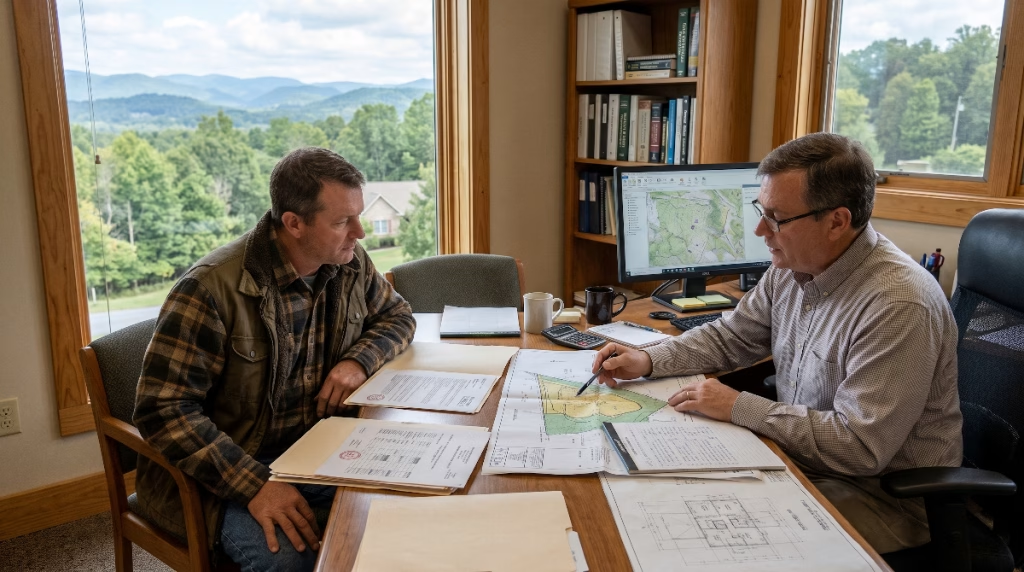
Securing liability insurance and signing an agreement does more than prevent lawsuits; it protects property values and ensures buyers can obtain mortgage financing. Major loan programs have strict rules regarding private access roads. If a private road maintenance agreement is missing or written improperly, mortgage underwriters will halt loan approvals, derailing home purchases and construction financing.
+--------------------------------------------------------------------------+
|                     MORTGAGE LENDER REQUIREMENTS                         |
+--------------------------------------------------------------------------+
|  FANNIE MAE: Requires an executed, recorded maintenance agreement with   |
|  perpetual easement access running with the land.   |
|                                                                          |
|  FREDDIE MAC: Requires permanent, all-weather ingress and egress with an |
|  enforceable cost-sharing plan among all benefited parcels.              |
|                                                                          |
|  FHA: Requires safe, continuous, all-weather road surface; recorded      |
|  maintenance agreement required by underwriter guidelines.               |
|                                                                          |
|  VA LOANS: Mandates permanent deeded access, verified safe road bed,     |
|  and a legally binding agreement signed by all affected parties.         |
+--------------------------------------------------------------------------+
Fannie Mae Guidelines
Under Fannie Mae Selling Guide Section B4-1.3-04, properties situated on a private road must have adequate vehicular access. Fannie Mae requires a legally enforceable, recorded private road maintenance agreement that outlines how the road will be kept in acceptable condition and how expenses will be shared among all users.
If Tennessee had a statutory law that automatically assigned equal road maintenance obligations to all parcel owners, Fannie Mae might waive the agreement requirement. Because Tennessee common law does not provide an automatic statutory formula for private roads, a recorded, signed agreement is mandatory for conventional financing.
Freddie Mac Standards
Freddie Mac enforces similar rules. Underwriters require clear proof that the property has permanent, legal, and all-weather access connecting to a publicly dedicated roadway. The road must be built to standards that allow emergency services, fire engines, ambulances, and police cars to reach the home at all times.
If an appraiser notes that a shared dirt lane is deeply rutted, impassable during winter conditions, or lacking a clear repair agreement, the underwriter will condition the loan on resolving those road maintenance deficiencies prior to closing.
FHA and VA Loan Requirements
Government-backed loans have very specific safety requirements. The Federal Housing Administration (FHA) requires that private roads be surfaced in a manner that provides all-weather access for ordinary passenger vehicles. Underwriters routinely verify that a binding maintenance agreement is in place to protect the marketability of the home.
The Department of Veterans Affairs (VA) guarantees home loans for active military members and veterans. The VA requires that private streets be protected by a permanent recorded easement running with the land and supported by a binding private road maintenance agreement.
If one property owner on the shared drive refuses to sign the agreement, a VA loan underwriter can decline the veteran’s loan application. For builders and developers, failing to draft a clear road agreement early in the development phase can shrink the buyer pool and reduce property values across the entire subdivision.
Common Questions Answered about Private Road Maintenance
Can you get liability insurance on a private road without an HOA?
Yes, you can secure liability insurance without forming an expensive, full-scale Homeowners Association. Many neighborhood groups form an unincorporated road association or register a simple non-profit mutual benefit entity with the Tennessee Secretary of State.
This single-purpose entity exists solely to hold the master liability insurance policy, open a bank account, collect annual road dues, and hire grading contractors. This approach avoids complex community rules, architectural review committees, or strict neighborhood restrictions while providing the liability shield your road requires.
Does homeowners insurance cover accidents on a private road easement?
Generally, no. Standard homeowners insurance policies apply directly to the deeded footprint of your insured parcel. While your personal liability may protect you if a guest slips on your private front sidewalk, it usually excludes shared access easements located away from your parcel.
When a multi-car collision occurs on an unowned, shared right-of-way, individual insurance adjusters often deny coverage, pointing out that the incident took place on shared property not listed under the individual policy’s declarations page. That coverage gap makes dedicated road association insurance essential.
Who is liable if an accident occurs on a shared driveway in Tennessee?
Under Tennessee law, liability follows the rules of comparative fault and premises negligence. If an accident happens, an injured party must prove that a dangerous condition existed, that the responsible parties knew or should have known about it, and that they failed to exercise reasonable care to correct it.
Tennessee property law distinguishes between the dominant estate (the property that benefits from the easement to reach their house) and the servient estate (the property whose land the easement physically crosses). As a general rule, the holders of the dominant easement have the primary duty to maintain the right-of-way in a safe condition.
If multiple neighbors share the easement, all participating users share that legal duty. If an accident occurs due to poor upkeep, an injured driver can sue every property owner who uses the road. Under Tennessee’s modified comparative fault rules, a plaintiff can recover damages as long as their own fault remains under 50 percent, with their final award adjusted accordingly.
How much does private road liability insurance typically cost annually?
For most small road groups serving between four and twenty homes, a Commercial General Liability policy providing $1,000,000 per occurrence and $2,000,000 aggregate coverage typically costs between $700 and $1,800 per year.
The annual premium depends on several key underwriting factors:
- The overall length and surface type of the road (gravel versus asphalt).
- Terrain features, such as steep mountain grades, sharp switchbacks, or deep roadside ravines.
- The presence of bridge structures, major drainage culverts, or automated security gates.
- The total number of homes and building lots served by the right-of-way.
Dividing that annual premium among eight or ten participating families works out to a modest investment per household each year, offering substantial protection for each owner’s personal wealth.
Step-by-Step Implementation: Drafting and Insuring Your Road Agreement
Creating a solid private road maintenance plan requires clear, sequential steps. Following this process protects everyone involved and keeps your project moving smoothly.
                    5 STEPS TO A PROTECTED PRIVATE ROAD

   [ Step 1 ] ----> Professional Survey & Courthouse Title Audit
         |
   [ Step 2 ] ----> Form a Simple Legal Entity (LLC or Association)
         |
   [ Step 3 ] ----> Draft PRMA with Mandatory Insurance Clauses
         |
   [ Step 4 ] ----> Execute, Notarize, and Record with Register of Deeds
         |
   [ Step 5 ] ----> Bind Commercial General Liability Policy
Step 1: Survey and Title Audit
Begin by gathering historical documents. Visit the Register of Deeds office in Sullivan, Washington, or Carter County, or work with a licensed title company. You need to pull the deeds, historical plats, and recorded easements for every parcel that fronts or accesses the road.
Identify all dominant and servient easements to verify who holds legal access rights. Hire a
Step 2: Forming the Legal Entity
To hold an insurance policy and manage shared funds, property owners should establish a clear legal entity. An experienced Tennessee real estate attorney can help you file Articles of Incorporation for a non-profit road association or organize a simple limited liability company (LLC).
This entity serves several important functions:
- It operates under its own federal Employer Identification Number (EIN).
- It opens a dedicated association bank account to hold annual dues and reserve funds.
- It serves as the named insured on all commercial liability and umbrella insurance policies.
- It signs contracts with grading, gravel, and snow-plowing contractors.
- It creates a liability shield that separates group road operations from the personal balance sheets of individual homeowners.
Step 3: Drafting the PRMA with Insurance Clauses
Work with your attorney to draft a comprehensive Private Road Maintenance Agreement tailored to your neighborhood’s needs. The document should spell out decision-making rules, cost allocations, and emergency repair procedures.
Most importantly, ensure the agreement includes mandatory insurance covenants:
- Requiring the road association to maintain an active Commercial General Liability policy at all times.
- Establishing minimum coverage limits (such as $1,000,000 per occurrence).
- Requiring annual insurance premiums to be funded as a non-negotiable line item in the annual dues.
- Mandating that any outside contractor hired for maintenance must provide an active certificate of insurance naming the road association as an additional insured before starting work.
Step 4: Executing and Recording the Document
Every property owner who relies on the road must sign the completed agreement. All signatures must be notarized to meet Tennessee recording standards.
Once executed, take the original agreement to the County Register of Deeds where the properties are located. Pay the standard recording fee and have the document filed and cross-referenced against the deed of every affected parcel.
Recording is what legally attaches the agreement to the land. When future buyers purchase homes along your road, their title search will reveal the recorded agreement, binding them to the established maintenance fees and insurance obligations from day one.
Step 5: Securing the Policy
With the entity formed and the agreement recorded, reach out to an independent commercial insurance agent who understands rural property and land association policies.
Provide the agent with:
- The recorded copy of your maintenance agreement.
- The total centerline mileage and surface type of the roadway.
- The number of occupied homes, secondary structures, and vacant building lots.
- Any special physical features, such as bridges, cattle guards, or security gates.
The agent will shop specialty carriers to find a Commercial General Liability policy tailored to private rights-of-way. Once bound, file the policy declaration pages in the association’s permanent records and distribute copies to every participating family.
Best Practices for Ongoing Physical Road Upkeep
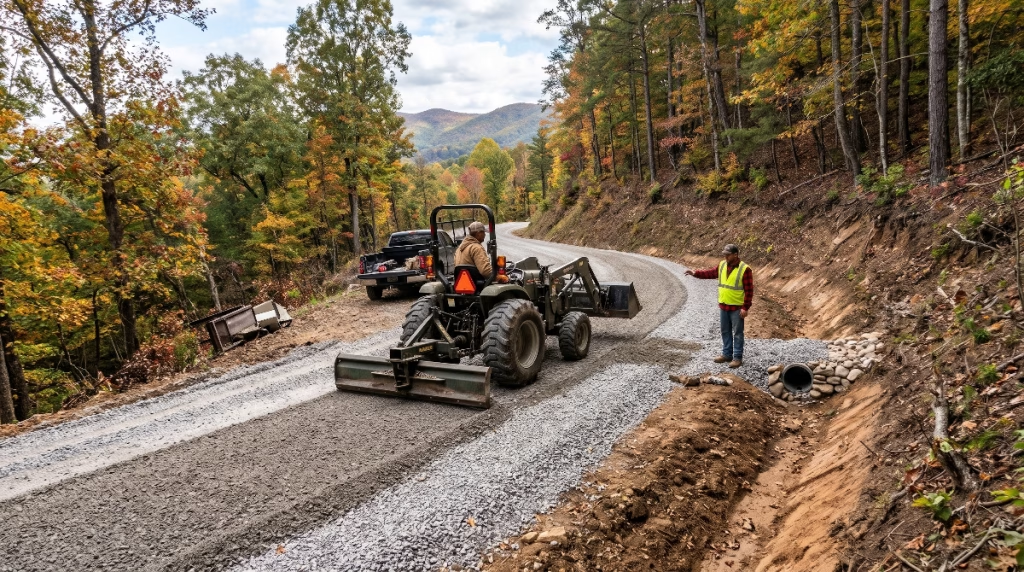
An insurance policy protects your finances in court, but sound engineering and consistent road maintenance prevent accidents from happening in the first place. Keeping a private mountain drive in good condition requires a proactive, seasonal maintenance routine.
+--------------------------------------------------------------------------+
|                  SEASONAL ROAD MAINTENANCE CHECKLIST                     |
+--------------------------------------------------------------------------+
|  SPRING: Clean out all culvert inlets and outlets; blade gravel road     |
|  surfaces to re-establish a centered crown; seed eroding ditch banks.    |
|                                                                          |
|  SUMMER: Clear brush along blind curves; check sight lines at the county |
|  road entrance; apply dust control; seal cracks on asphalt drives.|
|                                                                          |
|  FALL: Clear fallen leaves from drainage channels; grade   |
|  gravel before winter freezes; inspect retaining walls and headwalls.    |
|                                                                          |
|  WINTER: Stage salt, cinders, or sand; confirm the emergency plow crew;  |
|  mark culvert edges and bridge abutments with high-visibility stakes.    |
+--------------------------------------------------------------------------+
Water Drainage Is Everything
The number one enemy of any road in East Tennessee is unmanaged stormwater. When rainwater runs across a road surface instead of along ditch lines, it creates washboards, cuts deep ruts, and carries away expensive gravel.
A gravel road should always be maintained with a centered crown, rising roughly one-half inch of height for every foot of width from the edge to the center. This slope sheds water into parallel ditches before it can build momentum.
Culverts must be sized correctly for mountain downpours. A twelve-inch pipe may handle normal summer showers, but an eighteen-inch or twenty-four-inch smooth-interior corrugated polyethylene pipe (HDPE) is far better suited for severe storms. Inspect culvert openings every autumn to clear out fallen branches, leaves, and silt before heavy winter rains arrive.
Managing Gravel Surfaces
Gravel roads are common across rural East Tennessee, but they require consistent maintenance to remain stable under heavy truck traffic. Avoid filling deep ruts with plain river rock or rounded pea gravel, which rolls under tires like ball bearings.
Instead, use crushed limestone that packs down into a tight, durable surface. A base layer of Tennessee Department of Transportation (TDOT) Grade D or Number 2 stone provides structural support over soft subsoils. Top that base with a wearing layer of crusher run or TDOT Number 33 or 41-A stone, which contains a blend of crushed stone and fine mineral dust. When compacted, this mixture forms an interlocking crust that sheds surface water and holds up to heavy residential traffic.
Long-Term Care for Asphalt Pavement
If your private subdivision drive is paved with asphalt, your maintenance strategy shifts from routine grading to surface preservation. Asphalt consists of aggregate stone bound together by petroleum bitumen. Over time, sunlight, freezing temperatures, and vehicle traffic oxidize that binder, turning the pavement gray, brittle, and prone to cracking.
To protect your investment and maintain safe driving conditions, follow an orderly pavement management schedule:
- Crack Sealing (Years 3 to 5): Walk the road every autumn and fill any cracks wider than a quarter-inch with hot-pour, rubberized asphalt sealant. This step stops surface water from penetrating the gravel base beneath the pavement, where winter freeze-thaw cycles create severe potholes.
- Sealcoating (Years 4 to 8): Apply a high-grade asphalt emulsion sealer across the entire paved surface to block UV rays, resist oil drips, and restore the flexible binder.
- Structural Asphalt Overlay (Years 15 to 20): If the aggregate base beneath the road remains solid, paving contractors can mill down failing transition joints and install a fresh one-and-a-half to two-inch asphalt overlay. Resurfacing extends the working life of the road by another fifteen years at a fraction of the cost of total reconstruction.
Managing Neighbor Relationships and Dispute Resolution
Even with an airtight written agreement, managing shared road expenses among different families requires patience, transparent communication, and steady leadership. People have varying household budgets, risk tolerances, and opinions about road conditions. Managing those differences thoughtfully keeps neighborhood relationships strong.
Transparent Financial Records
Disagreements over private road maintenance usually start when owners feel kept in the dark about how funds are spent. A well-managed road association avoids these tensions through open financial reporting:
- Maintain a dedicated checking account used strictly for road business.
- Provide all participating owners with a simple annual balance sheet showing all dues collected, interest earned, and payments made to contractors.
- Keep digital copies of all contractor bids, invoices, and material receipts for stone deliveries, making them available for any member to review.
- Require two authorized signatures on any bank withdrawal or check over a specified dollar limit (such as $1,000) to ensure financial accountability.
Setting Up a Formal Bidding Process
When major work is required, such as applying new gravel, clearing trees, or paving an entrance, avoid giving the job to a friend or neighbor without a competitive bidding process.
Solicit written estimates from at least two or three licensed, insured paving or grading contractors. Share those bids with the road group during an annual or special meeting. When neighbors see multiple competitive estimates, discuss the options together, and vote openly on the plan, they are far more likely to support the investment and pay assessments promptly.
+--------------------------------------------------------------------------+
|                  DISPUTE RESOLUTION ESCALATION PATH                      |
+--------------------------------------------------------------------------+
|  Level 1: Direct Informal Discussion and Site Walkthrough with Neighbors |
|  Level 2: Formal Association Meeting and Documented Majority Vote        |
|  Level 3: Independent Professional Mediation with a Neutral Mediator     |
|  Level 4: Binding Commercial Arbitration Under Tennessee Dispute Rules   |
|  Level 5: Legal Filing of Assessment Lien and Court Enforcement Action   |
+--------------------------------------------------------------------------+
Structured Dispute Escalation
If a conflict arises over repair standards, assessment dues, or road rules, having a clear dispute resolution path written into the agreement keeps disagreements out of court:
- Direct Meeting: The parties meet on-site to walk the road, inspect the area of concern, and talk through the issue face to face.
- Association Vote: The issue is placed on the agenda for a road meeting, where owners discuss the matter and take a vote according to the agreement’s rules.
- Mediation: If an impasse remains, the parties present the dispute to a neutral mediator in the Tri-Cities area. Mediation provides a private, informal setting where a trained professional helps the neighbors work out a fair compromise.
- Binding Arbitration: If mediation does not resolve the matter, the dispute moves to binding arbitration under Tennessee arbitration statutes. An experienced arbitrator reviews the recorded agreement, hears both sides, and issues a final, legally enforceable ruling without the expense of a prolonged courtroom trial.
- Lien and Legal Action: If an owner refuses to follow arbitrated terms or fails to pay valid assessments, the association exercises its recorded power to file an assessment lien against the title of the non-paying parcel.
Conclusion & Pro Builder Takeaway
Building a custom home along a quiet ridgetop or tucked into an East Tennessee hollow offers privacy, natural beauty, and a wonderful way of life. The freedom of living along a shared private drive comes with the responsibility of managing your own access corridor.
A road left to chance is a serious financial hazard. Without a clear plan, a sudden summer washout, an unplowed stretch of winter ice, or a heavy delivery truck can spark expensive lawsuits that damage personal finances and strain neighborhood relationships.
Investing the time and effort to establish a formal Private Road Maintenance Agreement, backed by a dedicated commercial general liability insurance policy, provides lasting security. It protects against unexpected accidents, ensures compliance with mortgage lending guidelines, and keeps emergency vehicles, delivery drivers, and guests traveling safely to your door. When planning your custom home in Sullivan, Washington, or Carter County, treat private road maintenance with the same care and precision you bring to pouring your foundation or framing your roof. Clear agreements and solid insurance coverage keep your mountain investment safe, sound, and secure for years to come.