

Scheduled Personal Property vs. Dwelling Coverage
When you build or renovate a custom home, you invest your heart, your time, and your savings into the details. You select quarter-sawn white oak for your study, commission built-in library shelves, and install commercial kitchen equipment. Most homeowners believe their standard homeowners policy simply takes care of everything under the roof. However, when an unexpected disaster strikes, many people run straight into a confusing wall between their structural coverage and their belongings.
The division between permanent building finishes and personal belongings is one of the most misunderstood areas in real estate. To protect your investment, you must know where dwelling coverage ends and where scheduled personal property begins. In this guide, we will break down the rules, examine the construction details, and show you exactly how to structure your coverage so you never face an unpaid rebuild bill.
The Custom Finish Dilemma: Where Carpentry Meets the Insurance Policy
The High-End Build Reality
In a typical production home, finishes are basic and easy to value. Standard cabinets arrive in boxes, hang on drywall with simple screws, and come with predictable price tags. If a kitchen fire occurs, the replacement cost is simple to estimate.
Custom homes are different. In a high-end build, carpentry is not merely decorative. It is structural, architectural, and deeply tied to the living space. When you hire an artisan trim carpenter to build coffered ceilings, wall-to-wall bookcases, or an inglenook bench around a stone fireplace, you are blending furniture craftsmanship with house framing.
The financial investment in these finishes is substantial. It is not uncommon for a custom trim and cabinetry package to exceed $100,000 or even $250,000. When your finishes are that specialized, a standard homeowners policy can leave dangerous gaps. If you do not classify these items properly between your base building policy and scheduled personal property, you can find yourself underinsured. A fine piece of cabinetry might be treated as a basic structure, while valuable items kept inside those cabinets might exceed the standard personal property limits.
The Severance and Attachment Test
Insurance adjusters evaluate property damage using clear standards. One of the most common guidelines is known as the severance and attachment test.
The test asks a basic physical question: If you took your house, turned it completely upside down, and shook it, what would stay put, and what would fall out?
Anything that stays firmly attached to the framing, the foundation, or the subfloor is generally considered part of the building. This falls under Coverage A, which is your dwelling coverage. Anything that detaches, drops to the ceiling, or rolls away is personal property, which falls under Coverage C.
In custom homes, this test gets complicated. What happens to a modular wall unit that is secured to wall studs with only four hidden screws? What happens to high-end audio equipment wired directly through custom millwork? Adjusters look closely at how an item is attached. If removing the item causes physical damage to the drywall, plaster, or framing, it is usually considered part of the dwelling. If it can be removed cleanly with a screwdriver, an adjuster may classify it as contents. That classification determines whether it is covered by your dwelling limit or if you need scheduled personal property protection to cover its full replacement value.
The Real Risk of Claim Shortfalls
The biggest mistake custom homeowners make is assuming that having a high policy limit automatically covers everything they own. That is not how insurance contracts work.
A standard policy places items into strict legal bins. Your dwelling coverage has one limit, your general personal property has another limit, and certain high-value categories have strict internal sub-limits. If an expensive asset is classified as personal property rather than a fixture, the standard contents coverage may only pay a small fraction of its true value after a loss.
To make matters worse, basic contents coverage often applies depreciation, paying only actual cash value unless you have purchased specific replacement cost endorsements. When you add scheduled personal property endorsements to your policy, you bypass these low caps. At the same time, if custom millwork is undercounted in your dwelling limit, you risk running out of funds to pay your carpenters during a rebuild. Navigating this boundary is essential for anyone who values fine craftsmanship.
Dwelling Coverage (Coverage A): Protecting Permanently Affixed Millwork
What Coverage A Actually Covers
Coverage A is the backbone of any homeowners insurance policy. It protects the physical structure of your home, including the foundation, roof, exterior walls, framing lumber, plumbing pipes, electrical wiring, and permanent interior finishes.
Under an ISO HO-3 or HO-5 policy, Coverage A covers real property. Real property means land and anything permanently erected on or attached to it. When trim carpenters install custom woodwork, they attach those elements directly to the studs and joists using finish nails, structural screws, and construction adhesives. Once those materials are attached, they become part of the real property.
If a burst pipe ruins your custom walnut baseboards or a fire scorches your tongue-and-groove ceiling, Coverage A pays to repair or replace that carpentry. Dwelling coverage is designed to rebuild the house to its prior condition, provided your coverage limit reflects the true cost of custom labor and premium materials. It does not, however, cover loose possessions, which is why scheduled personal property exists as a separate protection.
Built-Ins That Universally Fall Under Coverage A
To keep your records clean, you should know which built-in elements fall under your dwelling coverage:
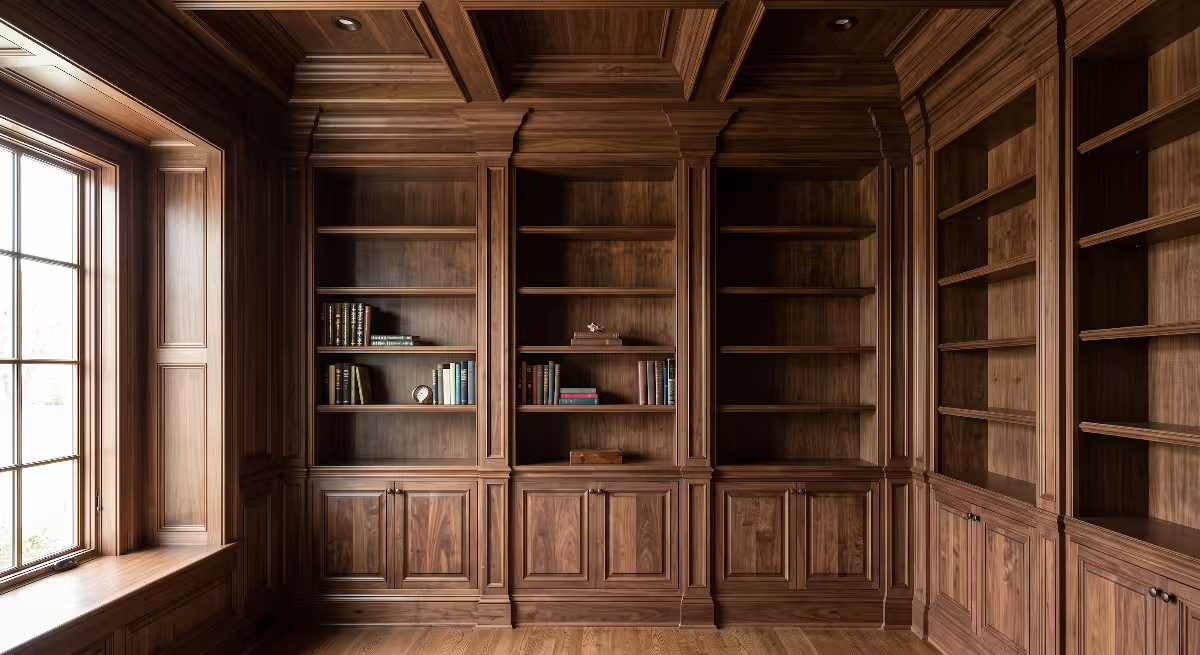
- Architectural Millwork and Trim: Crown molding, tall baseboards, picture rails, coffered ceilings, wall paneling, and applied wainscoting. These items cannot be removed without damaging the wall surface.
- Custom Cabinetry: Kitchen cabinets, bathroom vanities, and built-in linen presses that are leveled, scribed to the walls, and anchored directly to the wall studs.
- Integrated Seating and Nooks: Banquettes, window seats, and reading nooks with storage boxes built into the floor structure and wall framing.
- Built-in Kitchen Appliances: Drop-in cooktops, wall ovens, and panel-ready dishwashers or refrigerators that sit inside custom cabinet openings and are hard-wired or plumbed directly into the house systems.
- Permanent Fireplace Surrounds: Custom oak or walnut mantels, stone hearths, and built-in firewood storage niches.
All of these items are permanent fixtures. They add value directly to the real estate. However, because they raise the replacement cost of your house, they require you to carry higher dwelling coverage so you do not run short of funds. They should not be confused with items that require scheduled personal property endorsements.
The Coinsurance Hazard (The 80% Rule)
One of the most dangerous traps in custom home building is the coinsurance clause. Most insurance policies require you to carry a dwelling coverage limit that equals at least 80 percent of the home’s total replacement cost. If your coverage drops below 80 percent, the insurer can penalize you on every claim, even for minor partial losses.
Here is the problem: automated insurance estimators often use regional average costs to set dwelling values. In the Tri-Cities area, an estimator might calculate basic construction at $175 to $225 per square foot. However, a home featuring custom built-ins, quartersawn hardwoods, and heavy timber accents can easily cost $350 to $500 per square foot to rebuild.
If your home would cost $1,000,000 to rebuild due to its custom millwork, but your insurer only writes the policy for $700,000, you are insured for only 70 percent of the true value. You have violated the 80 percent rule. If a small kitchen fire causes $50,000 in damage, the insurance company will not pay the full $50,000. They will pay a reduced percentage because you underinsured the structure.
While you might carefully purchase scheduled personal property endorsements for your jewelry and collections, forgetting to properly value your built-in woodwork can trigger this severe penalty on the structure itself.
Coinsurance Formula:
(Amount of Insurance Carried / Amount of Insurance Required) * Loss Amount = Payout
If you carry $700,000 when the 80 percent requirement was $800,000 (80 percent of $1,000,000), the insurer will only pay seven-eighths of your claim, minus your deductible. That is an expensive mistake for any homeowner.
The Necessary Protection: Extended Replacement Cost
To protect custom millwork, you should always ask your insurance agent for an extended replacement cost endorsement. This endorsement provides an extra safety net above your stated Coverage A limit, typically adding 25 percent or 50 percent more coverage if labor and material costs spike after a disaster.
In the building industry, we frequently see supply chain shortages and labor spikes following regional weather events. If a severe storm damages hundreds of homes, the cost of skilled trim carpenters and clear hardwood lumber will rise quickly. An extended replacement cost endorsement ensures that your dwelling policy can absorb those higher costs.
Remember, this endorsement applies only to real property covered under your dwelling limits. It does not replace the need for scheduled personal property coverage for the valuable belongings that sit on those custom shelves. Both coverages work together to protect the complete home.
Scheduled Personal Property (Coverage C Endorsements): Securing Contents Beyond the Sub-Limits
Standard Coverage C Mechanics
Coverage C is the section of your homeowners policy that pays for personal property. Personal property includes your clothes, furniture, cookware, televisions, portable tools, and everyday household items.
Under standard policies, your personal property limit is usually set automatically as a percentage of your dwelling coverage, commonly 50 percent to 70 percent of Coverage A. For example, if your house is insured for $600,000, your personal property coverage might be set at $300,000.
At first glance, $300,000 sounds like plenty of money to replace clothing and furniture. However, standard Coverage C comes with strict terms. In many basic policies, contents are covered only for actual cash value, which deducts depreciation for age and wear. More importantly, standard contents coverage is subject to your general policy deductible, which might be $1,000, $2,500, or more. Most critical of all, standard Coverage C places severe dollar caps on specific categories of valuable belongings, making scheduled personal property coverage necessary.
The Sub-Limit Bottleneck
Every standard insurance policy contains internal sub-limits. These are specific caps that limit what the insurer will pay for certain types of high-risk or high-value items if they are stolen, damaged, or lost.
Standard sub-limits often look like this:
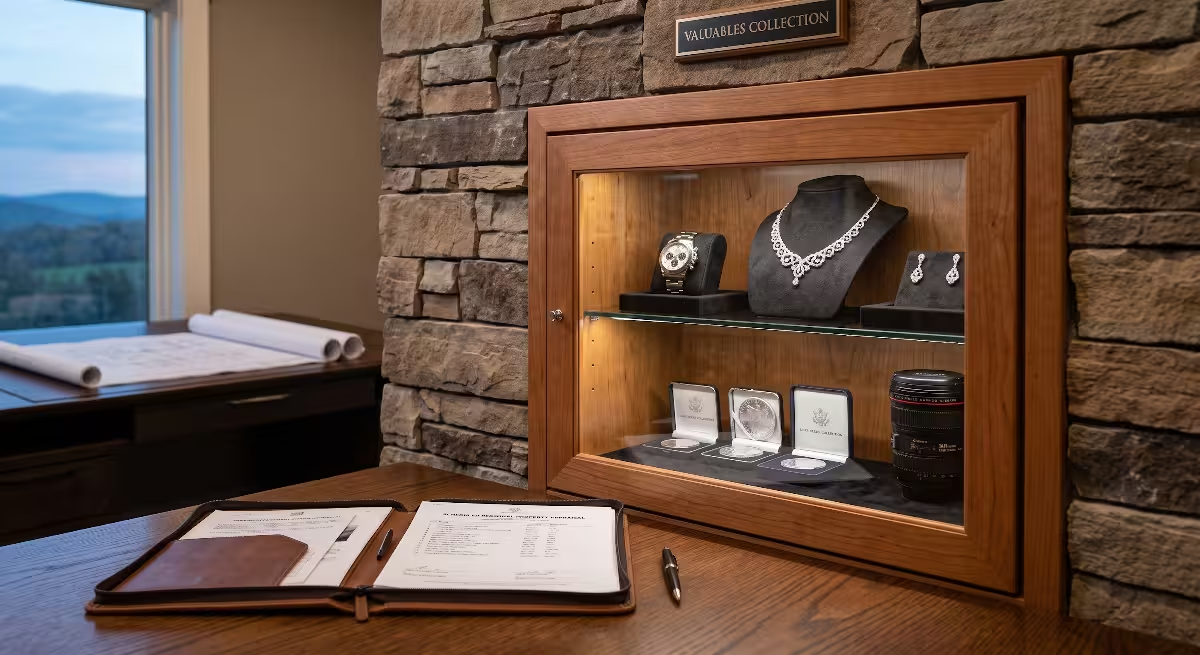
- Jewelry and Watches: Often limited to $1,500 total for loss by theft.
- Firearms and Accessories: Often capped at $2,500 total for theft.
- Silverware, Goldware, and Pewter: Typically capped at $2,500.
- Fine Art, Antiques, and Collectibles: Often lumped into general contents with low per-item limits.
- Musical Instruments and Audio Equipment: Frequently capped if used outside the home or for any performance.
Imagine you have built a custom walk-in gun room with hand-crafted walnut display cases anchored to the wall studs. The cabinetry is covered under Coverage A. But if a theft occurs and ten custom hunting rifles are stolen, your standard policy might pay only $2,500 for all the firearms combined. That might not even cover the cost of a single high-end rifle and scope.
This bottleneck is why relying on basic Coverage C is a dangerous gamble. To protect those items, you must move them out of the standard pool and list them under scheduled personal property.
The Role of the Scheduled Personal Property Floater
A scheduled personal property endorsement, often called an inland marine floater or personal articles floater, is a separate policy addition designed for valuable possessions.
When you use scheduled personal property coverage, you provide your insurer with an itemized list of your valuable belongings. Each item is individually listed along with a professional appraisal, a receipt, and a detailed description.
Here is why scheduled personal property coverage is superior to standard contents coverage:
- Agreed Value Settlement: You and the insurer agree on the value of the item before the policy is written. If a scheduled item is destroyed or stolen, you receive that agreed amount without any argument over depreciation.
- Open Perils Protection: Standard contents policies usually cover only named perils, such as fire, smoke, and lightning. Scheduled personal property coverage is typically open perils, meaning it covers almost any accidental loss, including dropping an expensive camera or losing a gemstone from a ring.
- No Deductible: In most cases, claims filed under a scheduled personal property endorsement carry a zero deductible. You receive the full agreed amount without paying out of pocket.
- Worldwide Coverage: Your scheduled personal property is protected whether it is resting in your custom display cabinet in Tennessee or traveling with you on a trip across the world.
By separating your building finishes from your loose valuables, you create a clear line. Your dwelling policy pays for the wall, the cabinet, and the trim, while your scheduled personal property policy protects the high-value item resting on the shelf.
The Gray Zones: Built-Ins vs. Scheduled Belongings
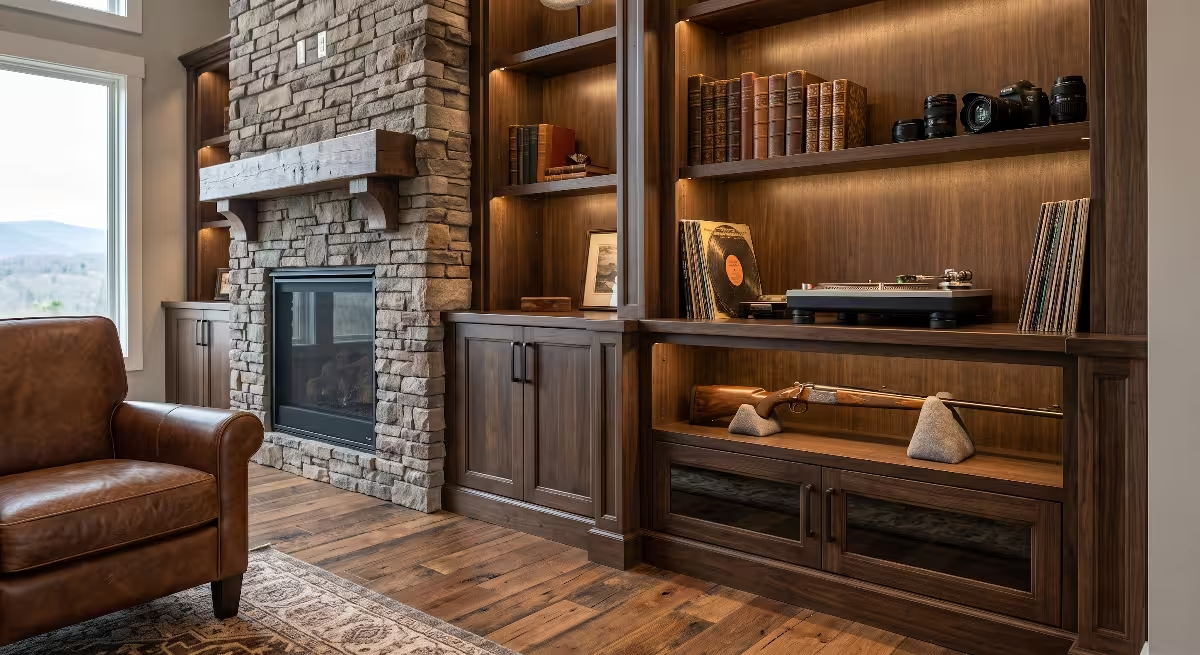
In fine home building, structural elements and personal belongings often meet in the same room. These areas are gray zones where adjusters, builders, and insurance agents must look closely at how items are installed. Let us walk through five common examples to clarify the line between dwelling coverage and scheduled personal property.
Custom Home Theater and Media Walls
A custom media room is one of the most common places where building finishes and electronics blend together.
Consider a media room featuring a full wall of custom cabinetry, acoustic fabric panels, and integrated equipment racks:
- Dwelling Coverage (Coverage A): The structural framing built to house the screen, the custom walnut face frames, the storage drawers, the electrical outlets, and the in-wall speaker wiring belong under Coverage A. If in-wall architectural speakers are drywalled and painted into the wall assembly, they are almost always treated as permanent building fixtures.
- Scheduled Personal Property: The loose components inside the cabinets tell a different story. The high-end audio preamplifier, the multi-channel power amplifiers, the standalone turntable, and the $15,000 laser projector mounted on a quick-release ceiling bracket are personal property. Because high-end audio and video gear can easily exceed the electronics sub-limits in a standard policy, these pieces should be protected with scheduled personal property endorsements.
If a water pipe leaks into the media room, your dwelling policy pays to rebuild the cabinetry and replace the drywall. Your scheduled personal property floater pays to replace the damaged high-end electronics inside the cabinets.
High-Security Vaults and Gun Rooms
Many people enjoy hunting in East Tennessee. As a result, homebuyers design secure storage for hunting rifles, shotguns, and precision gear.
The division between the room and the contents requires careful attention:
- Dwelling Coverage (Coverage A): A 1,500-pound commercial safe anchored directly to the concrete slab foundation using heavy expansion bolts is generally classified as a permanent fixture under Coverage A. The same rule applies to reinforced steel vault doors hung on heavy steel frames embedded in concrete masonry block walls, as well as the interior oak shelving built into the vault walls.
- Scheduled Personal Property: The firearms, custom scopes, optical rangefinders, and historical collections stored inside that safe are loose personal property. As we discussed earlier, standard homeowners insurance severely caps firearm theft coverage. Even if your safe is permanently bolted to the foundation, you must carry scheduled personal property coverage for every custom rifle, shotgun, and valuable handgun stored within it.
Custom Wine Cellars
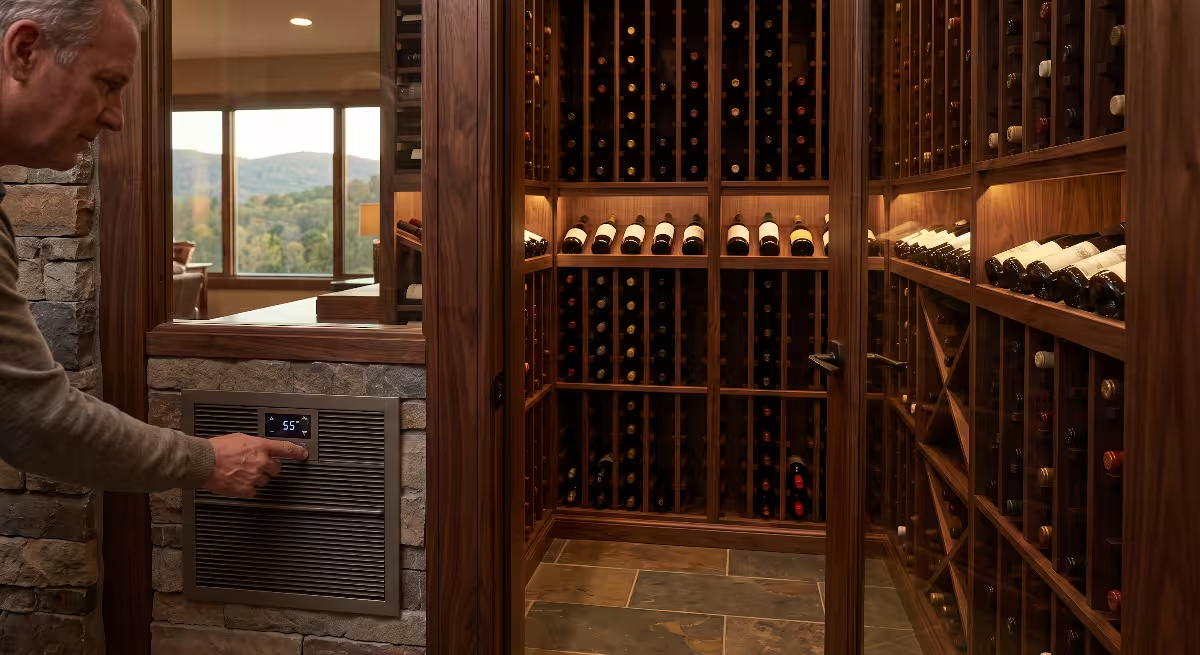
Building a custom wine cellar requires strict attention to detail. You must install a proper vapor barrier, specialized closed-cell insulation, an exterior-grade sealed door, and an independent climate control system.
Here is how the insurance coverage splits:
- Dwelling Coverage (Coverage A): The climate control condenser, the insulated wall framing, the moisture-resistant green board, and the hand-built mahogany or redwood wine racks attached to the walls are real property. They are covered under your dwelling policy. If a fire damages the cellar, Coverage A pays to rebuild the climate-controlled room.
- Scheduled Personal Property: The wine collection itself is personal property, and it faces unique risks. Standard policies rarely cover wine for spoilage caused by mechanical failure of the cooling unit, nor do they cover temperature swings or bottle breakage. To protect a valuable wine collection, you need a specialized scheduled personal property floater. This floater should specifically include coverage for mechanical breakdown, temperature fluctuations, and accidental bottle breakage.
Modular Closets and Murphy Beds
Closet systems and fold-down beds create frequent arguments during insurance adjustments because their installation methods vary widely.
- The French Cleat and Track Issue: Many modern closet systems hang on a steel rail or a wooden French cleat screwed to the studs. The individual closet towers, shelves, and drawers simply hang on that rail without being permanently fastened to the wall. Some insurance adjusters will argue that because the units lift off the rail without tools, they are personal property.
- The Built-In Standard: If the closet system is scribed to the baseboards, secured with direct face screws into the wall studs, trimmed out with top crown molding, and caulked to the drywall, it becomes a permanent fixture. At that point, it clearly falls under Coverage A.
- Murphy Beds: A Murphy bed that is fastened to wall studs with heavy lag bolts, trimmed with matching casing, and designed to look like a permanent wall cabinet will generally be treated as part of the dwelling. However, the mattress inside that bed is personal property. If you own custom luxury bedding or high-value materials, remember where the bed frame ends and personal belongings begin.
Fine Art Integration and Display Niches
In many luxury custom builds, we construct specialized architectural niches with dedicated low-voltage picture lights to showcase fine paintings or bronze sculptures.
- Dwelling Coverage (Coverage A): The framed niche, the drywall corner bead, the custom wood sill, the concealed electrical conduit, and the hard-wired accent lighting fixture are all covered under Coverage A. If the home suffers structural damage, your dwelling policy repairs the niche.
- Scheduled Personal Property: The artwork hanging inside the niche is completely separate. Even if a bronze sculpture is heavy or a painting is hung with heavy-duty security brackets that require a special key to remove, it is not a building fixture. Fine art must always be insured under a scheduled personal property endorsement. Doing so ensures you receive an agreed value payout based on a certified appraisal, without depreciation or low sub-limit restrictions.
Built-In vs. Scheduled: Quick Reference Decision Matrix
To help you organize your home inventory, use this quick reference matrix. It outlines common custom home features, their primary insurance policy designations, and the paperwork required by adjusters.
| Item Description | Primary Policy Section | Valuation Method | Essential Documentation Needed |
| Custom Kitchen Cabinets | Coverage A (Dwelling) | Replacement Cost Value | Cabinet maker invoice, shop drawings, wood species list |
| Panel-Ready Refrigerator | Coverage A (Dwelling) | Replacement Cost Value | Appliance receipt, proof of cabinet panel installation |
| Floor-to-Ceiling Bookshelves | Coverage A (Dwelling) | Replacement Cost Value | Builder finish schedule, finish carpentry material receipts |
| In-Wall Architectural Speakers | Coverage A (Dwelling) | Replacement Cost Value | Low-voltage contractor invoice, wiring diagrams |
| High-End Audio Components | Scheduled Personal Property | Agreed Value (Floater) | Purchase receipts, model serial numbers, photo inventory |
| Slab-Anchored Gun Safe (1,500 lbs) | Coverage A (Dwelling) | Replacement Cost Value | Safe purchase receipt, installation invoice showing anchor bolts |
| Custom Hunting Rifles & Optics | Scheduled Personal Property | Agreed Value (Floater) | Professional appraisals, serial numbers, gunsmith invoices |
| Custom Wine Cellar Racks & Chiller | Coverage A (Dwelling) | Replacement Cost Value | HVAC installer contract, cellar carpentry invoices |
| Collectible Vintage Wine Inventory | Scheduled Personal Property | Agreed Value (Wine Floater) | Bottle inventory list, purchase invoices, auction records |
| Permanent Wall-Mounted Murphy Bed | Coverage A (Dwelling) | Replacement Cost Value | Carpenter invoice showing structural lag screw installation |
| Fine Art in Architectural Niches | Scheduled Personal Property | Agreed Value (Fine Art Floater) | Certified art appraisal, gallery provenance, high-resolution photos |
| Recessed Bathroom Medicine Cabinets | Coverage A (Dwelling) | Replacement Cost Value | Framing inspection notes, plumbing and finish invoices |
Documentation and Builder Collaboration: How to Avoid Claim Denials
The Contractor Finish Schedule
When an insurance adjuster steps into a damaged home, they work from evidence. If a fire has reduced your custom library to charcoal, the adjuster cannot see the delicate dovetail joints, the fluted pilasters, or the premium grade of the wood. Unless you can prove those details, the insurance company will calculate the loss using standard, builder-grade materials.
To protect your investment, ask your general contractor for a complete finish schedule before your project is completed. A finish schedule is a detailed document that lists every trim profile, wood species, paint type, hardware brand, and cabinet construction method used in the home.
Your finish schedule should clearly state:
- The exact wood species (for example, select white oak instead of standard paint-grade pine).
- Drawer construction methods (such as five-piece solid wood boxes with half-inch dovetail joints and soft-close under-mount slides).
- Crown molding dimensions and profiles (such as three-piece built-up crown instead of simple single-piece molding).
- Direct builder costs for specialty millwork labor.
Keep a physical copy of this document in a fireproof safe and store a digital copy in cloud storage. This record proves that your built-ins belong under Coverage A at a premium replacement value.
Establishing Replacement Cost with Your Agent
Do not let your insurance agent guess your home’s replacement cost using an automated software tool. Take your builder’s finish schedule and construction contract directly to your agent’s office.
Sit down with your agent and review the numbers. Explain that the home features custom millwork that requires skilled craftsmen to duplicate. Ask your agent to increase your Coverage A limit to match the true replacement cost.
At the same time, discuss your scheduled personal property needs. Present your appraisals for fine art, jewelry, collections, and electronics. By setting up your dwelling limit and your scheduled personal property endorsements at the same time, you make sure that both the building and its contents are fully protected with no coverage gaps between them.
Managing Mid-Build and Post-Build Upgrades
A custom home is rarely static. Homeowners often complete unfinished basements, add built-in desks to home offices, or convert bonus rooms into home theaters a few years after moving in.
Every time you add custom millwork, you change the replacement value of your home. If you spend $40,000 adding custom walnut built-ins to your living room, you must inform your insurance agent. If you fail to report the addition, your dwelling coverage will fall behind your home’s actual value, which can trigger the 80 percent coinsurance penalty we discussed earlier.
The same rule applies to personal belongings. If you acquire a new collection of fine art, purchase high-end sporting rifles, or buy rare jewelry, you cannot wait until your annual policy renewal to take action. You must contact your agent and update your scheduled personal property schedule immediately. Most insurers provide a short grace period of 30 to 90 days for newly acquired items, but coverage is limited until the item is officially added to your scheduled personal property endorsement.
The Digital Inventory Protocol
Many builders emphasize the value of clear documentation. Before you move your furniture into a new custom home, complete a thorough digital walkthrough.
Use your smartphone to record a slow, high-definition video of every room:
- Zoom in on the Millwork: Capture close-up video of crown molding, door casings, window sills, and cabinet joints. Open drawers to show dovetail joinery and underside hardware.
- Record Brand Plates and Labels: Film the manufacturer tags and serial numbers on built-in appliances, water heaters, HVAC units, and electrical panels.
- Document Attachment Points: Film inside cabinets and closets to show where screws hold the units firmly to the wall framing. This simple video provides clear proof for the severance and attachment test if an adjuster ever questions whether an item is a fixture.
Once you have moved your furniture and personal items into the home, repeat the process for your belongings. Open closet doors, display cabinets, and storage vaults. For items covered under your scheduled personal property floater, take high-resolution, well-lit photographs from multiple angles. Photograph serial numbers, maker marks, signatures on artwork, and gemstone settings. Store these photos alongside your appraisal papers in secure digital storage.
Frequently Asked Questions About Custom Homes and Scheduled Personal Property Coverage
Are built-in cabinets considered personal property or dwelling coverage?
Built-in cabinets are almost always classified as real property under dwelling coverage (Coverage A). Because custom cabinets are leveled, screwed directly into wall studs, scribed to the adjoining walls, and trimmed with baseboards and crown molding, removing them causes damage to the structure. This permanent attachment makes them part of the building. However, the items stored inside those cabinets, such as cookware, dishes, and loose valuables, are personal property. High-value items kept in cabinets must be protected with scheduled personal property endorsements if they exceed standard policy caps.
What is the primary difference between unscheduled personal property and a scheduled personal property endorsement?
Unscheduled personal property is covered under your standard Coverage C limit as a general, blanket sum. It is subject to your policy deductible, often applies depreciation to settle claims at actual cash value, covers only specific named perils, and enforces low internal dollar sub-limits on categories like jewelry, art, and firearms.
In contrast, a scheduled personal property endorsement lists each valuable item individually with an agreed dollar value based on an appraisal. It provides open perils protection, carries no deductible, and pays the full agreed amount without depreciation.
Does my dwelling coverage automatically update when I add custom built-in cabinetry?
No, your dwelling coverage does not automatically adjust when you complete home improvements. While many policies include an automatic inflation guard that raises limits slightly each year to match regional construction inflation, this adjustment does not account for new custom projects. If you invest $50,000 in custom built-in cabinetry or finish a basement, you must contact your insurance agent to increase your Coverage A limit. Failing to update your limit can leave you underinsured and expose you to coinsurance penalties.
Are high-end freestanding appliances treated the same as built-in appliances?
No, freestanding appliances and built-in appliances are treated differently by insurance adjusters. A standard freestanding refrigerator or slide-in range that plugs into an outlet and slides between two cabinets is personal property (Coverage C). If you sell the home, that refrigerator can be unplugged and moved without damaging the house. A built-in appliance, such as a panel-ready refrigerator bolted into an enclosure or a drop-in cooktop wired directly into an electrical box, is classified as a permanent fixture under dwelling coverage (Coverage A). Always verify how your kitchen appliances are installed so you know which coverage protects them.
How do I prove the replacement cost of hand-built custom carpentry to an adjuster?
You prove the value of custom carpentry through detailed construction records. Save your builder’s finish schedule, architectural blueprints, cabinet maker shop drawings, line-item material invoices, and payment receipts. High-resolution photographs and video showing drawer joinery, wood species grain, and attachment methods are also critical pieces of evidence. If a total loss occurs, these records demonstrate to the insurance adjuster that your home contained premium artisan finishes rather than standard builder-grade materials.
Does dwelling coverage protect audio equipment installed in a custom media cabinet?
Dwelling coverage protects the wooden media cabinet, the drywall enclosure, the in-wall electrical circuits, and the structural speaker wiring running through the wall studs. It may also cover architectural speakers that are permanently mounted flush inside the drywall. However, dwelling coverage does not protect the audio components sitting on the shelves, such as amplifiers, receivers, media streamers, or gaming consoles. Those electronic components are personal property. If you own an expensive sound system, you should list those pieces under a scheduled personal property endorsement to ensure they are fully covered against electrical damage, drops, and theft.
Aligning Coverage with Craftsmanship
Building a custom home is an exercise in precision. When we cut roof rafters, frame stairwells, or fit cabinet doors, we work to tight tolerances. We do not guess on measurements, and we do not use substandard fasteners.
You must take that same disciplined approach when organizing your homeowners insurance. Do not assume that a standard policy automatically covers the exceptional details of your home. Take the time to understand the clear line between your physical building finishes and your personal belongings:
- Keep Coverage A Strong: Ensure your dwelling coverage reflects the true cost of artisan labor and premium materials. Protect your home with an extended replacement cost endorsement, and update your limits whenever you complete new built-in projects.
- Use Scheduled Personal Property for Valuables: Do not let expensive collections, jewelry, fine art, hunting firearms, or audiophile equipment sit under the low limits of standard contents coverage. Appraise these items, separate them from general belongings, and secure them with a scheduled personal property floater that provides agreed value settlement and zero deductibles.
- Document Every Detail: Keep clean records of your finish schedules, receipts, and builder invoices. Back up your paperwork with clear video and photographic walkthroughs of both your built-in woodwork and your scheduled personal property.
When your carpentry and your insurance policy are in complete alignment, you can enjoy your custom home with true peace of mind. You will know that the craftsmanship you built into your home, and the valuable possessions you keep inside it, are thoroughly protected against any disaster.