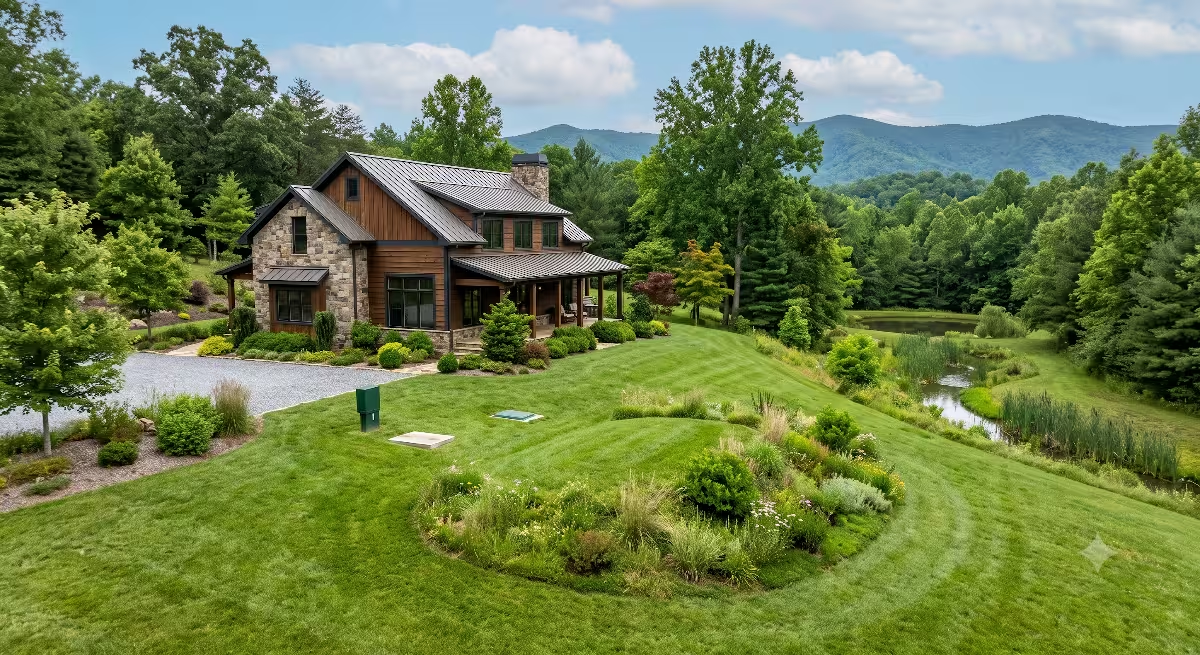

Feel that pull? That deep yearning for space to breathe, roots to plant, and a view that steals your breath away every single morning? Imagine stepping out onto your land, coffee in hand, greeted by a misty Appalachian sunrise painting the sky – a daily reality many only dream of. This vision isn’t a distant fantasy; it’s waiting to be claimed in the stunning Tri-Cities region of Northeast Tennessee.
Nestled amidst rolling hills and majestic peaks, this vibrant area – encompassing the core cities of Kingsport, Johnson City, and Bristol, along with welcoming communities like Elizabethton and Jonesborough scattered across Sullivan, Washington, Carter, and Unicoi counties – offers an unmatched blend of natural splendor and down-to-earth Appalachian charm. It’s a place where the air feels cleaner, the stars shine brighter, and the dream of owning your own piece of the earth feels powerfully within reach.
If the search for Land and Acreage for Sale in the Tri-Cities of northeast Tennessee has brought you here, you’re likely feeling that same magnetic pull towards a different pace of life. Consider this your essential companion. We’ve crafted this comprehensive guide to navigate you through every crucial step – from exploring the unique appeal and diverse property types of this beautiful region to confidently securing your very own slice of East Tennessee heaven. Let’s begin the journey to finding your perfect spot.
Understanding the Tri-Cities Region: Why Buy Land Here?
So, what makes Northeast Tennessee’s Tri-Cities region such a compelling place to put down roots – literally? It’s a unique blend of breathtaking natural beauty, a welcoming lifestyle, and practical advantages that draws people seeking connection, space, and opportunity.
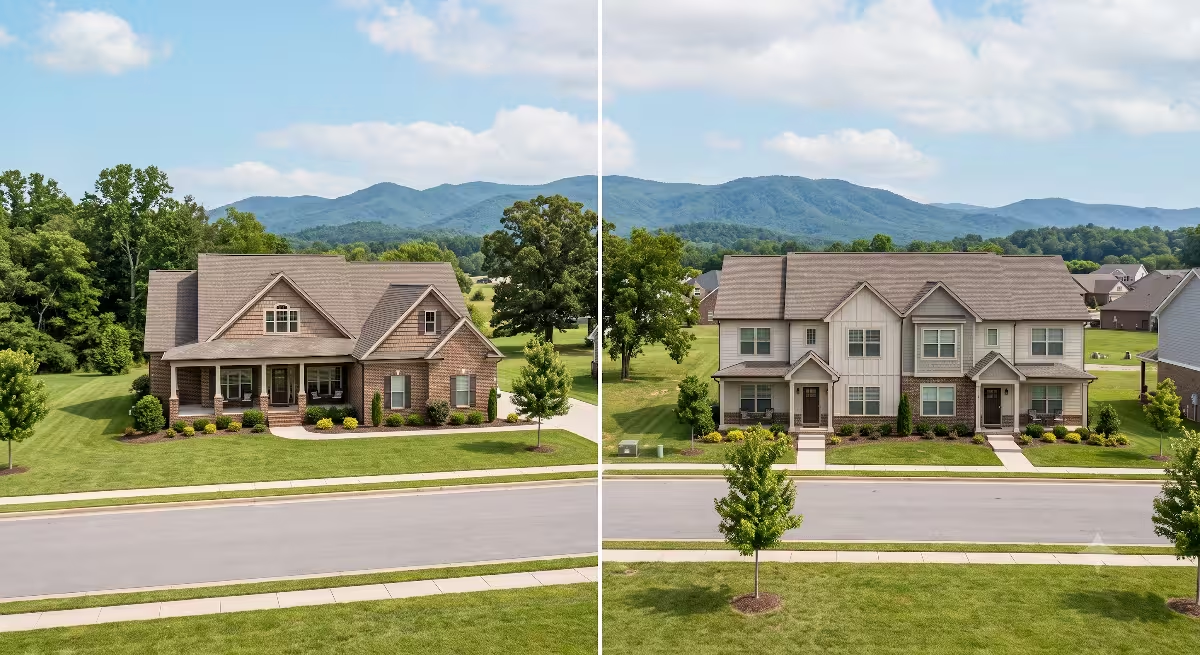
First and foremost, the landscape is simply stunning. Cradled by the ancient Appalachian Mountains, the region boasts rolling hills, fertile valleys, and clear waterways like the Holston River and sparkling lakes such as Boone Lake, Watauga Lake, and South Holston Lake. Imagine owning land with panoramic mountain vistas, tranquil wooded acreage bordering the vast Cherokee National Forest, or even a spot near the water for easy access to boating and fishing. This isn’t just scenery; it’s an invitation to a lifestyle deeply connected to the outdoors.
Life here moves at a comfortable pace, yet it’s far from sleepy. Residents cherish the four distinct seasons and the endless opportunities for recreation – world-class hiking trails (including the popular Tweetsie Trail connecting Johnson City and Elizabethton), fishing, kayaking, biking, and more are right outside your door. There’s a strong sense of community in towns large and small, combined with growing amenities, local breweries, diverse restaurants, and cultural events.
Beyond the lifestyle, the Tri-Cities region offers tangible benefits. The cost of living, and often land itself, is generally more affordable compared to major metropolitan areas, allowing your investment to go further. While offering a peaceful setting, the area isn’t isolated. Major routes like I-81 and I-26 provide easy connectivity, and the Tri-Cities Airport (TRI) links the region to destinations beyond. The local economy is diverse and growing, presenting a stable environment for residents and potential for long-term property value appreciation, making it an attractive prospect for both homeowners and investors. It’s this combination of natural allure, quality of life, accessibility, and relative affordability that makes buying land in the Tri-Cities a truly attractive proposition.
Types of Land & Acreage Available in the Tri-Cities
The land market in Northeast Tennessee’s Tri-Cities is as diverse as its landscape. Whether you envision a cozy home on a neighborhood lot or a sprawling private retreat, you can likely find a parcel that fits your dream. Here’s a breakdown of common types of land and acreage you’ll encounter:
- Residential Lots: These range from smaller plots within established subdivisions (often with HOA guidelines and readily available utilities) to larger individual lots in more rural settings, perfect for building a custom home. You’ll find options both inside and outside city limits in areas like Kingsport, Johnson City, and Bristol.
- Large Acreage Tracts: For those seeking privacy, space for recreation, or potential future development, tracts of 10, 20, 50 acres or more are available. These often feature mixed terrain, including woods and open areas.
- Farmland/Agricultural Land: Northeast Tennessee has a rich farming heritage. You can find rolling pastures ideal for livestock, fertile bottomland suitable for crops, or established farms with existing barns and outbuildings. Look for terms like “rural properties TN” or “farm land for sale.”
- Mountain Property: Embrace the Appalachian spirit with wooded, often sloped land offering potential for stunning views. These parcels are popular for building cabins, private getaways, or homes nestled in nature. Keep buildability and access in mind. Keywords like “mountain property TN” or “wooded land for sale” are relevant here.
- Waterfront/Water View Property: With numerous lakes (Boone, Watauga, South Holston) and rivers (Holston, Watauga, Nolichucky), opportunities exist for lots directly on the water (“lakefront,” “riverfront”) or nearby with deeded access or views (“lake view,” “water view”). These are highly desirable and often command premium prices.
- Recreational/Hunting Land: Often overlapping with mountain or large acreage tracts, this land is prized for outdoor pursuits. Look for features like proximity to national forests, existing trails, diverse wildlife habitats, and streams. “Hunting land Tennessee” is a common search term.
- Unrestricted Land: While less common, some parcels may have fewer county zoning restrictions or private covenants, offering more flexibility in use. Crucially, always verify restrictions independently – never rely solely on listing descriptions.
- Commercial Land: For business owners or investors, tracts zoned for commercial use are available, often along major highways or near town centers.
Understanding the typical topography is also key. You’ll find everything from flat, easily buildable level lots and gentle rolling hills to moderately sloped parcels and challenging steep slope mountain land, alongside tracts described as wooded, cleared, or partially wooded. The type and topography dramatically influence usability, building costs, and overall value.
Navigating the Tri-Cities Land Market
Finding the right piece of land involves understanding the local market dynamics. While real estate markets fluctuate, Northeast Tennessee, including the Tri-Cities, has seen considerable activity and growth in recent years (as noted by sources like East Tennessee REALTORS® and local market reports like those for Kingsport, which indicated a Seller’s Market with rising prices as of early 2025). However, the market for raw land can behave differently than the market for existing homes.
Current Market Snapshot (as of early 2025): Generally, demand for land in desirable areas of East Tennessee remains strong, fueled by people seeking the region’s quality of life and relative affordability. While price growth might moderate compared to peak years (forecasts suggest modest growth), desirable tracts still move relatively quickly. Inventory levels can be tight, especially for prime locations like waterfront or large, usable acreage near amenities. Always consult with a local real estate professional for the most up-to-the-minute market conditions.
Factors Driving Land Value: What makes one parcel significantly more expensive than another?
- Location, Location, Location: Proximity to Johnson City, Kingsport, or Bristol city centers, desirable school districts, easy access to highways, and specific sought-after areas heavily influence price.
- Size and Usability: While total acreage matters, the amount of usable land (level or gently rolling, suitable for building or farming) is critical. Price per acre often decreases as the total size increases, but not always, especially if the land has unique features.
- Features & Amenities: Stunning mountain or water views, river or lake frontage/access, mature timber, existing pastures, springs, creeks, or even existing structures like barns add significant value.
- Utility Access: Land with readily available public water, sewer, electricity, and high-speed internet access is considerably more valuable and easier to develop than raw land requiring wells, septic systems, and potentially costly utility extensions.
- Zoning and Restrictions: What you can do with the land dictates its value. Fewer restrictions generally mean higher potential value, while strict zoning or HOA covenants can limit usage and price.
- Access: Clear, legal, year-round access via a publicly maintained road is ideal. Private roads or easements require careful investigation regarding maintenance agreements.
What About Cost Per Acre? This is one of the most common questions (“How much does land cost per acre in East Tennessee?”). The honest answer: it varies dramatically. While regional averages (like the $35,580/acre cited by LandSearch for East TN) provide a very rough benchmark, you might find remote, steep, wooded acreage for under $5,000/acre, while prime developable land near a city center or a small lakefront lot could exceed $100,000 or even $200,000 per acre. Factors listed above heavily influence the specific price. Rely on comparable sales data for similar properties in the specific Tri-Cities area you’re interested in for the most accurate picture.
The Process of Buying Land in Tennessee (Tri-Cities Focus)
Buying land is different from buying a house. It often requires more investigation and due diligence. Here’s a step-by-step guide focused on purchasing land in the Tri-Cities region:
- Define Your Needs and Budget: Before you even look, get crystal clear on why you want land and what you plan to do with it. Building a primary home? Weekend cabin? Hobby farm? Investment? How much acreage do you realistically need? What’s your absolute maximum budget, considering not just the land price but also potential development costs (clearing, grading, utilities, driveway)?
- Get Financing in Order (If Applicable): Don’t wait until you find the perfect plot. Talk to lenders early. Financing raw land can be trickier than a standard mortgage. Explore options like specific land loans (which often require 20-50% down), home equity lines of credit (HELOCs) if you own property, seller financing (sometimes offered by the owner), or paying cash. Get pre-qualified or pre-approved to understand your buying power. (More on this in Section 10).
- Find Properties: Start your search using online listing services (Zillow, Realtor.com, LandWatch, Land.com, LandSearch, etc.), but critically, connect with a local real estate agent who specializes in land in the Tri-Cities. Their expertise on local nuances, off-market deals, and the intricacies of land transactions is invaluable. Sometimes, simply driving around your desired area reveals “For Sale By Owner” signs.
- Make an Offer: Once you find a property, work with your agent to submit a written offer. Crucially, include contingencies – clauses that allow you to back out of the deal without losing your earnest money deposit if certain conditions aren’t met. Common land contingencies include financing approval and satisfactory results from your due diligence investigations.
- CONDUCT THOROUGH DUE DILIGENCE (The Most Critical Phase!): This is where you verify everything about the property before finalizing the purchase. Do not skip these steps, addressing the key question “What should I know before buying land in Tennessee?”:
- Survey: Obtain a new boundary survey or review an existing recent one to confirm property lines, acreage, easements (rights for others to use part of your land), and any encroachments (where a neighbor’s structure crosses the line).
- Title Search & Insurance: A title company researches the property’s history to ensure the seller has clear ownership rights and that there are no liens or claims against it. Purchase title insurance to protect yourself from future claims.
- Zoning & Restrictions Review: Personally contact the relevant county (Sullivan, Washington, Carter, Unicoi) or city (Kingsport, Johnson City, Bristol, etc.) planning/zoning department. Verify the property’s zoning classification and confirm your intended use is permitted. Ask about setback requirements (how far structures must be from property lines), subdivision regulations, and any other relevant ordinances. Also, check for any private covenants or restrictions (CC&Rs) recorded with the deed, especially in subdivisions.
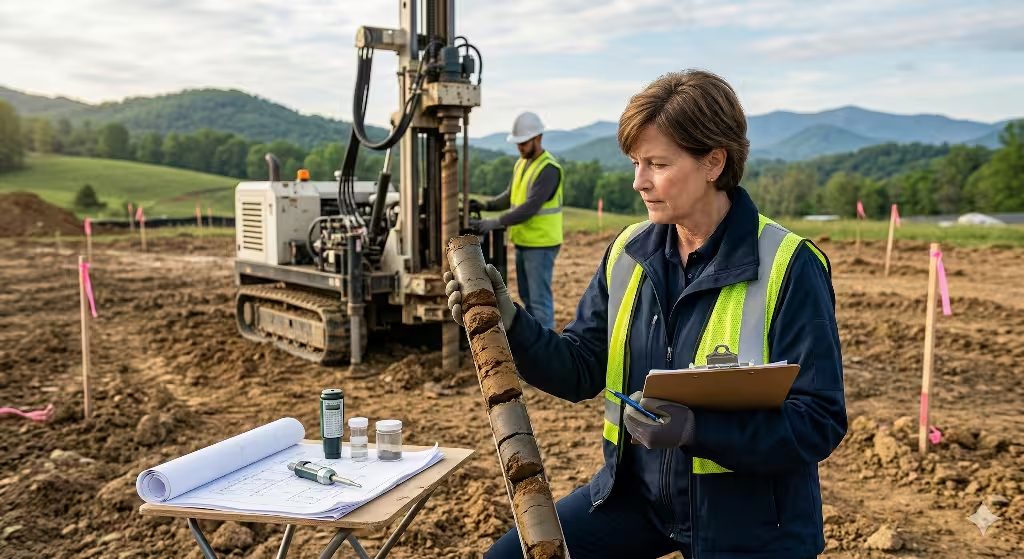
- Soil & Percolation (“Perc”) Test: Absolutely essential if public sewer is unavailable. A soil scientist performs tests to determine if the ground can adequately absorb wastewater for a septic system. A failed perc test can make land unbuildable for a home requiring septic.
- Water Source Confirmation: Verify connection availability and costs if public water is nearby. If a well is needed, research typical well depths and water quality in the area, and consider adding a well-drilling contingency to your offer.
- Flood Zone Check: Consult FEMA flood maps to see if any portion of the property lies within a designated flood hazard area, which impacts building requirements and insurance costs.
- Access Verification: Confirm you have legal, deeded access to the property. If access is via a private road or easement, understand who is responsible for maintenance.
- Utility Availability & Costs: Contact local utility providers (electric cooperative, internet companies) to confirm service availability and estimate the cost of extending lines to your desired building site. Costs can be substantial for remote parcels.
- Environmental Assessment (Optional but recommended for large tracts or former industrial/farm land): Checks for potential contamination issues.
- Finalize Financing & Closing: Once due diligence is complete and satisfactory, finalize your loan. The closing involves signing all final documents, paying closing costs and your down payment, and officially transferring ownership. This is typically handled by a title company or real estate attorney.
This process takes time and attention to detail, but thorough due diligence is your best protection when investing in land.
Key Considerations & Potential Challenges
While the dream of owning land in the beautiful Tri-Cities is exciting, it’s wise to go in with your eyes open to potential hurdles and important factors specific to the area. Thinking through these points helps avoid costly surprises down the road:
- Zoning Nuances and Restrictions: As mentioned, zoning regulations aren’t uniform. What’s permitted in rural Sullivan County might differ greatly from Washington County or within Johnson City limits. Some areas may have restrictions on mobile homes, minimum square footage requirements for dwellings, or limitations on subdividing land. Always verify directly with the local planning office for the specific parcel. Don’t assume anything based on neighboring properties.
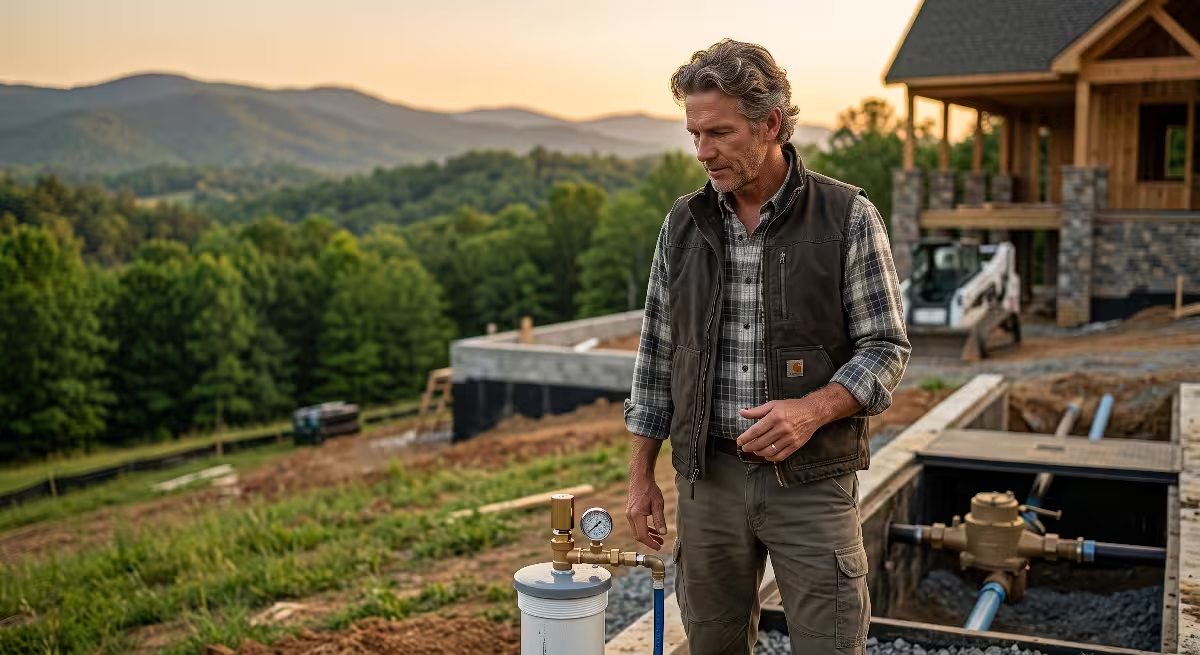
- Septic Systems and Wells: Outside of towns and developed subdivisions, public water and sewer are often unavailable. This means budgeting for, and navigating the regulations around, drilling a well for water and installing a septic system for wastewater. Passing a percolation test is non-negotiable for septic approval. Research local installers and typical costs.
- Access Issues: Ensure the property has legal and physical access. Legal access means it’s documented in deeds/easements. Physical access means you can actually reach the property year-round. Is access via a state-maintained road, a private road, or an easement? If private, is there a road maintenance agreement in place? Who pays for upkeep and snow removal? Lack of clear access can render land unusable or unsellable.
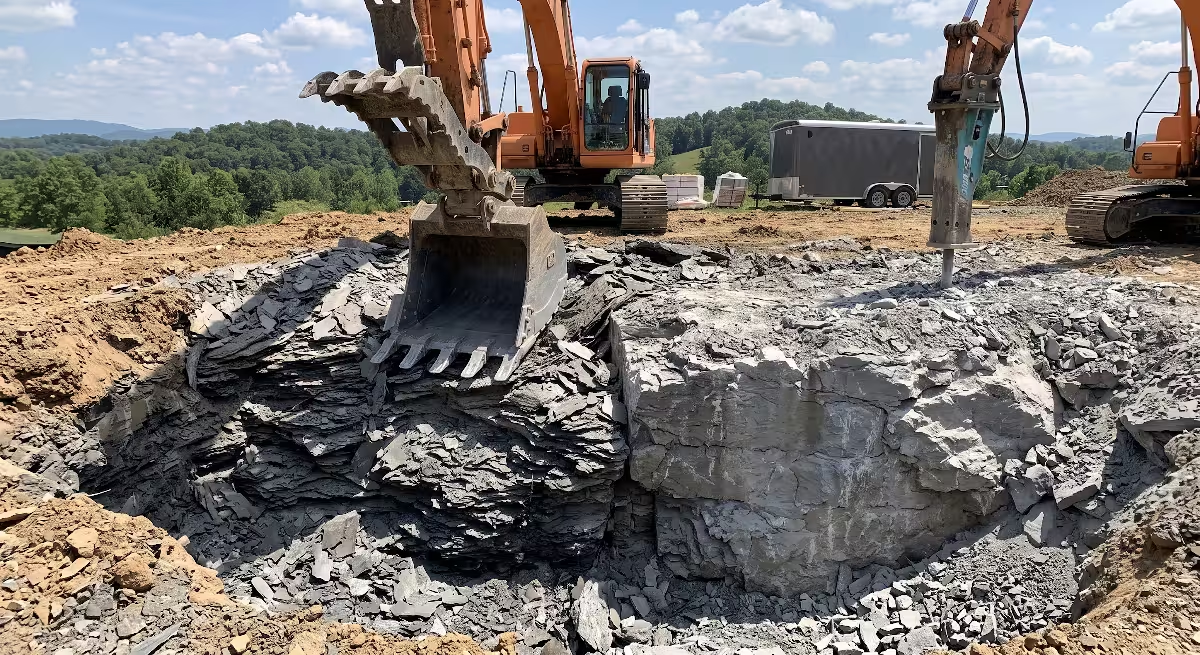
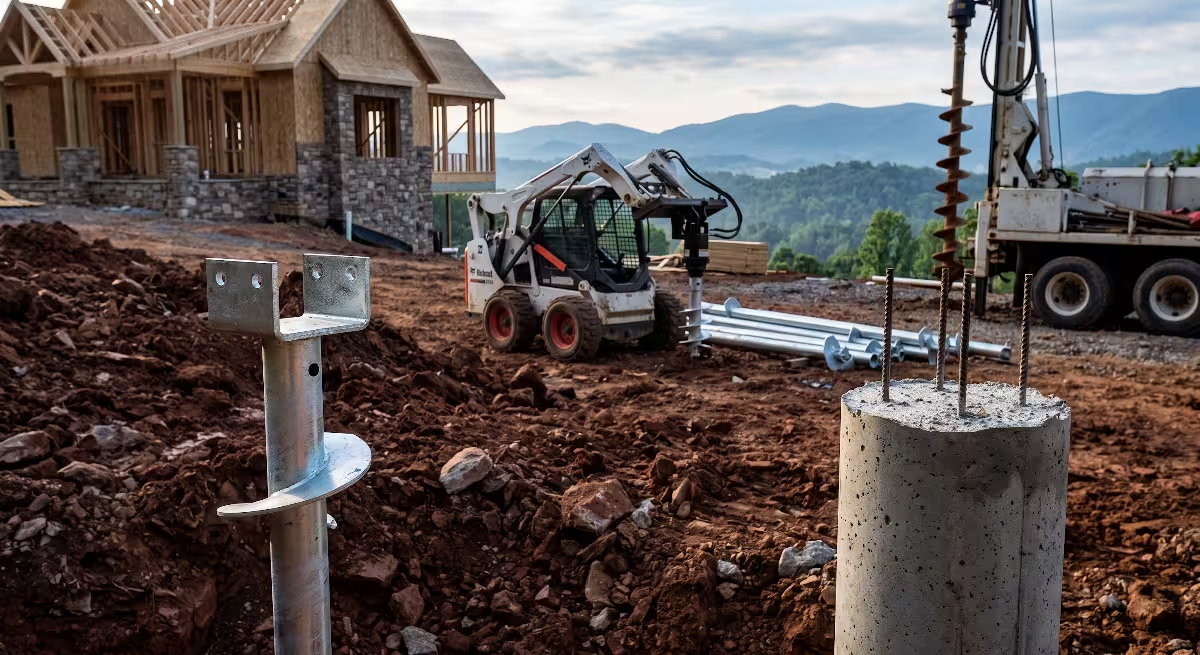
- Topography and Buildability: That gorgeous mountain view often comes with steep slopes. Building on sloped land typically costs significantly more due to excavation, foundation work, and potentially longer driveways. Assess potential building sites carefully and consider how the terrain impacts your plans and budget.
- Utility Extension Costs: Don’t underestimate the cost of bringing power, water (if public is an option but not at the road), and especially internet to a building site far from existing lines. Get quotes from utility providers during your due diligence period.
- Property Taxes: Here’s some good news! Tennessee generally boasts low property tax rates compared to the national average (Source 4.2 notes an average effective rate around 0.69%). This can translate into significant long-term savings compared to owning property in higher-tax states. However, rates do vary slightly by county and city, so check the specific rates for your target location.
- Investment Potential vs. Risk: Is buying land in Tennessee a good investment? It certainly can be, especially given the region’s growth and appeal. However, raw land is typically a less liquid asset than a house – it can take longer to sell. Its value is subject to market fluctuations, zoning changes, and broader economic factors. Treat it as a long-term investment and ensure the purchase aligns with your overall financial goals.
Addressing these considerations upfront helps ensure your land purchase is a source of joy, not frustration.
Finding Your Perfect Plot: Resources and Expertise
With your vision clear and budget in mind, the exciting hunt for your piece of the Tri-Cities begins! Fortunately, several resources can help you uncover available land and acreage:
- Online Listing Portals: Websites and apps are often the first stop. Popular platforms include:
- Zillow & Realtor.com: While focused heavily on residential homes, they list many land parcels. Use their map features and filter specifically for “Lot/Land.” (Entities: Zillow, Realtor.com)
- Land-Specific Sites: Platforms like LandWatch.com, Land.com, LandSearch.com, and LandHub.com specialize in listing rural properties, farms, acreage, and hunting land. These often have more detailed filters relevant to land buyers (e.g., timber, water features, unrestricted). (Entities: LandWatch, Land.com, LandSearch, LandHub)
- Local Brokerage Websites: Check the websites of real estate companies active in the Tri-Cities; they often feature their land listings prominently.
- Local Real Estate Agents – The Land Specialists: This is arguably your most valuable resource. While any agent can help with a land transaction, seek out Realtors® who specialize in land and acreage within Northeast Tennessee. Why?
- Local Knowledge: They understand the nuances of different areas, soil types, zoning quirks between counties, well/septic norms, and realistic market values.
- Network Access: They often know about properties before they hit the general market or hear about “For Sale By Owner” opportunities.
- Transaction Expertise: They are adept at navigating the specific contingencies, due diligence requirements, and potential pitfalls unique to land deals.
- Resource Connections: They can often recommend reliable local surveyors, soil scientists, excavators, and other necessary professionals.
- Driving the Area & “For Sale By Owner” (FSBO): Sometimes the old-fashioned way works! Drive through neighborhoods and rural roads in your target areas. You might spot FSBO signs for properties not listed online. Be prepared to handle more of the negotiation and due diligence coordination yourself if pursuing an FSBO deal without agent representation.
- Local Publications & Bulletin Boards: Occasionally, land listings might appear in local newspapers, community bulletin boards, or agricultural publications.
Combining online searching with the invaluable expertise of a local land specialist gives you the broadest view of available properties and the best chance of finding that perfect plot in the Tri-Cities.
Financing Your Land Purchase
Securing funding for raw land typically differs from getting a mortgage for an existing home. Lenders often view land loans as slightly riskier because the property isn’t immediately generating income or serving as a primary residence. Here’s what you need to know about financing your Tri-Cities land purchase:
- Cash Purchase: The simplest option, if feasible. Paying cash eliminates loan applications, appraisals (though you still need due diligence!), interest payments, and financing contingencies, potentially making your offer more attractive to sellers.
- Land Loans: These are specific loan products for buying land. Be prepared for:
- Higher Down Payments: While standard mortgages might require 3-20% down, land loans often demand 20% to 50% down, depending on the lender, loan type, and property characteristics (raw land vs. improved lot).
- Shorter Loan Terms: Terms might be shorter than the typical 30-year mortgage, potentially 10, 15, or 20 years, leading to higher monthly payments.
- Higher Interest Rates: Rates on land loans may be slightly higher than conventional mortgage rates due to the perceived higher risk.
- Types of Land Loans:
- Raw Land Loans: For undeveloped land with no utilities or improvements. Often have the highest down payment requirements and interest rates.
- Improved Land Loans: For land that already has some infrastructure (utilities nearby, road access, etc.), potentially making it slightly easier to finance.
- Seller Financing: Sometimes, the property owner may be willing to finance the purchase themselves (“owner financing”). This involves negotiating terms directly with the seller, including the down payment, interest rate, and repayment schedule. It can be more flexible but requires careful legal review of the agreement.
- Home Equity Loan or Line of Credit (HELOC): If you already own a home with significant equity, you might be able to borrow against that equity to purchase land. Interest rates may be favorable, but you’re putting your existing home up as collateral.
- Personal Loans: While possible, unsecured personal loans typically have higher interest rates and lower borrowing limits, making them less ideal for significant land purchases.
- Construction Loans (If Building Immediately): If you plan to build right away, you might explore a construction-to-permanent loan that covers both the land purchase and construction costs, converting to a standard mortgage upon completion.
Key Steps for Financing:
- Check Your Credit: Ensure your credit score is strong, as this significantly impacts loan eligibility and interest rates.
- Shop Around: Talk to various lenders, including local banks and credit unions in the Tri-Cities area (they often have better understanding of local land values), as well as lenders specializing in land or agricultural loans. Compare rates, terms, and down payment requirements.
- Get Pre-Approved: Before making an offer, secure pre-approval from a lender. This clarifies your budget and strengthens your negotiating position with sellers.
Understanding your financing options early is crucial for a smooth land buying process in Northeast Tennessee.
Conclusion
Your East Tennessee Land Awaits
The allure of Northeast Tennessee’s Tri-Cities – the misty mountains echoing Appalachian history, the vibrant communities of Kingsport, Johnson City, and Bristol, the promise of space, tranquility, and a life lived closer to nature – is undeniably strong. Owning a piece of this unique region isn’t just about acquiring property; it’s about investing in a lifestyle and planting roots in land rich with beauty and potential.
This guide has aimed to illuminate the path toward that goal, equipping you with the knowledge to navigate the journey. We’ve explored the diverse types of land available, delved into the nuances of the local market, outlined the crucial steps in the buying process, highlighted key considerations specific to Tennessee, and discussed resources for finding and financing your dream plot.
As you move forward, remember that the single most important key to a successful land purchase is thorough due diligence. Taking the time to investigate every detail, from zoning restrictions and utility access to soil suitability and property boundaries, is the essential foundation upon which your land-owning dream will be securely built. It transforms aspiration into tangible reality.
So, is the Tri-Cities calling to you? Are you ready to trade pavement for pastures, or distant sirens for the sound of wind through the trees? Take the next step today. Define exactly what your piece of Tennessee looks like, begin your search with newfound confidence, and strongly consider partnering with a local real estate professional who specializes in land within this remarkable region.
Your East Tennessee adventure awaits – go claim your piece of it.