

Whether you are living in a historic house in Kingsport or a new build over in Johnson City, you know that home is where you go for peace and quiet. But sometimes, the walls feel like they are made of paper. Maybe you can hear the television in the next room, or maybe the kids are playing games and it sounds like they are right next to you. If you want to fix this, you need to learn about the STC rating of your walls.
A quiet room can change a family’s life. Our goal today is to help you understand how to make your current walls much better at blocking noise. We will talk about the science behind it in a simple way. We will look at real steps you can take without tearing your whole house apart. By the time we are done, you will know exactly how to improve the STC rating of your existing walls.
Understanding the Weakest Link Theory
When we talk about an STC rating, we are talking about a score. This score tells us how good a wall is at stopping sound from traveling through the air. A normal wall in most houses has an STC rating of about 33. This is not very high. At this level, you can usually hear someone talking in the next room. If they raise their voice, you might even understand what they are saying.
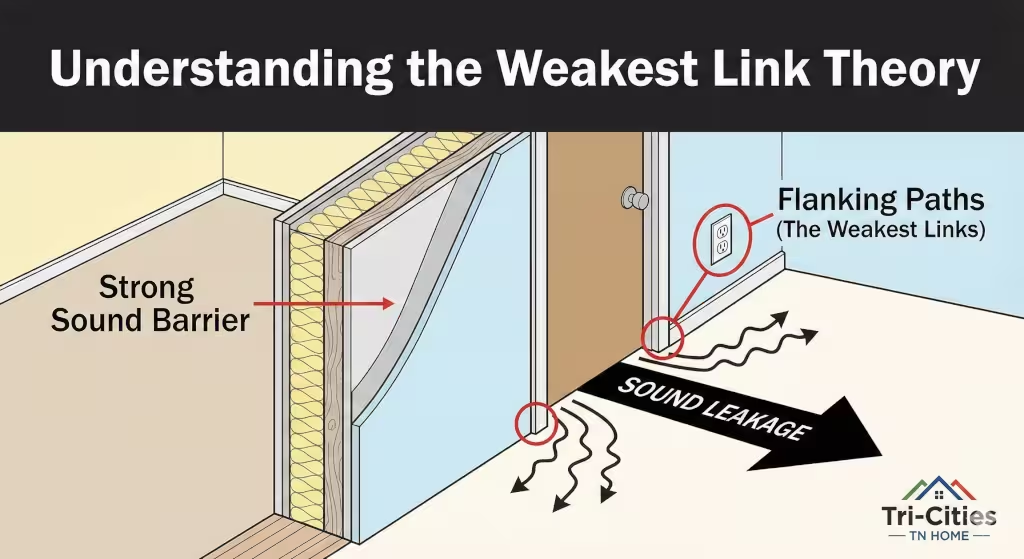
The “Weakest Link” theory is a big deal in the sound world. It means that sound is like water. If you have a big, strong bucket but it has one tiny hole in the bottom, all the water will leak out. Your wall is the same way. You could have a very thick wall, but if there is a gap under the door or a hole for an outlet, the STC rating of the whole wall drops.
To improve the STC rating, you have to look for these leaks. We call these leaks “flanking paths.” This is just a fancy way of saying that sound found a sneaky way to get around your wall. It might travel through the floorboards or through the air vents. If you want a high STC rating, you have to be precise. You have to seal every little crack. Even a gap the size of a penny can ruin the STC rating of a high-quality wall.
Technical Methods: How to Improve STC Rating on an Existing Wall
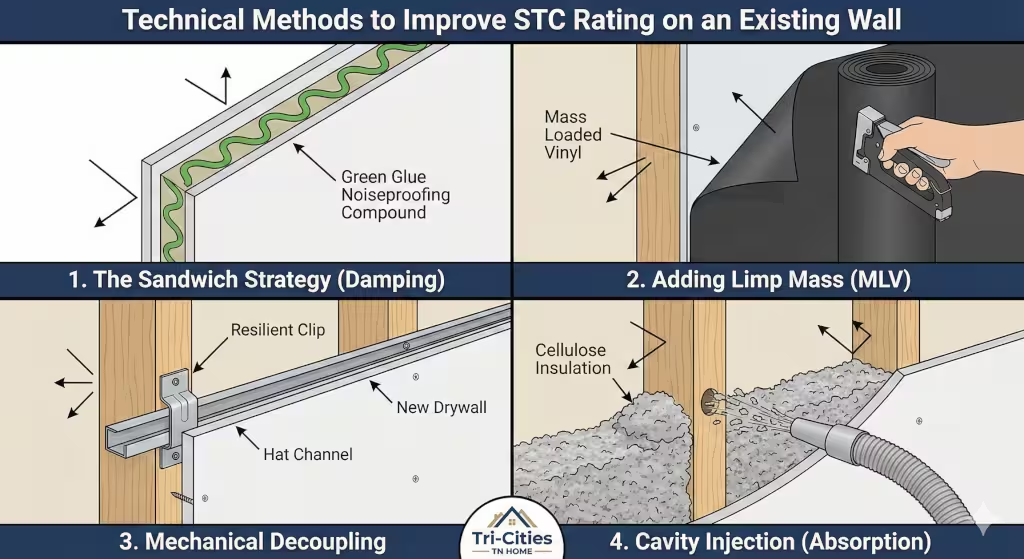
If you want to stay in your home while you do this work, you probably do not want to tear down the drywall. The good news is that you can improve the STC rating without a total mess. We focus on four main ideas: mass, damping, decoupling, and absorption.
The first thing to know is that mass is your friend. Heavy things make it harder for sound to move. When sound hits a wall, it makes the wall vibrate. If the wall is heavy, it does not vibrate as much. This is why adding another layer of drywall is a common way to help. But just adding more weight is not always enough to get a great STC rating. You also need to stop the vibration from passing through the wall.
Another part of the technical side is called decoupling. Think of a string telephone. If the string is tight, the sound travels perfectly. If you cut the string, the sound stops. Decoupling is like cutting the “string” inside your wall. We try to make it so the two sides of the wall are not touching each other directly. This is the best way to get a very high STC rating.
The Sandwich Strategy (Damping)
One of the favorite ways for builders to help people in the Tri-Cities is the “sandwich” method. This is a very professional way to improve the STC rating. You take a special glue called Green Glue Noiseproofing Compound and put it on a new piece of drywall. Then, you screw that new piece right onto your old wall.
This glue is not like regular glue. It stays a bit stretchy forever. When sound tries to move the wall, the glue turns that movement into a tiny bit of heat. We call this “damping.” It is like putting your hand on a bell while it is ringing. The sound stops quickly.
By making this sandwich of drywall and glue, you can raise the STC rating by a lot. It is much better than just adding more drywall by itself. In fact, adding two layers of drywall with this glue can make a wall perform better than a wall twice as thick. This is a great choice if you want to keep the room nearly the same size but want a much better STC rating.
Adding Limp Mass (MLV)
Sometimes you need a lot of weight but you do not have a lot of space. This is where Mass Loaded Vinyl, or MLV, comes in. MLV is a heavy, black material that feels like a thick rubber mat. It is very dense. Even though it is thin, it weighs a lot. This weight helps to block sound and increase the STC rating.
The “limp” part is important. Because it is flexible, it does not ring like a piece of metal would. It just hangs there and stops the sound waves. To use this on an existing wall, you can nail it to the wall and then cover it with another layer of drywall.
When you use MLV, you are adding a different kind of material to the wall. Sound has a hard time traveling through things that change. Going from drywall to vinyl and then back to drywall makes the sound lose energy. This is a solid way to boost the STC rating for rooms that need to be very quiet, like a home office or a nursery.
Mechanical Decoupling
If you want the absolute best STC rating, you have to look at decoupling. In a normal wall, both sides of the drywall are screwed into the same wooden studs. This means the sound can jump from one side to the other through the wood. To fix this, we use something called resilient clips and hat channels.
You screw the clips into the existing wall, and then you snap long metal tracks (the hat channels) into the clips. Then, you screw your new drywall only into the metal tracks. This means the new wall is “floating.” It is not directly touching the old wall.
This break in the connection is like magic for the STC rating. It stops vibrations from walking right through the wall. This is a bit more work than the glue method, but the results are much better. If you have a loud home theater or a teenager who plays the drums, this is how you get an STC rating high enough to keep the rest of the house happy.
Cavity Injection (Absorption)
A lot of people think their walls are empty. Usually, they are full of air. Sound travels through air very easily. If you have an existing wall with no insulation inside, you can improve the STC rating by filling that empty space.
We do this by drilling small holes at the top of the wall and blowing in insulation. We usually use cellulose, which is made from recycled paper, or mineral wool. These materials are very “fuzzy.” When sound enters the wall cavity, it gets trapped in the fuzz. This turns the sound energy into heat.
You should be careful here. You should always avoid spray foam if they are trying to block sound. While spray foam is great for keeping your house warm, it gets very hard when it dries. Hard materials can actually carry sound better. To get a good STC rating, you want something soft and heavy inside the wall.
Precision Details: The Seal the Deal Checklist

You can spend a lot of money on special drywall and glue, but if you skip the small stuff, you will not get the STC rating you want. You have to be precise.
First, you need acoustic caulk. Regular caulk gets hard and cracks. Acoustic caulk stays flexible. You should use it to seal the gap where the wall meets the floor and the ceiling. If air can get through, sound can get through.
Second, look at your electrical outlets. They are basically big holes in your wall. You can buy “putty pads” that you wrap around the back of the outlet box. This seals the hole and helps maintain the STC rating of the wall.
Finally, don’t forget the doors. A door is usually the weakest part of any wall. If you have a hollow-core door, it will have a very low STC rating. Switching to a solid-core door and adding weather stripping can make a huge difference. You want the door to be airtight when it is closed.
Questions Answered about STC Ratings in Existing Walls
How many STC points does a second layer of drywall add? Adding just one layer of 5/8-inch drywall usually adds about 3 points to the STC rating. This is a very small change. You would need a 5-point change to really notice it. This is why I always suggest using a damping glue between the layers to get a much bigger jump in the STC rating.
Is mineral wool better than fiberglass for a high STC rating? Yes, in most cases, mineral wool is better. It is much denser and heavier than fiberglass. Because it has more mass, it does a better job of soaking up sound. Using it can improve the STC rating of a wall by several points compared to leaving the wall empty or using light fiberglass.
Can you soundproof a wall without removing drywall? Absolutely. All the methods we talked about, like adding Green Glue and a second layer of drywall, or using resilient clips, can be done right over your existing wall. This is the best way to improve the STC rating without the mess of a full demo.
What STC rating is needed to stop loud talking? If you want to stop loud talking from being understood, you generally want an STC rating of at least 45. If you want it to be totally silent, you should aim for an STC rating of 50 or higher. This is the level that luxury hotels and high-end apartments try to reach.
Steps for Installing Soundproofing Material
Achieving a high STC rating through mechanical decoupling is arguably the most effective engineering solution we have in the building industry. It literally breaks the path that sound vibrations take to get through your home.
When you use resilient clips and hat channels, you are building what we call a “floating wall.” Since the new wall is not directly nailed to the wooden studs, the sound loses its ability to travel through the solid parts of the house. This can jump your STC rating from a noisy 33 to a very quiet 55 or even 60.
Here is exactly how you do it step-by-step.
Step 1: Prep the Existing Wall and Mark Your Studs
Before you start, you need to find the “bones” of your wall. Use a stud finder to locate every wooden stud behind your existing drywall. Usually, they are 16 inches apart. Mark them from top to bottom.
To get the best STC rating, you should also remove any baseboards or crown molding. You want a clean, flat surface. Check for any air leaks now. If you see a gap where the floor meets the wall, fill it with acoustic caulk. Remember, if air can move through it, sound will ruin your STC rating.
Step 2: Install the Resilient Sound Isolation Clips
These clips are the most important part of the system. You will screw these clips directly into the existing studs, going right through the old drywall.
Vertical Spacing: Space the clips about 24 inches apart vertically.
Horizontal Spacing: Place them on every other stud (usually 32 inches apart) or as the clip manufacturer suggests.
Staggering: Stagger the clips so the weight is spread out evenly.
By using these clips, you are creating a rubber-cushioned mounting point. This rubber acts as a shock absorber, which is the secret to a high STC rating.
Step 3: Snap in the Hat Channels
The “hat channel” is a long piece of metal that looks like a top hat if you look at it from the end. You simply snap these metal tracks into the clips you just installed.
These channels run horizontally across your wall. Once they are snapped in, they are “decoupled” from the studs. If you push on them, you might feel a tiny bit of “give” or bounce. This is exactly what you want. This flexibility is what keeps the sound from passing through, significantly boosting the STC rating of the finished project.
Step 4: Add the New Drywall
Now it is time to put up the new wall surface. You will screw your new 5/8-inch drywall into the metal hat channels.
Very Important: You must make sure your screws only go into the metal channel. If a screw is too long and goes through the channel and into the wooden stud behind it, you have “short-circuited” the wall. This is a common mistake that will instantly drop your STC rating because it creates a solid bridge for sound to travel across. Use 1-1/4 inch screws to stay safe.
Step 5: Leave the “Acoustic Gap”
When you hang the drywall, do not let it touch the floor, the ceiling, or the side walls. Leave a small gap of about 1/4 inch all the way around the perimeter.
If the new drywall touches the floor or ceiling, the vibrations will just go around the clips and through the rest of the house. To maintain your STC rating, you want this new wall to be a “floating island” that doesn’t touch anything but the rubber clips.
Step 6: Seal with Acoustical Sealant
Fill that 1/4 inch gap you left around the edges with a high-quality acoustical sealant. This is a special type of caulk that never gets hard. It stays like heavy rubber forever.
By sealing the edges this way, you make the room airtight without creating a solid connection that vibrates. This final step is what ensures you actually achieve the high STC rating you have worked so hard for. Once the caulk is dry, you can finish the drywall seams with tape and mud just like a normal wall.
Comparison of Improvements
| Method | Estimated STC Rating | Best For |
| Standard Wall (No Insulation) | 33 | Basic privacy (not great) |
| Adding 1 layer of Drywall | 36 | Very minor improvement |
| Drywall + Green Glue | 45 – 50 | Loud talking and TV noise |
| Resilient Clips & Channels | 55 – 60 | Home theaters and total privacy |
Final Expert Insight
If you are going to all the trouble of using clips and channels, I highly recommend using a solid-core door for the room as well. You can have a wall with an STC rating of 60, but if you have a cheap door with a gap at the bottom, the room will still feel noisy. As we say in engineering, your system is only as strong as its weakest point.
Investing in Peace and Quiet
Improving the STC rating of your home is one of the best things you can do for your family. In my years of experience, a quiet home is a happy home. Whether you are in Kingsport, Bristol, or Johnson City, you deserve to have a space where you can relax without hearing the rest of the world.
Remember to focus on the four big tools: mass, damping, decoupling, and absorption. Start with the easiest steps, like sealing gaps with acoustic caulk. If you need more help, look into the sandwich method with damping glue. And if you really need silence, go for mechanical decoupling. Each step you take will raise that STC rating and make your home feel more solid and peaceful.
Precision and integrity matter in building. Take your time, do it right, and you will enjoy the results for many years.