A lot of folks get frustrated with homes that just do not work with them in the Tri-Cities of Tennessee. You know that feeling when the upstairs is a sauna but the living room is like an icebox? Or when you are trying to have a quiet video call while the kids are playing tag three feet away? That is exactly what we are going to fix today.
The Death of the “One-Size-Fits-All” Home
For a long time, we built houses like they were big empty boxes. We had one heater, one air conditioner, and one thermostat right in the hallway. If that hallway felt fine, the system turned off, even if your bedroom was still freezing. That is the old way. Today, we talk about zoned living. This is a smart way of planning a house so that different parts of the home do different jobs and stay at different temperatures.
In our beautiful corner of East Tennessee, we have some real weather. We get those humid summer days where the sun beats down on your roof, and we get those chilly mountain mornings where you just want your bathroom floor to be warm. Zoned living is the answer to those “thermostat wars” you might be having with your spouse. It is about making sure your home fits your life, not the other way around.
Think of it like this: you do not have one light switch that turns on every single light in your whole house at once, right? That would be silly. You have a switch for each room. Zoned living brings that same smart thinking to your comfort and your privacy.
The Two Pillars of Zoned Living
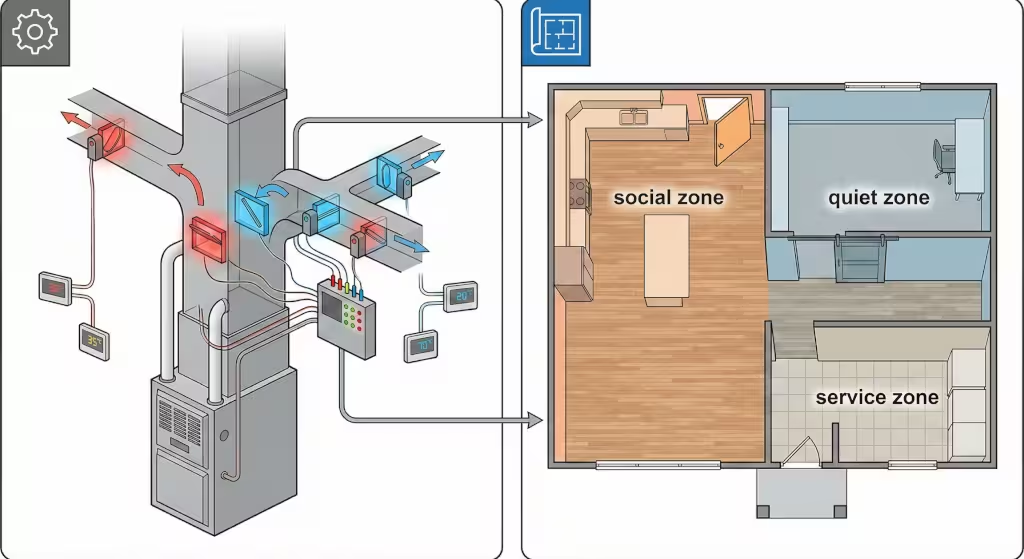
When we talk about the two pillars of zoned living, we are looking at the foundation of what makes a modern home actually work for the people inside it. Think of these pillars like the legs of a sturdy table. If one is missing, the whole thing feels off. In my years as a builder and an engineer, I have learned that you cannot have a truly comfortable home without balancing the mechanical side and the architectural side.
The Mechanical Pillar: The Hidden Engine of Comfort
The first pillar of zoned living is all about the systems you usually do not see. These are the things hidden behind your drywall and tucked away in your attic or crawlspace. To understand how mechanical zoned living works, we have to look at how we used to do things.
In an old-fashioned house, you had one big furnace and one big air conditioner. It was a “yes or no” system. Either the whole house got air, or nothing got air. The problem is that heat rises. If you have a two-story home in Johnson City, your upstairs is almost always going to be warmer than your downstairs. If you set the thermostat downstairs to 72 degrees, your upstairs might stay at 78 degrees. If you turn it down to make the upstairs comfortable, the downstairs becomes a walk-in freezer. This is the exact problem that mechanical zoned living was designed to solve.
Motorized Dampers: The Traffic Cops of Your Air
The most important part of this mechanical pillar is the motorized damper. I like to describe these to my clients as “traffic cops” for your air vents. Imagine your ductwork is like a set of roads. In a standard house, every road is always open. In a home with zoned living, we install these metal plates inside the ducts that can open or close on command.
When the zone upstairs needs cooling, the system sends a signal to the dampers. The dampers for the downstairs “road” close, and the dampers for the upstairs “road” open wide. This forces all that cold, refreshing air exactly where it is needed. This is a very precise way to manage your home. Instead of fighting the physics of rising heat, we use engineering to redirect it.
The Zone Control Panel: The Brain of the Operation
Every system for zoned living needs a brain. This is a small control board usually mounted near your furnace. It takes in information from all the different thermostats around your house.
In a modern home, you might have four or five different thermostats. One is in the master bedroom, one is in the guest wing, one is in the main living area, and maybe one is in the finished basement. The control panel looks at all of them at once. It says, “The master bedroom is too hot, but the living room is fine.” It then decides which dampers to move and how hard the air conditioner needs to work.
This is where the engineering gets really gets interesting. In 2026, these panels are very smart. They do not just turn things on and off. They can adjust the speed of the fans so that they blow just the right amount of air. This prevents that “blast” of cold air that can be noisy and uncomfortable. It makes the zoned living experience feel smooth and natural.
Multi-Stage Equipment and Energy Efficiency
To get the most out of zoned living, you really need what we call “multi-stage” or “variable-speed” equipment. Think of a normal air conditioner like a car that can only go 0 miles per hour or 100 miles per hour. That is not very efficient for driving around town.
A variable-speed unit is like a modern car that can go any speed. When only one small zone in your house needs a little bit of cooling, the unit runs at a low, quiet speed. It uses very little electricity. This is why zoned living is so good for your power bill. You are not running a giant machine at full blast just to cool one small bedroom. You are using just enough energy to get the job done. This matches my core value of being precise. Why waste energy you do not need?
The Architectural Pillar: Designing for the Human Experience
The second pillar of zoned living is about the physical layout of the home. You can have the best HVAC system in the world, but if your floor plan is a mess, you still will not be comfortable. Architectural zoned living is about grouping parts of the house together based on what people are doing in those spaces.
Identifying the Functional Zones
When a builder sits down with a family to look at blueprints, the first thing we do is identify their zones. We look at how they live their daily lives. Most homes need at least three distinct types of zones to be successful.
The Social Zone is the heart of the home. This is the kitchen, the dining room, and the great room. This area is built for noise, light, and movement. It usually has hard floors like wood or tile because people are walking through it all day. In a home with zoned living, we try to keep this area central but separated from the quiet spots.
The Quiet Zone is where you sleep, study, or relax. This includes the bedrooms and home offices. In the past, we just put these down a hallway. In a modern zoned living plan, we might use “buffer spaces” like a laundry room or a large closet to act as a wall of silence between the loud kitchen and the quiet bedroom.
The Flex Zone is a newer idea that has become very popular in 2026. This is a room that can change its job. Maybe it is a playroom for the kids now, but in ten years it will be a hobby room or a gym. Architectural zoned living makes sure these rooms have the right doors and walls so they can be closed off when needed.
The “Broken-Plan” Concept
For a long time, everyone wanted “open-concept” homes. People wanted to see from the front door all the way to the back fence. But we learned the hard way that open-concept homes are very loud. If someone is washing dishes, you cannot hear the TV. If the kids are playing, you cannot have a quiet conversation.
Zoned living has led to the “broken-plan” style. This gives you the feeling of a big open space but uses smart architectural features to break it up. We might use a half-wall with a beautiful wood cap, or a set of glass French doors. This lets the light pass through so the house feels big, but it stops the sound and the drafts. It is a more competent way to design a home because it acknowledges that humans need both connection and privacy.
Acoustic Control and Sound Zoning
A big part of architectural zoned living is what we call “acoustic zoning.” This is just a fancy way of saying we want to keep the noise where it belongs. When we build a house with zoned living in mind, we use different materials in the walls.
For example, in the wall between a bathroom and a living room, we might use thicker insulation or special “quiet” drywall. We might also look at the flooring. Using a soft rug in a quiet zone and a hard surface in a social zone tells your ears and your feet that you have moved into a different part of the home.
Visual Cues and Transitional Spaces
Finally, a well-designed home uses visual cues to mark the transition between zones. In the Tri-Cities, we love our craftsmanship. We might use a heavy timber beam in the ceiling to show where the kitchen zone ends and the family room zone begins.
These transitional spaces, like a wider hallway or a small foyer, act like a “reset button” for your brain. As you walk through a transitional space, you are leaving the high-energy social zone and entering the low-energy quiet zone. This is a key part of zoned living because it helps lower your stress levels. Your home starts to feel like a series of purposeful spaces instead of just one big, chaotic room.
How the Two Pillars Work Together
When you combine a smart mechanical system with a smart floor plan, you get the ultimate version of zoned living. The architecture keeps the noise and activities separated, while the mechanical system keeps each of those areas at the perfect temperature.
In a house like this, you do not have to think about your comfort. The house handles it for you. If you go into your home office to work, the air is fresh and the room is quiet. If you move to the kitchen to cook a big Sunday dinner, the system knows to kick on the cooling to handle the heat from the oven.
This is what we mean when we talk about the best home building experience. It is not just about the paint colors or the countertops. It is about building a home that has the integrity to support your life every single day. Zoned living is the most precise and effective way to make sure your new home in the Tri-Cities is a place you will love for a long time.
Common Zoned Living Questions Answered
When a builder is out at a job site in Johnson City or meeting with folks in Kingsport, they often get the same few questions about zoned living.
What is the difference between zoned living and an open floor plan? An open floor plan is just one big space with very few walls. It looks pretty, but it can be loud and hard to heat. Zoned living takes the best part of an open plan—the airy feel—and adds back some control. You might have an open kitchen, but you use a sliding barn door to create a separate “quiet zone” for your office.
Does a zoned HVAC system increase home value? Absolutely. Around here, buyers are looking for homes that are smart and cheap to run. When you can show a buyer that the house has zoned living with separate controls for each floor, they know they won’t be sweating in bed or paying for air they don’t use. It makes the home much more “competent” in the eyes of a buyer.
Is zoned living better for large families? Yes, it is a lifesaver. If the kids are watching a loud movie in the basement social zone, you can still have a quiet dinner in the dining zone. Zoned living keeps the peace.
2026 Design Trends: The Future of the Zone
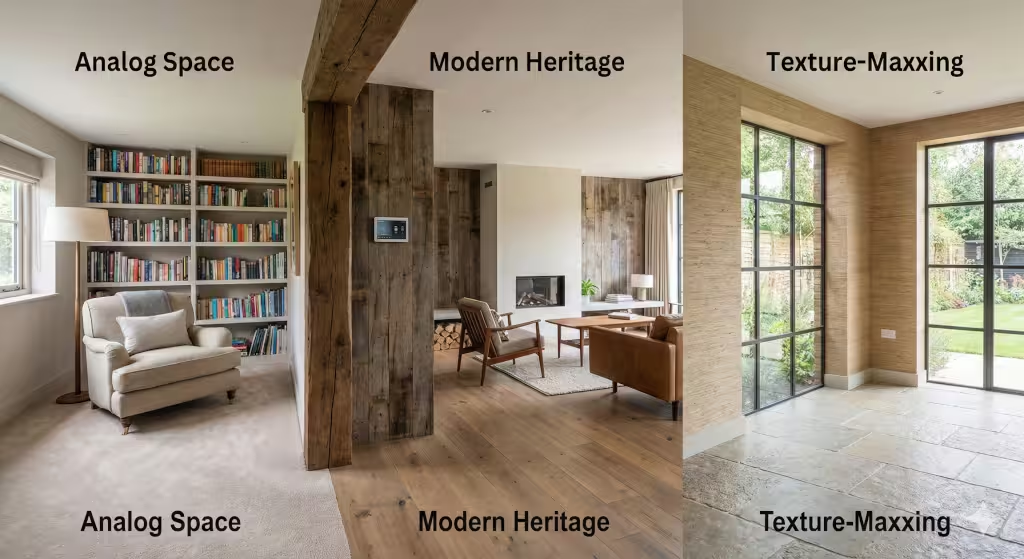
Since it is 2026, we are seeing some really cool new ways to handle zoned living. One of my favorite things is called “Texture-Maxxing.” This is where we don’t even use a wall to mark a zone. We might use a beautiful hardwood floor in the living room and then switch to a textured stone in the sunroom. Your brain sees the change and knows it is entering a different zone.
We are also seeing “Analog Spaces.” These are zones in the house where we deliberately don’t put any TV outlets or smart speakers. It is a quiet zone meant for reading or just talking. In our fast-paced world, having a zone in your home dedicated to unplugging is a huge part of zoned living.
Another big thing is blending our local history with new tech. We call it “Modern Heritage.” We might use old-fashioned Tennessee timber for a big beam that marks the edge of a kitchen zone, but hidden inside that beam is the smart sensor for the zoned living climate control. It looks like a classic home, but it works like a spaceship.
The Pros and Cons of a Zoned House
To be fair and give you the full story, let’s look at the trade-offs of zoned living.
| Feature | Benefit of Zoned Living | Consideration |
| Privacy | You get quiet spots even in a busy house. | If you have too many walls, the house can feel small. |
| HVAC Control | No more fighting over the thermostat. | It costs more to install the extra parts at first. |
| Acoustics | Sound stays where it belongs. | You have to pick the right materials to stop the noise. |
| Efficiency | Lower bills over the long run. | There are more parts (like dampers) that might need a check-up later. |
As you can see, the benefits of zoned living are mostly about how you feel every day, while the downsides are mostly about the setup cost. Most of my neighbors here in the Tri-Cities find that the energy savings pay for the system pretty quickly.
Why Precision Matters
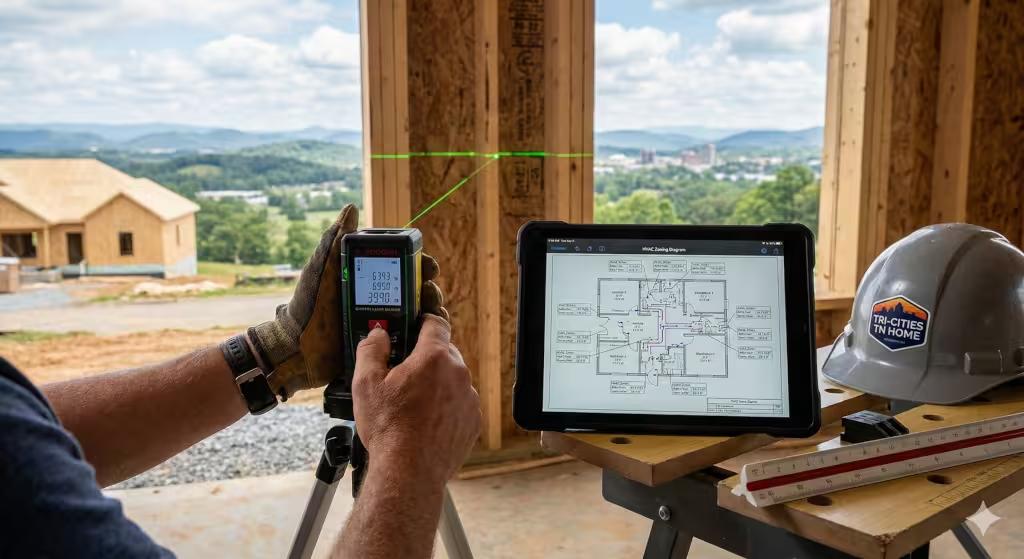
When we build a house with zoned living, we have to be very precise. If you just slap a few doors in a house, you don’t have true zoned living. You have a mess.
You have to think about how the air moves. You have to think about where the sun hits the house at 4:00 PM in July. This is where my engineering background comes in handy. Zoned living is like a puzzle. When all the pieces, the walls, the vents, the smart sensors, all fit together, the house feels “right.” It feels stable.
Conclusion: Is Zoned Living Right for You?
So, at the end of the day, is zoned living worth it? If you have a house with more than one floor, or if you have a big family, the answer is a big “yes.” It turns a house from a simple shelter into a tool that helps you live better.
Zoned living lets you be social when you want to be and quiet when you need to be. It keeps your wallet happy by not wasting power. And most importantly, it makes sure every person in your home is comfortable. Whether you are building a new custom home in Johnson City or looking to fix up an older place, thinking about zoned living is the smartest move you can make.
Building a home is a big deal, and I want you to have the best experience possible. If you take the time to plan your zoned living areas now, you will be thanking yourself for years to come.