

If you are looking at your space and feeling a bit crowded, you are in the right place. Lately, a lot of folks here in East Tennessee are looking to build a small home that does not actually feel tiny. It is a smart move. Building a smaller footprint saves you money on taxes and heating, but you still want it to feel like a palace.
We approach home building like a math problem. If you get the numbers and the light right, you can make any small home feel like it has double the square footage. It is about being precise and using a bit of engineering logic. We call this “right-sizing” today. It means we focus on making every inch work hard for you. Let’s walk through the steps to turn your cozy cottage into a space that feels wide open.
The Science of Color and Light
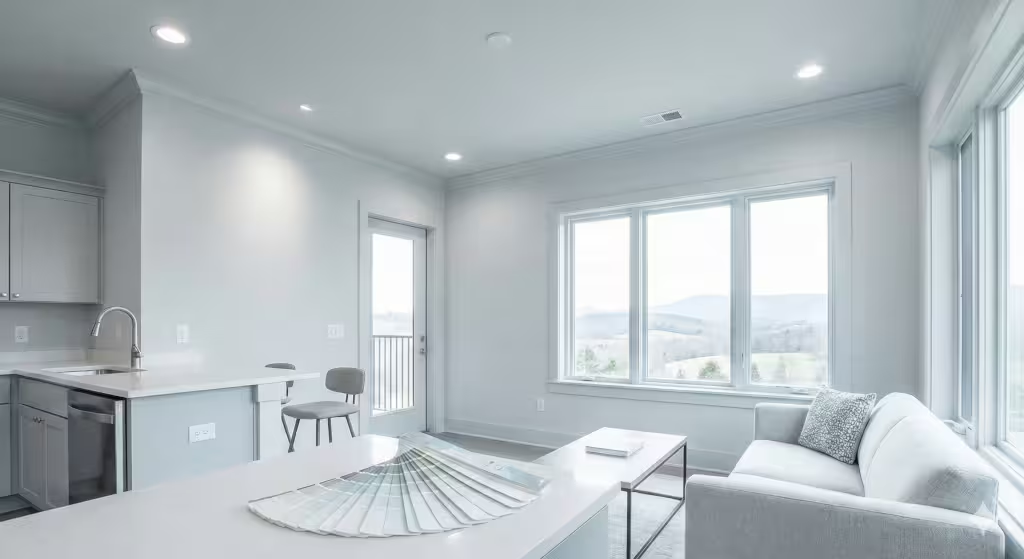
In the home building industry, we do not just pick paint because it looks pretty on a small paper swatch. We use a bit of engineering to make sure the physics of the room work in your favor. If you want a small home to feel like it has room to breathe, you have to understand how light waves interact with surfaces. As a builder, I look at every wall as a tool to move light from the windows into the dark corners of the house.
Understanding Light Reflectance Value (LRV)
In the world of paint, this is called Light Reflectance Value, or LRV. Every can of paint has an LRV number from 0 to 100. A score of 0 is absolute black, which soaks up all light. A score of 100 is a perfect white, which reflects all light back into the room.
To make a small home feel open, you should aim to stay above an LRV of 60. This ensures that the natural light coming through your windows is not wasted. If you use a dark navy blue with an LRV of 10, the walls will eat the light. This makes the boundaries of the room very clear to your eyes, which makes the small home feel tight. When you use a high LRV color, the light bounces from wall to wall. We can represent the relationship between the light hitting the wall (Li) and the brightness you see (B) with a simple formula:
By keeping the LRV high, you increase the perceived brightness of the small home without having to add more windows or expensive light fixtures.
The Role of Color Temperature
It is not just about how much light reflects, but also the “temperature” of the color. Colors are usually split into warm and cool tones. Warm colors like red, orange, and deep yellow are called “advancing” colors. In the world of design, this means they seem to move toward you. If you paint a small home in a warm terracotta, the walls will feel like they are closing in.
Cool colors like light blue, soft green, and crisp gray are “receding” colors. They seem to move away from the eye. When you walk into a small home painted in a cool, light gray, your brain feels like the walls are further back than they really are. This creates a sense of airiness. In my time managing projects in the Tri-Cities, I have found that a cool-toned white is the most effective tool for making a small home look like it has extra square footage.
The Monochromatic Strategy
One of the biggest mistakes people make in a small home is using too many different colors. They might paint the walls beige, the trim bright white, and the doors a dark wood stain. Every time the color changes, your eye stops. These “visual breaks” tell your brain exactly where the room ends.
To fix this, I suggest a monochromatic look. This means you use different shades of the very same color. If you paint your walls, baseboards, and crown molding in the same light color, the visual breaks disappear. Your eye slides right over the corners and the trim. In a small home, this “seamless” look tricks the mind into thinking the space is continuous and much larger than it is. We often call this “color drenching” in the 2026 design world. It is a very precise way to handle a small home layout.
Managing Artificial Light
Natural light from the sun is great, but here in East Tennessee, we have plenty of cloudy days. You need to engineer your artificial light to support your small home design. Most folks just put one big light in the middle of the ceiling. This is a mistake. It creates a “hot spot” in the center and leaves the corners in shadow. Shadows are the enemy of a small home because they hide the actual size of the room.
Instead, use layered lighting. You should have “task lighting” for reading, “ambient lighting” for the whole room, and “accent lighting” to highlight the walls. When you light up the corners of a small home, you show the eye that there is more space available. I like to use recessed cans that sit flush with the ceiling. They do not hang down and take up visual space, but they provide a wash of light that makes the small home feel bright and welcoming even at night.
Finish and Sheen
The “sheen” of your paint, how shiny it is, also matters. A flat paint reflects light in a scattered way. A semi-gloss or satin paint reflects light more directly. While you do not want your walls to look like a mirror, a slight satin finish in a small home can help bounce light into the darker parts of the hallway. It adds a bit of depth and glow that a flat paint cannot provide.
By being precise with your LRV choices, color temperatures, and lighting layers, you can change the entire feel of a small home. It is about using the rules of science to create a better living experience.
Scaling Furniture for Precision
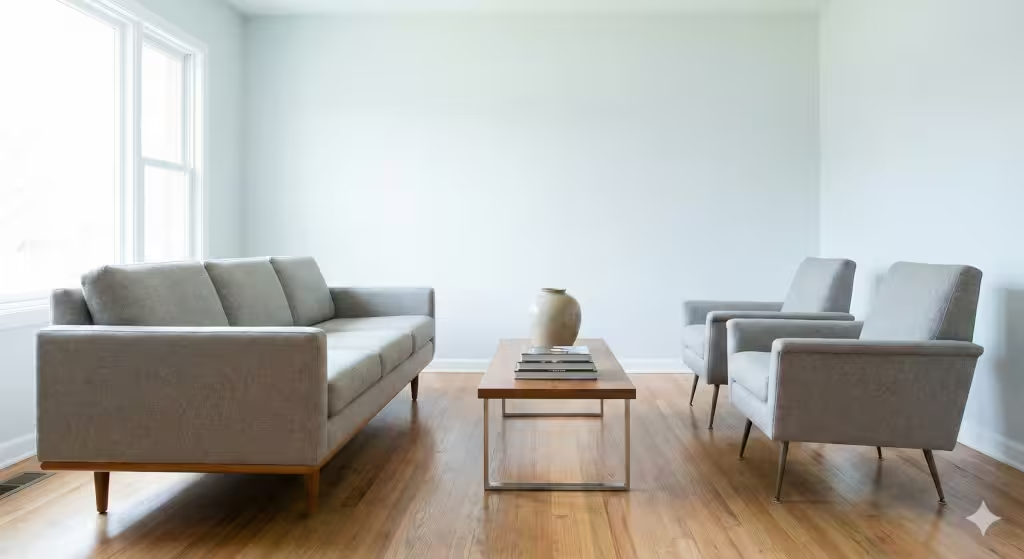
In the home building and design world, we often talk about “scale” and “proportion.” These are fancy words for a simple engineering concept: how big things look compared to the room they are in. When you are working with a small home, every inch of floor space is like prime real estate in downtown Johnson City. You cannot afford to waste it.
Being precise with your furniture is about more than just fitting a sofa through the front door. It is about how that sofa affects the “visual weight” of the room.
The “One Large Piece” Rule
A common mistake is when folks move into a small home is that they buy a lot of tiny furniture. They think that small chairs will make the room look bigger. In reality, a lot of small items create “visual noise.” It makes the room look cluttered and messy.
Instead of five small chairs, try using one full-sized, comfortable sofa. One large, well-placed piece of furniture gives the eye a place to rest. It makes the small home feel intentional and organized. In my experience as a project manager, I have found that fewer, larger pieces actually make a room feel more grand. It is about the ratio of furniture to open floor. If you have too many legs and edges, the room feels like an obstacle course.
The Importance of “Lithe” Design
When you are picking out pieces for a small home, you need to look at the legs. In the building trade, we like to see the “envelope” of the room—which is the floor, walls, and ceiling. If a heavy sofa sits right on the floor with a skirt covering the bottom, it blocks your view of the floorboards. This “eats” square footage in your mind.
We recommend “lithe” furniture. These are pieces with thin, exposed legs. When you can see the floor extending under the sofa or the chair, your brain registers that the floor space is still there. This makes the small home feel much more open. It is like an optical illusion that creates a sense of airiness. Mid-century modern styles are great for this because they were designed for smaller post-war houses.
Multifunctional Engineering
Every piece of furniture in a small home should have at least two jobs. As a builder, I love integrated storage. If you are choosing a coffee table, do not just get a flat surface. Get one with drawers or a lift-top. This allows you to hide away remotes, magazines, and blankets.
When the surfaces in a small home are clear, the house feels bigger. We call this “clearing the decks.” Use an ottoman that opens up to store toys or shoes. Use a dining table that can fold down when you are not using it. By being precise and choosing furniture that works overtime, you keep the clutter at bay. A clutter-free small home always feels more expensive and more spacious than a big house full of junk.
The “Cantaloupe Rule” for Decor
Once the big furniture is in place, you have to think about the small stuff—the lamps, the vases, and the pictures. I always tell my clients to follow the “Cantaloupe Rule.” If a piece of decor is smaller than a cantaloupe, it is probably too small.
If you put twenty tiny trinkets on a shelf, the small home starts to feel like a souvenir shop. It draws the eye to a hundred different spots, which makes the walls feel like they are closing in. If you use one large, beautiful vase instead, the room feels calm. This is a key part of maintaining a professional, clean look in a smaller footprint.
Mapping the Traffic Flow
Before you buy anything for your small home, you should take a roll of blue painter’s tape and mark the “footprint” of the furniture on the floor. This is a trick we use in construction to make sure people can actually walk through a room.
You want to maintain at least 36 inches of space for major walkways. In a small home, you might have to squeeze that to 30 inches, but no less. If you have to turn sideways to get past the coffee table, the piece is too big. Engineering a clear path through the house ensures that you never feel “trapped” in your own living room.
Using these rules of scale and proportion is the most effective way to manage a small home. It is not about how much furniture you can fit; it is about how much floor you can keep visible.
Vertical Engineering: Looking Upward
When you run out of floor space in a small home, you have to look up. We call this vertical engineering. Most people only think about the four walls around them. I want you to think about the ceiling. If you can draw the eye toward the ceiling, the whole small home feels taller and grander.
One way to do this is with cabinetry. Instead of stopping your kitchen cabinets a foot below the ceiling, take them all the way up. This gives you extra storage for things you do not use every day, like your big Thanksgiving platters. It also makes the wall look much longer. You can also use vertical lines on the walls. Shiplap or wallpaper with thin vertical stripes can trick the eye into thinking the room has more height.
Don’t forget your windows. Most people hang their curtains right at the top of the window frame. If you want your small home to feel huge, hang the curtain rod just a few inches below the ceiling. Then, let the curtains go all the way to the floor. This makes your windows look massive and your walls look like they go on forever. It is a professional move that costs very little but changes everything.
Strategic Layout and Flow
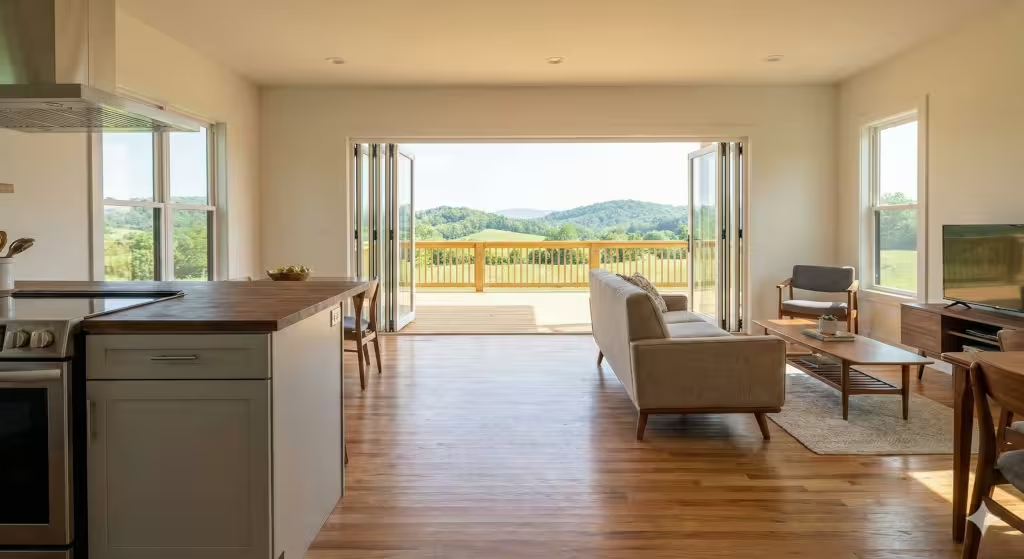
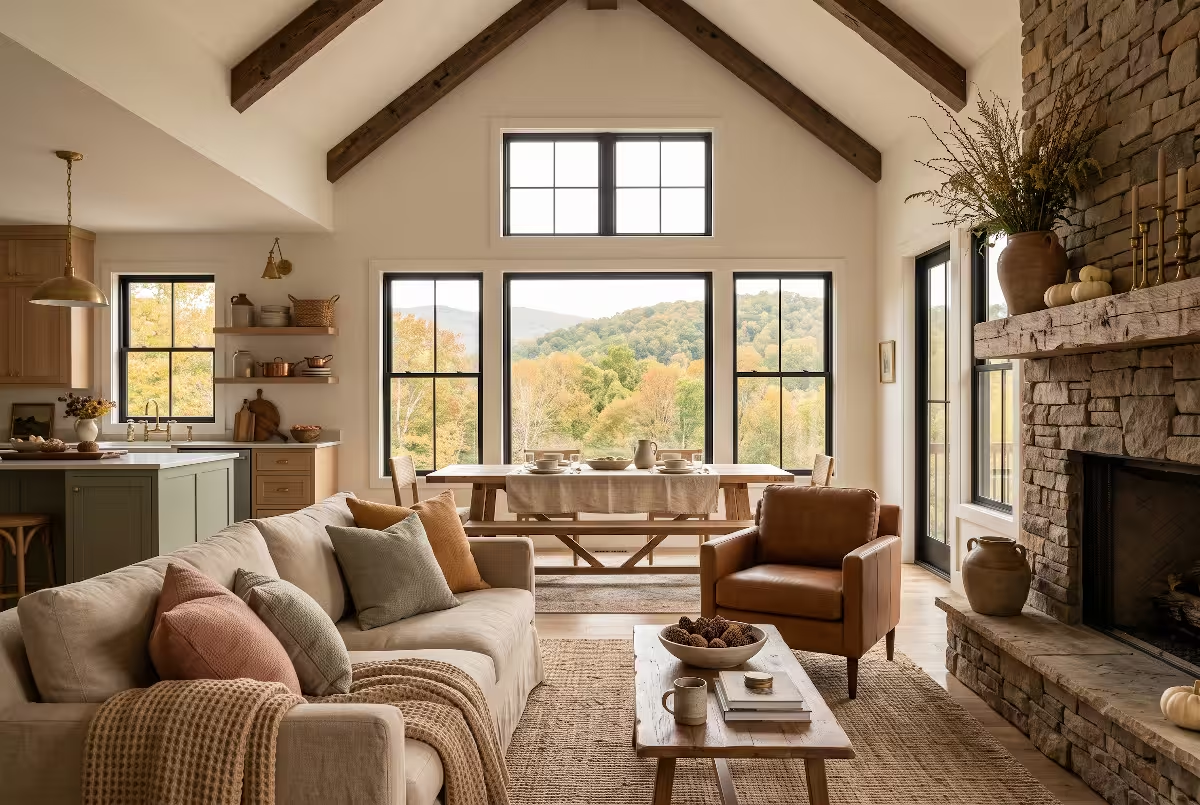
The way you move through a small home is very important. In my work with regional builders, we focus on sightlines. A sightline is what you see when you stand in one spot and look across the house. If you can see from the front door all the way to the back window, the house feels long and open. If a big bulky cabinet is blocking that view, the small home feels chopped up.
Keep your traffic paths clear. You should be able to walk from one room to another without zig-zagging around furniture. We try to keep the center of the room open. This gives you a “landing zone” for your eyes. If the middle of the floor is clear, the small home feels like it has room to breathe.
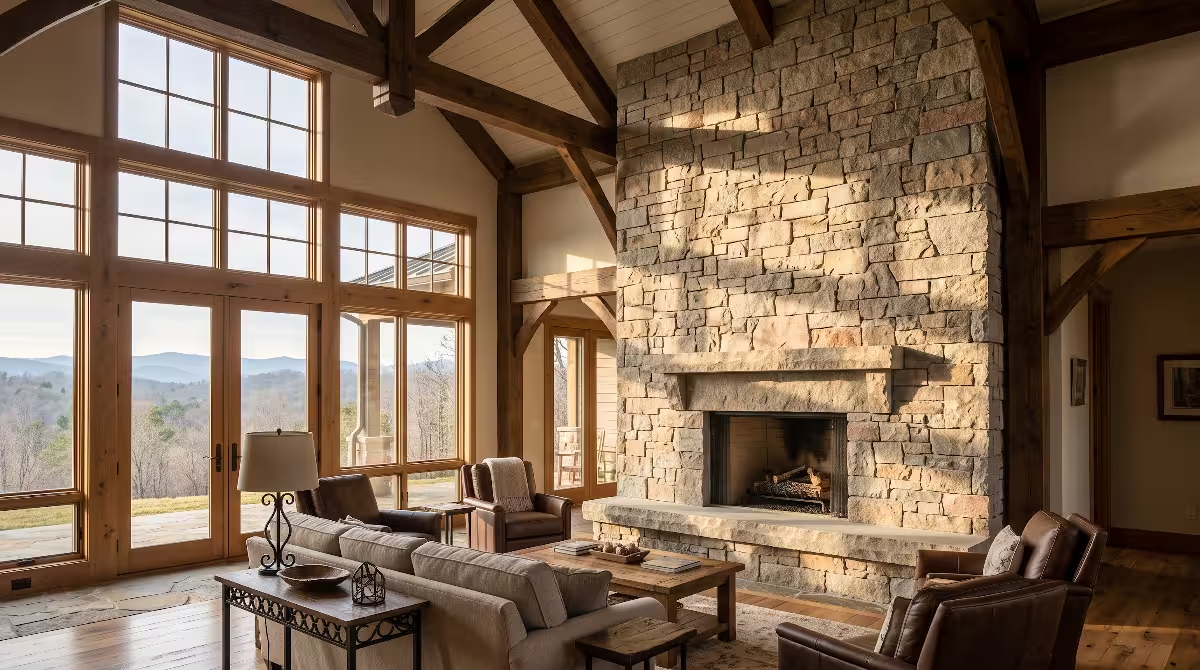
We also like to connect the inside to the outside. Here in Johnson City, we have beautiful views of the mountains. Using a big sliding glass door or a set of French doors can make a small home feel like the whole backyard is part of the living room. It breaks down the walls and lets the outdoors in. In 2026, we are seeing more people use “pocket doors” that slide into the wall. This saves the space that a swinging door would normally take up, which is a big win for any small home.
The Reflection Factor: Mirror Placement
Mirrors are like magic for a small home. They are the cheapest way to “add” square footage without actually swinging a hammer. If you place a large mirror opposite a window, it reflects the view from outside. This makes it look like you have another window on that wall. It also bounces natural light into the dark parts of the room.
In a narrow hallway, a mirror at the very end can make it feel twice as long. You can also use mirrored closet doors in a bedroom. Some people think mirrors are old-fashioned, but they are a key tool in the engineering of a small home. They create “perceived depth.” Your brain sees the reflection and thinks there is more space to walk into. Just be careful not to overdo it—you don’t want your house to feel like a carnival funhouse. One or two large, well-placed mirrors are better than a dozen small ones.
Questions Answered about Small Homes
People often ask how to maximize their small house. My answer is always to look at the “hidden” spaces. Look under the stairs. Look at the space above the doors. You can build shelves in these areas to hold books or bins. This keeps your main living areas clean and open. A small home stays comfortable when everything has a specific home.
Another common question is about what colors work best. While white is the classic choice, you don’t have to live in a white box. Light greens, pale yellows, and soft tans also work well. The goal is to keep the colors “airy.” Avoid anything that feels heavy or muddy. In a small home, you want to feel like you are surrounded by light.
Folks also wonder how to handle having a lot of stuff in a small home. It is best to try to use fewer, larger decorations. Instead of five small pictures on a wall, use one large painting. This keeps the walls from looking “busy.” A clean wall makes a small home feel much more peaceful.
Quality Over Square Footage
A large house that is poorly built is a nightmare. A small home that is built with precision and care is a joy. When you have less space to maintain, you have more time to enjoy your life. You can spend more on high-end finishes like granite counters or hardwood floors because you are buying less of them.
In the Tri-Cities area, we take pride in our homes. Whether you are in a historic part of Kingsport or a new development in Johnson City, a small home can be a great investment. It is about using your head and planning every detail before you ever start building. If you follow these rules of light, scale, and layout, your home will feel big enough for all your dreams.
We hope this gives you a good start on your building journey. Making a small home feel bigger is all about outsmarting the floor plan.