

When you build a custom home in our beautiful part of East Tennessee, the garage is often more than just a place to park a car. It is a workshop. It is where you build furniture, fix the mower, or work on a classic truck. But there is a silent problem in many of these shops. That problem is dust. Here at Tri-Cities TN Home, we want to help you understand why choosing the best air filtration system is the most important tool you can buy for your health and your home.
The Importance of Air Filtration in the Garage Workshop
When you are working wood or metal, you see the big chips and the sawdust on the floor. You might think that sweeping up or using a shop vac is enough, but often it is not. The most dangerous dust is the stuff you cannot see. These tiny bits of dust stay in the air for hours. They are so small that they go deep into your lungs. In our humid Tennessee climate, this fine dust can even mix with the moisture in the air and stick to your walls and tools.
A good air filtration setup acts like a second set of lungs for your shop. It pulls the air through filters that catch those tiny particles. This keeps your air clean so you can breathe safely. It also keeps your shop cleaner because the dust does not have a chance to land on your workbench or your finished projects. Whether you are in a small one-car garage in Johnson City or a large pole barn in Bristol, you need a plan for air filtration.
What Is Air Filtration and Why Does Your Shop Need It?
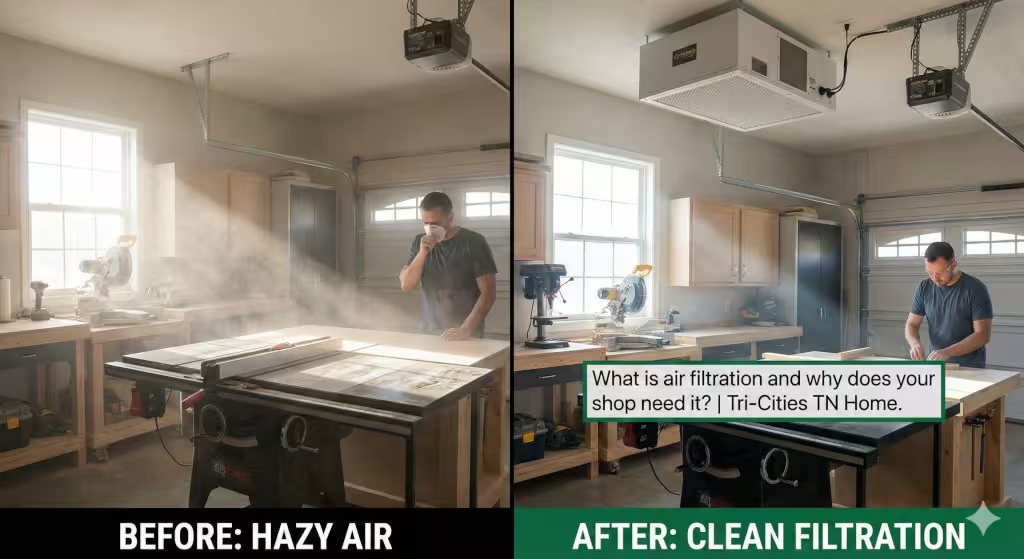
To put it simply, air filtration is the process of cleaning the air in a room. In a garage workshop, this usually means a box that hangs from the ceiling. This box has a fan inside and filters on the ends. The fan pulls the dirty air in, the filters catch the dust, and then the clean air is blown back out.4 This is different from a dust collector.5 A dust collector has a big hose that you hook up to your saw. It catches the big stuff at the source. But even the best dust collector lets some fine dust escape.6 That is where air filtration comes in to finish the job.
Your shop needs air filtration because fine wood dust is a known health risk. It can cause breathing problems and even long-term illness. If you find yourself coughing after a few hours in the shop, your air filtration is not doing its job. Also, if you plan to paint or finish wood in your garage, you need the air to be very clean. One tiny speck of dust can ruin a beautiful coat of varnish. By using a dedicated air filtration unit, you ensure that your hard work looks professional and your lungs stay healthy.
The Engineering Behind Clean Air: CFM and ACH Explained
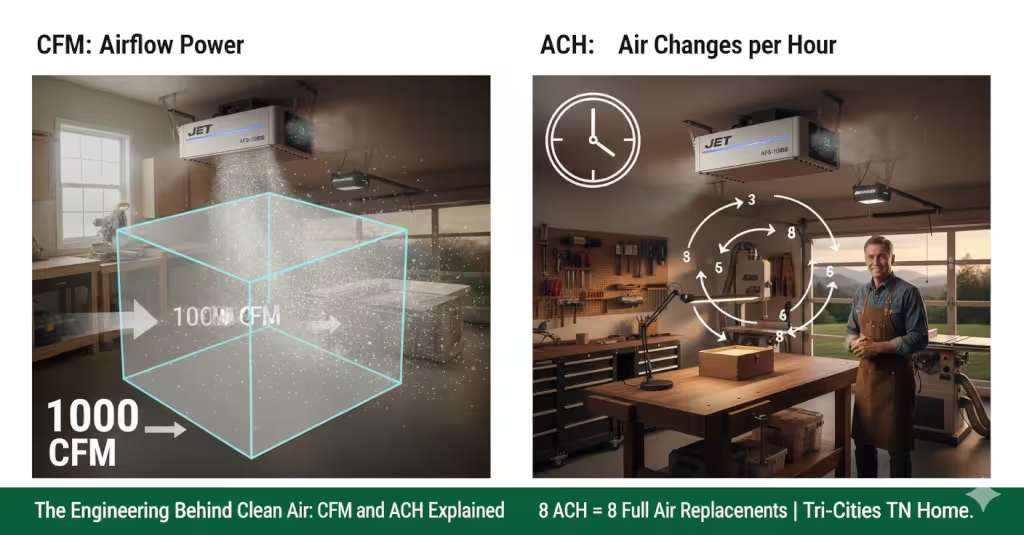
To get the best air filtration, you need to understand two main terms: CFM and ACH. CFM stands for Cubic Feet per Minute. This tells you how much air the fan can move. ACH stands for Air Changes per Hour. This tells you how many times all the air in your garage goes through the filters in one hour.
For a workshop, you want at least 6 to 8 air changes per hour. If you do a lot of heavy sanding, you might even want 10 changes. Think of it like this: if your garage is full of smoke, you want it gone fast. High CFM means the air filtration system can clear the air quickly. If the CFM is too low, the dust stays in the air longer than it should. it is always advisable for buyers to look for a unit that has a high enough CFM for their specific room size. This is the only way to ensure the air filtration actually works.
Understanding Micron Ratings and MERV Efficiency
When you look at filters for your air filtration system, you will see the word “micron.” A micron is a tiny unit of measurement. For scale, a human hair is about 70 microns wide. The dust that hurts your lungs is usually 1 to 5 microns small. The best air filtration systems use a two-stage process. The first filter catches the big stuff, like 5 microns and up. The second filter, which is usually a bag inside the unit, catches the 1-micron dust.
You might also see a MERV rating. This stands for Minimum Efficiency Reporting Value. The higher the MERV number, the better the filter is at catching small things. For a garage, you want a MERV rating of at least 11 or 12. Some high-end air filtration units even use HEPA filters.19 HEPA stands for High-Efficiency Particulate Air. These are the gold standard because they catch almost 100 percent of the tiniest particles. When you are serious about air filtration, you do not settle for cheap furnace filters. You look for high micron and MERV ratings.
How to Calculate the Right Size for Your Garage
You do not want to guess when it comes to air filtration. There is a simple formula to find the right size unit. First, find the volume of your garage. Multiply the length times the width times the height of the ceiling. For example, if your garage is 20 feet long, 20 feet wide, and 10 feet high, your volume is 4,000 cubic feet.
Next, multiply that volume by the number of air changes you want per hour. Let’s use 6 changes as a base. 4,000 times 6 equals 24,000. Finally, divide that by 60 minutes. 24,000 divided by 60 is 400. This means you need an air filtration unit with at least 400 CFM. If you have a bigger shop or do more work, you will need a higher CFM. Buying a unit that is too small for your space is a waste of money. Proper air filtration starts with the right math.
Top Recommended Air Filtration Systems for 2025
There are several great brands on the market today. Based on my experience in the industry, I have a few favorites for different needs. For a standard 2-car garage, the JET AFS-1000B is a classic. It moves over 1,000 CFM on its high setting and is very reliable. If you have a smaller space or a tighter budget, the WEN 3410 is a solid choice for entry-level air filtration. It is easy to hang and does a great job for its size.
For those who want the best of the best, the Powermatic PM1250 uses electrostatic technology. This means it uses electricity to help the filters grab more dust. It is also very quiet. In a home workshop, noise is a big deal. You don’t want your air filtration system to be so loud that you can’t hear your music or talk to your spouse. Always check the decibel (dB) rating before you buy. The best air filtration units are the ones you can leave running without getting a headache.
Proper Placement: Creating the Circular Flow Vortex
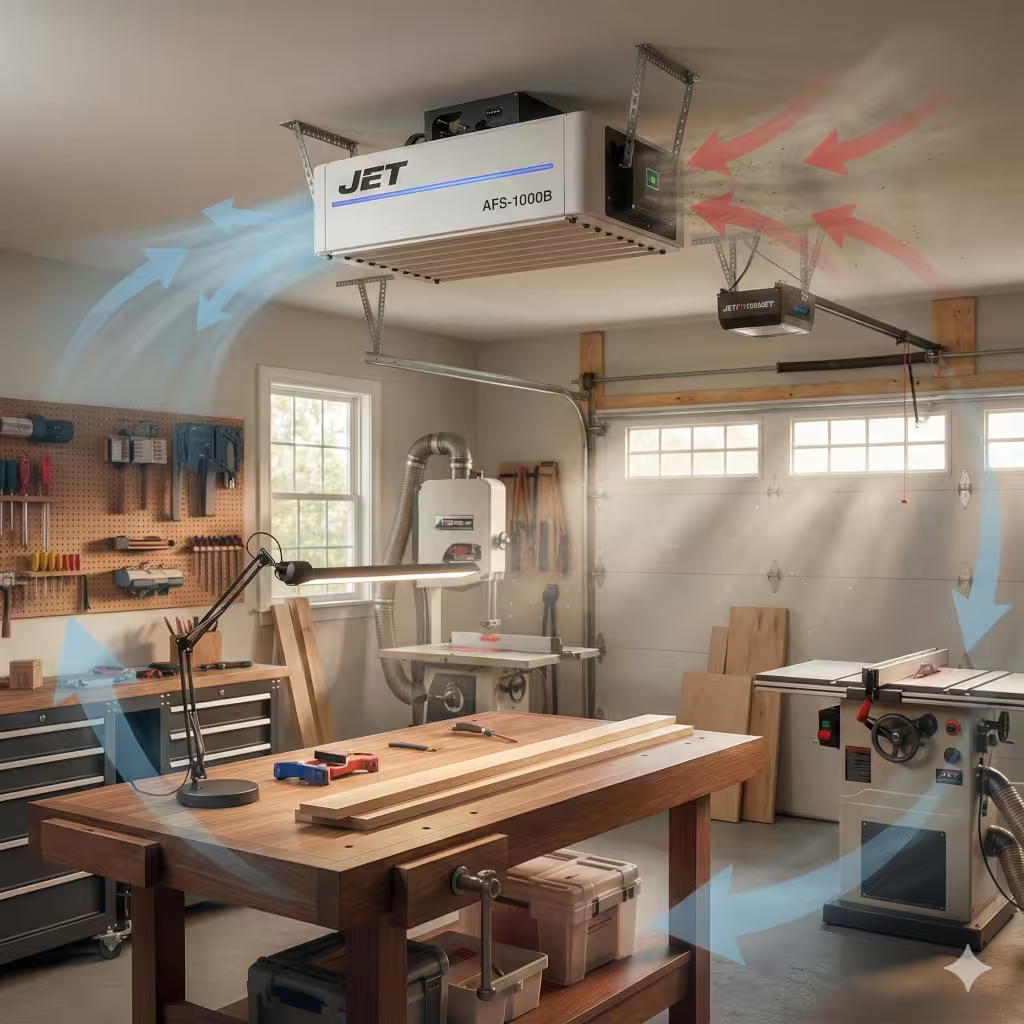
Where you put your air filtration unit is just as important as which one you buy. You don’t want to just stick it in a corner. To get the best results, you want to create a “vortex” or a circular flow of air. The best spot is usually along the longest wall of your garage. You should place it about one-third of the way down the wall. This helps the unit pull air from the whole room and push the clean air out in a circle.
You should also mount the unit about 7 to 8 feet high. This is high enough to be out of the way but low enough to catch the dust before it hits the floor. If you put it too high, the air near your face stays dirty. If you put it too low, it just stirs up the dust on the floor. Proper placement ensures that your air filtration system is actually cleaning the air you breathe while you work.
Installation Tips: Safety and Precision on the Ceiling
When hanging an air filtration unit, safety is the first priority. These units can be heavy, often weighing 50 pounds or more. You must find the ceiling joists. Do not ever hang a unit just from the drywall. It will fall and could hurt you or damage your tools.
Use heavy-duty eye bolts and chains. The chains allow you to adjust the height and angle of the unit. They also help soak up some of the vibration from the motor. This makes the air filtration unit run more quietly. I also suggest adding a dedicated outlet on the ceiling. This keeps cords out of your way. A clean install makes for a safer shop and better air filtration performance.
Maintenance: Keeping Your Filters Efficient for the Long Haul
An air filtration system is only as good as its filters. If the filters are clogged with dust, the fan cannot move air. This puts stress on the motor and stops the cleaning process. I recommend checking your outer filter once a month. In a busy shop, you might need to change it or vacuum it off more often. Many units have a light that tells you when it is time to check the filter.
The inner bag filter usually lasts much longer, maybe six months to a year. When you change your filters, always wear a mask. You don’t want to breathe in all that dust you just worked so hard to collect. Keeping up with maintenance ensures that your investment in air filtration lasts for many years. It also keeps your electricity bill lower because the motor does not have to work as hard to pull air through a dirty filter.
Comparing Dust Collection and Air Filtration
Do you really need both. The answer is yes. Think of it like this: a dust collector is for the floor and the big machines. Air filtration is for the air and your lungs. A dust collector uses high pressure and a large hose to suck up chips. Air filtration uses high volume to cycle the air in the room. They work together like a team.
If you only have a dust collector, you will still see a fine layer of dust on everything the next morning. That is because the fine dust stayed in the air and settled slowly. If you only have air filtration, your filters will clog up in minutes because they are trying to catch the big chips. To have a truly professional and healthy shop in the Tri-Cities, you need a balanced system of both dust collection and air filtration.
Common Questions about Garage Air Filtration Systems
Can I just use a box fan with a furnace filter?
You can, but it is not very good. A box fan is not designed to pull air through a filter. It will slow down the fan and could even burn out the motor. A real air filtration unit has a motor designed for static pressure. This means it can pull air through a thick filter without losing power.
Is a 1-micron filter enough for woodworking?
Yes, for most hobbyists and even many pros, a 1-micron filter is excellent.33 It catches the vast majority of the dust that is harmful to your health. If you are doing very fine work with toxic woods, you might want a HEPA-rated air filtration system, but 1-micron is a huge step up from nothing.
How long should I run the unit after I finish working?
I always tell my clients to let the unit run for at least 30 to 60 minutes after they stop working. This gives the air filtration system time to clear out the last of the fine dust that is still floating around. Most good units have a built-in timer for this reason.
Final Thoughts from Tri-Cities TN Home
Building a great home in Tennessee means paying attention to the details. If you have a workshop, the air you breathe is one of those details. Investing in the best air filtration system for your garage is a smart move. It protects your health, keeps your tools in good shape, and ensures your projects come out looking perfect.
If you live in Kingsport, Johnson City, or Bristol and are planning a new build or a shop upgrade, don’t overlook your air quality. A calm, clean shop is a productive shop. I hope this guide helps you choose the right air filtration setup for your needs. Remember to measure your space, do the math, and hang your unit safely.
Tri-Cities Garage CFM Requirement Chart
In this chart, we have taken the most common garage dimensions we see in Northeast Tennessee and calculated the required Cubic Feet per Minute (CFM) for your air filtration unit.
| Garage Type | Common Size (ft) | Ceiling Height (ft) | Total Volume (cu ft) | Required CFM (8 ACH) |
| Small 1-Car | 12 x 20 | 8 | 1,920 | 256 |
| Standard 1-Car | 12 x 24 | 9 | 2,592 | 345 |
| Minimum 2-Car | 20 x 20 | 8 | 3,200 | 427 |
| Standard 2-Car | 22 x 22 | 9 | 4,356 | 581 |
| Large 2-Car / Shop | 24 x 24 | 10 | 5,760 | 768 |
| 3-Car Bay | 32 x 22 | 9 | 6,336 | 845 |
| Custom High-Bay | 30 x 40 | 12 | 14,400 | 1,920 |
How to Use This Data for Your Air Filtration
If you are shopping for a unit and your specific garage size falls between two of these rows, we always advise buyers to “round up.” This is to ensure that you always have adequate air circulation, no matter the task. For instance, if you have a 20×22 garage with 10-foot ceilings, you are looking at about 4,400 cubic feet. While a 500 CFM unit might seem close, moving up to a 750 or 1,000 CFM unit will provide much more efficient air filtration.
In the Tri-Cities, many of our older homes in Kingsport have lower 8-foot ceilings, while newer custom builds in Johnson City often go to 10 or 12 feet to allow for car lifts or overhead storage. As the height increases, the volume of air grows quickly, and your air filtration needs to keep pace.
A Note on Multi-Unit Systems
For the “Custom High-Bay” or larger pole barns often found in rural Washington or Sullivan County, a single air filtration unit might not be enough to move the air effectively. In those cases, I suggest using two smaller units placed on opposite walls to create a stronger air current. This ensures that no “dead zones” of dust are left in the corners of your shop.