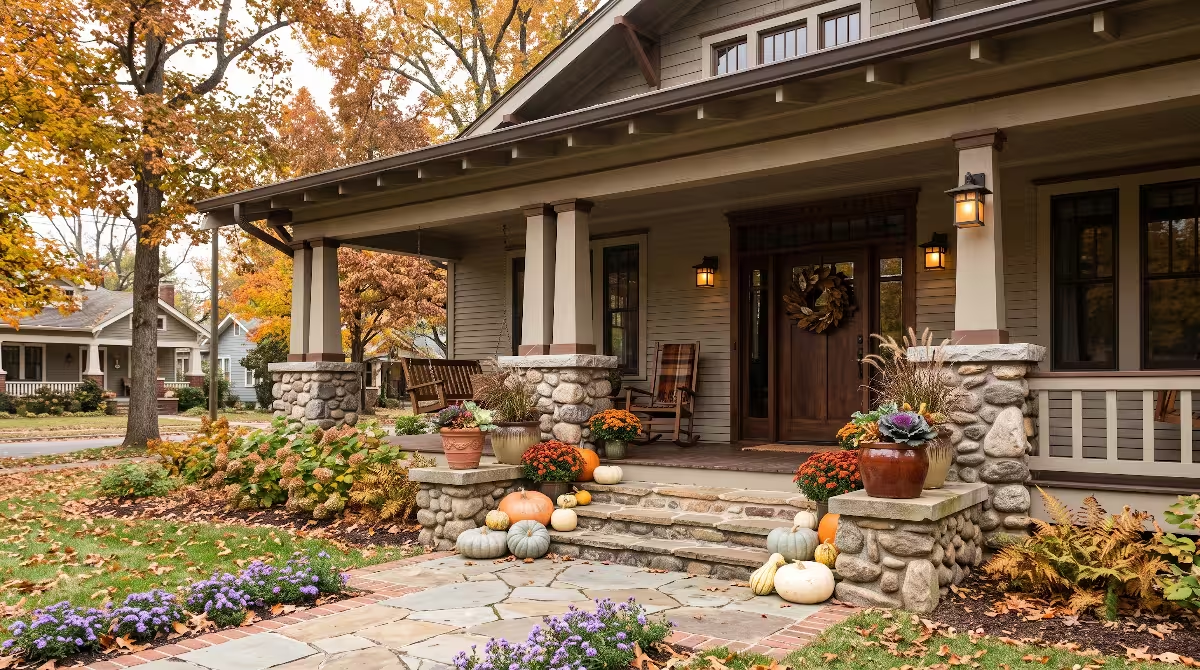

Permeable Crab Orchard Flagstone Patios
When women design custom homes across the Tri-Cities, outdoor living is almost always near the top of their wish list. We want spaces where our families can gather on cool autumn evenings, where friends can sit comfortably with a glass of tea or wine, and where we can step outside without worrying about tracking red mud across our clean hardwood floors. A flagstone patio built with authentic Tennessee Crab Orchard stone is one of the most beautiful additions you can make to your property. That warm, golden buff and gray stone feels right at home against the backdrop of our East Tennessee mountains.
However, building a flagstone patio in
The solution is a modern permeable flagstone patio. Instead of fighting nature by trying to seal water out, a permeable flagstone patio invites water to drain straight through the surface into an engineered stone reservoir underneath. In this detailed guide, we are going to look at the exact
Zone 7a Climate Dynamics and East Tennessee Soil Mechanics
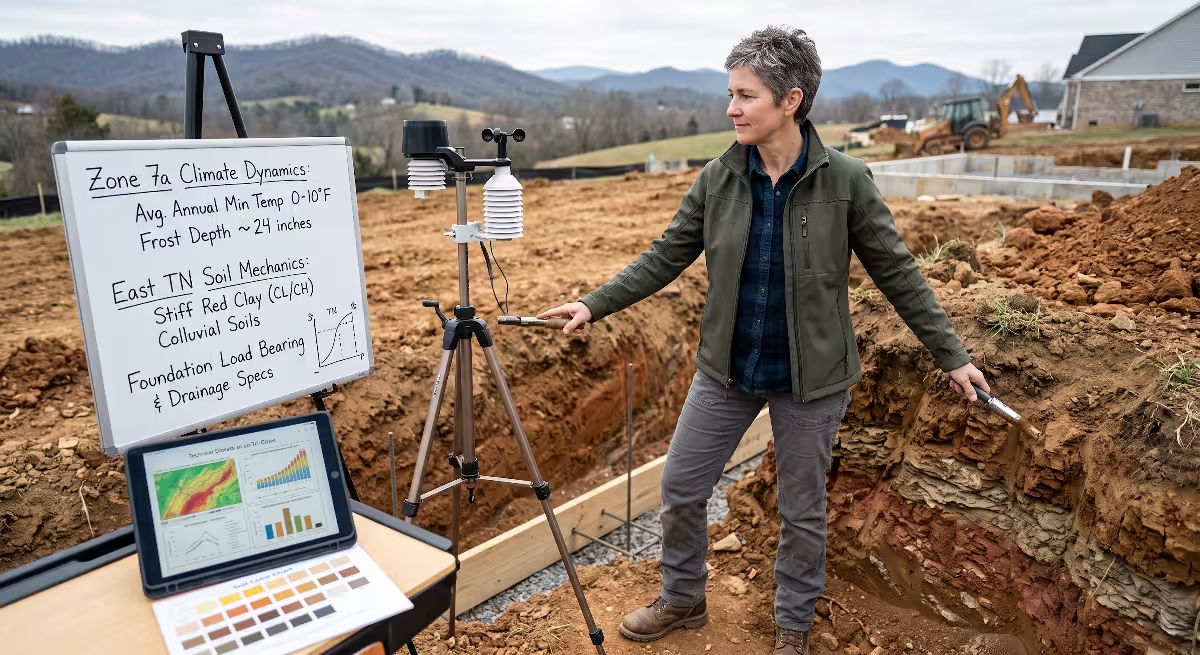
Building a successful flagstone patio starts beneath your feet. You cannot design a durable outdoor space without understanding the local climate and the specific dirt on your property. In our part of East Tennessee, two major physical factors dictate how an outdoor stone floor behaves over time: winter temperature swings and native clay soils.
Temperature Extremes, Frost Line Depth, and Freeze-Thaw Physics
In USDA Hardiness Zone 7a, our winter temperatures typically drop down to between 0 and 5 degrees. While that may not sound as extreme as the Midwest, our challenge comes from how often the temperature bounces back and forth across the freezing mark. In Johnson City, Kingsport, or Bristol, it is completely normal to have an afternoon with temperatures near 55 degrees followed by an overnight drop down to 20 degrees.
This rapid cycling is where a traditional flagstone patio runs into serious trouble. Water has a unique physical property: when liquid water freezes into ice, it expands by roughly 9 percent in volume. If your flagstone patio traps water in the bedding layer or beneath the stones, that expanding ice acts like a hydraulic jack. This process is known as frost heave. The ice pushes up against the underside of the stone, lifting it out of alignment. When the ground thaws the next day, the stone settles back down, but it almost never settles into its original position. Over a few winters, your once-level flagstone patio turns into an uneven, wavy surface with tripped edges and cracked joints.
In our area, local building codes and soil conditions establish a frost penetration depth between 12 and 18 inches. That means freezing temperatures can reach well below the surface of the soil during prolonged cold snaps. If your flagstone patio base holds water within that top foot of ground, frost heave is practically guaranteed.
A permeable flagstone patio solves this problem through open-graded stone aggregates. Unlike traditional dense-graded bases that use fine dust and dirt to pack down tight, an open-graded base uses clean, washed stone with no fine particles. This creates an interconnected network of air spaces, known as a void ratio, of about 30 to 40 percent. When rain falls on a permeable flagstone patio during cold weather, water drains instantly into these voids. Even if some moisture remains in the base during a sudden freeze, the expanding ice simply expands harmlessly into the empty air spaces between the rocks instead of lifting your flagstone patio stones.
Conquering East Tennessee Red Clay
Anyone who has ever tried to dig a garden bed in the Tri-Cities knows all about East Tennessee red clay. Our soils are rich in ultra-fine clay minerals that stick together tightly. When wet, this clay turns into a slick, heavy paste. When dry, it bakes as hard as a brick.
From an engineering perspective, the most critical number for soil drainage is the infiltration rate, or percolation rate. Well-draining sandy loam might absorb several inches of water per hour. East Tennessee red clay, by contrast, often absorbs less than 0.5 inches of water per hour. During a heavy summer thunderstorm, the sky can dump 2 inches of rain in forty-five minutes. Because the native clay subgrade cannot drink that water fast enough, water backs up quickly beneath any hardscape.
If you place a flagstone patio directly over poorly drained clay without an escape plan for water, the excavated area under your patio turns into an underground bathtub. The water sits trapped beneath your stones, softening the clay subgrade until the soil loses its bearing capacity. When the soil softens, heavy flagstones begin to sink unevenly under foot traffic or patio furniture weight.
To make a permeable flagstone patio work over heavy clay, you must follow two fundamental rules:
- You must grade the excavated clay floor beneath your flagstone patio so it slopes at a minimum of 1.5 to 2 percent (about 1/4 inch of fall per linear foot) away from your home foundation.
- For large spaces or areas with zero native percolation, you should install a perforated drain pipe at the lowest point of the excavation beneath your flagstone patio. This pipe collects excess water from the stone reservoir and routes it safely to daylight, a drainage swale, or a rain garden.
Permeable Crab Orchard Flagstone Patio Drainage Specs
To make sure your contractor builds your flagstone patio correctly, you need to understand the structural cross-section. A long-lasting permeable flagstone patio is not just stone laid over dirt. It is a multi-layered civil engineering system. Every layer has a specific job, a specific aggregate size, and a specific thickness.
Here is the step-by-step layer breakdown for an engineered permeable flagstone patio in Zone 7a:
[ Natural Cleft Crab Orchard Flagstone (1.5" to 2" thick) ]
[ Joint Infill: ASTM #89 Clean Washed Angular Stone Chips ]
-------------------------------------------------------------
Bedding Layer: 1" to 2" ASTM #8 or #89 Washed Crushed Stone
-------------------------------------------------------------
Base Choker Course: 3" to 4" ASTM #57 Clean Crushed Stone
-------------------------------------------------------------
Sub-Base Reservoir: 4" to 6" ASTM #2 Clean Crushed Ballast
=============================================================
Non-Woven Geotextile Separation Fabric (Class 1 or 2)
/////////////////////////////////////////////////////////////
Compacted Native Clay Subgrade (Sloped 2% away from house)
Layer-by-Layer Engineering Specifications
Now, lets go through each layer of your flagstone patio from the bottom up so you know exactly what materials belong on your job site.
1. Compacted Subgrade Preparation
Everything rests on the native ground. Your contractor must excavate deep enough to accommodate all structural stone layers plus the thickness of your stone. For a high-performance residential flagstone patio, that usually means digging down 11 to 14 inches below your desired finished surface height.
Once the soil is excavated, the clay must be shaped to maintain a steady 2 percent slope away from the house. Before any stone goes in, the native clay should be compacted using a heavy vibratory plate compactor or roller to reach roughly 95 percent standard Proctor density. Compacting the clay prevents future settlement, ensuring your flagstone patio will never develop low spots where water collects.
2. Non-Woven Geotextile Separation Fabric
This is one of the most critical components of a permeable flagstone patio, yet it is the one cut-rate contractors skip most often. You must place a high-quality, non-woven geotextile fabric directly over the compacted clay floor and up the sides of the excavation.
The fabric acts as an absolute boundary. It allows water to pass through freely into the subsoil, with a flow rate of at least 80 to 110 gallons per minute per square foot, but it prevents the native clay particles from mixing into your clean base stone. If you build a flagstone patio without this fabric, the wet clay underneath will slowly pump up into the spaces between your base rocks over time. Once those spaces fill with mud, your open-graded reservoir loses its storage capacity, water becomes trapped, and your flagstone patio will begin to heave and sink. Be sure your contractor uses a non-woven needle-punched polypropylene fabric (4 to 6 ounces per square yard) and overlaps all seams by at least 12 to 18 inches.
3. Sub-Base Reservoir Layer (ASTM #2 Stone)
The lowest aggregate layer in your flagstone patio foundation is the sub-base reservoir. This layer consists of 4 to 6 inches of ASTM #2 crushed limestone. ASTM #2 stone consists of large, clean, angular rocks ranging from 1.5 to 3 inches in size. It contains zero dust and zero sand.
Because these stones are large and angular, they lock together tightly to support heavy surface weight while leaving massive open void spaces between the stones. These void spaces act as a temporary holding tank for stormwater during heavy Appalachian downpours. When rain sheets off your roof or cascades down your lawn toward your flagstone patio, this reservoir holds the water beneath the surface until it can slowly soak into the clay subgrade or flow out through your drainage pipe.
4. Base Course Layer (ASTM #57 Stone)
Directly on top of the large #2 ballast stone, your builder must install 3 to 4 inches of ASTM #57 crushed limestone. ASTM #57 stone ranges in size from about 1/2 inch to 1 inch. Just like the layer below it, this stone must be double-washed and completely free of fine stone dust.
The purpose of this layer in your flagstone patio is to choke off the larger gaps in the #2 stone below. It creates a bridge between the giant aggregate at the bottom and the smaller bedding stone above. Without this intermediate layer, the small bedding chips under your flagstone patio would slowly sift down into the big voids of the #2 stone, causing your patio surface to drop and become uneven. Once placed, this layer is compacted thoroughly until the stones lock into a rigid matrix.
5. Bedding Course Layer (ASTM #8 or #89 Stone)
The bedding course is the smooth layer upon which your flagstone patio stones actually rest. This layer must be 1 to 2 inches thick and consist of clean, washed ASTM #8 or ASTM #89 crushed stone chips. These are small, angular chips ranging from 1/8 inch to 3/8 inch in size.
In traditional construction, workers often use concrete sand, mason sand, or stone dust (often called crusher run or screenings) to set a flagstone patio. You must never use sand or stone dust in a permeable flagstone patio. Sand and stone dust hold water like a sponge. When that trapped water freezes in winter, it expands directly under your slabs, breaking the stones or lifting them. Clean ASTM #89 chips allow water to drop straight through instantly while still providing a workable bed that lets the installer level each piece of flagstone.
6. Surface Layer and Joint Infill
The top of your system is the
Once the stones are set in place, the open joints between them are filled to the top with the same washed ASTM #89 or ASTM #9 aggregate chips used in the bedding layer. Never use polymeric sand, mortar, or stone dust between the stones of a permeable flagstone patio. Those materials block the flow of water and break down under winter frost. Clean angular stone chips allow surface water to disappear beneath your feet the second it hits the patio, providing a clean, interlocked joint that will never crack or wash away.
The Practical Lifestyle and Living Design Perspective

Now that we have covered the engineering backbone, let us talk about how a flagstone patio works for everyday living. As a woman who loves both structural integrity and functional, welcoming design, I evaluate every flagstone patio by how well it serves family life. A patio can be structurally sound, but if your outdoor chairs wobble or your shoes get ruined, you will never truly enjoy your investment.
Designing for Real Living: Furniture, Footwear, and Mud-Free Flow
When planning your flagstone patio, you need to consider how your outdoor living space interacts with your daily routine, your entertaining style, and your home interior.
+-------------------------------------------------------------------------+
|                  LIFESTYLE-FIRST PATIO DESIGN CHECKLIST                 |
+-------------------------------------------------------------------------+
| [x] Table & Chair Balance: Wide-face stones (18"+) in dining zones      |
| [x] Shoe & Foot Comfort: Tight joints (3/8" to 3/4") with #89 chips     |
| [x] Mud-Free Transition: Direct surface drainage stops clay tracking    |
| [x] Structural Restraints: Low-profile edge curbs keep stones locked     |
+-------------------------------------------------------------------------+
The Table and Chair Stability Problem
One of the most frustrating experiences on a poorly planned flagstone patio is sitting down for dinner and feeling your chair rock back and forth. Even worse is when an outdoor dining table wobbles every time someone cuts their food, causing drinks to spill.
Natural flagstone has surface texture, which is part of its organic charm. However, on a flagstone patio, you can control furniture stability by specifying the size of the stone pieces in key zones. For dining areas, outdoor kitchens, and conversation seating around fire pits, ask your stone mason to select large-format stand-up slabs. Look for stones that measure at least 18 by 24 inches across their face.
When you use large-face stones in the main seating zones of your flagstone patio, all four legs of your chairs and tables are far more likely to rest on a single, continuous plane of stone. Smaller pieces of stone can be used around the perimeter, in garden walkways, or along curved transition edges where furniture will not be placed.
The High Heel and Barefoot Test
A great flagstone patio should welcome every guest, whether they are wearing summer flip-flops, running barefoot, or dressed up in high heels for a backyard cocktail party.
If joint spacing on a flagstone patio is too wide or filled with large river gravel, high heels will slip between the stones and get scratched or stuck. Wide, unfilled joints can also trip elderly guests and stub the toes of excited children running toward the yard. On the other hand, if joints are filled with coarse sand, that grit ends up stuck to damp feet and tracked indoors.
To pass the footwear test, insist on tight, uniform joint spacing across your flagstone patio. Work with your mason to achieve joints between 3/8 inch and 3/4 inch wide. When these narrow joints are packed tightly with washed ASTM #89 stone chips, the angular edges of the chips lock together like tiny puzzle pieces. They create a firm, level walking surface that supports slender shoe heels without sinking, while remaining smooth enough for bare feet to walk across comfortably in mid-July.
Pet and Family Mud Elimination
In East Tennessee, red clay tracking is a daily battle for anyone with dogs or busy kids. After a heavy rain, a standard lawn or a poorly drained outdoor space stays saturated for hours. Dogs run across the damp grass, splash through puddles on an old patio, and track bright orange clay straight across your rugs and wood floors.
A permeable flagstone patio acts as a massive defense shield for your home interior. Because rain drains through the surface joints immediately, there is never standing water on your flagstone patio. When you let your dogs out during a rainstorm, they step onto a clean, firm, dry stone surface instead of a muddy swamp. You can even position your flagstone patio as a transitional buffer between your backyard lawn and your rear sliding doors, cutting down on indoor cleaning time significantly.
Edge Restraints and Visual Transitions
A permeable flagstone patio has open edges that must be contained to keep the stone slabs and bedding chips from drifting laterally over time. If the perimeter stones push outward, the interior joints will open up, causing the stones to loosen and wobble.
To keep your flagstone patio permanently secure, your installer must install a strong edge restraint system. You have two excellent options:
- A Submerged Concrete Edge Beam: A trench is dug around the perimeter of the flagstone patio and filled with concrete below the final grade line. The exterior flagstones are mortared directly to this hidden concrete curb, while the interior field of the patio remains fully permeable. Once backfilled with topsoil and mulch, the concrete is invisible.
- Commercial Heavy-Duty Permeable Restraints: Heavy composite or aluminum edge restraints designed specifically for
permeable pavers can be spiked into the aggregate base with 10-inch steel pins.
Whichever method you choose, a solid edge restraint keeps your flagstone patio locked tight while creating a clean, crisp transition to your surrounding lawn or planting beds.
Why Crab Orchard Stone Outperforms Other Natural Materials
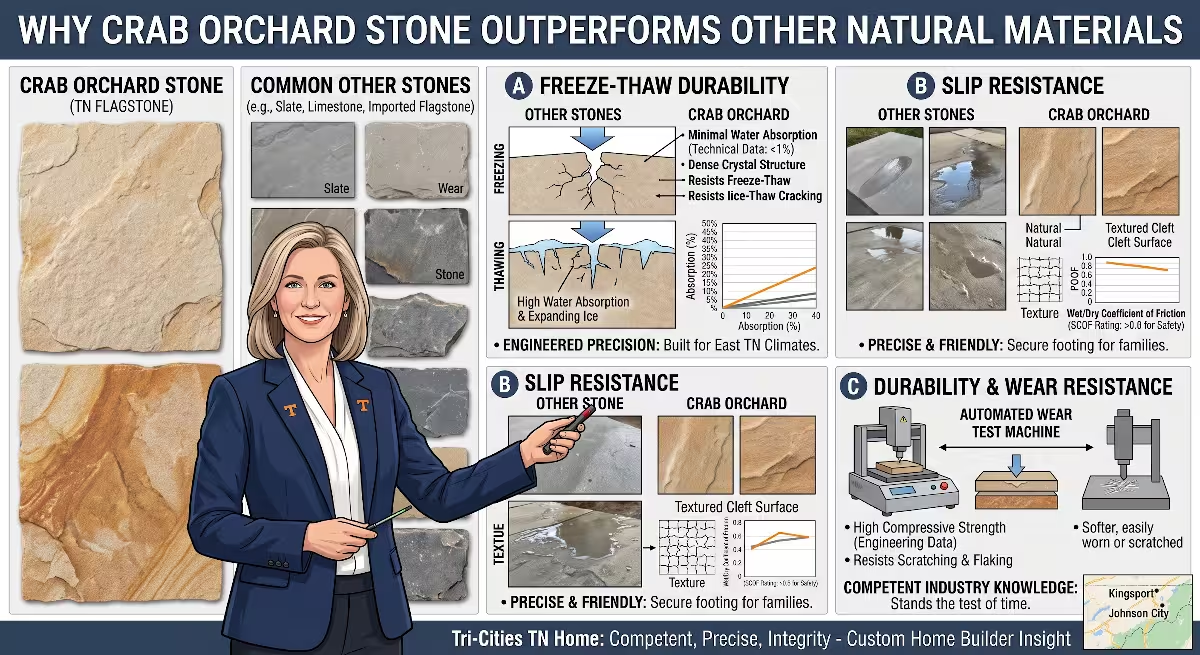
Tennessee Crab Orchard stone is world-renowned, and for good reason. Quarried from the Cumberland Plateau near Crossville, Tennessee, this stone is a dense quartzite-sandstone formed hundreds of millions of years ago under intense heat and pressure.
When choosing materials for your flagstone patio, it helps to understand why this regional treasure outperforms imported slate, limestone, or standard bluestone in our local climate.
+------------------------------------------------------------------------------+
|                    NATURAL STONE COMPARISON FOR ZONE 7A                      |
+-------------------+--------------------+------------------+------------------+
| Stone Type        | Compressive Strength| Slip Resistance  | Freeze-Thaw Risk |
+-------------------+--------------------+------------------+------------------+
| Crab Orchard      | Very High (Quartz) | Exceptional      | Very Low         |
| Pennsylvania Blue | Moderate to High   | Good to Fair     | Moderate (Flakes)|
| Slate             | Low to Moderate    | Poor When Wet    | High (Spalls)    |
| Travertine        | Moderate           | Variable         | High (Pits Fill) |
+-------------------+--------------------+------------------+------------------+
Crab Orchard stone contains a very high concentration of silica. This gives the stone incredible compressive strength, often exceeding 15,000 to 20,000 pounds per square inch. It does not easily crack, chip, or flake when exposed to the moisture swings of Zone 7a.
Another major benefit of Crab Orchard stone on a flagstone patio is its natural cleft surface. When the stone is split along its natural bedding planes at the quarry, it reveals an organic, textured surface that provides outstanding slip resistance. Even when soaked with rain, a Crab Orchard flagstone patio provides secure footing. This makes it an exceptional choice around swimming pools, outdoor showers, or uncovered dining areas where slip resistance is essential for safety.
Finally, the natural color range of Crab Orchard stone complements our regional landscape. Rather than the cold, formal gray tones of northern bluestone, Crab Orchard stone offers warm buff, tan, copper, soft gray, and subtle pink tones. These earthy hues blend naturally with the brick, stone, and siding choices popular across Tri-Cities custom homes, making your flagstone patio look as though it grew naturally out of the East Tennessee earth.
Step-by-Step Installation Protocol
Building a long-lasting permeable flagstone patio requires craftsmanship and strict adherence to process. If your installer cuts corners on base prep, stone spacing, or compaction, the long-term performance of your patio will suffer.
Here is the exact step-by-step process your contractor should follow from start to finish.
Step 1: Site Layout and Elevation Checks
Before anyone starts an engine, the perimeter of your new flagstone patio must be staked out accurately with string lines and marking paint. The installation crew should use an optical transit or a rotating laser level to determine elevations across the entire workspace.
The most critical measurement is the finished height where your flagstone patio meets your house. The top of the stone must sit at least 2 to 4 inches below the bottom of your home exterior siding or door thresholds to prevent water intrusion. From that starting point, the laser level is used to establish the 2 percent downward slope heading away from your home foundation.
Step 2: Excavation and Clay Subgrade Preparation
Next comes excavation. Using a mini-excavator or skid steer, the contractor removes native red clay to a uniform depth of 11 to 14 inches across the entire layout of your flagstone patio.
The floor of this excavation must mirror the final slope of the patio surface. It should be smooth and pitched away from the house. Once the digging is complete, the crew runs a heavy commercial vibratory plate compactor over the clay bed to firm up the soil base. If soft, wet pockets of clay are found, they should be dug out and replaced with dry, stable soil or coarse aggregate before moving forward.
Step 3: Installing the Geotextile Underlayment
The crew rolls out the non-woven geotextile separation fabric across the excavated footprint of the flagstone patio. The fabric must lay flat against the clay without tight stretches or loose wrinkles.
The edges of the fabric should extend up the vertical sides of the excavation trench like a shallow bowl, reaching all the way to the planned surface grade. Where two rolls of fabric meet, they must overlap by at least 12 to 18 inches. This ensures that no seam can pull apart during aggregate placement, keeping your flagstone patio base stone completely isolated from the native clay below.
Step 4: Placing and Compacting Aggregate Layers
Now the open-graded foundation is constructed in two distinct stages:
First, the crew spreads 4 to 6 inches of clean ASTM #2 ballast stone over the geotextile fabric. Because these stones are large, they are leveled carefully with rakes and settled into place using a heavy vibratory plate compactor (with a minimum compaction force of 5,000 pounds) or a walk-behind roller.
Second, the crew spreads 3 to 4 inches of clean ASTM #57 crushed stone directly over the #2 stone. The crew compacts this layer thoroughly, making at least three to four passes across the flagstone patio footprint in alternating directions. As the compactor runs, the angular edges of the #57 stone lock into the top spaces of the #2 layer, creating a flat, dense, interlocking platform that will never shift underfoot.
Step 5: Screeding the ASTM #89 Bedding Course
With the structural base locked tight, the crew installs screed rails, typically 1-inch metal pipes, across the flagstone patio surface.
The crew dumps washed ASTM #89 stone chips over the rails and pulls a straight screed board across them. This creates a smooth, consistent bedding layer between 1 and 2 inches thick. This layer must remain loose and uncompacted until the flagstones are laid on top. The crew must never step directly on the freshly screeded bedding layer.
Step 6: Hand Setting and Leveling the Crab Orchard Flagstone
Setting a natural flagstone patio is an art form. Unlike manufactured concrete pavers that are perfectly uniform, every single piece of natural Crab Orchard flagstone has slight variations in thickness, shape, and surface texture.
The stone mason selects each piece carefully, fitting them together like a puzzle while maintaining consistent 3/8-inch to 3/4-inch joint spaces. The installer sets each stone into the loose ASTM #89 bedding layer, tapping it gently with a non-marking dead-blow rubber mallet.
The mason checks every stone using a 4-foot or 6-foot carpenter level across multiple directions. If a stone sits too high, the mason scoops out a tiny handful of bedding chips from underneath. If a stone sits too low, the mason adds a few chips until the stone sits flush with its neighbors. This hand leveling ensures your completed flagstone patio provides an exceptionally flat, smooth surface for walking and entertaining.
Step 7: Joint Infill and Final Water Infiltration Testing
Once all the stones are set, the installer sweeps clean ASTM #89 stone chips across the entire flagstone patio surface, filling every joint completely to the top of the stone edge.
The crew sweeps away any extra loose chips from the surface. Then, they place protective rubber mats on the base of their vibratory plate compactor and make a final gentle pass over the stone surface, or they hand-tamp each stone firmly with a heavy hand tamper. This vibration settles the joint chips deep into the gaps, locking each stone in place laterally.
Finally, your contractor should run a water infiltration test right in front of you. Take a five-gallon bucket of water and dump it quickly across the center of your new flagstone patio. The water should vanish down into the joints almost instantly without ponding, pooling, or washing aggregate out of the joints. That immediate drainage confirms your flagstone patio is working exactly as designed.
Frequently Asked Questions About Building a Flagstone Patio in Zone 7a
When homeowners in the Tri-Cities start planning their projects, they usually have several specific questions about how a permeable flagstone patio holds up over time. Here are the clear, straightforward answers to the most common questions.
What is the best base for a permeable flagstone patio?
The best base for a permeable flagstone patio is a multi-tier, open-graded aggregate foundation. It should consist of:
- A bottom sub-base layer of 4 to 6 inches of clean ASTM #2 washed crushed stone (1.5-inch to 3-inch aggregate).
- A middle base layer of 3 to 4 inches of clean ASTM #57 crushed stone (1/2-inch to 1-inch aggregate).
- A top bedding layer of 1 to 2 inches of clean ASTM #89 washed stone chips.
This entire stone assembly must sit on top of a heavy-duty non-woven geotextile separation fabric. You should never use traditional base materials like crusher run, road base, mason sand, or stone dust beneath a permeable flagstone patio. Those traditional materials contain fine particles that trap water, causing freeze-thaw damage and stopping drainage.
How thick should Crab Orchard flagstone be for a dry-laid flagstone patio?
For a dry-laid permeable flagstone patio, your Crab Orchard stone must be between 1.5 and 2 inches thick.
Some suppliers sell thin flagstone that is only 3/4 inch to 1 inch thick. That thin material is intended exclusively for setting in a continuous bed of wet concrete mortar over an existing concrete slab. If you attempt to lay thin 1-inch stone in a loose gravel bedding layer on a flagstone patio, the individual pieces lack the physical weight to stay firmly in place. Over time, thin stones will wobble, tip when stepped on at the edges, and can easily crack under concentrated loads like a heavy planter or an iron patio chair leg. A 2-inch slab provides the self-weight and mass needed to remain rock solid for decades.
Why does a traditional flagstone patio shift or crack in Zone 7a winters?
A traditional flagstone patio shifts or cracks in Zone 7a because of trapped moisture and the physics of frost heave.
When a flagstone patio is installed using mortar joints over a concrete pad, water inevitably finds its way into micro-cracks between the stone and mortar. When winter temperatures drop below freezing, that trapped moisture freezes and expands by 9 percent, snapping the mortar bond and popping the stone loose.
Similarly, when a flagstone patio is laid over a dense sand or stone dust base, that fine material holds groundwater like a saturated sponge. When the ground freezes down to our regional 12- to 18-inch frost line, the trapped water forms thick lenses of ice that push upward against the stones. A permeable flagstone patio eliminates this problem entirely because water drains away into open void spaces before it ever has a chance to freeze.
Is a Crab Orchard flagstone patio slippery when wet?
No, a Crab Orchard flagstone patio is remarkably slip-resistant, even when completely wet.
Crab Orchard stone is a quartzite-sandstone composed predominantly of silica grains cemented together naturally under high geological pressure. When split from the quarry, the stone has a natural cleft texture that provides excellent traction underfoot. Unlike polished granite, smooth slate, or sealed stamped concrete, which can become slick and dangerous during a summer rain shower, a Crab Orchard flagstone patio offers a secure, high-traction surface for bare feet, pet paws, and shoes.
How do you prevent weeds and ants in a permeable flagstone patio without polymeric sand?
Homeowners often worry that using stone chips instead of polymeric sand in their flagstone patio joints will invite weeds and ant colonies. In reality, a permeable system is naturally hostile to both.
Weeds do not grow through the base of a well-built flagstone patio; the geotextile fabric and deep layers of clean stone stop root growth from below. Weeds that appear on patios actually sprout from windblown seeds that land on top in dirt trapped in the joints. Because your permeable joints are filled with double-washed ASTM #89 stone chips that contain zero soil, dirt, or organic nutrients, weed seeds have almost no medium to take root in. Any occasional stray seedling that sprouts can be pulled out effortlessly by hand because its roots cannot anchor into the loose, clean stone chips.
Furthermore, ants dislike permeable flagstone patio joints. Ants need fine, moist sand or soil to excavate tunnels and build mounds. The dry, angular stone chips in a permeable joint collapse under excavation, making it an unappealing home for insects.
Seasonal Care and Long-Term Maintenance in East Tennessee
One of the greatest joys of a well-engineered permeable flagstone patio is how easy it is to maintain. Because you do not have to worry about crumbling mortar or peeling sealers, your routine maintenance checklist is simple and straightforward.
+-------------------------------------------------------------------------+
|                  SEASONAL PATIO MAINTENANCE CALENDAR                    |
+-------------------------------------------------------------------------+
| SPRING:  Perform a bucket infiltration test; rinse surface with hose    |
| SUMMER:  Lightly spray any windblown weeds with organic citrus spray    |
| AUTUMN:  Blow fallen leaves promptly; do not let wet foliage decay      |
| WINTER:  Clear snow with plastic shovel; avoid salt / chemical melters  |
+-------------------------------------------------------------------------+
Spring Infiltration Check and Surface Rinsing
Each spring, give your flagstone patio a quick physical checkup. Grab your garden hose or a five-gallon bucket of water and check the drainage in a few different spots. Water should drop right down through the stone chips without any pooling.
Over the winter, fine dirt and organic pollen can settle into the surface of your joint chips. Take a garden hose with a standard brass spray nozzle and give the stone surface a brisk wash. Direct the water stream across the patio at a 45-degree angle to wash away surface dust without blasting the stone chips out of the joints. If you notice any joints where aggregate chips have settled slightly, simply sweep a handful of clean ASTM #89 chips into the gaps until they are flush with the stone again.
Autumn Leaf Management
Here in the beautiful Appalachian Highlands, our fall foliage is spectacular. However, you should not let heavy layers of fallen oak, maple, and poplar leaves sit on your flagstone patio through long, wet winter months.
When wet leaves are left to rot on any stone surface, they release natural organic tannins that can temporarily stain the face of lighter buff Crab Orchard stone.
Furthermore, decomposing leaves break down into fine organic compost that can wash into your joint chips, creating the exact soil environment where weed seeds like to germinate.
Use a high-velocity leaf blower once or twice a week during October and November to clear fallen leaves off your flagstone patio before they get soaked and matted down by autumn rains.
Winter Snow and Ice Management
When winter storms roll through the Tri-Cities, caring for your flagstone patio requires only a light touch.
Because surface water drains through the patio instantly, you will rarely find the thick sheets of clear black ice that commonly form on solid concrete or mortared patios. When snow accumulates, clear it using a plastic snow shovel. Never use a metal shovel with a sharp steel edge, as the metal blade can scratch the natural cleft face of your Crab Orchard stone or chip the stone corners.
If you experience an unusual winter freezing event and need extra traction on your flagstone patio, avoid using chemical de-icers such as calcium chloride, magnesium chloride, or rock salt (sodium chloride). Chemical salts can seep into the micro-pores of natural stone. As the salt dissolves, recrystallizes, and dissolves again, it generates internal osmotic pressure that can cause natural stone surfaces to scale or spall over time. Instead of chemical salts, simply scatter a few handfuls of clean ASTM #89 stone chips across the walking paths of your flagstone patio. The chips give you instant slip resistance, and when the snow melts, you can simply sweep those same chips right back into the patio joints where they belong.
Final Thoughts: An Outdoor Investment Built for Life
Building a custom home or updating your outdoor living area is an exciting milestone. You deserve an outdoor space that looks breathtaking on the day it is finished and continues to look just as beautiful ten, twenty, and thirty years down the road.
By combining the natural beauty of authentic Tennessee Crab Orchard stone with the proven engineering of an open-graded permeable base, you protect your investment against everything our Zone 7a climate can dish out. You eliminate the puddles, the frost heave, the failing mortar, and the red clay mud tracks. In their place, you get a clean, dry, rock-solid flagstone patio where your family can make memories across every season.
Take your time when vetting contractors. Make sure they understand these drainage specs, make sure they use the right washed aggregate gradations, and insist on quality non-woven geotextile fabric. When you invest in the right engineering beneath the surface, your flagstone patio will be the pride of your home for a lifetime. Happy building!