Let’s face it, in our part of the country, we do not have much flat land. If you want a home with a view of the Holston River or the Blue Ridge Mountains, you are likely building on a slope. While hills are beautiful, they bring a big challenge: water. When rain hits a hill, it moves fast. If you do not have a good plan for drainage, that water will find a way into your basement or wash away your yard. I have seen many homeowners struggle with this.
My job today is to help you understand how to manage drainage on a hillside property so your home stays safe and dry for a long time.
Assess the Flow: Identifying the Problem Areas
Before you start digging, you must understand how water moves on your specific lot. Every hill is different. Some have heavy clay that acts like a slide for water. Others have rocky soil that lets water seep in deep. To fix your drainage, you first need to be a detective.
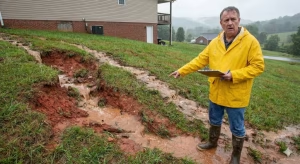
Put on your boots and a raincoat during a heavy storm. This is the best time to see the truth about your land. Look for where the water starts to gather. In the Tri-Cities, our soil is often full of clay. Clay does not let water soak in quickly. Instead, the water stays on top and gains speed as it goes down the hill. You might see small streams forming in your grass. These are called “rills.” If they get bigger, they become “gullies.” These gullies are a sign of bad drainage because they are literally carrying your land away.
Another thing to look for is “ponding.” This is when water sits in one spot for a long time. If this happens near your house, it creates hydrostatic pressure. That is a fancy word for the weight of water pushing against your foundation walls. Over time, that pressure can cause cracks. You also want to look at the “toe” of the slope. This is the flat area at the very bottom of the hill. If the drainage at the bottom is poor, this area will stay muddy for days after the rain stops.
How to Manage Drainage on a Hillside Property
Once you know where the water is going, you can start to guide it. Think of yourself as a traffic cop for the rain. You want to tell the water where to go so it does not cause trouble. There are several tools we use in the building industry to handle hillside drainage effectively.
The French Drain (Subsurface Diversion)
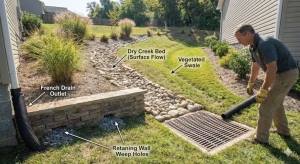
A French drain is one of the most common ways to handle subsurface drainage. Despite the name, it has nothing to do with France. It was named after a man named Henry French. It is basically a trench filled with gravel and a pipe with holes in it.
To build a good French drain on a hill, you dig a trench across the slope. This “catches” the water as it moves underground. The water enters the gravel, falls into the holes in the pipe, and then flows through the pipe to a safe place. In the Tri-Cities, we have to be careful with our clay soil. If you just put a pipe in the ground, the clay will clog the holes. You must wrap your gravel and pipe in a special fabric. This fabric lets water through but keeps the dirt out. This keeps your drainage system working for years without getting blocked.
Swales and Dry Creek Beds (Surface Routing)
A swale is like a shallow, wide ditch. It is usually covered in grass. The goal of a swale is to slow down the water and give it a path to follow. It is a very natural way to handle drainage. If you have a long hillside, you might put a swale near the top. This catches the water before it gets too fast and sends it around the side of your house.
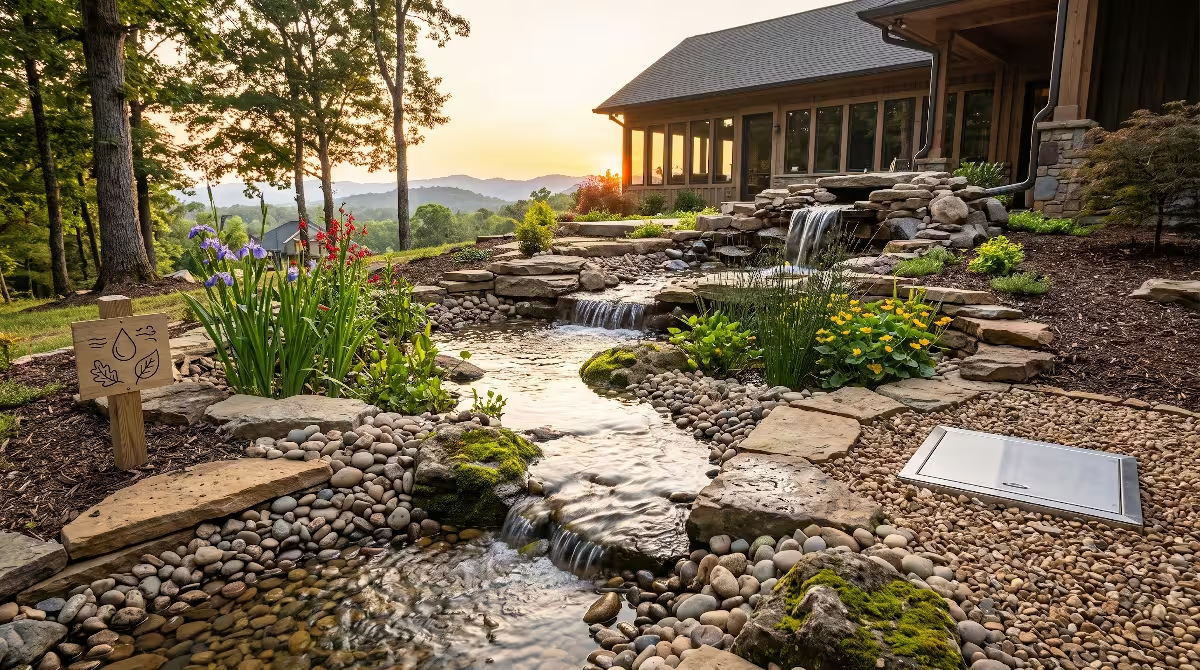
If you want something that looks more like a landscape feature, you can build a dry creek bed. This is like a swale, but instead of grass, you use different sizes of river rock. It looks like a mountain stream that has gone dry. When it rains, it fills up and carries the water away safely. This is a great choice for East Tennessee because it fits the mountain look. It also handles the heavy “sheet flow” of water that happens during our summer thunderstorms. Good drainage does not have to be ugly; it can actually make your yard look better.
Retaining Walls with Proper Drainage
Sometimes a hill is too steep to just use grass or rocks. You might need to build a retaining wall to hold the dirt back. This is very common in places like Bristol or Johnson City where homes are built into the side of a mountain. But a wall without drainage is just a dam. If water gets trapped behind the wall, the weight will eventually knock the wall over.
To prevent this, every wall needs a “weep hole.” These are small openings at the bottom of the wall that let water out. Behind the wall, you should have a thick layer of gravel and a perforated pipe. This setup collects the water and lets it out through the weep holes before it can build up pressure. If you are building a wall higher than four feet, you should always talk to an expert. At that height, the engineering becomes very important to keep your drainage and your wall safe.
The Legal Aspect: Tennessee’s Natural Flow Rule
This is a part that many people forget. You cannot just move water anywhere you want. In Tennessee, we follow the “Natural Flow Rule.” This means that water has a right to follow its natural path. As a homeowner, you have to accept the water that naturally flows onto your land from uphill. However, you also have a responsibility to your neighbors downhill.
You are not allowed to “concentrate” the water. For example, you cannot take a whole hillside of water, put it into one big pipe, and point that pipe right at your neighbor’s back door. That would be changing the natural drainage in a way that causes damage. If you do this, you could be legally responsible for any problems it causes. Always try to keep the water moving in its natural direction, just in a more controlled way. Good drainage planning includes talking to your neighbors and making sure your project helps everyone.
Biological Stabilization: Native Plants for Erosion Control
Engineering is great, but nature has its own ways of handling water. One of the best ways to improve hillside drainage is by planting the right things. Grass is okay, but its roots are very shallow. On a steep hill, grass can actually slide off like a carpet if it gets too wet.
In the Tri-Cities, we have access to many native plants that have very deep roots. These roots act like “living rebar.” They hold the soil together and help the ground soak up more water.
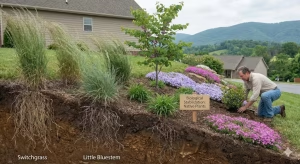
- Switchgrass (Panicum virgatum): This is a native grass that can have roots ten feet deep. It is amazing for drainage and erosion control.
- Eastern Redbud (Cercis canadensis): This is a beautiful tree that grows well on our slopes.
- Creeping Phlox (Phlox subulata): This makes a great ground cover that holds the top layer of soil in place.
When you use plants along with your pipes and swales, you create a complete drainage system. The plants slow the water down and drink some of it, while the pipes carry away the extra.
Maintenance: Keeping the Water Moving
A drainage system is not something you build once and then forget. It needs care. Over time, leaves, sticks, and dirt can clog your pipes and swales. In the fall, our Tennessee hills are covered in beautiful leaves. Those leaves love to hide in your drainage ditches and block the water.
You should check your system at least twice a year. Once in the spring before the heavy rains start, and once in the late fall after the leaves have dropped. Clear out any trash or debris. If you have a French drain, make sure the “outlet,” where the water comes out, is clear of dirt. If your drainage system gets backed up, it can cause more damage than having no system at all. A little bit of work once or twice a year will save you thousands of dollars in repairs later.
The Cost of Managing Hillside Drainage
I know everyone wants to know what this will cost. The price of drainage work can vary a lot depending on how big your hill is and what kind of soil you have. In 2026, costs have stayed pretty steady.
- Small French Drain: This might cost you between $2,000 and $5,000 if you hire a pro.
- Swale or Dry Creek Bed: Since this is mostly moving dirt and buying rocks, it might be between $1,000 and $3,000.
- Retaining Walls: These are more expensive because of the labor and materials. You might spend $5,000 to $15,000 or more for a large wall with a full drainage system.
If you do the work yourself, you can save on labor, but you will still have to pay for the gravel, pipes, and fabric. Materials for a basic drainage project can cost a few hundred to a few thousand dollars.
DIY vs. Hiring a Professional
Can you fix your own drainage? For small problems, yes. If you just need to move a little bit of water away from a shed, you can dig a simple ditch or install a small pipe. It is good exercise and gives you a sense of pride in your home.
However, for big hillside problems, I usually suggest hiring an expert. Hillside drainage involves a lot of math. You have to calculate how much water is coming down the hill and how big your pipes need to be to handle it. If the pipes are too small, the system will fail during a big storm. Also, heavy equipment like excavators can be dangerous on a slope. Since I value competence and precision, I always say that if the job involves your home’s foundation, it is worth paying a professional to make sure the drainage is done right the first time.
Common Questions about Drainage on Hillsides
How do I stop my hill from washing away?
To stop erosion, you need to slow the water down and hold the dirt in place. You can do this by building swales to redirect the water and planting native trees and grasses with deep roots.
Will a French drain work on a steep hill?
Yes, French drains work great on hills. You should install them across the slope to catch the water as it flows down. This stops the ground from getting too soggy and protects your home’s drainage.
How do I keep water out of my basement on a hillside?
The best way is to keep the water away from your foundation. Use gutters to catch rain from the roof and use a French drain to catch water moving through the ground. Good drainage starts with moving water away before it ever touches your walls.
Conclusion
Managing drainage on a hillside property in the Tri-Cities is all about respect. You have to respect the power of the water and the pull of gravity. By using tools like French drains, swales, and native plants, you can protect your home and enjoy the beauty of East Tennessee without the stress of a wet basement. Remember to always think about your neighbors and keep your system clean. Precision and integrity in your building projects will always pay off in the long run.
Bonus Section: A List of Native Plants in the E Tennessee Region You Can Use
Selecting the right plants for a hillside is one of the most important things you can do to manage drainage effectively. As an engineer and a builder, I have learned that while pipes and gravel do the heavy lifting, the right root systems do the fine-tuning. In the Tri-Cities, we have unique soil and weather, so you want plants that can handle a wet spring and a dry, hot August.
Below is an in-depth guide to choosing native Tennessee plants that will help you control drainage and keep your soil where it belongs.
The Importance of Deep Roots for Hillside Drainage
When we talk about drainage on a slope, we are really talking about two things: stopping the water and holding the dirt. Most people think a thick lawn of grass is enough. But standard lawn grass like Fescue only has roots that go down a few inches. If you have a lot of water moving down a hill, that water can actually get under the grass and lift it up like a rug. This causes massive erosion and ruins your drainage plan.
Native plants are different. Because they have lived in our Tennessee mountains for thousands of years, they have adapted to find water deep in the ground. Some native grasses have roots that go down ten feet or more. These roots act like a giant net that holds the soil together. When it rains, these roots also create tiny tunnels in the ground. These tunnels help the water soak into the earth instead of just running off the top. This is the natural way to manage drainage.
Native Grasses: The Workhorses of Hillside Drainage
If you have a large, sunny hillside, native grasses are your best choice. They are tough, they do not need much water once they are established, and they look beautiful blowing in the wind.
Switchgrass (Panicum virgatum)
Switchgrass is a superstar for drainage control. It grows in tall, thick clumps and can handle both very dry soil and very wet soil. This is perfect for the Tri-Cities because our hills can be bone-dry at the top and soggy at the bottom. The roots of Switchgrass are incredibly deep and strong. It stays upright even in winter, which helps keep the wind and rain from hitting the bare soil directly.
Little Bluestem (Schizachyrium scoparium)
This grass is a bit shorter than Switchgrass, but it is very hardy. It changes color throughout the year, going from a blue-green in the summer to a beautiful mahogany red in the fall. It loves the sun and is excellent at holding soil on steep banks. It is a great choice for a drainage project where you want some visual variety.
Indian Grass (Sorghastrum nutans)
This is another tall grass that thrives in East Tennessee. It has beautiful golden seed heads in the late summer. Like the others, its primary job in your drainage plan is to anchor the soil and absorb moisture.
Groundcovers for Shady Slopes and Erosion Control
Not every hillside gets full sun. If your property is tucked into the woods in a place like Unicoi or Carter County, you need plants that like the shade. Shady hillsides often have more leaf litter, which helps with drainage, but you still need living roots to prevent washouts.
Creeping Phlox (Phlox subulata)
You have likely seen this in the spring. It looks like a carpet of pink, purple, or white flowers. Creeping Phlox is one of the best groundcovers for drainage because it grows in a very tight mat. This mat protects the soil from being hit by heavy raindrops, which is often the start of erosion. It loves rocky soil, which we have plenty of around here.
Native Sedges (Carex spp.)
Sedges look like grass, but they are actually a different family of plants. Many native sedges, like the Pennsylvania Sedge, love the shade. They spread slowly and create a thick cover that is very effective at slowing down water. They are a great low-maintenance option for a shady drainage area.
Wild Ginger (Asarum canadense)
This is a beautiful, low-growing plant with heart-shaped leaves. It spreads through underground stems called rhizomes. These rhizomes create a thick network that is perfect for holding soil on a shaded slope. While it doesn’t drink as much water as a large tree, it is a key part of a layered drainage system.
Shrubs and Trees: The Heavy Anchors
For very steep slopes or areas where you have a lot of water, you need the heavy hitters. Shrubs and trees have thick, woody roots that can stabilize even the most difficult hillsides.
Eastern Redbud (Cercis canadensis)
The Redbud is one of my favorite trees to see in the spring in Kingsport. It is a small tree, so it won’t overwhelm your yard, but it has a very strong root system. Planting a few of these on a hillside helps break up the flow of water and provides deep stabilization for your drainage plan.
Serviceberry (Amelanchier spp.)
Serviceberries are tough and beautiful. They handle our Tennessee weather well and provide berries for the birds. Their roots are excellent for slope stability. They are often used in “riparian” areas—which is just a builder’s word for the land next to a creek or river—because they are so good at handling water.
American Beautyberry (Callicarpa americana)
This shrub is famous for its bright purple berries in the fall. It is a hardy plant that can grow in various soil types. In a drainage setup, it fills the “middle layer.” You have your groundcovers at the bottom, your shrubs like the Beautyberry in the middle, and your trees at the top. This layered approach is the most professional way to handle a hillside.
Designing Your Planting Plan for Maximum Drainage
When you are ready to plant, do not just put things in random spots. Think about the “toe,” the “slope,” and the “crest” of the hill.
- The Crest (Top): Plant your trees here. They will catch the rain first and their deep roots will anchor the very top of the hill.
- The Slope (Middle): This is where you put your grasses and shrubs. They will slow the water as it gains speed.
- The Toe (Bottom): This is where the water gathers. Plant things that like “wet feet,” like certain sedges or even a River Birch if you have the space.
By placing your plants strategically, you create a natural filter. This filter cleans the water and slows it down, which is exactly what good drainage is supposed to do.
Maintaining Your Hillside Landscape
Once your plants are in the ground, they need a little help for the first year. Even though they are native and hardy, they need water until their roots grow deep enough to reach the Tennessee groundwater.
You should also use drainage mats or straw blankets on any bare soil until the plants grow in. This keeps the dirt from washing away before the roots have a chance to take hold. Once the plants are established, your maintenance will be very low. You won’t need to mow a steep hillside, which is a huge safety benefit. Instead, you just have a beautiful, stable hill that handles rain like a pro.
Common Questions About Hillside Planting
Will these plants help with a wet basement?
Plants alone usually won’t fix a basement that is already leaking, but they are a vital part of the solution. They help keep the soil from becoming a “sponge” that holds water against your walls. When you combine native plants with a French drain, you have a top-tier drainage system.
How long does it take for these plants to start working?
Most native grasses will start helping with drainage in their first full growing season. Trees and shrubs may take two to three years to develop the deep root systems needed to stabilize a very steep slope.
Do I need to fertilize native Tennessee plants?
Generally, no. One of the reasons I love using them in the Tri-Cities is that they are used to our soil. Adding too much fertilizer can actually make them grow too fast and become weak. Natural drainage works best when the plants grow at their own pace.
Managing a hillside is a big job, but it is also an opportunity to create a beautiful landscape that works for you. Whether you are in Bristol, Kingsport, or Johnson City, using the natural power of native plants will make your drainage system more effective and more beautiful.