

The Sound of Living Architecture
When we design a home, we spend months obsessing over what we can see. We look at natural light, window placement, paint colors, counter materials, and room dimensions. We study how traffic flows through a kitchen and how outdoor views frame the mountains. Yet, we almost always forget the sense that never turns off: our hearing. Even when your eyes are closed and you are deep in sleep, your ears are constantly taking in sound. Your brain evaluates every single sound wave to decide if you are safe or in danger.
In modern houses, our acoustic environment is broken. We build hard, reflective boxes out of drywall, glass, and tile. We fill these spaces with the high-pitched hum of refrigerators, the sharp clatter of dishes, the sudden roar of an HVAC unit, and distant traffic. This creates a state of chronic sensory friction.
The goal of this article is to show how to reconnect human biology with the natural world inside our built environments. Nature is never completely silent, but it is also never mechanically harsh. Instead, natural environments are filled with a specific kind of sound called 1/f frequency, commonly known as pink noise.
Understanding the psychological impact of 1/f frequency (pink noise) in home design allows us to turn our living spaces into places of deep biological recovery. By introducing the balanced acoustic signature of pink noise into our homes, we can reduce stress hormones, improve deep sleep, sharpen our daily focus, and create a calming acoustic background.
In this guide, we will explore the science of pink noise, look at how the human brain processes it, and examine practical ways to build this sound into your home using both passive architecture and modern acoustic engineering.
The Neuroacoustic Blueprint: What is 1/f Frequency?
Defining the Mathematical Structure: Equal Energy per Octave
To understand why pink noise works so well in a living space, we need to understand the physics of sound. Sound is made of pressure waves moving through the air at different speeds, which we measure in Hertz (cycles per second), and at different sound levels, which we measure in decibels.
Most people have heard of white noise. White noise contains every frequency across the entire human hearing range, from 20 Hertz up to 20,000 Hertz, played at equal power per individual cycle. While that sounds fair on paper, the human ear does not hear all frequencies equally. We are much more sensitive to high pitches, like crying babies, breaking glass, or hissing steam, because our evolutionary biology designed us to detect danger. As a result, white noise sounds like a harsh, bright television hiss that quickly causes ear fatigue and mental tension.
Frequency Spectrum Comparison:
White Noise: Equal energy across all raw frequencies (sounds high-pitched and harsh)
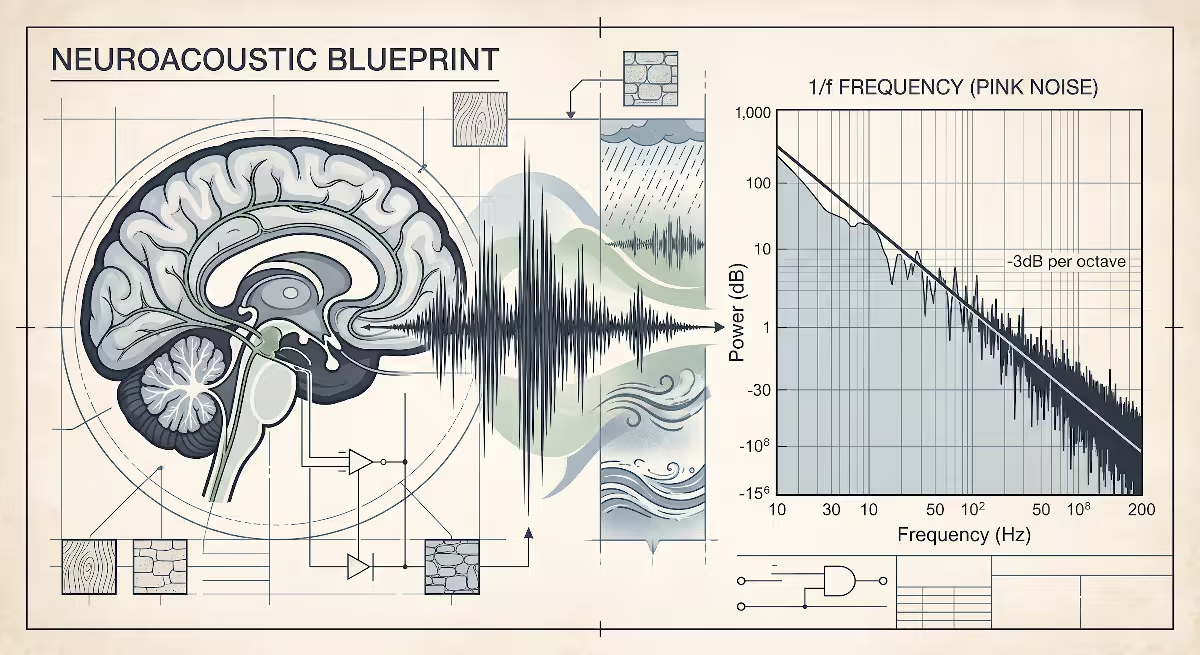
Pink Noise:  Equal energy per octave band (drops 3 dB per octave; sounds warm and natural)
Brown Noise: Drops 6 dB per octave (sounds very deep, heavy, and muffled)
This is where pink noise changes the equation. Pink noise is governed by a mathematical relationship called 1/f, where power is inversely proportional to frequency. In simple terms, as the pitch gets higher, the power drops by exactly 3 decibels for every doubling of frequency (known as an octave).
Because each higher octave contains twice as many frequencies as the one before it, the energy in pink noise balances out perfectly across the human hearing range. Each octave receives the exact same total amount of acoustic energy.
When you listen to pink noise, you do not hear a sharp hiss. Instead, pink noise sounds like a deep, balanced, and gentle rainfall, a distant waterfall, or the continuous rustle of wind through a dense forest. It provides full-spectrum coverage without overloading your auditory system.
Why Modern Residential Interiors Suffer from Acoustic Sterility
Traditional buildings used heavy, porous materials like plaster, thick wood beams, tapestries, and soft furnishings that absorbed sound. Modern home construction, however, relies heavily on flat gypsum drywall, glass walls, hard synthetic flooring, and open-floor plans.
This design style creates two major acoustic problems:
- Acoustic Deadness mixed with Flutter Echo: Hard surfaces bounce high-frequency sounds back and forth, creating flutter echoes that make normal conversation sound harsh and exhausting.
- High Sound Intelligibility of Distractions: In a quiet, reflective room, any sudden noise stands out sharply. A single dropped spoon, a distant car horn, or an air conditioning compressor kicking on will immediately grab your brain’s attention.
When a room is too quiet, your brain turns up its internal acoustic gain. It listens harder for potential threats. When a sudden noise breaks that silence, your body experiences a micro-startle response. Your heart rate jumps slightly, your muscles tense, and your focus breaks.
By designing homes that incorporate continuous, low-level pink noise, we raise the background acoustic floor in a healthy way. Pink noise smooths out the peaks and valleys of home sound, hiding sudden noises and giving your auditory nervous system a steady, calming baseline.
Neurological and Physiological Mechanisms
How the Nervous System Decodes 1/f Frequencies
The human brain is an electrical organ that produces rhythmic waves of electrical activity. These brainwaves change depending on what we are doing, ranging from fast beta waves during active problem-solving to slow delta waves during deep sleep.
Brainwave States and Acoustic Interaction:
- Beta Waves (13 to 30 Hz): Active thinking, high alertness, potential stress.
- Alpha Waves (8 to 12 Hz): Relaxed focus, calm state, stimulated by pink noise.
- Theta Waves (4 to 8 Hz): Light sleep, deep meditation, daydreams.
- Delta Waves (0.5 to 4 Hz): Deep physical recovery, enhanced by slow-wave pink noise.
When we are exposed to steady auditory patterns, our brainwaves begin to align with the rhythm of the sound, a biological process called neural entrainment. Because pink noise follows the 1/f mathematical ratio that matches many internal biological systems (including heartbeat intervals and neuron firing patterns), the brain processes pink noise with very low cognitive effort.
Pink noise also uses a physical principle called stochastic resonance. In simple terms, adding a small amount of calibrated background pink noise to a sensory system actually makes it easier for the brain to process important signals while ignoring random background clutter.
Instead of working hard to filter out unpredictable noises, the brain rests on the steady, predictable blanket of pink noise. This frees up metabolic energy in the auditory cortex and prevents mental exhaustion.
Autonomic Nervous System Modulation
Your autonomic nervous system controls your unconscious body functions and has two main branches:
- The Sympathetic Branch: The “fight or flight” system that raises your heart rate, tenses your muscles, and dumps cortisol into your bloodstream when you are stressed.
- The Parasympathetic Branch: The “rest and digest” system that slows your heart rate, lowers blood pressure, aids digestion, and allows your body to repair itself.
Sudden, irregular noises trigger the sympathetic branch. A car alarm or a loud television downstairs will immediately spike your stress response.
Laboratory studies measuring heart rate variability (HRV) and skin conductance show that continuous exposure to calibrated pink noise activates the parasympathetic branch. Heart rate variability increases, which is a strong clinical indicator of low stress and high biological resilience.
When pink noise fills a room at a comfortable volume, the body feels secure. Breathing slows down, muscle tension in the shoulders and jaw eases, and salivary cortisol levels drop.
Psychological Dimensions: Cognitive Restoration and Affective State
Attention Restoration Theory in Auditory Environments
Psychologists Stephen and Rachel Kaplan developed Attention Restoration Theory (ART) to explain how human focus works. We have two types of attention:
- Directed Attention: The conscious, effort-heavy focus we use to read a report, write an email, or balance a budget. This type of attention drains quickly and leads to mental fatigue.
- Fascinated (Involuntary) Attention: The effortless attention we use when watching waves lap against a shore, looking at a fire, or listening to leaves rustling in the wind. This type of attention allows our directed attention reserves to recharge.
Most indoor work environments place heavy demands on our directed attention while surrounding us with annoying auditory distractions. Intelligible speech from another room is the single most distracting sound in an office or home work area. If you can understand the words someone else is saying, your brain is forced to spend mental energy processing their sentences.
Acoustic Masking with Pink Noise:
[Intelligible Distraction: 55 dBA Peak]
                      ▲
                      │ (Without Masking: High Distraction)
[Quiet Room Base: 30 dBA]

                      vs.

[Intelligible Distraction: 55 dBA Peak]
                      ░ (Sound smoothed out by Pink Noise)
[Pink Noise Blanket: 45 dBA]
Pink noise serves as an ideal auditory masking tool. Because pink noise covers the exact frequency bands of human speech (especially the 250 Hz to 4,000 Hz range) without sounding harsh, it makes distant conversations unintelligible.
You no longer hear words; you only hear a soft, meaningless background wash. This protects your directed attention, prevents mental burnout, and helps you sustain deep creative work for much longer periods.
Affective State and Ambient Anxiety Reduction
Your emotional baseline, or affective state, is heavily influenced by your sensory environment. Living in a noisy home with hard, echoing walls creates low-level ambient anxiety. You are always sub-consciously waiting for the next loud sound.
When you introduce pink noise into a living room, library, or common space, you create an “acoustic shelter.” The space feels smaller, warmer, and more private.
Families living in homes treated with pink noise often report fewer feelings of irritation and less daily conflict. Because pink noise softens sound peaks, normal household activities like cooking, walking, or closing doors no longer disturb people in adjacent rooms. The home becomes an emotional sanctuary rather than a sound amplifier.
Sleep Architecture and Nocturnal Recovery
Enhancement of Slow-Wave Sleep and Delta Waves
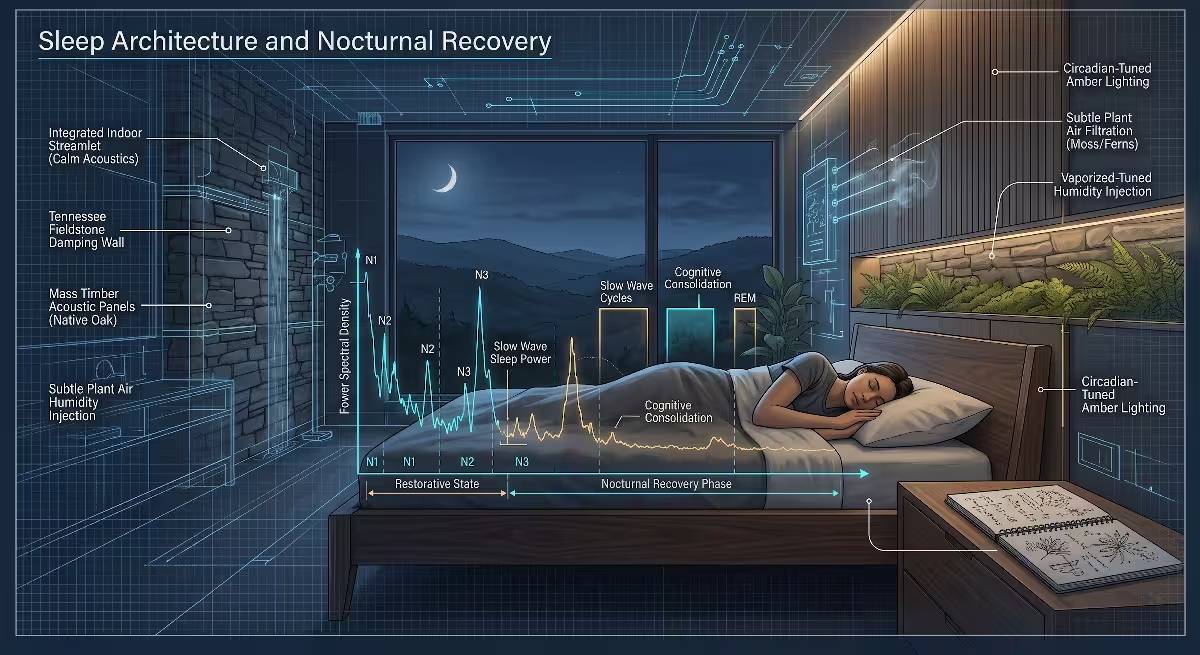
Sleep is not a uniform state of unconsciousness. It moves through distinct stages, including light sleep, REM (rapid eye movement) sleep, and slow-wave sleep (stage N3).
Slow-wave sleep is the deepest, most restorative stage of rest. During this stage, your brain produces slow, powerful delta waves ($0.5\text{ to }4\text{ Hz}$). This is when your body releases human growth hormone, repairs tissue, clears metabolic waste from brain cells, and consolidates new memories.
Sleep Architecture Enhancement:
+-------------------------------------------------------------------+
| Stage N1 / N2: Light Sleep                                        |
|   - Easily disrupted by noise spikes                              |
|   - Protected by steady pink noise sound masking                  |
+-------------------------------------------------------------------+
| Stage N3: Deep Slow-Wave Sleep (SWS)                              |
|   - Brain produces rhythmic Delta Waves (0.5 - 4 Hz)              |
|   - Pink noise entrainment increases Delta amplitude and duration |
|   - Physical cellular repair & memory consolidation               |
+-------------------------------------------------------------------+
| REM Sleep: Dreaming & Emotional Processing                        |
|   - Maintained through undisturbed sleep cycles                   |
+-------------------------------------------------------------------+
Clinical sleep studies have demonstrated that playing continuous pink noise during the night increases the amount of time people spend in slow-wave sleep.
The 1/f frequency structure of pink noise syncs with the natural oscillations of the sleeping brain. By gently reinforcing these slow rhythms, pink noise helps the brain stay in deep sleep longer, leading to clearer thinking and better physical energy the next morning.
Sleep Fragmentation Defense
Most people do not wake up because a room is noisy; they wake up because of a sudden change in sound volume. If a bedroom sits in total silence at 30 decibels, a passing truck that produces 60 decibels creates a 30-decibel jump. That sudden shift triggers a fight-or-flight response, waking you up immediately.
Sound Spike Comparison:
Quiet Room (No Pink Noise):
Base Level: 30 dB  ----------> Truck Passes: 65 dB  [Delta = +35 dB! Wakes you up]

Room with Calibrated Pink Noise:
Base Level: 45 dB  ░░░░░░░░░░> Truck Passes: 65 dB  [Delta = +20 dB! Sleep continues]
By introducing a steady 40 to 45-decibel field of pink noise into the bedroom, you raise the baseline sound level. When that same truck passes, the difference between the background sound and the truck is much smaller.
The pink noise swallows the sound spike, allowing your brain to stay asleep. This reduces nighttime wake-ups, improves sleep efficiency, and prevents morning fatigue.
Clinical Nuance: Open-Loop vs. Closed-Loop Pink Noise
When designing sleep environments, we distinguish between two types of acoustic setups:
- Open-Loop Pink Noise: This is continuous, steady pink noise played at a set volume throughout the entire night from an architectural speaker or natural water feature. It provides steady sound masking, protects against noise spikes, and gently encourages slow-wave sleep. This is the most practical choice for home design.
- Closed-Loop Pink Noise: This advanced system uses sensors (like an EEG headband) to read your brainwaves in real time. When the system detects that you are entering deep slow-wave sleep, it plays short, timed bursts of pink noise that match your brain’s delta waves. While closed-loop setups are currently confined to clinical research and high-end sleep labs, smart home systems are beginning to integrate early versions of this technology.
The Biophilic Connection: Fractal Soundscapes in Nature
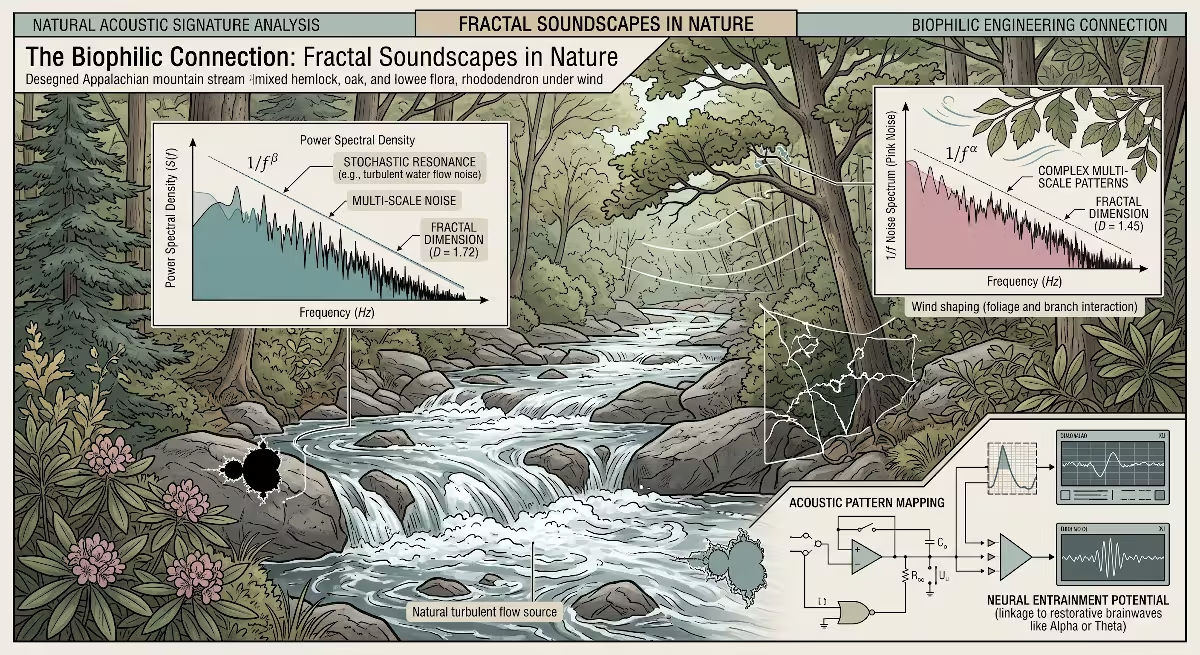
Nature’s Inherent Fractal Acoustics
Biophilia is the innate biological bond between humans and other living systems. Millions of years of human evolution took place in wild landscapes governed by natural geometry and sound.
In nature, geometry is fractal, meaning patterns repeat at different scales. You can see this in the branches of an oak tree, the veins of a leaf, the structure of a fern, or the network of streams in a mountain watershed.
Fractal Dimensions in Nature and Architecture:
- Visual Fractals: Tree branches, mountain ridges, natural stone patterns.
- Auditory Fractals (Pink Noise): Mountain creeks, falling rain, canopy winds.
Sound in nature is also fractal. When wind moves through a forest, it moves large branches slowly (low frequencies), smaller twigs at medium speeds (mid frequencies), and thousands of individual leaves quickly (high frequencies). When you record this sound and analyze its frequencies, it produces an exact 1/f mathematical curve: pink noise.
The same 1/f pink noise spectrum is found in:
- Ocean waves breaking gently against a shoreline.
- A mountain brook flowing over river rocks.
- A steady summer rain falling on a deciduous forest.
- Wind blowing across an open mountain ridge.
For our ancient ancestors, hearing steady pink noise meant safety. It meant there was water, wind, and vegetation nearby, and that no predator was sneaking through the brush. Complete silence in nature is often terrifying; it means a predator is near and the birds have stopped singing.
When we hear pink noise, our ancient survival circuits recognize that the environment is safe, stable, and hospitable to life.
Multisensory Biophilic Alignment:
+------------------------------------+------------------------------------+
| VISUAL BIOPHILIA                   | AUDITORY BIOPHILIA (PINK NOISE)    |
+------------------------------------+------------------------------------+
| Natural timber grains & knots      | 1/f power spectrum from moving air |
| Non-repeating stone textures       | Water flowing over stone basins    |
| Daylight patterns through leaves   | Wind filtering through trees       |
| Organic plant phyllotaxis          | Acoustic resonance from wood panels|
+------------------------------------+------------------------------------+
| RESULT: Reduced Cortisol, Lower Blood Pressure, Restored Attention      |
+------------------------------------+------------------------------------+
Bridging Visual and Auditory Biophilia
True biophilic design is multisensory. If an architect builds a room with natural cedar paneling, living plant walls, and large windows looking out at the woods, but fills the space with the harsh buzzing of a fluorescent light and the loud clatter of an HVAC fan, the biophilic experience fails. The eyes see nature, but the ears hear mechanical stress.
By pairing visual biophilic elements with natural pink noise, we achieve multisensory alignment. The brain receives matching signals across both sight and sound, creating a deep sense of place, calm, and physical ease.
Architectural Implementation: Passive Acoustic Design
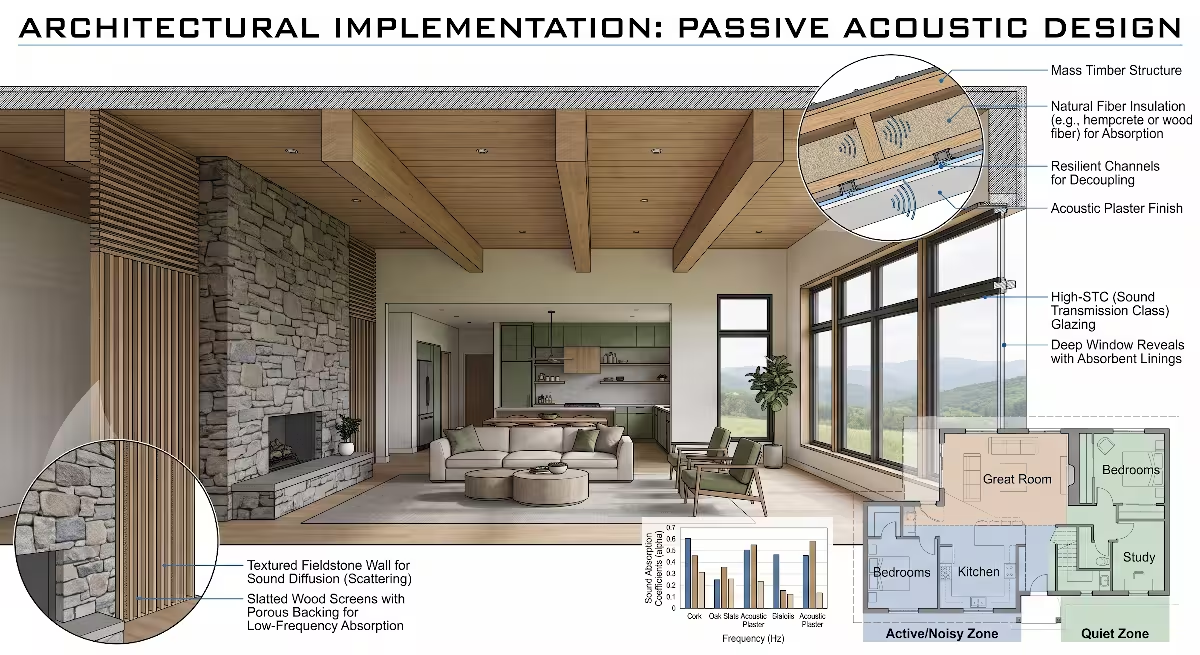
To bring pink noise into a home, we should first look to passive design methods. Passive acoustic design uses the layout of the home, gravity, water, and building materials to create a natural pink noise signature without relying on electronics.
Cross-Section of a Passive 1/f Hydro-Acoustic Feature:
                     [Water Supply Pipe]
                              │
                              ▼
                     ┌─────────────────┐
                     │ Top Copper Lip  │
                     └────────┬────────┘
                              │ (Smooth laminar sheet)
                              ▼
                     ┌─────────────────┐
                     │ Textured Slate  │ <--- High-frequency dispersion
                     └────────┬────────┘
                              │
                              ▼
                     ┌─────────────────┐
                     │ Rough River Bed │ <--- Low-frequency water mass
                     └─────────────────┘
                              │
                     [Recirculating Sump]
Indoor Hydrological Features
Water is the most effective way to generate passive pink noise indoors. However, simply buying an off-the-shelf plastic fountain will rarely produce true pink noise.
Most small decorative fountains produce a high-pitched trickling or splashing sound. That sound has too much high-frequency energy, making it sound more like white noise, which can become irritating over time.
To engineer an indoor water feature that produces a true 1/f pink noise spectrum, use these guidelines:
- Fall Height and Flow Volume: Water falling a short distance over a broad surface creates a richer, lower-frequency sound. Design a wide sheet of water (a laminar flow wall) falling 4 to 8 feet down a textured slate or granite surface.
- Catch Basin Design: The pool at the bottom must have sufficient depth (at least 6 to 10 inches) and be filled with rounded river stones of varying sizes (from 1 inch to 5 inches across). As the falling water strikes both the stone surfaces and the standing pool, it creates a blend of deep bubbly tones and softer surface sounds that match the balanced curve of pink noise.
- Flow Control: Install a variable-speed DC water pump so you can dial in the water volume until the sound matches the ideal decibel level ($40\text{ to }45\text{ dBA}$) for your living space.
Natural Ventilation and Aeroacoustic Buffering
Wind moving through and around a house can be shaped into gentle pink noise through smart passive ventilation design.
- Acoustic Wind Buffers: Plant native evergreen and deciduous trees close to the prevailing windward side of the home. When outdoor breezes hit dense vegetation like Eastern White Pine or Mountain Laurel, the leaves naturally filter the air, turning turbulent gusts into a steady pink noise hiss before the sound ever reaches your open windows.
- Operable Window Sills and Louvers: Custom timber acoustic louvers mounted on the outside of bedroom windows can break up harsh street noise while shaping passing air currents into a soft pink noise curve.
Material Selection and Resonant Damping
The materials you choose for your walls, floors, and ceilings determine how sound decays inside the room. Hard, non-porous surfaces bounce high pitches around the room, destroying the gentle nature of pink noise.
Material Acoustic Profiles:
- Gypsum Drywall: Hard, reflective, amplifies harsh high-frequency flutter.
- Polished Concrete: Extremely reflective, creates long, muddy reverberation.
- Tongue-and-Groove Mass Timber: Absorbs harsh highs, resonates warmly in mid-low frequencies.
- Variable-Density Acoustic Plaster: Diffuses sound evenly, supporting a balanced 1/f room response.
To create an environment that supports pink noise:
- Mass Timber Ceilings: Use exposed wood decking, such as tongue-and-groove white oak or cedar. Wood has a complex cellular structure that naturally absorbs harsh, high frequencies while gently resonating with warmer low-mid frequencies.
- Acoustic Plaster: Use natural lime or clay plasters mixed with straw or aggregate instead of standard flat drywall. These plasters have microscopic pores that diffuse sound evenly across the room.
- Textured Stone Walls: An interior accent wall made of rough, unpolished fieldstone acts as an acoustic diffuser. When pink noise hits the irregular faces of the stone, the sound scatters evenly in all directions rather than bouncing back as a harsh echo.
Architectural Implementation: Active Soundscapes and Smart Integration
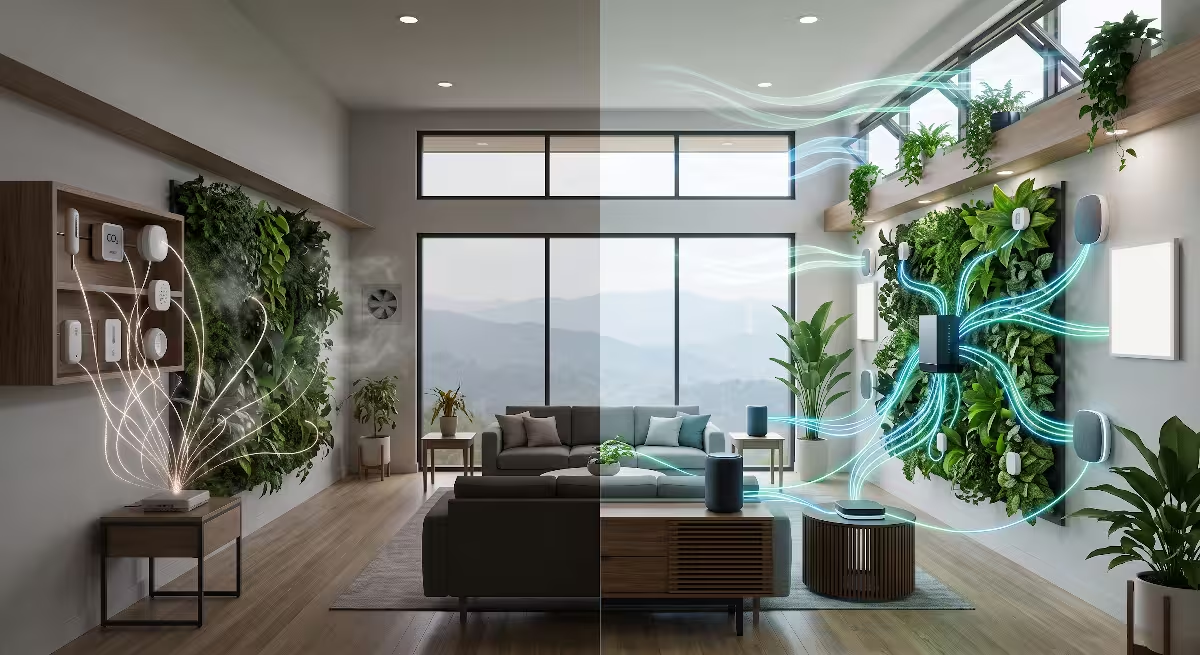
While passive design is the gold standard, active electroacoustic systems allow you to control and calibrate your acoustic environment with precision throughout the day and night.
Smart Multi-Zone Active Pink Noise Topology:
┌───────────────────────────────────────────────────────────┐
│ Central Microprocessor / Sound Generator                  │
│ (DSP calibrated with 1/f pink noise algorithm)            │
└─────────────┬───────────────────────────────┬─────────────┘
              │                               │
    [Day / Night Scheduler]          [Decibel Level Sensors]
              │                               │
  ┌───────────┴───────────┐       ┌───────────┴───────────┐
  ▼                       ▼       ▼                       ▼
Primary Bedroom        Home Office        Living Room         Meditation Area
(35 - 38 dBA Target)   (42 - 45 dBA)      (40 - 45 dBA)       (38 - 42 dBA)
[Invisible Ceiling]    [Linear Slot]      [In-Wall Transducer][Direct Array]
Whole-Home Pink Noise Generation and In-Wall Transducers
Traditional cone speakers mounted in the corner of a room create a “point source” of sound. The sound is loud right next to the speaker and quiet on the other side of the room. This does not work well for ambient sound, because your ear can easily pinpoint where the noise is coming from, which breaks the feeling of being in a natural environment.
To build an effective active pink noise system:
- Invisible In-Wall Transducers: These flat acoustic panels are installed directly into the wall framing and skimmed over with plaster, making them completely invisible. Instead of shooting sound in a narrow beam, they vibrate the entire wall surface slightly, acting like a large acoustic radiator. This fills the entire room with a uniform, diffuse field of pink noise.
- Distributed Ceiling Arrays: If using traditional architectural speakers, install multiple small, wide-dispersion speakers spaced evenly across the ceiling, rather than two large speakers in the corners. Run them at low volumes to create a seamless blanket of pink noise.
HVAC Acoustic Tuning
In most homes, the heating and cooling system is an acoustic nuisance. Air rushes through undersized metal ducts, sheet metal rattles, and noisy blowers turn on and off abruptly.
You can work with your mechanical contractor to turn your HVAC system into an intentional pink noise generator:
- Oversized Ductwork with Acoustic Liners: Increasing duct sizes lowers air velocity, which eliminates high-pitched air rushing noises. Adding internal acoustic duct liners absorbs the mechanical motor hum from the furnace or heat pump.
- Linear Slot Diffusers: Replace cheap stamped-metal supply grilles with architectural linear slot diffusers. These long, narrow vents allow air to enter the room smoothly, producing a continuous, gentle wash of pink noise at a constant, comfortable level.
Decibel and Frequency Calibration Thresholds
For pink noise to help you relax and focus, it must be set to the right volume. If pink noise is too loud, it becomes annoying; if it is too quiet, it will not mask sudden household sounds.
- Daytime Focus Areas (Home Office, Library): Set the sound level to $42\text{ to }45\text{ dBA}$. This volume masks distant speech and outdoor traffic without requiring you to raise your voice during phone calls.
- Nighttime Recovery Areas (Bedrooms): Set the sound level to $35\text{ to }38\text{ dBA}$. This creates a soft, protective acoustic blanket that prevents sleep disruptions while allowing your nervous system to fully unwind.
Room-by-Room Specification Matrix
Every room in a home serves a different biological and daily purpose. The table below provides specific design goals, target sound levels, and implementation methods for introducing pink noise throughout a residential floor plan.
| Room Type | Primary Acoustic Goal | Implementation Method | Target SPL (dBA) | Recommended Finish Materials |
| Primary Bedroom | Deep sleep continuity and slow-wave sleep support | Concealed ceiling transducers with scheduled night pink noise curves | $35\text{ to }38\text{ dBA}$ | Wood ceiling decking, wool rugs, heavy linen drapery |
| Home Office | Speech masking and sustained mental focus | Calibrated linear slot HVAC diffusers supplemented by ambient pink noise | $42\text{ to }45\text{ dBA}$ | Perforated acoustic wood wall panels, cork flooring |
| Great Room / Living | Conversation warmth and reduced echo | Integrated indoor slate water wall generating passive natural pink noise | $40\text{ to }46\text{ dBA}$ | Exposed timber framing, rough stone fireplace, plaster walls |
| Primary Bathroom | Sensory relaxation and acoustic privacy | In-ceiling micro-speakers paired with natural water flow from broad fixtures | $42\text{ to }48\text{ dBA}$ | Textured river pebble floors, cedar ceiling panels |
| Meditation / Wellness | Parasympathetic nervous system activation | Dedicated spatial audio array playing multi-channel natural pink noise | $38\text{ to }42\text{ dBA}$ | Clay plaster walls, tatami mats, living plant walls |
Regional Acoustic Ecology: The Southern Appalachian Context
Here in the Tri-Cities region of Eastern Tennessee (encompassing Johnson City, Kingsport, and Bristol), we are surrounded by one of the oldest, most biologically diverse mountain landscapes on earth. The Southern Appalachian region offers incredible inspiration and natural materials for biophilic acoustic design.
Appalachian Acoustic Ecosystem:
[Ridge Top Winds] -------> Hardwood Canopy (Oak / Maple / Hickory) Filter
                                │
                                ▼ [1/f Pink Noise Spectrum]
[Valley Stream Flow] ----> Tennessee River Stone Diffuser Bed
Utilizing Native Materials for Acoustic Harmony
The Southern Appalachian forest provides dense, high-character hardwoods that excel at acoustic conditioning:
- Native Appalachian Hardwoods: Using locally harvested White Oak, Black Walnut, and Sugar Maple for flooring, exposed structural posts, and wall slats adds rich architectural beauty while controlling room reverberation. These dense hardwoods absorb harsh high-frequency sounds while reflecting a warm, comfortable tonal response that complements pink noise.
- Tennessee Fieldstone and River Rock: Incorporating local limestone, sandstone, and smooth river rocks from regional riverbeds into interior water features grounds the home in its local geography. The rough textures of native stone scatter sound waves evenly, creating a natural acoustic balance that electronic systems cannot match on their own.
Interior Application in Appalachian Homes:
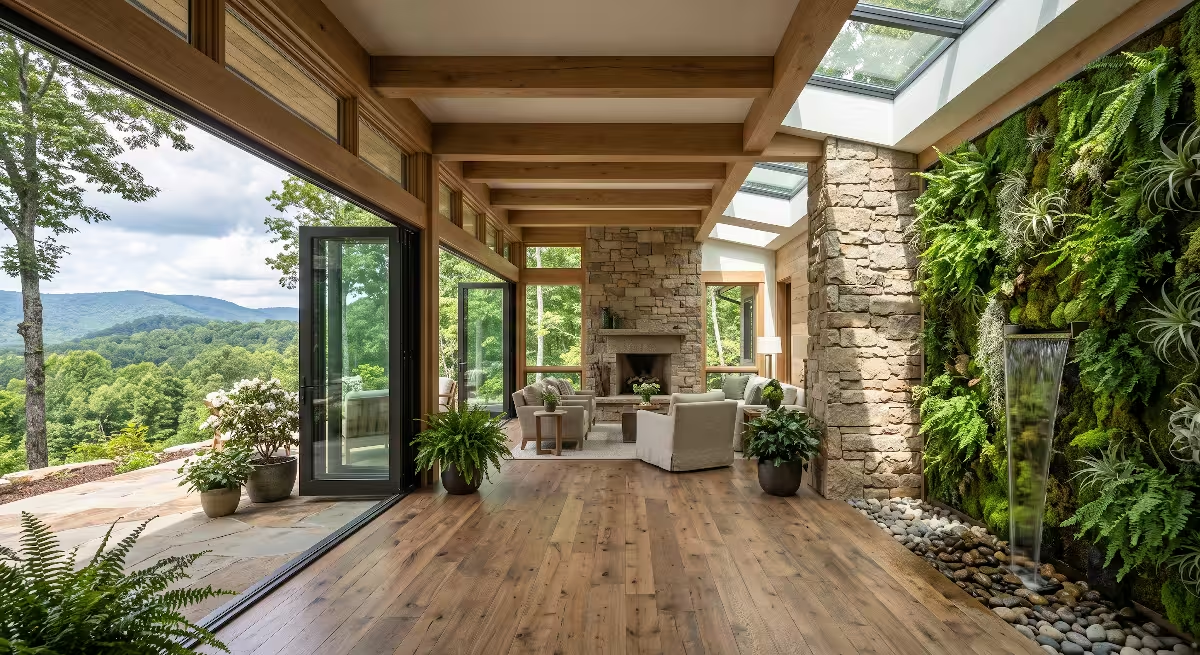
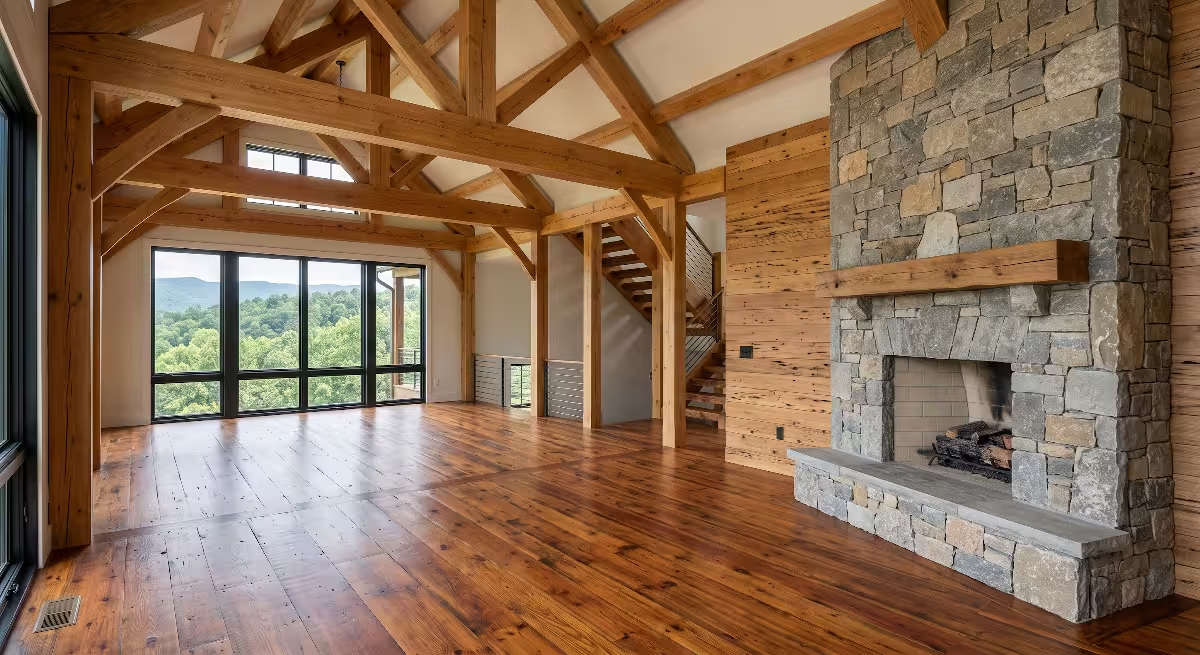
- Great Room: A soaring Tennessee fieldstone hearth paired with a live-edge Black Walnut mantel.
- Water Feature: A slate spillway fed by local river stones, filling the room with steady pink noise.
- Ceiling: Tongue-and-groove White Oak planks that absorb flutter echoes.
Topographical and Climate Adaptation
Building in our ridge-and-valley topography brings unique acoustic considerations:
- Ridge Acoustic Buffering: Homes built along ridge tops, such as those overlooking Roan Mountain or the Holston River, face high winds. By planting dense belts of native Eastern Hemlock, White Pine, and Rhododendron along the windward slopes, we can turn turbulent mountain gusts into a continuous, calming pink noise soundscape before it hits the home.
- Humid Subtropical Microclimates: Our warm, humid Appalachian summers change how sound moves through the air; humid air absorbs high-frequency sounds faster than dry air. Incorporating balanced indoor humidity controls alongside mass-timber surfaces ensures that your indoor pink noise levels remain steady and comfortable throughout all four seasons.
Frequently Asked Questions about Pink Noise
What is the psychological difference between pink noise and white noise in a home?
White noise has equal energy across all raw frequencies, which gives it a high-pitched, hissing sound similar to an untuned radio or a loud fan. This high-frequency emphasis can feel harsh and cause ear fatigue over time.
Pink noise has equal energy per octave, meaning the power drops by 3 decibels for each higher octave. This roll-off matches human hearing and sounds like gentle rainfall or wind in the trees. Psychologically, white noise tends to keep the brain alert and on edge, while pink noise triggers the parasympathetic nervous system, lowering stress and encouraging calm.
Can living with continuous pink noise damage hearing or cause sensory overload?
No, as long as it is kept at proper residential volumes. Hearing damage only occurs with prolonged exposure to sounds at or above 85 decibels.
In a properly designed home, pink noise is delivered at gentle, ambient levels between 35 and 45 decibels, which is no louder than a quiet conversation or a soft rain. Far from causing sensory overload, low-level pink noise actually prevents sensory fatigue by smoothing out sudden noises and giving your ears a steady, predictable background sound.
How does 1/f pink noise help with home office productivity?
The biggest distraction in any home office is intelligible speech coming from other rooms, such as children playing, someone watching television, or a partner on a phone call. When you can understand the words being spoken, your brain is forced to spend mental energy processing that language.
Pink noise covers the frequency range of human speech, blurring those conversations into an unintelligible background murmur. This protects your directed attention, prevents task switching, and helps you stay focused on your work.
Can I achieve pink noise naturally without electronic sound machines?
Yes. You can generate natural pink noise by designing passive acoustic water features inside the home, such as a slate water wall with a river-stone catch basin.
You can also shape outdoor air currents into natural pink noise by planting dense evergreen trees along the windward side of your home and using operable window louvers. Using natural mass-timber ceilings and textured stone walls will further help your home maintain a balanced 1/f acoustic curve.
Does pink noise help with tinnitus in quiet home environments?
Yes. Tinnitus (a constant ringing or buzzing in the ears) often becomes much more noticeable and irritating in a completely silent room. The sharp contrast between the quiet room and the internal ringing makes the brain focus on the tinnitus sound.
Introducing a soft background field of pink noise gently fills in the silence, reducing that acoustic contrast and helping the brain push the ringing sound into the background.
Tinnitus Masking Comparison:
Silent Room (30 dBA):
[Silence] -----------------------> [Tinnitus Ringing: 45 dBA] (High Contrast / High Distress)

Room with Pink Noise (40 dBA):
[Pink Noise Blanket: 40 dBA] ----> [Tinnitus Ringing: 45 dBA] (Low Contrast / Low Distress)
Final Thoughts: Building the Acoustic Future
A home should be more than a visual shelter; it should be an acoustic sanctuary that restores your physical and mental health. By understanding the science of 1/f frequency and incorporating pink noise into our residential architecture, we can move away from harsh, echoing spaces and return to an environment that matches our human biology.
Whether you achieve this through a natural Appalachian stone water wall, carefully selected mass-timber finishes, or a smart, integrated sound system, designing with pink noise creates a home that calms your nervous system, deepens your sleep, and supports your daily well-being.