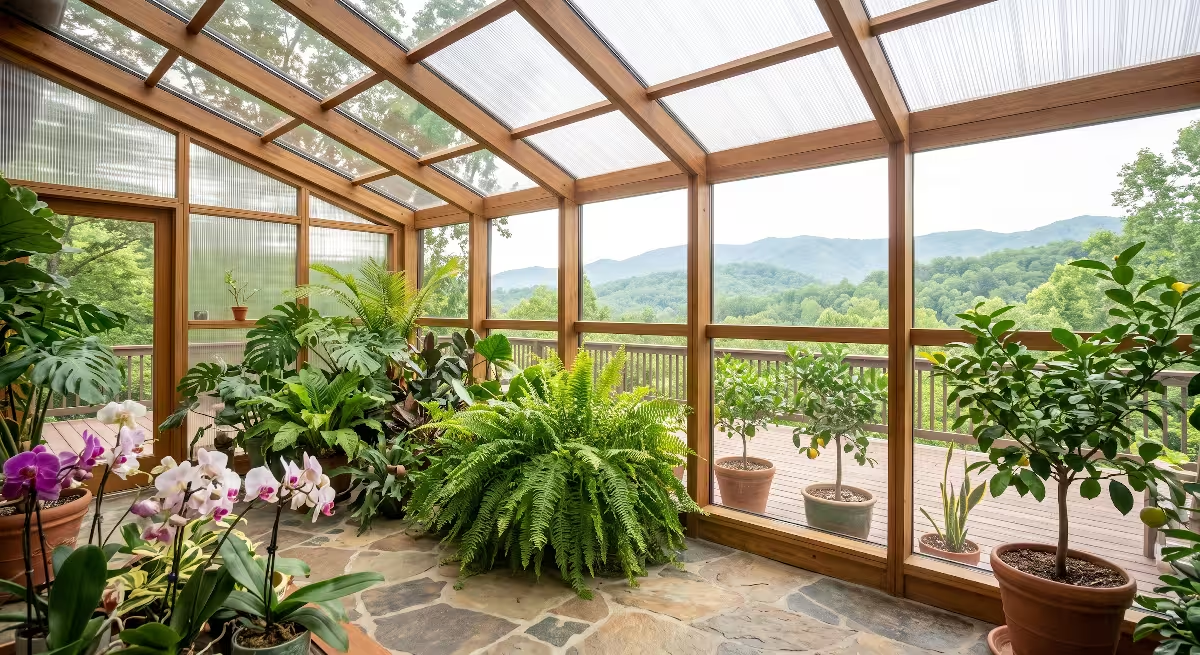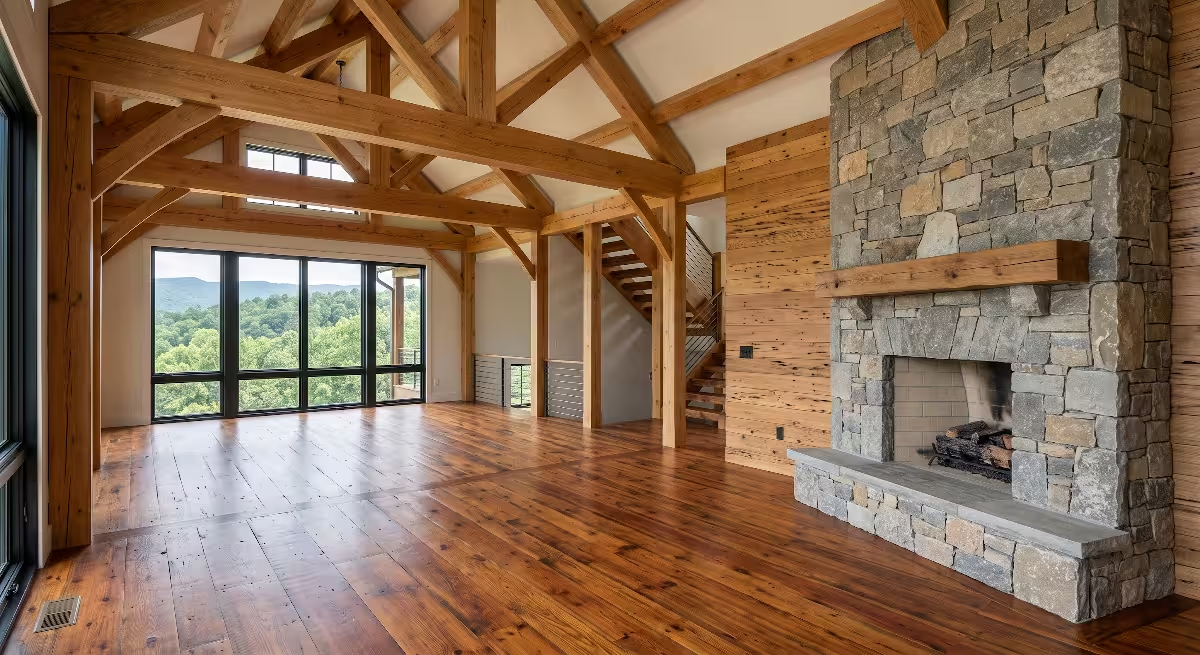


When winter arrives in the Tri-Cities, many residents experience a noticeable drop in mood, focus, and physical energy. This condition is often known as Seasonal Affective Disorder, or SAD. While many people know that daylight decreases during the winter months, few understand the critical role played by light temperature. The specific light temperature of the sun changes throughout the day, and the indoor light temperature we choose for our homes has a profound effect on our internal biological clocks. By understanding the impact of light temperature on our hormonal systems, and by designing our living spaces to mirror natural daylight, we can reduce the symptoms of winter depression and support our well-being.
Understanding Seasonal Affective Disorder Through an Environmental Lens
Seasonal Affective Disorder is a form of depression that follows a seasonal pattern. For most people in East Tennessee who struggle with this condition, symptoms begin in late autumn, peak during the coldest months of January and February, and lift when spring arrives. The symptoms are not just mental feelings of sadness. They include heavy physical fatigue, difficulty waking up in the morning, cravings for carbohydrates, weight gain, brain fog, and a strong urge to withdraw from social activities. A milder version of this condition, often called the winter blues or sub-syndromal SAD, affects an even larger percentage of our local population.
From a biological standpoint, SAD is an environmental disorder caused by a mismatch between our internal body clock and the external photic environment. Inside the human brain, right above where the optic nerves cross, sits a tiny structure called the suprachiasmatic nucleus. This structure acts as the master biological clock for the entire body. It controls when we feel alert, when we feel sleepy, when our core body temperature rises or drops, and when vital hormones like cortisol and melatonin are released into our bloodstream.
The master clock does not run on a mechanical timer. Instead, it relies on light signals from the environment to reset itself every single morning. When the eyes detect morning light with the correct light temperature and brightness, the master clock resets. It sends a direct signal to the pineal gland to stop producing melatonin, which is the hormone that makes us sleep. At the same time, it triggers the release of cortisol, which gives us energy, raises our blood pressure to daytime levels, and sharpens our mental focus.
When winter reduces the amount of natural daylight, and when the light temperature entering our eyes does not reach the right biological threshold, this daily reset fails to happen. Melatonin production continues into the morning hours, leaving us feeling sluggish and exhausted. Cortisol levels remain flat, leading to low motivation and difficulty concentrating. In simple terms, winter depression occurs when our indoor and outdoor environment fails to give our brain the clear light signals it requires to function properly.
The Geographic Microclimate: Why Tri-Cities Winters Amplify Photoreceptive Deficits

Living in the Tri-Cities region, spanning Johnson City, Kingsport, and Bristol, presents unique geographical and atmospheric conditions that make winter light loss even more severe than in flatter regions of the country. Our geography directly shapes the quantity and quality of light temperature available to our eyes throughout the day.
+-------------------------------------------------------------------------+
|                  TRI-CITIES WINTER LIGHT ATTENUATION                    |
|                                                                         |
|   Topography: Mountain Ridges (Holston, Buffalo, Unaka)                |
|               --> Shaves 45 to 90 minutes off daily direct sunlight     |
|                                                                         |
|   Atmosphere: Low Valley Inversions & Fog + Stratocumulus Deck          |
|               --> Reduces ambient outdoor illuminance below 2,500 lux   |
|                                                                         |
|   Built Env:  Residential 2700K Soft White Lighting                     |
|               --> Fails to provide morning circadian stimulus           |
+-------------------------------------------------------------------------+
The first factor is our ridge-and-valley topography. The Tri-Cities region is nestled within the Appalachian Basin, framed by prominent landforms like Holston Mountain, Buffalo Mountain, and the Unaka Range. In winter, the sun travels along a much lower angle across the southern sky. Because of the surrounding ridges, homes situated in hollows, valleys, and along north-facing slopes lose direct sunlight much earlier in the afternoon and receive it much later in the morning. This topographic shading can easily shave forty-five to ninety minutes of direct daylight off both ends of the day.
The second factor is the winter weather pattern of East Tennessee. During the winter months, cold air frequently becomes trapped in our mountain valleys, creating temperature inversions. These inversions hold moisture close to the ground, resulting in thick valley fog, low stratus clouds, and persistent stratocumulus cloud decks. On a clear summer day in Johnson City, outdoor daylight can easily reach 50,000 to 100,000 lux. On an overcast winter day in Bristol or Kingsport, outdoor light levels often struggle to reach 2,000 to 2,500 lux. The prevailing atmospheric cloud cover diffuses the sun, changing the natural light temperature and dramatically reducing the biological stimulation our brains receive.
The third factor is modern human behavior in our region during the winter. When chilly temperatures, rain, and gray skies settle over the Holston River Valley, people naturally retreat indoors. Most residential homes and commercial offices in our area are lit with standard, static lighting fixtures. These indoor fixtures typically produce a dim 100 to 300 lux, and they usually emit a fixed, warm light temperature. While warm light feels cozy during a cold evening, living under that same light temperature all day tricks the brain into believing it is perpetually dusk. The combination of mountain shading, persistent cloud cover, and dim indoor environments creates a chronic light deficit that fuels winter depression across our communities.
What Is Correlated Color Temperature?
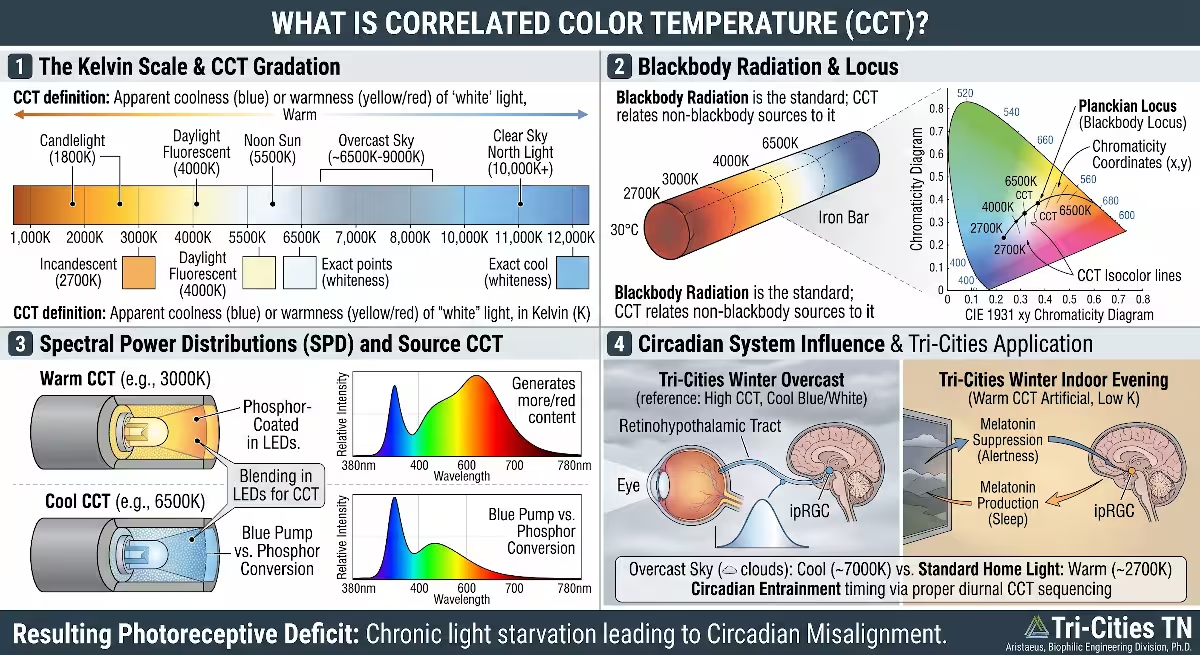
To understand how lighting influences human health, we must examine the physics of light temperature. In the lighting industry, light temperature is officially known as Correlated Color Temperature, abbreviated as CCT. Light temperature is measured in units called Kelvin, using the letter K.
The Kelvin scale comes from a physics concept called blackbody radiation. Imagine taking a solid black iron object and heating it up in a furnace. At lower temperatures, the iron begins to glow a dull red. As the heat rises, the color shifts from red to orange, then to yellow, then to a brilliant warm white. As the heat becomes extremely intense, the metal glows a bright, crisp white, and eventually takes on a distinct blue tint. The light temperature scale uses these thermal degrees in Kelvin to describe the color appearance of light produced by any bulb or natural light source.
1800K               2700K             4000K             5000K             6500K+
  |-------------------|-----------------|-----------------|-----------------|
Candlelight       Soft White         Neutral          Cool Day         Sky Blue
(Zero Alertness) (Relaxation)     (Office Work)     (Melanopic Peak) (High Alert)
Lower numbers on the Kelvin scale represent warmer light colors with high red and yellow content. For example:
- A burning wax candle produces a light temperature around 1,800 K.
- A traditional incandescent light bulb produces a warm light temperature around 2,700 K.
- A standard halogen lamp has a light temperature near 3,000 K.
Higher numbers on the Kelvin scale represent cooler, crisper light colors with higher blue content. For example:
- A neutral white office light has a light temperature around 4,000 K.
- Direct midday sunlight on a clear day has a light temperature around 5,500 K.
- An overcast sky or light from a clear blue northern sky has a light temperature ranging from 6,500 K to over 10,000 K.
It is important not to confuse light temperature with visual brightness. Brightness is measured in units called photopic lux or foot-candles, which represent the amount of light visible to the human eye for ordinary seeing. Light temperature, by contrast, describes the spectral composition of that light. Two different light sources can provide the exact same brightness of 500 lux, but one might have a warm light temperature of 2,700 K while the other has a cool light temperature of 6,500 K.
This difference in light temperature matters immensely for human biology. The cool light temperature contains a high proportion of short-wavelength blue light, specifically between 460 and 490 nanometers. This blue wavelength is the exact spectral trigger that human eyes evolved to recognize as daytime. When that specific light temperature is missing from our indoor environment, our visual system can still see well enough to read or cook, but our biological clock remains completely unaware that the sun is up.
Biological Pathways: How Light Temperature Regulates Mood and Hormones
For decades, scientists believed that the human eye only contained two types of light receptors: rods for night vision and cones for daytime color vision. In the early 2000s, researchers discovered a third type of light sensor in the human retina. These cells are called intrinsically photosensitive retinal ganglion cells, or ipRGCs.
These specialized cells have nothing to do with forming visual images. Instead, they act as biological light meters. The ipRGCs contain a unique, light-sensitive photopigment called melanopsin. Melanopsin is chemically tuned to respond to a very specific light temperature and wavelength band, with peak sensitivity right around 480 nanometers in the cyan-blue spectrum.
Incoming Photons
     │
     ▼
Retina: ipRGCs (Melanopsin Photopigment) ── Peak: 480 nm Cyan-Blue
     │
     ▼ (Retinohypothalamic Tract - Direct Neural Highway)
Suprachiasmatic Nucleus (SCN Master Biological Clock)
     │
     ├────────► Pineal Gland: Shuts down Melatonin (Stops Sleepiness)
     ├────────► Adrenal System: Stimulates Cortisol (Sparks Morning Energy)
     └────────► Raphe Nuclei: Boosts Serotonin Synthesis (Elevates Mood)
When light containing a cool, high light temperature enters the eye, the blue wavelengths strike the melanopsin molecules inside the ipRGCs. These cells instantly fire electrical signals along a dedicated nerve pathway called the retinohypothalamic tract. This pathway bypasses the visual cortex completely and connects directly into the suprachiasmatic nucleus.
Once the master clock receives these signals from a high light temperature source, it sets off a coordinated neurochemical cascade:
- Suppression of Melatonin: The master clock halts the synthesis of melatonin within minutes. Without melatonin in the bloodstream, morning drowsiness disappears, mental clarity returns, and the body transitions into an active physiological state.
- Release of Morning Cortisol: The brain initiates the cortisol awakening response. A healthy morning spike in cortisol gives us drive, helps regulate blood sugar, and supports immune function throughout the day.
- Synthesis of Serotonin: Photic signals from a high light temperature travel into the raphe nuclei, the brain region responsible for creating serotonin. Serotonin is our primary mood-stabilizing neurotransmitter. Higher serotonin levels prevent feelings of hopelessness, anxiety, and depression.
- Dopamine Activation: Bright morning light stimulates dopamine pathways in the brain, improving executive function, motivation, and motor coordination.
In contrast, when you spend your winter mornings under a low light temperature, such as a 2,700 K incandescent or warm LED lamp, the melanopsin in your ipRGCs is barely activated. Even if the room feels visually bright, the warm light temperature lacks the 480-nanometer blue wavelengths needed to trigger the nerve pathway. As a result, the brain continues to produce melatonin, serotonin levels remain low, and the sluggish, depressive feelings of SAD take hold. The light temperature of your surroundings is literally the master switch for your daily neurochemistry.
What Kelvin Light Temperature Is Best for Seasonal Affective Disorder?
When selecting lighting fixtures or therapy lamps to combat SAD during an East Tennessee winter, you must match the light temperature to the specific time of day. Using the wrong light temperature at the wrong hour can worsen sleep quality, increase anxiety, or fail to relieve depressive symptoms.
+------------------------------------------------------------------------------------+
|                RECOMMENDED DIURNAL LIGHT TEMPERATURE SCHEDULE                      |
|                                                                                    |
|  Time Period        Target Light Temperature      Biological Function              |
|  --------------------------------------------------------------------------------  |
|  07:00 AM - 10:00 AM    5,000 K - 6,500 K         Maximum Melanopic Reset          |
|  10:00 AM - 03:00 PM    3,500 K - 4,000 K         Sustained Focus & Stability      |
|  03:00 PM - 06:00 PM    2,700 K - 3,000 K         Gentle Twilight Transition       |
|  06:00 PM - Bedtime     1,800 K - 2,200 K         Melatonin Protection & Sleep Prep|
+------------------------------------------------------------------------------------+
The Morning Standard: 5,000 K to 6,500 K
For morning phototherapy and primary general illumination before noon, the most effective light temperature range is between 5,000 K and 6,500 K. This range closely mimics the light temperature of a crisp, clear morning sky. Light within this high light temperature range delivers maximum energy to the melanopsin receptors, ensuring complete melatonin shutdown and a robust boost in mood-regulating neurotransmitters. When using a dedicated SAD light box, 6,500 K is the clinical gold standard.
The Midday Plateau: 3,500 K to 4,000 K
As the morning progresses toward midday, your lighting needs shift. Keeping your home or office under an intense 6,500 K light temperature all day long can lead to eye fatigue, headaches, and physical overstimulation. Between 10:00 AM and 3:00 PM, transitioning to a balanced light temperature of 3,500 K to 4,000 K provides clean, neutral white light. This intermediate light temperature supports sustained concentration, reading comfort, and visual acuity while continuing to keep the biological clock stable.
The Evening Safety Zone: 2,700 K or Lower
After the sun sets over the East Tennessee hills, cool blue light becomes biologically harmful. Exposing your eyes to a cool light temperature of 5,000 K at 8:00 PM tricks your brain into thinking it is noon. This delays the release of melatonin by several hours, causing sleep-onset insomnia and fragmenting restorative deep sleep. In the evening, indoor lighting should drop to a warm light temperature of 2,700 K, and ideally down to 1,800 K to 2,200 K in the final two hours before bed. This warm, amber light temperature protects natural sleep onset while allowing you to navigate your home safely.
Does Color Temperature Matter if the Light Box Is 10,000 Lux?
A common question among people shopping for phototherapy equipment is whether light temperature truly matters as long as the device produces the standard clinical brightness of 10,000 lux. The answer is yes, light temperature matters a great deal.
Lux measures light only as it is perceived by the human visual system, which is most sensitive to green and yellow light wavelengths around 555 nanometers. However, as we have seen, the biological clock inside your brain relies on the melanopsin system, which is sensitive to blue wavelengths around 480 nanometers. This biological measurement is called Equivalent Melanopic Lux, or EML.
10,000 Photopic Lux at a Warm 2,700 K Light Temperature:
===================> High visual glare, but very LOW circadian stimulation (EML is low)

10,000 Photopic Lux at a Cool 6,500 K Light Temperature:
===================> Moderate visual glare, and MAXIMUM circadian stimulation (EML is high)
If you take a light box with a warm light temperature of 2,700 K and turn it up to 10,000 photopic lux, it will appear intensely bright and glaring to your eyes. However, because that warm light temperature contains very little blue spectral energy, its Equivalent Melanopic Lux will be surprisingly low. You would have to sit in front of that warm light temperature device for hours to receive the same biological stimulation that a cool light temperature produces in twenty minutes.
When a device combines 10,000 lux with a crisp light temperature of 6,500 K, its spectral output aligns directly with the absorption curve of melanopsin. This allows the light to achieve a high Circadian Stimulus score, typically defined by researchers as a CS value of 0.3 or higher. Achieving this threshold within a short morning session is what successfully lifts depression. A light box that delivers high lux without the appropriate light temperature is biologically inefficient, visually uncomfortable, and far less likely to relieve your winter symptoms.
How Long Should You Sit in Front of a SAD Light, and at What Time of Day?
Using a phototherapy device with the correct light temperature requires following a precise daily protocol. Simply turning on a bright light box at random times during the day will not provide reliable relief from Seasonal Affective Disorder.
The optimal time to receive high light temperature exposure is within the first sixty minutes of waking up in the morning. For most people living in the Tri-Cities, this means scheduling your light session between 6:30 AM and 8:30 AM. Receiving this light temperature stimulus early in the morning creates a phase advance in your circadian rhythm. A phase advance shifts your internal clock earlier, helping you feel alert during the day and naturally tired at a reasonable bedtime.
The duration of your session should be calibrated to the intensity and light temperature of the light source:
- If using a clinical-grade 10,000 lux box with a 6,500 K light temperature, a session of twenty to thirty minutes is sufficient for most adults.
- If using a smaller, lower-intensity lamp that produces around 5,000 lux at a 5,000 K light temperature, you will need to extend the session to forty-five to sixty minutes.
- If you sit further away from the device than the manufacturer recommends, the light intensity drops off rapidly due to the inverse square law of light, requiring significantly more time.
                      Correct Angle of Incidence

                       [ 6,500 K Light Box ]
                               \
                                \  30 to 45 Degree Angle
                                 \
                                  ▼
                            ( Eyes / Face )
                            [ Morning Coffee / Reading ]
Positioning is also critical. Place the light box slightly to the side of your line of sight, roughly thirty to forty-five degrees off-center, and slightly elevated so the light shines downward toward your eyes, just as natural sunlight does. Do not stare directly into the light source, as this can cause eye strain and corneal discomfort. Instead, keep your eyes open while reading the morning news, enjoying a cup of coffee, or working at your desk. As long as the high light temperature washes over your eyes indirectly, the light will reach your retinal ganglion cells and activate your master clock.
The Seasonal Circadian Phase Shift in East Tennessee
To appreciate why lighting is so critical in our region, we must look at how the winter calendar affects our local timekeeping. In the Tri-Cities area, winter brings a significant reduction in total photoperiod. On the winter solstice in late December, Johnson City receives only about nine hours and thirty-eight minutes of daylight, compared to over fourteen hours and forty minutes in mid-summer.
This rapid loss of daylight causes what chronobiologists call a seasonal phase delay. In simple terms, when the sun rises late behind our mountain ridges, your brain delays its morning chemical wake-up call. However, modern life does not delay its schedule. You still have to wake up at 6:00 AM or 7:00 AM for work, school, or family commitments.
Natural Winter Sun:   Wakes brain up late (~7:45 AM behind ridges)
Work/School Alarm:    Forces body awake early (6:30 AM)
-----------------------------------------------------------------
Result:               Circadian Phase Delay + Chronic Social Jetlag
This creates a painful condition known as social jetlag, where your biological clock and your social clock are hours out of alignment. You are awake and driving on Interstate 26 or Highway 11E, but your brain is still in a biological night state, producing melatonin and keeping your core temperature low.
This problem is made worse by standard residential lighting in East Tennessee homes. Most homes in our area rely on traditional 2,700 K warm white bulbs in every room. When a person wakes up in the dark, steps into a kitchen illuminated by a 2,700 K light temperature, and stays in a dim office all day, their brain never receives the definitive photic signal needed to snap out of the night cycle. The low light temperature reinforces the phase delay, making the person feel exhausted all day long, only to find themselves wide awake late at night when they try to sleep.
Correcting this phase shift requires introducing a dynamic light temperature strategy. By delivering a sharp, bright, high light temperature pulse immediately upon waking, you halt the phase delay and pull your circadian rhythm back into alignment with your daily schedule.
Comparative Breakdown: Light Temperatures and Physiological Impacts
Understanding the specific physiological impacts of different light temperature bands allows us to make deliberate choices in our homes and workplaces. Every Kelvin range carries a distinct biological meaning.
| Light Temperature Range | Spectral Color Description | Melanopsin Activation Level | Primary Hormonal & Neurological Response | Ideal Application During Tri-Cities Winters |
| 1,800 K to 2,400 K | Deep warm amber / Candlelight glow | Near zero percent activation | Allows natural melatonin secretion; relaxes peripheral nervous system | Bedrooms, living room lamps, dining areas after 7:30 PM |
| 2,700 K to 3,000 K | Soft warm white / Traditional home glow | Very low activation (5% to 15%) | Gentle relaxation; insufficient to halt morning sleepiness or lift SAD | Late afternoon living spaces, ambient accent lighting |
| 3,500 K to 4,000 K | Neutral balanced white / Clean daylight | Moderate activation (40% to 60%) | Sustains cognitive alertness; maintains steady daytime cortisol levels | Home offices, kitchens, school classrooms from 10:00 AM to 3:00 PM |
| 5,000 K to 6,500 K | Cool sky blue white / Crisp morning sun | High to maximum activation (80% to 100%) | Shuts down melatonin; spikes cortisol; increases serotonin and dopamine | Morning SAD light therapy, main task lighting from 7:00 AM to 11:00 AM |
The 1,800 K to 2,400 K Range: Biological Night
Light within this warm light temperature range contains virtually no blue wavelengths. When you sit in a room lit by this light temperature, your brain registers the environment as complete darkness from a circadian standpoint. The pineal gland is free to produce melatonin at full capacity. This light temperature is ideal for relaxing in the evening, sharing a meal, or reading before sleep.
The 2,700 K to 3,000 K Range: Domestic Comfort
This light temperature has been the standard for residential indoor lighting since the invention of the incandescent light bulb. It provides a warm, comfortable visual environment that makes wood tones and warm paint colors look rich and inviting. However, this light temperature is incapable of resetting your circadian rhythm in the morning. Using this light temperature exclusively throughout the day leaves your brain in a semi-dormant biological state.
The 3,500 K to 4,000 K Range: Cognitive Equilibrium
This neutral light temperature provides an ideal balance for daytime focus. It delivers enough blue spectral energy to keep you alert and prevent midday fatigue, without producing the intense glare or stark appearance of higher Kelvin ranges. It is well suited for kitchens, bathrooms, workshops, and home offices during the middle hours of the day.
The 5,000 K to 6,500 K Range: Biological Dawn
This high light temperature is a powerful therapeutic tool. It simulates the clear morning sky, flooding the retina with 480-nanometer light. When used during the first few hours of the morning, this light temperature clears morning brain fog, elevates mood, and resets your circadian clock for the day ahead.
Passive Daylighting Strategies for Mountain Topography
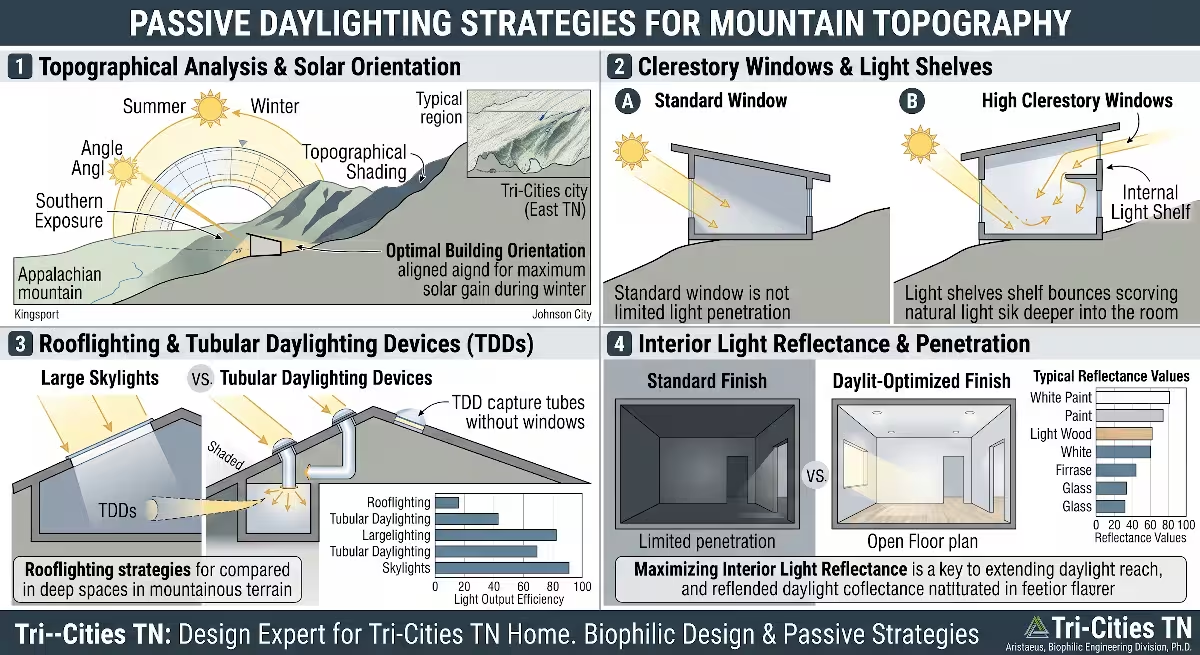
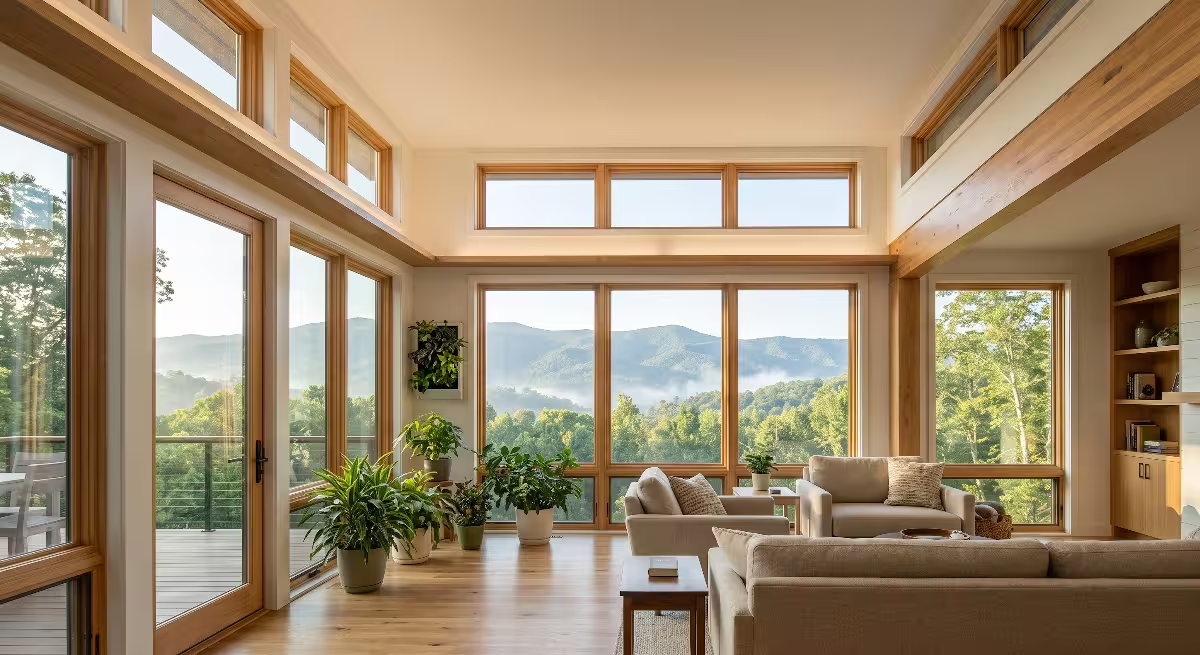
While artificial lighting plays a crucial role in treating SAD, natural daylight is always the gold standard for biophilic design. In the mountainous terrain of the Tri-Cities, capturing and directing natural daylight into our homes requires thoughtful architectural strategies. Natural sunlight delivers a dynamic light temperature that shifts smoothly throughout the day, providing an ideal biological stimulus whenever it is available.
                  SOUTHERN APPALACHIAN PASSIVE DAYLIGHTING

             Winter Sun (Low Azimuth Angle)
                 \
                  \
                   \      [ Clerestory High Window ]
                    \    ┌─────────────────────────┐
                     \   │                         │====> Deep North Wall Bounce
                      ▼  │                         │
            [ Light Shelf ]                      [ High LRV Ceiling (>0.85) ]
                   │     │                         │
                   └─────┼─────────────────────────┼──────
                         │   South-Facing Glazing  │
                         │   (Low-E High VLT)      │
                         └─────────────────────────┘
South-Facing Aperture Optimization
Because our region sits at approximately 36 degrees north latitude, the winter sun stays low in the southern sky throughout the day. Homes designed with expansive, south-facing windows can capture this low-angle sunlight deep into the living space. South-facing glass should feature a high Visible Light Transmittance (VLT of 0.60 or higher) combined with a low solar heat gain coefficient (SHGC) tailored for our climate zone. This configuration lets in the full spectrum of natural light temperature while maintaining comfortable indoor temperatures.
Interior Light Shelves and Clerestory Windows
Homes built into mountain hillsides or situated on north-facing slopes often struggle to bring daylight into rear rooms. Installing interior light shelves on south-facing windows solves this problem. A light shelf is a horizontal reflective surface mounted just above eye level. It catches incoming low-angle winter sunlight and bounces it upward onto the ceiling. The ceiling then reflects that light deep into the interior floor plan.
Clerestory windows, which are high, horizontal windows placed near the roofline, operate on the same principle. They introduce daylight with a cool, natural light temperature high into the room, where it can reach the eyes of occupants without causing direct visual glare.
Light Reflectance Values of Interior Surfaces
The colors and finishes you choose for your interior walls and ceilings directly influence the indoor light environment. Every material has a Light Reflectance Value, or LRV, rated on a scale from 0% (absorbing all light) to 100% (reflecting all light).
In East Tennessee homes prone to dark winters, ceilings should always be finished in flat white paint with an LRV of 85% or higher. Upper walls should feature light, natural tones with an LRV of at least 70%. When high-Kelvin daylight or cool artificial light strikes these high-LRV surfaces, it bounces and diffuses throughout the room. This diffuse ambient bounce raises vertical illuminance at the eye, ensuring that your photoreceptors receive sufficient light temperature stimulation from every angle.
Dynamic Circadian Tunable Lighting Systems
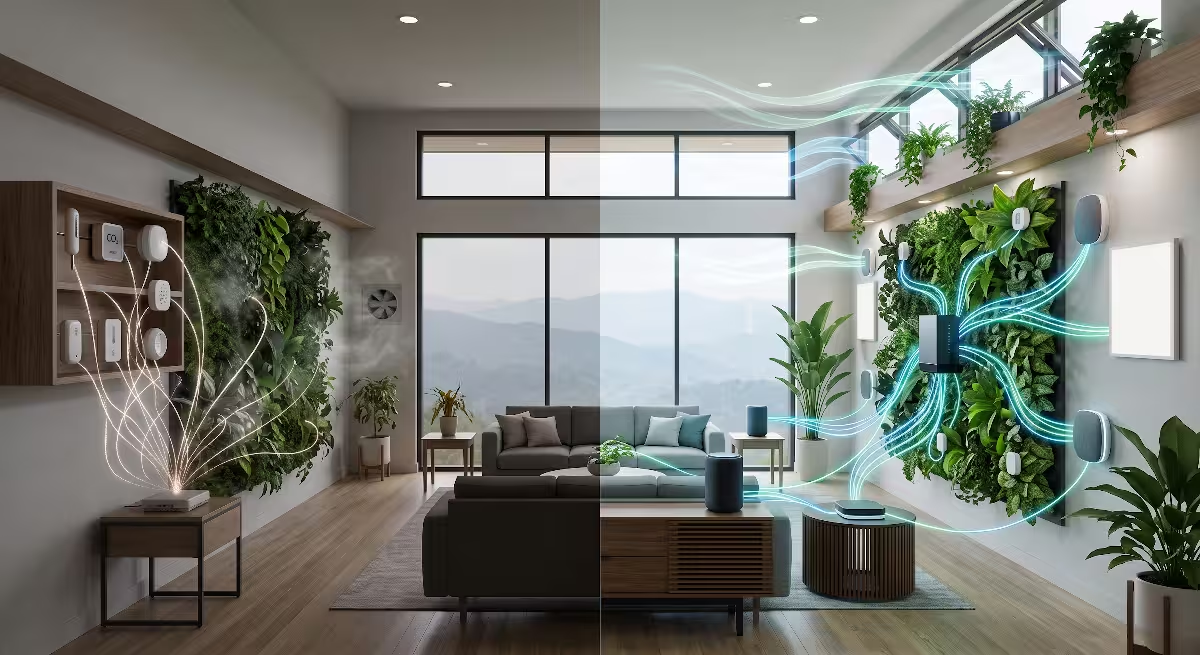
One of the most exciting developments in biophilic engineering is the arrival of circadian tunable white LED systems. Rather than relying on a static bulb that produces a single light temperature all day, tunable white lighting can smoothly shift its light temperature and brightness across the day to match the natural solar cycle of the Tri-Cities.
Tri-Cities Tunable White Automation Curve (Winter Cycle):
Kelvin (K)
 6500K │              /-------------------\
       │             /                     \
 4000K │            /                       \
       │           /                         \
 2700K │----------/                           \-------------------
 1800K │                                                           \________
       └──────────┴─────────┴─────────┴────────┴─────────┴─────────┴────────
        06:30 AM   08:00 AM  12:00 PM  03:00 PM 05:30 PM  07:30 PM  10:00 PM
A modern tunable lighting system uses LED fixtures that contain multiple colored diodes, typically pairing very warm 1,800 K chips with cool 6,500 K chips. By blending the power delivered to these chips, an automated controller can generate any light temperature along that spectrum with remarkable precision.
In a well-designed home in Johnson City or Kingsport, the lighting system is programmed using an astronomical clock keyed to our exact regional coordinates (roughly 36.3 degrees North latitude, 82.3 degrees West longitude). The system operates on an automated daily cycle:
- 06:45 AM (Dawn Simulator): Before the sun clears the eastern ridges, the bedroom lights slowly fade on, beginning at a soft 2,000 K light temperature and gradually brightening to an energizing 5,000 K light temperature by 7:30 AM. This gentle ramp stimulates cortisol production before your alarm rings, eliminating sleep inertia.
- 08:30 AM to 11:30 AM (Morning Focus): The primary ceiling fixtures throughout the kitchen, living areas, and home office operate at a cool light temperature of 5,500 K with high vertical brightness. This completely shuts down remaining melatonin and boosts morning focus.
- 12:00 PM to 03:30 PM (Midday Balance): The system shifts to a neutral light temperature of 4,000 K, providing clean, comfortable illumination that sustains mental energy without eye strain.
- 04:30 PM to 06:30 PM (Twilight Transition): As the winter sun sets over the Holston Valley, the indoor fixtures automatically warm up, shifting from 3,500 K down to a cozy 2,700 K light temperature.
- 07:30 PM Onward (Evening Melatonin Protection): Overhead lighting turns off, and secondary low-level lighting (such as wall sconces, under-cabinet strips, and table lamps) takes over, emitting a warm light temperature of 2,200 K or lower. This allows the pineal gland to release melatonin right on schedule, ensuring deep, restorative sleep.
By installing a dynamic system like this, your home ceases to be a passive box and becomes an active health tool that protects your circadian rhythm throughout the darkest Appalachian winters.
Step-by-Step Circadian Optimization Checklist
If you live in the Tri-Cities and want to optimize your home lighting to combat winter depression, here is a practical, step-by-step implementation guide you can follow immediately.
+-----------------------------------------------------------------------------------+
|                     RESIDENTIAL LIGHTING RETROFIT CHECKLIST                       |
|                                                                                   |
|  [ ] 1. Audit Current Bulbs: Replace static 2700K morning bulbs with tunable      |
|         or high-Kelvin options in kitchens, bathrooms, and workspaces.            |
|                                                                                   |
|  [ ] 2. Deploy Morning Phototherapy: Set up a 10,000 lux, 6500K light box at desk |
|         or breakfast table; use for 20 to 30 minutes within 1 hour of waking.     |
|                                                                                   |
|  [ ] 3. Verify Quality Metrics: Choose fixtures with CRI Ra >= 90, R9 > 50, and   |
|         flicker rate below 1% to prevent eye strain and headaches.                |
|                                                                                   |
|  [ ] 4. Layer Light Sources: Keep high-Kelvin light coming from above in the      |
|         morning; switch to low-angle, warm-Kelvin table lamps in the evening.     |
|                                                                                   |
|  [ ] 5. Establish Evening Amber Routine: Eliminate cool light sources after       |
|         7:30 PM; use 1800K to 2200K bulbs and warm display modes on devices.     |
+-----------------------------------------------------------------------------------+
1. Perform an Indoor Lighting Audit
Walk through your home with a notepad and inventory the bulbs currently installed in your fixtures:
- Look at the small printed text on the base of each bulb to identify its light temperature (listed as 2700K, 3000K, 5000K, etc.).
- Identify rooms where you spend your morning hours (kitchens, primary bathrooms, breakfast nooks, home offices). If these spaces are illuminated exclusively with a 2,700 K light temperature, schedule them for an upgrade.
2. Set Up a Morning Phototherapy Station
Create a dedicated space where you can easily complete a twenty-minute to thirty-minute light therapy session every morning:
- Purchase a verified light box that delivers 10,000 lux at a certified light temperature of 5,000 K to 6,500 K.
- Set the box on your kitchen counter, desk, or dining table at a thirty-degree angle to your face.
- Plug the device into an automated mechanical or smart timer so it turns on automatically at your wake-up time.
3. Check for High Color Quality and Low Flicker
When purchasing LED bulbs with a high light temperature, look beyond the Kelvin rating:
- Color Rendering Index (CRI): Ensure the bulb has a CRI (Ra) rating of 90 or higher, with an R9 value (red color rendering) of at least 50. Low-quality LED bulbs with a high light temperature often produce a harsh, greenish tint that makes skin look pale and causes aesthetic discomfort. High-CRI bulbs produce a natural, vibrant daylight look.
- Flicker-Free Drivers: Look for LED fixtures with high-quality drivers that produce less than 1% flicker modulation. Low-quality LEDs pulse rapidly at frequencies that cause eye strain, fatigue, and migraines, which can undermine the mood-boosting benefits of the proper light temperature.
4. Create Layered Lighting Zones
Avoid relying on a single overhead light fixture in the center of the room. Instead, establish three distinct layers of lighting:
- Ambient Layer: Overhead ceiling troffers, recessed cans, or cove lighting equipped with tunable white LEDs to establish the primary daytime light temperature.
- Task Layer: Focused desk lamps, under-cabinet task lights, and reading fixtures with adjustable light temperature settings.
- Accent/Evening Layer: Low-mounted table lamps, wall sconces, and floor-level baseboard lighting fitted with warm 2,200 K bulbs for evening use.
5. Establish an Evening Light Curfew
Protect your sleep quality by eliminating cool light exposure after sunset:
- Switch off all high light temperature ceiling fixtures by 7:30 PM.
- Transition to warm, amber table lamps and dim floor fixtures.
- Enable warm night-shift modes on your smartphones, tablets, and computer monitors to reduce the display light temperature to a warm amber glow.
When Lighting Is Not Enough: Multi-Disciplinary SAD Management
While optimizing your indoor light temperature is one of the most powerful environmental interventions available, treating Seasonal Affective Disorder often requires a comprehensive, multi-layered approach. Light is the primary regulator of our circadian biology, but our daily physical behaviors and medical support systems are equally vital.
                      HOLISTIC WINTER WELLNESS MODEL

                     ┌──────────────────────────────┐
                     │   Photobiological Control    │
                     │  (CCT / Lux / Morning Reset) │
                     └──────────────┬───────────────┘
                                    │
          ┌─────────────────────────┴─────────────────────────┐
          │                                                   │
          ▼                                                   ▼
┌───────────────────┐                               ┌───────────────────┐
│ Outdoor Movement  │                               │ Clinical Support  │
│ (Mountain Trails) │                               │  (Medical / CBT)  │
└───────────────────┘                               └───────────────────┘
Outdoor Morning Movement in the Appalachian Landscape
Nothing replaces the full-spectrum biological power of being outdoors, even on a cloudy winter day in East Tennessee. A morning walk delivers natural light temperature across your entire field of view, while physical movement stimulates blood circulation and neurotransmitter release.
Take advantage of our regional outdoor recreation assets:
- Take a brisk thirty-minute walk along the Tweetsie Trail between Johnson City and Elizabethton around 8:30 AM or 9:00 AM.
- Walk the paved loops at Winged Deer Park or Founders Park in Johnson City.
- Explore the trails along the Holston River at the Greenbelt in Kingsport.
- On clear weekend mornings, take a trip up to higher elevations, such as the base of Roan Mountain or Unaka Mountain, where you can get above low-lying valley fog and soak in crisp, high-Kelvin alpine sunlight.
Nutritional and Metabolic Support
During the winter months, the reduced angle of the sun in East Tennessee prevents human skin from synthesizing adequate vitamin D. Consult your primary healthcare provider to check your 25-hydroxy vitamin D levels. Supplementing with vitamin D3, maintaining a balanced diet rich in omega-3 fatty acids, and limiting refined carbohydrates can help stabilize energy levels and reduce the metabolic sluggishness associated with SAD.
Medical Guidance and Cognitive Therapy
If you experience severe depressive symptoms, persistent feelings of hopelessness, or an inability to manage daily responsibilities during the winter, seek guidance from a qualified mental health professional or medical doctor in the Tri-Cities area. Many local healthcare networks, including Ballad Health and regional psychiatric practices, offer evidence-based treatments such as Cognitive Behavioral Therapy for SAD (CBT-SAD) and pharmaceutical support alongside light therapy protocols. Photobiology is a foundational health tool, but it works best when integrated into a caring, comprehensive wellness strategy.
Designing Homes That Heal
Living through winter in the Tri-Cities does not mean you have to surrender to fatigue, brain fog, and low spirits. Seasonal Affective Disorder is not a personal failing; it is a predictable, biological reaction to an environmental light deficit. Our mountain topography, winter cloud patterns, and modern indoor habits combine to deprive our eyes of the essential light temperature cues our bodies need to function.
     Appalachian Winter Deficit           Biophilic Lighting Solution
   ┌────────────────────────────┐       ┌────────────────────────────┐
   │ • Low 2,700 K Indoor Glow  │       │ • 6,500 K Morning Reset    │
   │ • Valley Fog & Cloud Decks │ ====> │ • 4,000 K Midday Focus     │
   │ • Mountain Ridge Shading   │       │ • 2,200 K Evening Amber    │
   │ • Melatonin Delay & SAD    │       │ • Circadian Entrainment    │
   └────────────────────────────┘       └────────────────────────────┘
By recognizing how the physics of light temperature interacts with human photobiology, we can transform our built environments from passive shelters into active spaces of health and restoration. When we align our indoor light temperature with the natural rhythm of the sun, delivering high-Kelvin blue-enriched light in the morning and warm, soothing amber light in the evening, we give our brains the clear signals they need. We shut down morning melatonin, elevate mood-stabilizing serotonin, sharpen mental focus, and safeguard deep, restful sleep.
As we continue to build, renovate, and live in the beautiful communities of Johnson City, Kingsport, and Bristol, let us design our homes to work in harmony with nature. By embracing biophilic design and smart light temperature choices, we can stay healthy, productive, and energized right through the heart of an Appalachian winter.