

Imagine standing on a muddy job site in Kingsport. The framing was just going up on a custom build, and the homeowner, a woman, was looking at the backyard with a mix of excitement and total overwhelm. She told me she wanted a beautiful home, but she also wanted a place where she could grow her own food. She wanted to know that her family was eating something healthy, straight from the earth. I looked at that red East Tennessee clay and saw exactly what she saw: a challenge. Building a garden is a lot like building a house. You need a solid foundation, a clear plan, and an understanding of the local environment.
Here in Johnson City and the surrounding Tri-Cities, our environment is unique. We are in Zone 7, a place where the seasons are distinct and the soil is stubborn. Starting your journey into vegetable gardening does not have to be a series of expensive mistakes. It is about working with the land instead of against it. Whether you are looking to save money on groceries or find a peaceful hobby that gets you outdoors, your success starts with the right information. Let’s walk through how to build your first garden from the ground up, with the same precision and care we would use for a new home.
The Technical Blueprint: Understanding Zone 7
When we talk about vegetable gardening in our region, we have to start with the USDA Plant Hardiness Zone Map. The Tri-Cities area is firmly in Zone 7. This classification is based on the average annual minimum winter temperature. In Zone 7, our temperatures usually do not drop below zero degrees Fahrenheit. This is important because it tells us which plants can survive our winters and when it is safe to put tender plants in the ground.
In 2026, we are looking at a typical climate pattern for our area. For anyone starting vegetable gardening, the most important dates to memorize are the frost dates. The last frost usually happens between April 15 and April 20. Before this date, a sudden cold snap can kill young tomato plants or peppers. The first frost in the fall usually arrives in late October. This gives us a long, productive growing season of about 200 days. Understanding these numbers is like knowing the building codes for your house. If you ignore them, the whole structure could fail.
Zone 7 is a great place for vegetable gardening because it is a middle ground. It is not so hot that everything wilts in July, and it is not so cold that you can only grow for a few months. However, we do have high humidity. Our East Tennessee summers can feel like a sauna. This humidity affects how we choose our plants and how we space them out. When you understand the climate of Zone 7, you can choose varieties that are bred to handle our specific mix of sun and moisture.
Site Selection: Engineering Your Garden for Success
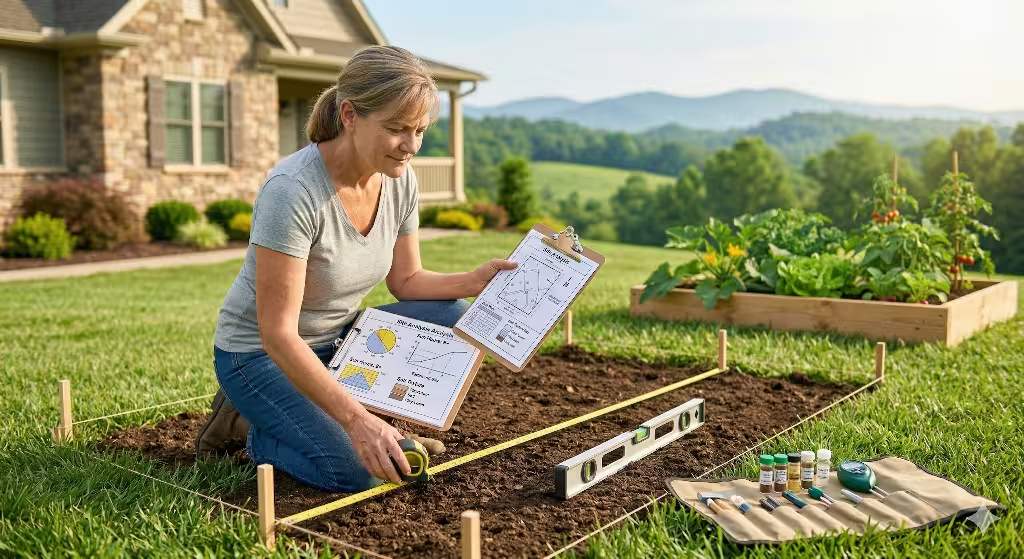
If you were building a house, you would want the best lot possible. The same rule applies to vegetable gardening. You cannot just throw seeds in a random corner of the yard and expect a feast. You need to do a sun study. Most vegetables need at least six to eight hours of direct sunlight every single day. Take a day to walk your property and watch where the shadows fall. That big oak tree might provide great shade for a porch, but it will starve your peppers of the energy they need to grow.
Another factor is drainage. We have a lot of hills and slopes in the Tri-Cities. If you do place and do your vegetable gardening at the bottom of a hill, it might turn into a swamp every time we get a heavy rain. Vegetable roots need oxygen, and if they are sitting in water, they will rot. Look for a spot that is relatively level or can be easily terraced.
Looking at the design for vegetable gardening, we always tell people to think about “The Kitchen Rule.” You want your vegetable gardening area to be close to your kitchen door. If you have to hike across a large acre to grab a handful of herbs or a tomato, you probably won’t do it as often. Keeping the garden close to your living space makes it part of your daily routine. It also makes it easier to keep an eye on pests or weeds before they become a major problem.
Foundations: Preparing the Floor (Soil and Bed Type)
The soil in East Tennessee is famous for being heavy red clay. In its raw state, it is not great for vegetable gardening. It is hard to dig, it drains slowly, and it can become as hard as a brick in the August sun. But clay is also rich in minerals. To make it work, you have to amend it. Think of this as preparing the subfloor before you lay down the hardwood. You need to add organic matter like compost, rotted leaves, or aged manure. This breaks up the clay and allows roots to move through the soil.
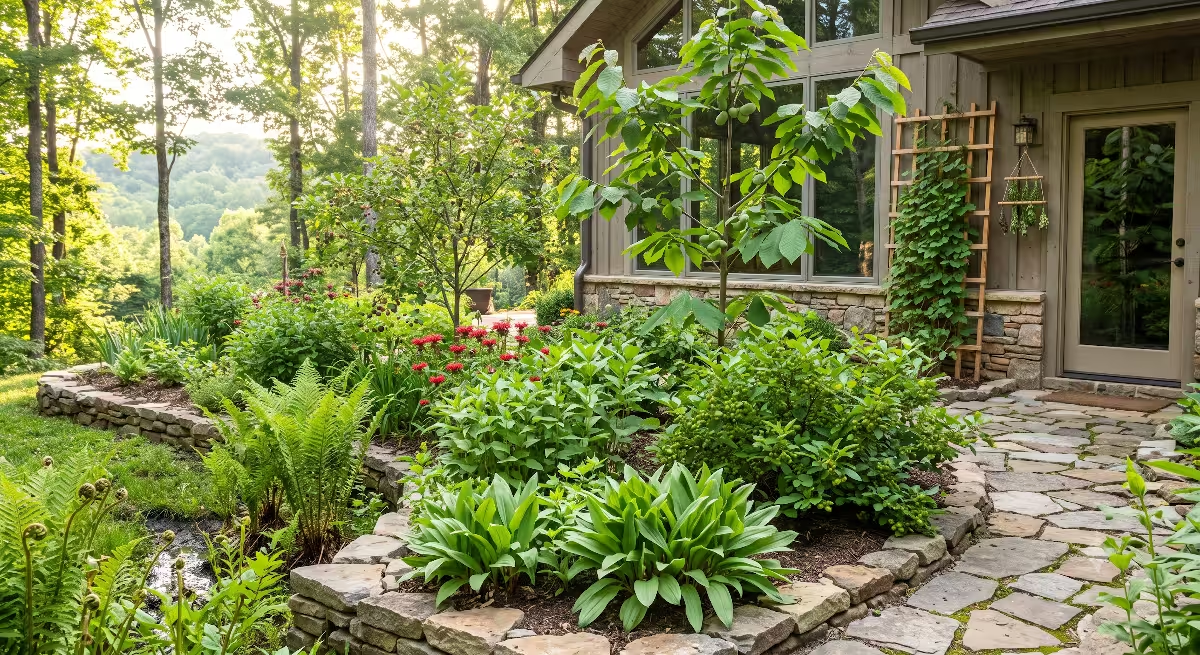
You also have to decide between raised beds and in-ground gardening. For a beginner, I almost always recommend raised beds. They are the custom build of the gardening world. You can control exactly what goes into the soil. You don’t have to fight the existing clay as much. Raised beds also warm up faster in the spring, which means you can start your vegetable gardening activities a little earlier. They also help define the space, making it look neat and professional in your yard.
Before you plant a single seed, get a soil test. You can get these through the local UT Extension office. A soil test tells you the pH level and the nutrient levels of your dirt. It is the only way to be precise. Most vegetables like a pH that is slightly acidic, around 6.0 to 7.0. If your soil is too acidic or too alkaline, your plants won’t be able to “eat” the nutrients in the ground, no matter how much fertilizer you add. It is a small step that saves a lot of heartache later.
The Beginner Starter Pack: What to Plant First
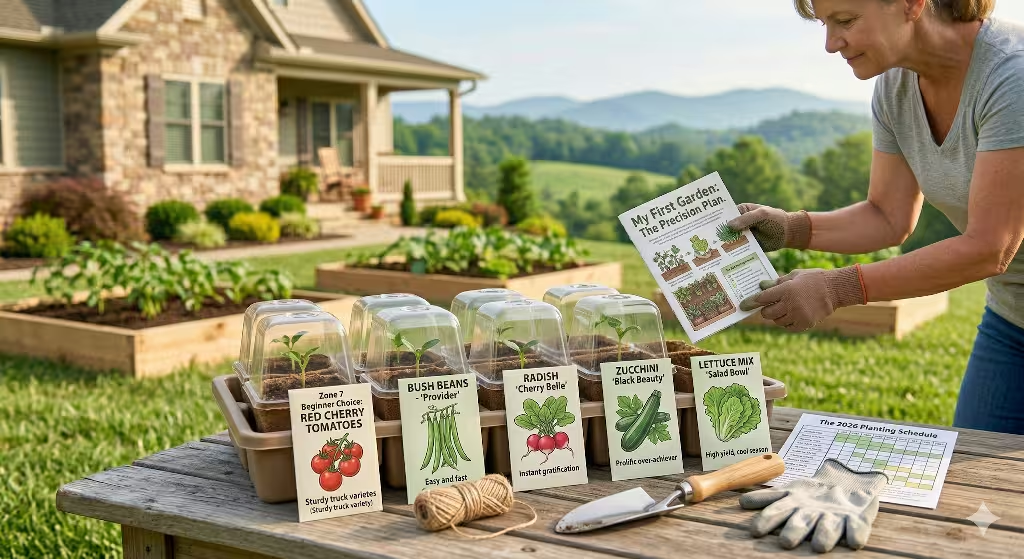
One of the biggest mistakes we see in vegetable gardening is trying to do too much at once. It is better to have a small, successful garden than a giant, weedy mess. Start with five easy crops that love Zone 7. First, try lettuce and leafy greens. These are great because they grow quickly and can handle the cool air of early spring. You can start harvesting them just a few weeks after planting.
Second, look at bush beans. Unlike pole beans, they don’t need a tall trellis to climb. They stay in a nice, compact mound. They are very productive and they actually help the soil by adding nitrogen back into it. Third, every beginner should try zucchini. These plants are incredibly hardy. Just one or two plants can provide enough squash to feed your whole neighborhood.
Fourth on the list is radishes. I call these the “instant gratification” vegetable. Some varieties are ready to eat in just 25 days. They are a great way to get children or grandchildren interested in vegetable gardening because the results happen so fast. Finally, go for cherry tomatoes. While big slicing tomatoes are iconic, they can be finicky. Cherry tomatoes are like the sturdy trucks of the garden. They produce hundreds of small fruits and are much more resistant to the common diseases we see in Tennessee.
The 2026 Planting Schedule: The Precision Timeline
Timing is everything when you are vegetable gardening. In March, while the air is still crisp, you can start your cool-season crops. This is when you put in your peas, spinach, and kale. These plants actually enjoy a little bit of frost. They are the “early phases” of your garden construction. By the time the weather starts to warm up in late April, these plants will already be well-established.
Once we pass that mid-April frost date, it is time for the warm-season stars. This is when you move your tomatoes, peppers, and cucumbers outdoors. In the Tri-Cities, a lot of people use the “Mother’s Day Rule.” They wait until Mother’s Day to put their most sensitive plants in the ground. This is a safe bet because our weather can be unpredictable. A late April freeze is rare, but it can happen. Waiting those extra few days is a mark of a competent gardener.
As we move into June and July, your vegetable gardening focus shifts to maintenance. This is the heat of the season. You will be harvesting your spring greens and making room for more summer crops. In late August, you can actually start a second round of cool-season vegetables for a fall harvest. Many people forget that Zone 7 allows for a wonderful fall garden. You can plant carrots and broccoli in August to enjoy in October and November. It is all about managing the timeline.
Irrigation and Infrastructure: The Plumbing of Your Garden
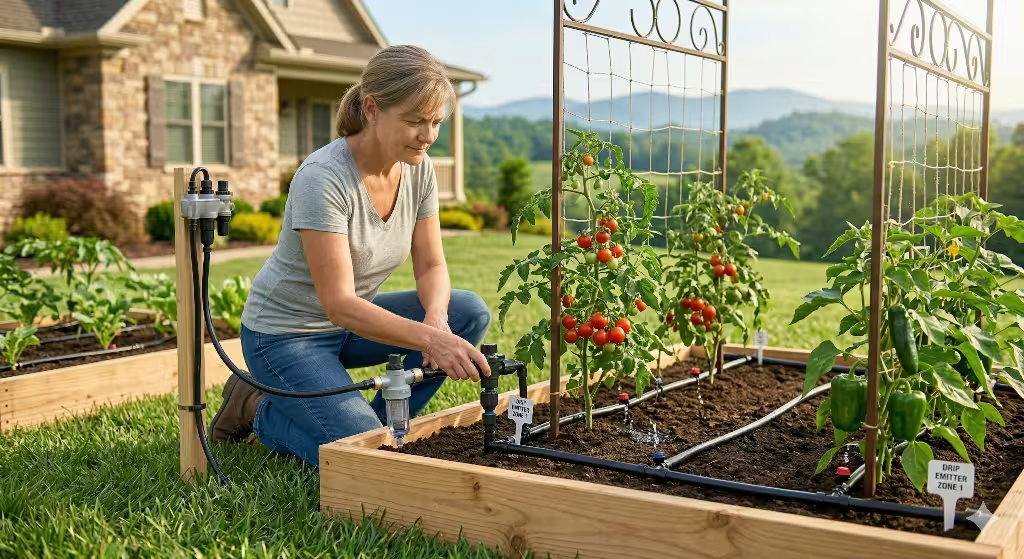
A house is not functional without good plumbing, and a garden is no different. Consistent water is the secret to great vegetable gardening. If you let your plants dry out until they wilt and then soak them, they get stressed. This stress leads to cracked tomatoes and bitter cucumbers. For a beginner, a simple garden hose with a spray wand works, but you have to be disciplined.
If you want to be more precise, look into drip irrigation. This is a system of tubes that delivers water directly to the base of each plant. It keeps the leaves dry, which is very important in our humid Tri-Cities climate. Wet leaves are an open invitation for fungus and blight. Drip irrigation also saves water because it doesn’t evaporate into the air as quickly as a sprinkler.
Infrastructure also includes support systems. Tomatoes need cages or stakes. Cucumbers love to climb. Using vertical space is a smart engineering move. It keeps the fruit off the ground, where it is less likely to rot or be eaten by slugs. It also makes your vegetable gardening area look more organized and professional. A few simple wooden stakes or a wire cattle panel can transform the way your garden grows.
Managing the Tri-Cities Elements: Humidity and Pests
In East Tennessee, our biggest enemy in vegetable gardening is often the humidity. When the air is thick and still, diseases can spread quickly. The best way to fight this is with good design. Don’t crowd your plants. It is tempting to pack them in, but they need airflow. Think of it like the HVAC system in your home. You need proper circulation to keep things healthy. If air can move between the leaves, they will dry out faster after a rain.
Then there are the pests. From Japanese beetles to squash bugs, our area has plenty of insects that want to eat your hard work. Our approach is to use a “multi-layered defense.” First, we use companion planting. Planting marigolds and basil near your vegetables can help naturally repel some bad bugs. The smell confuses them, and they move on to someone else’s yard.
Second, we practice daily inspections. When you are out in the morning with our coffee, look under the leaves. If you see a cluster of orange eggs or a single beetle, we can remove it by hand before it becomes an infestation. This is much better than waiting until the problem is huge and having to use heavy chemicals. Precise management is always more effective than reactive measures in vegetable gardening. It keeps your food clean and your garden thriving.
Frequently Asked Questions about Vegetable Gardening
One question that is often asked is if you can do vegetable gardening in containers. The answer is a loud yes! If you live in an apartment in Johnson City or have a very small lot, containers are a perfect solution. You just need a pot with good drainage holes and some high-quality potting mix. You can grow almost anything in a container, from peppers to herbs. It is a great way to start small and learn the ropes without a huge commitment.
Another common question is about how much to water. A good rule of thumb is about one inch of water per week. In the middle of a Tennessee July, you might need a little more. The best way to check is to stick your finger into the soil. If it feels dry an inch down, it is time to water. Don’t just spray the surface. You want to water deeply so the roots grow down into the cool earth. Deep roots make for a much stronger plant.
People also ask about fertilizing. While good soil is the most important thing, a little extra help doesn’t hurt. I prefer organic fertilizers because they feed the soil, not just the plant. Think of it as long-term maintenance for your property. Chemical fertilizers can give a quick boost, but they can also wash away easily and don’t help the health of the earth over time. In vegetable gardening, we are looking for sustainable, long-term success.
Expanding Your Garden Knowledge
Once you have mastered the basics of vegetable gardening, you might want to look into more advanced techniques. Succession planting is a great way to maximize your space. This means as soon as one crop is finished, you plant another one right in its place. For example, after your spring radishes are harvested, you can plant your summer beans in that same spot. This keeps your garden productive for the entire growing season.
You should also start a compost pile. In the home building world, we hate waste. In the garden, waste is actually a resource. All those vegetable scraps from your kitchen and the leaves from your lawn can be turned into “black gold.” Composting is a simple way to create your own organic fertilizer for free. It completes the cycle of your garden and makes your vegetable gardening efforts much more sustainable.
Don’t forget to keep a garden journal. Write down what worked and what didn’t. Note the dates you planted and when you saw the first pests. Having a record of your garden’s history will make you a much better gardener next year. You won’t have to guess when to plant your tomatoes because you will have your own personal record of what works in your specific backyard.
The Social Side of Gardening
Vegetable gardening is also a wonderful way to connect with your community. Here in the Tri-Cities, we have many local garden clubs and community gardens. Sharing seeds and tips with your neighbors is a great way to learn vegetable gardening. You might find a neighbor who has been growing a specific type of heirloom bean for forty years. That kind of local knowledge is priceless and often better than anything you can find in a book.
It is also a way to share your abundance. There will come a week in August when you have more zucchini than you know what to do with. Sharing that fresh produce with friends and family is a joy. It brings people together and spreads the benefits of your hard work. In a world that moves so fast, the slow pace of a garden is a gift we can share with others.
Harvesting Memories
We want you to remember that vegetable gardening is a journey. Your first year will not be perfect. You will have some plants that thrive and others that struggle. That is part of the process. Even after years of engineering homes and managing large builds, I still learn something new in my garden every season. There is a special kind of peace that comes from working the soil in the early morning while the fog is still lifting off the mountains.
Your home is more than just four walls and a roof. It is the land it sits on and the way you interact with that land. By starting a garden, you are adding a layer of self-reliance and beauty to your life. You are creating a space where you can connect with nature and provide for your loved ones. It is a project that pays dividends in flavor, health, and happiness.
So, take a deep breath and look at your yard. Don’t see a daunting task. See a building site with endless potential. Whether you start your vegetable gardening with one tomato in a pot or a full row of raised beds, you are becoming a part of a long tradition of growers in the Tri-Cities. Vegetable gardening is a skill that grows with you. It is precise, it is rewarding, and most importantly, it makes a house feel like a home.
Final Thoughts for the Tri-Cities Gardener
In closing, egetable gardening fits perfectly into our way of life. It requires patience and a bit of grit, but the rewards are undeniable. You are not just growing food; you are growing a better life for yourself and your family.
Remember to take care of yourself while you are out there. Wear a hat, stay hydrated, and don’t spend too many hours in the midday sun. Gardening should be a pleasure, not a chore. Listen to the birds, enjoy the fresh air, and take pride in every green shoot that pokes through the soil. You are doing something wonderful.
We hope this guide has given you the confidence to start your own vegetable gardening adventure. It doesn’t matter if you have a huge backyard or just a small balcony. The principles remain the same. Start with a good plan, build a strong foundation, and nurture your plants with care. You have everything you need to succeed right here in Zone 7. Happy planting!