A Woman’s Space to Breathe
If you are a woman in the Tri-Cities, you may have felt that common feeling of being “boxed in.” We spend so much of our lives inside, rushing from a closed-in house to a closed-in car to a closed-in office. We might live in one of the most beautiful places in the country, but sometimes we only see it through the windshield or while we are rushing to do errands.
Inagine one particularly stressful week. You come home, and your own beautiful, solid house felt restrictive. It felt like you couldn’t catch your breath. You realized that as women, we often create homes that take care of everyone else, but we forget to build spaces that take care of us. Our homes should not be boxes that keep us away from the world. They should be sanctuaries that let the outside world restore us. This is where I started falling in love with the concept of biophilic design.
Biophilic design sounds like a complex engineering term, but it is very simple. It means designing spaces that reconnect humans with nature. We have a basic need to be around natural things. We need light. We need fresh air. We need the color green. When we deny ourselves these things, our stress goes up, and our mental health goes down. The absolute best place in a house to fix this is the sunroom.
Our goal today is to combine two passions: the precision of home engineering and the art of joyful living. We are going to explore how we can use smart, precise, and beautiful sunroom ideas to build a sanctuary for your mental health. We are looking beyond just adding square footage. We are looking at creating a place that lets your mind rest and your spirit breathe. I want you to feel competent and precise when you talk to a builder about these concepts, knowing that you are building something truly special for your well-being.
The Science of the Sunlight Sanctuary
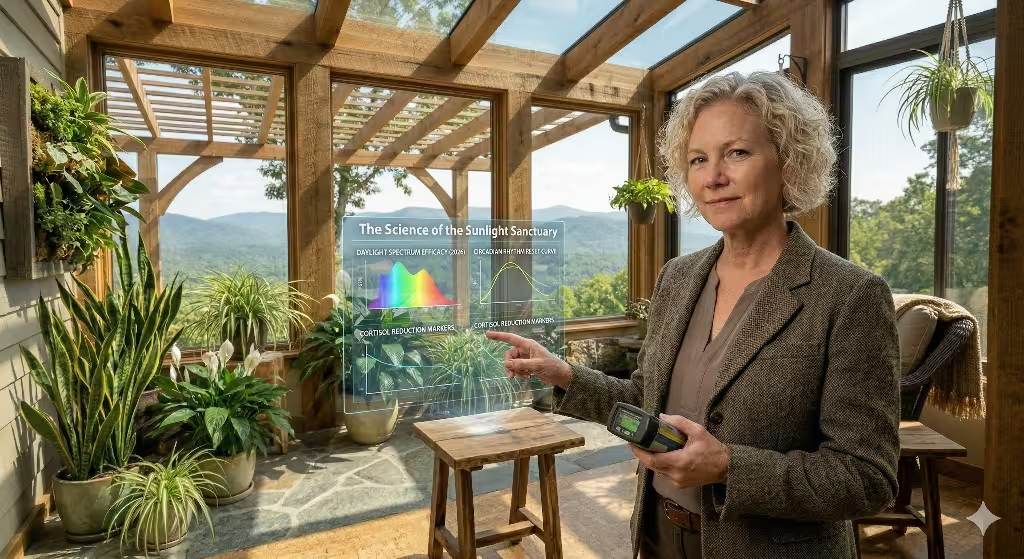
First, we need to understand the “why” before we can appreciate the “how.” The reason we need to focus so heavily on sunroom ideas for wellness is because of the science of how our brains work. Your brain is a beautiful, complex machine that is hardwired to respond to natural light and natural patterns. We cannot “engineer” our way out of that basic need. When we ignore it, the machine starts to wear down.
Let’s look at what actually happens in your body when you spend time in a well-designed space. It starts with the sunlight. The most important sunroom ideas are always the ones that manage light correctly.
Circadian Rhythm
Your body has an internal clock called the circadian rhythm. This clock tells you when to be awake and when to sleep. It is set by natural light, specifically the bright, “blue-rich” light that comes from the sun in the morning. When we spend our mornings under artificial lights, our body doesn’t get the signal that it is daytime. This messes up our sleep. It also messes up our mood, making us feel foggy and stressed.
A sunroom lets you flood your body with that natural morning light. Sitting in that room, even for just thirty minutes with your coffee, resets your body clock. Studies have shown that people with a strong, reset circadian rhythm are happier, less anxious, and more productive.
Next, let’s talk about the stress hormone, cortisol. We all know cortisol well. It’s that feeling of tight shoulders and a racing mind. Cortisol is designed to help us in short bursts, but having high cortisol all day is bad for your mental and physical health. The amazing thing about biophilic sunroom ideas is that they have a proven, scientific way to lower cortisol.
The Feeling of Nature
When you look at nature, like leaves rustling, water moving, or clouds drifting, your brain goes into a state called “soft fascination.” This is different from the “hard focus” we use all day when looking at screens or driving. Soft fascination lets your brain rest and recover. While your brain is resting, your body naturally drops its cortisol levels. Research has actually measured this, showing that being in nature-integrated spaces can drop cortisol and lower your heart rate significantly.
Another engineering concept that translates beautifully to psychology is the concept of “Prospect and Refuge.” We are all a little bit like the deer on the mountainside. We want to be able to see around us for safety (Prospect), but we also want a cozy place where nothing can sneak up on us (Refuge).
A sunroom provides this perfect psychological balance. The walls of glass give you Prospect. You can see your garden, the trees, and the sky. This view gives your brain a feeling of control and safety. But the walls behind you, a cozy roof overhead, and a comfortable chair provide the Refuge. It is the perfect recipe for safety and peace. When your brain knows it is safe and can “see the whole field,” it finally shuts down the stress response. This is why you feel a sudden, deep breath when you sit in a properly designed sunroom.
2026 Biophilic Design Sunroom Ideas for Mental Health
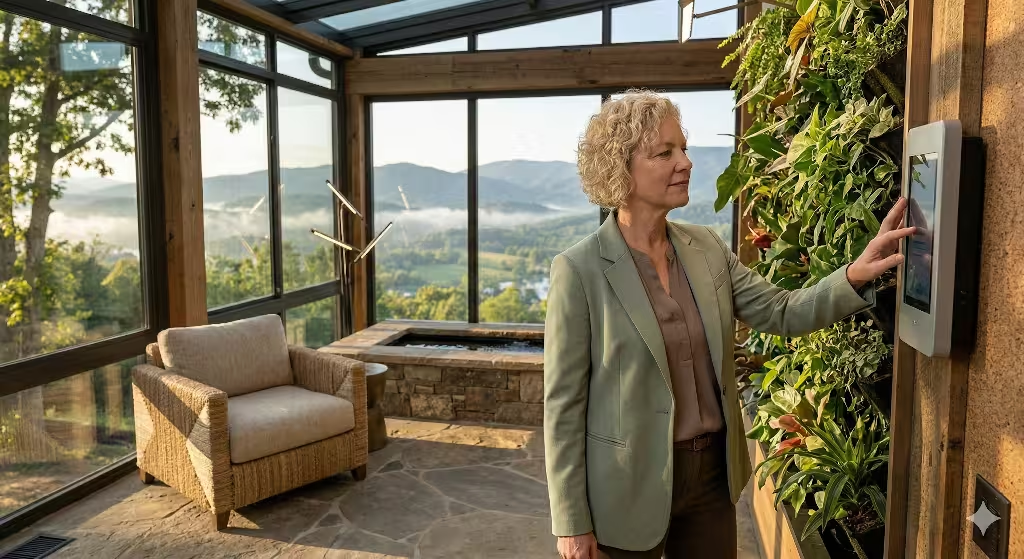
Now that we know why a sunroom is so vital, let’s look at the “how.” We need to precise about the design. As we look ahead to 2026, sunroom ideas are moving away from being just another “room with extra windows.” They are becoming specialized, living spaces. We are moving beyond just putting a potted plant on a table. We are going to look at three main areas that are trending for 2026: fully immersive ecosystems, using all your senses, and warm, earthly color palettes.
Immersive Indoor Ecosystems
The next generation of sunroom ideas involves making the plants part of the actual building itself. Instead of having many small pots to manage (which, let’s be honest, can become a chore and create stress instead of removing it), we are looking at integrated green systems.
This might look like a vertical “living wall.” This is where you build a wall structure that has built-in irrigation and space for plants. These walls look stunning. They completely surround you with the visual “soft fascination” we talked about. But they are also smart. They act as massive, natural air filters, cleaning your air of toxins and releasing pure oxygen right where you sit.
Vertical herb gardens are another excellent way to do this. Imagine building a green wall near where you sit, filled with rosemary, lavender, and mint. Every time a breeze blows through the sunroom, you smell those calming herbs. When you are looking for sunroom ideas that nurture, you are looking for this kind of total immersion. It’s about building a living sanctuary, not just a room.
Sensory Variability
One of my engineering rules is that good design is never one-dimensional. The best sunroom ideas engage all your senses. If you just have a great view, you are missing most of the opportunity for true mental health support. Nature is not just about looking; it’s about feeling and hearing.
A major trend for 2026 is focusing on airflow. A lot of old sunroom ideas involved closed, sealed glass boxes. They got hot, the air got stale, and they were not comfortable for long periods. The new way is to focus on operable windows. These are windows that you can open. For mental health, this is crucial. You need to be able to smell the earth after a rainstorm. You need to feel a fresh breeze on your face. That natural variability in air temperature and scent is vital. It wakes up your senses in a gentle way and connects you to the seasons.
We also have to look at the sense of sound. A sunroom is often a quiet place, which is good, but sometimes the lack of sound makes you focus on the wrong things—like a leaf blower three blocks away. A great way to fix this is with integrated water features. We are not talking about huge, messy waterfalls. Modern sunroom ideas often use small, self-contained, low-profile fountains. The sound of moving water is one of the most effective sounds for masking suburban noise and bringing the body to a state of calm. This sound naturally triggers the brain to relax.
Warm, Earth-Rooted Palettes
For too long, the common wisdom for sunroom ideas was to use bright, sterile, glossy white. People thought it made the room feel cleaner. But research has shown that these stark whites can feel cold, institutional, and even stressful. They reflect too much light, which can create a glare.
The 2026 trends are moving towards “biophilic palettes.” This means using colors that you naturally find in the environment of East Tennessee. Think of sage greens, soft teracotta (like our local red clay), or warm, “cloud-dancer” neutrals that have a hint of grey and brown in them. These colors don’t fight the light; they soften it. They make the room feel immediately grounded and cozy. They feel stable. For your mental health, these colors provide a psychological foundation of calmness and peace.
Engineering the View: Windows and Materials
This is my favorite part. You cannot have a high-functioning sanctuary without precise engineering. If you get the windows wrong, your beautiful room will be a hotbox in the summer, a freezer in the winter, and a glare monster all year round. We are going to build it better than that.
Strategic Glazing: The Glass Science
When you are looking at sunroom ideas that keep you comfy, you must check out “Low-E” glass. This special glass has a tiny, thin coat on it. It is so thin you cannot see it. This coating is smart. It blocks heat from the sun in the summer. It also bounces your furnace heat back inside during the winter. For your mental health, this means you can sit there any day without feeling too hot or too cold. It is about steady comfort.
We also have to talk about UV light. While we want the visible sunlight, we do not want the UV rays that fade your furniture and damage your skin. Most Low-E glass filters out over 90% of these harmful rays. That is precise and competent engineering that protects you.
Another important point in my region is looking at sunroom ideas that can handle our changing seasons. We can go from 95 degrees and humid in July to 10 degrees and snowy in January. If you want a “four-season” sunroom, you will need double-pane or even triple-pane glass that is “argon-filled.” This means the space between the glass panes is filled with a safe gas that is even better at insulating than regular air.
Honest Textures: The Grounding Effect
The materials you choose for the sunroom are just as important as the glass. One of the primary sunroom ideas in biophilic design is to use “honest” materials. An “honest” material is one that hasn’t been overly processed or covered in plastic. It is raw, natural, and tactile.
Why does this matter for your mental health? It is about a concept called “grounding.” When your brain is stressed, focusing on the texture of a real object can calm you down. When we look for sunroom ideas that are precise, we are looking for this. Think about using a raw, unhoned stone for the floor or an accent wall. Imagine walking barefoot on a slightly rough, warm stone. It feels real. It connects you to the earth.
You might look at using reclaimed Tennessee barn wood for the ceiling or a feature wall. The rough grain and the smell of the old wood are comforting. Or you could try cork flooring. Cork is a truly sustainable material. It is made from the bark of a tree, but they don’t have to cut the tree down. Cork is soft and warm on your feet, and it helps with sound insulation, making the room quieter.
Dynamic Shadows: Building Natural Light Patterns
One of the coolest concepts in modern sunroom ideas is building shadows into the design. We usually think of a sunroom as having no shade, but think about walking in a forest. It is not one massive, flat field of bright light. It is a mix of light and shadow, called “dappled light.”
Our brains find dappled light to be very calming. You can engineer this by using sunroom ideas like a pergola. A pergola is a structure with open-air rafters that you build outside your sunroom. It creates beautiful, shifting striped patterns of light and shadow across the floor. Or, you can look at “window mutins.” Mutins are the little bars that divide the glass into smaller panes. They can create similar patterns. This creates a room that feels “alive” as the patterns change throughout the day, just like in a forest.
The “Living Air Purifier” Gallery
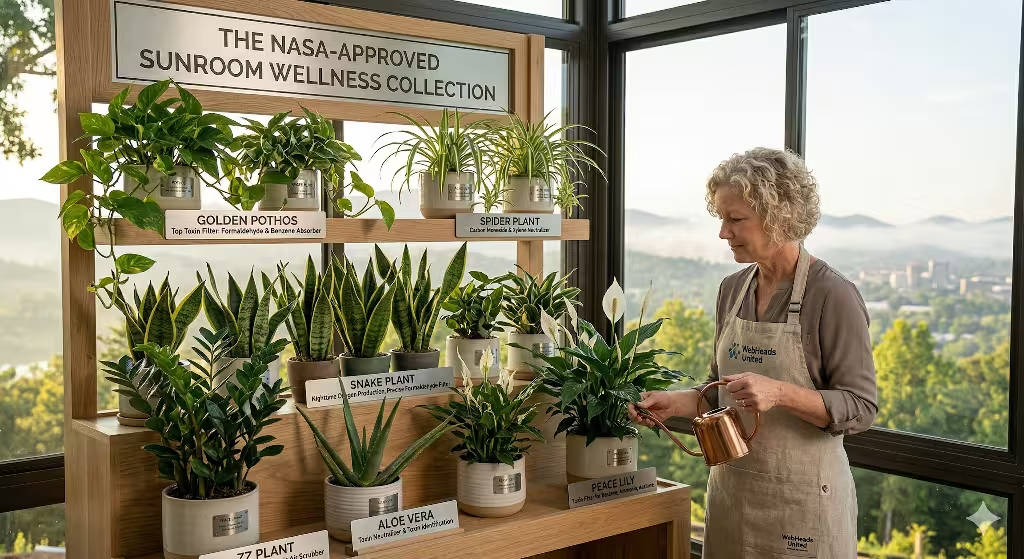
A sunroom isn’t really a sunroom until you have the plants. They are the heart and lungs of your sanctuary. But as a busy, competent woman, I know you do not want another hobby that feels like work. The common sunroom ideas for plants often create a jungle that requires hours of maintenance. We are going to be more precise than that. We will use the plants that give the maximum benefit with the minimum work.
NASA-Approved Selections for Wellness
While researching plant options, it was fascinating to learn that NASA had done studies on this exact topic. They were looking for the best plants to clean the air in closed spaces like space stations. We can use their precise science to build our mental health sanctuary.
A well-rounded plant strategy includes a few specific types of “power-plants.” When you are implementing your sunroom ideas for wellness, consider these options:
Snake Plants: These are the unsung heroes of the biophilic world. Many sunroom ideas often list them because they are nearly impossible to kill. They thrive on neglect. But their engineering secret is amazing. Most plants give off oxygen during the day. Snake plants are one of the very few that also release high amounts of oxygen at night. This makes them excellent for a sunroom that you might use for evening meditation or for a sunroom that is connected to a bedroom. They also act as massive scrubbers for VOCs (Volatile Organic Compounds), which are common air toxins. They are a precise, hard-working plant.
Peace Lilies: If you are looking for sunroom ideas that bring a softer, more elegant touch, the Peace Lily is perfect. They have dark green leaves and a beautiful white, sail-like flower. But their job is wellness. They are exceptional at absorbing mold spores and regulating humidity. A sunroom with too much humidity can feel stuffy and trigger breathing issues. A sunroom that is too dry can irritate your nose and skin. The Peace Lily helps balance this naturally.
Spider Plants: These are classic sunroom ideas for a reason. They have a cheerful, wild look. But like the Snake Plant, they are incredible air filters. Studies show they can remove up to 90% of harmful chemicals like formaldehyde from the air in a single day. They are also incredibly easy to grow and will naturally create “baby” plants that you can pass on to friends.
Maintenance for the Busy Professional
We have to be honest. The leading cause of failure for biophilic design sunroom ideas is the “maintenance mental load.” You build this beautiful space to relax, but then you spend your relaxation time worrying that your plants are dying. We will use our engineering brains to solve this problem.
The trending sunroom ideas for 2026 involve “smart garden” technology. You can now build hidden irrigation systems into your sunroom that automatically water your plants on a set schedule. These systems can have moisture sensors in the soil that only water when the plant actually needs it.
You can also look at “integrated grow-lighting.” These lights look like regular, stylish track lighting, but they use a full-spectrum bulb that provides the exact type of light your plants need to grow. This is especially good for sunrooms on the north side of the house. By engineering the maintenance, you ensure your sanctuary remains a place of joy, not a place of chores. This is the definition of “precise integrity” in design.
Your Questions Answered about Sunroom Ideas
One of my jobs is to keep up with the latest trends in the building industry, and part of that involves knowing what people are asking. When homeowners get serious about sunroom ideas for their custom home, they often have the same few concerns. I want you to have the precise answers to these questions so you feel competent when you talk to a designer.
How does biophilic design help mental health?
As we discussed, it is not just a trend; it is biology. It helps by lowering your body’s physiological stress response. When you are in a room designed with biophilic sunroom ideas, your heart rate slows down, and your muscles relax. Your brain can enter that state of “soft fascination,” which allows it to recover from focus fatigue. Studies also show that simply seeing a natural view can improve your mood and even help you heal faster if you are sick. When we combine all these things, you are creating a room that actively builds mental resilience.
What is the best orientation for a sunroom for mental health?
This is a great engineering question. The standard sunroom ideas usually point to a “south-facing” room. A south-facing room gets sun almost all day long. If your goal is just maximum brightness, this is the best. But when you are looking for sunroom ideas specifically for mental health, you have to look at how you use the room.
If your primary goal is resetting your circadian rhythm and dropping morning stress, an east-facing sunroom is the perfect choice. It catches all that bright morning light, giving you the best cortisol-lowering effect for your start to the day.
If you are a night owl who needs a place to unwind and decompress after a long day, a west-facing sunroom might be better. It catches the soft, warm “golden hour” light in the evening. This can be a very powerful setting for lowering evening anxiety and preparing your mind for sleep.
You must choose the orientation that serves your precise mental health need.
Are four-season sunrooms worth the investment for wellness?
This is the classic cost-versus-value engineering problem. A three-season sunroom is beautiful in the spring and fall, but it will be too hot in July and freezing in January. For your mental health, this means you lose access to your sanctuary for half the year.
Think about our long winters in East Tennessee. Those are the times when you need your light sanctuary the most. People who suffer from Seasonal Affective Disorder (SAD) need natural light in the winter. For this reason, my answer is a solid “Yes.” A four-season sunroom, which has full HVAC and properly insulated glass, is a huge investment, but it provides year-round mental health support.
When you look at the best sunroom ideas, you must think about long-term value. A room that you can only use half the time does not provide full-time wellness support. When you invest in a four-season room, you are investing in your own daily access to peace and sunshine, no matter the weather.
Building Your Breathable Home
We have spent a lot of time exploring the precise details of sunroom ideas. We have looked at the science of shadows, the engineering of Low-E glass, and the benefits of specific plants. We have a lot of practical tools.
But we want to bring this back to that feeling of being a woman who just needed to catch her breath.
Your home is more than a structure. It is the containers of your life. It is where you nurture your family, where you face your challenges, and where you restore your spirit. If you feel boxed in, your home is not doing its job.
The precision of home engineering and the technical aspects of biophilic design are only useful if they serve a greater purpose. The purpose is to create a home that is beautiful, competent, and honest, a home that lets you be your best self.
We invite you to look at your next build or renovation not as a list of features, but as an opportunity to build breathability into your life. The best sunroom ideas are the ones that make your eyes light up when you think about sitting in them. A sunroom isn’t just a place to grow plants. It is a place to grow your own peace of mind. Let’s build spaces that breathe, so you can too.