

Wine Cellar Insurance in E Tennessee
Building a custom home in our beautiful corner of Northeast Tennessee is one of the most rewarding journeys you can undertake. From the rolling hills of Kingsport to the ridge lines around Johnson City and the historic streets of Bristol, our region gives us incredible backdrops for distinctive homes. In the Tri-Cities, many home trends have come and go, yet one specialty room continues to grow in popularity among our custom home buyers: the dedicated wine cellar.
A wine cellar is a magnificent addition to any luxury residence. However, there is a fundamental truth that many homeowners miss during the initial design phase. A wine cellar is not merely a pretty room with custom mahogany racks, soft display lights, and glass doors. Mechanically speaking, a wine cellar is an engineered cold storage box built inside your conditioned living space. It is a complex thermal envelope operating under constant stress. When that environmental enclosure works, it quietly preserves irreplaceable vintages for decades. When it fails, the damage happens swiftly, quietly, and expensively.
Imagine a typical late July afternoon here in the Tri Cities. Outside, the summer heat climbs past ninety degrees, and our East Tennessee humidity hangs thick in the air. Inside your home, your wine cellar cooling unit is working around the clock to hold an internal temperature of fifty-five degrees and a relative humidity of sixty-five percent. Suddenly, an internal component in the refrigeration unit gives out. The compressor stops pumping refrigerant. Because the room is sealed tight, the ambient heat from the rest of the house, along with the heat produced by the dying mechanical motor, begins to soak into the space. Within forty-eight hours, the temperature inside that wine cellar can easily spike past seventy-five degrees.
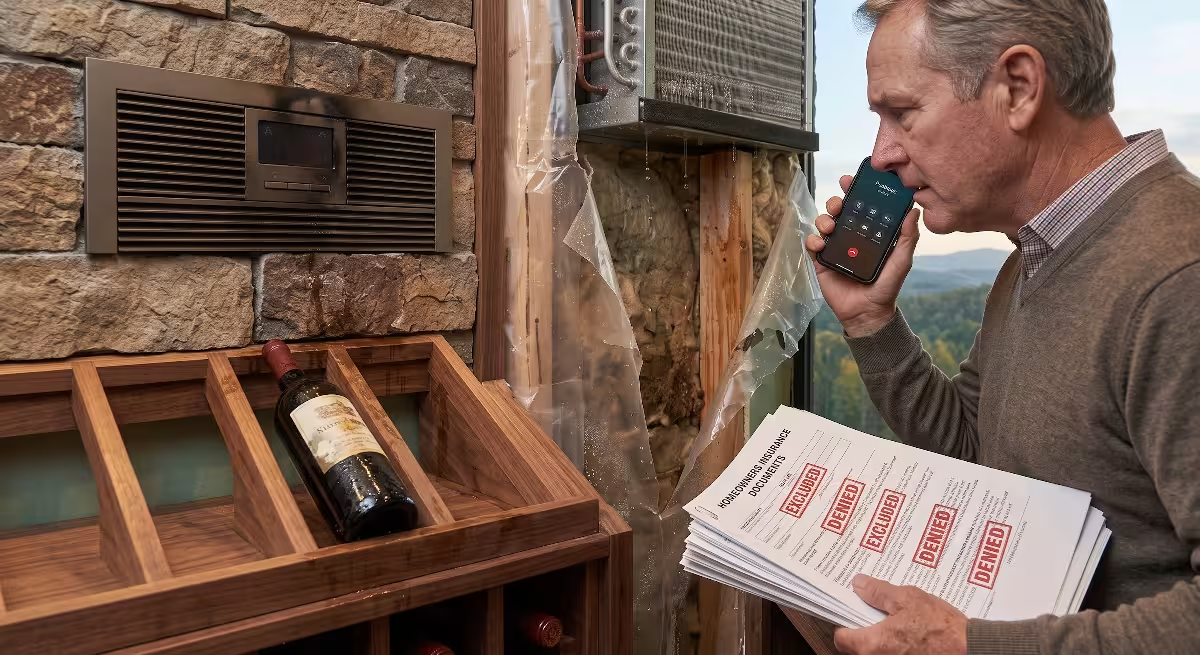
For fine wine, this level of thermal shock is catastrophic. Corks expand and push out of neck seals, allowing precious liquid to seep onto fine woodwork. Oxygen rushes into the bottles, oxidizing delicate vintages and turning prized labels into flat vinegar. When the homeowner discovers the failure, the first instinct is to call their property insurer, expecting a simple settlement to replace the cooling machinery and the spoiled inventory. That phone call often brings a harsh realization: standard insurance policies rarely cover the mechanical breakdown of a specialized cooling unit, and they almost never cover the ruined contents without specific policy endorsements in place.
This brings us to the core issue every collector and custom homeowner must address: wine cellar climate control system insurance coverage. Navigating this topic requires understanding the mechanics of how these units work, how buildings behave, and how insurance companies view specialized mechanical gear. In this comprehensive guide, we will walk through the mechanical components, the construction standards required to prevent catastrophic loss, the exact language used in insurance policies, and how you can properly shield your home and your collection from preventable financial ruin.
The Hidden Engineering Vulnerability of Custom Wine Cellars
When we sit down with clients to design a custom residence, the wine cellar often starts as an aesthetic conversation. Buyers love discussing custom black walnut shelving, stone accent walls sourced from local river rock, iron display gates, and integrated LED accent strips. While those architectural finishes give a wine cellar its visual charm, they have nothing to do with whether the room actually succeeds at its job. From an engineering viewpoint, a wine cellar is essentially an isolated building envelope with an artificial climate designed to run twenty-four hours a day, seven days a week, for decades on end.
To make an artificial climate work, you are fighting basic laws of physics. Heat always wants to travel toward cold, and moisture always travels from areas of high humidity toward areas of low humidity. In our regional climate, your living areas are typically maintained around seventy-two degrees with moderate humidity, while the exterior air during summer is hot and moist. Inside your wine cellar, you are demanding an environment of fifty-five degrees and roughly sixty-five percent relative humidity. That sharp contrast creates a continuous vapor drive and thermal gradient pressing against every square inch of the room.
If any part of that structural envelope is poorly engineered, the mechanical system has to work twice as hard to compensate. A standard home air conditioner runs in short cycles throughout the day to take the edge off the heat. A specialized cooling unit for a wine cellar operates far more like an industrial refrigeration compressor. It must handle steady runtimes, precise temperature bands, and delicate moisture management. Because these systems are built with specialized parts like thermostatic expansion valves, high-pressure switches, and quiet evaporator fans, they are vulnerable to electrical irregularities, mechanical friction, and environmental wear. If you treat a wine cellar as just another standard closet, you are setting yourself up for an expensive mechanical failure down the line.
The Reality of High-End Wine Storage
True wine aging is a biological and chemical process that cannot be rushed. Inside each bottle, minute amounts of oxygen interact with organic compounds over years or decades. This transformation softens tannins, deepens aromatics, and creates complex flavor profiles. However, this delicate chemical dance depends on stability.
A proper wine cellar provides four foundational pillars of protection:
- Consistent Temperature: An optimal target of fifty-five degrees Fahrenheit with no more than a one-degree swing per day.
- Controlled Relative Humidity: Maintained strictly between sixty and seventy percent to keep the corks supple without growing mold on bottle labels.
- Absence of Vibration: Keeping the wine still so sediment settles naturally and molecular chains remain unbroken.
- Darkness: Blocking harmful ultraviolet and blue light rays that degrade organic wine compounds.
When an amateur builder attempts to build a wine cellar without understanding these technical requirements, they often make the mistake of using standard domestic air conditioners or small mini-split units designed for bedrooms. A standard residential mini-split is built to chill an interior space quickly down to about sixty-eight degrees while stripping as much humidity out of the air as possible to keep humans comfortable. If you place that equipment inside a wine cellar, it will strip away the air moisture, drying the corks until they shrink. Once a cork dries out, air enters the bottle neck, and the wine is ruined. A dedicated wine cellar demands an industrial-grade refrigeration machine that cools the air over a large surface area at high evaporator temperatures, protecting the ambient humidity while preserving the cool environment.
The Compressor Failure Scenario in East Tennessee Summers
To understand why wine cellar climate control system insurance coverage is so vital, you must understand what happens during a localized mechanical breakdown. Let us look closely at what occurs when a compressor fails during an East Tennessee summer.
Your refrigeration equipment uses an electric motor to compress chemical refrigerant, pumping it back and forth between an evaporator coil inside the wine cellar and a condensing coil located outside or in an adjoining mechanical room. This motor operates under continuous head pressure. Over years of operation, electrical components like capacitors weaken, motor windings degrade, or a tiny pinhole leak in a copper line allows refrigerant to escape slowly.
When the compressor finally burns out, the cooling stops instantly. However, the fans inside the wine cellar air handler often continue to run because they operate on a separate electrical circuit. These spinning fan motors generate heat. Within hours, that heat has nowhere to go except into the sealed room. Because a properly insulated wine cellar has thick walls packed with insulation, it works just like a thermos: it holds heat in just as well as it holds cold.
Within twenty-four hours, the ambient air in the wine cellar climbs from fifty-five degrees to seventy degrees. Within forty-eight hours, the liquid inside the glass bottles reaches room temperature and continues to climb. When liquid wine warms up, it expands. This thermal expansion creates immense hydraulic pressure against the bottom of the cork. The cork begins to slide up the neck of the bottle, popping through the decorative foil capsule. Liquid begins to seep down the glass, and outside air enters the bottle. Even if you replace the compressor three days later, the chemical damage to that collection is absolute and irreversible.
The Coverage Gap in Standard Homeowners Policies
The average collector assumes that because they carry a comprehensive homeowners policy on their dwelling, any major catastrophe inside their home will be handled by their insurance company. This is where many people run into an unpleasant surprise. Most residential dwellings are insured under standard forms known in the insurance world as an HO-3 or an HO-5 policy. These standard policies are written to cover broad perils such as fire, lightning strikes, severe windstorms, and sudden burst plumbing pipes.
When it comes to high-value specialty rooms and unique contents, standard policies contain massive coverage gaps. First, a standard homeowners policy usually has strict sub-limits on personal collectibles. An insurer might cap coverage for fine art, jewelry, coins, and wine at a combined total of anywhere from one thousand to two thousand five hundred dollars. If you have spent fifty thousand dollars stocking your wine cellar with rare vintages, your standard policy covers only a fraction of that loss.
Second, standard policies almost universally exclude losses caused by mechanical breakdown, normal wear and tear, electrical failure, or gradual deterioration. If the compressor in your wine cellar cooling unit simply burns out due to mechanical stress, your primary home insurer will view that as an uninsurable equipment failure, not an accidental disaster. Furthermore, standard policies exclude property damage caused by extremes of temperature unless that temperature change is the direct result of a covered peril, like a tree crashing through the roof and severing power lines. If the machine simply stops running on its own, your claim for ruined wine will almost certainly be denied.
Defining Wine Cellar Climate Control System Insurance Coverage
To ensure you are fully protected, you must understand what true wine cellar climate control system insurance coverage actually involves. This is not a single, off-the-shelf document. Instead, it is a coordinated combination of property coverage, mechanical insurance, and specialty collection floaters designed to eliminate every financial vulnerability.
True coverage for your wine cellar climate system must address two distinct issues:
- The Machinery: Protecting the physical equipment that keeps the room conditioned, including split-system compressors, condensing units, digital controllers, and internal air handlers against sudden mechanical and electrical breakdowns.
- The Perishables: Protecting the contents of the room against thermal spoilage, oxidation, label damage, and total loss resulting from a failure of that cooling equipment or a loss of utility power.
When an insurance agent talks to you about protecting your wine cellar, you must verify whether they are talking about fixing the metal cooling machine or cutting you a check for the ruined bottles inside the room. As we explore the finer details of these policies, you will see why having one without the other leaves you exposed to significant personal risk.
The Anatomy of Cellar Climate Failures: Mechanical Breakdown vs. Spoilage
To make smart choices when setting up your insurance and building your home, you need to understand the mechanical components of a cooling system and how they can break down. In my years managing construction sites, I have inspected dozens of wine cellar installations. The cooling systems generally fall into three main categories: self-contained through-the-wall units, ducted self-contained systems, and ductless split systems.
A self-contained through-the-wall system works similarly to a heavy-duty hotel room air unit. It mounts directly through an opening in the wall, exhausting heat into an adjacent indoor room. While simple to install, they are often noisy and struggle to handle larger spaces. A ducted self-contained unit sits in a nearby mechanical room or attic, using insulated flexible ducts to push cold air into the wine cellar and draw warm air out. A ductless split system separates the loud, hot compressor from the quiet cooling coil. The condensing unit sits outdoors on a concrete pad, while a sleek air handler is mounted inside the wine cellar, connected by insulated copper refrigerant lines and electrical wiring.
Regardless of the configuration you choose, every one of these systems contains moving parts that are susceptible to wear and tear. Let us break down the primary differences between equipment damage and spoilage losses:
+-------------------------------------------------------------------------+
|                  WINE CELLAR INCIDENT RISK SPECTRUM                     |
+------------------------------------+------------------------------------+
|     EQUIPMENT BREAKDOWN            |      COLLECTION HEAT SPOILAGE      |
|     (The Cooling Machinery)        |      (The Stored Inventory)        |
+------------------------------------+------------------------------------+
| * Seized compressor motor          | * Cooked wine from elevated temps  |
| * Refrigerant line micro-leaks     | * Pushed and compromised corks     |
| * Burnt electronic control boards  | * Premature chemical oxidation     |
| * Condensation drain pan overflows | * Peeled, moldy, ruined labels     |
| * Electrical grid surge damage     | * Complete total asset write-off   |
+------------------------------------+------------------------------------+
The repair bill for fixing a cooling unit is typically measured in thousands of dollars, while the replacement cost of the wine inside can easily reach tens or hundreds of thousands of dollars. The physical failure of the equipment is the trigger, but the spoilage is the financial disaster.
Common Causes of Mechanical Cooling Unit Failures
Why do wine cellar climate systems break down in the first place? In residential construction, we see the same handful of mechanical vulnerabilities surface time and time again:
- Compressor Motor Burnout: The compressor is the heart of the system. It runs under high pressure, pumping refrigerant through narrow lines. Over time, internal valves can snap, bearings can seize, or electrical windings can short out, bringing the entire cooling cycle to a sudden halt.
- Refrigerant Leaks: Copper lines are subject to subtle vibrations every time a system starts and stops. Over years of operation, those vibrations can cause microscopic cracks along soldered joints. As refrigerant leaks into the surrounding air, the system loses its cooling capacity. The compressor is forced to run continuously without cooling the space, ultimately overheating and burning itself out.
- Condensation Drain Failures: When air cools, it loses its ability to hold water vapor. That moisture condenses on the cold evaporator coil and drops into a drain pan. In our humid Southern summers, an active wine cellar can pull gallons of water out of the air every week. If that drain line gets blocked by algae or sediment, the pan overflows. This spills water into your wall assemblies, destroying expensive millwork and breeding toxic mold before tripping safety switches that shut the system down completely.
- Electrical Surges and Grid Drops: Mountain weather patterns in East Tennessee bring frequent summer thunderstorms. Sudden voltage spikes from nearby lightning strikes can fry delicate solid-state circuit boards in modern digital controllers. Conversely, sudden brownouts or rolling electrical drops can starve compressor motors of adequate voltage, causing them to draw excessive amperage and melt internal safety relays.
Thermal Mass Dynamics and the Critical Forty-Eight Hour Window
One factor that works in favor of the homeowner is thermal mass. Liquid wine inside a glass bottle warms up much slower than the surrounding air. When a cooling unit shuts down, the air temperature inside the wine cellar will climb relatively quickly, but the liquid inside the bottles responds at a slower rate.
Glass is a natural insulator, and a full wine cellar holds a massive amount of thermal inertia. If your wine cellar contains five hundred bottles of wine, all sitting at fifty-five degrees, that liquid helps keep the room cool for a short window of time. In a well-built room with superior insulation and tight door seals, you generally have a window of twenty-four to forty-eight hours before the wine temperature rises enough to cause irreversible chemical spoilage.
However, once that forty-eight hour mark passes, the risk escalates rapidly. As the core temperature of the wine crosses sixty-five degrees and heads toward seventy degrees, the liquid expands. This internal pressure forces the cork outward. If a cork moves even a fraction of an inch, the airtight seal is broken. Outside oxygen is pulled into the bottle as soon as the room cools down again. That process leads to rapid oxidation, stripping the wine of its fruit flavors, dulling its color, and ruining its finish. If you are away on a three-day weekend and your system fails without an automated alert, you could return home to find your entire collection ruined.
Evaluating Insurance Tiers: Standard Policies vs. Specialized Protection

To ensure you are properly covered, you need to understand how different insurance products handle wine cellars. Broadly speaking, there are three primary paths homeowners use to handle these risks: standard homeowners policies, equipment breakdown endorsements, and dedicated collectible insurance riders.
Let us explore the strengths and weaknesses of each option so you can determine where your current home coverage stands.
Standard Homeowners Insurance (HO-3 and HO-5 Policies)
As mentioned earlier, an ordinary homeowners policy is designed around structural perils. It treats the building shell and your everyday personal items as separate categories:
- Dwelling Coverage (Coverage A): Covers the physical frame of your house, roof, foundation, and built-in components. If your wine cellar cooling unit suffers damage because a tree falls on the outdoor condenser, Coverage A will pay to replace the equipment, subject to your standard deductible.
- Personal Property Coverage (Coverage C): Covers your personal belongings inside the home. However, basic policies place strict limits on specialty items. Most standard insurance forms group fine wine under general personal property, but they impose restrictive payout limits on collectibles and luxury goods.
- The Mechanical Exclusion: Standard policies specifically state that damage caused by mechanical breakdown, electrical failure, or wear and tear is excluded from coverage. If your compressor simply stops working, the insurer will not pay a penny to fix or replace that unit.
- The Temperature Exclusion: Even worse, standard property policies carry an exclusion for loss caused by temperature extremes or changes in relative humidity. If a mechanical breakdown causes your wine cellar to heat up, the insurer will deny the claim for the ruined wine, pointing directly to the temperature exclusion clause in your policy booklet.
Equipment Breakdown Coverage Endorsement
Recognizing the limitations of basic home policies, many modern insurance carriers now offer an optional add-on known as an Equipment Breakdown Endorsement. This endorsement acts as an affordable mini-insurance policy for the mechanical gear operating inside your home.
For an extra thirty to seventy dollars a year, this endorsement expands your base policy to cover the sudden and accidental mechanical or electrical failure of major household equipment. This includes your central heating and cooling units, tankless water heaters, solar electrical arrays, well pumps, and dedicated wine cellar climate units:
- What It Covers: If an electrical surge fries the control board of your wine cellar cooling unit, or if the compressor motor suffers sudden mechanical seizure, an Equipment Breakdown Endorsement will pay to repair or replace that equipment, often with a reasonable deductible of around five hundred dollars.
- The Spoilage Trap: Homeowners must read the fine print of these endorsements carefully. While the endorsement will pay to replace the broken cooling unit, it often contains very low sub-limits for perishable contents. Some policies cap spoilage coverage at one thousand or two thousand five hundred dollars. While that might cover a freezer full of beef, it will not begin to cover the value of a fine wine cellar. Relying on an equipment endorsement alone can leave your valuable inventory completely unprotected.
Dedicated Standalone Collectibles and Fine Wine Policies
For serious collectors who have tens of thousands of dollars invested in their wine cellar, the only complete solution is a dedicated collectible policy or a comprehensive personal articles floater written by a specialized insurer. Companies that cater to high-value homes understand the realities of luxury features and design policies specifically around those risks:
- All-Risk Spoilage Protection: These policies are written on an “all-risk” basis, meaning every conceivable peril is covered unless it is specifically named as an exclusion. Crucially, they explicitly include climate control failure, mechanical breakdown of cooling equipment, and utility power outages as covered causes of loss.
- Agreed Value vs. Market Value: With a specialized floater, you can insure your collection on an agreed-value basis or a market-value basis. Under an agreed-value policy, you and the insurer agree on the value of specific bottles ahead of time based on formal appraisals or verified acquisition receipts. If a bottle is ruined by a climate spike, the insurer pays that exact stated dollar amount without haggling over depreciation.
- No Deductibles: Many high-end collectible policies come with zero deductibles. If a mechanical failure spoils twenty bottles of wine, the company pays the full replacement claim without subtracting a thousand-dollar out-of-pocket penalty.
Policy Comparison Matrix
To help you easily compare these insurance options, the table below breaks down how each policy type handles the common risks associated with a wine cellar climate system failure:
| Coverage Type | Covers the Cooling Machinery? | Covers Spoilage from Temperature Spikes? | Covers Utility and Grid Interruption? | Average Deductible Profile |
| Standard Homeowners (HO-3) | No. Excluded as mechanical breakdown or wear and tear. | No. Excluded under the temperature change clause. | No. Grid failure without direct property damage is excluded. | Standard policy deductible ($1,000 to $2,500). |
| Equipment Breakdown Endorsement | Yes. Pays to repair or replace sudden mechanical failures. | Partial. Often strictly sub-limited ($500 to $2,500 max). | Rarely. Only covers if surge originates on the property. | Low out-of-pocket ($250 to $500 typical). |
| Scheduled Wine Floater (Rider) | No. Only covers the bottles and physical collection. | Yes. When specifically endorsed for mechanical and climate failure. | Yes. Usually covers extended regional power outages. | Typically low ($100) or zero deductible. |
| Dedicated Fine Wine Policy | Optional. Equipment riders can be easily bundled. | Yes. Full collection coverage up to total agreed limits. | Yes. Full coverage including utility and grid failure. | Zero deductible or minimal flexible options. |
Underwriting and Construction Prerequisites: What Insurers Require
Insurance companies are in the business of managing risk, not paying for predictable mistakes. If you approach a specialty insurer asking for a hundred thousand dollars in climate failure coverage for your wine cellar, their underwriting team will look closely at how the room was engineered and built. Many underwriters want you to provide proof that your structural envelopes and mechanical installations meet commercial refrigeration standards.
If an insurer discovers that a wine cellar was built without proper vapor barriers, inadequate insulation, or insufficient electrical circuits, they will either decline to write the policy or insert specific exclusions that leave you holding the bill when a failure occurs.
Let us review the essential building practices required to make your wine cellar insurable and structurally sound.
Vapor Barrier Integrity and Insulation Standards
The absolute most critical structural component of an indoor wine cellar is the vapor barrier. In normal home construction, moisture vapor passes harmlessly back and forth through standard drywall and fiberglass batt insulation. However, because a wine cellar is kept much colder and more humid than the rest of the house, moisture is constantly trying to force its way into the room from the surrounding warm spaces.
+-------------------------------------------------------------------------+
|                  WINE CELLAR WALL PROFILE LAYOUT                        |
+-------------------------------------------------------------------------+
| [Warm Exterior / Living Space]                                          |
|  1. Standard Interior Drywall                                           |
|  2. 2x4 or 2x6 Framing Studs                                            |
|  3. Minimum 6-Mil Polyethylene Vapor Barrier (Continuous, Taped)        |
|  4. Closed-Cell Spray Foam or High-Density R-13/R-19 Insulation         |
|  5. Moisture-Resistant Greenboard or Marine Grade Plywood               |
|  6. Finish Material (Redwood, Stone, Mahogany, Slotted Racks)           |
| [Chilled 55°F Wine Cellar Interior]                                     |
+-------------------------------------------------------------------------+
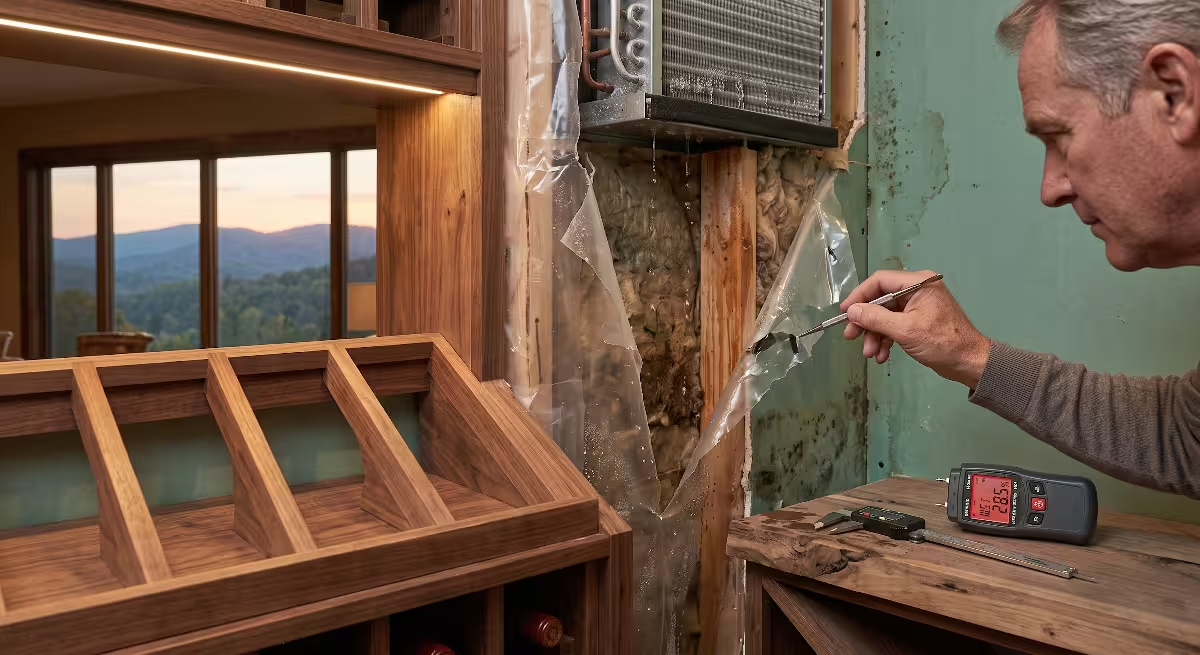
If you do not install a continuous vapor barrier on the warm side of the wall assembly, that moisture vapor will travel through the wall until it hits the cold fifty-five degree air inside the wine cellar. When that happens, the vapor immediately condenses into liquid water inside the wall cavities. Within months, your framing studs will rot, dangerous black mold will spread, and your cooling unit will be overwhelmed by the constant humidity load.
To satisfy a thorough insurance inspection, your wine cellar must feature:
- Vapor Barrier: A minimum of six-mil continuous polyethylene plastic sheeting wrapped around the entire exterior perimeter (warm side) of the studs, with all seams overlapping by twelve inches and sealed with acoustic vapor barrier tape. Alternatively, using a minimum of three inches of closed-cell spray foam insulation serves as both a thermal barrier and a class-one vapor retarder.
- Wall Insulation Values: A minimum rating of R-13 in interior walls using two-by-four framing, or preferably R-19 using two-by-six framing studs.
- Ceiling Insulation Values: Because heat rises, the ceiling of your wine cellar is its greatest thermal vulnerability. The ceiling must be insulated to a minimum of R-19, with R-30 being the preferred industry benchmark when living spaces sit directly above the room.
- Moisture-Resistant Wallboards: Never use standard white paper-faced drywall inside a wine cellar. The paper acts as food for mold spores. Always specify greenboard, purple moisture-resistant drywall, or exterior-grade glass-mat gypsum boards.
Dedicated Circuits and Electrical Provisions
A commercial-grade wine cellar cooling unit cannot share an electrical circuit with household appliances, hallway lighting, or bedroom outlets. Compressors require a steady, unyielding supply of clean electrical current to run safely:
- Dedicated Electrical Lines: Your building plans should include a dedicated twenty-amp, 115-volt or 230-volt circuit running straight from the main breaker panel to the wine cellar cooling system. Sharing a circuit means that another appliance could trip a breaker while you are away, quietly cutting power to your wine cellar and allowing the temperature to climb unnoticed.
- Commercial-Grade Surge Suppression: Standard power strips offer virtually no protection against serious electrical anomalies. You must install a whole-house surge protection device directly at the main electrical panel, along with a dedicated point-of-use surge suppressor rated for refrigeration motors at the cooling unit outlet. Underwriters look favorably on these installations because they eliminate the most common cause of electronic control board failure.
Climate Monitoring and Telemetry
In the world of modern insurance, underwriters place significant value on early detection systems. If a cooling unit breaks down, having an alert system in place can mean the difference between a simple service call and a catastrophic total-loss claim.
Today, insurance companies often require or offer policy discounts for custom homes equipped with smart monitoring systems:
- Smart Wi-Fi Environmental Sensors: Installing a standalone environmental monitor inside the wine cellar that operates independently of the cooling unit itself. Devices like these track temperature and humidity minute-by-minute, sending push notifications and phone alerts if the room crosses predefined thresholds, such as sixty degrees or seventy-five percent humidity.
- Smart Home Integration: Modern custom builds across our region frequently integrate the wine cellar environmental sensors directly into the main home automation platform. If a thermal anomaly occurs, the system can flash alert lights, sound an audible warning, or instantly alert the local mechanical contractor. Underwriters appreciate this telemetry because it allows homeowners to take corrective action well before the forty-eight hour thermal window closes.
Backup Power Mandates
If you live in our corner of East Tennessee, you know that summer storms and winter ice can cause occasional power outages, especially in rural or wooded neighborhoods. When the regional electrical grid goes down, your wine cellar cooling unit turns off with it. While the room will hold its temperature for a short period, extended summer outages can easily ruin a collection.
To secure the most comprehensive wine cellar climate control system insurance coverage without high deductibles or restrictive clauses, many underwriters recommend installing an auxiliary power system:
+-------------------------------------------------------------------------+
|                  RESIDENTIAL BACKUP POWER ARCHITECTURE                  |
+-------------------------------------------------------------------------+
|                                                                         |
|   +-------------------+              +------------------------------+   |
|   | Utility Power Grid|              | Automatic Generator (Propane)|   |
|   +---------+---------+              +--------------+---------------+   |
|             |                                       |                   |
|             +-----------------+   +-----------------+                   |
|                               |   |                                     |
|                               v   v                                     |
|                     +-----------------------+                           |
|                     |Automatic Transfer     |                           |
|                     |Switch (ATS)           |                           |
|                     +-----------+-----------+                           |
|                                 |                                       |
|                                 v                                       |
|                     +-----------------------+                           |
|                     |Critical Loads Subpanel|                           |
|                     +-----------+-----------+                           |
|                                 |                                       |
|                +----------------+----------------+                      |
|                |                                 |                      |
|                v                                 v                      |
|   +--------------------------+     +--------------------------+         |
|   | Wine Cellar Cooling Unit |     | Home Freezers & Well Pump|         |
|   +--------------------------+     +--------------------------+         |
|                                                                         |
+-------------------------------------------------------------------------+
An automatic standby generator powered by natural gas or propane ensures that if grid power drops, an automatic transfer switch kicks on within ten to thirty seconds. The generator assumes the electrical load, keeping the wine cellar cooling system operating smoothly until utility crews repair the primary lines. Pointing out this level of backup capability to your insurance representative during the underwriting phase demonstrates that you take risk mitigation seriously.
Maintenance Logs and Preventative Care
Insurance policies carry standard legal exclusions regarding negligence and lack of maintenance. If a cooling unit breaks down and the insurance adjuster inspects the condenser only to find the coils completely caked with three inches of pet hair and dirt, they can legally deny your claim, arguing that the failure was caused by homeowner neglect rather than a sudden, accidental breakdown.
To protect your rights during a claim:
- Keep Professional Invoices: Hire a licensed refrigeration technician to perform bi-annual inspections of your wine cellar mechanical equipment. Have them clean the evaporator and condensing coils, check the refrigerant pressure, test motor capacitors, and clear out the condensation drain lines.
- Document Every Service Call: Keep these service records in a dedicated home folder alongside your building documents. If you ever have to file a claim for mechanical failure, handing that maintenance log to the claims adjuster eliminates the argument that you failed to maintain the equipment.
Frequently Asked Questions About Wine Cellar Climate and Insurance
Does homeowners insurance cover wine cellar cooling units?
A standard homeowners insurance policy does not cover internal mechanical breakdowns, electrical shorts, or normal component wear and tear for a wine cellar cooling unit. It will only pay to replace the machinery if it is damaged by a specifically named, external peril, such as a fire, lightning strike, or a falling tree. To protect the mechanical machinery against sudden operational failure, you must add an Equipment Breakdown Endorsement to your policy.
Does insurance pay for ruined wine if my cellar climate system stops working?
Under standard home insurance forms, the answer is an absolute no. Standard policies contain explicit exclusions for damage resulting from changes in temperature or relative humidity. To receive compensation for spoiled wine caused by a failed cooling system, you must have either an equipment endorsement with high spoilage sub-limits or a dedicated fine wine personal articles floater that explicitly includes climate failure and mechanical breakdown as covered causes of loss.
What is the difference between blanket wine coverage and scheduled bottle coverage?
Blanket coverage provides a single, overall lump sum of insurance money that covers your entire collection up to a specific limit without requiring you to list every individual bottle on the policy. This is ideal for medium-sized collections where bottles are frequently consumed and replaced. Scheduled bottle coverage requires you to submit a detailed inventory list showing the producer, vintage, bottle size, and verified value of specific high-end bottles. Scheduled coverage is best for high-value collector items because claims are settled based on an agreed value without depreciation debates.
How much does dedicated wine and cellar equipment insurance cost?
Comprehensive collectible insurance for fine wine is surprisingly affordable when compared to standard home coverage. Most specialty insurers charge between forty cents and eighty cents per one hundred dollars of insured collection value annually. That means a fifty thousand dollar collection can be fully covered against all risks, including climate failure, for roughly two hundred to four hundred dollars per year. Adding an Equipment Breakdown Endorsement to your standard home policy to cover the cooling unit machinery typically adds between twenty-five and seventy-five dollars annually.
What documentation is required to file a successful climate failure claim?
To ensure your claim is processed smoothly without pushback from the adjuster, you should maintain three distinct sets of records:
- Inventory Logs: A digital record of your collection using cellar management apps like CellarTracker or InVintory, showing exactly what bottles were in the room, their purchase price, and their current market value.
- Technician Diagnostic Report: A written service invoice from a licensed HVAC technician stating clearly that the cooling failure was sudden and accidental rather than the result of long-term neglect.
- Physical Evidence: Clear photographs of the failed equipment, digital temperature logs showing the room temperature spike, and clear photos of the physical damage to the wine, such as pushed corks and leaking foil seals. Never dispose of spoiled wine bottles until the insurance adjuster has inspected them in person or given you written permission to do so.
Step-by-Step Claim Playbook for Mechanical Failures
If you walk into your home and find that your cooling equipment has shut down, handling the situation calmly and methodically can save your collection and protect your insurance claim. Follow this step-by-step procedure:
+-------------------------------------------------------------------------+
|                  EMERGENCY CLIMATE FAILURE PROTOCOL                     |
+-------------------------------------------------------------------------+
|                                                                         |
|  [STEP 1: THERMAL CONTAINMENT]                                          |
|  * Shut the door immediately. Do not leave it open to inspect.          |
|  * Minimize room access to lock in the remaining thermal inertia.       |
|                                                                         |
|  [STEP 2: TELEMETRY & DOCUMENTATION]                                    |
|  * Record current ambient temperature and humidity readings.            |
|  * Screenshot data-logger graphs showing the exact hour of failure.     |
|                                                                         |
|  [STEP 3: EMERGENCY REFRIGERATION SERVICE]                              |
|  * Call your licensed refrigeration specialist for emergency dispatch.  |
|  * Request a written diagnostic report documenting the sudden failure.  |
|                                                                         |
|  [STEP 4: INTERMEDIATE ASSET PRESERVATION]                              |
|  * If repairs will take over 24 hours, deploy frozen ice packs          |
|    in perimeter buckets (never place ice directly on bottle racks).     |
|  * Prepare to move high-value bottles to temperature-controlled space.  |
|                                                                         |
|  [STEP 5: NOTIFY YOUR INSURANCE SPECIALIST]                             |
|  * Alert your insurance broker immediately to initiate the claim.       |
|  * Retain all damaged bottles, leaking corks, and service invoices.     |
|                                                                         |
+-------------------------------------------------------------------------+
Step 1: Immediate Thermal Containment
The moment you realize the cooling unit is not running, close the wine cellar door immediately. The biggest mistake homeowners make is leaving the door propped open while trying to figure out what went wrong. As we discussed earlier, the cold wine bottles create a thermal cushion. Keeping the insulated room sealed tight locks in that remaining coolness. Every time you open that door, you allow warm, humid room air to pour into the space, speeding up the thermal decline.
Step 2: Telemetry and Documentation
Take clear photographs of the digital thermostat reading or download the telemetry report from your Wi-Fi environmental sensors. Documenting the ambient temperature and the exact time the unit stopped working establishes an accurate timeline. This data proves to the insurance adjuster that the temperature spike happened suddenly and that you moved quickly to mitigate the damage.
Step 3: Emergency Professional Service Dispatch
Contact a qualified heating and refrigeration specialist who understands wine cellar mechanics. When you schedule the emergency service call, inform them that you need a detailed diagnostic write-up for an insurance claim. Instruct the technician to document the exact mechanical or electrical component that failed, whether it suffered a sudden burnout, and that the unit was otherwise properly installed and maintained.
Step 4: Intermediate Asset Preservation
If the technician informs you that replacement parts will take several days to arrive, you must take steps to protect your wine. Insurance contracts include a duty to mitigate loss, meaning you must make a reasonable effort to stop further damage from occurring. If you have a few high-value bottles, move them to a domestic refrigerator or a wine fridge. For the broader room, place closed coolers filled with dry ice or standard ice packs along the floor perimeter. Never place bare ice or wet towels directly on wooden racking or vintage paper labels, as moisture can easily ruin collectible packaging.
Step 5: Notify Your Insurance Broker
Call your insurance broker and notify them that an equipment failure has occurred. Provide them with the technician diagnostic report, the temperature logs, and your inventory sheet showing the stored bottles. Having this organized package ready for the adjuster demonstrates competence, speeds up the claims review, and eliminates the delays that often complicate specialty property payouts.
Builder Guidance: Structuring Defense Before the Compressor Stops
Over my decades in the building trades, I have lived by a straightforward rule: true protection begins long before you plug in a piece of equipment. You can write the best insurance policy in the world, but navigating an insurance claim is still a stressful, time-consuming process. The ultimate goal is to build an environment so reliable and resilient that you never have to file a claim in the first place.
When designing a custom home, treat your wine cellar climate system with the exact same engineering care you would give to the structural foundation or the main roof structure. Build defense-in-depth into every single layer:
- Build the Envelope Correctly: Never cut corners on insulation or vapor barriers. Use high-performance closed-cell spray foam, seal every electrical penetrations with acoustic sealant, and install an exterior-grade, weather-stripped solid core door with an automatic bottom drop seal.
- Size the Equipment Realistically: Do not undersize the cooling unit to save a few dollars up front. A unit that runs at ninety percent capacity will wear out its mechanical components twice as fast as an appropriately sized unit running smooth, balanced cooling cycles.
- Insist on Redundancy: For serious collections, talk with your mechanical contractor about installing dual split systems. By installing two smaller, independent cooling units operating side-by-side, each unit shares the cooling load. If one unit suffers a sudden compressor burnout, the second unit automatically steps up to keep the room safe from temperature spikes until repairs are completed.
- Coordinate Your Builder and Your Insurer: Bring your insurance broker into the conversation while your home is still in the blueprint stage. Show them the architectural plans, the mechanical cooling specifications, the electrical schematics, and the backup generator integration. When your insurer sees that your wine cellar has been designed by experienced professionals who understand structural physics and commercial refrigeration, getting complete, comprehensive insurance coverage at reasonable rates becomes a simple, stress-free conversation.
Building a custom residence in East Tennessee is an incredible milestone. By making smart decisions during the design and construction phase, and backing up those engineering choices with appropriate insurance protection, you can rest easy knowing that your luxury home and your treasured wine collection are completely protected for years to come.