Today, we are going to talk about a very important topic for anyone buying land or building a custom home in our area. We will discuss the tennessee greenbelt law. If you are looking at land in Washington, Sullivan, Hawkins, or Carter counties, you need to know about the greenbelt law. This statute is formally known as the Agricultural, Forest, and Open Space Land Act of 1976. This article will serve as a complete guide to the tennessee greenbelt law. We will explain the 2026 requirements, acreage limits, rollback taxes, and application deadlines. I want to add immense value for you, the reader. By the end of this guide, you will understand every aspect of the tennessee greenbelt law.
Let us get started on this journey to understand the tennessee greenbelt law. I will calmly and directly walk you through each step.
Introduction to the Tennessee Greenbelt Program
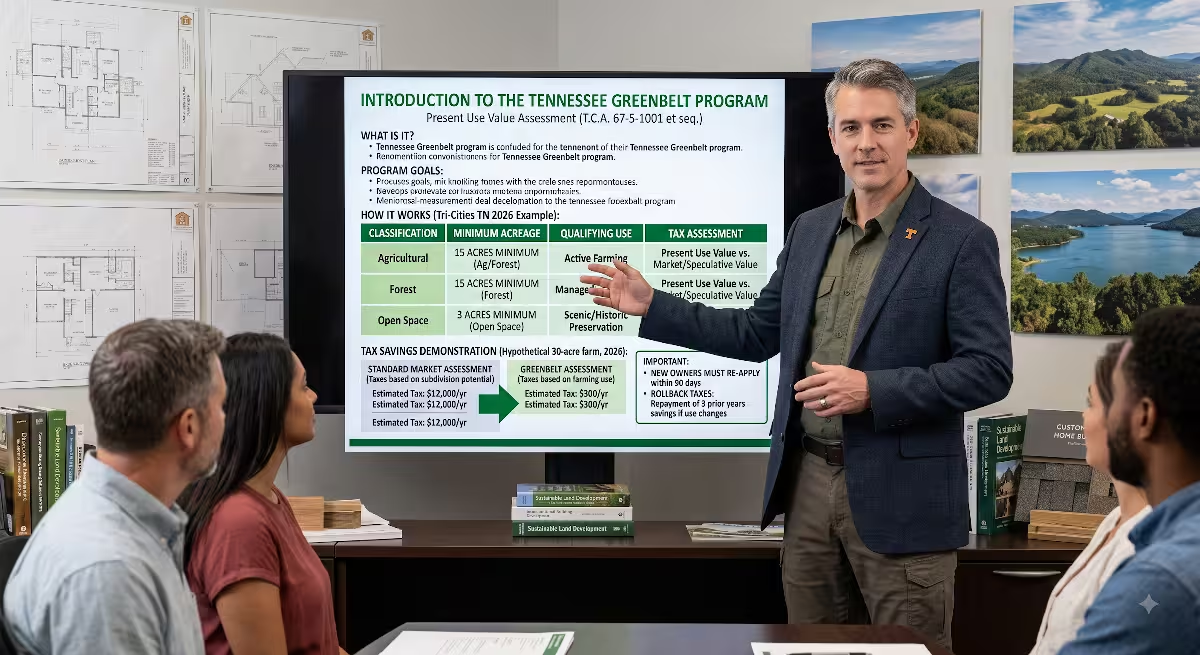
Let us talk about what the tennessee greenbelt law actually does. The core purpose of the tennessee greenbelt law is to protect farmers and landowners. Back in 1976, the state government realized that cities were growing fast. They created the Agricultural, Forest, and Open Space Land Act. Today, most of us just call it the tennessee greenbelt law. The state codified this under the Tennessee Code Annotated section 67-5-1001.
Why did they make the tennessee greenbelt law? The goal was to prevent urban sprawl from pricing farmers out of their land. When land values go up, property taxes go up. If a farmer is taxed based on the highest and best use of their land, like a new subdivision, they might have to sell their farm. The tennessee greenbelt law stops this. It allows land to be taxed based on its present use value instead of its market value.
Let me explain present use value versus market value under the tennessee greenbelt law. Market value is what a developer would pay for your land to build houses or stores. Present use value is what the land is worth as a working farm, a forest, or an open space. The tennessee greenbelt law says that if you qualify, your property taxes will be based on the lower present use value. This saves landowners a massive amount of money on their annual tax bills.
This matters more than ever in 2026. Property values in East Tennessee have skyrocketed. Land in the Tri-Cities is very expensive now. If you buy acreage to build a custom home, your property taxes could be huge. However, if your land qualifies for the tennessee greenbelt law, you can keep those taxes low. Many buyers walk away from land because they did not understand the tennessee greenbelt law. They thought the taxes would be too high. Once the tennessee greenbelt law was explained to them, they realized the land was affordable.
The tennessee greenbelt law is a vital tool. It is a tool for preserving our beautiful Tennessee hills. It is a tool for keeping farms in families. And it is a tool for smart land buyers who want space without huge tax bills. When sportspeople go hunting or fishing on the weekends, they can see the direct results of the tennessee greenbelt law. They see vast open spaces that might have been paved over if the tennessee greenbelt law did not exist.
In this guide, we will break down the specific rules of the tennessee greenbelt law. We will look at agricultural land, forest land, and open space land. So let us examine the tennessee greenbelt law 2026 requirements.
Main Tennessee Greenbelt Law 2026 Requirements by Classification
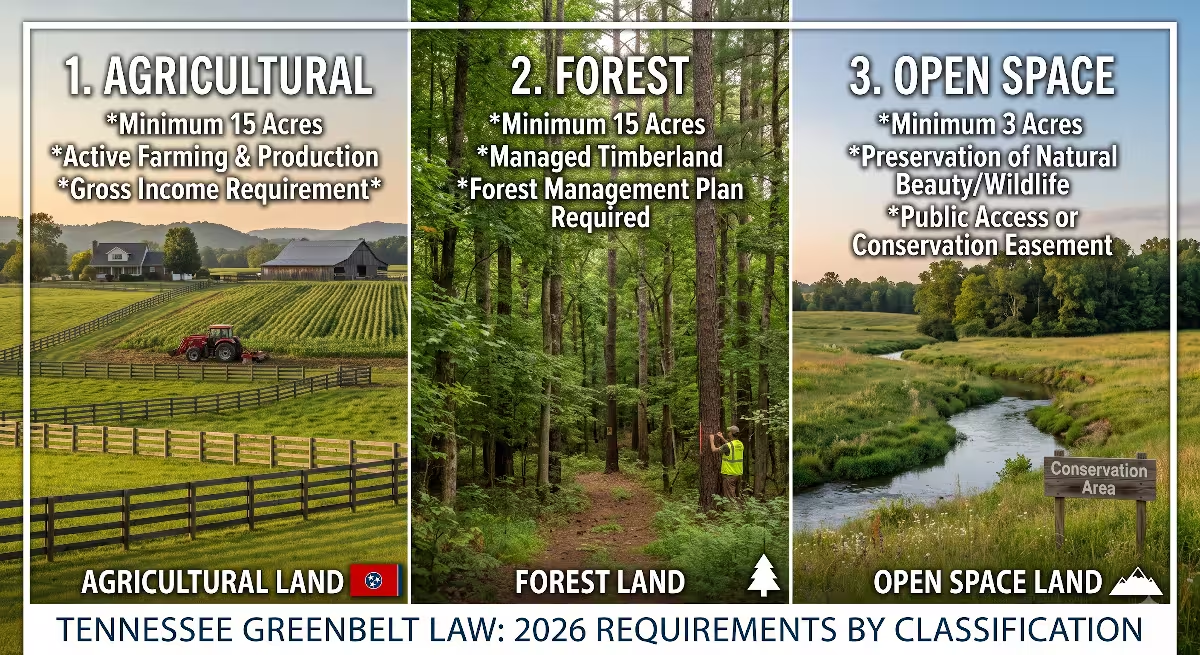
To get the benefits of the tennessee greenbelt law, your land must fit into one of three categories. The tennessee greenbelt law classifies eligible land as agricultural, forest, or open space. Each category has very specific rules. You cannot just call your land a farm. You have to prove it meets the strict requirements of the tennessee greenbelt law.
Let us start with the first and most common category under the tennessee greenbelt law. This is agricultural land.
1. Agricultural Land Requirements
If you want to qualify your property as agricultural land under the tennessee greenbelt law, you must meet an acreage threshold. You need a minimum of fifteen acres. These fifteen acres must be actively engaged in farming. Farming can mean growing crops, raising livestock, cutting timber, or running a nursery. I remember when I was a Project Manager in Knoxville. We had a client who bought twenty acres. He wanted to raise cattle and build a house. Because he had more than fifteen acres, he easily met the first test of the tennessee greenbelt law.
But what if you do not have fifteen acres all in one spot? The tennessee greenbelt law has a rule for that. It is called the satellite tract exception. If you own a primary farm of at least fifteen acres that already qualifies for the tennessee greenbelt law, you can add a smaller tract. This satellite tract must be between ten and fourteen point nine nine acres. It must be in the same county as your primary farm. If you meet these rules, the satellite tract can also fall under the tennessee greenbelt law. This is a great feature of the tennessee greenbelt law for farmers who expand by buying small neighboring lots.
Next, the tennessee greenbelt law requires an income verification test for agricultural land. You cannot just let the land sit there and grow weeds. You must prove the land produces money. The tennessee greenbelt law states you must produce an average gross agricultural income of at least one thousand five hundred dollars per year. This is measured over a three year rolling period. You can meet this by selling cattle, hay, vegetables, or even leasing the land to a farmer. As long as the land makes one thousand five hundred dollars a year, it satisfies the tennessee greenbelt law. Keeping your receipts is a core value of being competent and precise.
There is one big exception to the income rule in the tennessee greenbelt law. It is called the twenty five year family farm exception. The tennessee greenbelt law wants to protect old family farms. If the land has been farmed by the owner, their parent, or their spouse for at least twenty five years, the income rule goes away. Under the tennessee greenbelt law, this family farm remains eligible even if it does not make one thousand five hundred dollars a year. The only catch is that the owner must live on the property, and the property cannot be used for non farm purposes. This part of the tennessee greenbelt law is very special for folks who have deep roots in our community. It honors the history and hard work of our local farmers.
2. Forest Land Requirements
The second category under the tennessee greenbelt law is forest land. We have a lot of beautiful forests in East Tennessee. The tennessee greenbelt law helps landowners afford to keep these woods intact rather than clear cutting them for quick cash.
Just like agricultural land, the tennessee greenbelt law requires a minimum of fifteen acres for forest land. These fifteen acres must be dedicated to growing timber and practicing forestry management. You cannot just have fifteen acres of unmanaged brush. The tennessee greenbelt law requires intent and active management. The state wants to see that you are actually nurturing a healthy forest environment.
The biggest rule for forest land under the tennessee greenbelt law is the forestry plan mandate. You must submit a formal forest management plan. This plan cannot be written by just anyone. The tennessee greenbelt law requires that a professional licensed forester prepare the plan. The forester will walk your land. They will detail the tree species, the stocking rates, and the long term harvest goals. They will establish a program of sustained yield. This means they plan out how to cut timber safely over decades without destroying the forest.
One great thing about forest land under the tennessee greenbelt law is that there is no annual income requirement. You do not have to make one thousand five hundred dollars a year like you do with agricultural land. Trees take decades to grow. The tennessee greenbelt law recognizes this fact. However, you must actively follow the forest management plan. If the county assessor sees that you are ignoring the plan, they can remove your property from the tennessee greenbelt law program. When hunters go hunting for deer in the fall, they are often sitting in woods that are protected by the tennessee greenbelt law. It is a wonderful system that benefits both the environment and the landowner.
3. Open Space Land Requirements
The third and final category under the tennessee greenbelt law is open space land. This is the least common category in our area, but it is still a vital part of the tennessee greenbelt law. This category is perfect for land that is naturally beautiful or ecologically important.
The acreage threshold for open space land under the tennessee greenbelt law is much lower. You only need a minimum of three acres. These three acres must be preserved in an open, natural condition. The goal of this part of the greenbelt law is to provide public benefit or ecological conservation. The state wants to reward people who keep small pieces of nature pristine.
You cannot just decide on your own that your three acres are open space. The tennessee greenbelt law requires formal planning approval. Your land must be included in a county or city planning commission preservation plan. Alternatively, you can execute a perpetual conservation easement. This means you legally agree never to develop the land. Because this is a permanent or highly restrictive choice, the greenbelt law grants you the tax break for just three acres.
Many people who fish or love the outdoors, appreciate the open space provision of the tennessee greenbelt law. It keeps riverbanks and scenic views free from heavy development. Many custom home buyers who bought land near the Watauga River are advised to look into this part of the greenbelt law. It is a fantastic way to protect the natural beauty of the Tri-Cities area for future generations.
In summary, the tennessee greenbelt law offers three distinct paths. You can qualify through agriculture, forestry, or open space. Each path under the greenbelt law has strict requirements. You must understand these rules before you buy land in the Tri-Cities.
Rules for Homesites and Acreage Caps
Now let us talk about building a house on greenbelt land. Many buyers want to buy twenty acres, build a custom home, and keep the land under the tennessee greenbelt law. They want the peace and quiet of rural living along with the tax benefits.
The tennessee greenbelt law has a very specific rule for this situation. It is called the one acre homesite rule. The greenbelt law recognizes that you need a place to live on your farm or forest. If you build a home on your greenbelt land, up to one acre of land directly surrounding the home is excluded from the greenbelt law assessment.
Let me break that down simply for you. That one acre homesite will be appraised at standard market value. It will be taxed at the normal residential rate of twenty five percent of its appraised value. However, the rest of your land stays under the tennessee greenbelt law. For example, if you own fifteen acres and build a house, one acre is taxed at market value. The remaining fourteen acres keep the low tax rate provided by the greenbelt law. As long as those fourteen acres meet the farming or forestry rules along with a primary farming tract, the greenbelt law protects them. This split assessment is very fair and saves home buyers a lot of money.
There are also maximum limits in the tennessee greenbelt law. You cannot put unlimited land into the program. The greenbelt law caps individual owners at one thousand five hundred acres per county. If you own two thousand acres in Washington county, only one thousand five hundred acres can receive the greenbelt law tax break. The state added this rule to prevent massive corporations from dodging all of their property taxes.
The tennessee greenbelt law also applies proportionate ownership rules. This matters if the land is owned by a corporation, a partnership, or in joint tenancy. The one thousand five hundred acre cap applies to your specific share of the land. Furthermore, the greenbelt law states that a husband and wife who own land jointly share a single one thousand five hundred acre cap. For instance, a husband and wife cannot each claim one thousand five hundred acres in the same county under the greenbelt law. They share the limit.
Finally, the tennessee greenbelt law includes a six percent reappraisal protection cap. County property reappraisals happen every few years. Without protection, your present use value could jump dramatically. The tennessee greenbelt law prevents sudden tax spikes. It caps the increase of your present use value to no more than six percent per year since the last assessment. This part of the greenbelt law gives landowners financial predictability. When you are planning a budget for a new custom home, knowing your taxes will not skyrocket is a huge relief. The greenbelt law makes owning large tracts of land safe and predictable.
Application Deadlines and Procedure
Understanding the rules of the tennessee greenbelt law is only half the battle. You also have to follow the procedure perfectly. If you miss a deadline, the tennessee greenbelt law will not help you. Following are the exact steps you need to follow.
The most critical date in the greenbelt law calendar is March fifteenth. Your application must be completed and submitted to the local county assessor of property by March fifteenth of the tax year. If you walk into the office on March sixteenth, you are too late for that year. The tennessee greenbelt law is very strict about this deadline. It is advised for landowners to file their paperwork in January or February to be completely safe.
The filing process for the tennessee greenbelt law is straightforward but requires attention to detail. First, you must complete the correct application form. There are different forms for agricultural, forest, and open space land under the greenbelt law. You must fill it out completely and have it notarized. Do not skip any lines. Precision is key.
Second, the county assessor will usually perform a physical property inspection. They need to verify that your land actually meets the requirements of the tennessee greenbelt law. They will look for cattle, crops, or a managed forest. They are friendly people, but they have a job to do. They must ensure the tennessee greenbelt law is not being abused.
Third, after the assessor approves your application, there is one more vital step under the tennessee greenbelt law. The application must be recorded at the county register of deeds office. There is a small recording fee for this service. The greenbelt law plainly states that your property is not officially enrolled until this document is recorded. I have seen folks get approved by the assessor but forget to record the paper. They end up losing their greenbelt law status.
What happens if you are purchasing existing greenbelt property? This is a huge trap for new buyers. The tennessee greenbelt law status does not automatically transfer when the title changes hands. When you buy the land, the slate is wiped clean.
The tennessee greenbelt law requires the new buyer to reapply for the program. You must file a new application within ninety days of the property sale date. If you fail to file within ninety days, you lose the protection of the greenbelt law. Even worse, you might trigger rollback taxes. It is generally advised to go the assessor right after leaving the title company. The greenbelt law expects you to be proactive.
Understanding Rollback Taxes (Recapture Period)
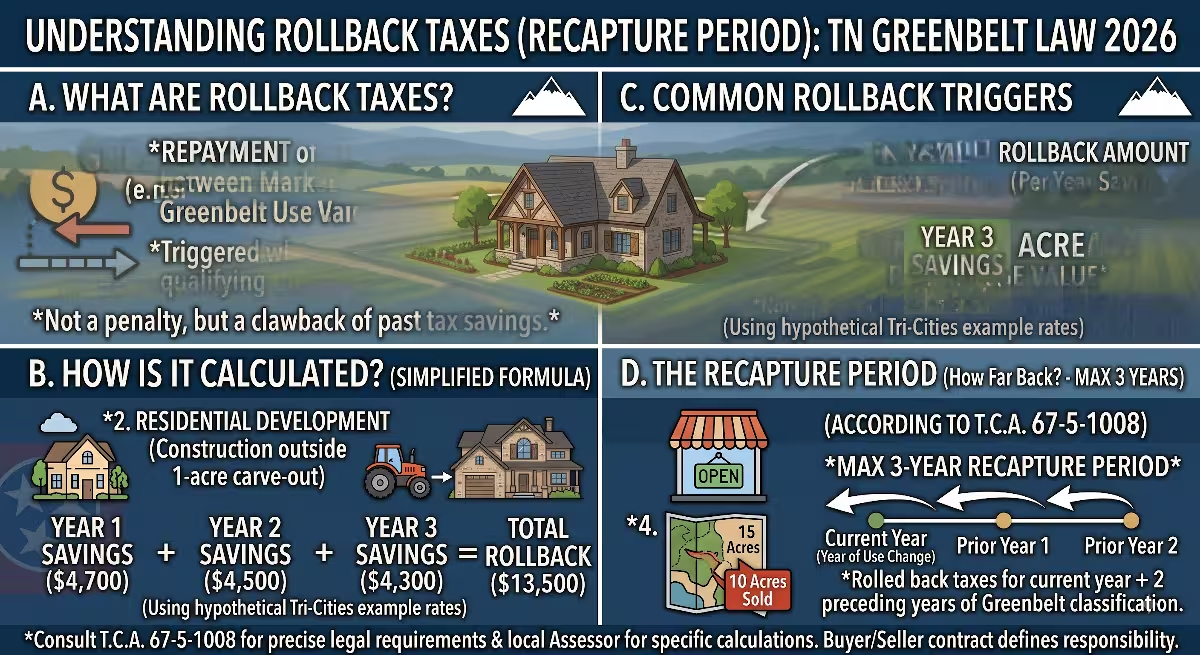
Now we must discuss the most feared part of the greenbelt law. We need to talk about rollback taxes. Many people misunderstand this concept. Rollback taxes are not a financial penalty or a fine. They simply represent a repayment of the tax savings you enjoyed while the land was classified under the tennessee greenbelt law.
If you change the use of the land so it no longer qualifies for the greenbelt law, you have to pay back the taxes you saved. How does the county calculate this under the tennessee greenbelt law? It is a simple formula. They take the market value tax rate and subtract the greenbelt use value tax rate. The difference is the amount of taxes you saved each year.
The tennessee greenbelt law limits how many years you have to pay back. This is called the recapture period. For agricultural and forest land, the tennessee greenbelt law requires a recapture period of three years. This includes the current year and the two preceding years. For open space land, the greenbelt law requires a recapture period of five preceding years. This means open space has a longer payback period under the greenbelt law.
What triggers a rollback tax under the tennessee greenbelt law? There are five primary triggers.
First, if the land size drops below the required minimum. If you sell off five acres of your fifteen acre farm, the remaining ten acres no longer meet the tennessee greenbelt law minimum. You will owe rollback taxes on the disqualified land.
Second, recording a residential subdivision plat will trigger a rollback under the tennessee greenbelt law. If you chop your farm up into small lots, the state wants their money back.
Third, converting the land to commercial use or high density residential development breaks the tennessee greenbelt law rules. You cannot build a shopping mall on greenbelt land without paying the rollback tax.
Fourth, a written request by the owner to withdraw from the tennessee greenbelt law program will trigger the taxes. Sometimes folks just want out of the program, and that is fine, but it comes with a cost.
Fifth, as I mentioned before, the failure of a new buyer to reapply within ninety days of the sale date is a major trigger under the tennessee greenbelt law.
Here is a major tip for your real estate sales contract. Under the tennessee greenbelt law, the seller of the land is responsible for rollback taxes unless it is otherwise stated in the transaction of property. However, you can change this by a written contract. When you are writing a purchase agreement, you must explicitly state who will pay the rollback taxes if the land use changes. If the buyer plans to build a huge subdivision, the buyer should take on the rollback taxes. The tennessee greenbelt law allows you to negotiate this, but you must put it in writing. If you do not, the tennessee greenbelt law will force the seller to pay the bill.
Questions Answered about Tennessee Greenbelt Law Requirements
We want to use this section to answer some common questions about the tennessee greenbelt law that are commonly asked in the area.
Does building a barn or an outbuilding void my status under the tennessee greenbelt law?
The answer is no. Agricultural structures that you use for farm operations maintain the agricultural use of the property. The greenbelt law encourages farming. Building a barn, a tractor shed, or a hay storage facility is perfectly fine. However, if you build a non farm residential structure or a commercial retail shop, that can trigger a carve out or a rollback tax under the tennessee greenbelt law.
Can I lease my land to a local farmer to meet the one thousand five hundred dollar income requirement for the tennessee greenbelt law?
The answer is absolutely yes. You do not have to drive the tractor yourself. Leasing your pasture to a cattle farmer or your fields for crop production counts. The rent they pay you counts toward the income requirement of the tennessee greenbelt law. You must make sure you maintain clear documentation of the lease agreement and the rent payments to prove this to the county assessor under the rules of the tennessee greenbelt law.
What happens if I split a thirty acre greenbelt parcel into two separate fifteen acre tracts?
The answer is that both tracts can remain protected by the greenbelt law. As long as both resulting fifteen acre parcels independently meet all the qualification criteria, you are safe. Both parcels must have the required acreage and the required income or forest plan. If they do, the greenbelt law allows the division without triggering a rollback tax.
What county offices handle applications for the tennessee greenbelt law in our local Tri-Cities area?
The answer is the Assessor of Property for your specific county. Applications for the tennessee greenbelt law are filed locally. If you are in Washington County, you go to the office in Jonesborough. If you are in Sullivan County, you file in Blountville. For Carter County, you visit Elizabethton. And for Hawkins County, you will go to the office in Rogersville. Every local assessor understands the greenbelt law and can help you get the right forms. They are great folks to work with if you are polite and prepared.
Final Thoughts and Landowner Checklist for 2026
To sum up this article into the tennessee greenbelt law, we always like to give a clear checklist to summarize the material. Here is your landowner checklist for the tennessee greenbelt law in 2026. We recommend you print this out and keep it in your home building file.
First, you must verify your total unsubdivided acreage. Ensure it meets the absolute minimum thresholds of the tennessee greenbelt law. You need fifteen acres for agriculture or forestry. You need three acres for open space. Do not guess on your acreage. Have a professional surveyor verify the exact size.
Second, if you own forest land, you must confirm your forest management plan is entirely up to date. The greenbelt law requires this plan to be active and managed by a professional forester. Keep a copy of the plan in a safe place.
Third, for agricultural land, you must organize your paperwork. Keep very clear documentation of your farm sales. If you lease the land, keep your lease agreements organized. You need to prove that one thousand five hundred dollar gross annual income to satisfy the tennessee greenbelt law. We suggest keeping a separate bank account just for farm income and expenses to make proving your numbers very easy.
Fourth, you must mark March fifteenth on your calendar. This is the ultimate deadline for initial applications under the tennessee greenbelt law. Do not miss it. Make it a habit to review your property status every January.
Fifth, when you are buying or selling land, address the ninety day reapplication window. Also, clearly state the rollback tax liabilities in your purchase agreements. The tennessee greenbelt law demands that the new buyer file quickly to keep the tax benefits active. A good real estate attorney or experienced real estate agent can help you draft the right language for your contract.
We hope this guide helps you feel confident about the tennessee greenbelt law. Buying land and building a custom home in the Tri-Cities is an amazing experience. Knowing the rules of the tennessee greenbelt law makes it even better. It gives you peace of mind and saves you a tremendous amount of money over the lifetime of your property ownership.