The Foundation of Family Fun
Imagine a custom home buyer standing in a backyard in Johnson City. It was a beautiful spring afternoon, the kind where the air smells like blooming dogwoods and the sun feels just right on your shoulders. The buyer had just finished a stunning custom build. Every detail of the house was perfect, from the craftsman-style trim to the quartz countertops. But looking out at the newly installed play set for her grandkids, she had a worried look. She had spent a fortune on the swings and slides, but she had just used standard garden mulch for the base. She wondered if it was enough to keep the kids safe.
Many home builders, look at backyards a little differently than buyers. They see the potential for joy, but they also see the physics of a fall. In the Tri-Cities area, we take pride in our outdoor living spaces. Our backyards are an extension of our homes, often serving as an “outdoor room” where we host Sunday dinners and summer birthdays. When you invest in a custom home, you want every part of it to be high-quality and safe. Choosing between safe playground surfacing and traditional mulch is one of those decisions that seems small but has a huge impact on your daily life.
In this guide, we want to take a calm, direct look at these options. We want to explain the technical side of things in a way that makes sense for your family. We will talk about why some materials protect better than others and how our local Tennessee weather plays a role. Our goal is to give you a balances perspective on home building that values both the beauty of your yard and the absolute safety of the people playing in it. We are going to explore why safe playground surfacing is often the better investment for a modern home.
The Engineering of Safety: Understanding Fall Heights
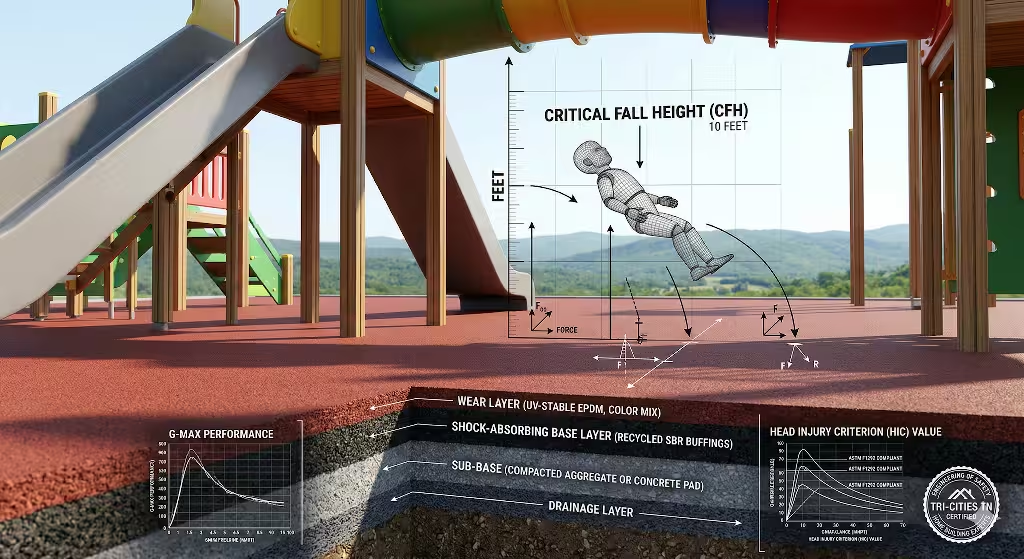
In homebuilding, everything has a breaking point. In the world of playground design, we talk about something called Critical Fall Height. This is a technical term, but it is easy to understand. It is the height from which a child could fall and likely avoid a life-threatening head injury. When we design a play area, our main job is to make sure the surface can absorb that impact.
Safe playground surfacing is engineered specifically for this task. Unlike the dirt or grass we played on as kids, modern materials are tested to see how much energy they can soak up. Think of it like the bumper on your car. It is designed to crumple and take the hit so that you do not have to. A good safe playground surfacing material does the same thing for a child’s fall.
We follow specific rules set by groups like ASTM and the Consumer Product Safety Commission. These organizations have done the math so we do not have to. They tell us exactly how deep a material needs to be to protect a child falling from a six-foot slide. When builders work with homeowners, they emphasize that safe playground surfacing is not just about looks. It is about meeting these safety standards to give you peace of mind every time the kids run outside.
Traditional Mulch: The Classic Aesthetic
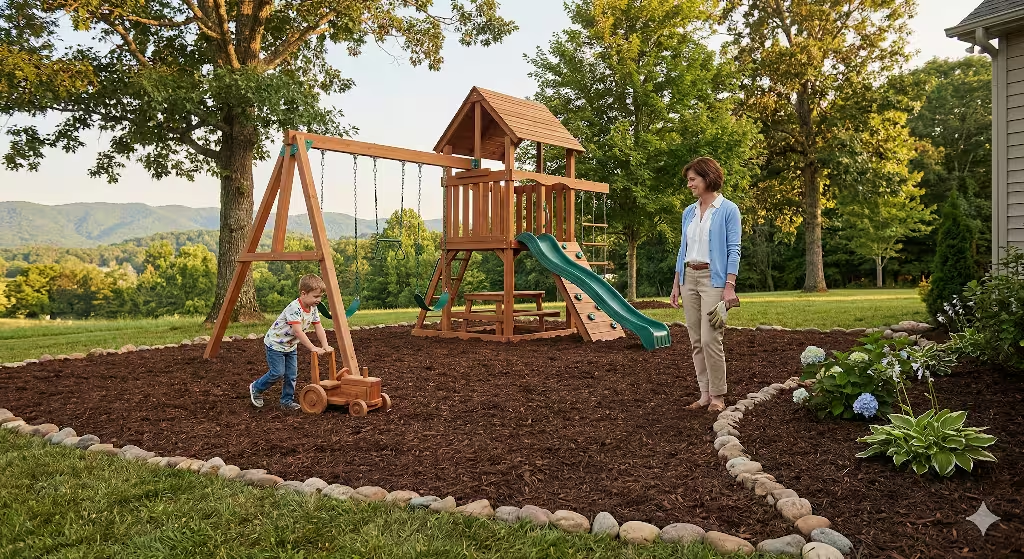
Most people are very familiar with traditional mulch. You see it in flower beds all over Kingsport and Bristol. It is usually made of wood bark, shredded wood, or decorative chips. People like it because it is cheap to buy at the start and it looks very natural. It blends in with the trees and the landscaping of a traditional Tennessee home.
However, from a building and maintenance standpoint, traditional mulch has some real downsides. First, it is organic. This means it rots. In our humid East Tennessee summers, wood mulch breaks down quickly. As it rots, it loses its ability to cushion a fall. It also gets packed down, becoming almost as hard as the ground underneath it. This means it is no longer safe playground surfacing after just a season or two.
Another issue we face here is pests. Traditional mulch is like a giant sign inviting termites and carpenter ants to your property. Since many playgrounds are close to the house, you do not want to attract these bugs. Also, traditional mulch tends to “travel.” It gets stuck in shoes and tracked into your clean house, or it gets washed away during our heavy spring rains. While it is easy to install yourself, it often ends up being more work in the long run.
Safe Playground Surfacing: The Modern Standard
Now, let’s talk about the alternatives that actually qualify as safe playground surfacing. There are a few different types, and each has its own benefits. One of the most popular is Engineered Wood Fiber, often called EWF. This is not the same as the mulch you put in your garden. EWF is made from high-quality wood that is shredded in a special way so the fibers knit together. This creates a firm but springy surface that stays in place much better than regular chips.
Another great option is rubber mulch. This is made from recycled tires that have been cleaned and coated. It is a fantastic safe playground surfacing choice because rubber never rots. It provides amazing cushion and stays looking new for years. It does not attract bugs, and it drains water very quickly after a storm.
If you want the absolute best, you look at Poured-in-Place rubber. This is a seamless surface that looks like a colorful carpet. It is mixed on-site and spread out like wet concrete. Once it dries, it is a soft, rubbery floor. This is the ultimate safe playground surfacing because there are no loose pieces to kick around or swallow. It is smooth, easy to walk on, and comes in almost any color to match your home’s exterior.
Side-by-Side Comparison: Safe Playground Surfacing vs. Traditional Mulch
Now that we know what the surface materials are let’s compare them based on what matters most to a homeowner.
First, let’s look at safety. Traditional mulch provides some cushion when it is fresh and deep, but it fails quickly. On the other hand, safe playground surfacing like rubber or EWF is designed to keep its safety rating for a long time. In terms of durability, traditional mulch needs to be topped off every single year. Safe playground surfacing might cost more on day one, but it lasts much longer. Rubber mulch can last ten years or more without needing to be replaced.
Next, think about cleanliness. We’ve all dealt with the “mulch mess.” It’s the wood slivers in the kids’ socks and the dark dirt tracked onto the rugs. Poured-in-Place safe playground surfacing eliminates this entirely. Even rubber mulch is much cleaner than wood because it doesn’t turn into mud when it gets wet. In the Tri-Cities, where we get plenty of rain, having a play area that doesn’t turn into a mud pit is a huge win for any mom or grandma.
The Installation Process
Installing safe playground surfacing is a project that requires precision. For loose-fill materials like EWF or rubber mulch, the first step is always drainage. You should always insist on a good base. You can’t just throw safe playground surfacing onto the grass. You need to dig out the area, install a landscape fabric to keep weeds away, and ensure there is a way for water to drain out. If water gets trapped under your safe playground surfacing, it will become a swamp.
For Poured-in-Place safe playground surfacing, the process is even more technical. We usually start with a base of crushed stone or concrete. Then, a “buffings” layer is applied. This is a thick layer of recycled rubber mixed with a special glue called a binder. This layer provides all the cushion. After that dries, we add a “wear layer” on top. This is the colorful part that people see. It is made of EPDM rubber, which is very tough and resists fading in the sun. Watching a crew install this kind of safe playground surfacing is a lot like watching a team pour a custom countertop. It takes skill and the right weather conditions to get it perfect.
Safety Zones and Borders
Another part of creating a safe playground surfacing area is the “use zone.” This is the space around the equipment where a child is likely to land if they fall or jump. You need to make sure the safe playground surfacing extends at least six feet in every direction from the play set. For swings, that zone needs to be even larger, usually twice the height of the swing bar in the front and the back.
To keep your safe playground surfacing in place, you need a good border. You can use heavy-duty plastic timbers, pressure-treated wood, or even concrete curbs. A good border ensures that your investment doesn’t end up scattered across your lawn. It also gives the play area a finished, professional look that complements your home’s architecture. In my experience, a well-defined safe playground surfacing area is one of the best ways to keep a yard looking organized and tidy.
Environmental Impact
Many buyers in the Tri-Cities care about the environment. When we talk about safe playground surfacing, there is an eco-friendly story to tell. Rubber mulch and Poured-in-Place surfaces are often made from recycled tires. This keeps millions of tires out of landfills every year. By choosing this type of safe playground surfacing, you are giving a second life to a material that would otherwise be waste.
On the other hand, Engineered Wood Fiber is a renewable resource. It is often made from the leftovers of the lumber industry. So, regardless of which safe playground surfacing you choose, you are making a choice that can be sustainable. As a builder, I love finding ways to make our homes more “green” while also making them safer for our families.
Frequently Asked Questions about Safe Playground Surfacing
There are often a lot of questions about this topic, so let’s address the most common. One big question is: “What is the safest surface for a backyard playground?” From an engineering perspective, Poured-in-Place rubber or high-quality rubber mulch are the winners. They offer the best impact protection and don’t shift around, ensuring the safe playground surfacing is always where it needs to be.
Another common question is: “Is rubber mulch better than wood mulch?” The answer usually depends on your budget and how long you plan to stay in your home. Rubber is better for safety and long-term cost. However, some people worry about it getting hot in the sun. In our Tennessee summers, dark rubber can get warm. I always tell my clients to choose a lighter color for their safe playground surfacing if the playground is in a very sunny spot.
The final question is: “How deep should playground mulch be?” If you are using a loose material like EWF or rubber mulch, you generally need it to be 9 to 12 inches deep. This sounds like a lot, but you have to account for the material getting compressed over time. Maintaining this depth is key to keeping it as a safe playground surfacing area.
The Accessibility Factor
One to always consider in home living is accessibility. We want our homes to be welcoming to everyone, including people with mobility challenges. Traditional mulch is a nightmare for wheelchairs, walkers, or even strollers. The wheels just sink right into the wood chips.
If you choose a solid safe playground surfacing like Poured-in-Place rubber or specialized synthetic turf, you make the playground accessible to everyone. This follows the rules of the Americans with Disabilities Act, or ADA. Even if you don’t need these features now, they add value to your home. A house with an inclusive, safe playground surfacing area is much more attractive to a wider range of buyers if you ever decide to sell. It shows that you thought about every detail of the home’s design.
The Tri-Cities Context: Weather and Pests
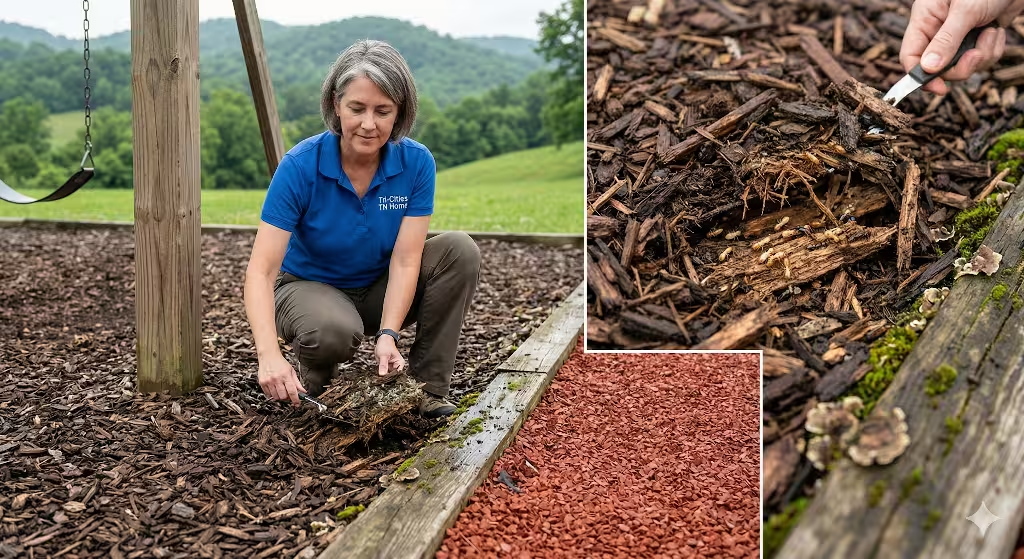
Living in Johnson City, Kingsport, or Bristol brings some specific challenges to building. Our climate is beautiful, but it is also very damp. We have high humidity, which is the enemy of organic wood mulch. When wood stays damp, it grows mold and fungi. This can be a problem for children with allergies. Using a non-organic safe playground surfacing avoids this issue entirely.
We also have to think about our local pests. In East Tennessee, termites are a serious threat to our homes. If you pile up traditional wood mulch against a wooden playground near your house, you are basically building a bridge for termites. Choosing a safe playground surfacing made of rubber or synthetic materials removes that risk. It keeps the “bugs” away from your investment.
Also, our heavy rains can cause erosion. You do not want a big storm to wash half the wood mulch into the creek. Because safe playground surfacing like Poured-in-Place rubber is bonded to the ground, it stays put. Even rubber mulch is heavier and stays in place better than light wood chips during a typical Tennessee downpour.
Maintenance and Long-Term ROI
It also helps to look at the “Return on Investment,” or ROI. A lot of people choose traditional mulch because it is the cheapest option today. But if you have to spend $500 every year to replace it and spend every Saturday morning pulling weeds out of it, is it really cheap?
When you invest in a high-quality safe playground surfacing, you are paying for your time and your peace of mind. Poured-in-Place systems require very little maintenance beyond an occasional wash with a garden hose. Rubber mulch just needs a quick raking now and then. Over ten years, the cost of safe playground surfacing often ends up being lower than the cost of buying and hauling wood mulch every spring. Plus, it keeps your yard looking professional and well-kept, which fits the aesthetic of a custom-built home.
Conclusion: Making the Precise Choice for Your Home
Choosing the right base for your playground is about more than just filling a hole in the ground. It is about creating a space where your children can test their limits without you having to worry about every little trip or fall. Whether you are building a new home in a developing neighborhood or upgrading your current backyard in the Tri-Cities, safety should be your top priority.
Traditional mulch has served us for a long time, but as we learn more about engineering and safety, it is clear that safe playground surfacing is the way of the future. It offers better protection, lasts longer in our Tennessee climate, and keeps your home cleaner and safer from pests. It is a competent and precise choice for any homeowner who values integrity in their building projects.
If you are looking to create the best home building experience, don’t overlook the ground beneath your feet. A beautiful home deserves a beautiful, safe yard. By choosing a professional safe playground surfacing, you are making an investment in your family’s happiness for years to come.