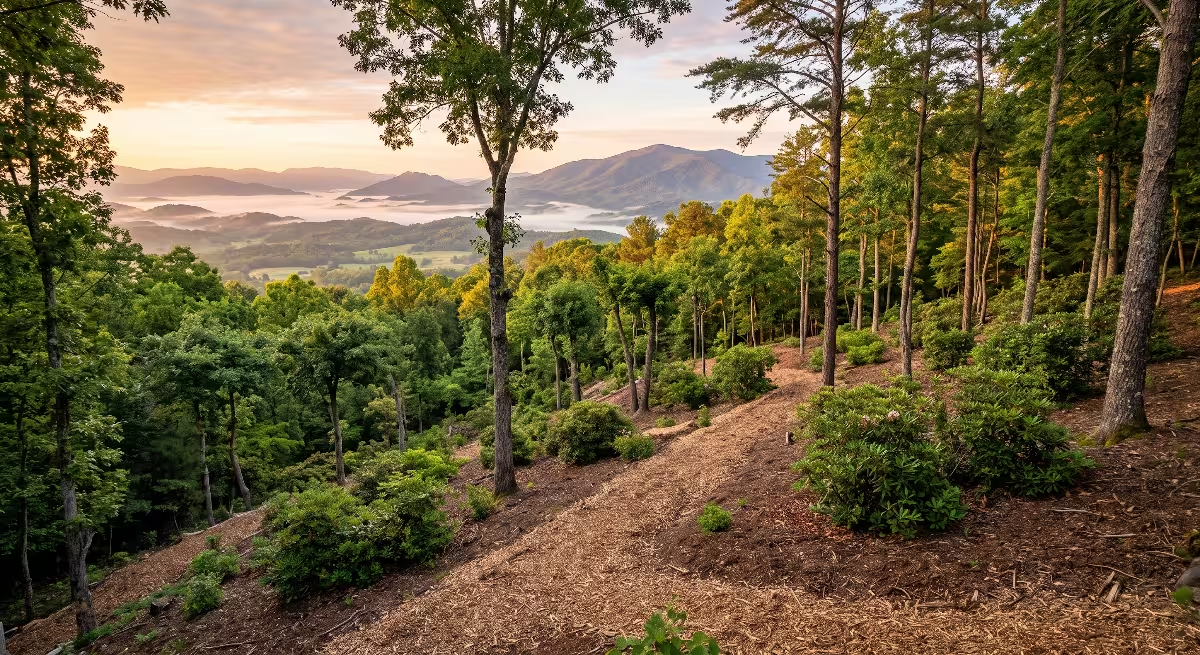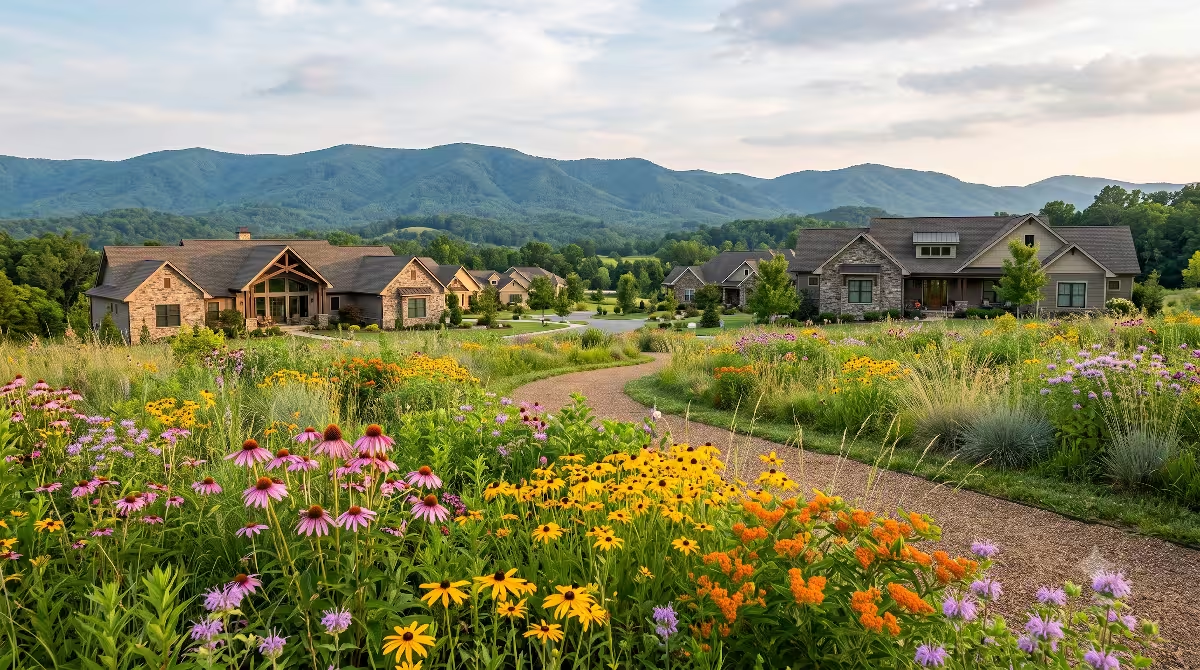


Imagine standing on a wind-swept ridge in Kingsport. Looking over a fresh building site. You have just finished the framing on a beautiful custom home. The house was stunning, but the land around it looked like a red-clay scar. This couple had spent years planning this dream home, looked at the five acres of raw earth and sighed. The wife, did not want a lawn that looked like a golf course. She wanted something that felt like the Tennessee mountains. She wanted birds, butterflies, and the sound of wind through tall grass. That was the moment her builder started talking about native meadow restoration as the solution for her property.
In the Tri-Cities, we are lucky to live in a place where the geography is truly unique. We sit right in the middle of the Blue Ridge and the Valley and Ridge areas. This means our soil and our weather allow for a huge variety of life. For the modern female home buyer, a home is more than just four walls and a roof. It is a sanctuary. Traditional lawns are often high-maintenance and chemically dependent. They do not give much back to the soul.
When we choose native meadow restoration, we are choosing to build a legacy. We are creating a living landscape that changes with every season. It is a sophisticated way to manage land that respects our history and our environment. Anybody who loves the beauty of Johnson City, loves how a meadow makes a property feel like it has been there forever.
Why Restore? The Value of a Living Landscape
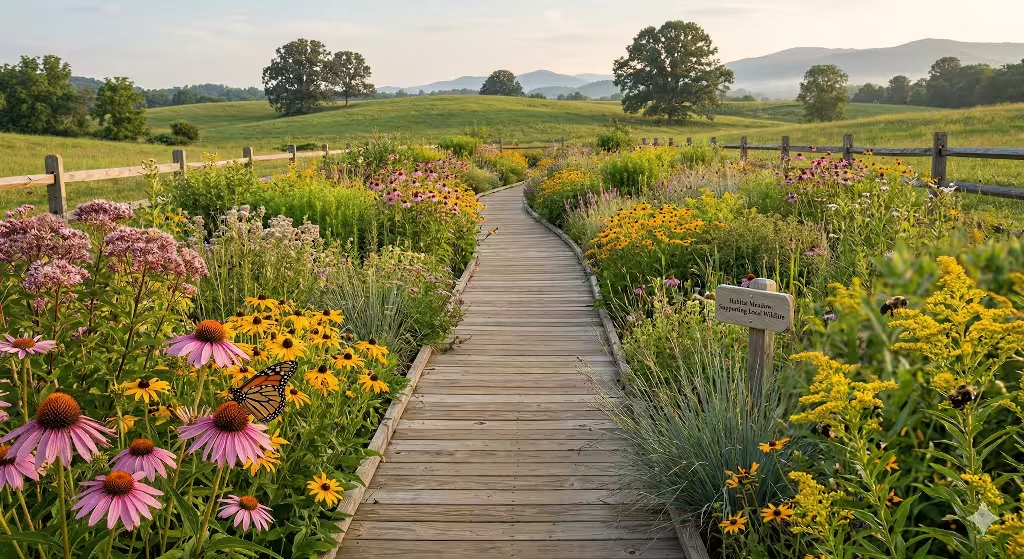
When we talk about native meadow restoration, we are talking about bringing back a piece of the original Tennessee. Many people think our state was always just thick forests, but we actually had vast grasslands, where buffalo roamed. Today, almost 90 percent of the rare species in our state depend on these open, grassy areas. By choosing native meadow restoration, you are creating a home for creatures that have nowhere else to go.
There is also a huge return on your investment. In the home building industry, we often look at the long-term costs of a property. A traditional lawn requires weekly mowing, expensive fertilizers, and thousands of gallons of water. Native meadow restoration takes more work at the very beginning, but once it is established, the costs drop significantly. You trade the noise of a lawnmower for the sound of songbirds. You trade chemical runoff for deep roots that clean our local groundwater.
From a design standpoint, a meadow offers a level of curb appeal that a flat lawn cannot match. Imagine a rolling hillside in Bristol covered in purple coneflower and goldenrod. It has a movement and a texture that feels luxurious and wild at the same time. For a custom home, this adds a layer of character that makes the house stand out. It shows that the owner is a steward of the land, not just a resident. Below are some of the steps involving in native meadow restoration.
Phase 1: Site Analysis and The Engineering Approach
Before we start any native meadow restoration project, we have to look at the data. You cannot just throw seeds on the ground and hope for the best. You have to understand the site. We start with three big things: light, drainage, and soil.
Most native meadow plants need at least six hours of full sun. If your acreage is heavily shaded by old oaks, native meadow restoration might look a little different for you. We also check the drainage. Some plants love wet feet, while others will rot if the soil stays soggy. In East Tennessee, we deal with a lot of clay. This clay holds water, but it also gets very hard in the summer.
We also have to do an inventory of what is already there. Most Tennessee acreage is covered in “enemy” plants like Tall Fescue or Bermuda grass. These were brought in for cattle or lawns, and they are very aggressive. If you do not remove them before you begin native meadow restoration, they will choke out your beautiful wildflowers in a single season. We look at the soil pH as well. Our soil in the Tri-Cities is often slightly acidic, which many of our native grasses actually prefer. Knowing these details helps us build a plan that is precise and effective.
Phase 2: The Clean Slate (Preparing the Land)
One of the most common questions people ask is: how do I prepare land for a native meadow? This is the most important part of native meadow restoration. If you skip this step, the rest of the project will likely fail. You have to remove the existing vegetation completely.
There are a few ways to do this. For smaller areas near the home, we often use solarization. This involves laying clear plastic over the ground during the hot summer months. The sun traps heat under the plastic and cooks the weeds and their seeds. It is a great chemical-free way to start your native meadow restoration.
For larger acreage, we might use the stale seedbed technique. This means we till the soil lightly to encourage weed seeds to sprout, and then we kill them off. We do this several times until the “seed bank” in the soil is empty. Another option for very large fields is the use of selective herbicides. While some people prefer to avoid chemicals, sometimes it is the only way to clear out ten acres of aggressive fescue so that native meadow restoration can actually take hold. As an expert, I always tell my clients that the preparation phase usually takes an entire growing season. You have to be patient to get the best results.
Phase 3: Designing Your Palette (Native Plant Selection)
Now we get to the fun part of native meadow restoration: choosing the plants. Many people ask: what are the best native plants for Tennessee meadows? I like to think of this as the interior design of your landscape. We need a balance of structure and color.
The foundation of any good native meadow restoration is the grass. We use native bunch grasses like Little Bluestem (Schizacharyium scoparium) and Indiangrass (Sorghastrum nutans). These grasses do not grow like a lawn. They grow in clumps, which leaves space for flowers to grow in between. They also have beautiful colors in the winter, turning shades of orange and bronze.
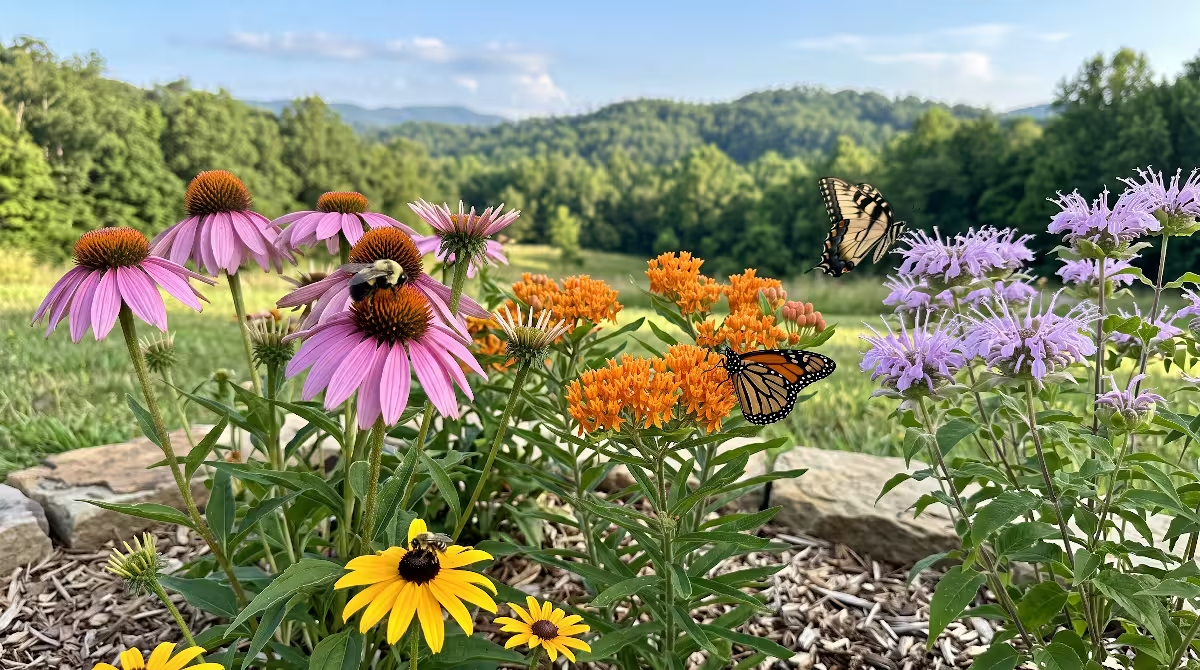
Then we add the showstoppers, which are the flowering plants. To make native meadow restoration look professional, you need flowers that bloom at different times. In the spring, we love Wild Columbine (Aquilegia canadensis). In the summer, we focus on Bee Balm (Monarda didyma) and Purple Coneflower (Echinacea purpurea). In the fall, our Tennessee meadows shine with Aromatic Asters (Symphyotrichum spp.) and Goldenrod (Solidago spp.). This bloom succession is vital. It ensures that bees and butterflies have food all year long. It also ensures that your view from the porch is always changing and always beautiful.
Phase 4: Installation Strategy (The When and How)
Timing is everything in the building industry, and it is no different for native meadow restoration. People often ask: when is the best time to plant a meadow in Tennessee? While you might think spring is best, we actually prefer late fall or early winter.
Many of our native seeds need a period of cold and wet weather to wake up. This is called cold stratification. By planting in the winter, we let nature do the work. The winter rains in Johnson City tuck the seeds into the soil. When the ground warms up in April, the seeds are ready to go.
There are two main ways to put the seeds down. For smaller slopes or areas near the house, we use broadcast seeding. This is basically scattering the seeds by hand or with a small spreader. For large Tennessee acreage, we use a machine called a no-till drill. This is a heavy piece of equipment that slices a tiny groove in the ground and drops the seed in. It is very precise. This method is great for native meadow restoration because it does not disturb the soil. If you stir up the soil too much, you bring old weed seeds to the surface, which we want to avoid.
Phase 5: The Stewardship Phase (Maintenance and Expectations)
People need to know that the first year of a build is the most hectic. Native meadow restoration follows a similar path. We have a saying for native plants: “The first year they sleep, the second year they creep, and the third year they leap.”
During the first year of native meadow restoration, you might feel a little disappointed. The plants are spending all their energy growing deep roots. On the surface, it might just look like a bunch of short green sprouts. This is when maintenance is key. People often ask about the maintenance requirements for native meadows. In year one, we do what we call “high mowing.” We keep the meadow cut to about eight or ten inches. This prevents weeds from making seeds, but it is high enough that it doesn’t hurt the young native plants.
By year two, you will see more flowers. By year three, the native meadow restoration is usually complete, and the plants “leap” into full size. From that point on, you only need to mow the meadow once a year in the late winter. This clears out the old growth and makes room for the new spring sprouts. Some people choose to do a prescribed burn if they have a lot of land and their local laws allow it. Fire is a natural part of the Tennessee landscape and can really jumpstart a meadow.
The Financial Aspect: Cost of Restoration
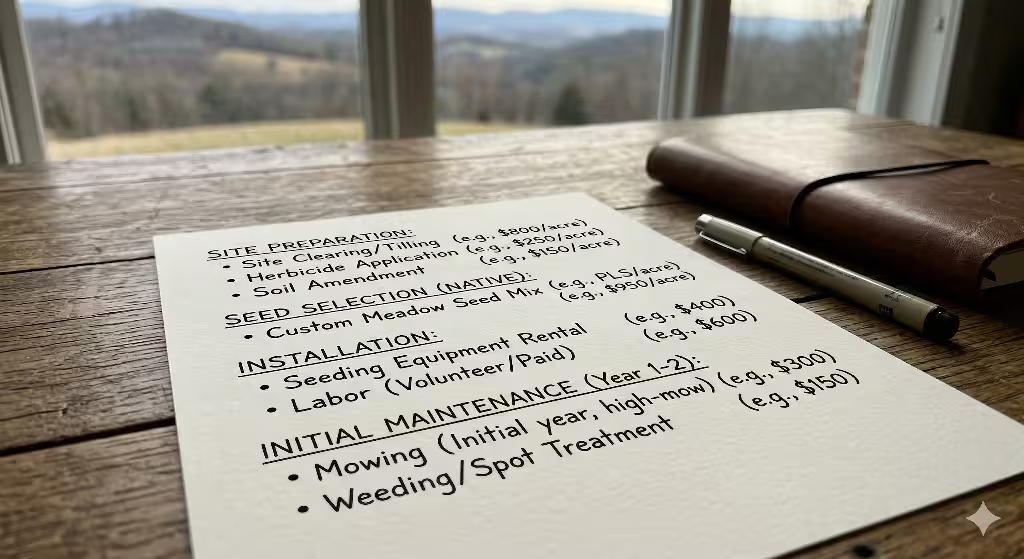
Many people want keep an eye on the budget. People naturally want to know: how much does it cost to restore a native meadow? The cost can vary depending on how much prep work you need to do. Generally, you can expect to spend anywhere from 500 dollars to 2,000 dollars per acre for the seed and the site preparation.
While that might seem high, you have to compare it to the cost of a lawn. To install a traditional lawn with sod or heavy seeding and irrigation can cost much more. Plus, you have to pay to maintain that lawn every single year. With native meadow restoration, the biggest cost is at the start. After three years, your maintenance costs are almost zero.
There are also programs that can help you pay for it. In Tennessee, we have resources like the NRCS cost-share programs. If you have a large amount of acreage, the government might actually help cover the cost because native meadow restoration provides such a huge benefit to the public by protecting soil and water. It is always worth checking with local agricultural experts in the Tri-Cities to see if your property qualifies for these grants.
Common Questions and Concerns about Native Meadow Restoration
Whenever homeowners want to learn about native meadow restoration, a few common concerns always come up. One big one is about wildlife. People worry that a meadow will attract snakes or ticks. It is true that a meadow is a habitat, but it is a balanced one. A healthy meadow attracts hawks, owls, and bluebirds that eat the things we don’t want. To keep ticks away from the house, I always suggest keeping a wide, mown path around the edges of the meadow. This gives you a clear walking area and keeps the taller grass away from your feet.
Another question is whether you can walk through the meadow. I always design native meadow restoration projects with mown paths. These paths look intentional and professional. they allow you to walk through the flowers and enjoy the butterflies without crushing the plants. It turns the meadow into a park for your family.
People also ask how long it takes to look “finished.” Unlike a house that is finished the day we hand over the keys, native meadow restoration is a living process. It takes about three full growing seasons to reach its peak beauty. But I find that my clients actually enjoy watching the process. They like seeing the first few flowers pop up in year two. It makes them feel more connected to their land.
Making the Choice for Your Tennessee Home
Building a home in the Tri-Cities is an amazing experience. Whether you are in the hills of Kingsport or the valleys of Johnson City, the land is part of the story. Choosing native meadow restoration is a way to honor that land. It is a choice that shows competence and integrity. You are choosing a landscape that is precise in its function and beautiful in its form.
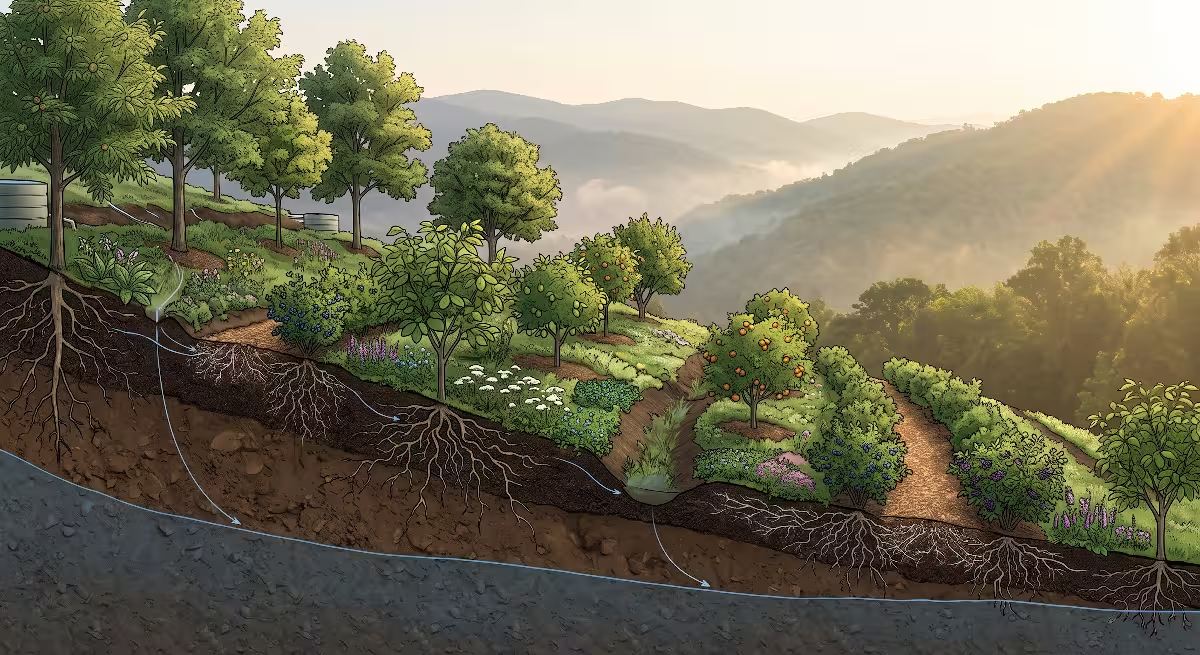
An additional benefit of native meadow restoration is how it handles stormwater and prevents erosion on our steep Tennessee hills. People who love to write and create art, appreciate the colors and the life that a meadow brings to a backyard. It is a project that requires patience, but the reward is a landscape that lives and breathes with you.
If you are planning a new build or looking at a large piece of acreage that is currently just a field of weeds, we encourage you to think about native meadow restoration. It is more than just a gardening project. It is a way to build a home that is truly in harmony with Tennessee. You are not just building a house; you are restoring a piece of the world.
When we look at the future of home building in our area, we see more people moving away from the “standard” suburban look. We see people who want authenticity. Native meadow restoration provides that. It tells a story of what Tennessee used to be and what it can be again. It is a gift to yourself and to the future generations who will live on your land.
When you see the first goldfinch land on a coneflower in your new meadow, you will know that all the work of native meadow restoration was worth it. It is a magical moment that connects you to the land in a deep way. Native meadow restoration makes those moments possible.
The process of native meadow restoration might seem daunting at first, but if you take it one step at a time, it is very manageable. Start with a small area if you need to. Watch how the birds react. See how the soil changes. I think you will find that once you start, you will want to turn your entire property into a native sanctuary.
In our region, we have so many experts and local nurseries that can help. From the staff at our state parks to the local native plant societies, the resources are there. Native meadow restoration is a community effort in many ways. When you plant a meadow, your neighbors’ bees get more food. The water that leaves your property is cleaner for the people downstream. It is a professional and responsible way to manage Tennessee acreage.
Recently there has been a shift toward native meadow restoration. It feels like we are finally learning how to live with the land instead of just on it. For any woman looking to create a legacy on her property, this is a beautiful place to start.
As you move forward with your project, remember to stay patient. The soil wasn’t built in a day, and your meadow won’t be either. But every year, it will get stronger. Every year, it will get more beautiful. That is the beauty of native meadow restoration. It is a project that grows with you and your family. It is a true reflection of the spirit of the Tri-Cities.
A Season by Season Guide to Your Meadow
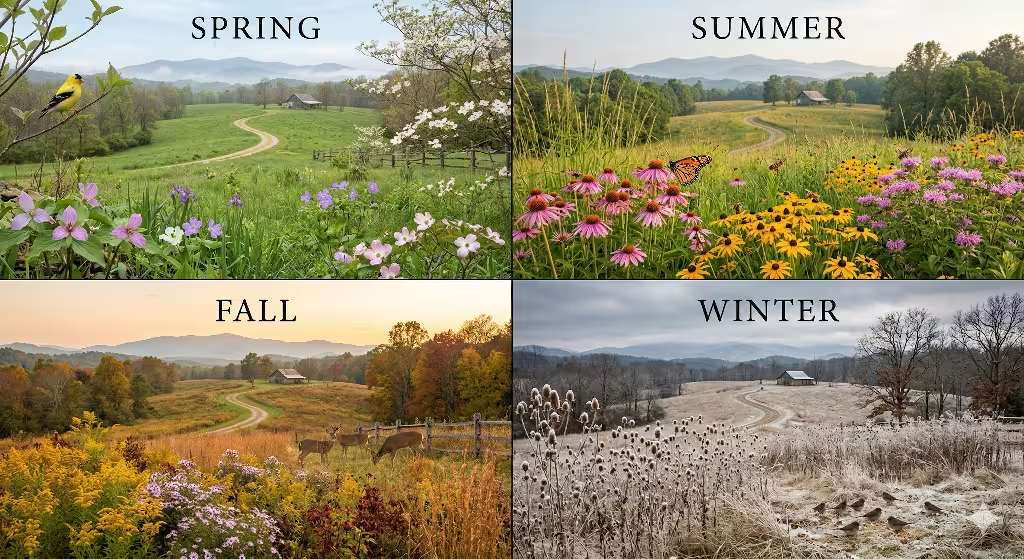
To help you visualize what native meadow restoration looks like throughout the year, let’s break down the seasons. This helps manage expectations and highlights the beauty of each phase.
Spring: This is the season of awakening for native meadow restoration. You will see the bright greens of the new grass shoots. Wildflowers like Golden Ragwort (Packera aurea) will provide early color. This is the time when you might do some spot-weeding if any winter weeds have popped up.
Summer: This is the peak of the show. Your native meadow restoration will be tall and full of life. This is when the Monarch butterflies will visit your milkweed (Asclepias spp.). The heat of a Tennessee July doesn’t bother these plants because their roots are so deep. They will look fresh and vibrant even when the neighbors’ lawns are turning brown.
Fall: The colors shift to golds, purples, and deep reds. This is the most dramatic time for native meadow restoration. The grasses turn bronze and the Asters (Symphyotrichum spp.) provide a late-season feast for pollinators. It is a great time to take photos and enjoy the cool mountain air.
Winter: While many think of winter as “dead,” in native meadow restoration, it is a time of structure. The dried seed heads and tall grasses provide a beautiful silhouette against the snow. They also provide vital cover and food for birds during the coldest months of the year in the Tri-Cities.
By understanding this cycle, you can appreciate your native meadow restoration every single day of the year. It is a dynamic landscape that never stops working for you and for the environment. It is the perfect finishing touch for any custom home in East Tennessee.
Final Technical Tips for Success
For a successful native meadow restoration, always buy your seeds from a reputable local source. Seeds grown in the South will do much better than seeds brought in from the Midwest.
Also, make sure your seed mix is “pure live seed” (PLS). This is a technical term we use to ensure you aren’t paying for stems and chaff. You want the highest quality for your native meadow restoration.
Lastly, do not fertilize your meadow. Native plants are adapted to our local soils. If you add fertilizer, you are mostly just helping the weeds grow. The goal of native meadow restoration is to let the native plants win by being tougher and more efficient than the weeds.
If you follow these steps, your Tennessee acreage will be transformed. You will have a property that is not only beautiful but also functional and sustainable. It is a wonderful way to live, and I am so glad to see more people in our area embracing this path. Native meadow restoration is truly the future of the Tennessee landscape.
We hope this guide helps you feel confident in starting your journey. Whether you are in the planning stages of a new home or looking to update your current land, native meadow restoration is a choice you will never regret. It brings a sense of peace and purpose to a home that is hard to find anywhere else. Happy planting, and enjoy the beauty of our incredible state!