

Open Shelving vs. Hidden Pantry
One question comes up repeatedly in our local design consultations: Should you use open shelving or a hidden pantry to create the best biophilic kitchen flow?
At first glance, this choice looks like a simple style debate. Some people love the airy look of open shelving. Other people prefer the clean, flat look of closed cabinet panels. From an environmental engineering standpoint, this decision is not just about looks. The choice between open shelving and a
In this comprehensive guide, we will analyze open shelving alongside hidden storage through the lens of human biology, spatial psychology, and everyday mountain living. We will look at natural lighting, acoustic stress, clutter management, and regional Appalachian hardwoods. By the end of this article, you will know how to configure your kitchen layout so it supports your daily health, workflow, and peace of mind.
The Biophilic Kitchen Framework: Spatial Flow and Environmental Psychology
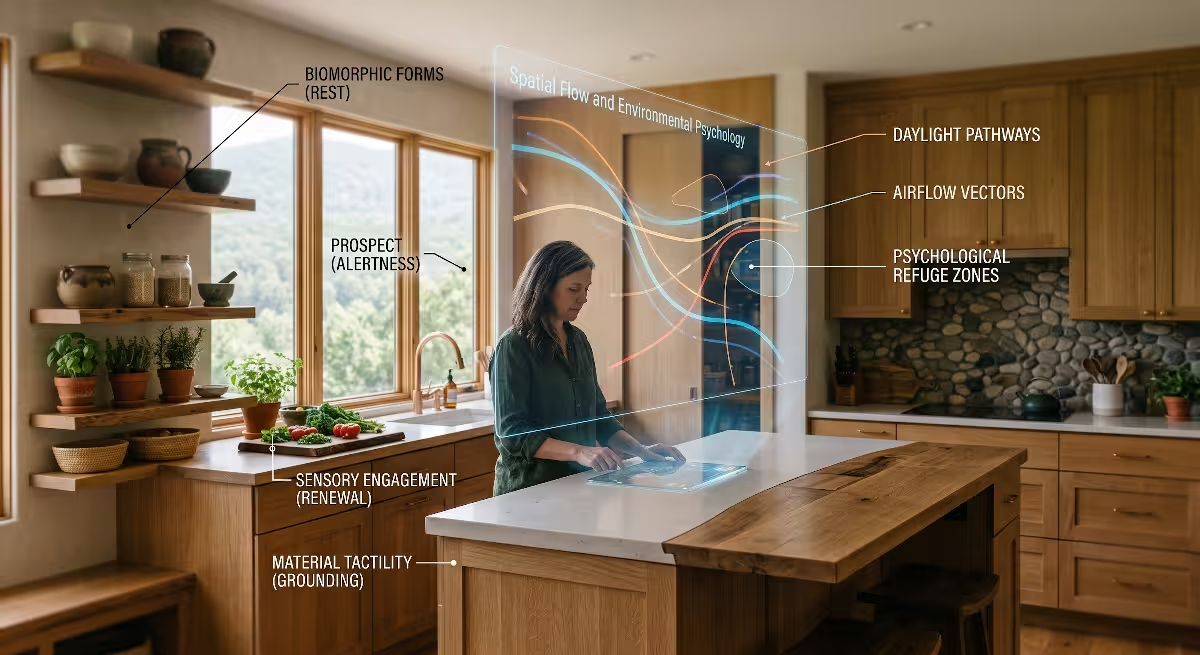
To understand kitchen flow, we must look past the old kitchen work triangle. For decades, builders arranged kitchens based only on the walking distance between the stove, the sink, and the refrigerator. While that physical step count matters, it ignores the human nervous system.
True biophilic design connects modern indoor living with our evolutionary biology. As humans, our eyes, ears, and brains evolved in outdoor habitats over millions of years. Our bodies respond constantly to natural light shifts, organic shapes, fresh airflow, and visual patterns. When an indoor kitchen cuts off these sensory cues, our bodies experience subtle stress. Our task efficiency drops, and mental fatigue sets in.
Two environmental psychology theories help explain how storage design impacts human wellness in the home:
First is the Prospect and Refuge theory, introduced by geographer Jay Appleton. Appleton discovered that humans feel safest and most relaxed in spaces that offer both prospect and refuge. Prospect means having an open, clear view across your territory so you can spot opportunities or changes in your environment. Refuge means having a safe, enclosed, and protected place to step back into when sensory inputs become overwhelming.
Second is
When we evaluate open shelving, we see that it emphasizes prospect. Open shelving removes heavy upper cabinet boxes, opens sightlines, and allows sunlight to travel uninterrupted across work surfaces. However, if open shelving is loaded with random items, it creates visual chaos that drains mental energy.
A hidden pantry, on the other hand, acts as a pure refuge. A hidden pantry conceals small appliances, food boxes, and dirty prep tools behind a closed door or panel. This enclosure restores order to the main kitchen. Yet, if a home relies completely on closed boxes and ignores open shelving, the kitchen can feel rigid, dark, and disconnected from the natural world.
How Does Biophilic Design Improve Kitchen Workflow?
Biophilic kitchen design improves daily workflow by reducing sensory friction and supporting natural bodily rhythms. When your kitchen incorporates open shelving made from natural wood, sunlight bounces deeper into the room. This daylight stimulates your circadian rhythm, which controls wakefulness and digestion during morning and afternoon meal prep.
At the same time, positioning open shelving near natural light sources helps you locate everyday plates and bowls using peripheral vision. You do not need to repeatedly pull open heavy cabinet doors with wet or flour-coated hands. Workflow becomes a continuous, fluid movement where clean air circulates freely, sightlines stay open toward garden windows, and the materials you touch connect you directly to the living landscape outside.
Open Shelving: The Mechanics of Prospect, Daylighting, and Tactile Exposure
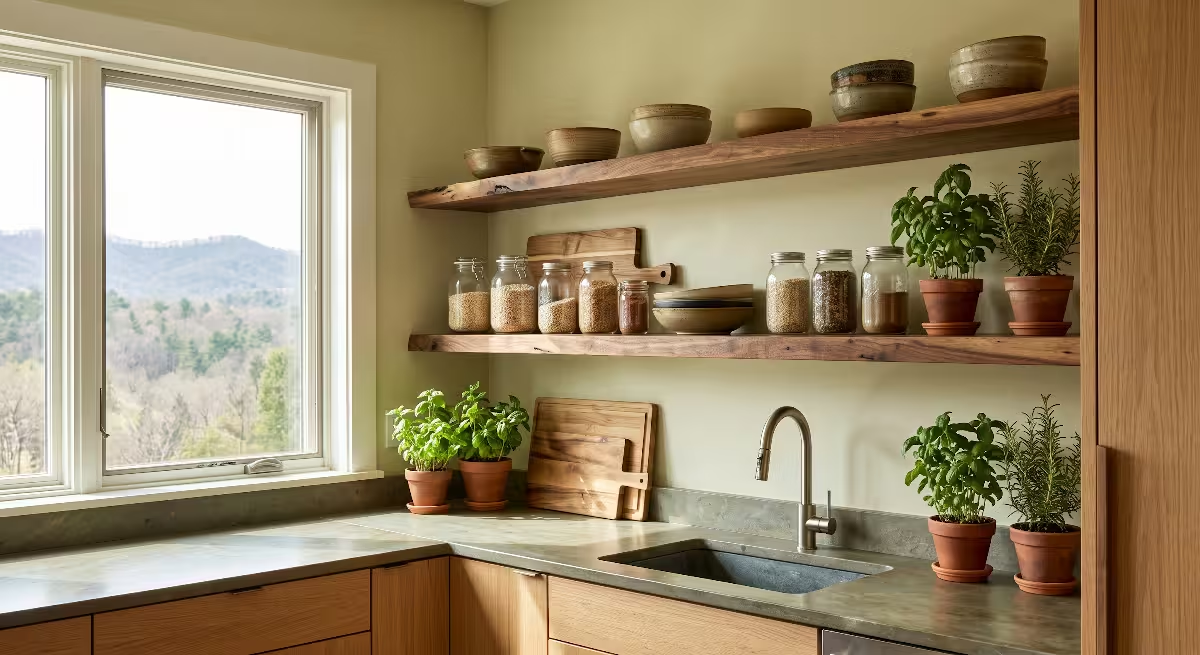
Open shelving changes the physical physics of a kitchen. By eliminating upper cabinet boxes, open shelving changes the way daylight moves, how sound bounces, and how people interact with their storage. Let us look closely at the biological and practical mechanics of open shelving.
+----------------------------------------------------------------+
|                   OPEN SHELVING DYNAMICS                       |
+----------------------------------------------------------------+
|  [ Daylighting ] ----> Bounces light deep into work surfaces   |
|  [ Materials ]   ----> Raw Appalachian hardwoods ground touch  |
|  [ Prospect ]    ----> Unbroken sightlines to outdoor views     |
|  [ Risk Factor ] ----> Grease, dust, and visual entropy        |
+----------------------------------------------------------------+
Daylight Permeability and Luminescence
In a standard kitchen, solid upper cabinets project twelve to fourteen inches outward from the wall directly above your prep counters. These deep boxes block daylight coming from nearby windows. They cast dark shadows across your work surface, forcing you to rely on artificial overhead spotlights.
Installing open shelving solves this shadow problem. Because open shelving uses narrow horizontal planes without solid sides or doors, daylight flows around the shelves. Natural light washes down the wall surface and reflects across countertops.
In our East Tennessee region, where winter mornings can bring overcast skies across the mountains, maximizing natural daylight is essential. Open shelving allows early morning sunlight to reach your eyes. This light exposure signals your brain to reduce melatonin production and boost daytime alertness. The kitchen feels bigger, airier, and more intimately tied to outdoor weather patterns.
Material Honesty and Sensory Touch
Biophilic design values genuine, natural materials over manufactured imitations. Open shelving gives you a direct way to showcase real, sustainably harvested regional lumber. In the Southern Appalachian forests surrounding Johnson City, we have access to exceptional native hardwoods:
- White Oak (Quercus alba): A dense wood with closed cellular pores that resist moisture. Its warm, golden-brown hue creates an earthy foundation.
Black Walnut (Juglans nigra) : A rich, dark hardwood with deep grain character. It adds warmth, grounds light-colored walls, and provides strong contrast.- Sugar Maple (Acer saccharum): A bright, fine-grained wood that reflects maximum light and stays exceptionally clean over decades of service.
When you install solid timber open shelving, you bring living rings, grain variations, and real organic textures into your everyday prep space. Touching a real wood shelf when reaching for a coffee mug gives your nervous system a brief tactile reset. Unlike plastic laminate or synthetic veneers, natural wood on open shelving ages with character, developing a soft patina that tells the story of your home.
Living Elements and Micro-Ecosystems
Open shelving also creates a practical display platform for indoor botanicals. Placing living culinary herbs like sweet basil, rosemary, thyme, and mint directly on open shelving accomplishes two design goals at once.
First, living plants emit gentle phytoncides, which are airborne organic compounds that plants produce to protect themselves. Breathing in small amounts of these natural compounds has been shown to reduce cortisol levels in humans.
Second, having living herbs on open shelving provides immediate
The Biological and Practical Costs of Open Shelving
Despite its visual appeal, open shelving has definite drawbacks that must be engineered carefully. The most common problem with open shelving is visual entropy, which is the scientific term for disorder and clutter.
When open shelving is packed with commercial food containers, bright plastic packaging, mismatched takeout containers, and random kitchen gadgets, your brain reads that layout as visual noise. Instead of feeling calm and connected to nature, you feel overwhelmed. The prospect benefits of open shelving vanish, replaced by cognitive fatigue.
The second issue is the physical buildup of cooking grease and dust. When you cook, heat and bubbling oils release microscopic grease particles into the air. In East Tennessee, our summer humidity can stay high for weeks at a time. This airborne moisture combines with aerosol grease and floating house dust, forming a sticky layer on flat surfaces.
If open shelving is installed too close to a high-heat gas range or an electric cooktop without proper ventilation, every exposed plate and bowl on that open shelving will collect grime. You then spend valuable time washing dishes before you can even use them, which disrupts your cooking flow.
Is Open Shelving Practical for Everyday Cooking, or Does It Cause Visual Chaos?
Open shelving is very practical for everyday cooking, but only when you set strict rules for what lives on those shelves. Open shelving works best when it holds daily essentials: the plates, bowls, cups, and drinking glasses that your household uses, washes, and returns within a twenty-four to forty-eight hour cycle. Because these items rotate constantly, dust never has time to settle on them.
Visual chaos happens when homeowners treat open shelving like general pantry storage. If you store boxed cereals, canned goods, and rarely used baking pans on open shelving, the space quickly looks disorganized. Keep open shelving reserved for matching, high-rotation dinnerware and clean natural materials, and reserve bulky items for closed cabinets.
The Hidden Pantry: Acoustic Refuge and Sensory Decompression
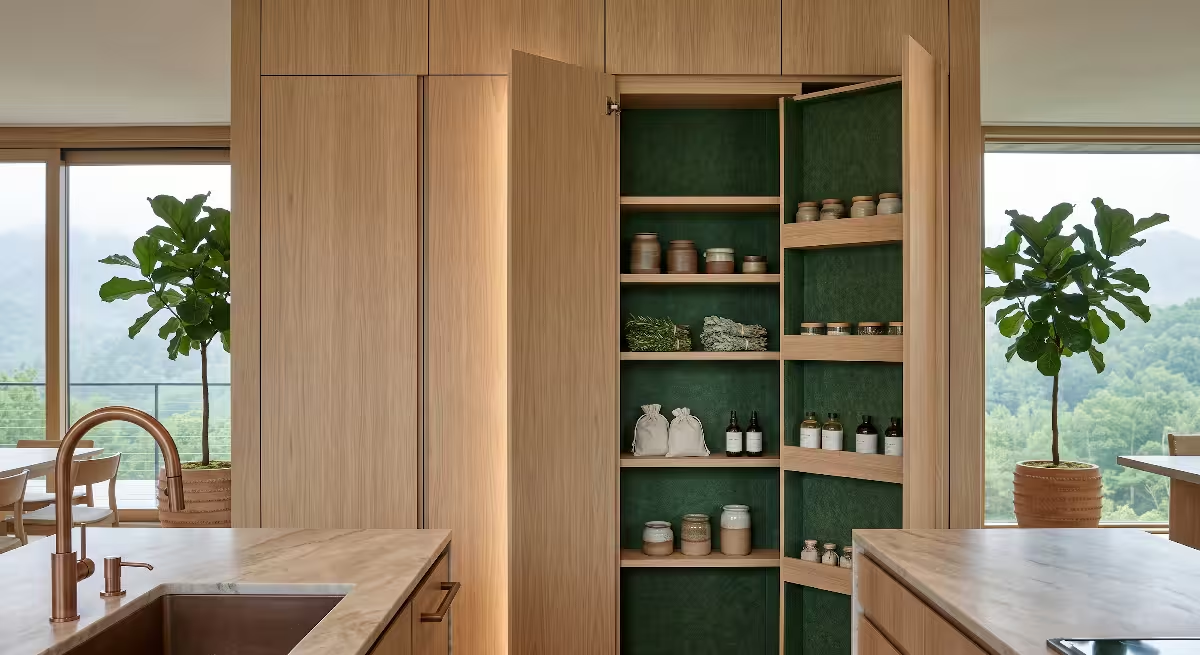
While open shelving celebrates openness and light, the hidden pantry provides quiet refuge,
+----------------------------------------------------------------+
|                    HIDDEN PANTRY DYNAMICS                      |
+----------------------------------------------------------------+
|  [ Visual Reset ]   ----> Erases packaging noise and clutter   |
|  [ Sound Baffling ] ----> Muffles motor hums and prep racket   |
|  [ Microclimate ]   ----> Cool, dark storage for living foods  |
|  [ Risk Factor ]    ----> Can feel isolating if poorly zoned   |
+----------------------------------------------------------------+
The Concept of Evolutionary Refuge
In wild nature, no creature remains fully exposed on an open plain indefinitely. Healthy ecosystems always offer sheltered dens, shaded hollows, and safe nesting sites. A hidden pantry serves as that safe architectural den inside a busy modern home.
When you walk into a kitchen where all clutter is tucked away inside a hidden pantry, your eyes can rest. The Kaplans’ Attention Restoration Theory shows that flat, continuous planes and clean sightlines give our directed attention mechanisms a chance to recharge.
Inside the hidden pantry, you can leave small appliances plugged in, stack unwashed prep bowls during a dinner party, and store brightly colored grocery packaging completely out of sight. Closing the door to the hidden pantry instantly restores peace to the primary living and dining areas.
Acoustic Ecology and Noise Isolation
One overlooked element of biophilic design is the acoustic landscape of your home. Natural environments feature
Refrigerators produce a continuous low-frequency motor hum. Dishwashers click, pump, and slosh. Coffee grinders, high-speed blenders, and stand mixers generate high-decibel motor whine that instantly triggers a fight-or-flight stress response in the body.
The primary kitchen stays quiet, making it easier to hold conversations, listen to acoustic music, or enjoy peaceful morning coffee while looking out at the mountains.
Microclimate Control for Whole and Living Foods
Biophilic eating involves cooking with fresh, whole, unprocessed ingredients. This includes fresh garden produce, heirloom potatoes, winter squash, garlic bulbs, and home-fermented foods like sourdough starters, krauts, and kombucha.
These living foods require specific environmental conditions to stay fresh:
- Cool, steady temperatures: Heat accelerates spoilage and breaks down vitamins.
- Protection from direct sunlight: Ultraviolet light destroys delicate nutrients and speeds up vegetable decay.
- Controlled airflow: Proper ventilation prevents mold spores from settling on fresh produce.
A hidden pantry provides this controlled microclimate far better than open shelving. On open shelving, food items are exposed to warm ambient room air, steam from boiling pots, and direct sunlight from kitchen windows. Inside a well-designed, unheated hidden pantry, root crops and canned goods sit in calm, dark, temperate conditions. This mimics the biological preservation power of a traditional Appalachian root cellar.
The Spatial Risks of a Hidden Pantry
Despite its sensory benefits, a poorly planned hidden pantry can break kitchen flow. If you isolate essential cooking tools too far from the main stove, cooking becomes tiring. Homeowners find themselves walking back and forth between two rooms dozens of times to make a single meal.
Furthermore, stepping into a dark, cramped, windowless pantry can feel claustrophobic and uninviting. To support biophilic flow, a hidden pantry must feature smart entry points, efficient shelving, and daylight-balanced lighting.
What Is a Hidden Pantry Called, and How Does It Differ from a Standard Pantry?
A hidden pantry goes by several architectural names depending on its size and features:
- Scullery: A secondary utility space equipped with a sink, prep counter, and dishwasher, used for washing dishes and messy food prep.
- Walk-in Larder: A cool, well-ventilated room designed specifically for storing dry foods, root crops, oils, and preserved staples.
- Back Kitchen: A fully functional secondary kitchen where heavy cooking, frying, and appliance use happen out of view.
- Appliance Garage: A small, cabinet-depth niche hidden behind pocket or tambour doors on the main kitchen counter.
A standard pantry is usually a shallow closet with basic shelves and a standard hinged door. In contrast, a modern hidden pantry is integrated seamlessly into the surrounding cabinetry or wall architecture. It often uses cabinet-faced doors that look like regular panels when closed, maintaining visual continuity across the entire kitchen.
Head-to-Head Architectural Comparison: Open Shelving vs. Hidden Pantry
To understand how open shelving and hidden pantries compare directly, we must look at how each storage option performs across essential environmental, practical, and sensory categories.
| Evaluation Vector | Open Shelving System | Hidden Pantry (Scullery/Larder) | Biophilic Impact Winner |
| Visual Prospect | High: Sightlines remain open, wall depth increases, and light reflects freely across the room. | Low: Wall panels and closed doors contain the view to define boundaries. | Open Shelving |
| Sensory Refuge & ART | Low: Exposes everyday items, creating visual clutter if not curated carefully. | High: Closes off food packaging, small appliances, and messes to give your mind a quiet rest. | Hidden Pantry |
| Daylight Permeability | High: Eliminates upper cabinets, allowing exterior window light to wash down backsplashes and counters. | Neutral: Does not add daylight to the main room, and the pantry interior often needs artificial fixtures. | Open Shelving |
| Acoustic Management | None: Hard dish surfaces and open walls reflect motor hums, kitchen clatter, and running water. | High: Thick drywall and interior doors baffle noisy blenders, dishwashers, and food processors. | Hidden Pantry |
| Material Tactility | High: Showcases live-edge or clean-sawn local timber, handmade pottery, and living herbs. | Contained: Functional wire or painted wood shelving remains tucked behind closed doors. | Open Shelving |
| Microclimate Resistance | Poor: Dinnerware and food face cooking grease, ambient room dust, and summer humidity shifts. | Strong: Protects bulk ingredients and delicate cookware from moisture, heat, and sunlight. | Hidden Pantry |
Looking closely at this comparison, you can see that neither open shelving nor a hidden pantry is completely superior on its own. Each option addresses a completely different part of human wellness:
Open shelving excels at connecting you to the outdoor world. It increases your visual horizon, reflects daylight, and lets you touch authentic, natural materials like oak and walnut every single day. When you look up from chopping vegetables and see a set of warm, solid wood open shelving holding clean white ceramics, your brain experiences open prospect and calm.
However, the hidden pantry is the champion of mental quiet and practical utility. It isolates mechanical noise, hides commercial chaos, and protects living produce from heat and sun. Without a hidden pantry or enclosed storage nearby, open shelving often becomes overloaded with clutter, losing the very biophilic qualities that made it attractive in the first place.
The Prospect and Refuge Hybrid Blueprint: Engineered Synergy
Because open shelving offers outstanding daylight prospect, and a hidden pantry delivers unbeatable acoustic and visual refuge, the ideal biophilic kitchen does not choose between them. Instead, it combines both into a balanced hybrid system.
+----------------------------------------------------------------+
|             THE 80/20 HYBRID ARCHITECTURAL BLUEPRINT           |
+----------------------------------------------------------------+
|  PRIMARY KITCHEN (20% Open Shelving)                           |
|  - 2 to 3 thick White Oak or Black Walnut open shelves         |
|  - Holds daily rotation dishes, glassware, and living herbs    |
|  - Daylight bounces cleanly around window frames               |
|                                                                |
|  HIDDEN PANTRY (80% Enclosed Storage)                          |
|  - Sequestered behind flush, wood-grain secret doors           |
|  - Houses blenders, mixers, bulk goods, and excess dishware    |
|  - Acoustic insulation dampens appliance motor noise           |
+----------------------------------------------------------------+
The 80/20 Spatial Allocation Model
To create steady biophilic flow, follow the 80/20 spatial rule. Dedicate eighty percent of your total kitchen storage volume to closed, hidden areas, and dedicate twenty percent to open shelving.
Total Kitchen Storage Volume:
[==================== 80% Hidden Pantry ====================][== 20% Open Shelving ==]
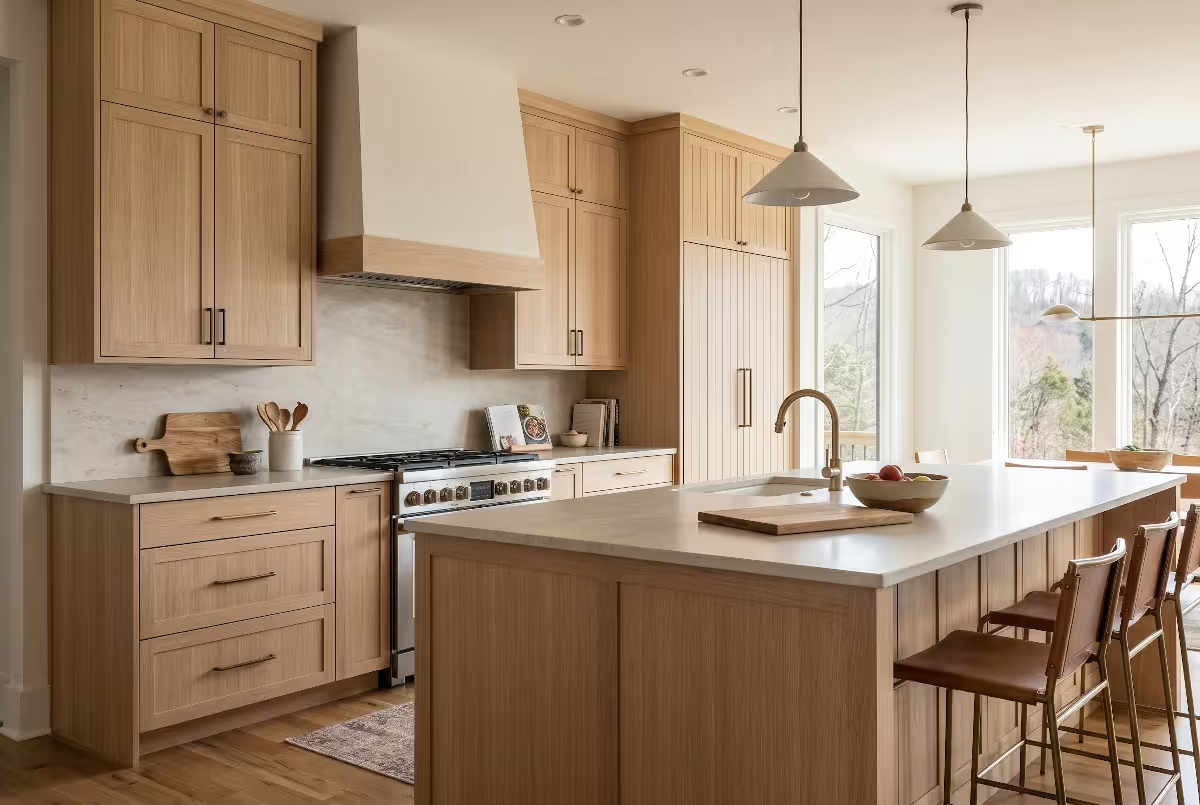
- The 80% Refuge (Hidden Pantry): Place eighty percent of your kitchen items inside the hidden pantry or behind closed base cabinet drawers. This includes packaged foods, cereal boxes, baking ingredients, spare pots and pans, small countertop appliances, and specialty serving platters. Because this inventory stays out of sight, your main kitchen maintains clean surfaces, continuous lines, and low visual noise.
- The 20% Prospect (Open Shelving): Reserve the remaining twenty percent of your storage for open shelving in your prime prep and coffee zones. Keep this open shelving lightly loaded. Place only everyday drinking glasses, everyday dinner plates, a small wooden salt cellar, and one or two pots of living herbs on this open shelving. With few items on display, the natural grain of the wood shelves remains visible, and daylight moves freely across the room.
Sightline and Daylight Engineering
To maximize the benefits of open shelving, place the shelves along your brightest exterior walls. Run open shelving right up to the sides of your window frames, or cantilever them directly across window openings using sturdy brass, steel, or hidden rod supports.
When you place open shelving across or next to a window opening, the shelves act as architectural light shelves. Natural sunlight strikes the flat horizontal wood surfaces and bounces upward toward the ceiling, diffusing soft daylight evenly across your entire workspace.
At the same time, design the entrance to your hidden pantry so it flows naturally into the room. Conceal the pantry door using wood-paneled cabinet faces or a flush drywall door painted to match the surrounding wall.
When the door is closed, the entrance disappears into the background, maintaining an unbroken visual field. When the door is open, the pathway should be wide and level, allowing you to carry heavy soup pots or grocery bags into the pantry without squeezing through tight bottlenecks.
+-----------------------------------------------------------------+
|               KITCHEN SIGHTLINE AND DAYLIGHT FLOW               |
+-----------------------------------------------------------------+
| [Window] === Daylight ===> [Open Shelving] === Bounces ===> Prep Counter
|                                                                 |
| [Main Prep Zone] <==== Easy Direct Pathway ====> [Hidden Pantry]|
+-----------------------------------------------------------------+
Regional Appalachian Material and Environmental Sourcing
In the Tri-Cities region, our home designs must accommodate distinct seasonal weather shifts. Summers in Bristol, Kingsport, and Johnson City can be hot and humid, while mountain winters bring crisp, dry, sub-freezing air. These temperature and moisture swings cause solid timber to expand and contract across the seasons.
When installing open shelving in East Tennessee, select quarter-sawn native hardwoods like Southern Appalachian White Oak. Quarter-sawn boards are cut perpendicularly to the tree’s growth rings. This cutting technique makes the timber stable, helping it resist twisting or warping as household humidity changes.
Finish your open shelving with breathable, non-toxic plant oils, such as pure tung oil or cold-pressed linseed oil blended with natural beeswax. Avoid heavy, synthetic polyurethane coatings.
Natural oil and wax finishes penetrate deep into the wood fibers. They seal the wood against water spots while letting the natural timber breathe, expand, and contract without cracking. Most importantly, plant-based finishes do not off-gas volatile organic compounds (VOCs) into your indoor kitchen air, keeping your breathing environment clean and pure.
How Do You Balance Open Shelving and Hidden Storage in a Modern Kitchen?
You balance open shelving and hidden storage by dividing your kitchen into active functional zones. Place open shelving directly in your primary work area, centered around the sink, prep counter, and coffee station. This puts the items you use every morning and evening right at your fingertips, bathed in natural window light.
Position your hidden storage and hidden pantry slightly to the side or behind your main cooking area. This secondary zone holds your dry goods inventory, small appliances, and cleanup tools.
By keeping prep tools visible on open shelving and bulk storage tucked away in the hidden pantry, you eliminate clutter while keeping the kitchen comfortable, efficient, and easy to use.
Common Questions Answered about Open Shelving vs. Hidden Pantries
Does open shelving disrupt or enhance biophilic flow in a kitchen?
Open shelving enhances biophilic flow when it is planned carefully and kept organized. By removing bulky upper cabinetry, open shelving allows natural sunlight from exterior windows to travel freely across the room, brightening dark corners and helping support your circadian rhythm.
Furthermore, open shelving lets you incorporate natural materials into your daily routine, such as solid Appalachian hardwoods, handmade clay ceramics, and living potted herbs.
However, open shelving can disrupt biophilic flow if it is used to hold commercial food packaging, brightly colored boxes, or mismatched kitchen supplies. That type of clutter creates visual noise, causes mental fatigue, and cancels out the calming benefits of natural daylight and wood textures.
How does regional climate affect open shelving performance?
Regional climate has a direct effect on how easy it is to keep open shelving clean and structurally sound. In humid climates, like our summers here in the Appalachian valleys of East Tennessee, high indoor humidity mixes with airborne grease droplets from cooking. This airborne mixture settles on open shelving, creating a sticky coating on exposed plates and woodwork.
To prevent this grime buildup, homeowners with open shelving should install a high-performance range hood that vents directly outdoors, moving at least 600 cubic feet of air per minute (CFM).
In addition, seasonal moisture shifts cause solid wood open shelving to expand in summer and shrink in winter. Using stable quarter-sawn hardwoods and applying breathable plant-oil sealants keeps the wood flat and prevents splitting over time.
What is the ideal wood for biophilic kitchen shelving?
The ideal wood for biophilic open shelving is a dense, locally sourced hardwood with tight cellular pores and strong natural resistance to moisture:
- White Oak: The top architectural choice because its internal pores are plugged with natural tyloses, making it rot-resistant, highly stable, and easy to clean.
- Black Walnut: A luxurious option that introduces dark chocolate tones, tight grain lines, and an earthy appearance that softens bright white walls.
- Sugar Maple: A very hard, light-colored wood that brightens dark rooms and offers exceptional resistance to dents and surface scratches.
Always select domestic hardwoods harvested from sustainably managed regional forests. These woods look authentic, wear gracefully, and connect your home directly to the surrounding regional landscape.
Can a hidden pantry maintain biophilic qualities without an exterior window?
Yes, a hidden pantry can feel deeply biophilic even if it lacks an exterior window. To bring nature into an interior pantry, use circadian-tuned LED lighting with a high color rendering index (CRI of 90 or higher). Set these lights to shine at a crisp 4000K to 5000K during midday, and warm down to a soft 2200K to 2700K in the evening to match the natural color temperature of outdoor sunlight.
In addition, line your hidden pantry walls with unfinished eastern white pine or cedar slats. These aromatic woods give off a fresh, forest scent that naturally repels insects while keeping the pantry smelling clean and dry.
Using breathable clay plaster or mineral lime paint on interior pantry walls also helps absorb excess humidity, protecting dry goods without synthetic chemical off-gassing.
How often do you need to clean open shelving?
Open shelving needs two separate cleaning routines to stay fresh and clean:
- Weekly Dust and Wipe Down: For open shelving located within six to eight feet of your cooktop, run a dry or damp microfiber cloth over exposed shelf edges once a week to pick up stray dust and cooking moisture before they can bond into grime.
- Every Three to Six Months: Every three to six months, remove all dishes from your open shelving, wipe down the timber with a mild, pH-neutral plant soap, let the wood dry completely, and rub in a thin coat of food-grade mineral oil or beeswax salve.
Dishes that stay in daily rotation on your open shelving are washed constantly during normal use, so they rarely collect dust.
Does open shelving make a small kitchen feel larger?
Yes, open shelving makes a small kitchen feel significantly larger. Solid upper cabinets project forward into the room, creating an enclosed, boxy feeling that brings the walls closer to your face.
Replacing upper cabinets with open shelving pushes your visual boundaries back to the actual structural wall. This extra wall reveal creates greater visual depth, allows sightlines to continue uninterrupted across the room, and lets natural window light reach every counter surface.
In compact kitchens, using open shelving makes tight rooms feel lighter, more open, and far more connected to adjacent living spaces.
Strategic Conclusion and Implementation Plan
Balancing open shelving and a hidden pantry is not an all-or-nothing choice. It is an exercise in ecological balance. In the natural world, healthy environments balance open views with safe, quiet shelters. Your kitchen should offer that exact same balance.
Open shelving gives you prospect. It lets morning light wash across your countertops, brightens your spirits, and connects you to regional timber, handmade ceramics, and living botanical herbs.
The hidden pantry gives you refuge. It isolates noisy small appliances, stores bulk food supplies in a cool microclimate, and hides visual clutter behind clean, quiet panels.
When you bring these two systems together into an 80/20 hybrid kitchen design, your kitchen transforms. The room stops feeling like a purely mechanical workspace and becomes a restorative living environment.
You enjoy the light, airy feeling of open shelving right where you prepare meals, supported by the hidden storage capacity of a quiet walk-in pantry or scullery nearby.
Action Steps for Your Kitchen Design:
- Track Your Kitchen Sightlines: Stand in your kitchen entry and note where your eyes naturally travel. Preserve those primary sightlines for exterior windows and open shelving made from natural hardwoods.
- Inventory Your Kitchen Gear: Group your kitchen tools into two clear categories:
- Active, Beautiful, and Daily Items: Everyday plates, drinking glasses, pour-over carafes, and fresh herbs (place these on open shelving).
- Utility, Bulk, and Mechanical Items: Blenders, mixers, food boxes, spare pots, and cleaning supplies (place these in your hidden pantry).
- Choose Local, Stable Hardwoods: If you are building or remodeling in the Tri-Cities area, source sustainably harvested Appalachian white oak or walnut for your open shelving. Finish the wood with low-VOC, breathable plant oils to handle our seasonal mountain humidity shifts.
- Invest in Proper Range Ventilation: Protect your open shelving by installing an exterior-venting range hood rated for at least 600 CFM. Good ventilation pulls grease and steam out of the house before it can ever land on your open shelving.
- Engineer Soft Transitions: Use concealed cabinet doors or smooth pocket panels to separate your primary kitchen from your hidden pantry. This lets you step effortlessly between bright open prospect and calm hidden refuge.
By following these biophilic design principles, you can create a kitchen that serves your practical daily needs while nurturing your physical and mental well-being for decades to come.