Setting the Foundation: A Clear-Eyed View of Home Design in Northeast Tennessee
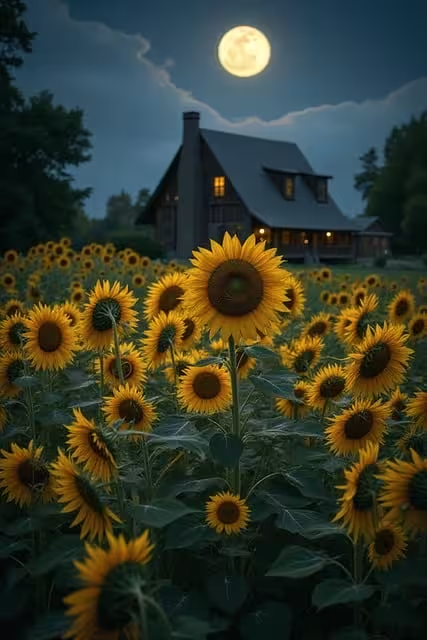
There is a common thread or shift in housing that goes beyond mere aesthetics or fleeting trends seen on television in northeast Tennessee. The current movement in Tri-Cities residential architecture is more thoughtful, driven by a deep appreciation for our unique Appalachian landscape, a demand for lasting quality, and a practical understanding of how a modern family needs a home to function.
The questions are no longer just about square footage or the number of bedrooms. Clients ask how a design can maximize a view of Boone Lake, how a floor plan can accommodate both work-from-home needs and future retirement, and what materials will endure our region’s specific climate with grace and minimal maintenance. This is a sophisticated approach to home building, and it’s one I wholeheartedly endorse. My background is in engineering and carpentry—fields where precision, integrity, and competence are not just values, but necessities. It’s through this lens that I analyze the architectural landscape.
This article serves as a clear, no-nonsense guide to the most significant residential architectural trends currently shaping new construction across the Tri-Cities. My goal is not to sell you on a particular style, but to equip you with the knowledge to make informed, precise decisions for your new build. This is about understanding the why behind the what, ensuring the home you build today will serve you beautifully for all the years to come.
Trend #1: The Dominance of the “Modern Appalachian Farmhouse”
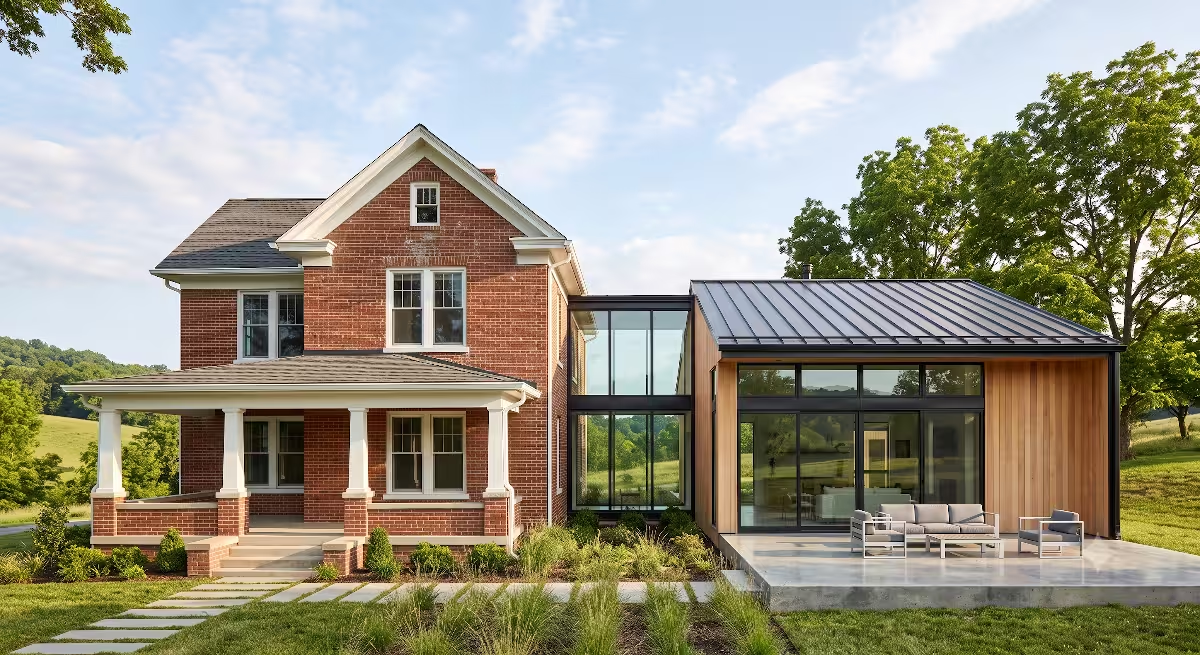
When people hear “farmhouse,” many still picture the rustic, shiplap-heavy style that dominated home design shows nearly a decade ago. Let me be direct: that is not what we are building today in Northeast Tennessee. The style that has firmly taken root here is a more refined, elegant, and regionally appropriate evolution I call the “Modern Appalachian Farmhouse.” It borrows the classic, simple forms of historic farmhouses but executes them with clean lines, high-performance materials, and a quiet sophistication that complements our mountain setting.
The Form and Structure
At its core, this style is defined by its silhouette. We are seeing a proliferation of simple, strong gable rooflines, often with steep pitches. From an engineering standpoint, this is not just an aesthetic choice; a steeper roof is highly effective at shedding the heavy rains we get and the occasional significant snowfall, ensuring the long-term integrity of the structure. These primary forms are often accented with secondary gables, dormers, and shed roofs over porches, creating a layered, visually interesting facade that avoids monotony.
The overall massing is kept simple and clean. The goal is to avoid overly complex, fussy designs. Think of a classic “house” shape drawn by a child, then rendered with architectural precision and high-quality materials. This simplicity is its strength, allowing the materials and the surrounding landscape to take center stage.
The Siding and Palette: Contrast and Texture
Perhaps the most identifiable feature of the Modern Appalachian Farmhouse is its siding and color scheme. The ubiquitous horizontal vinyl siding of the past has been almost entirely replaced by more durable and visually appealing options. The leading material choice is fiber cement siding, most notably from brands like James Hardie. Its resistance to moisture, pests, and fire makes it a practical, long-term investment.
The application of this siding is key. Vertical board and batten siding is the dominant look, used on main gables to create a strong vertical emphasis that echoes the tall trees of our landscape. This is often mixed with traditional horizontal lap siding on other parts of the home to create subtle textural contrast.
The color palette is where the “modern” element truly shines. High contrast is the prevailing theme. The most popular combination by far is a crisp, clean white siding paired with dark, moody accents. Windows, for example, are almost universally specified in black or a dark bronze. This creates a sharp, graphic look that feels both timeless and contemporary. Gutters, fascia, and even garage doors often follow suit in these dark tones. For those who prefer a more subdued look, we are also seeing entire homes clad in darker colors like deep charcoal gray, olive green, or navy blue, accented with natural wood tones.
The Importance of Stone and Wood
To keep these high-contrast homes from feeling sterile, a crucial element is the integration of natural materials. This is where the “Appalachian” modification comes into play. We are blessed with beautiful regional materials, and they are being used strategically to add warmth and authenticity.
Tennessee fieldstone is a prime example. Instead of covering the entire front of a house, it’s used with precision: on the foundation skirt, as the base for porch columns, or on a single chimney mass. This grounds the home to the land and provides a rugged, timeless texture that contrasts beautifully with the smooth siding.
Wood is the other critical component. Heavy timber or cedar posts and beams are used to frame front porches and back patios. These are often left with a natural or lightly stained finish to showcase the grain. You’ll also see wood used for front doors or as an accent on a small section of a gable. This deliberate use of natural elements is a direct nod to our region’s heritage and natural beauty, preventing the modern farmhouse from feeling like it could be located anywhere else.
The Metal Roof: A Sound Investment
Finally, no discussion of this style is complete without mentioning the metal roof. While once relegated to barns or purely rustic cabins, the standing-seam metal roof is now a hallmark of high-end custom homes in our area. Its clean vertical lines perfectly complement the board and batten siding. It’s often used as an accent on a porch or dormer, but increasingly, clients are choosing to invest in a full metal roof for the entire home.
The reasons are practical and appeal directly to the 40-64 demographic planning a long-term residence: longevity (often 50+ years), superior durability against wind and rain, and energy efficiency, as many modern metal roofs have reflective coatings that can lower cooling costs. It’s a prime example of a trend driven by both aesthetics and intelligent, long-term financial planning.
Trend #2: The Rise of “Mountain Modern” Design
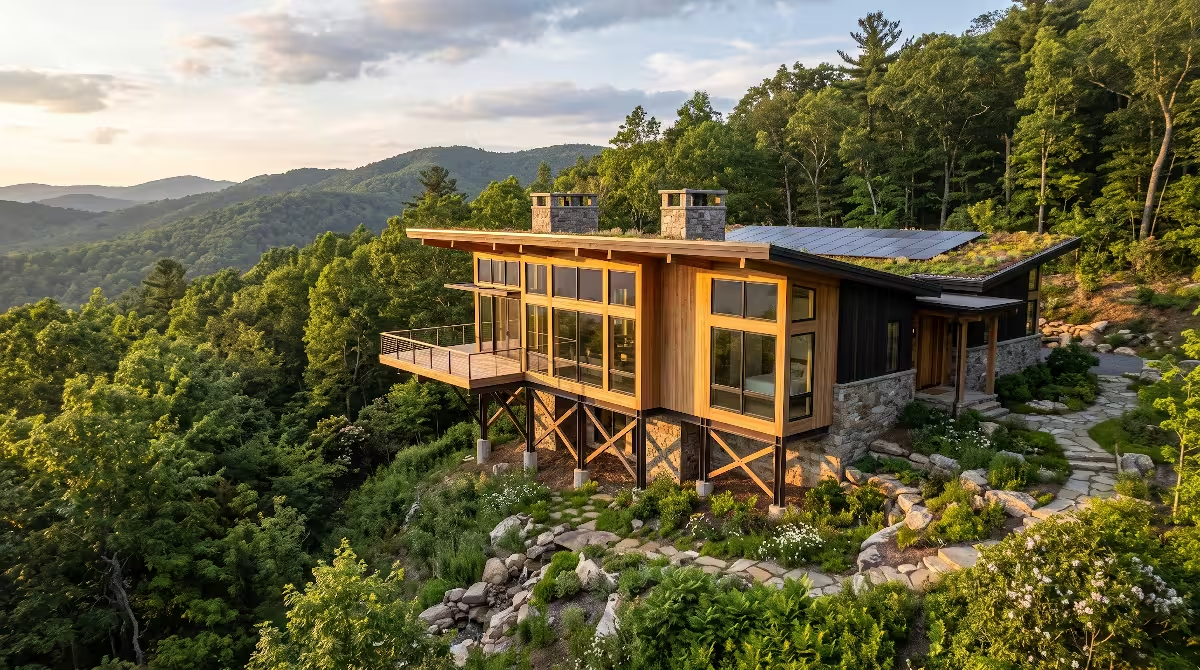
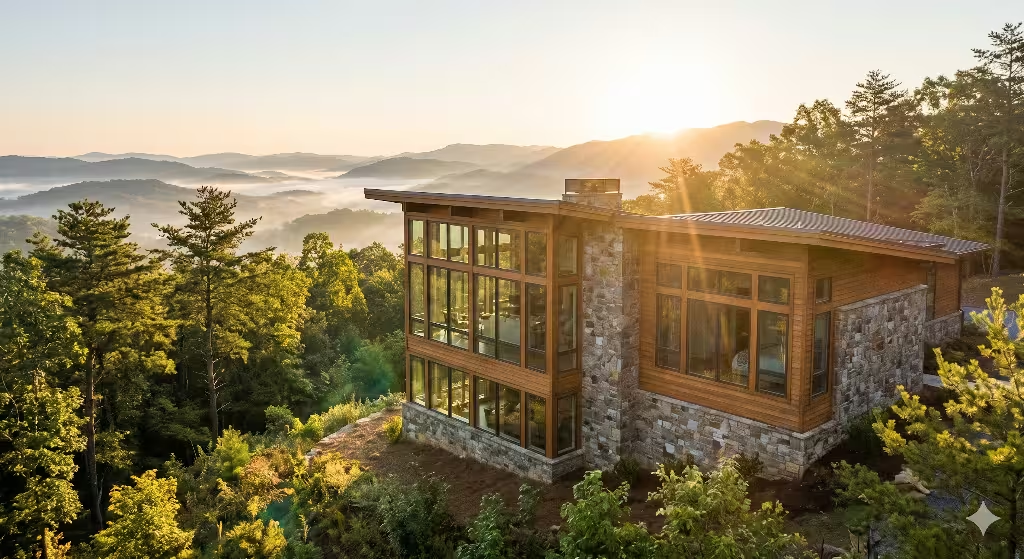
Running parallel to the modern farmhouse is a slightly more adventurous and site-specific style that I refer to as “Mountain Modern.” This architectural approach is less about historical forms and more about creating a direct, unmediated connection with the natural environment. It’s particularly prevalent in properties with premium views—those overlooking Watauga Lake, perched on a ridge with a view of the Appalachian range, or nestled into a secluded, wooded lot.
Philosophy: Living in the Landscape
The driving principle of Mountain Modern is to blur the line between indoors and out. The architecture itself becomes a frame for the landscape. For the homeowner in their 40s, 50s, or 60s who has perhaps worked for decades to afford such a property, the goal is to fully inhabit and enjoy the setting they’ve chosen. They don’t just want to look at the view; they want to feel a part of it.
This philosophy dictates every design decision. The orientation of the house on the lot is the first and most critical step. We spend a significant amount of time on-site determining the optimal placement to capture specific views, manage the path of the sun throughout the day, and maintain privacy.
Architectural Elements: Glass, Lines, and Materials
The most prominent feature of a Mountain Modern home is its extensive use of glass. We’re talking about large, commercial-grade window walls, floor-to-ceiling sliding glass doors, and strategically placed clerestory windows that bring in light without sacrificing privacy. Imagine drinking your morning coffee in a great room where an entire wall seems to disappear, offering an unobstructed panorama of the sun cresting the mountains. This is the experience Mountain Modern aims to deliver.
From an engineering perspective, this requires careful planning. We use oversized headers, and sometimes steel, to support the long spans required for these window walls. Window selection is also critical; we specify double- or triple-pane units with low-emissivity (Low-E) coatings to manage solar heat gain in the summer and prevent heat loss in the winter, ensuring the home is as energy-efficient as it is beautiful.
Rooflines in this style are often simpler and more dramatic than in a farmhouse. Low-slope or even flat roofs are common, often combined with single-sloped “shed” roofs that angle up towards the primary view. This creates a dynamic, asymmetrical profile that feels organic and responsive to the topography.
Material selection is about creating a palette that is both natural and sophisticated. You will see a mix of:
- Wood: Often used as siding (like cedar or cypress) and as a warm interior element on ceilings or accent walls.
- Stone: Similar to the farmhouse, but often applied in larger, cleaner-cut panels for a more contemporary look.
- Stucco: Provides a smooth, monolithic surface that contrasts beautifully with the texture of wood and stone.
- Steel: Used for structural elements, railings, or window frames, adding a touch of industrial precision.
The interplay of these materials is key. The warmth of the wood softens the hardness of the steel and stone, creating a balanced and inviting environment that is modern without being cold.
Trend #3: Evolving Interior Layouts – Beyond the Open Concept
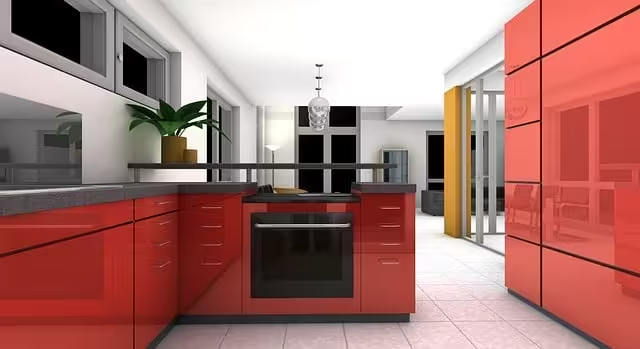
For the past twenty years, the “open-concept floor plan” has been the undisputed king of residential design. While it remains the foundation of most new builds, we are seeing a significant and intelligent evolution of the concept. The vast, undifferentiated “great room” is being refined to create spaces that are more functional, intimate, and adaptable to the realities of modern life.
The Rise of Defined “Zones”
Homeowners still want the feeling of light and connection that an open plan provides, but they also recognize the downsides—lack of sound privacy, cooking smells permeating the entire house, and a general lack of coziness. The solution isn’t to put the walls back up, but to use clever design cues to create defined “zones” within the larger open space.
We achieve this through several methods. A change in ceiling height or a coffered or tray ceiling can visually separate a living area from a dining area. Dropping a few exposed wood beams across the ceiling in the family room portion creates a sense of enclosure without a wall. We also use flooring to delineate space; for example, a large, inset area rug or a shift from hardwood in the living area to tile in the kitchen area can create a clear, psychological boundary. Even a wide, cased opening between the kitchen and living room, rather than no division at all, can provide a much-needed sense of separation while maintaining flow.
The Non-Negotiable Flex Space
If there is one room that has become an absolute necessity in new home design, it is the “flex space.” For the 40-64 demographic, this room’s adaptability is its greatest asset. It acknowledges that life changes. Today, it might be a dedicated home office, a necessity for the many who now have remote or hybrid work arrangements. Five years from now, it could be a hobby room for painting or writing. In ten years, it might become a quiet den for reading or a playroom when grandchildren visit.
The key is that this space has a door. It can be closed off from the noise and activity of the main living area. We typically locate it near the front of the house for a home office or away from the primary bedrooms to serve as a media or music room. Designing this space with forethought—ensuring it has adequate lighting, electrical outlets, and perhaps built-in storage—makes it a valuable, long-term asset.
Main-Level Living as the New Standard
For the target demographic of this article, the concept of “aging in place” is not an abstract idea; it’s a practical planning strategy. This has made the main-level primary suite a standard feature, not a luxury upgrade. Having the owner’s bedroom, bathroom, and laundry facilities on the ground floor provides convenience for today and accessibility for the future. It eliminates the daily need to climb stairs and ensures the home remains comfortable and manageable for decades. This single design choice offers profound peace of mind and is one of the most common requests I receive from clients planning their “forever home” in the Tri-Cities.
Trend #4: High-Function Kitchens and Spa-Inspired Bathrooms
A home’s long-term value and daily enjoyment are heavily influenced by its two most functional spaces: the kitchen and the primary bathroom. The trends we’re seeing in these areas are a perfect blend of high-end aesthetics and uncompromising practicality. A well-designed kitchen or bath is a significant financial investment, and homeowners today are ensuring that investment pays dividends in both beauty and ease of use.
The Kitchen as the Undisputed Hub
The kitchen is no longer just a place for cooking; it is the command center of the home. The island has evolved from a simple prep surface into a multi-functional anchor for the entire living space. These islands are now massive, often accommodating seating for four or more, a large sink, a dishwasher, and ample storage. The preferred countertop material is overwhelmingly quartz. While natural stones like granite are still beautiful, quartz offers a non-porous, stain-resistant, and maintenance-free surface that busy homeowners appreciate. Its ability to mimic the look of marble without the associated fragility has made it the go-to for a clean, high-end look.
While all-white kitchens had a long run, we are seeing a confident return to color and warmth. This often manifests in the cabinetry. Two-tone kitchens are very popular, with upper cabinets in a light color (like white or a light gray) and lower cabinets or the island in a darker, contrasting shade like a deep navy blue, forest green, or even a rich walnut wood tone. This adds personality and depth to the space.
Perhaps the most sophisticated trend is the rise of the “scullery” or “back kitchen.” This is essentially a large, walk-in pantry that’s been outfitted with countertops, a second sink, and outlets for appliances like the coffee maker, microwave, and toaster oven. This allows the main kitchen to remain pristine and uncluttered, especially during entertaining. It’s a highly practical feature borrowed from classic, grand homes of the past and adapted for modern living.
The Bathroom as a Private Sanctuary
The modern primary bathroom is conceived as a personal retreat, a space to decompress. The old tub/shower combination has been completely abandoned in favor of a much more luxurious and practical setup. The centerpiece is now the large, walk-in shower. These are often curbless, meaning the floor tile runs seamlessly into the shower, a feature that is both sleek and an excellent aging-in-place design. These showers are outfitted with multiple fixtures—a rain head, a handheld wand, and sometimes body sprays—creating a spa-like experience.
The freestanding tub, while not used daily by most, remains a powerful design element. It acts as a beautiful piece of sculpture in the room, a visual promise of relaxation.
Vanities are also evolving. Floating vanities, which are mounted to the wall without touching the floor, create a sense of spaciousness and make cleaning easier. Double sinks are standard, and high-quality, statement lighting, such as elegant sconces or a small chandelier, replaces the dated “builder-grade” light bar. The overall effect is one of quiet luxury and intentional design.
Trend #5: Seamless Indoor-Outdoor Connection

Living in Northeast Tennessee means being surrounded by natural beauty. One of the most significant lifestyle-driven trends is the architectural emphasis on blurring the line between the home’s interior and its exterior living spaces. This goes far beyond a simple concrete patio. The goal is to create outdoor “rooms” that are a genuine extension of the home’s floor plan.
After a day on Watauga Lake, hiking a trail near Roan Mountain, or just enjoying a pleasant summer evening, homeowners want a comfortable, well-appointed space to relax outdoors. The covered back porch has become essential. We design these with the same attention to detail as any interior room, often featuring high, vaulted ceilings with tongue-and-groove wood, recessed lighting, and ceiling fans. These covered spaces provide shade and protection from rain, effectively creating a three-season room that vastly increases the home’s usable square footage.
The connection itself is also key. Instead of a single back door, we are installing large multi-panel sliding or folding glass door systems. When opened, these create a massive, seamless transition from the great room to the porch, perfect for entertaining and allowing breezes to flow through the home.
Finally, the features within these outdoor spaces are becoming more sophisticated. Built-in outdoor kitchens, complete with a grill, sink, and refrigerator, are increasingly common. A stone fireplace or a more casual fire pit area serves as a natural gathering spot on cooler evenings, extending the usability of the space well into the spring and fall. These features acknowledge that in our region, a significant part of the joy of homeownership is the ability to enjoy the land it sits on.
Conclusion: Building with Precision and Foresight
As we’ve seen, the architectural trends currently defining the Tri-Cities are not arbitrary. They are a direct response to our environment, our modern lifestyles, and a growing desire for homes built with integrity and long-term value in mind. The Modern Appalachian Farmhouse and Mountain Modern styles both honor our landscape in their own ways. Refined interior layouts with flex spaces and main-level living provide practicality for today and adaptability for tomorrow. And the focus on high-function kitchens, spa-like baths, and seamless outdoor living elevates daily life from mundane to exceptional.
In my experience, the most successful projects—the homes that bring the most lasting satisfaction—are born from a clear understanding of both current trends and timeless design principles. These trends aren’t about chasing fads; they’re about responding to how we live in Johnson City, Kingsport, and Bristol today. It is about building a competent, durable, and valuable asset for your family.
As you begin to plan your own project, I encourage you to consider these elements, not as a checklist, but as a framework for thinking about what you truly want and need. By doing so, you can work with your builder and designer to create a home that is not only stylish but is fundamentally, and precisely, right for you.