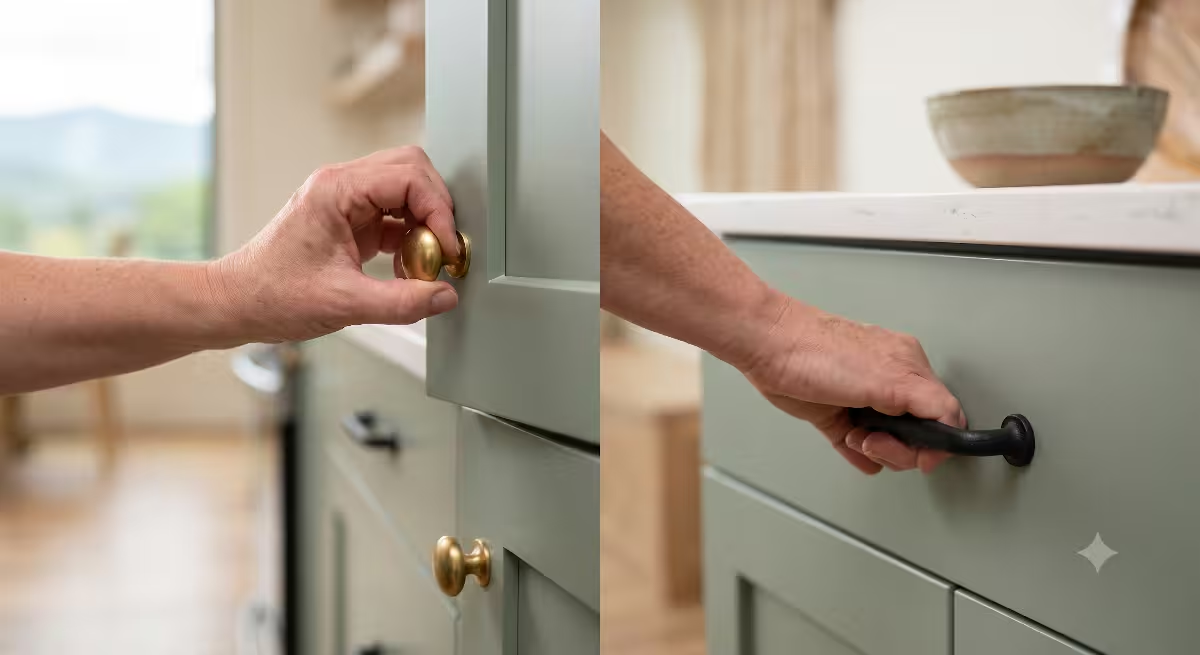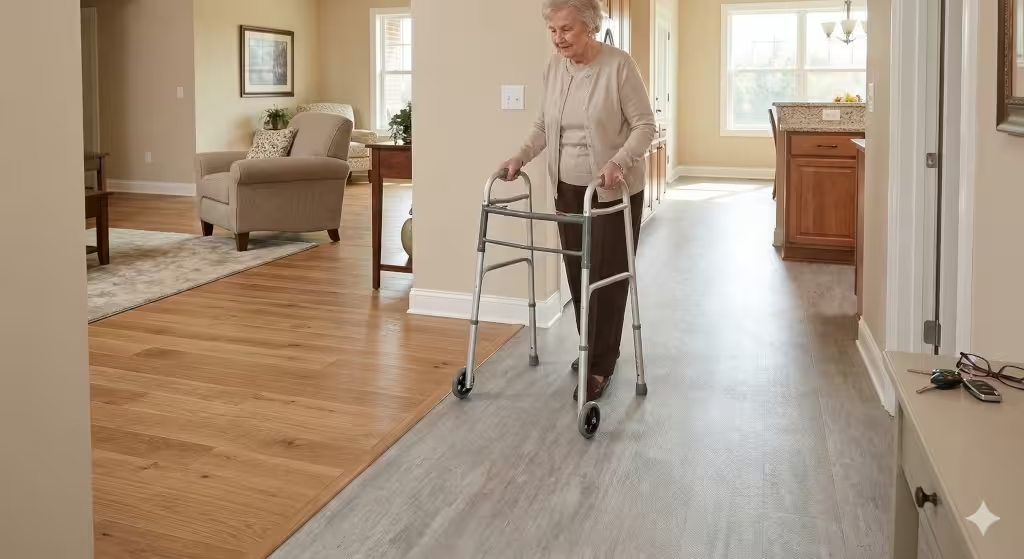
Today, we are going to talk about one of the most important parts of making a house a true home. When we think about building or fixing up a house in our beautiful corner of East Tennessee, we often focus on the big things. We look at the mountain views from the porch in Johnson City or the sturdy brickwork of a classic home in Kingsport. However, it is often the small things you touch every day that matter the most. If you or someone you love is living with the stiffness and pain of arthritis, the way you open a door can become a big hurdle.
Let’s speak directly to the heart of the home today. Most of the time, it is the women in our families who are the caretakers and the ones who notice when a space is not working quite right. You want a home that is warm, inviting, and easy for everyone to use, from your grandchildren to your own parents. Replacing old round knobs with lever handles is a simple but powerful way to show love and care for the people in your life. It is about more than just hardware. it is about making sure that every room in your home stays open and welcoming, no matter how much your hands might hurt on a cold morning.
In this guide, we will explain why this change is so helpful and how you can make it happen in your own home with confidence and ease.
The Engineering of the Human Hand: Why Knobs Fail Us

To understand why we need a better way to open doors, we have to look at how our hands work. A standard round door knob is a simple machine, but it requires a very specific set of movements. You have to reach out, wrap your fingers all the way around the circle, squeeze tight, and then twist your wrist. For most people, this is something they do without thinking. But for someone with arthritis, every single one of those steps can be a source of sharp pain.
Arthritis often attacks the small joints in the fingers and the base of the thumb. When you try to grip a smooth, round surface, you are putting a lot of pressure on those tiny joints. If the knob is old or the latch is a bit stiff, you have to squeeze even harder. This can cause the joints to swell or ache for hours afterward. Then comes the twist. The twisting motion puts stress on the wrist and the forearm. If you have carpal tunnel syndrome or general weakness, that twist might be impossible to finish.
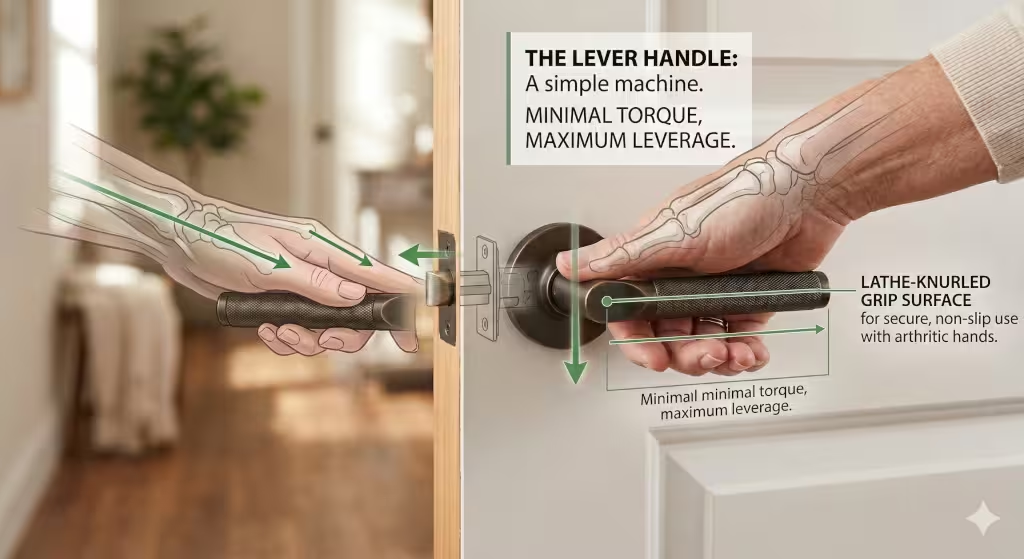
This is where the design of lever handles changes the game. Instead of a circle, you have a long, straight arm. This arm acts as a lever, which is one of the basic tools of engineering. It takes the force you apply and makes it much stronger at the point where the latch moves.
Because the lever handles are long, you do not have to use your fingers to do the work. You can use the weight of your hand, the side of your arm, or even your elbow to push the handle down. This removes the need for a tight grip and a painful twist. It turns a difficult chore into a light, easy motion that does not hurt.
Defining the Lever Handle: What It Is and Why It Works
If you walk into any hardware store in the Tri-Cities today, you will see rows and rows of different door options. A lever handle is simply a door latch that uses a horizontal bar instead of a round knob. While they have been common in office buildings for a long time, they are now the top choice for modern homes because of how well they work for everyone.
The beauty of lever handles lies in their simplicity. Most models are designed so that the bar sits parallel to the floor. When you want to open the door, you just press down on the end of the bar. This pulls back the latch inside the door and lets you walk through. Because the bar is long, you have a lot of “leverage.” This means you do not need much strength at all to make the door open.
Many buyers often worry that lever handles might look too much like a hospital or a commercial building. But that is no longer true. In 2026, the styles available are stunning. You can find lever handles that look like hand-forged iron for a rustic Appalachian cabin, or sleek, modern designs that look perfect in a new suburban home. They come in every finish you can imagine, from warm brass to cool matte black. The goal is to find hardware that matches your style while making your life much easier.
The ADA Standard: Making Sense of the Five-Pound Rule
When we talk about accessibility, we often hear about the Americans with Disabilities Act, or ADA. While these rules are mostly for public buildings like stores and schools, they provide a perfect roadmap for how we should build our own homes. The ADA has very clear rules about door hardware to make sure that anyone can use a door without help.
One of the most important rules is the “closed fist” test. If you can open a door using only a closed fist, then the hardware is considered accessible. Round knobs fail this test because you cannot turn them without opening your hand and gripping them. Most lever handles pass this test with flying colors. You can just rest your fist on top of the bar and press down.
Another rule is about the force needed to open the door. The ADA says that it should not take more than five pounds of force to operate the handle. In a high-quality set of lever handles, the internal springs are designed to be very responsive. They snap back into place quickly but move down with very little pressure. When I am inspecting a custom home build, I always check the “feel” of the doors. If a door feels heavy or sticky, it is not going to be comfortable for someone with arthritis. Using high-quality lever handles ensures that every door in the house meets these comfort standards.
Material Matters: Selecting the Right Finish for East Tennessee

In the Tri-Cities area, we have a climate that can be a bit hard on home hardware. Our summers are humid, and our winters can be damp and cold. When you are picking out new lever handles, you want to choose materials that will last and feel good in your hand.
For many years, polished brass was the most popular choice. While it looks nice when it is new, it can show fingerprints and wear down over time. For someone with arthritis, a very smooth, polished surface can also be slippery. If your hands are a bit weak, your hand might slide right off a shiny metal handle.
In 2026, we are seeing a big shift toward “brushed” or “satin” finishes. A satin nickel or brushed bronze lever handle has a tiny bit of texture on the surface. This texture provides a better grip without being rough. It also hides the oils from your skin, so you do not have to clean them as often. Another great option is matte black. It provides a high-contrast look that is very easy to see, which helps if your eyesight is also changing as you get older. If you want something very durable, stainless steel lever handles are excellent because they do not rust and are very easy to keep germ-free.
Design Trends of 2026: Texture, Warmth, and Quiet Luxury
As a building expert, I keep a close eye on what is trending in home design. Right now, the big word is “Quiet Luxury.” This means choosing items that feel expensive and high-quality but are not flashy. For lever handles, this means we are moving away from sharp, industrial edges and moving toward softer, more organic shapes.
One of the most exciting trends this year is the use of “knurled” textures. Knurling is a pattern of small ridges cut into the metal. It looks very sophisticated and adds a lot of visual interest to a door. But more importantly, it provides an incredible grip. For a woman with arthritis, a knurled lever handle is a dream. You don’t have to squeeze at all; the natural texture of the handle catches your hand and makes the motion feel secure.
We are also seeing a return to warmer metal tones. Instead of the cold, blue-ish chrome of the past, people are choosing champagne bronze and soft gold. These colors make a home feel cozy and grounded. When you pair these warm colors with a comfortable lever handle, you are creating a space that feels intentional and caring. It says that you have thought about every detail of how people will live in the home.
Installation 101: A Step-by-Step Guide for the DIY Homeowner
Many people think that changing all the door hardware in a house is a job for a professional contractor. But I want to tell you that you can do this yourself. If you can use a screwdriver, you can install lever handles. It is a great weekend project that can be done one door at a time.
First, you need to measure your current doors. Most modern doors in the United States use a standard size for the hole, which is usually two and one-eighth inches. You also need to check the “backset,” which is the distance from the edge of the door to the center of the hole. It will almost always be either two and three-eighths inches or two and three-quarters inches. Most new lever handles come with an adjustable latch that can fit either size.
Once you have your new hardware, start by removing the old knob. There are usually two screws on the inside part of the door. Once those are out, the two halves of the knob will pull right apart. Then, unscrew the latch on the edge of the door and pull it out.
Now you are ready for the new stuff. Slide the new latch into the hole on the edge, making sure the slanted part is facing the right way so the door will shut. Then, slide the two halves of your new lever handles through the hole and the latch. Line up the screw holes, tighten them down, and you are finished. Just make sure the lever handles are pointing the right way, usually toward the hinges of the door.
Safety and the Modern Family: Children, Pets, and Security
One question I often get from families in Johnson City is about safety. Because lever handles are so easy to push down, some people worry that small children or clever pets might open doors they shouldn’t. It is true that a toddler can hang on a lever and pop a door open much easier than they could turn a round knob.
However, there are very easy ways to handle this. You can buy lever locks that are designed specifically to keep kids safe. These are small plastic pieces that sit behind the handle and prevent it from moving until an adult pushes a button. For pets like large dogs who have learned how to use their paws to open doors, choosing a set of lever handles with a slightly stiffer spring can help.
From a security standpoint, lever handles are just as safe as knobs. They can be fitted with high-quality deadbolts and locking mechanisms. In fact, many people find that it is easier to lock and unlock a lever handle because the thumb-turn on the inside is often larger and easier to grip. When you are coming home with your arms full of groceries, being able to push the door open with your hip because you used a lever handle is a huge benefit that you will appreciate every single day.
Cost vs Value: Why Investing in Quality Hardware Pays Off
When you start shopping for lever handles, you will notice a big range in prices. You can find some for fifteen dollars, and some for over a hundred. As a builder, I always tell my clients to look for the “middle ground.” You want to choose hardware that is rated as Grade 2 or Grade 1. This is a rating given by the American National Standards Institute (ANSI) to tell you how long the hardware will last.
A cheap, Grade 3 lever handle might look fine at first, but the springs inside will eventually get tired. After a year or two, the handle might start to sag or feel “mushy.” This makes it harder to use, which defeats the whole purpose of switching to lever handles for arthritis. A Grade 2 set is designed for heavy residential use. It will stay crisp and easy to turn for many years.
Think of this as an investment in your home’s “Universal Design.” This is a way of designing homes so they work for people of all ages and abilities. Homes that have these features often sell faster and for more money. People are looking for “forever homes” where they won’t have to do expensive renovations as they get older. By installing high-quality lever handles now, you are adding real value to your property and making it a better place for whoever lives there next.
The Smart Home Evolution: Touchless and Biometric Options
As we move through 2026, technology is becoming a bigger part of our home hardware. We are now seeing smart lever handles that don’t even require you to push them down. Some models use a “touch-to-open” technology. As long as you have a small key fob in your pocket or a smartphone in your purse, you can just tap the handle with your knuckle or the back of your hand, and it will unlock and unlatch the door for you.
This is a massive breakthrough for people with severe arthritis who may struggle to even apply the small amount of pressure needed for a standard lever. There are also biometric lever handles that use your fingerprint. You just rest your thumb on a small sensor on the handle, and the door opens. This is much easier than fumbling with a metal key, which requires a lot of fine motor skills and can be very painful on a cold day.
The best part is that these smart lever handles are now designed to look like regular, beautiful hardware. The technology is hidden inside. They run on batteries that last for a year or more, and they usually have a hidden keyhole just in case the battery dies. If you are building a new custom home in the Tri-Cities, I highly recommend looking at these options for your main entry doors.
Maintenance and Longevity: Keeping Your Home Running Smoothly
Once you have your new lever handles installed, they don’t need much work to keep them in great shape. Because I value precision and competence, I always recommend a quick check-up once a year. Use a screwdriver to make sure the mounting screws are still snug. Over time, the vibration of the door closing can loosen them just a tiny bit.
To clean your lever handles, avoid using harsh chemicals or abrasive sponges. Most modern finishes have a protective clear coat. All you need is a soft cloth and some mild soapy water. Wipe them down and then dry them with a clean towel. This will keep the finish looking brand new and prevent any buildup of dirt that could make the handle feel sticky or uncomfortable.
If you ever notice that a handle is starting to squeak, a tiny drop of silicone-based lubricant on the moving parts will fix it right up. Do not use heavy oils or WD-40, as these can attract dust and eventually gum up the mechanism. With just a few minutes of care, your lever handles will provide you with pain-free access to every room in your house for the rest of your life.
In the end, choosing lever handles is about choosing comfort and independence. It is about making sure your home is a place that supports you, rather than a place that causes you pain. I have seen so many families in our Tennessee communities find a new sense of freedom just by making this one small change. It is a precise, effective, and beautiful way to care for yourself and your loved ones.
I hope this guide has given you the information and the confidence you need to take this next step for your home. Making your space more accessible is one of the most rewarding projects you can take on. Whether you are building a new custom home from the ground up or just updating the one you have lived in for thirty years, remember that your comfort is worth the effort.