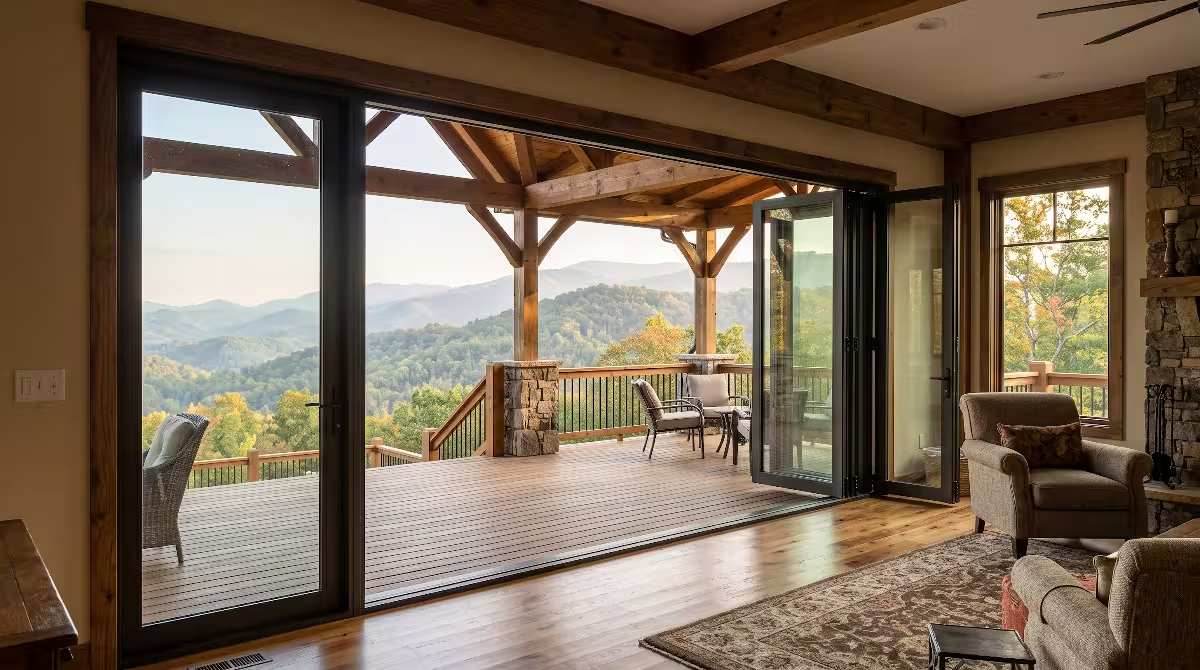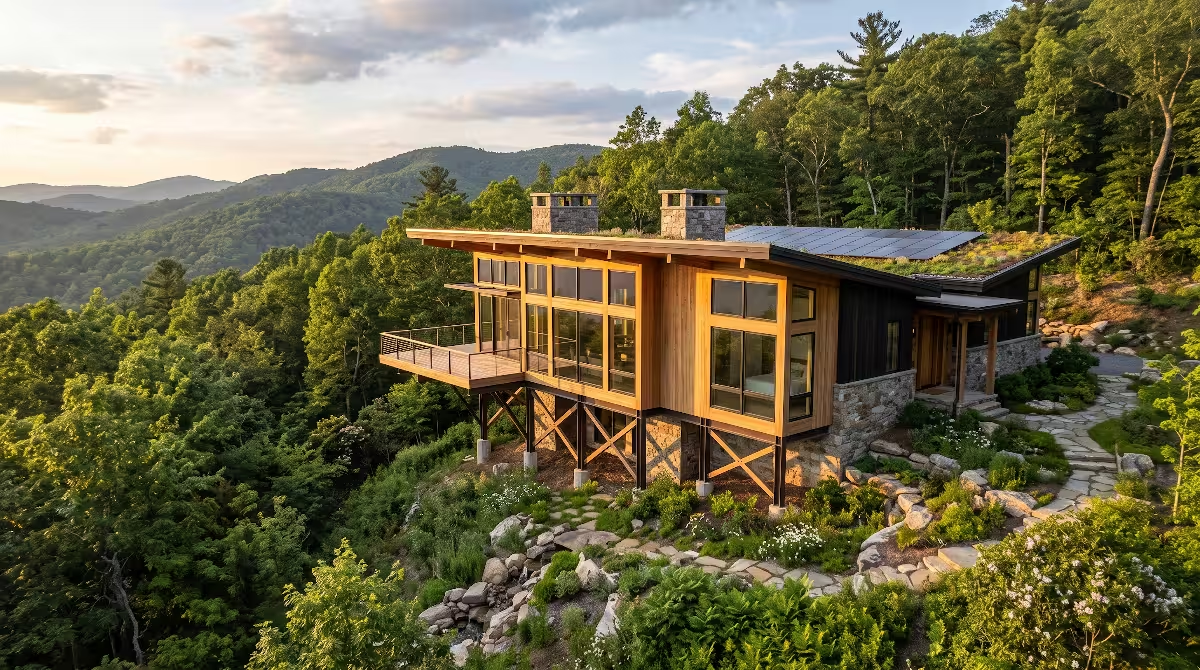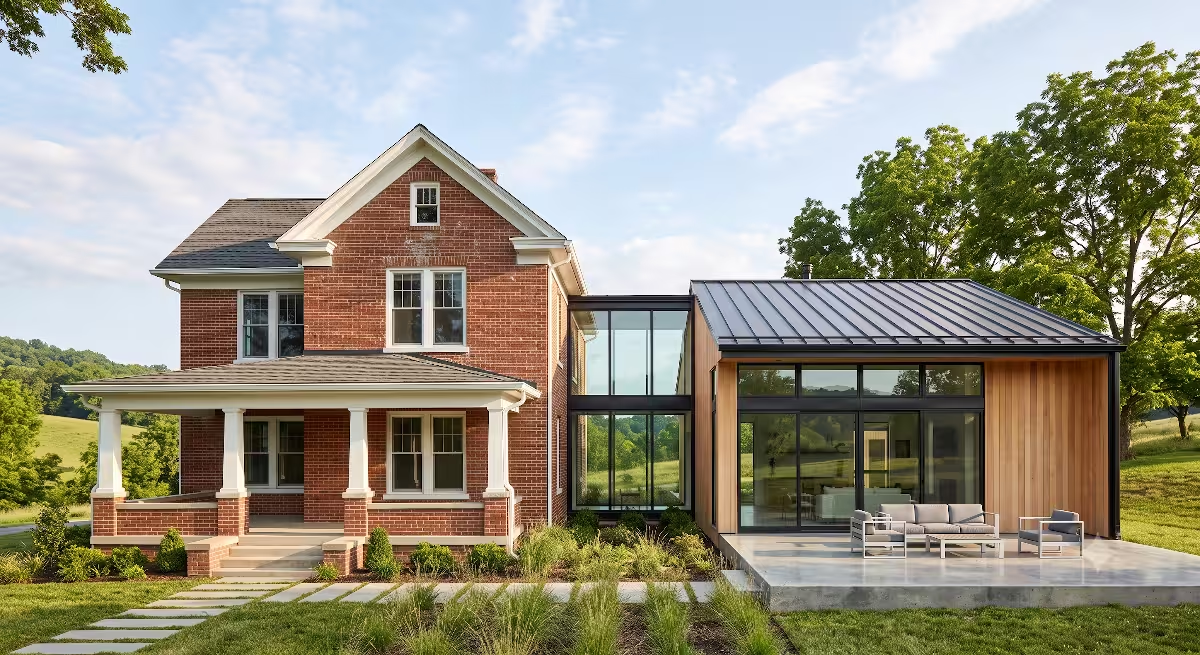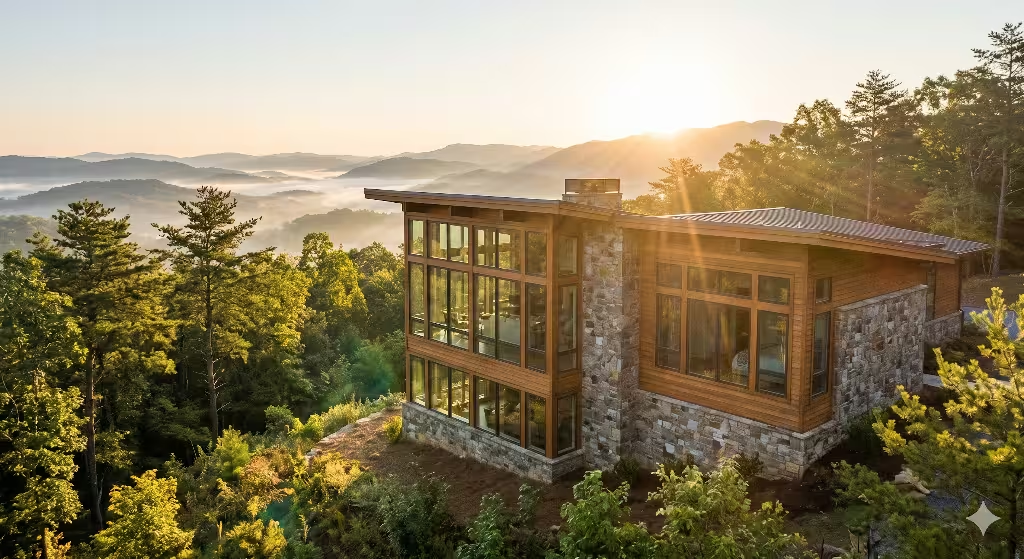


There have been many trends over the years, but one idea that continues to gain strength is the desire for families to live closer together. It’s a return to an older way of life, updated for the modern world. We’re moving beyond just adding an in-law suite and starting to dream bigger. This dream has a name: the family compound. It’s a concept that resonates deeply here in Northeast Tennessee, where family and land are central to our way of life.
So, what is a family compound? At its core, it is a collection of separate, independent homes built on a single piece of property, owned and occupied by different generations or branches of the same family. These homes often share common areas and resources, creating a private community built on connection and mutual support. This isn’t just about building houses; it’s about building a future.
This article will provide a clear, competent roadmap, explaining the process from the initial dream to the final, welcoming doorstep of your new family compound.
What is a Family Compound? Defining the Dream
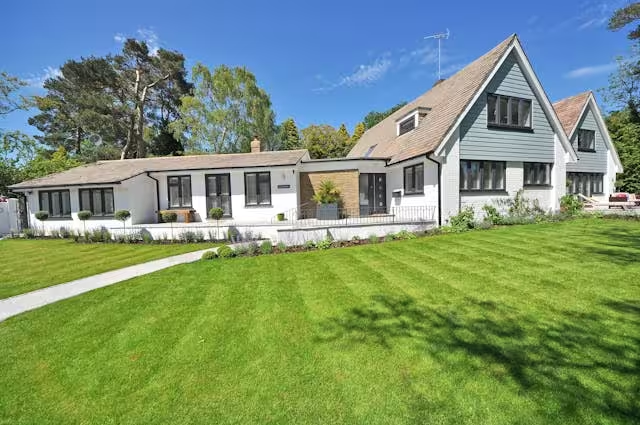
Before you can build one, you need to understand exactly what a family compound is and, just as importantly, what it is not. Think of it less like a single large house and more like your own private, miniature neighborhood designed exclusively for your relatives. It’s a purposeful arrangement that fosters community while respecting the need for individual space.
The core components of a true family compound are quite specific. First, you must have multiple, distinct dwellings. This isn’t one large home with many wings; it is at least two separate, fully functional primary residences. Each house would have its own kitchen, bathrooms, and living spaces. Second, all these structures are located on shared land, either a single, large parcel or several adjacent parcels that are legally connected. This shared ownership of the land is fundamental to the concept.
Third, a family compound almost always includes shared common areas and amenities. This is where the real magic happens. These shared spaces are the hubs of community life. They could be practical, like a large workshop, a shared laundry facility, or a massive vegetable garden that everyone tends. They could also be for recreation, such as a swimming pool, a central outdoor kitchen and patio for family gatherings, a playground for the grandchildren, or a small lake for fishing. The design of these common areas helps define the character and daily life of your family compound.
Finally, a family compound operates under a shared governance or ownership structure. This is a critical legal and financial framework that determines how the property is managed, how expenses are paid, and what happens in the future. We will discuss this in greater detail later, but it is a foundational piece of the puzzle.
It is also helpful to understand how a family compound differs from similar housing concepts. Many people confuse it with an Accessory Dwelling Unit, or ADU. An ADU, often called a granny flat or in-law suite, is a smaller, secondary home on a property that already has a main house. An ADU is legally subordinate to the primary residence.
A family compound, by contrast, is a community of primary homes, each on equal footing. It is also different from a standard subdivision. When a developer creates a subdivision, they are creating separate lots that can be sold to anyone. A family compound is typically designed to remain under unified family ownership and is not intended for public sale. Understanding these distinctions is the first step in planning your own family compound.
The First Question: Is a Family Compound Right for You? (Pros and Cons)

The idea of a family compound is romantic and appealing, but it’s a decision that requires a clear head and an honest assessment of your family’s dynamics. The unique living arrangement offers incredible benefits but also comes with a specific set of challenges. It is vital to weigh both sides carefully.
Potential Advantages (The “Why”)
The biggest advantage is, of course, proximity and support. With multiple generations living just a short walk from each other, daily life can become much simpler and richer. Grandparents can easily help with childcare, and adult children are right there to assist their aging parents. Sharing meals, celebrating small victories, and offering a helping hand becomes effortless. There is a profound sense of security in knowing that your loved ones are just across the yard if you ever need them.
There is also a powerful financial synergy. By pooling resources, a family can often afford a larger or more desirable piece of land than any individual member could on their own. The cost of developing the property, such as building a road or bringing in utilities, is shared. The same goes for amenities; a pool or a large workshop becomes much more affordable when the cost is split among several households. Building a family compound allows you to create a shared lifestyle that might be financially out of reach otherwise.
This leads to a greater sense of security and privacy. A well designed family compound can feel like a private retreat from the rest of the world. You know your neighbors intimately, creating a safe environment for children to play and for everyone to feel at ease. It is your own secluded haven, built to your family’s specifications. Ultimately, creating a family compound is about building a lasting family legacy. It is a physical anchor for your family, a place where future generations can gather and create memories.
Potential Challenges (The Reality Check)
The biggest challenge is balancing privacy with proximity. Living so close to relatives means you will interact constantly. While often a blessing, it can also lead to a lack of personal space if clear boundaries are not established from the very beginning. Everyone needs a place to retreat, and the design of the family compound must prioritize the creation of private zones for each household.
The financial complexity can be daunting. While you can pool resources, you also have to manage shared expenses, property taxes, and insurance. Obtaining financing for such an unconventional project can be more difficult than for a standard home. Furthermore, you must have a clear, legally binding plan for what happens if someone wants or needs to move away. Untangling the finances of a family compound can be messy without a proper agreement.
Of course, there are interfamily dynamics. Every family has its disagreements. When you live in a family compound, you cannot simply go home and escape the tension. Small conflicts can escalate if not handled with open communication and mutual respect. You must establish a system for making decisions and resolving disputes before you even break ground. Finally, consider the resale complications. A family compound is a highly customized property. If your family ever decides to sell, finding a buyer who needs several homes on one piece of land can be difficult, potentially affecting the property’s market value.
Navigating the Legal Landscape in Northeast Tennessee
This is the most critical and often the most difficult hurdle to clear. Before you fall in love with a piece of land or spend a dollar on architectural plans, you must understand the local rules. The question, “Is it legal to build multiple houses on one property?” has an answer that is entirely dependent on local zoning regulations.
Here in the Tri-Cities, the rules can vary significantly between Johnson City, Kingsport, and Bristol, and they can be different yet again in the unincorporated parts of Washington, Sullivan, and Carter counties. The vast majority of land zoned for residential use has a very simple rule: one primary residence per legal parcel of land. You cannot simply buy a five acre lot zoned R-1 (Single Family Residential) and expect to be allowed to build three separate houses on it. Doing so would violate the zoning ordinance.
So, how do people successfully build a family compound? There are a few established pathways, and each requires working closely with local planning departments.
- Subdivision: This is often the most common and straightforward approach. It involves taking a larger piece of property and going through the legal process of dividing it into smaller, individual lots. For example, you could buy a ten acre tract and subdivide it into three two acre lots and a fourth four acre lot designated as a shared common area. Each of the two acre lots could then have a home built on it, fully complying with the “one house per parcel” rule. This process involves a land surveyor creating a new plat map, which must be approved by the local planning commission.
- Rezoning: Another option is to request that the property be rezoned. This means you are asking the city or county to change the official land use designation. You might request a change to a higher density residential zone that allows for more units per acre, or to a special designation like a Planned Unit Development (PUD). A PUD provides more flexibility in design and placement of homes in exchange for a more detailed and comprehensive site plan.8 This process is more complex, often requiring public hearings and a vote by the city council or county commission.
- Agricultural Zoning: In some of the more rural parts of our region, land zoned for agriculture may offer more flexibility. These zones sometimes permit the construction of additional homes for family members who are actively involved in the farm operations. The rules are very specific, so this path requires careful investigation.
Beyond zoning, you must also check for any covenants and restrictions on the deed. If you are buying land in an existing community or one that was part of a larger development, there may be private rules in place that limit what you can build. These restrictions can be even stricter than the county’s zoning laws. An attorney can help you perform a title search to uncover any such limitations before you buy. Building a family compound is legally complex, and professional guidance is not just recommended; it is essential.
Assembling Your Professional Team
A project of this magnitude is not a do it yourself endeavor. The success of your family compound will depend on the quality and experience of the professional team you assemble. Each member plays a distinct and vital role in turning your vision into a safe, legal, and well built reality. Attempting to cut corners here will almost certainly lead to costly mistakes and delays down the road.
Your first call should be to a Real Estate Attorney. This expert is your legal shield. They will investigate the property for any zoning issues, deed restrictions, or easements that could prevent your project. Most importantly, they will help you create the legal ownership structure for the family compound, whether it’s a Limited Liability Company (LLC) or a Family Trust. This legal framework is the foundation of your entire project, defining ownership, responsibilities, and exit strategies.
Next, you will need a Land Surveyor and a Civil Engineer. The surveyor will precisely map the boundaries of your property, identify the topography, and create the official plat map if you choose to subdivide. The civil engineer will then design the site plan, figuring out the best placement for homes, driveways, and septic systems. They will also create a grading plan to manage water drainage across the site, which is crucial for protecting the foundations of your homes.
Of course, you will need an Architect or Designer. This is the professional who will help you design the homes and the overall layout of the family compound. A good designer will listen to the needs of each individual family unit while also creating a cohesive architectural style that makes the entire property feel unified. They are experts at positioning homes to maximize views and sunlight while ensuring privacy for everyone.
Finally, you need a Custom Home Builder or General Contractor. As your builder, this person is the quarterback of the project. They are responsible for managing the entire construction process, from clearing the land to the final coat of paint. They hire and coordinate all the subcontractors, like electricians and plumbers, manage the construction schedule and budget, and ensure that everything is built to code and to the highest standards of quality. A builder with experience in developing raw land is invaluable for a family compound project. As a builder myself, I can attest that our role is to take all the pieces of the puzzle and put them together seamlessly.
The Financial Blueprint: How to Fund Your Family Compound

The two biggest financial questions are always “How much does it cost?” and “How do we pay for it?” For a family compound, the answers are more complex than for a single family home.
Answering “How much does it cost?” is impossible without a specific plan, but we can break down the major cost categories. First is the land acquisition cost. This is the price of the property itself. Next is site preparation. This can be a very significant expense and includes clearing trees, building an access road or driveway, grading the land, and bringing utilities like water, power, and internet to each home site. If you are not on a public sewer system, you will have costs for soil testing and installing septic systems for each dwelling.
Then you have the construction cost for each individual home, which is typically calculated on a price per square foot basis. Finally, you have the cost of your shared amenities, whether it is landscaping, a common building, or a pool.
Answering “How to do you finance a family compound?” requires looking beyond traditional home mortgages. A standard mortgage is a loan for an existing house. For a project like this, you will need different financial tools.
The most common option is a Construction Loan. This is a short term loan that covers the cost of building your project. A bank will not just give you all the money at once. Instead, you will receive the funds in a series of payments called “draws” as you complete different phases of construction. For example, after the foundation is poured, the bank will send an inspector. Once the inspector verifies the work, the bank releases the next draw to pay for the framing. This process continues until the homes are complete. At that point, the construction loan is typically converted into a traditional mortgage for each household.
To begin, you may need a Land Loan just to purchase the property. These loans usually require a larger down payment and have a shorter term than a mortgage. Sometimes, you can find a local bank or credit union that will roll the land loan into the construction loan. These banks may offer Portfolio Loans, which are loans they keep on their own books instead of selling them. This gives them more flexibility to create a custom loan product for a unique project like a family compound.
Finally, many families fund at least part of the project by pooling family capital. This can be an effective way to cover the down payment or pay for the initial site work, but it must be meticulously documented by your attorney to ensure that everyone’s contribution is fairly accounted for in the ownership structure.
Design and Construction: From Dirt to Doorstep
With the legal and financial structures in place, you can finally move on to the exciting part: designing and building your family compound. This phase is all about translating your family’s dreams into a physical blueprint.
The process starts with a detailed Site Plan. This is the master map for your entire family compound. A crucial question here is, “How much land do you need?” The answer depends on several factors: the number and size of the homes, the need for individual yards, and whether you will use septic systems, which require a certain amount of space (a “drain field”) for each home. As a general rule, a minimum of two to five acres is a good starting point to provide adequate spacing and privacy.
The site plan does more than just place dots on a map. It is a strategic document. You will want to position the homes to take advantage of the best views while shielding them from winter winds. You will consider solar orientation to maximize natural light. Most importantly, you will arrange the homes to create a sense of community without sacrificing privacy. This might mean angling houses away from each other or using landscaping and trees to create visual buffers. The plan will also map out all the shared infrastructure, including the main driveway, walking paths between homes, and the routes for underground utilities.
When Designing the Dwellings, you have the opportunity to customize each home for its occupants. The family with young children might need a two story home with a playroom, while the grandparents might prefer a single level ranch style home with wider doorways and no stairs for easier accessibility as they age. While each home can be unique on the inside, it is often best to maintain a sense of Architectural Cohesion on the outside. This does not mean the houses have to be identical, but using similar materials, color palettes, or design elements can make the entire family compound feel like a unified and thoughtfully planned community.
The Building Process itself follows a logical sequence. It begins with site preparation, followed by laying the foundations. Then the homes are framed, and the mechanical systems—plumbing, electrical, and HVAC—are installed. Finally, the interior and exterior finishes are completed. A good builder will manage this complex timeline to ensure that your family compound is built efficiently and to the highest standards of quality.
The Governance Document: Planning for the Future
A family compound is more than a collection of buildings; it is a long term commitment. To ensure it runs smoothly for years and even generations to come, you must create a governance document. Think of this as the “rulebook” for your family compound. This is a legally binding agreement drafted by your attorney that every family member agrees to and signs. If your compound is owned by an LLC, this would be your Operating Agreement.
This document proactively answers the tough “what if” questions, preventing disagreements before they start. It should be detailed and clear, covering several key areas.
First, it must outline how shared expenses are managed. How will you divide the cost of property taxes, insurance for common areas, and maintenance for the shared driveway? Will each household pay an equal share, or will payments be proportional to the size of their home? The agreement should specify how these funds are collected and managed.
Next, it needs to establish rules for common areas. What are the hours for the pool? Who is responsible for mowing the shared lawn? Setting these expectations in writing avoids misunderstandings.
The most critical part of the agreement details what happens when life changes. What happens if one of the children gets a job in another state and needs to sell their home? The document should include a “right of first refusal” clause, which requires them to offer the home to the other family members before they can sell it to an outside party. It should also define how the sales price will be determined. What happens in the unfortunate event of a death or a divorce? The agreement needs to provide a clear process for handling the ownership interest of that family member.
Finally, the document should establish a decision making process. How will you make decisions about future improvements, like adding a new shared amenity? Will it require a majority vote or a unanimous agreement? By thinking through these scenarios and putting a plan in writing, you protect both your financial investment and, more importantly, your family relationships.
Conclusion: Your Family’s Future Starts with a Solid Foundation
Creating a family compound is one of the most ambitious and rewarding projects a family can undertake. It is a journey that requires a significant investment of time, money, and emotional energy. As we have seen, the process is a complex blend of financial planning, legal navigation, and detailed construction management. It demands careful consideration of everything from local zoning laws here in the Tri-Cities to the delicate dynamics of your own family.
Success ultimately depends on three things: meticulous planning from the very beginning, assembling a team of experienced professionals you can trust, and maintaining open and honest communication within your family every step of the way. When done right, the result is more than just a cluster of beautiful homes. It is a legacy. It is a place of support, security, and shared joy. A family compound is a solid foundation upon which your family can build its future for generations to come.
If you are considering this journey here in the Johnson City, Kingsport, or Bristol area, the first step is a practical conversation. Contact a trusted professional to discuss the realities of your vision and to learn how you can build a legacy that will stand the test of time.