

The Vision for Your Tri-Cities Home
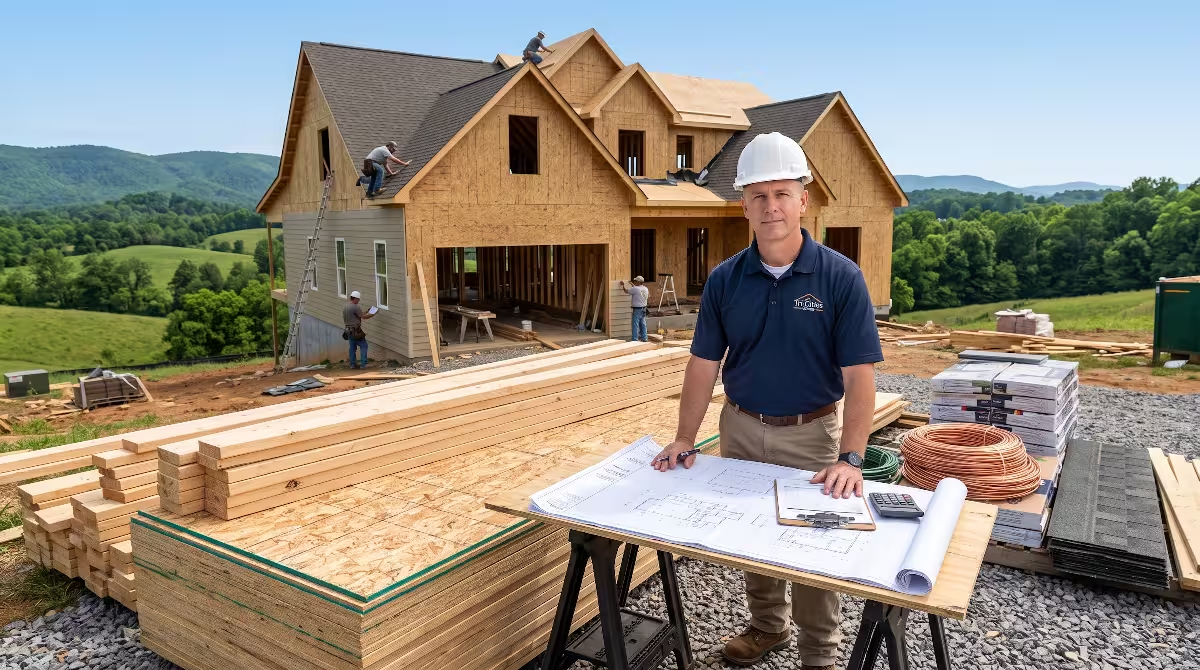
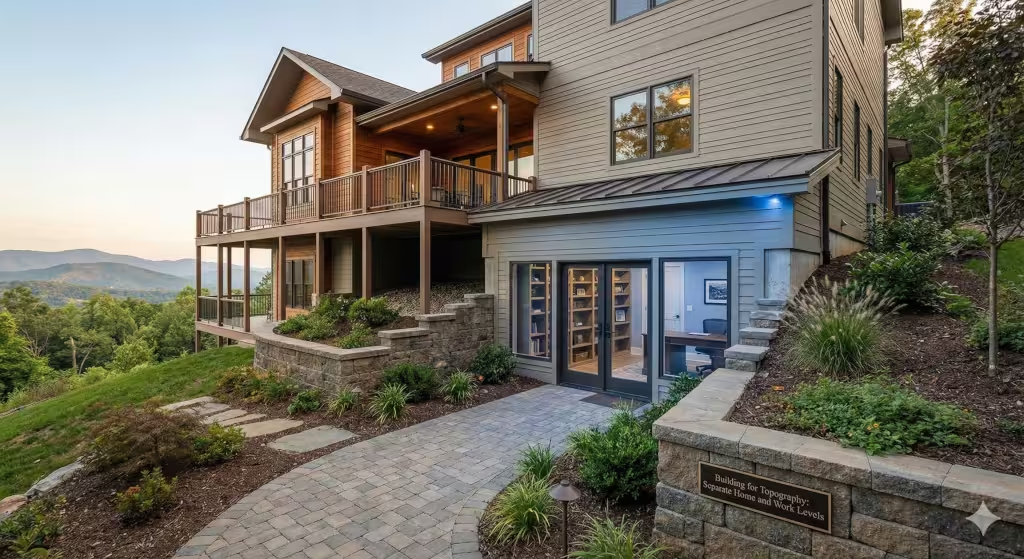
For many, the ambition to build a home from the ground up in Northeast Tennessee is a deeply held goal. It’s easy to understand why. One often finds a unique sense of place here, nestled between the rolling hills and the formidable peaks of the Appalachian Mountains. Whether it’s the vibrant community life in Johnson City, the historic charm of Kingsport, or the cross-state energy of Bristol, the Tri-Cities area offers a quality of life that is both peaceful and engaging. The dream isn’t just about building a house; it’s about creating a home base for a life rich with outdoor adventure and genuine community connection.
The purpose of this guide is to take one of the most complex pieces of that puzzle, financing, and make it clear. We will walk through the FHA Construction-to-Permanent loan, a powerful but often misunderstood tool, to help you determine if it’s the right foundation for your own Tri-Cities dream.
Definition of an FHA Construction Loan?
Decoding the “One-Time Close” Loan
Before we can pour a foundation or frame a wall, we have to understand the financial tool that makes it all possible. When people hear “FHA Construction Loan,” what they are almost always referring to is a specific product called an FHA Construction-to-Permanent Loan. You might also hear lenders call it a “One-Time Close” or “Single-Close” loan.
Think of it like this: traditionally, if you wanted to build a home, you often had to get two separate loans.
- The Construction Loan: This was a short-term loan, maybe for a year, that paid the builder as the house was being built. These loans often had higher, variable interest rates.
- The Mortgage: Once the house was finished, you had to go through a whole new application process to get a standard, long-term mortgage to pay off the construction loan.
This two-step process had risks. What if interest rates went up during the year your home was being built? What if something changed with your job and you no longer qualified for the second loan? You could be left in a very difficult position.
The FHA One-Time Close loan solves this problem. It combines those two loans into one. You go through the application and approval process just once, before any dirt is moved. At a single closing, you lock in your interest rate for the entire life of the loan—typically 30 years. This one loan covers everything:
- The cost of buying the land (if you don’t already own it).
- All the costs of construction (materials, labor, permits, etc.).
- The final, permanent mortgage you will have once you move in.
This single transaction provides immense peace of mind. You know your interest rate and your final monthly payment before the first nail is ever hammered.
It’s also important to clarify what this loan is not. You may have heard of an FHA 203(k) loan. While that is also an FHA product, it is designed for buying and renovating an existing home, not for building a brand new one from scratch. For a new build, the One-Time Close construction loan is the correct tool.
Finally, the “FHA” part of the name is key. The Federal Housing Administration, which is part of the U.S. Department of Housing and Urban Development (HUD), insures this loan. This insurance protects the lender in case the borrower can’t make their payments. Because the lender has this protection, they are willing to offer loans with more flexible requirements, which we’ll cover next.
Key Requirements for FHA Construction Loans in Tennessee

Meeting the Foundation: Borrower and Property Qualifications
Because FHA loans are backed by the government, they have specific rules and requirements. These are designed to make homeownership accessible while still ensuring the loan is a sound investment. Understanding these requirements is the first step in seeing if this path is right for you.
Credit Score
Your credit score is a number that represents your history of borrowing and repaying money. For most traditional home loans, lenders want to see very high scores. The FHA program, however, is designed to be more forgiving. While every lender has slightly different standards, you’ll generally find that the minimum credit score required for an FHA construction loan starts somewhere between 620 and 640.
A lender will look at your full credit report to see that you have a history of paying bills on time and haven’t had major issues like recent bankruptcies or foreclosures. The lower your score, the more important it is that you have other strengths, like a steady job or savings in the bank. The goal is to show the lender you are a reliable borrower.
Down Payment
This is one of the biggest advantages of the FHA program. For a conventional construction loan, you might be asked to put down 20% or more. With an FHA One-Time Close loan, the minimum down payment is just 3.5%.
It’s crucial to understand how this 3.5% is calculated. It’s not based on just the construction cost; it’s based on the total project cost. This includes the price of the land plus all hard and soft costs of building the home.
Let’s use an example. Suppose:
- The land you want to buy costs $50,000.
- The contract with your builder to construct the home is $250,000.
- The total project cost is $300,000.
Your minimum down payment would be 3.5% of $300,000, which is $10,500. This significantly lowers the barrier to entry for many families who are excellent at managing monthly payments but haven’t had the chance to save up a massive lump sum.
Debt-to-Income (DTI) Ratio
This sounds complicated, but the idea is simple. Lenders want to make sure your new house payment won’t be an overwhelming burden. Your Debt-to-Income ratio, or DTI, is a percentage that shows how much of your monthly income (before taxes) goes toward paying all your monthly debts.
This includes:
- Your new estimated monthly mortgage payment (including taxes and insurance).
- Car payments.
- Student loan payments.
- Credit card minimum payments.
- Any other loans or required debt payments.
For example, if you earn $6,000 per month before taxes, and the sum of all your monthly debt payments (including the new house) would be $2,400, your DTI would be 40% ($2,400 is 40% of $6,000).
Generally, the FHA likes to see a DTI ratio of 43% or less. However, in some cases where a borrower has a higher credit score or significant savings, lenders may allow for a DTI as high as 50%. It’s a measure of your financial breathing room.
FHA Loan Limits
The FHA program was created to help low-to-moderate-income families, not to finance luxury mansions. For that reason, the FHA sets a maximum loan amount you can borrow. These limits vary by county across the United States based on the local cost of housing.
In our area, you must check the current FHA loan limits for the specific county where you plan to build. For example, the limits for Washington County, Sullivan County, and Carter County can be different. These numbers change periodically, so it’s essential to look up the most current limits for the year you are applying. You can find these on the HUD website. Your total loan amount—for the land and construction—cannot exceed this limit.
Mortgage Insurance Premium (MIP)
Remember that FHA insurance that protects the lender? It isn’t free. As the borrower, you pay for it in two ways. This is the main trade-off for the low down payment and flexible credit requirements.
- Upfront Mortgage Insurance Premium (UFMIP): This is a one-time fee, currently 1.75% of the total loan amount. Most people don’t pay this out of pocket; instead, it’s rolled into their total loan balance and paid off over the life of the mortgage.
- Annual Mortgage Insurance Premium (MIP): This is a recurring fee, paid monthly as part of your total mortgage payment. The amount depends on your loan amount and down payment. If you put down less than 10%, you will likely have to pay this MIP for the entire life of the loan.
MIP is a significant long-term cost, and it’s important to factor it into your budget when deciding if an FHA loan is your best option.
The Blueprint: Your Step-by-Step Process
From Groundbreaking to Move-In: The Loan Process
The path to getting an FHA construction loan is more involved than buying an existing house. It requires careful planning and coordination. Think of these steps as the official blueprint for your project’s financing.
- Prequalification & Finding a Lender: The very first step is to talk to a lender. You want to find a bank, credit union, or mortgage company that specifically has experience with FHA One-Time Close construction loans. Not all lenders offer them. During prequalification, you’ll provide a basic overview of your finances, and the lender will give you a general idea of how much you can afford. This is a crucial step before you start looking at land or hiring a builder.
- Finding an Approved Builder: This is perhaps the most critical partnership you will form. The FHA and your lender need to know that the person building your house is qualified, reputable, and financially stable. Your builder will need to be approved by your specific lender. This process involves the lender reviewing the builder’s financials, insurance, licenses, and past projects. It’s a good idea to ask potential builders upfront if they have experience with FHA-financed projects and if they’ve been approved by lenders in the Tri-Cities area before.
- Plans and Specifications: Once you have your builder, you will work together to create the detailed plans for your home. This isn’t just a floor plan. It includes everything from the type of foundation to the model of the kitchen faucet. These detailed plans, often called “plans and specs,” along with a line-by-line budget, are submitted to the lender.
- Appraisal: The lender will hire an FHA-approved appraiser. Unlike a regular appraisal, this one is based on the future. The appraiser reviews all the plans, specs, and the location of your lot to determine the home’s “as-completed” value—what it will be worth the day the builder hands you the keys. Your final loan amount will be based on either this appraised value or the total project cost, whichever is lower.
- Underwriting and Closing: This is the final approval stage. An underwriter will meticulously review all of your financial documents, your builder’s information, the plans, and the appraisal. Once everything is verified, you will go to closing. This is the “one-time close.” You’ll sign all the paperwork, your down payment will be collected, and the loan becomes official. The funds for construction are then placed in an escrow account, ready to be paid out to the builder.
- The Construction Phase & Draw Schedule: The builder does not get all the money at once. The loan is paid out in stages, called “draws.” For example, the builder might get the first draw after the foundation is poured. Before the lender releases the money for that draw, they will send an inspector to the site to verify the work has been completed correctly. This draw process continues throughout the build—after framing, after drywall, etc. This system protects both you and the lender, ensuring the money is only paid for work that is actually done.
- Final Inspection & Conversion: When the builder completes the house, a final inspection is done. Once the home is certified as 100% complete (and you are given a Certificate of Occupancy), the loan automatically converts into its permanent phase. No new closing, no new paperwork. You simply start making your regular monthly mortgage payments, just as you would with any other home loan.
Assembling Your Tri-Cities Team: Lenders and Builders
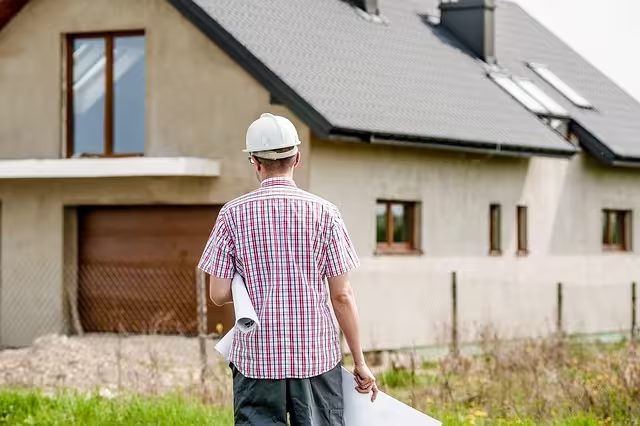
Finding the Right Local Partners
Successfully navigating an FHA construction loan hinges on having the right team. This isn’t a process you can do alone. You need experienced local professionals who understand the specific rules of the FHA and the unique landscape of the Tri-Cities market.
Lenders
Your first and most important partner is your loan officer. When you start your search, don’t just walk into the first bank you see. You need to ask a specific question: “Do you offer FHA One-Time Close Construction-to-Permanent loans?” If they hesitate or seem unsure, they are likely not the right fit. You need a specialist.
In the Johnson City, Kingsport, and Bristol area, you can find these specialists in a few places:
- Local Community Banks and Credit Unions: Institutions like Eastman Credit Union or other regional banks often have a deep understanding of the local market and may have dedicated staff for construction lending.
- Mortgage Brokers: A good mortgage broker works with many different lenders and can help you find one that offers this specific FHA product and has the most competitive rates.
- Larger National Lenders: Some large banks have local branches in the Tri-Cities with specialized construction lending departments.
When you interview a potential lender, ask about their process, their average closing time for these loans, and what their requirements are for builder approval. An experienced lender will be able to answer these questions with confidence.
Builders
Your builder is your partner in turning the financial blueprint into a physical reality. The lender’s builder approval process is strict for a reason: a bad builder can derail the entire project.
When looking for a builder, start by seeking out professionals with a strong local reputation. Resources like the Johnson City Area Home Builders Association are a great place to start, as their members are established professionals in our community.
When you interview builders, ask them directly:
- “Have you built homes using FHA construction financing before?”
- “Are you familiar with the FHA inspection and draw process?”
- “Can you provide references from past clients who used this type of financing?”
A builder who is experienced with this process will not be intimidated by the paperwork or the inspection schedule. They will understand the importance of staying on budget and on schedule. Choosing an organized, communicative, and financially sound builder is just as important as getting a low interest rate.
A Balanced View: Pros and Cons of FHA Construction Loans
Weighing Your Options with Precision
Like any tool, an FHA construction loan is perfect for some jobs and less than ideal for others. It’s my responsibility to give you a clear, balanced view so you can make an informed decision.
Advantages:
- Low Down Payment: This is the single biggest benefit. The 3.5% minimum down payment makes building a new home possible for many individuals and families who would otherwise be locked out of the market.
- Accessible Credit Requirements: The FHA’s more lenient stance on credit scores opens the door for those who may have had a few financial bumps in the past but are now on solid ground.
- Single Closing: This is a huge advantage in terms of both cost and stress. You only have to pay one set of closing costs, and you avoid the anxiety of having to re-qualify for a mortgage a year down the road.
- Locked-In Interest Rate: In a market where interest rates can change, locking in your rate for 30 years before construction even begins provides incredible security and predictability for your budget.
Disadvantages:
- Mandatory Mortgage Insurance (MIP): This is the most significant drawback. The monthly MIP payment adds to your total housing cost and, in most cases, will stay with you for the entire life of the loan. This can add up to tens of thousands of dollars over time.
- FHA Loan Limits: Depending on your vision and the cost of land and labor in the Tri-Cities, the county loan limits might be too low for the home you want to build. This loan is designed for modest homes, not sprawling custom estates.
- A More Complex Process: There is no sugarcoating it—this process involves more paperwork, more inspections, and more coordination between more people (you, the builder, the lender, the appraiser, the inspectors) than a conventional loan. It requires patience and organization.
- Strict Builder Requirements: The need for a lender-approved builder can sometimes limit your choices. If you have a friend or family member who is a builder but can’t meet the lender’s stringent financial and insurance requirements, you won’t be able to use them for the project.
Commonly Asked Questions about FHA Loans
Many people have the same questions come up when considering an FHA loan. Let’s address some of the most common ones directly.
Can I be my own general contractor with an FHA construction loan?
Generally, the answer is no. FHA guidelines and lender policies are very strict on this point. They require a licensed, insured, and experienced third-party builder who is not related to the borrower. The reason is risk management. The lender needs assurance that the project will be completed on time, on budget, and to code by a professional with a proven track record.
Is it harder to get an FHA construction loan than a regular FHA loan?
Yes, it is a more intensive and difficult process. For a regular FHA loan, the lender is just evaluating you and an existing, completed house. For a construction loan, they have to evaluate you, the land, the builder, the house plans, the budget, and the future value of a home that doesn’t exist yet. It involves many more moving parts and a higher level of scrutiny from the underwriter.
What happens if construction costs go over budget?
This is a critical point to understand. The loan amount is fixed at your closing before construction begins. If your builder runs into unexpected issues and costs go up, the loan amount does not automatically increase. Any costs above the agreed-upon budget are typically your responsibility to pay out-of-pocket. This is why it is vital to have a highly detailed contract with your builder and to include a “contingency fund” (extra money set aside) in your personal budget for unforeseen problems.
Can I use the loan to buy land?
Absolutely. If you haven’t bought your lot yet, the cost of the land purchase can be rolled into the total FHA construction loan. This is a common and accepted part of the one-time close process. If you already own your land, any equity you have in it can often be used toward your 3.5% down payment requirement, which is a significant benefit.
Conclusion – Laying the Foundation for Your Future
Building a home in the Tri-Cities is a significant undertaking, a project that requires a solid plan from the very beginning. The FHA One-Time Close construction loan can be an excellent financial tool to make that project a reality, particularly for first-time builders or those with less than 20% to put down. It offers a clear path with the security of a locked-in rate and a single, streamlined closing process.
However, its benefits come with a demand for precision, patience, and partnership. This is not a journey to be taken lightly or with an inexperienced crew. Success hinges on finding a lender who specializes in this product and a builder who has navigated the FHA’s requirements before.
It is our hope is that this guide has served as a steady hand, clarifying the process and empowering you with the knowledge to ask the right questions. Understanding your financing is the first, most crucial step in building your future.
If you’re considering building a home in the Tri-Cities, we at Tri-Cities TN Home are here to help you connect with the right partners to ensure your project is built on a foundation of integrity and expertise.