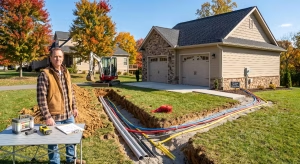
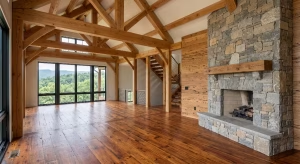
Tri-Cities TN Home the better part of three decades, has managed home construction projects right here in the Tri-Cities. From the initial survey of a raw piece of land to the final coat of paint, I’ve seen it all. I’ve seen the profound joy that comes from a well-executed build, and I’ve also witnessed the deep frustration that stems from a shaky start. In my experience, the one constant that separates the two is that the most successful projects always begin with solid, well-planned financing.
The decision to build a new home is a significant one—a journey filled with excitement about custom floor plans and unique finishes. Yet, the path from that dream to a finished home can feel intimidating, especially when it comes to securing the right funding. The financial side of construction is a world apart from buying an existing house, and navigating it without a clear map can be a challenge.
That is precisely why I’ve put this guide together. My goal is to demystify the new home construction loan process for you. We will walk through exactly what these loans are, what lenders require for approval, and most importantly, we will spotlight the local financial institutions right here in the Johnson City, Kingsport, and Bristol areas that have a proven track record of helping people build their foundation in the Tri-Cities. Consider this your blueprint for financing your future home.
Of course. It’s crucial to understand every component of the financing process before you break ground. A solid understanding here prevents costly surprises and keeps the project moving smoothly. Let’s move beyond the introduction and lay out the core details you’ll need.
What is a New Home Construction Loan and Why Do You Need One?

First things first, a standard mortgage that you’d get for an existing home won’t work for a new build. When you buy a house that’s already standing, the bank has a finished asset—a complete piece of collateral—from day one. When you build, you’re starting with a piece of land and a set of plans. The value is added incrementally as the home is constructed. This presents a different level of risk for a lender, which is why a specialized new home construction loan is required.
Think of it like this: a mortgage is for a finished product, like buying a car right off the lot. A construction loan is for the parts and labor to build that car from the ground up, with the lender releasing money at key stages of the assembly line.
The core feature of this loan is the draw process. You don’t get a lump sum of cash. Instead, the lender pays out the funds in stages, or “draws,” directly to your builder as construction milestones are completed. For example, a draw might be released after the foundation is poured, another after the framing is complete, and another after the drywall is up. Before releasing each payment, the lender will send an inspector to verify the work has been completed to standard. This process protects you and the lender by ensuring the money is being used as intended and the project is progressing on schedule.
The Two Main Paths: Understanding Loan Types
When you approach a lender in the Tri-Cities, they will generally present you with two primary ways to structure your financing. Choosing the right one depends on your financial situation and tolerance for risk.
Construction-to-Permanent Loan (The Single-Close Option)
This is, by far, the most popular and streamlined option I see with my clients. It combines the construction loan and your permanent mortgage into a single financial product with one application and one closing. You are qualified once for both phases. During the construction period (typically 9-12 months), you pay only the interest on the money that has been drawn. Once your certificate of occupancy is issued, the loan automatically converts into a standard, permanent mortgage.
- Pros: You save a significant amount of money and paperwork by only having one set of closing costs. More importantly, you lock in your permanent mortgage interest rate before the first shovel hits the dirt, protecting you from market fluctuations during the build.
- Cons: The upfront interest rate might be fractionally higher than a stand-alone loan, as the bank is taking on a longer-term risk.
Stand-Alone Construction Loan (The Two-Close Option)
This structure involves two separate transactions. The first loan is a short-term loan that only finances the construction phase. When the home is complete, you must then shop for and qualify for a brand-new, permanent mortgage to pay off the construction loan.
- Pros: This path offers a bit more flexibility. If interest rates happen to fall during your build, you could potentially secure a lower rate on your final mortgage. It might also be an option if you need to use a specialized lender for the construction phase who doesn’t offer permanent mortgages.
- Cons: The risks here are significant. You have to pay for two closings, which can add thousands to your costs. More critically, you are not guaranteed approval for your final mortgage. If your financial situation changes (a job loss, a credit score dip) or if interest rates rise substantially, you could find yourself with a completed house and no way to finance it long-term.
For most people building their primary residence, the certainty and cost savings of the single-close loan make it the superior choice.
The Blueprint for Approval: What Lenders Require

A lender isn’t just approving you; they are approving the entire project. From my years of experience working with banks like Bank of Tennessee and Eastman Credit Union, I can tell you they are meticulous. They need to see a solid plan built on these five pillars:
- Good Credit: This is non-negotiable. Lenders in our area are typically looking for a minimum credit score of 680, but to secure the best rates and terms, a score of 720 or higher is what you should aim for.
- Sizable Down Payment: Forget the 3% down of some conventional loans. For a construction loan, you’ll need to have more skin in the game. The standard is a 20-25% down payment based on the total cost of the project (land plus construction). The good news is if you already own your land outright, you can often use the equity in that land to satisfy most or all of this requirement.
- Low Debt-to-Income (DTI) Ratio: Your DTI is the percentage of your gross monthly income that goes toward paying your monthly debts. Lenders need to see that you can comfortably afford your existing obligations (car loans, credit cards) plus the interest-only payments on the new loan. The target DTI is generally 43% or lower.
- A Qualified Builder: The bank is investing hundreds of thousands of dollars, and they need to be confident in the person managing the project. They will thoroughly vet your chosen builder, requesting their license, proof of liability and workers’ compensation insurance, a portfolio of past projects, and financial statements to ensure they are solvent and reputable. A builder with a long, positive track record in the Tri-Cities is a major asset here.
- Detailed Plans & Budget: You can’t walk into a bank with a sketch on a napkin. You will need a full set of architectural plans (blueprints), a highly detailed line-item budget that accounts for every cost from excavation to doorknobs, and a formal, signed construction contract with your builder that outlines the scope, cost, and timeline.
The Players: A Look at Local Banks & Credit Unions

Navigating the local banking scene can be tricky, but we have some excellent institutions in the Johnson City, Kingsport, and Bristol area with deep experience in construction lending. My advice is always to speak with at least two or three to compare their process and service.
Tri-Cities TN Home Disclaimer: This isn’t a ranked list, but a look at some of the established local institutions that have experience in construction lending. Your experience will depend on your specific project and the loan officer you work with.
Eastman Credit Union (ECU)
- Overview: As one of the largest and most active lenders in the region, ECU has a very streamlined and experienced mortgage department. Their process for construction loans is well-established.
- Tri-Cities TN Home’s Take: I’ve worked on many ECU-funded projects. Their local appraisers and inspectors know the Tri-Cities market inside and out. They are often praised for competitive rates and for having a clear, understandable draw process that keeps projects on schedule. Their familiarity with local builders is a definite plus.
Bank of Tennessee
- Overview: A true community bank with deep roots in Johnson City and a vested interest in the region’s growth. They actively market their single-close construction-to-permanent loans.
- Tri-Cities TN Home’s Take: What I appreciate about a community bank like Bank of Tennessee is the potential for a more personal touch. You’re often dealing with decision-makers who are part of this community. They understand local challenges, like building on a sloped mountain lot, and can sometimes offer more flexible, common-sense solutions.
First Horizon Bank
- Overview: A larger regional bank with a significant presence across Tennessee. Their size means they have very robust, structured systems for handling complex loans like construction financing.
- Tri-Cities TN Home’s Take: If you appreciate a highly structured and predictable process, First Horizon is a strong contender. Their online platforms and clear communication protocols for the draw process are typically very efficient. They offer the full suite of products, including lot loans if you need to purchase the land first.
- Other Local/Regional Players to Consider: Don’t overlook other strong community institutions like the Appalachian Community Federal Credit Union (ACFCU), which also has a history of serving the needs of local residents and may offer unique benefits to its members.
Asking the Right Questions: What Your Builder Needs You to Know

When you sit down with a loan officer, you are interviewing them for a critical role on your team. As a builder, delays in funding are my biggest headache because they stall the entire project. Here are the questions I wish every single one of my clients would ask their potential lender:
- “Can you walk me through your entire draw process, from request to funding?”
- “How long does it typically take to get an inspector to the site once a draw is requested?”
- “Once the inspection is approved, how many days until the funds are wired to my builder?” (An answer of 2-3 business days is excellent. An answer of 7-10 days is a major red flag).
- “What are all the fees associated with the draws? (e.g., inspection fees, title update fees).”
- “How do you handle change orders? If we decide to upgrade our countertops, what is the process to get that approved and funded?”
- “What are your specific insurance requirements during construction?”
- “If we choose a single-close loan, can we lock our permanent interest rate today, before we break ground?”
A loan officer who can answer these questions clearly and confidently is one who understands the business.
Topics Related to Home Building (Not Covered Elsewhere)
A few other related items often come up during my initial client meetings:
- Land Loans: If you’ve found the perfect plot in Washington or Sullivan County but aren’t ready to build immediately, many of these same banks offer lot or land loans. These are short-term loans, typically for 2-5 years, that secure the property for you. Be aware that the down payment requirement for raw land is often higher than for a construction project.
- Interest Rates: It’s important to set your expectations. The interest rate on your construction loan will be variable and will likely be higher than the fixed rates you see advertised for standard mortgages. This is because the loan is considered higher risk until the home is complete. The key is to secure a good fixed rate for the permanent phase of your loan.
- Owner-Builder Loans: I get this question often: “Can I save money by acting as my own general contractor?” While it sounds appealing, you must know that the vast majority of banks will not finance an owner-builder project. The risk of budget overruns and timeline delays is simply too high for them unless you are a licensed, insured, and full-time builder by trade. For 99% of people, this is not a viable path.
Frequently Asked Questions

Let’s tackle some of the most common questions I hear head-on.
- Is it hard to get a construction loan? It is not necessarily “hard,” but it is more rigorous than getting a standard mortgage. The key is preparation. If you have your builder selected, your plans complete, your finances in order, and meet the “Five Pillars” I mentioned earlier, the process can be quite smooth. The difficulty arises when people try to rush the process without proper documentation.
- What is the minimum credit score for a construction loan? While you might find a lender willing to go as low as 680, I strongly advise my clients to aim for a credit score of 720 or higher. A higher score not only increases your chances of approval but also directly impacts the interest rate you’ll receive, potentially saving you tens of thousands of dollars over the life of the loan.
- How does the loan “convert” to a permanent one? This is the beauty of the single-close loan. Once the builder completes the home and the final inspection is passed, the county will issue a Certificate of Occupancy. This document is sent to the lender. The lender then does a final modification of the loan documents, the construction phase is closed out, and your payments automatically shift from interest-only to the principal-and-interest payments of your permanent mortgage. It all happens seamlessly behind the scenes without a second closing.
Of course. Let’s move beyond the outline and put some substance behind these points. A successful build is founded on clear understanding and preparation. Think of this as the detailed blueprint for the financial side of your project.
The Final Walk-Through: Your Next Steps
We’ve covered a lot of ground, from understanding the mechanics of a draw schedule to identifying the key financial institutions here in the Tri-Cities. If there are two things I want you to take away from all this, it’s these: preparation is paramount, and you are building a team. The relationship you have with your builder and your loan officer is the bedrock of your entire project. A strong, communicative team will navigate challenges smoothly, while a disjointed one can turn minor issues into major delays.
Your journey to building a home is a marathon, not a sprint. The groundwork you lay now, before the first shovel of dirt is turned, will determine the success and enjoyment of the entire process. Don’t rush these foundational decisions. Take the time to get your documents in order, to interview and vet your partners thoroughly, and to ask every question you can think of.
To that end, here are your immediate, actionable next steps:
- Organize Your Financial Blueprint. Gather your last two years of tax returns, recent pay stubs, and bank statements. Pull your credit report and address any inaccuracies. Knowing your exact financial standing is the first step to any serious conversation with a lender.
- Select Your Builder. Before you can get a loan, you need a builder. Interview at least two or three reputable local builders. Ask for references, look at their past projects, and choose the one whose communication style and quality of work give you the most confidence.
- Interview the Lenders. With your builder and your financials in hand, schedule meetings with loan officers at two or three of the institutions we’ve discussed. Go into those meetings with the list of questions from Section 6. Compare their answers, their fees, and their process. Choose the lender who feels most like a partner.
Building a custom home is one of the most challenging, yet deeply rewarding, ventures you can undertake. You are not just constructing walls and a roof; you are creating the backdrop for your family’s future memories. With the right team and a solid financial plan, you are setting the stage for a successful and satisfying build.
I wish you the very best in your project.