

In this guide, we will walk you through the structural, mechanical, and aesthetic principles behind modern spa-bathroom designs. We will explore how stone and water can transform a basic home bathroom into a personal sanctuary.
The Neurobiology of Hydic Biophilic Spa-Bathroom Design
Biophilic design is the practice of connecting human beings with natural systems inside built environments. When we bring natural materials, moving water, and fresh air into a living space, our nervous system responds immediately. In luxury homes across Eastern Tennessee, modern spa-bathroom designs are moving far beyond basic tile and porcelain fixtures. By incorporating raw stone and flowing water, we create spaces that actively reduce physical and mental stress.
The Biophilia Hypothesis in Wet Microclimates
The biophilia hypothesis was popularized by biologist E.O. Wilson. It states that human beings have an innate, biological need to connect with nature and other living things. Bathrooms are unique because they are wet microclimates. They are the only rooms in a house where water flows on demand every single day.
When water moves over natural stone, it creates subtle patterns of light and sound. In science, we call these patterns non-rhythmic sensory stimuli. Unlike the predictable ticking of a clock or the harsh buzz of a lightbulb, moving water changes constantly in small ways. Your brain registers these subtle changes without feeling overwhelmed. This gentle sensory input lowers your heart rate and decreases stress hormones like cortisol. When we build thoughtful spa-bathroom designs, we harness these natural biological reactions to make you feel calm and grounded.
Defining the High-Performance Spa-Bathroom
A high-performance bathroom goes far beyond looks. In traditional home construction, bathrooms are built using sterile, flat surfaces like ceramic tile and glass. While easy to clean, those static surfaces feel cold and disconnected from nature.
High-performance spa-bathroom designs combine active natural elements with heavy-duty construction engineering. These spaces feature integrated stone water walls, specialized moisture control systems, and customized acoustic tuning. Instead of treating a bathroom as a quick pit stop in your morning routine, modern spa-bathroom designs turn the room into an active wellness center. The water does not just clean your body; it calms your mind through sound, sight, and touch.
Merging Geology, Hydraulics, and Regional Design
Creating a successful biophilic retreat requires three core disciplines: structural geology, precision hydraulics, and regional building adaptation. You cannot simply stack rocks against a wall and turn on a hose. Without proper engineering, indoor water features can cause structural leaks, mold growth, and annoying mechanical noise.
When we balance geological stone selection, closed-loop water systems, and local Appalachian stone aesthetics, the result is an uncompromised home retreat. Quality spa-bathroom designs harmoniously link heavy natural stone with modern building science, ensuring your indoor sanctuary lasts for decades without maintenance headaches.
Material Selection: Geological Integrity in Wet Environments
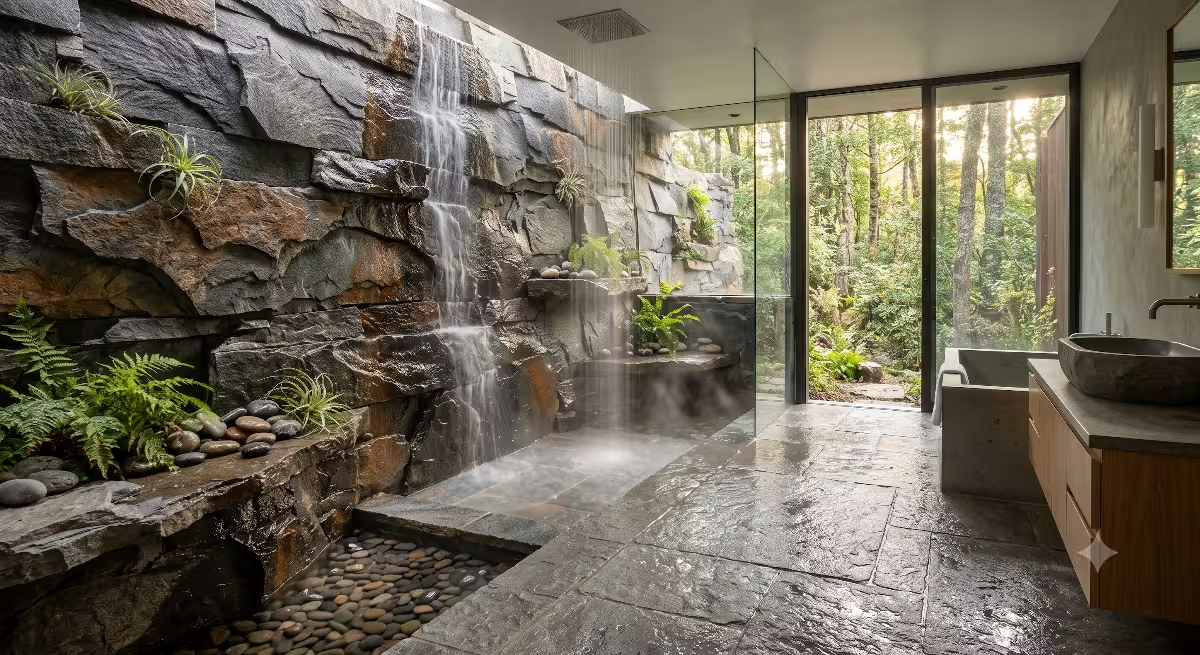
Selecting materials for wet indoor spaces requires an understanding of how rock reacts to continuous moisture, mineral exposure, and foot traffic. Not every pretty stone belongs in a shower or water feature. You must choose rock types based on their physical strength, absorption rates, and surface friction.
+-----------------------------------------------------------------------+
|                    NATURAL STONE SELECTION MATRIX                     |
+-----------------------------------------------------------------------+
| Stone Type  | Water Absorption | Slip Resistance | Best Application   |
+-------------+------------------+-----------------+--------------------+
| Slate       | Very Low (<0.5%) | High (Textured) | Water Walls/Floors |
| Quartzite   | Very Low (<0.5%) | High (Honed)    | Heavy Wet Zones    |
| River Rock  | Low (0.5-1.0%)   | High (Rounded)  | Shower Pans/Bases  |
| Travertine  | Medium (1.0-3.0%)| Medium (Honed)  | Dry Accent Walls   |
+-----------------------------------------------------------------------+
Stone Typologies and Physical Properties
Natural stone falls into three geological categories: igneous, metamorphic, and sedimentary. Each category behaves differently when exposed to water on a daily basis.
Slate and quartzite are metamorphic rocks, making them top choices for spa-bathroom designs. They formed under extreme heat and pressure beneath the earth’s surface. This dense structural makeup gives slate and quartzite extremely low water absorption rates, usually under 0.5%. Slate features natural layered planes that break water up gently as it cascades down a wall. Quartzite offers dense strength with subtle glass-like sparkles that reflect ambient light.
River rocks and smooth cobbles provide excellent tactile benefits. When embedded into a shower pan or water feature basin, these rounded stones massage the soles of your feet. This direct foot contact stimulates nerve endings, promoting better circulation and body awareness.
Travertine and limestone are sedimentary rocks. They are naturally porous and contain tiny air pockets called cavitations. If you use travertine in high-moisture spa-bathroom designs, those small holes must be filled with factory resin and sealed tightly. Unsealed sedimentary stone will absorb water, trap soaps, and break down over time.
+-----------------------------------------------------------------------+
|                     WATER ABSORPTION & DURABILITY                     |
+-----------------------------------------------------------------------+
| LOW ABSORPTION (<0.5%)  --> Slate, Quartzite, Granite                 |
|   - Resists staining, resists mineral buildup, handles heavy water    |
|                                                                       |
| HIGH ABSORPTION (>1.0%) --> Unsealed Travertine, Soft Limestone       |
|   - Traps water, prone to efflorescence, requires continuous sealing |
+-----------------------------------------------------------------------+
Safety Metrics and Surface Hydro-Finishes
Safety is a mandatory requirement when working with natural stone in wet areas. Polished marble looks beautiful in hotel lobbies, but it becomes slippery when wet. For home applications, floor stones must maintain proper friction under bare feet.
Building engineers use slip resistance standards to grade floor surfaces. The DIN 51130 standard tests wet flooring using a motorized ramp. For barefoot wet areas, stones should meet an R10 or R11 slip rating. Another metric is the Pendulum Test Value, or PTV. Flooring used in wet zones should score above 36 PTV to protect homeowners from slipping.
To achieve these safety ratings, stone fabricators apply specialized mechanical surface finishes:
- Honed finishes: The stone is ground to a smooth, matte surface without a mirror-like shine, keeping natural grip intact.
- Bush-hammered finishes: High-speed pneumatic hammers pound the stone surface, creating a rough, uniform, rock-like texture.
- Hydro-finishes: High-pressure water jets blast away loose surface minerals, exposing natural grain while creating deep texture for foot traction.
By applying these hydro-finishes, modern spa-bathroom designs keep barefoot bathers safe without relying on plastic mats or ugly anti-slip stickers.
Sealing and Maintenance Protocols
All natural stone features micro-pores that absorb liquids over time. In a wet bathroom environment, unsealed stone traps body oils, soap scum, and hard water minerals. Mineral deposits left behind by evaporating water create white crusty stains known as efflorescence.
To protect natural stone walls and floor features, you must use breathable silane-siloxane penetrating sealers. Unlike cheap acrylic sealers that sit on top of stone like plastic wrap, penetrating sealers sink deep into the rock matrix. They line the microscopic pores to repel water while letting trapped vapor escape.
A proper maintenance protocol for stone-filled spa-bathroom designs includes three simple steps:
- Daily rinsing: Rinse stone water features with clean water after use to clear away soap residues.
- Weekly cleaning: Wash stone faces with a pH-neutral cleaner specifically formulated for natural stone. Never use harsh acidic cleaners like vinegar or bleach, which eat away at natural stone.
- Annual resealing: Reapply a penetrating silane-siloxane sealer once per year. You can test your stone by dripping water on the surface; if the water beads up into tight droplets, the seal is working. If the stone darkens and absorbs the water droplet, it is time to reseal.
Hydraulic Engineering for Integrated Stone Water Features
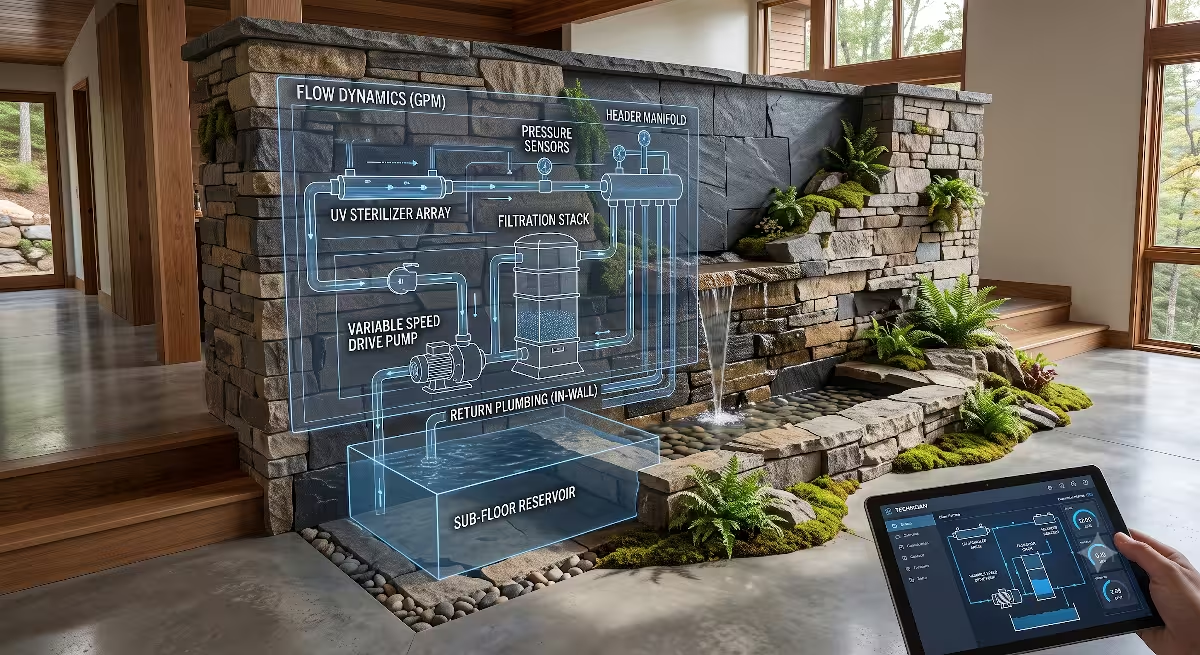
An integrated stone water feature should run quietly, efficiently, and cleanly. The magic of a waterfall or streaming water wall depends heavily on the hidden mechanics behind the wall. Proper hydraulic plumbing ensures that your room sounds like a quiet mountain creek rather than a noisy industrial sump pump.
+-----------------------------------------------------------------------+
|                    CLOSED-LOOP HYDRAULIC SCHEMATIC                    |
+-----------------------------------------------------------------------+
|  [Stone Water Wall]  <-- (Clean Water Output) <-- [UV-C Sterilizer]   |
|         |                                                 ^           |
|         v                                                 |           |
|  [Catchment Basin] --> [Sediment Filter] --> [Silent DC Pump]         |
+-----------------------------------------------------------------------+
Closed-Loop Recirculation Architecture
Indoor water walls must operate on a closed-loop recirculation system. This means the system reuses the same water continuously, drawing zero new water from your city supply line during operation.
A professional closed-loop system uses four main components:
- Subsurface Catchment Basin: A waterproofed tank hidden beneath decorative river cobbles at the base of the stone feature. The basin holds enough water volume to keep the pump fully submerged at all times.
- Automated Fill Valve: A small float valve connected to your home’s fresh water line. As water naturally evaporates into the room, the float drops and tops off the reservoir automatically.
- Brushless DC Pumps: Variable-speed magnetic drive pumps that sit inside the basin. These pumps run on direct current, consuming minimal electricity while producing operating sound levels under 25 decibels.
- Multi-Stage Filtration: A mechanical pre-filter catches stray hair or dust, while an inline UV-C lamp neutralizes bacteria and algae as water flows through the pipes. This eliminates the need to add harsh chemical chlorine into your home.
Using distilled or reverse-osmosis water inside these closed-loop systems is crucial. Tap water contains dissolved minerals like calcium and magnesium. As tap water evaporates off vertical stone surfaces, those minerals leave behind white crusts that spoil the look of luxury spa-bathroom designs.
Acoustic Calibration and Psychoacoustics
Sound plays a primary role in how our minds process relaxation. In acoustics, we study psychoacoustics, which is how human beings perceive and emotionally react to different sounds.
Water features can create two very different sounds: white noise or pink noise. White noise contains equal energy across all sound frequencies, resulting in a harsh, splashing sound like a running kitchen faucet. Pink noise features deeper energy at lower frequencies. It mimics natural sounds like gentle rain, ocean waves, or forest streams.
+-----------------------------------------------------------------------+
|                         ACOUSTIC CALIBRATION                          |
+-----------------------------------------------------------------------+
| WHITE NOISE (Harsh/Splashing)  --> High water drop heights (>24 in)    |
|                                    Flat tile splash zones             |
|                                                                       |
| PINK NOISE (Calming/Natural)   --> Low water drop heights (<12 in)    |
|                                    Angled slate sheets                |
|                                    Submerged river pebble landings    |
+-----------------------------------------------------------------------+
To calibrate your water feature for calming pink noise, we adjust three design variables:
- Water flow rate: Controlling gallons per minute (GPM) across the stone face. A thin sheet of water clinging to textured slate produces a quiet hum rather than an aggressive splash.
- Fall height: Keeping the total distance between the bottom of the stone wall and the receiving basin water under 12 inches. Long water drops create high-frequency splashing sounds.
- Impact landing zones: Filling the receiving basin with rounded river cobbles or sloped stone ramps. When falling drops hit angled stones or a shallow bed of pebbles, the impact energy dissipates softly without splashing water droplets onto the floor.
High-end spa-bathroom designs balance these acoustic factors so that water movement fills the room with peaceful, restorative frequencies.
Waterproofing and Moisture Management
Water must stay exactly where it is designed to go. Water escaping into subfloors or wall cavities causes wood rot, structural sag, and dangerous mold growth.
Modern waterproofing relies on bonded sheet membrane technology. Before placing a single piece of natural stone, contractors must construct a complete waterproof envelope. The industry gold standard requires waterproofing systems that meet ANSI A118.10 standards.
+-----------------------------------------------------------------------+
|                    WALL WATERPROOFING CROSS-SECTION                   |
+-----------------------------------------------------------------------+
|  [Wall Studs]                                                         |
|    |--> [Cement Backer Board]                                         |
|          |--> [Vapor Retarder Membrane]                               |
|                |--> [Bonded Waterproof Sheet (ANSI A118.10)]          |
|                      |--> [Thin-set Mortar]                           |
|                            |--> [Natural Stone Cladding]              |
+-----------------------------------------------------------------------+
For vertical water walls, installers attach cement backer board to wall framing, cover it with a liquid waterproofing membrane, and overlap that with bonded sheet waterproofing. All pipe penetrations, corners, and floor joints must be sealed using specialized elastomeric waterproof tape.
Subfloor structures supporting stone water walls require extra engineering. A solid natural stone water feature can add hundreds of pounds of static load to floor joists. We calculate floor deflection ratings to ensure the subfloor will not flex. Flexing subfloors break waterproof seals and crack stone joints. Subfloors underneath heavy stone spa-bathroom designs must achieve a minimum deflection rating of L/720 to keep the installation rigid and leak-free.
Microclimate Engineering: Air, Light, and Botanical Integration
An authentic spa experience engages all human senses. Simply installing stone and water features is not enough; you must control the surrounding microclimate. That means managing room humidity, tuning artificial light to natural body rhythms, and choosing plants that thrive in warm, moist air.
+-----------------------------------------------------------------------+
|                   MICROCLIMATE CONTROL SYSTEM                         |
+-----------------------------------------------------------------------+
|  [Indoor Air Sensor] --> Detects High Humidity (>55% RH)             |
|                                |                                      |
|                                v                                      |
|  [ERV Ventilation System] <-- Kicks On Automatically                  |
|                                |                                      |
|                                v                                      |
|  [Exhausts Stale Air] <--> [Pulls Fresh Air] <--> [Recovers Heat]     |
+-----------------------------------------------------------------------+
HVAC and Relative Humidity Control
Water features constantly evaporate water into room air. If relative humidity (RH) rises above 60% for long periods, condensation forms on cold mirrors, metal fixtures, and drywall. This leads directly to toxic black mold growth. Conversely, if the air is too dry (below 30% RH), water evaporates rapidly, stone features dry out, and plants wither.
The ideal target relative humidity for spa-bathroom designs is between 45% and 55%.
To maintain this balance without causing uncomfortable drafts, home builders install Energy Recovery Ventilators, or ERVs. An ERV continuously monitors room humidity. When humidity spikes, the ERV exhausts moist indoor air to the outside while drawing in fresh outdoor air. As the air streams pass each other, the ERV transfers heat energy from the outgoing air to the incoming air. This preserves room temperature, protects your house framing from moisture, and keeps indoor air clean and fresh.
Circadian and Biophilic Lighting Strategies
Lighting directs how we perceive space, stone textures, and water movement. Standard overhead lighting casts harsh downward shadows on human faces, making rooms feel sterile and clinical. Biophilic lighting uses indirect layer techniques to mimic natural sun dynamics.
+-----------------------------------------------------------------------+
|                     CIRCADIAN LIGHTING TIMELINE                       |
+-----------------------------------------------------------------------+
| MORNING   --> 2700K (Warm Amber)   | Stimulates gentle wake-up        |
| MIDDAY    --> 5000K (Cool White)   | High energy, simulates daylight  |
| EVENING   --> 2200K (Deep Amber)   | Prepares body for restful sleep  |
+-----------------------------------------------------------------------+
Modern spa-bathroom designs use tunable white LED fixtures that adjust Correlated Color Temperature (CCT) throughout the day:
- Morning: Warm 2700K light simulates sunrise, easing your eyes into the day.
- Midday: Crisp 5000K light matches bright overhead sunlight, giving you energy while preparing for the day.
- Evening: Deep amber 2200K light eliminates blue spectrum wavelengths, signaling to your brain that it is time to produce melatonin for sleep.
We also use graze lighting techniques along textured stone water walls. By mounting narrow-beam LED strips close to the stone surface, light grazes down the face of the rock. This reveals every ridge, shadow, and water shimmer, turning natural stone into a dynamic piece of living art.
Botanical Microclimates in High-Humidity Zones
Living plants complete the natural loop in biophilic spa-bathroom designs. Plants clean indoor air by absorbing carbon dioxide and volatile organic compounds while adding vibrant green colors that relax the eye.
Because bathrooms experience fluctuations in light and humidity, you must pick plant species that thrive in understory rainforest environments. Excellent botanical options include:
- Bird’s Nest Fern (Asplenium nidus): Loves high humidity and indirect light; features bright green wavy fronds.
- Sword Fern (Nephrolepis exaltata): Thrives near moving water features where micro-droplets keep soil moist.
- Golden Pothos (Epipremnum aureum): Highly durable trailing vine that cascades over stone ledges.
- Living Moss Walls (Sheet and Cushion Mosses): Mounted directly on non-structural vertical panels; absorbs air moisture naturally while deadening echoes.
Integrating hydroponic planting pockets directly into stone water features allows plant roots to draw water continuously from circulating filtration streams. This creates a self-sustaining miniature ecosystem inside your home.
Regional Synthesis: Appalachian Biophilia in East Tennessee Homes
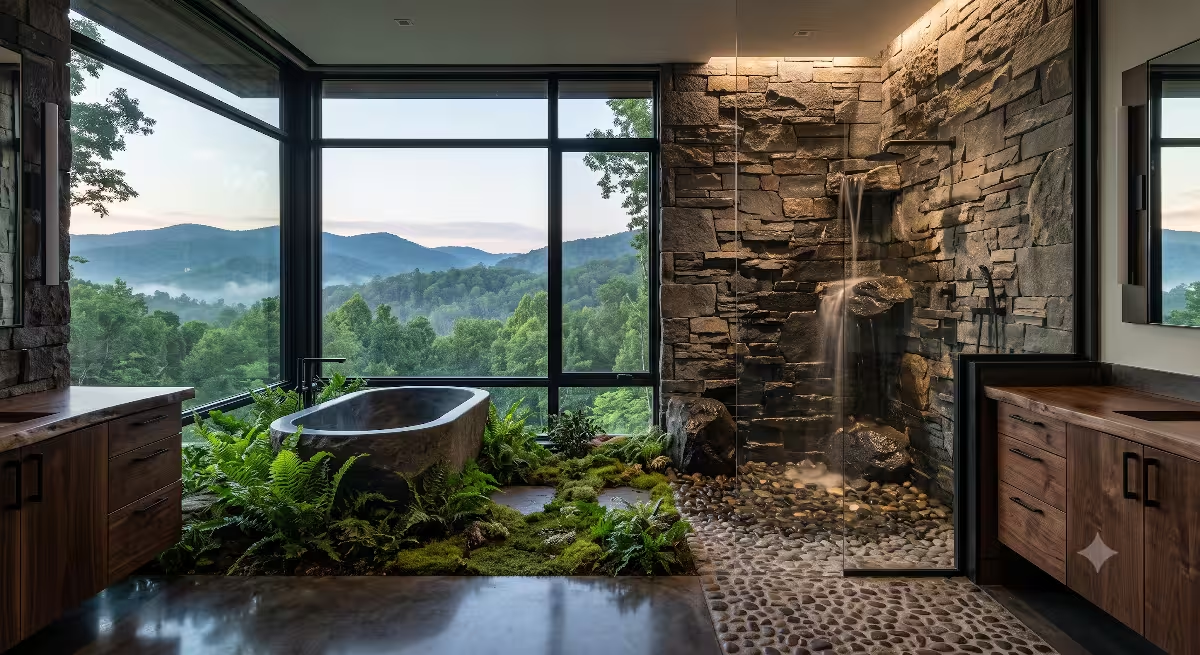
Every home should feel grounded in its local geographical context. Importing stone from across the world creates a disconnect with the local environment and inflates project shipping costs. Here in Eastern Tennessee, we live alongside some of the oldest, most beautiful mountain ranges on earth. Designing authentic spa-bathroom designs means drawing inspiration directly from our local Appalachian landscape.
+-----------------------------------------------------------------------+
|                    LOCAL MATERIAL SELECTION GUIDE                     |
+-----------------------------------------------------------------------+
| APPALACHIAN FIELDSTONE --> Earthy rusts and grays for feature walls   |
| TENNESSEE DARK SLATE   --> Deep blues and blacks for water walls      |
| HOLSTON RIVER PEBBLES  --> Smooth, rounded stones for shower floors   |
| LOCAL WHITE OAK WOOD   --> Moisture-sealed vanities and accent trim   |
+-----------------------------------------------------------------------+
Sourcing Local Materials
The geological history of East Tennessee provides a rich palette of building stones. Using regional stone supports local quarries, cuts shipping emissions, and grounds your home’s interior with local geology.
- Tennessee Slate: Quarried across the Appalachian foothills, this stone offers deep blue, charcoal, and gray tones. It cuts cleanly into dimensional panels for vertical water walls.
- Appalachian Fieldstone: Weathered stone harvested from regional hillsides features warm rust tones, tan accents, and mossy textures. It works best as structural stone accent cladding around tubs.
- Holston and Nolichucky River Pebbles: Smooth, water-worn river gravel collected from local river basins provides authentic regional foot therapy in custom shower pans.
Pairing local Tennessee stone with native hardwoods like quarter-sawn White Oak or sealed Chestnut creates warm material contrasts. The natural wood grains soften the cool surface of the stone, delivering well-balanced spa-bathroom designs.
Architecture Suited to the Tri-Cities Climate
The climate in Johnson City, Kingsport, and Bristol experiences four distinct seasons. Our summers are warm and humid, while winters bring cold mountain breezes and dry indoor air.
Indoor water features and natural stone elements must adapt to these seasonal shifts:
+-----------------------------------------------------------------------+
|                   SEASONAL HVAC OPERATIONAL MODES                     |
+-----------------------------------------------------------------------+
| SUMMER MODE --> High outdoor humidity                                 |
|                 ERV exhausts excess moisture outdoors                 |
|                 Keeps indoor air dry and prevents condensation        |
|                                                                       |
| WINTER MODE --> Low indoor humidity from central heating              |
|                 Water features act as natural, quiet humidifiers      |
|                 Reduces static air and keeps skin comfortable         |
+-----------------------------------------------------------------------+
During winter months, running central heating dries out indoor air. A integrated stone water feature acts as a quiet, natural humidifier, restoring moisture to healthy levels without noisy tabletop machines.
In humid summer months, mechanical ERV exhaust systems remove excess moisture from the house envelope. Integrating radiant in-floor heating beneath stone bathroom floors keeps foot surfaces comfortable year-round. Step onto warm stone in January, and your spa bathroom becomes a year-round retreat from seasonal weather.
Steps to Execution
Building an authentic home sanctuary requires combining design vision with precise technical execution. When you bring together natural stone, quiet hydraulics, controlled lighting, and fresh indoor air, daily bathing transforms into a restorative wellness ritual.
Summary of Key Engineering and Design Pillars
To review, successful spa-bathroom designs rely on four engineering pillars:
- Geological Integrity: Select dense, low-absorption stones like slate and quartzite. Use safe, slip-resistant hydro-finishes on wet floor areas.
- Hydraulic Precision: Build closed-loop water systems using low-voltage DC pumps, UV-C filtration, and low drop heights for soothing pink-noise acoustics.
- Microclimate Control: Install ERV ventilation to manage moisture between 45% and 55% RH. Combine dynamic circadian lighting with humidity-loving botanical walls.
- Regional Authenticity: Source local East Tennessee slate and river rock to connect your home with Appalachian geography.
+-----------------------------------------------------------------------+
|                     PROJECT EXECUTION ROADMAP                         |
+-----------------------------------------------------------------------+
| PHASE 1: FEASIBILITY   --> Structural load & plumbing checks         |
| PHASE 2: WATERPROOFING --> ANSI A118.10 membranes & subfloor flex test|
| PHASE 3: HYDRAULICS    --> Closed-loop pump & UV-C filter setup       |
| PHASE 4: STONEWORK     --> Sourcing & setting slip-resistant stone    |
| PHASE 5: MICROCLIMATE  --> ERV calibration & circadian light tuning   |
+-----------------------------------------------------------------------+
Phased Consultation Checklist for Builders and Homeowners
If you are planning a renovation or building a custom home in the Tri-Cities region, follow this phased checklist to ensure project success:
Phase 1: Planning and Structural Feasibility
- [ ] Verify subfloor structural joist deflection ratings ($L/720$ minimum for natural stone features).
- [ ] Designate a dedicated, accessible mechanical space for hidden pumps, UV-C filters, and auto-fill plumbing.
- [ ] Select regional stone varieties (Tennessee slate, river cobbles) and test samples for slip resistance.
Phase 2: Rough-In and Environmental Controls
- [ ] Install dedicated ERV exhaust ductwork sized for the room’s total cubic footage.
- [ ] Install complete ANSI A118.10 sheet waterproofing membranes across all wet walls and floor pans.
- [ ] Run dedicated electrical circuits for variable-speed DC pumps and circadian LED controllers.
Phase 3: Masonry and Mechanical Installation
- [ ] Set stone features using polymer-modified thin-set mortar designed for heavy natural stone.
- [ ] Calibrate water flow rates and drop heights to achieve peaceful pink-noise sound levels.
- [ ] Seal all natural stone surfaces with a breathable silane-siloxane penetrating sealer.
Phase 4: Biophilic Tuning and Commissioning
- [ ] Install indirect CCT LED lighting and program circadian wake/sleep timers.
- [ ] Add humidity-loving indoor plants or living moss walls near stone water features.
- [ ] Test water chemistry, check auto-fill float valves, and enjoy your new home retreat.
+-----------------------------------------------------------------------+
|                    TRI-CITIES TN HOME CONSULTATION                    |
+-----------------------------------------------------------------------+
| Ready to transform your master bath into an authentic biophilic       |
| sanctuary? Contact our team at Tri-Cities TN Home to schedule your    |
| architectural design consultation today.                              |
+-----------------------------------------------------------------------+