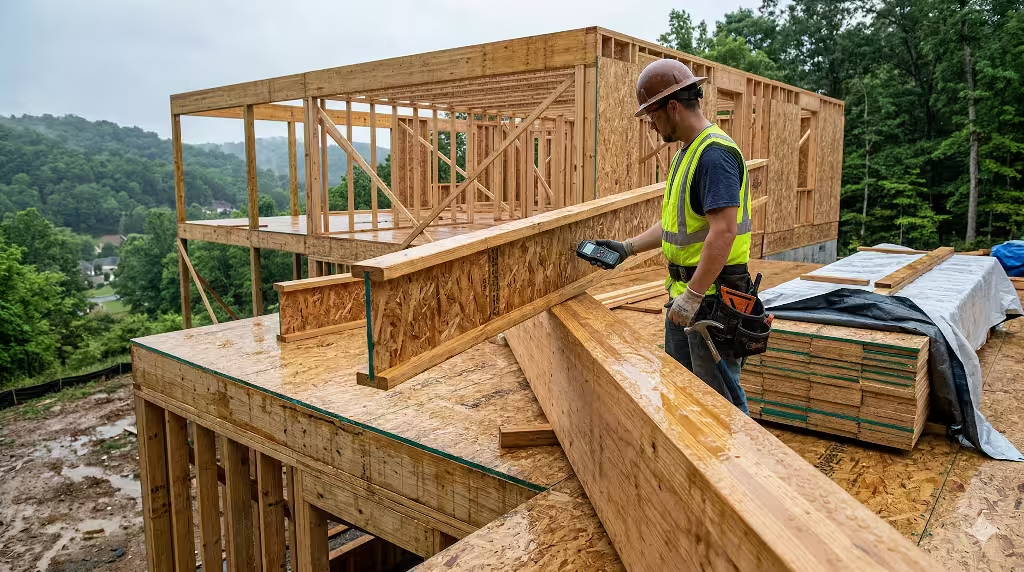

Building a home in the Tri-Cities is about more than just picking out the right granite for your kitchen or the perfect shade of gray for your shutters. It is about creating a place where your family feels safe when the wind starts howling off the ridges of the Appalachian Mountains. Many people growing up in Kingsport and watching the summer storms roll in over the hills, did not think much about the bones of the house as long as the roof did not leak.
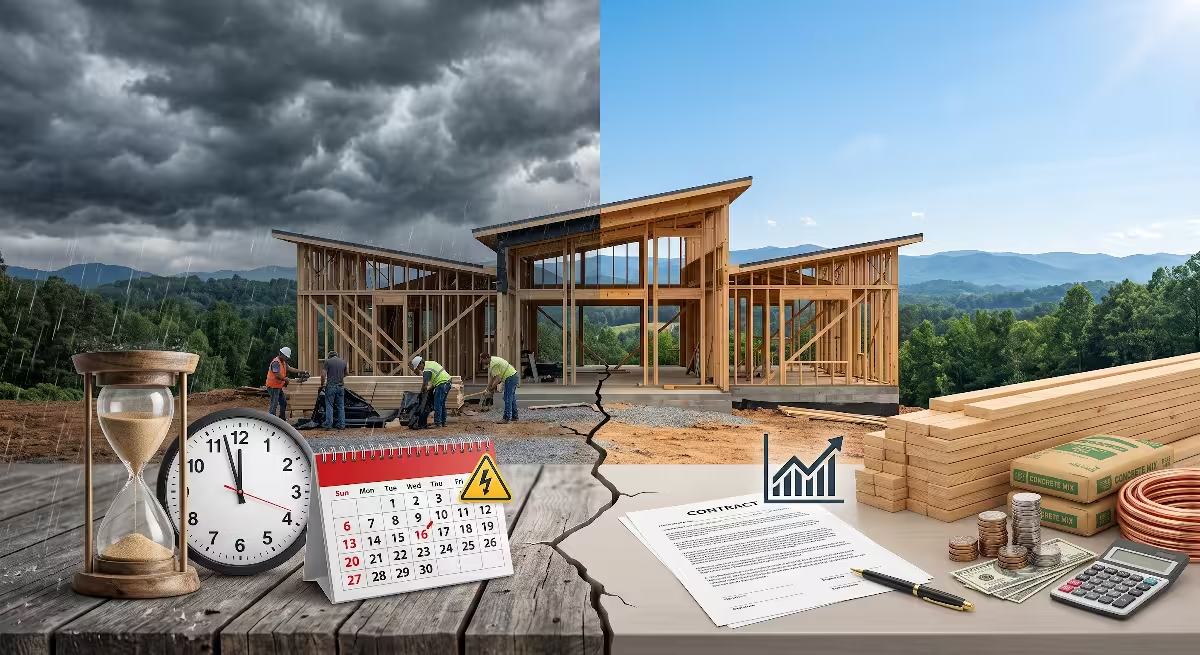
However, most people think that because a home is built to code, it is a high-quality home. This is like saying a car is great because it has seatbelts. Seatbelts are the bare minimum to keep you alive, but they do not stop the car from being totaled in a wreck. If you want a home that survives and stays livable after a major event, you have to look beyond the basic rules and embrace resilient design.
In our beautiful corner of East Tennessee, we face everything from heavy ice storms that snap power lines to high winds that test every shingle on your roof. When I talk to women about their custom homes, the word they use most is “sanctuary.” They want a place that protects their children and provides peace of mind.
That is exactly what resilient design is all about. It is a way of building that moves us past the old goal of just getting out of the house safely. It moves us toward a goal where the house itself stays standing and stays functional. Today, we are going to dive deep into the world of building code vs resilient design standards. We will look at why the minimum is not enough and how you can build a legacy home in the Tri-Cities that truly stands the test of time.
What is the Building Code?
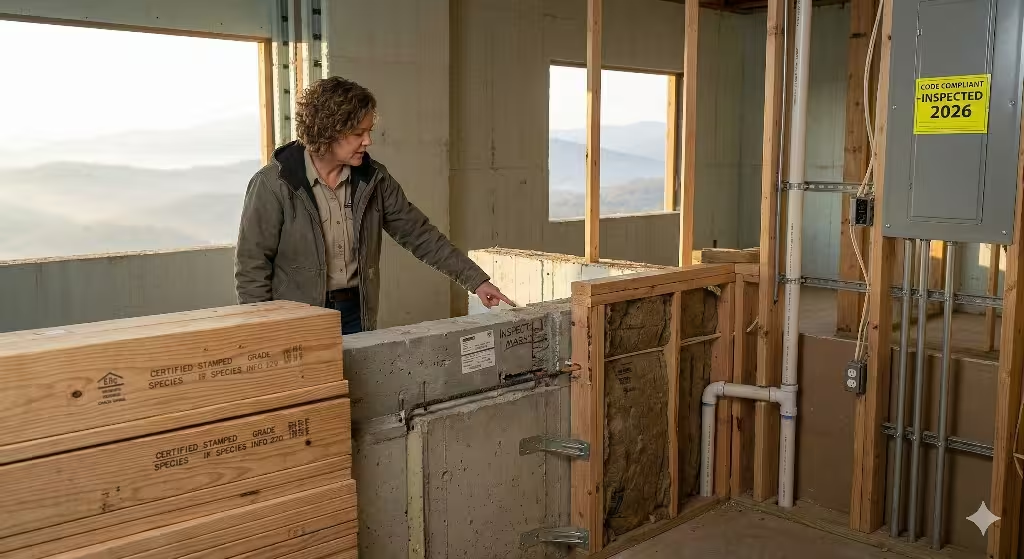
When you start your building journey in Johnson City or Kingsport, the first thing your builder will mention is the building code. In 2026, we are looking at updated versions of the International Residential Code and the International Building Code. These are the rulebooks that every builder must follow. They cover everything from how deep your footings must be to how many outlets you need in a room. The state of Tennessee has adopted these rules to make sure every new house meets a basic level of safety. These codes are great for making sure your house does not catch fire because of bad wiring or collapse under its own weight.
However, it is important to understand the philosophy behind the building code. The primary goal is life safety. This means the code is written to ensure that if a disaster happens, you and your family have enough time to get out of the house before it becomes dangerous. It is not necessarily written to save the house itself.
If a massive storm hits and your home is built exactly to code, it might protect you during the event, but the structure could be so damaged afterward that it has to be torn down. For many of us, our home is our biggest financial investment. Building just to code means you are accepting the risk that your investment could be lost even if you are physically safe.
In Tennessee, we also have energy codes like the 2021 IECC. These rules help with insulation and window quality, which is great for your monthly power bill. But even these energy codes are often treated as the finish line by some builders rather than the starting block. When we talk about building code vs resilient design standards, we have to realize that the code is the floor, not the ceiling. It is the lowest legal limit. If a builder tells you they build “to code,” they are essentially saying they build at the lowest level allowed by law. We believe we can do much better than the bare minimum.
What are Resilient Design Standards?
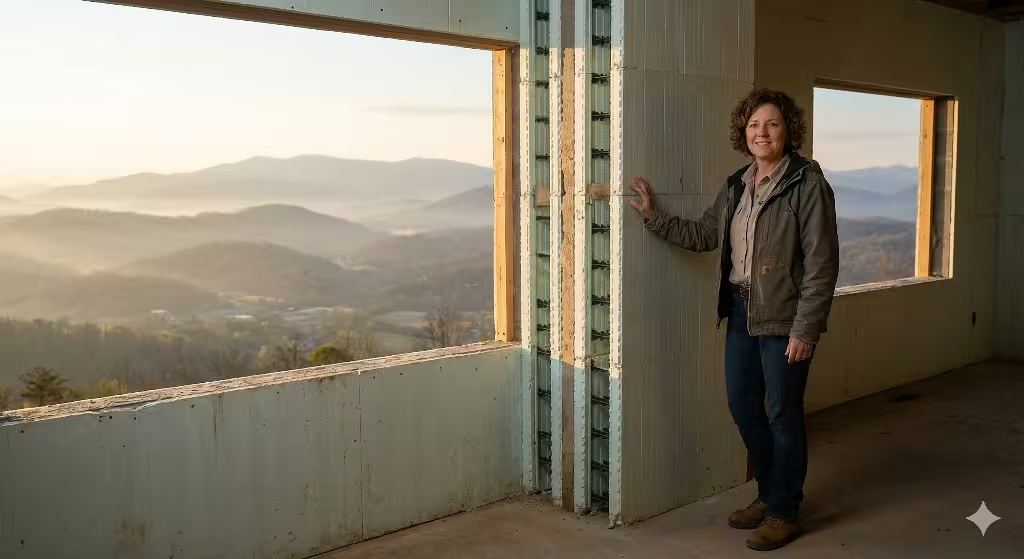
Now, let’s talk about the higher bar. Resilient design is a way of thinking about your home as a long-term survivor. While the building code asks, “How can we make sure people can escape?“, resilient design asks, “How can we make sure the family can stay?” This approach focuses on what experts call functional recovery. This means that after a major event, like a severe windstorm or a week-long power outage, your home is still a place where you can live. You do not have to move into a hotel or a shelter because your house is still doing its job.
One of the big pieces of resilient design in 2026 is the idea of passive survivability. This means your home can maintain safe conditions for a long time without any power from the grid. Imagine it is the middle of a freezing February in the Tri-Cities and the power goes out for four days. A home built with resilient design principles will stay warm much longer than a standard code-built home. It uses better insulation, airtight construction, and smart window placement to keep the heat inside. This is not just a luxury; it is a safety feature for the elderly or for families with young children.
A major goal in modern resilient design is something called the 26°C Limit. This is a standard used to make sure at least one room in your house, which we call a thermal refuge, stays below 79 degrees Fahrenheit even during a brutal summer heatwave without air conditioning. By using specific materials and shading, we can create a “cool room” that keeps you safe during an emergency. This type of planning is a huge part of resilient design because it looks at the long-term changes in our weather patterns. It ensures that your home is prepared for the extremes, not just the averages.
Building Code vs. Resilient Design Standards: Key Differences
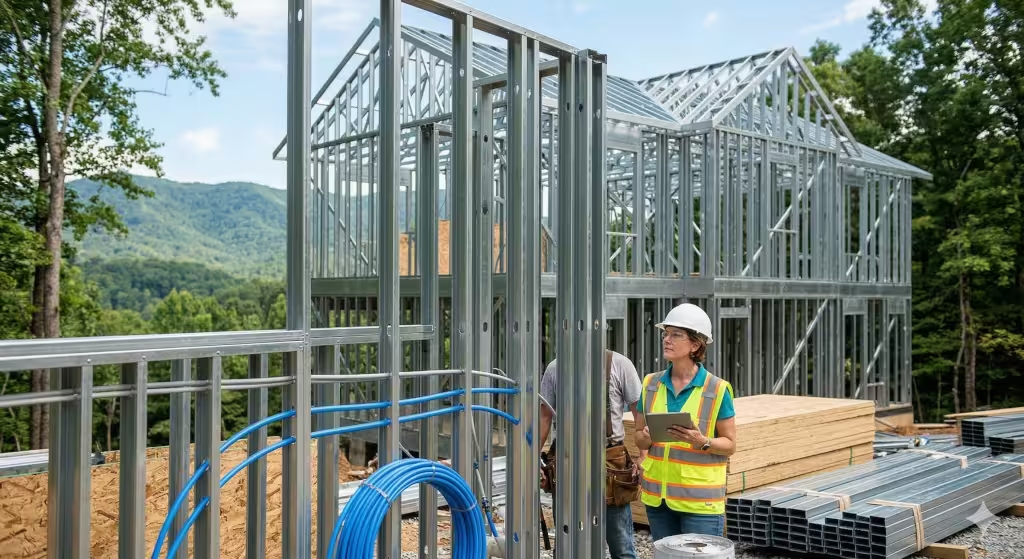
When we compare building code vs resilient design standards, the differences show up in the very bones of the house. For example, let’s look at the walls. A standard code home usually uses 2×4 or 2×6 wood framing with fiberglass insulation. It is a system that has worked for years, but it has weaknesses. In contrast, a home focused on resilient design might use Insulated Concrete Forms or Structural Insulated Panels. These systems are much stronger. They can withstand much higher winds and they are much better at keeping your indoor air separate from the outside elements.
Another key difference is how the house handles energy. The building code might require a certain amount of insulation in the attic. Resilient design goes further by making the home “islandable.” This means the house is pre-wired for solar panels and battery storage. If the main power grid goes down, your home can switch to its own power source like a little island. This allows your refrigerator to keep running and your lights to stay on. For a woman managing a household, knowing that the food in the freezer won’t spoil and the kids won’t be scared in the dark is a massive relief that comes from resilient design.
Then there is the financial side. Building to code is cheaper up front. There is no denying that. However, resilient design offers a much better return on investment over time. Studies from groups like FEMA show that every dollar you spend on making a home more resilient can save you up to eleven dollars in future repair costs. In the Tri-Cities, where we have seen our fair share of storm damage, that math makes a lot of sense. You might pay a little more during construction, but you will save a fortune on insurance and repairs over the life of the home. Resilient design is truly the smarter financial choice for a custom home buyer.
Why Resilience Matters for the Tri-Cities Homeowner
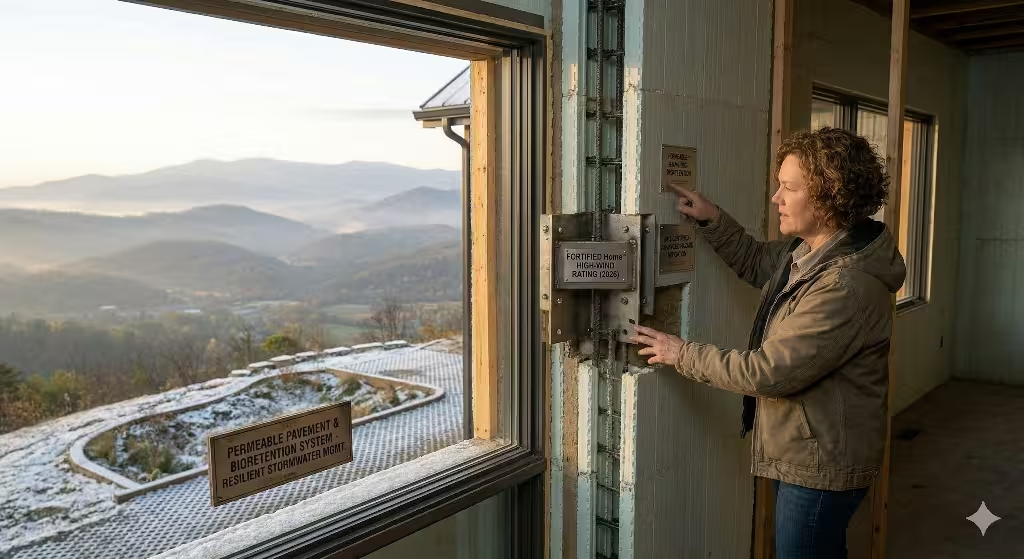
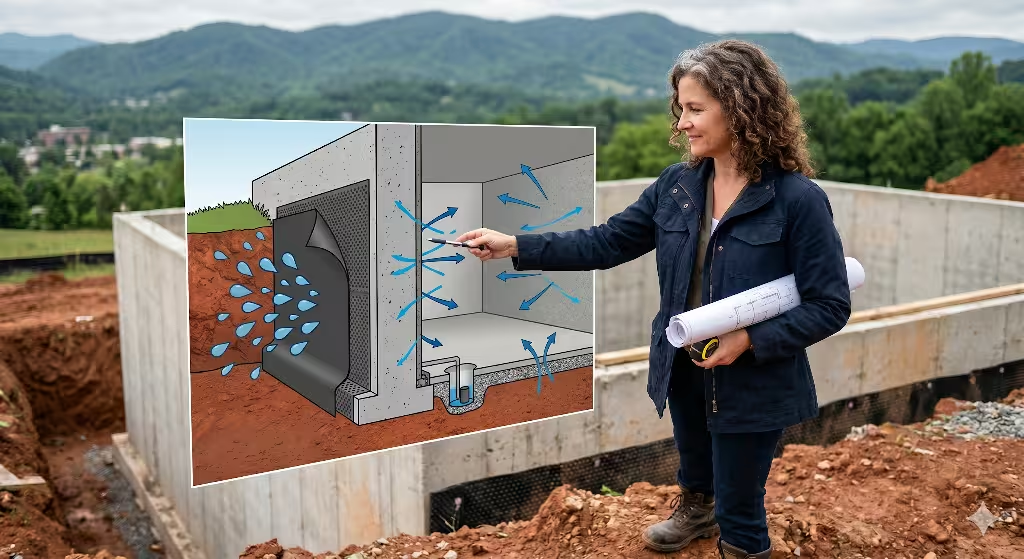
Living in East Tennessee is a dream for many, but our local geography brings specific challenges. Whether you are building near the beautiful waters of Boone Lake or up on a ridge overlooking the Watauga River, you have to think about the land. Our area has a lot of “karst” topography, which means there are underground caves and sinkholes. Standard building codes do not always account for the unique way water moves through our soil. Resilient design takes these local factors into account, ensuring that your foundation is reinforced and your drainage systems are over-engineered to handle heavy mountain rainfall.
We also have to talk about the wind. The Tri-Cities can experience “mountain waves” where high-altitude winds dip down and hit our valleys with surprising force. If your home is built in a 37601 or 37604 zip code, you might be in a spot that gets hit harder than others. While the code sets a basic wind speed requirement, resilient design pushes for higher standards, like using impact-resistant windows and reinforced roof attachments. These features keep the “envelope” of your home sealed. If a window breaks during a storm, the pressure inside the house changes instantly, and that is often when roofs get blown off. Resilient design prevents that chain reaction from starting.
Finally, we have to consider our seasonal shifts. We get hot, humid summers and cold, icy winters. This back and forth puts a lot of stress on building materials. Wood expands and contracts, which can lead to cracks and air leaks over time. By choosing materials that are part of a resilient design strategy, like fiber-cement siding or metal roofing, you are choosing things that can handle the Tennessee climate without constant maintenance. A resilient home is a low-maintenance home. It gives you more time to enjoy the beauty of our area and less time worrying about repairs.
Legislative Landscape: The Hicks Bill and Its Impact
In the building world, laws change almost as fast as the weather. One of the big topics of conversation in 2026 is the Hicks Bill, also known as HB 1021. This piece of legislation has been a major talking point for developers and local governments across Tennessee. The bill was designed to create more consistency in how land is developed, but it has also sparked a debate about local growth management. For those of us in the Tri-Cities, this bill is important because it affects how new neighborhoods are planned and what kind of infrastructure is required.
The Hicks Bill often focuses on developer rights, making it easier for builders to get projects started. While growth is good for our economy, we have to make sure it is “smart” growth. If a development is built too quickly without considering the long-term impact on water runoff or road safety, the whole community pays the price. This is where resilient design comes into play on a larger scale. Even if a developer is only required to meet the bare minimums set by new state laws, a savvy home buyer should demand more. You want your home to be part of a neighborhood that can handle the extra traffic and the extra rainwater that comes with new construction.
You need to keep a close eye on how the Hicks Bill influences our local zoning in Johnson City and Kingsport. We want to make sure that as we grow, we are not losing the things that make East Tennessee special. Resilient design is not just about a single house; it is about building communities that can withstand the pressures of a growing population and a changing environment. When you look at the legislative landscape, remember that the law sets the minimum path. Your personal standards for your custom home can, and should, be much higher. Resilient design is your way of taking control of your home’s future, regardless of what happens in the state capital.
Common Questions Answered about Resilient Design
There are often a lot of the same questions about resilient design. One of the most common is: “What is the real difference between building code and resilient design?” Our answer is always that the code is about surviving the moment, while resilient design is about surviving the aftermath. The code ensures you can get out of a burning or shaking building. Resilient design ensures that the building is still there and usable once the emergency is over. It is the difference between a temporary shelter and a permanent home.
Another question often asked is: “Is resilient design actually better than code if the code is supposed to keep us safe?” The answer is a resounding yes. The code is a safety standard, but it is not a quality or durability standard. Think about a cheap pair of shoes versus a high-quality pair of boots. Both might protect your feet from the ground, but the boots will last ten years while the shoes will fall apart in six months. Resilient design is the high-quality boot for your family. It offers better protection against wind, water, and heat than the code requires.
People also wonder: “Does building to code mean my house is safe from disasters?” This is a tricky one. Building to code means your house is as safe as the law requires for a typical event. But “typical” is changing. We are seeing bigger storms and more extreme temperatures than we used to. A house built to the 2018 or even 2024 code might not be prepared for the record-breaking events of 2026 and beyond. By choosing resilient design, you are “future-proofing” your home. You are making sure it can handle the 100-year storm that seems to happen every ten years now.
Home as a Sanctuary
As a woman, I see things through a different lens. For many of my male colleagues, building is about the “how,” the tools, the torque, and the timelines. But for the women, building is about the “why.” Why are we choosing this specific window? Why are we spending more on the foundation? The answer is almost always about the feeling of the home. Women want a sanctuary. They want a place where they can close the door on the world and know that their family is completely safe. Resilient design is the foundation of that feeling.
When a mother thinks about her home, she is often thinking ten or twenty years down the line. She is thinking about the legacy she is leaving for her children. A home built with resilient design is a legacy home. It is a structure that won’t require a massive structural overhaul in fifteen years because of rot or storm damage. It is a house that remains comfortable and healthy for everyone inside. Resilient design focuses on things like indoor air quality and moisture control, which are vital for a healthy family. No one wants to worry about mold behind the walls after a heavy rain. Resilient design prevents those worries from ever starting.
There is also a deep sense of empowerment that comes with resilient design. When you know your home is “islandable” and can provide its own power and water in a pinch, you feel a sense of independence. You are not at the mercy of the utility company or a failing power grid. In our modern world, that kind of self-sufficiency is a true luxury. It gives you the peace of mind to sleep soundly during a thunderstorm, knowing your home is reinforced and prepared. To me, that is the heart of female-centric building: creating a space that nurtures and protects, no matter what is happening outside.
Materials and Entities
If you want to get serious about resilient design, you need to know about the materials that make it work. We have already mentioned things like ICF and SIPs, which are game-changers for wall strength. But we should also talk about the roof. In the Tri-Cities, hail and wind are our biggest enemies. Using Class 4 impact-resistant shingles or a standing-seam metal roof can make a huge difference. These materials are tested to survive the kind of weather that would shred a standard shingle roof. This is a core part of the resilient design philosophy: choosing materials that are tougher than the environment they live in.
You should also become familiar with the entities that set the gold standards for building. One of the most important is the IBHS, which stands for the Insurance Institute for Business and Home Safety. They created the FORTIFIED Home program. This is a set of building standards that go way beyond the code. They have three levels: Roof, Silver, and Gold. Getting a FORTIFIED certification for your home can lead to massive discounts on your insurance premiums. It is a third-party proof that your home is a leader in resilient design. When you talk to your builder, ask them if they are familiar with the FORTIFIED standards.
Other important names to know are FEMA and the U.S. Green Building Council. FEMA provides a lot of the data on how to protect homes from floods and winds, while the Green Building Council is the group behind LEED certification. In 2026, we are seeing LEED v5, which has a much bigger focus on resilience than previous versions. They look at how a building can help a community recover after a disaster. By following these professional guidelines, you are ensuring that your custom home is built using the best science available today. Resilient design is a technical field, but it is one that every homeowner can understand and benefit from.
The Financial Reality of Choosing Resilience
Buyers often wonder if they can afford to build a house using resilient design. Our response is always that you can’t afford not to. Yes, the initial cost might be 5% to 10% higher than a standard code home. But let’s look at the long-term math. First, your energy bills will be much lower. A resilient home is incredibly efficient, often saving homeowners hundreds of dollars every month. Over ten years, that’s tens of thousands of dollars back in your pocket. That alone can pay for the extra cost of the better materials used in resilient design.
Second, think about the insurance. Insurance companies are businesses, and they hate risk. A home built to the bare minimum code is a high risk for them. A home built with resilient design principles is a low risk. Because of this, many insurance providers in Tennessee offer significant discounts for things like impact-resistant roofs and reinforced foundations. In some cases, these discounts can be as high as 50% of your annual premium. When you add up those savings year after year, the “expensive” resilient home actually becomes the cheaper option in the long run.
Finally, there is the resale value. As more people become aware of the risks of extreme weather, they are looking for homes that offer protection. A home in the Tri-Cities that is certified as resilient will stand out in the real estate market. It’s a major selling point. Imagine telling a potential buyer that the house never lost power during the last big ice storm and that the insurance is half the price of the house next door. That is the power of resilient design. It protects your family, it protects your wallet, and it protects your future resale value.
Planning for the Future: Passive Survivability
The term “passive survivability” sounds a bit technical, but it is actually a very simple and beautiful concept. It means that the design of your home does the work of keeping you safe, even if all the modern conveniences fail. In a world where we rely so much on the grid, this part of resilient design is becoming more important every day. For a custom home in the Tri-Cities, this means thinking about how the sun hits your house and how the wind moves around it. It means choosing the right amount of insulation so that the house holds its temperature like a thermos.
During a winter storm in East Tennessee, a home with good passive survivability will stay at a safe temperature for days without a heater. This is achieved through a “super-insulated” envelope and high-performance windows. This isn’t just about comfort; it’s about preventing pipes from freezing and keeping the inhabitants healthy. This is a cornerstone of resilient design because it assumes that the systems we usually count on might not always be there. By building a house that can “take care of itself,” you are creating a much higher level of security for your family.
We also have to think about water. Resilient design includes things like gravity-fed water systems or large rainwater collection tanks. If the city water system is interrupted, a resilient home might still have enough water for flushing toilets and basic washing. This level of planning is what turns a regular house into a true sanctuary. When we talk about building code vs resilient design standards, this is one of the biggest gaps. The code assumes the city will always provide water and power. Resilient design assumes they might not, and it prepares you for that reality.
The Importance of the Building Envelope
In the construction world, we talk a lot about the “envelope.” This is the outer shell of your house; the roof, walls, windows, and doors. In a standard code build, the envelope is like a light jacket. It’s okay for a little while, but it won’t protect you in a blizzard. In a home focused on resilient design, the envelope is like a high-tech suit of armor. It is designed to be airtight and incredibly strong. Keeping the outside out is the most important job your house has, especially during the extreme weather we see in the Tri-Cities.
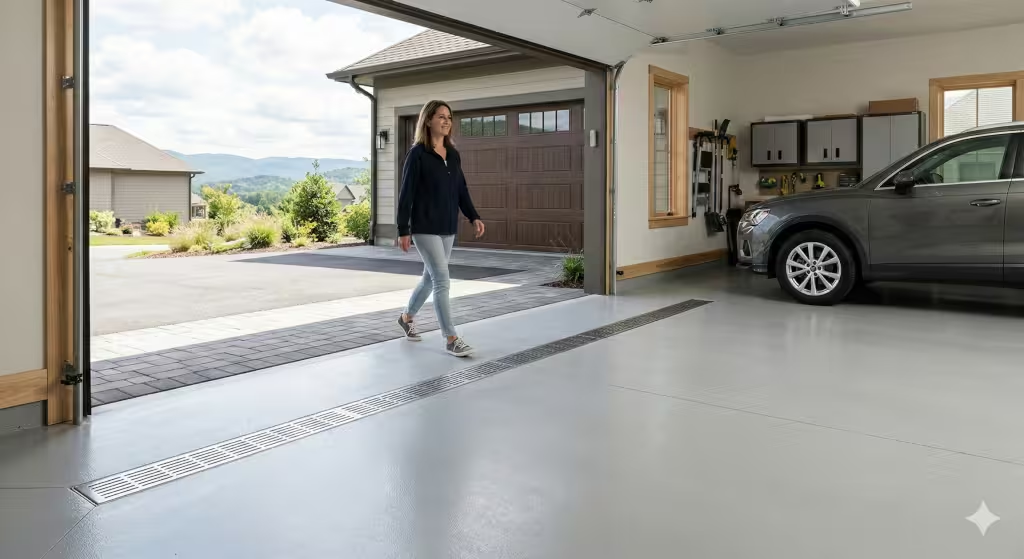
One of the biggest threats to a home during a high-wind event is “internal pressurization.” This happens if a window or door fails. The wind rushes into the house and tries to push the roof off from the inside. Building codes have some rules to prevent this, but resilient design goes much further. It requires impact-rated glass and reinforced garage doors. These features ensure that even if debris hits your home, the envelope stays sealed. Keeping the pressure out is what saves the structure. This is a perfect example of why resilient design is superior to the bare minimums of the code.
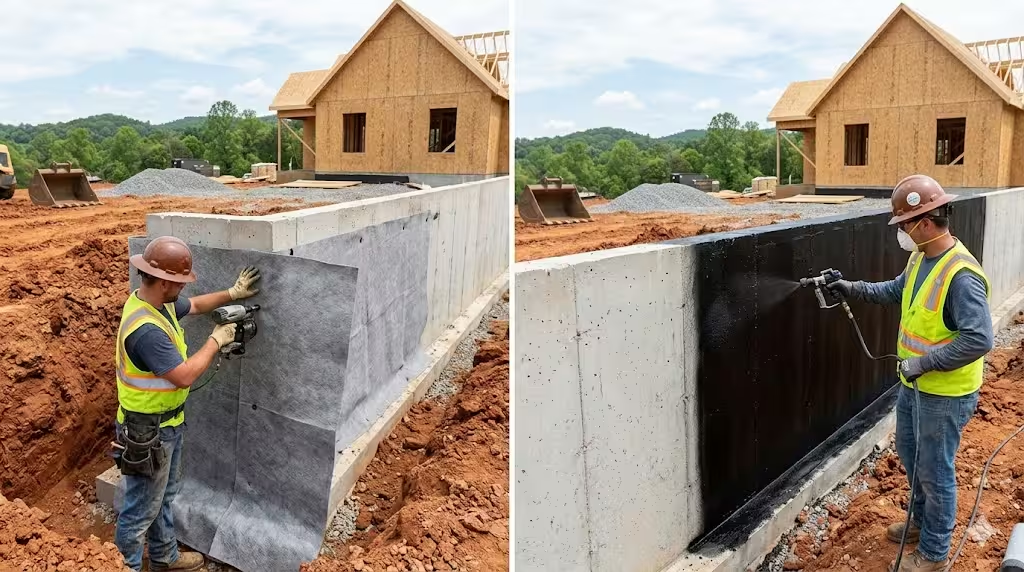
A tight envelope also helps with moisture. In our humid Tennessee climate, moisture is the enemy of every building. If air can leak into your walls, it carries water with it. That water can lead to rot and mold, which weakens the house and makes people sick. Resilient design uses advanced “vapor barriers” and “continuous insulation” to make sure that moisture stays where it belongs; outside. By protecting the envelope, you are protecting the entire investment. It is the most important part of the building code vs resilient design standards conversation.
Landscaping as a Resilient Tool
When we think about resilient design, we usually think about the house itself. But the land around the house is just as important. In the Tri-Cities, our hills and valleys mean that water is always on the move. A resilient landscape is designed to move that water away from the house as quickly as possible. This involves using “swales,” which are like little valleys in your yard, and “permeable” surfaces that let the water soak into the ground instead of running off into your basement. This is a key part of protecting your home from the heavy rains we get in East Tennessee.
We also have to consider fire safety. While we don’t have the same wildfire risks as the West Coast, we do have plenty of trees and dry brush in our area. A resilient design includes a “defensible space” around the home. This means choosing plants that don’t burn easily and keeping mulch and wood piles away from the siding. It also means using non-combustible materials for things like decks and porches. In Kingsport or Johnson City, where homes are often nestled in the woods, these small choices can make a huge difference if a brush fire starts nearby.
Finally, trees can be both a blessing and a curse. They provide shade, which helps with the 26°C Limit and passive cooling. But a dead or weak tree near the house is a major hazard during a windstorm. Part of a resilient design plan is regular “arborist” checkups to make sure the trees on your property are healthy and strong. It’s about looking at the whole property as a system. The house and the land should work together to keep you safe. This holistic approach is what makes resilient design so much more effective than just following a set of building codes.
The Role of Technology in Resilience
As we move through 2026, technology is playing a bigger role in how we build. Smart sensors can now monitor the moisture levels inside your walls or the structural stress on your roof during a storm. This “active” resilience allows you to catch problems before they become disasters. Imagine getting an alert on your phone that a small leak has started in the attic before it has a chance to ruin your ceiling. This is the future of home ownership, and it is a big part of the modern resilient design movement.
We are also seeing incredible advances in backup power. Beyond just generators, we now have “smart panels” that can automatically manage your home’s energy use during an outage. They can decide to turn off the water heater to make sure the refrigerator stays cold. When combined with solar and battery storage, these systems make a home almost entirely self-sufficient. For a woman managing a busy family, this kind of automated protection is a lifesaver. It takes the guesswork out of an emergency and lets you focus on what really matters.
Even the materials themselves are getting smarter. We now have “self-healing” concrete that can fix small cracks on its own and “phase-change” materials that absorb heat during the day and release it at night. While these might sound like science fiction, they are becoming more common in the world of high-performance building. When you choose resilient design, you are choosing to use the best that modern science has to offer. You are moving away from the old-fashioned way of building and toward a future where your home is an active partner in your safety.
Making the Right Choice for Your Family
Building a custom home in the Tri-Cities is one of the most exciting things you will ever do. It is a chance to create a space that is perfectly tailored to your life and your family. But with that excitement comes a big responsibility. You have to decide what kind of foundation you are going to build your life on. Will you choose the bare minimum and hope for the best? Or will you embrace the principles of resilient design and build a home that is ready for anything?
Many homes that were “built to code” fail during a typical Tennessee storm, and many homes with resilient design have stood firm through events that should have leveled them. The difference isn’t just in the materials or the engineering; it’s in the peace of mind. There is a special kind of quiet that comes with knowing you are safe. It’s the quiet that allows you to enjoy the sound of the rain on the roof instead of worrying about where the leaks might start.
As you move forward with your build in Johnson City, Kingsport, or anywhere in our beautiful region, we encourage you to be your own best advocate. Ask the hard questions. Don’t let a builder tell you that “to code” is good enough. You deserve a home that is as strong as you are. You deserve a home that is a true sanctuary. By choosing resilient design, you are making an investment in your safety, your finances, and your future. It is the best gift you can give to yourself and the people you love.
In the end, building code vs resilient design standards is not just a technical debate. It is a question of value. What do you value most in your home? If the answer is safety, longevity, and peace of mind, then the choice is clear. Let’s build something that lasts. Let’s build a home that the Tri-Cities can be proud of. Let’s choose resilience, every single time.